Sunday's Killer: Green Bay Leaving Plays on the Field in the Passing Game
Entering last week, many thought Aaron Rodgers would be able to throw all over the Detroit Lions' injured secondary. Even I wrote that the game plan for the squad entering the week should have been to target their inexperienced defensive backs:
"Other than targeting Slay, the Packers should also go after Detroit slot cornerbacks. Slot back Bill Bentley was lost early in the season to an ACL injury, creating a hole in the nickel defense. Another slot corner, Nevin Lawson, dislocated his left foot during the third quarter of Sunday's game against Carolina. In response, Detroit signed Danny Gorrer on Tuesday.
"
.jpg?w=2560 "Raiders Football")
With only 162 passing yards, Rodgers finished the 7-19 loss with his lowest yardage total in a full game since November of 2008. One of the largest factors for this were the plays left on the field by the team on Sunday. On at least six occasions, there were plays that could have been easily turned into gains, sometimes explosive plays, that went down as non-factors.
Play 1: Randall Cobb drops the deep ball
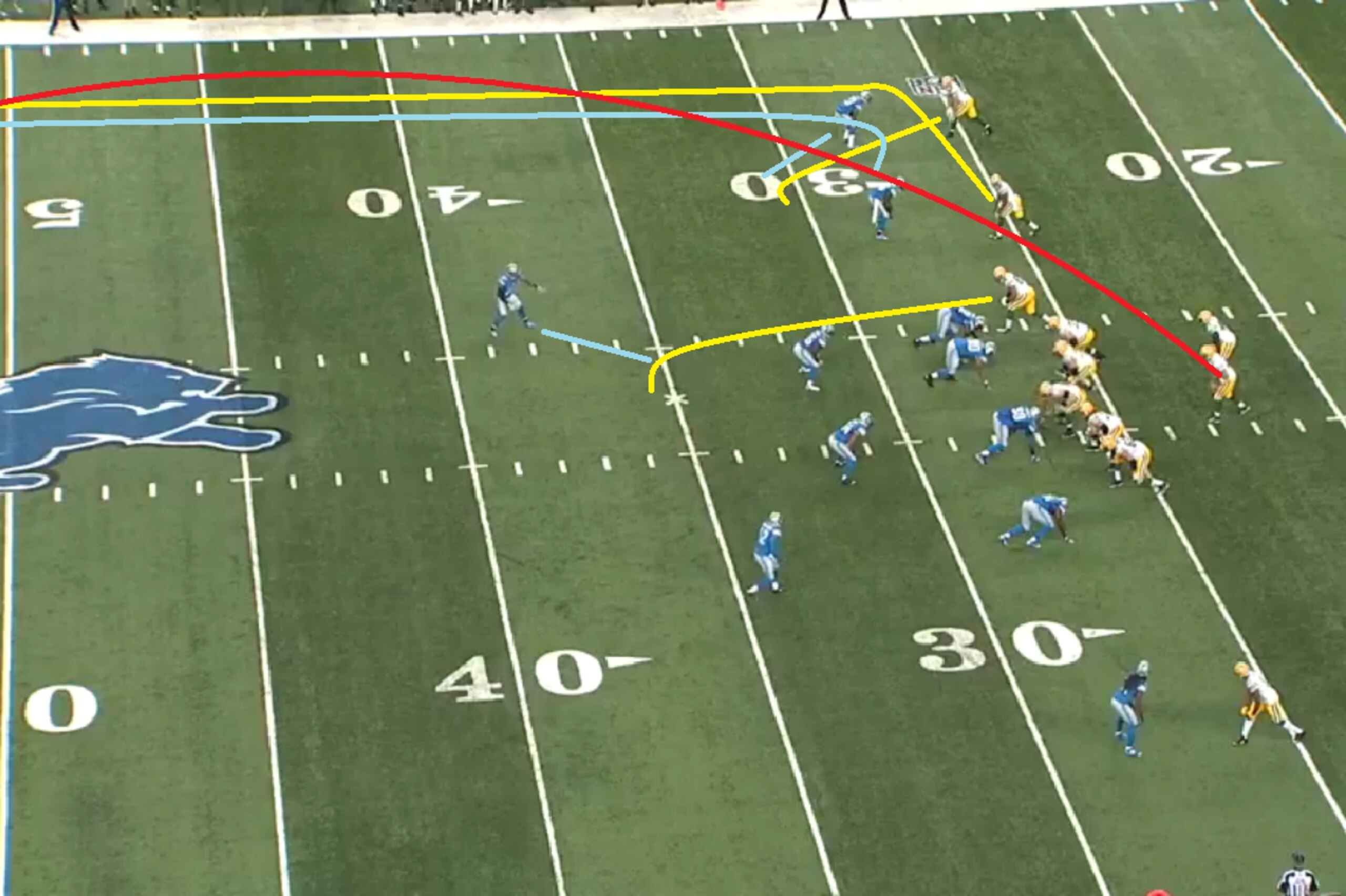
Green Bay came out on this play in a 1x3 set with a tight end split off the offensive line. On third down, the defense bunches up to play man. With Detroit selling out for the run and short passing game, Green Bay had a great opportunity to throw the deep ball.
On the right side, where Rodgers had three targets, there seemed to be some mismatches. Not only was the Lions secondary banged up and young, but they shouldn't have been able to compete against targets such as Jordy Nelson and Randall Cobb in one-on-one situations. On paper, this look is a pre-snap win for the Packers.
Nelson, the boundary receiver, ran a short curl, while the tight end ran a deeper curl behind the linebackers. What this did is suck the boundary cornerback and safety down to cover the routes. If they didn't suck in, Rodgers could have easily picked an open target for a first down to keep the offense on the field.
With the short passes covered, the best option then became Randall Cobb in the slot. Cobb on this play is running a wheel route. Essentially, he's running around Nelson's back, generating something close to a pick play on the slot corner covering him. In a perfect situation, the slotback either runs into his fellow corner or Nelson, then gets lost in a foot race versus Cobb because of the initial separation.

While there was no pick, the slot defender was lost on the play. By tailing Cobb at a distance, he couldn't close in and make a play on the ball. Rodgers sent a nice pass down the sideline, hit Cobb's hands, which allowed the ball to hit the turf. A majority of the time, this play goes to the house for the Packers. Unfortunately for the squad, the execution at the end of the play wouldn't allow it.
Play 2: James Starks drops the checkdown

There was nothing too special about this play. As this play developed, the linebackers and safeties vacated the middle of the field. Running back James Starks, who came in to spell starter Eddie Lacy, ran a simple checkdown rep after fulfilling his duty in pass protection. Rodgers sent the pass a little high, but that's a play Starks, a noted pass-catcher, usually grabs. Instead, the ball hit the turf.
Play 3: Rodgers' miscommunication with the rookie
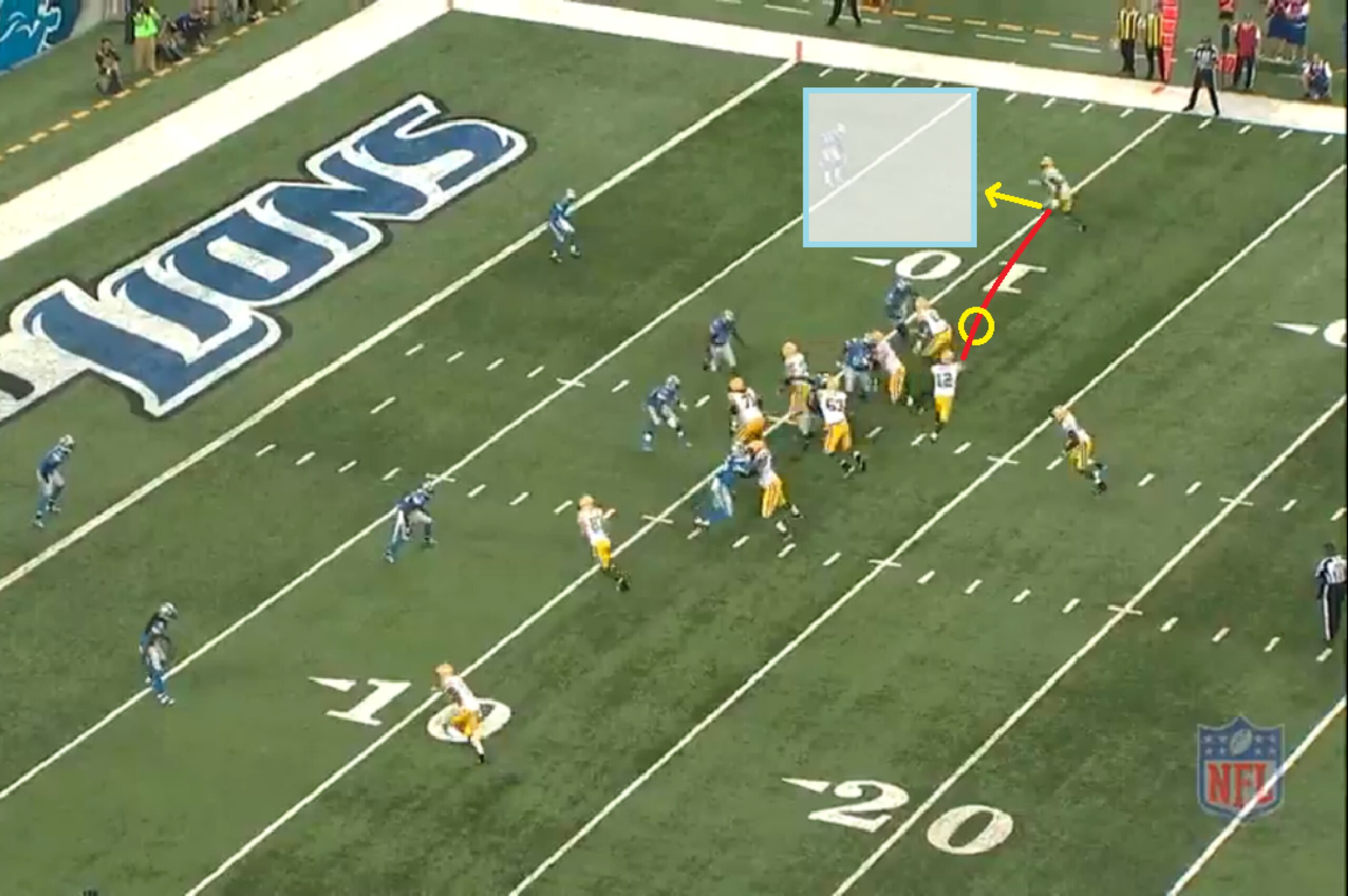
In the red zone, the Packers came out in a 2x1 set. With rookie second-round pick Davante Adams to the right with cushion between corner, he becomes an easy target for Rodgers. Taking one step, the quarterback fires it toward the Fresno State Bulldog.
Here's where the issue shows up. Instead of planting, catching the ball, and running after the catch, Adams actually took a couple steps towards the boundary defender. Instantly, the ball could be identified as being thrown behind the receiver.

Unable to make the play after taking his initial steps up field, the ball with Adams' name on it fell to the turf. Even when moving up, then back, the corner was still about three yards off the target. Had Adams simply turned toward Rodgers at the snap, he could have gained yardage.
These are the types of mistakes expected by rookies, which might be why McCarthy was hesitant to use him as the third receiver off-and-on in Week 2 and Week 3.
Play 4: Jarrett Boykin's turn to drop the ball
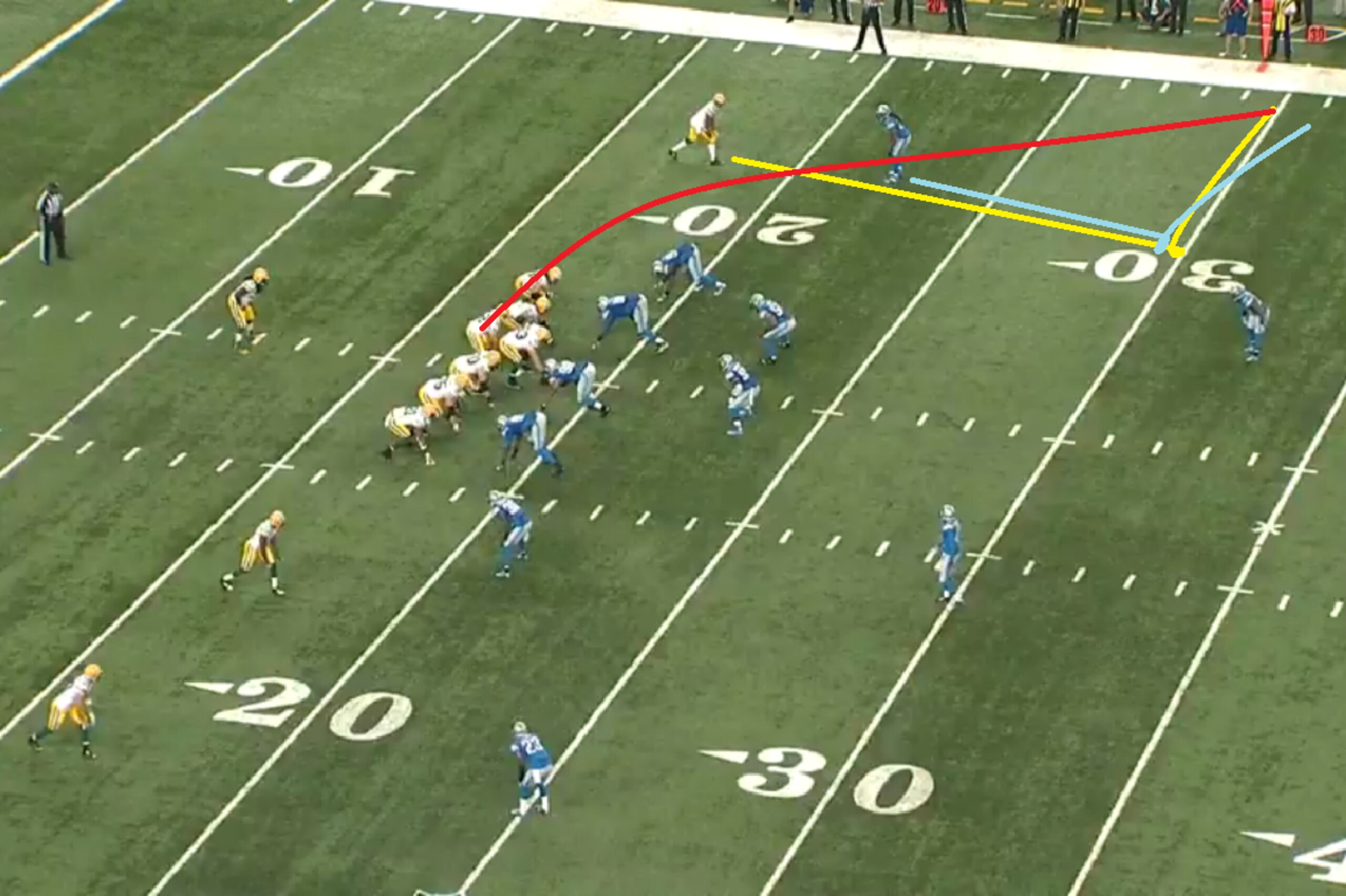
On first down, the Packers came out in a 1x2 set with 11 personnel. With the safeties showing deep coverage, Green Bay potentially had anything about 15 yards or shallower on the boundaries if their receivers could beat man coverage.
To the left was Jarrett Boykin. The third-year undrafted free agent ran an interesting route to free himself from the boundary cornerback. Running vertically for about 13 yards, Boykin initially turned to his right on the break. This caused the cornerback to roll his body in the same direction.
Continuing through the rotation, though, Boykin headed toward the sideline to the left, with a chasing defender behind him.
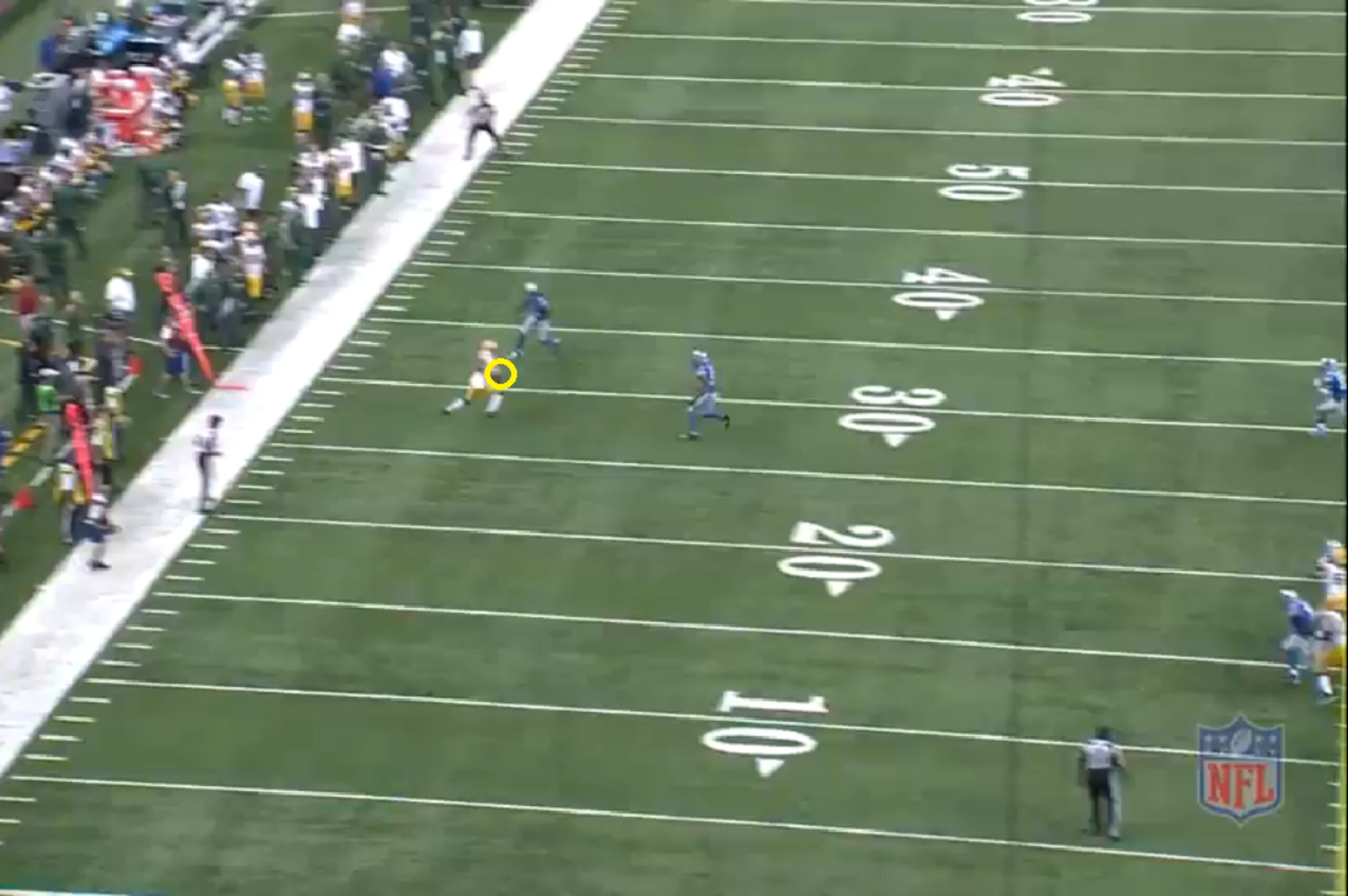
The former Virginia Tech Hokie couldn't keep a handle on the ball to finish, ending the play in its tracks.
Play 5: The "would have been a big play if not for the pressure" play

This play might be the most interesting of the "could have been" plays on Sunday. The Packers came out in a 3x1 set here with the tight end again split in the slot. The tight end's route was a quick slant to the boundary. Coming from the receivers from the left side were deep crossing routes.
What this does is give a quick play to the Packers, if it's man coverage. The linebacker assigned to the tight end can't make a play on the ball if it comes out quickly.
There was another option, though. With the furthest left receiver going over the top, it was likely that the left safety would also be responsible for him in coverage when it came time for the play to develop. Jordy Nelson, the lone receiver to the right, was running a streak, taking up the cornerback and right safety on vertical routes.
Why does that matter? Because if patient enough, the slot receiver would be in man-on-man coverage on a crossing route in the middle of the field. That's somewhat of a quarterback's dream.
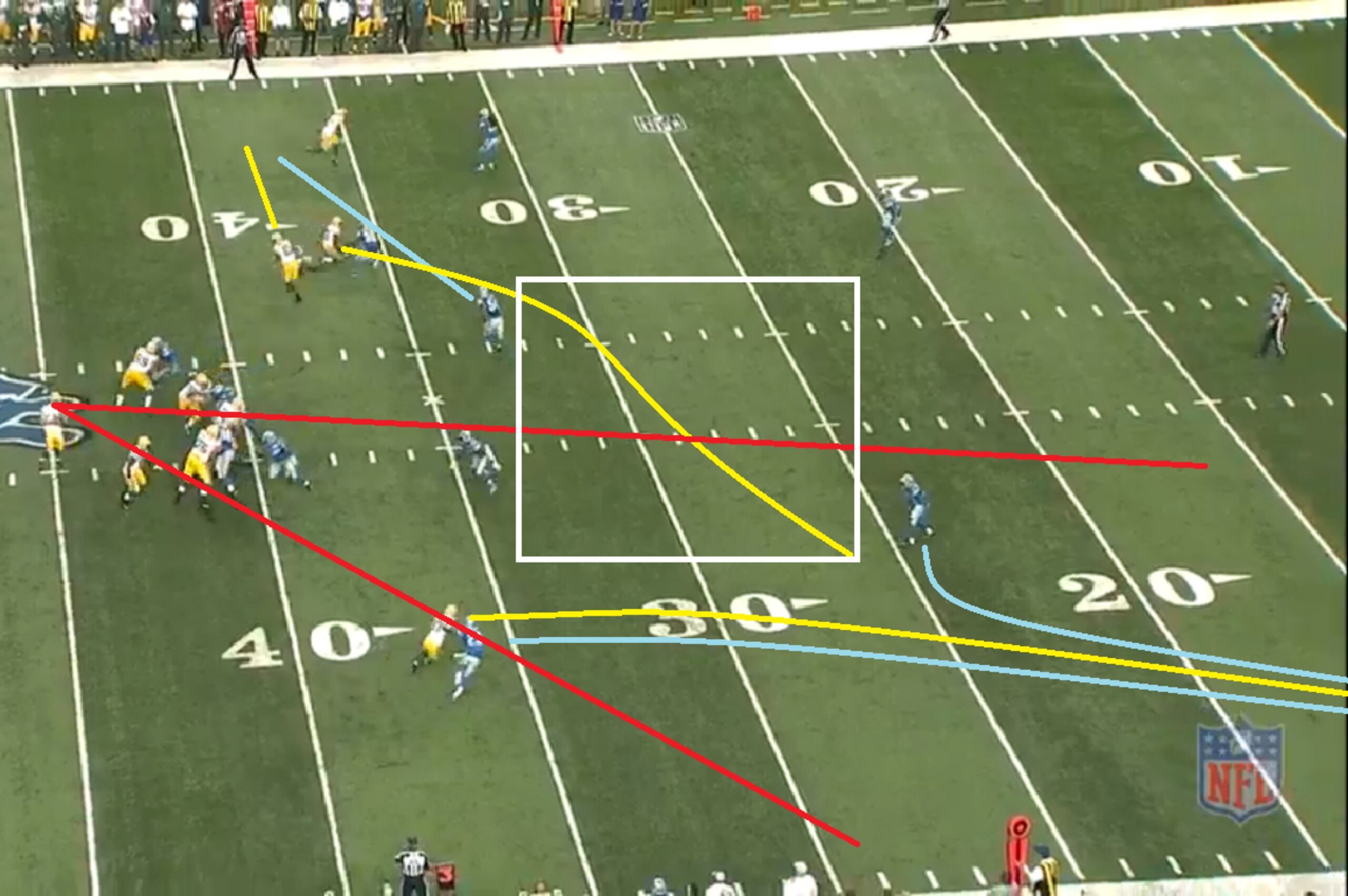
When Rodgers took the snap, his eyes immediately went to the right safety. He had given up the option of the tight end on the easy slant to go for a bigger play. By looking the way of the safety, he ensured that he would drop when Nelson went vertical, creating space for his slot receiver to run in the middle of the field.
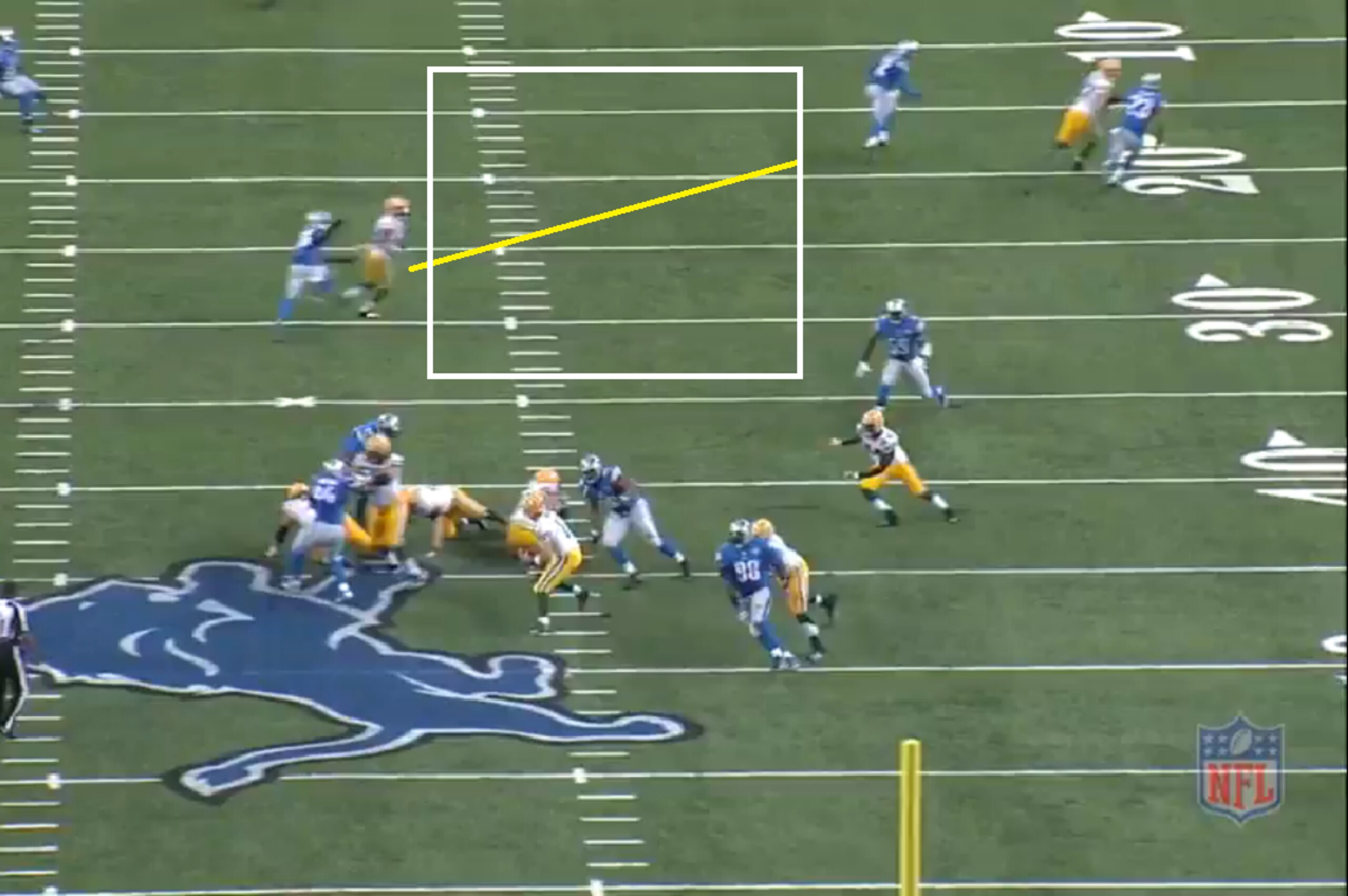
By the time Rodgers had his man open, though, there was pressure in his face forcing him in the other direction. Randall Cobb was open in the middle of the field, but the offensive line didn't hold up long enough to allow for a pass to be made.
Play 6: The "would have been a big play if Rodgers didn't slip" play
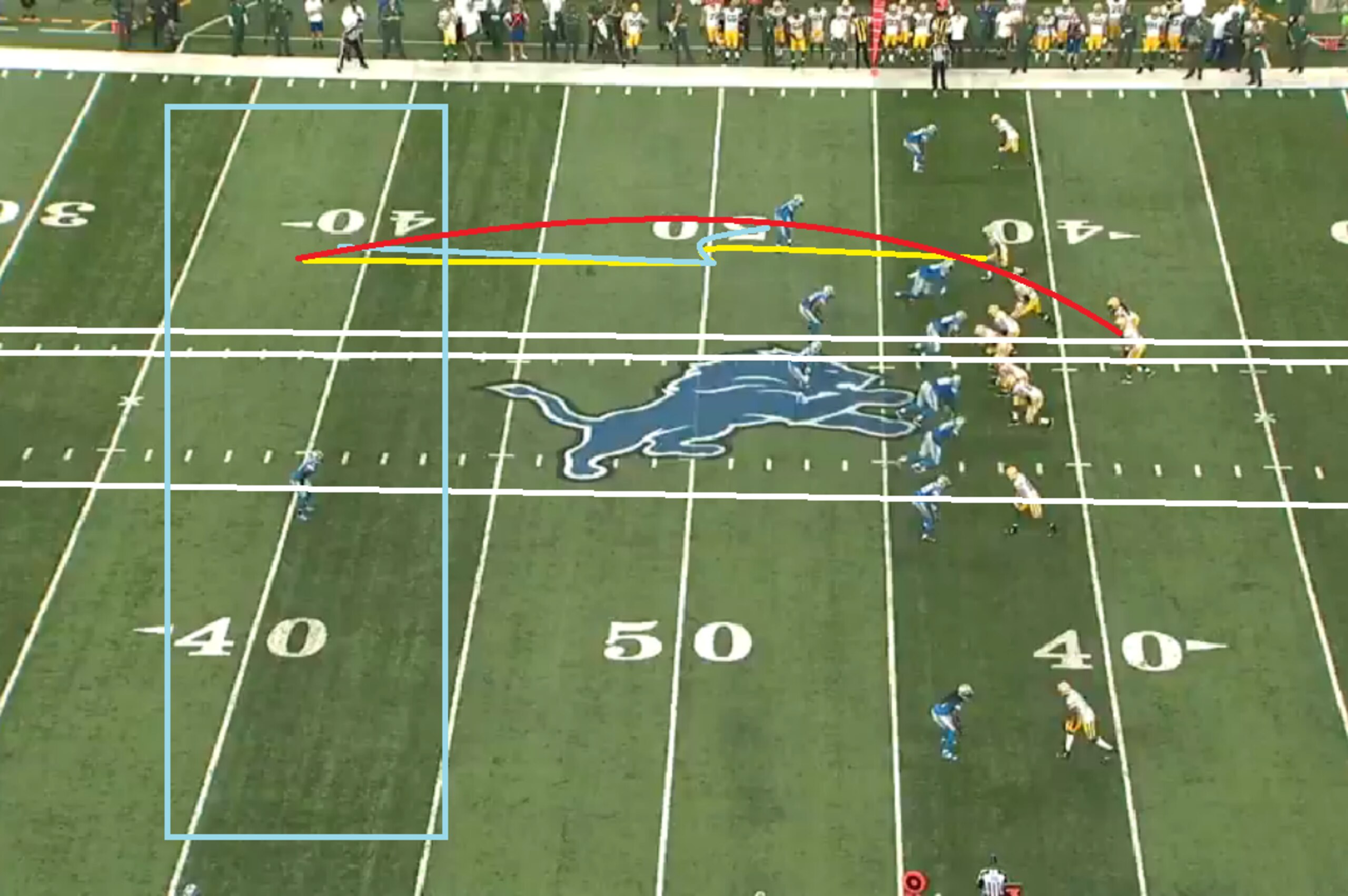
Green Bay came out on this play in a 2x2 set. Detroit hinted at Cover 1 man coverage with the way they aligned. That wasn't the only noticeable tip from their alignment, though. Shown in the graphic above are the lines of where the ball was centered and where the single-high safety was aligned. He was obviously leaning toward the left side of the formation.
Because of this, the right slot receiver became the premier focus. Without a safety or a sideline to assist his defensive back in man coverage, he should have been able to find space to run deep near the center of the field. As far as his route was concerned, it was a hitch and go. This creates separation by having the receiver break into a deep route as the cornerback on an island attempts to stop the decoy of a hitch route.
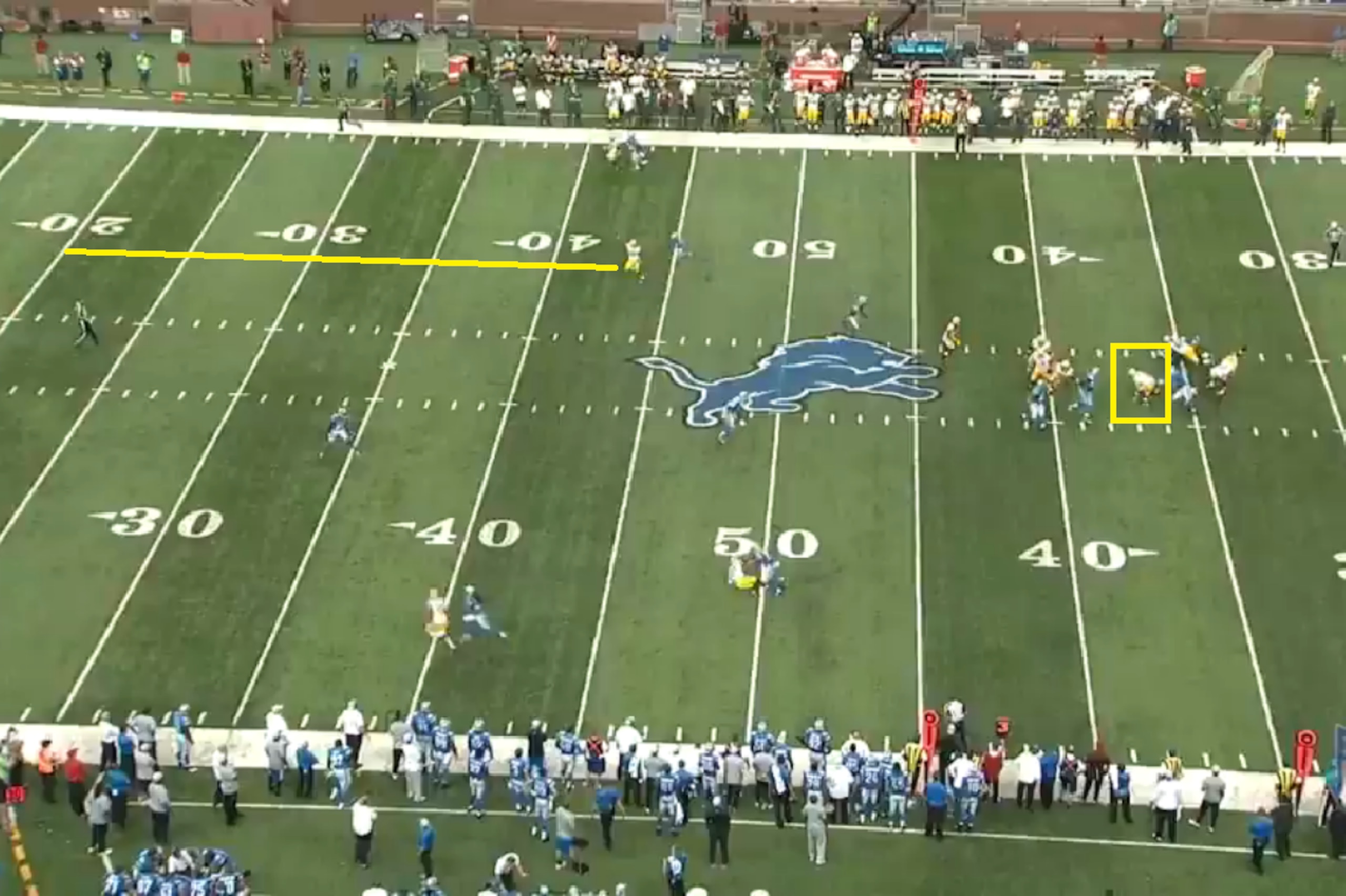
Streaking down the field, the receiver never touched the ball. Instead, while stepping up into the pocket, Rodgers began to stumble.
Final Thoughts
Green Bay's game plan wasn't poor against the Detroit Lions, only poorly executed. A couple of times, they had the young and mended Lions defense on the ropes but couldn't come away with the big play that was drawn up by them.
With a multitude of miscommunications, pressures, drops and random occurrences attributing to the lack of passing efficiency, it's doubtful that this type of game is played out again. Some of these issues will tighten up as the season goes on and the offense gets into a groove.
One thing's certain, though: Against the Chicago Bears, the Packers need to look much better passing the ball to avoid a 1-3 start to their 2014 season.
.jpg?w=2560 "Rams Camp Football")



.jpg?w=2560 "NFL Clarifies CFB Return Rules")