Green Bay Packers vs. Detroit Lions: Breaking Down Green Bay's Game Plan
After 32 total NFL games, the league is beginning to take shape. You can start to get a feel for which teams are having better than projected seasons and which aren't meeting the bar.
For Detroit and Green Bay, though, the season's been a mixed bag.
Detroit opened up the season in Ford Field for a Monday night showdown with the New York Giants. With relatively weak coverage personnel, the Lions defense forced two Eli Manning interceptions. Calvin Johnson played like Calvin Johnson, ending the day with 164 receiving yards and two scores. The Lions won in a 35-14 effort.
TOP NEWS
.jpg?w=2560 "Saints Lions Football")
Rap: Lions, LaPorta End Contract Talks
.jpg?w=2560 "Commanders Eagles Football")
Commanders May Change Logo 👀
.jpg?w=2560)
Live EVERY Fantasy Football Update
In Week 2, the story changed.
Against a tough Carolina Panthers defense, the Lions only managed to put up seven points. Coming off a 24-7 loss that evened their record, the Lions' 2014 has already mimicked their up-and-down 2013 season.
The inverted path of the Lions is the one Green Bay has been on so far. Opening the league schedule with a loss in Seattle, the Packers rallied from a 21-3 deficit against the New York Jets to win at home. In an emotional come-from-behind victory, Packers receiver Jordy Nelson notched 209 receiving yards.
Key on Offense: Attack the Secondary
Ourlads.com currently has Rashean Mathis and Darius Slay listed as Detroit's starting cornerbacks, while James Ihedigbo and Glover Quin are pegged as the starting safeties. In preparing to face an elite receiver in the NFL, I'm not sure you'd be confident in putting any of those defenders against him in one-on-one coverage. Unfortunately for Detroit, Green Bay has an elite receiver in Jordy Nelson, who represents a huge mismatch against those defensive backs.
In Week 1, Green Bay compressed its passing game to the left side of the field. With the Seahawks' Richard Sherman, playing on the opposite side, the Packers didn't send the ball in his direction all game. Over the top, playing Cover 1 was All-World free safety Earl Thomas, who discouraged Rodgers from throwing deep. Instead, the passing game consisted of mostly short passes to the left side of the formation.
Against the New York Jets, the team played completely differently. Down 21-3 early, the Packers needed to throw the ball early and often. The result was an amazing showing from Nelson and the emergence of second-round rookie Davante Adams, who took over the third receiver slot in mid-game.
With four capable receivers in Nelson, Randall Cobb, Adams and Jarrett Boykin, the Packers can torch a Lions secondary that is still learning to the new defensive scheme of coordinator Teryl Austin.
Slated to cover Jordy Nelson is the Mississippi State product Darius Slay, per John Katzenstein of The Detroit News:
"“Jordy’s a pretty good receiver,” Slay said. “I’m ready for the challenge, and I’m ready for him to bring his A game just like I’m going to bring mine.”
A second-round pick in 2013, Slay struggled as a rookie, and Mathis replaced him in each of the first two games. He showed improvement toward the end of the season, particularly in a Week 13 matchup against Green Bay, though he was primarily covering James Jones, who’s now with the Raiders.
This season, Slay has been sticky in man coverage, but did leave some openings in zone in the loss at Carolina.
“Read my keys better,” he said of how he can improve in zone. “Just be tighter more to the ball. See the routes better.”
"
Against Carolina, Slay's loose coverage was exposed a handful of times. On this play, he was lined up as the left cornerback at the bottom of the screen. The Panthers came out in a 3 x 1 look with the single receiver, tight end Greg Olsen, split off to the right.
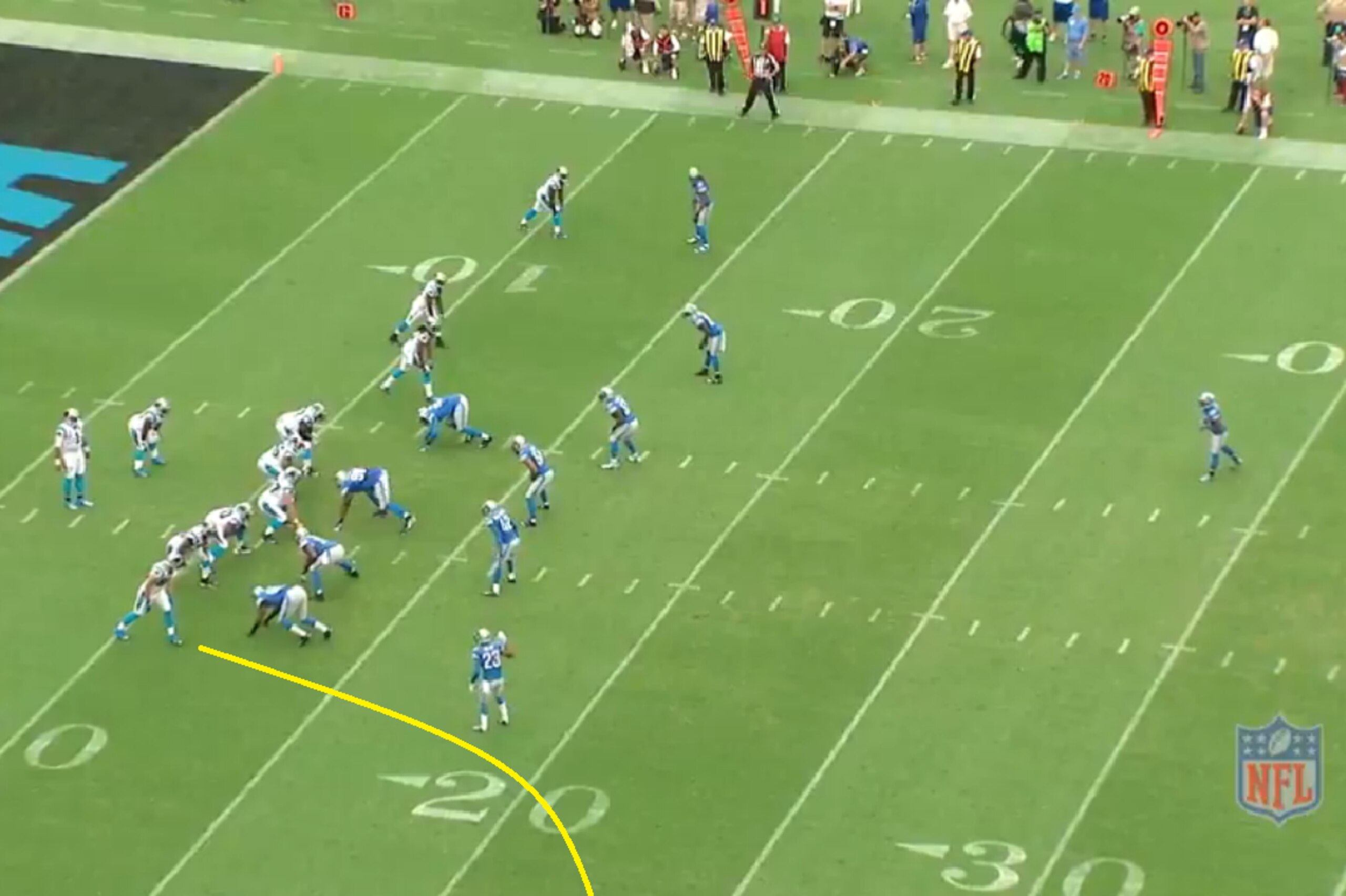
Olsen ran a corner route, while Slay played inside leverage on him. This meant that if the coverage wasn't tight enough, or if Slay didn't close in on the ball fast enough, Olsen should have been able to make an easy catch near the sideline.

As Panthers quarterback Cam Newton read the field, he saw Olsen opening up. Even during the time it took for the ball to get to the tight end, Slay couldn't close in on him.
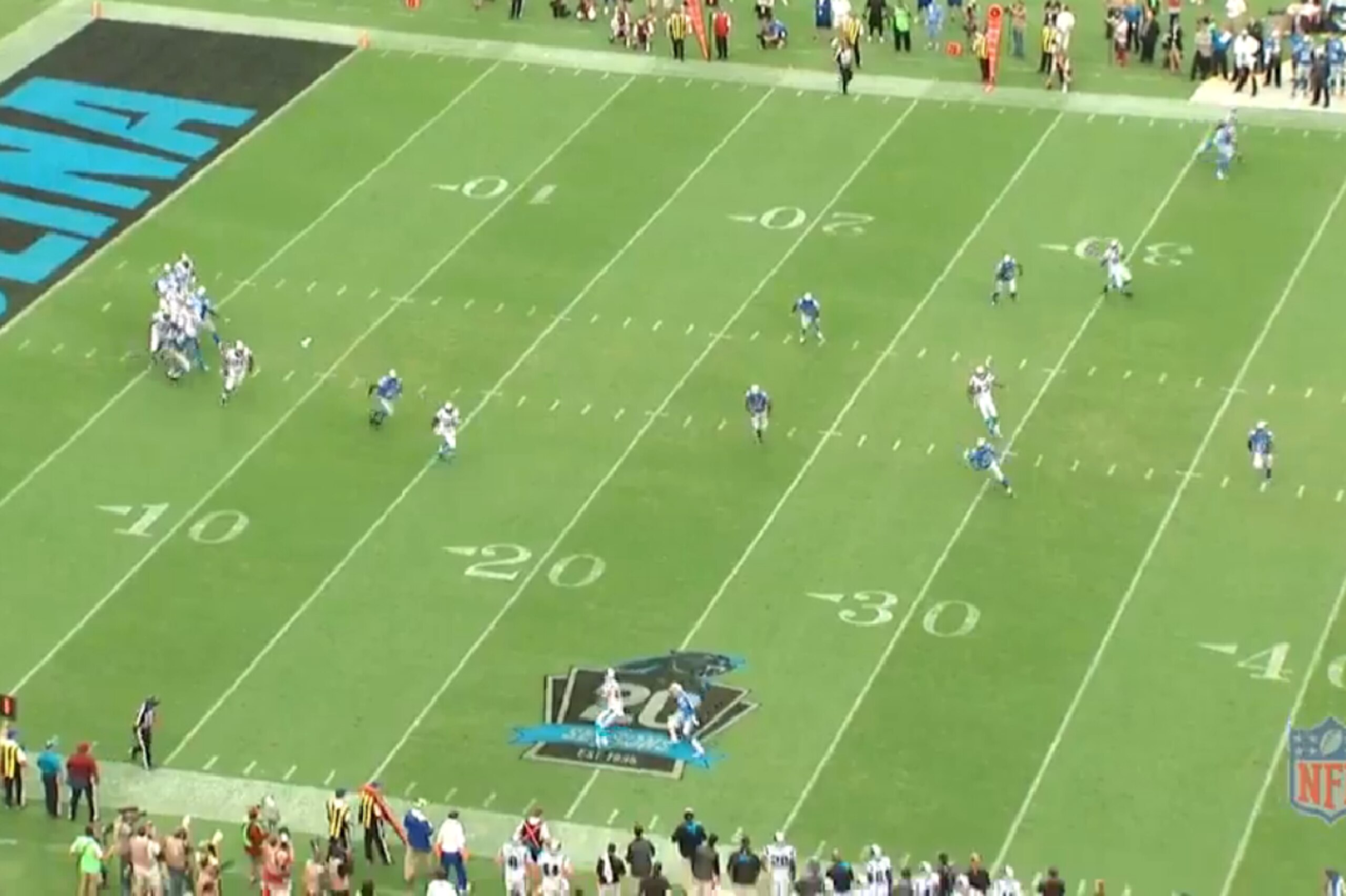
Slay doesn't get a hand on him during the process of the catch. Instead, he makes the tackle after an easy 16-yard gain.
Other than targeting Slay, the Packers should also go after Detroit slot cornerbacks. Slot back Bill Bentley was lost early in the season to an ACL injury, creating a hole in the nickel defense. Another slot corner, Nevin Lawson, dislocated his left foot during the third quarter of Sunday's game against Carolina. In response, Detroit signed Danny Gorrer on Tuesday.
It's going to be much easier to pass on the Detroit Lions, who rank in the bottom third of the league in pass defense, than run on them, where they currently rank second-best in the league.
Key of Defense: Stop Calvin Johnson
This task is easier said than done, but the Carolina Panthers cut Calvin Johnson's receiving yardage total in half from his Week 1 production against the New York Giants. Plus, they didn't allow him to score. How did they manage to do so? By playing man coverage with two-deep safety help.
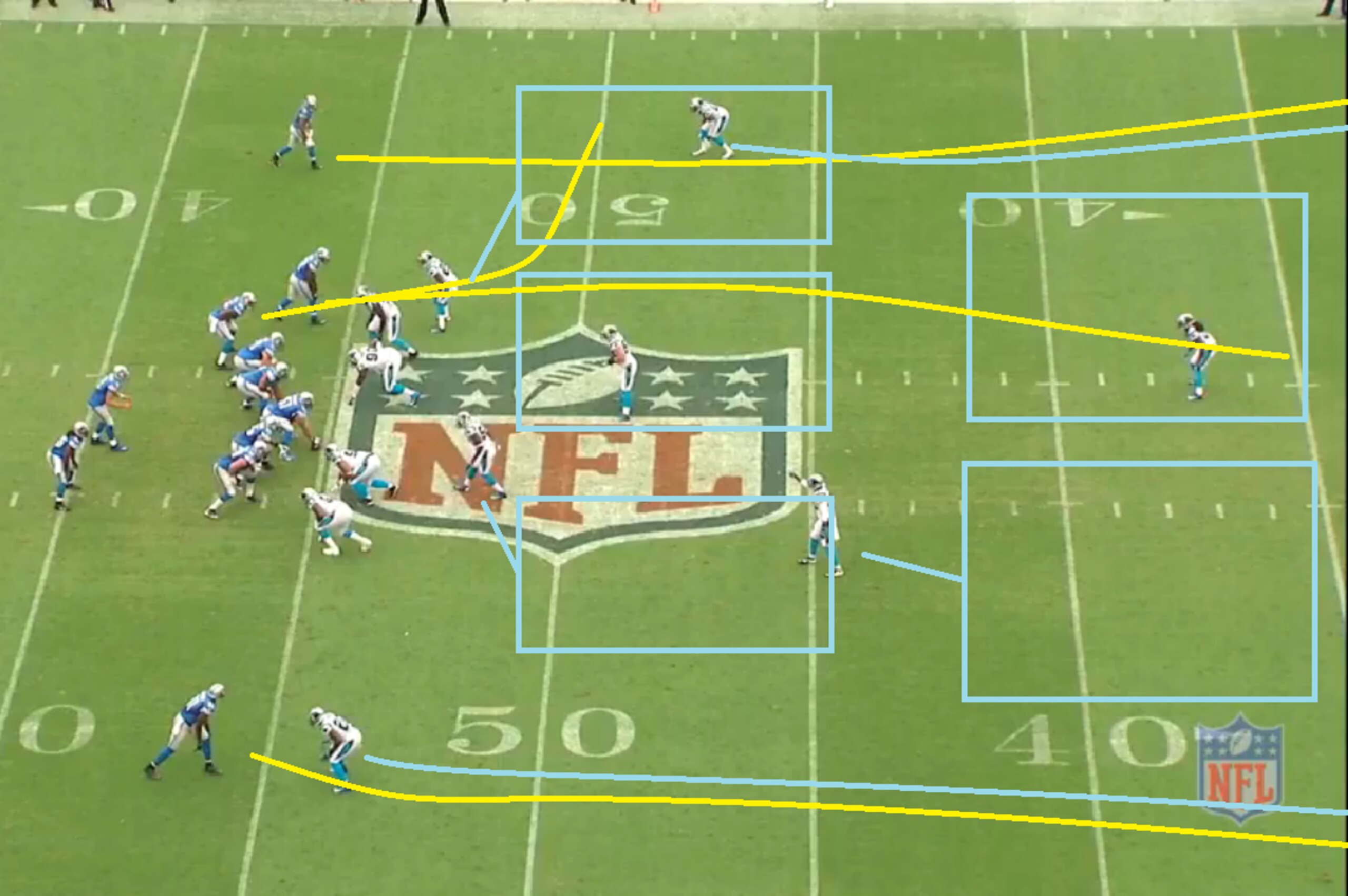
Here's an example of a Cover 2 defense that Carolina ran. On the boundaries, the cornerbacks are playing man coverage. The two deep safeties are playing for the home run ball. Everyone underneath is playing zone coverage. Calvin Johnson is at the bottom of the screen.
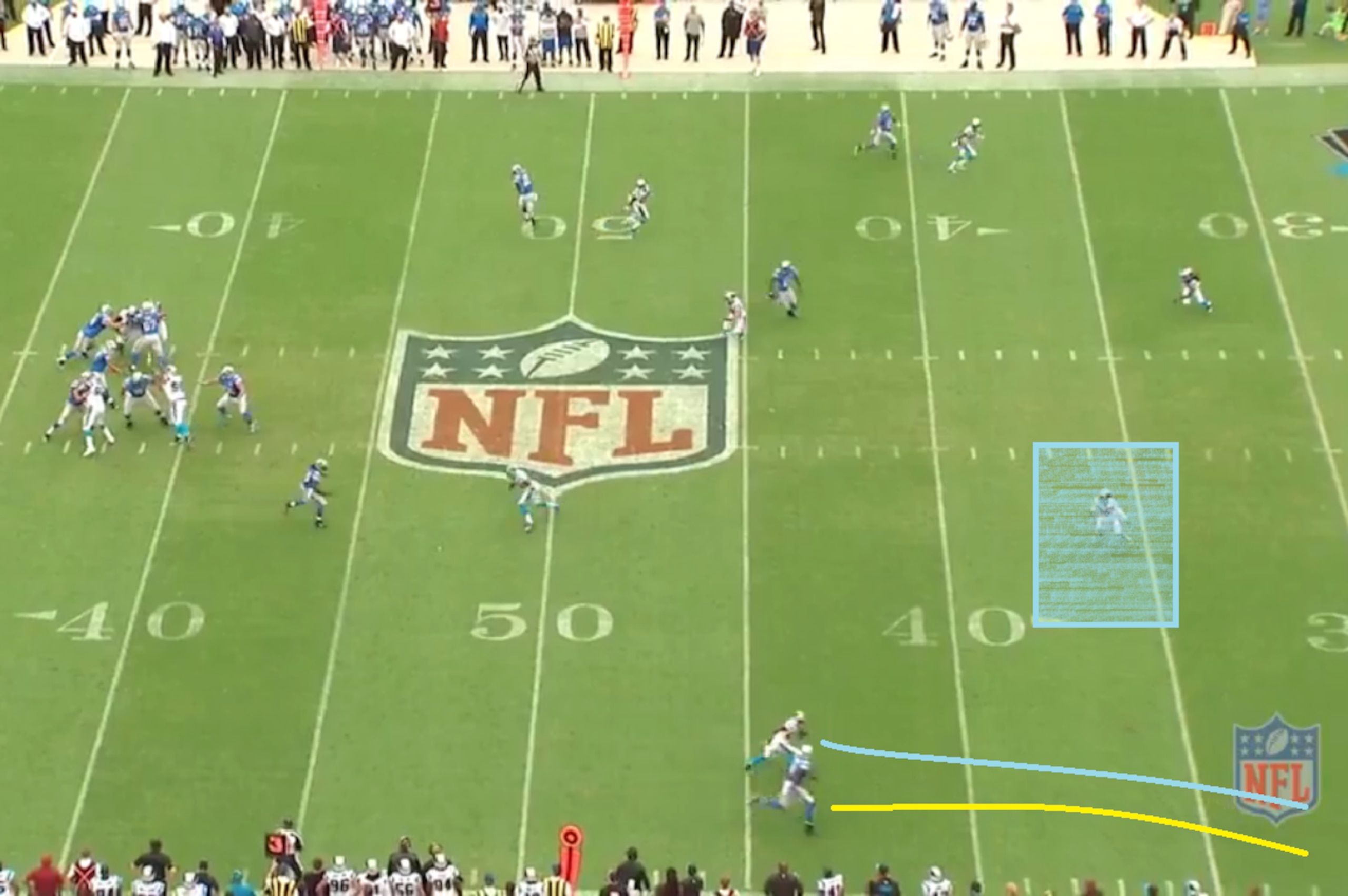
Calvin Johnson isn't necessarily open here, streaking down the sideline. He has a slight step on the defensive back covering him, but he's still going to need to make a play to secure the catch. The reason the ball was thrown, though, was because the safety responsible for playing over the top was sucked too far into the middle of the field. With only one vertical threat to his side, the safety should have been playing much closer to Calvin Johnson.

As the safety closes (but not quickly enough) Johnson makes a tremendous catch. The cornerback didn't even turn his head around to see the ball. He didn't have time. When you're playing someone like Calvin Johnson, he's getting all of your focus.
Plays like that one need to be avoided, but how? The fault of the play was on the safety. A cornerback on an island isn't going to outmuscle Johnson on jump balls. Not any cornerback in the league. Not Revis. Not Sherman. Not Peterson.
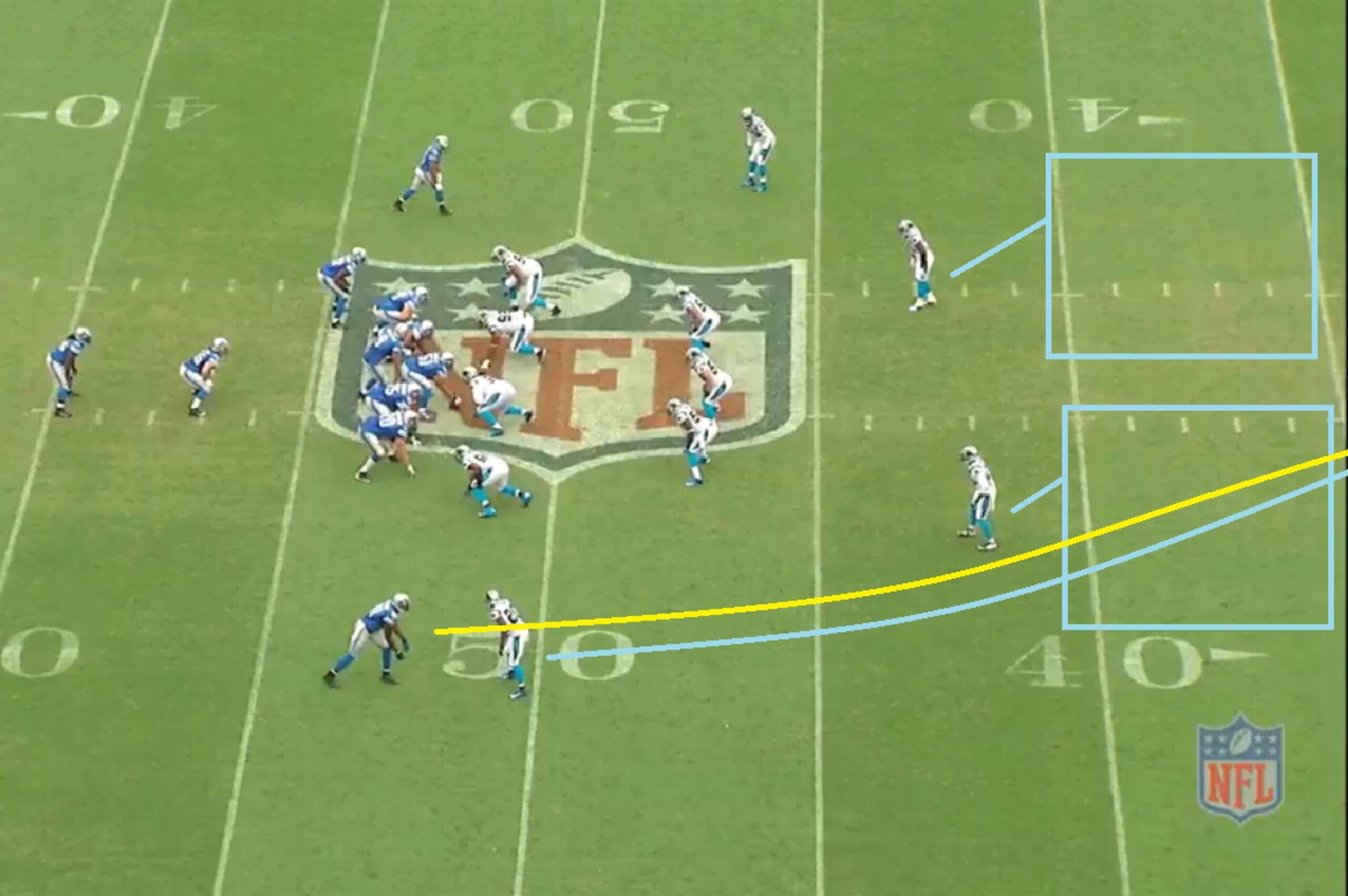
Here's another Cover 2 play against a vertical Johnson. This time, the execution on defense is much, much better. Off the jump, Calvin Johnson gets inside leverage on the corner. To Carolina, this is fine, since the safety should take the inside of Johnson, putting him between two defensive backs—a technique known as bracketing.
"In/out brackets provide horizontal leverage on a WR. One defender will cover him inside and up the other will work and outside and up. This type of coverage is easy to disguise and can be employed on any receiver. To illustrate this coverage, I will use some of Nick Saban's calls for in/out coverage and some key coaching points...
Versus a vertical route by the WR, both players essentially cover him inside and out eliminating any mismatch.
"
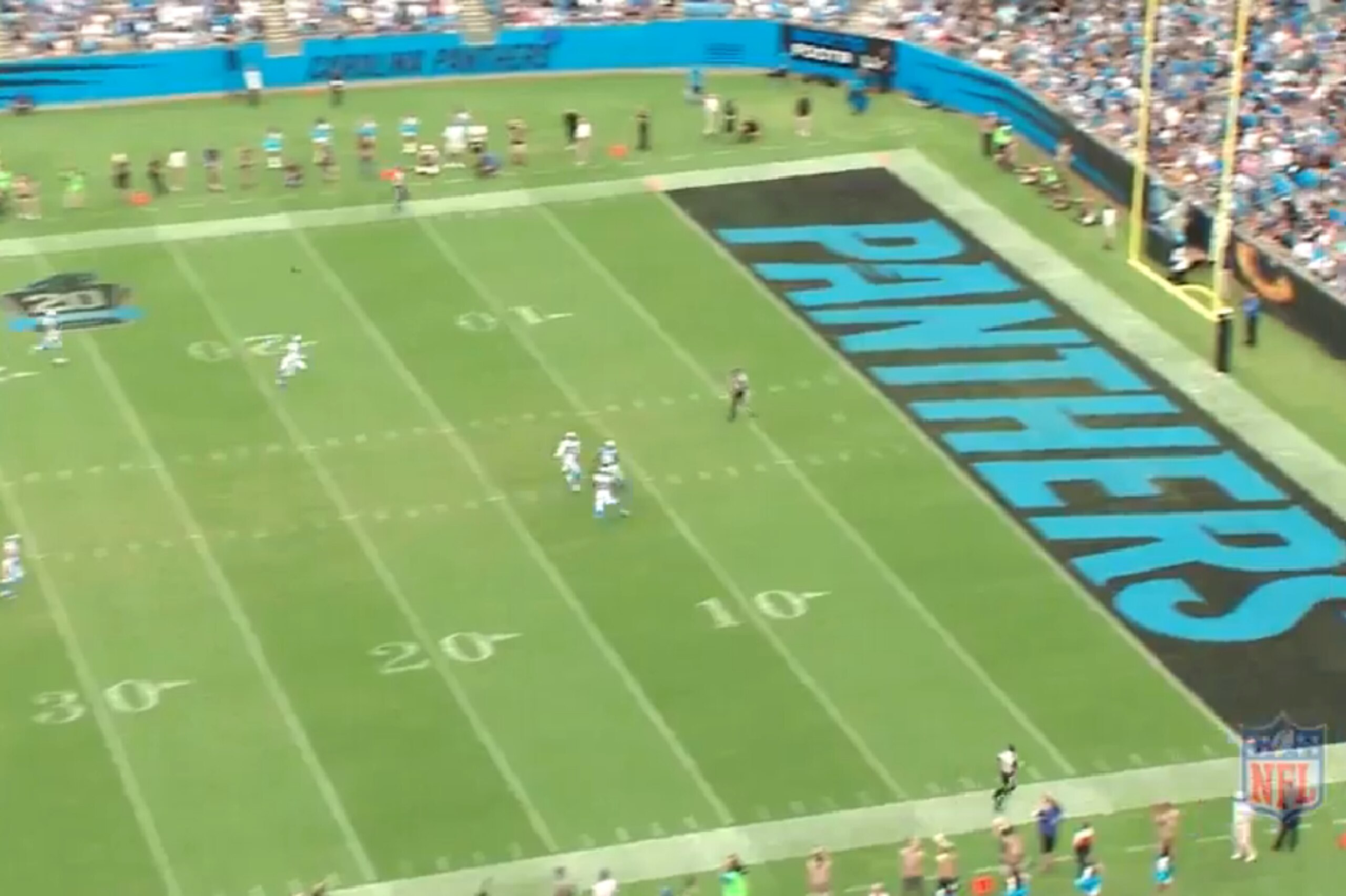
With the ball in the air, both defensive backs were able to make a play. The bracketing tactic helps negate Johnson's height and leaping ability. If nothing else, the two Panthers had two bodies in position to disrupt the process of the catch.
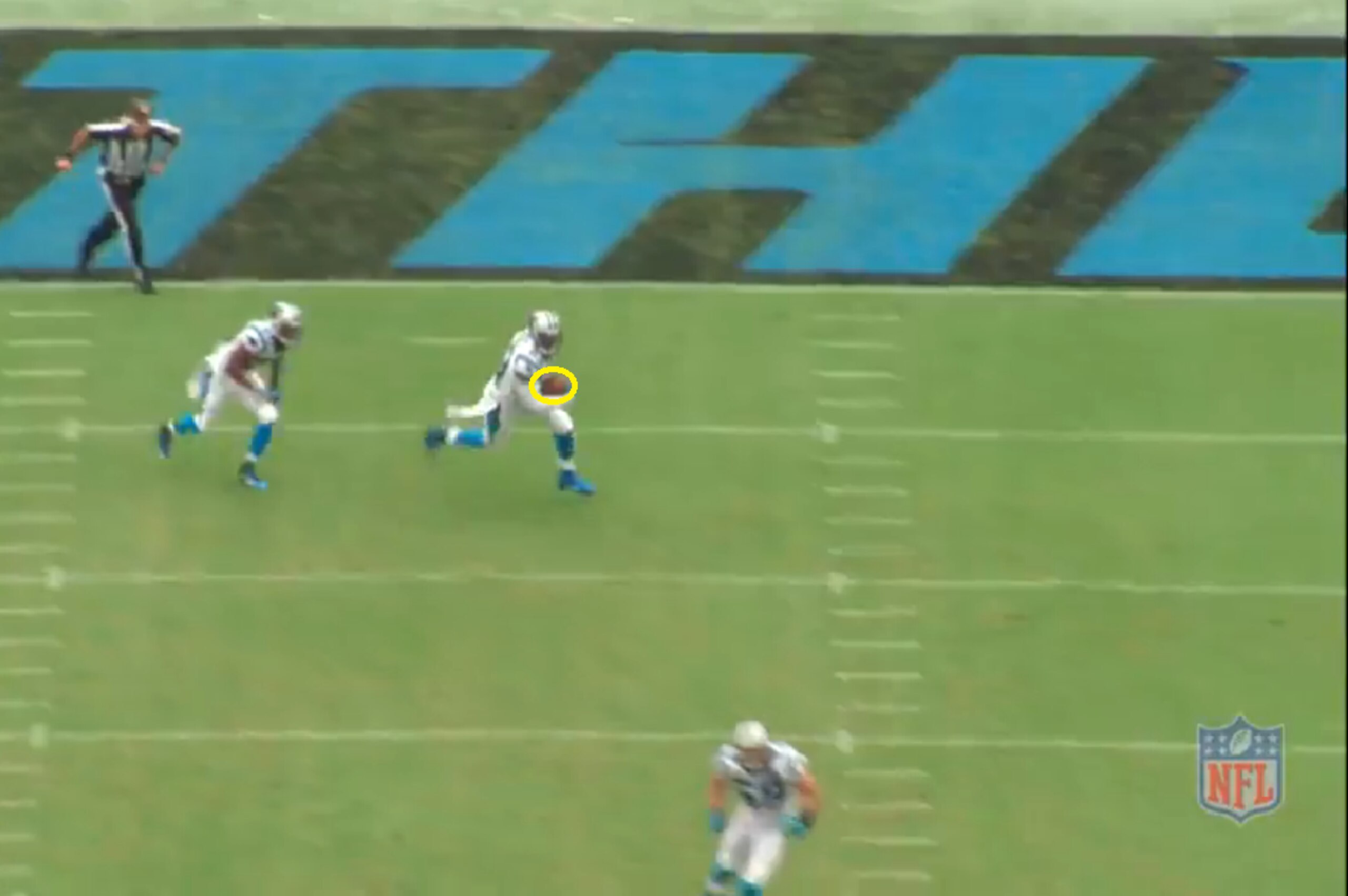
The pass is tipped, and the Panthers get the interception off the deflection. Green Bay could take a similar approach on Sunday, with either Morgan Burnett, Ha Ha Clinton-Dix or Micah Hyde assisting a cornerback when Calvin Johnson goes vertical.
If Green Bay can stick to the plan—with Rodgers attacking a vulnerable secondary and the Packers DBs bracketing Calvin Johnson—then it has a good chance at coming away from Ford Field with a victory.
.jpg?w=2560 "Chargers Mack")
.jpg?w=2560 "Seahawks Football Owners")
_0.png?w=2560 "Week 5 Winners & Losers 📊")