
2017 Midseason Awards for the NBA's Rookie Class
In the absence of multiple year-end awards for the NBA's rookie crop, we're taking matters into our hands.
Unofficially, of course.
Every major end-of-season honor will be doled out to a first-timer—this includes a Coach of the Year gold star. The MVP badge, however, will absorb the Rookie of the Year distinction, because the two awards are needn't exist separately.
All of the usual criteria will apply to each category: Individual efforts reign supreme over everything else, but the impact a player (or coach) has on his team is almost as valuable.
Injuries and playing time will only disqualify candidates in the most extreme cases—call it the "Joel Embiid Clause." We want dudes who see the court, but we must be flexible when dealing with the Association's most inexperienced talents.
Coach of the Year: David Fizdale, Memphis Grizzlies
1 of 5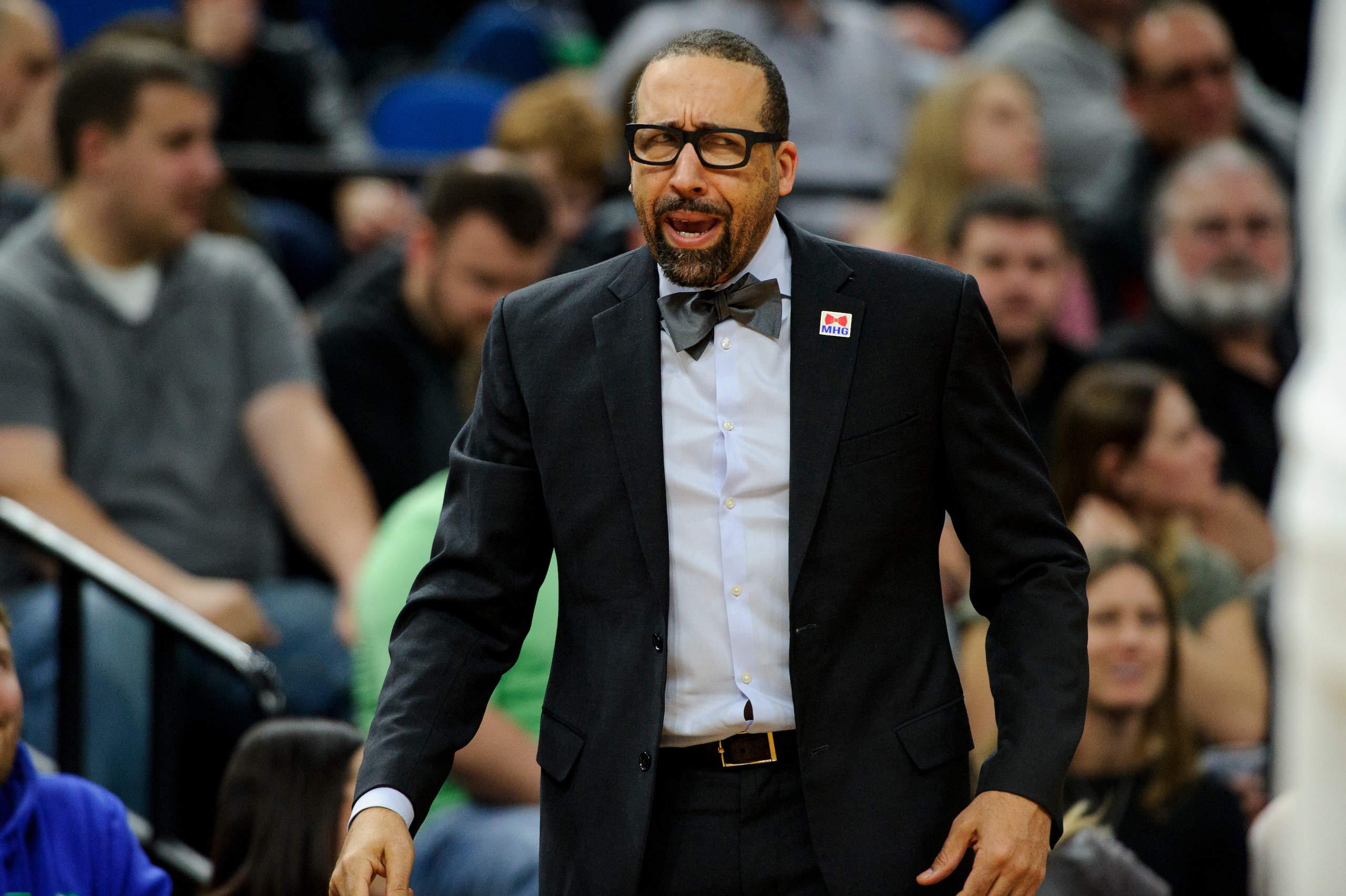
Sixth-place conference finishes are typically nothing to brag about, but the Memphis Grizzlies are on track for 48 victories and haven't skipped a beat under first-year head coach David Fizdale. This, despite enduring protracted absences from Mike Conley and Chandler Parsons, who has yet to start playing like his Dallas Mavericks self.
"They had a lot of good things going on before I got there," Fizdale said, per the Los Angeles Times' Paul Coro. "They had a toughness that was already built—a resiliency, a grit, a defensive mindset. I wanted to sustain those things and bring another level of accountability to view ourselves as champions."
Fizdale has sprinkled a contemporary offensive foundation into that defensive ipseity. The Grizzlies still struggle to generate consistent spacing and scoring, but he has them exploring previously untapped depths of versatility.
This is the first time in franchise history Memphis is averaging more than 22 three-point attempts. Neither Conley nor Marc Gasol has ever been more aggressive, and the latter is now a lethal deep-ball threat. And then there are the other little things—such as getting Zach Randolph to buy into a backup role behind JaMychal Green, or the use of Green himself.
To be fair, Fizdale is not beating out an exceptionally crowded field. The Brooklyn Nets' Kenny Atkinson and Los Angeles Lakers' Luke Walton are the league's lone other sideline kiddies. We can push the pool to five members by excluding the partial-season tenures in which Tyronn Lue (Cleveland Cavaliers) and Earl Watson (Phoenix Suns) began.
But let's not get wrapped up in sample size: Coach Fizzy takes home the hypothetical hardware even when we use loopholes to expand the group.
Runner-Up: Luke Walton, Los Angeles Lakers
Most Improved Player: Brandon Ingram, Los Angeles Lakers
2 of 5
Study Brandon Ingram's season-long performance, and you're bound to leave disappointed.
His three-point stroke hasn't translated to the NBA (28.7 percent), and he's shooting under 36.0 percent from the field overall. He is as rail-thin as advertised, to the point where the Lakers cannot yet test out lineups that feature his 6'9" frame at power forward.
Still, there has been progress on offense, particularly since the turn of the calendar:
Walton likes to use Ingram as a second-unit facilitator; That's not a role the 19-year-old is familiar with, so the learning curve was always going to be steep.
But Ingram's potential assists are up a tick since Jan. 1, and he's turning the ball over at a lower clip amid higher usage. His outside touch is rounding into form as well; he's shooting 37.5 percent on spot-up triples in the new year, compared to 26.7 percent beforehand. And his development on defense is even more pronounced.
"We love that he can guard multiple positions," Walton said, per NBA.com's David Aldridge. "We love that he can get in and rebound in the paint with people down there. His length, we can play him on point guards. We can switch the defense with him."
Though the Lakers still don't improve on the less glamorous end with Ingram, he looks far more comfortable shimmying between assignments. It's easy to see him playing the role of lengthy terror once he packs on additional muscle and those around him also learn the ins and outs of NBA defense—a lucid trajectory that qualifies as salient growth.
Runner-Up: Buddy Hield, New Orleans Pelicans
Sixth Man of the Year: Malcolm Brogdon, Milwaukee Bucks
3 of 5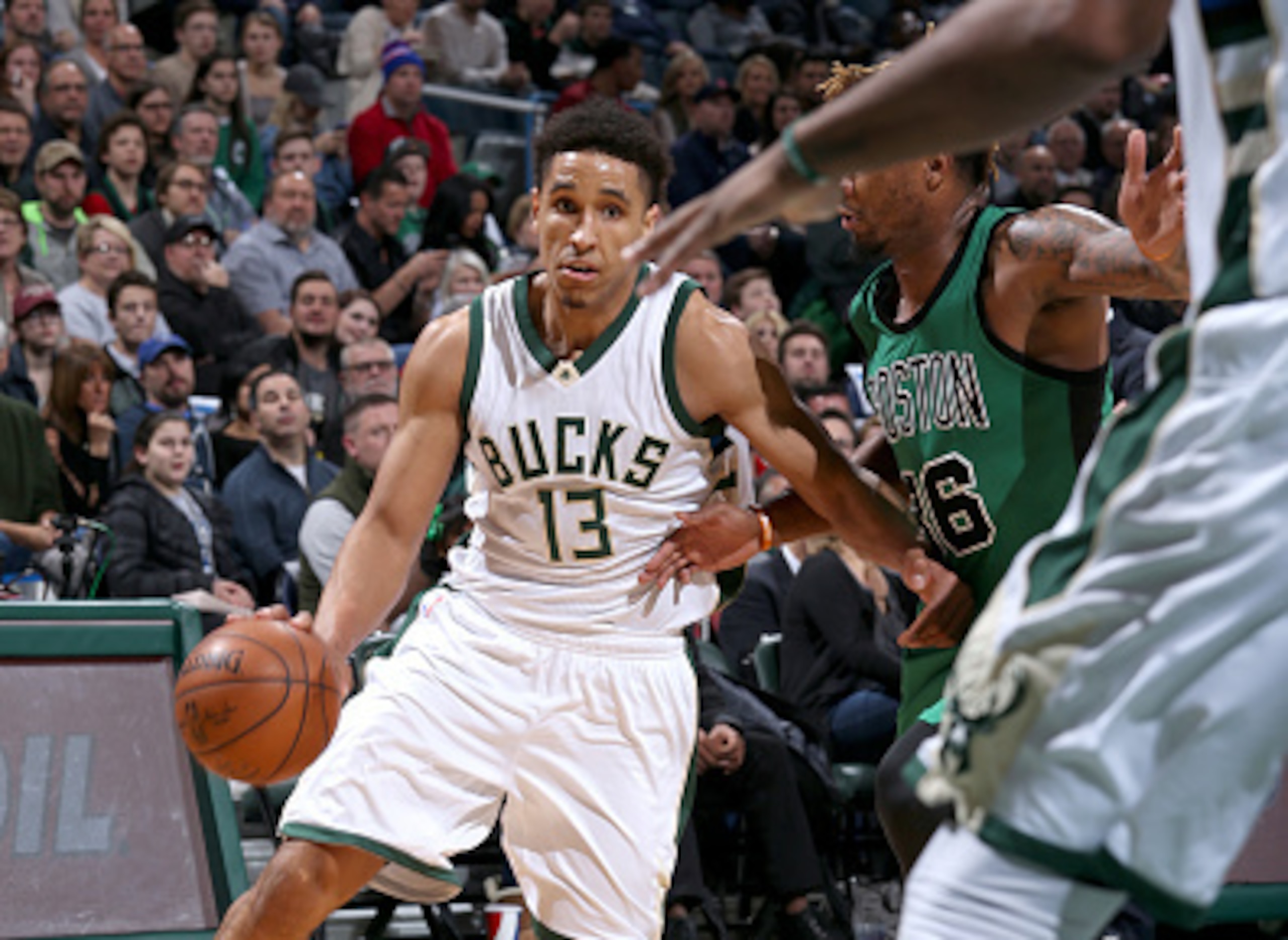
It's fortunate for Malcolm Brogdon that the Milwaukee Bucks have resumed bringing him off the bench. We all know where the MVP award is headed, and this Sixth Man of the Year honor permits us to gush poetic without a runner-up caveat.
Brogdon places fifth or better among rookies in every statistical category that matters: He leads the pack in assist (24.0) and three-point percentage (42.2) while trailing only Kris Dunn in steal rate (2.3). And his 0.086 win shares per 48 minutes have been matched by just one other rookie guard with similar court exposure over the last half-decade: Damian Lillard (2012-13).
People often expect 24-year-old novices who played four years in college to start out better than their peers, but Brogdon is playing like a veteran.
Milwaukee liberally switches up his defensive assignments without fear of stark blowback. He has a knack for shutting down pick-and-roll ball-handlers and is able to stifle bigger guards in the post.
Brogdon's turnover rate (15.4) is less than ideal for someone finishing only 17.9 percent of his team's plays while in the game, but he's run almost as many pick-and-rolls (157) as Giannis Antetokounmpo (158) in noticeably fewer minutes. Better ball control will come with experience.
In the meantime, Brogdon will remain one of the Bucks' most valuable players, period.
Both Milwaukee's offensive and defensive ratings improve with him in the lineup, and only two other players are rivaling his assist and three-point clips: Stephen Curry and Goran Dragic.
Runner-Up: Jamal Murray, Denver Nuggets
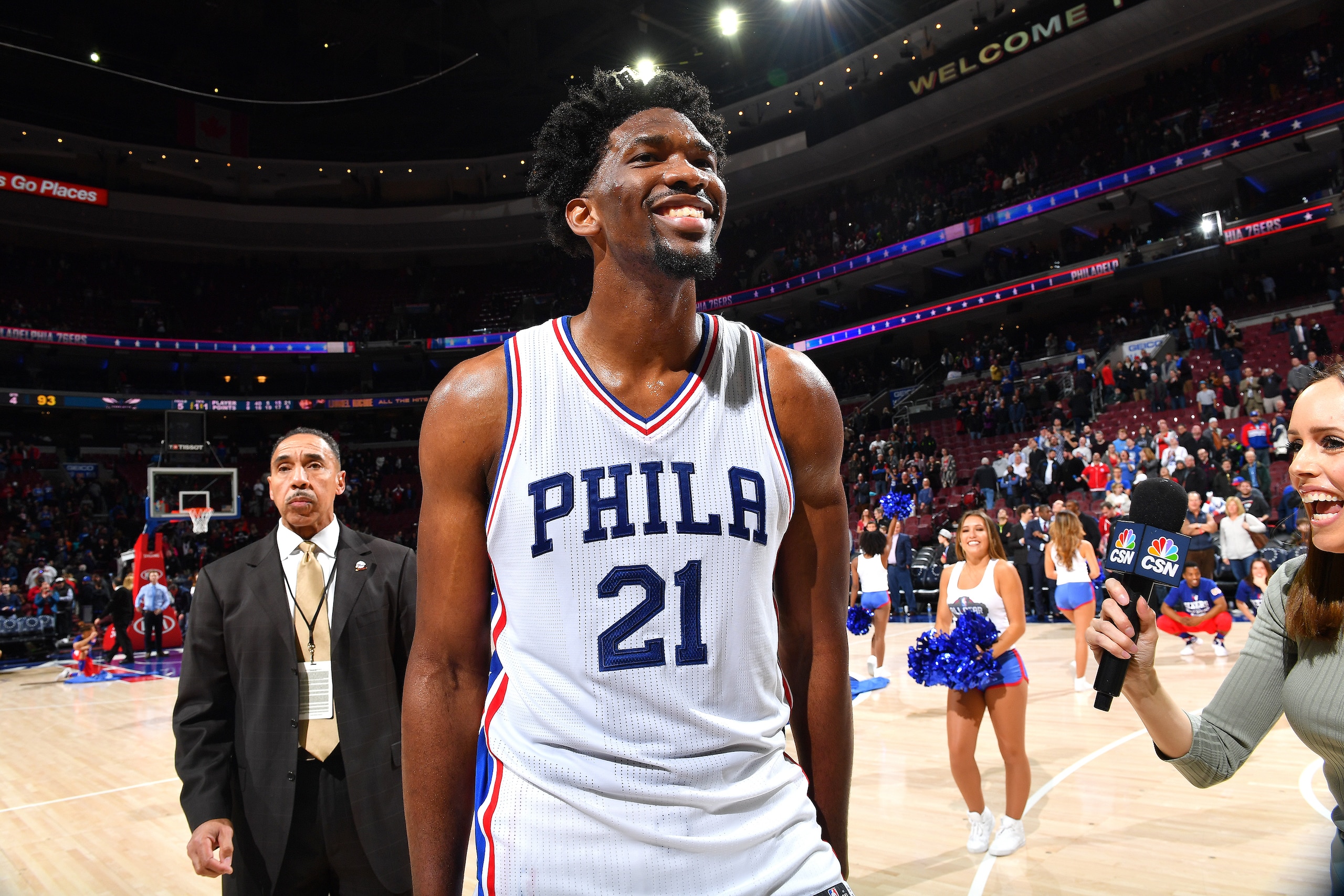
Defensive Player of the Year: Joel Embiid, Philadelphia 76ers
4 of 5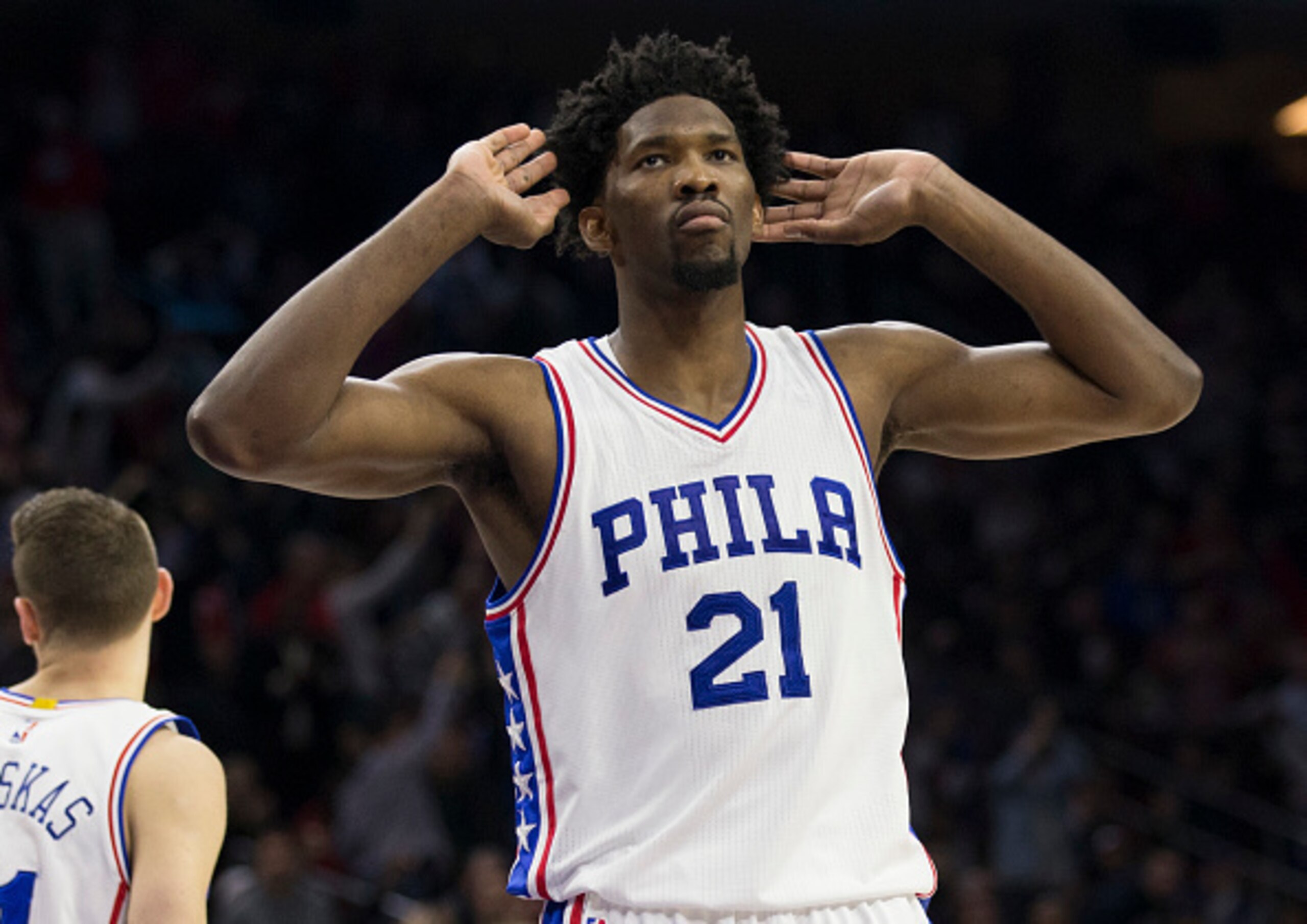
OK, let's get the playing-time disclaimer out of the way: Joel Embiid barely ranks in the top 15 of total floor time among newbies. He has yet to crack the 800-minute plateau and doesn't play both ends of back-to-backs.
More recently, a bone bruise in his left knee has kept him off the court altogether. He's missed five straight games, and head coach Brett Brown, while not worried, isn't quite sure when he'll return, per Philly.com's Keith Pompey.
Can we really give someone the nod over Embiid, though? (No. No, we cannot.)
Embiid has saved almost twice as many points on the defensive end than any other rookie, according to NBA Math. He doesn't get phased when switching onto ball-handling wings, and challenging him near the rim is a fool's errand. As The Ringer's Jonathan Tjarks wrote:
"The most important thing a center can do on defense is protect the rim. For as vital as the 3-point shot has become in today's game, the foundation of an elite defense is still the ability to shut down the paint and prevent opposing teams from getting easy shots around the basket. It's almost impossible for teams to lock down opposing offenses if they have a sieve as the second line of defense.
It's not so much about blocking shots as it is making them more difficult, and no big man in the NBA has been better at doing that this season than Embiid.
"
Opponents are shooting 41 percent around the basket when attacking Embiid. Not one of the other 126 players who contest at least three close-range looks per game matches that stinginess—and Embiid defends almost eight of those shots a night. With Embiid anchoring the middle, as both a paint protector and help defender, the Philadelphia 76ers' perimeter corps can play fast and loose without failed gambles coming back to haunt the scoreboard.
Between Nov. 10 and Jan. 27 (Embiid's last outing), the Sixers owned the Eastern Conference's best defensive rating (fifth overall)—a 38-game stretch that feels like the beginning of a new standard thanks to Embiid. He's the best deterrent of this season's rookie class, and it's not even sort of close.
Runner-Up (tie): Kris Dunn, Minnesota Timberwolves; Rodney McGruder, Miami Heat
MVP: Joel Embiid, Philadelphia 76ers
5 of 5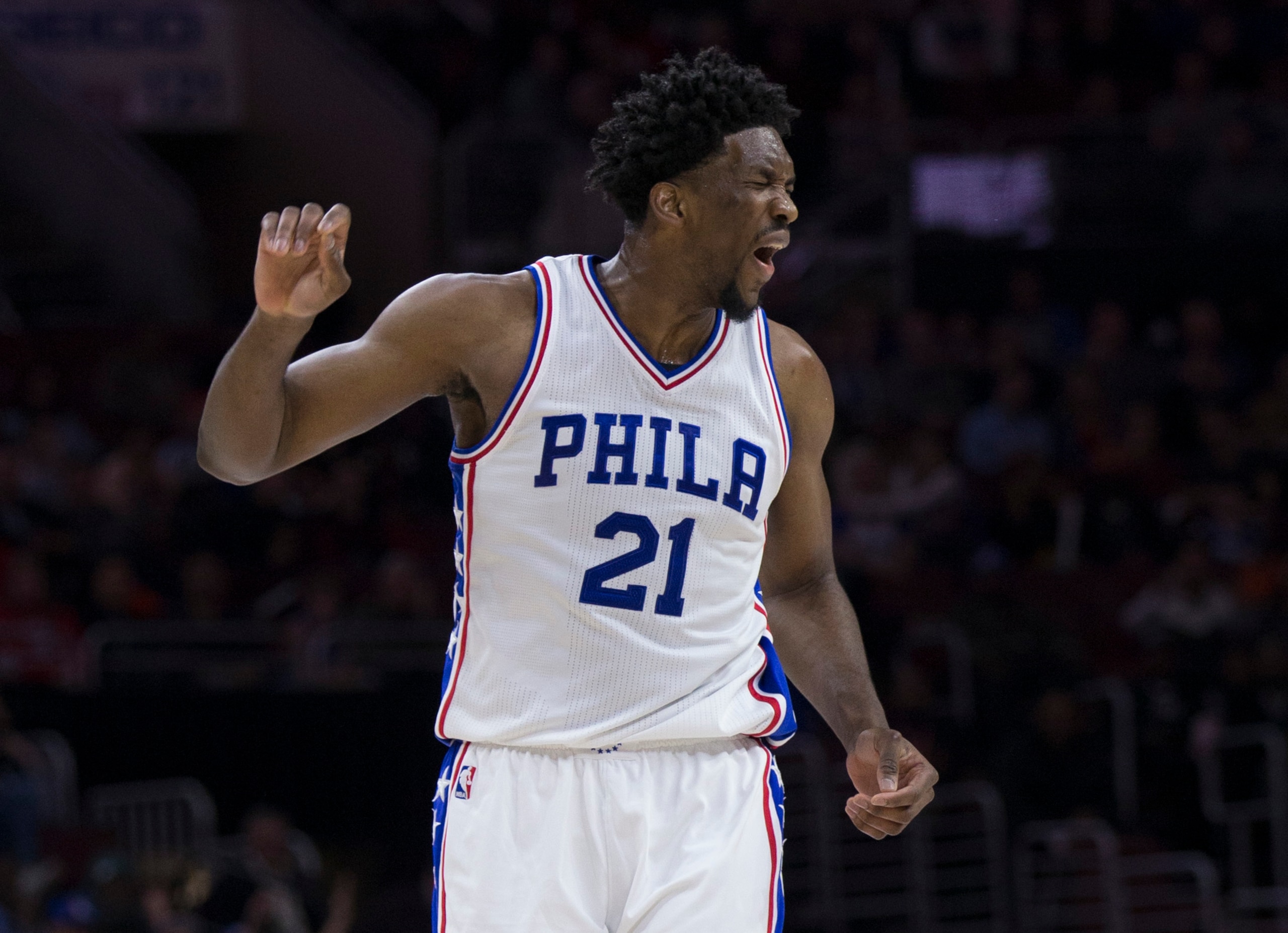
Spotty availability does not dampen Embiid's MVP case here either.
Sure, this is basically the Rookie of the Year award. And no newcomer has earned the honor while averaging less than 29.1 minutes per game—almost four minutes more than Embiid is averaging now. Patrick Ewing (1986) and Brandon Roy (2007) are the only players of the lottery era who received the distinction after missing more than 15 games.
This is us not giving a damn.
Embiid's absences hurt him in All-Star and actual MVP discussions, where the competitive landscape is larger and more established. Rookie-year recognition shouldn't emphasize quantity as much, because not everyone is playing a bazillion minutes out of the gate.
What a player does during his time on the hardwood, however brief or extensive, trumps everything else. And none of this season's basketball cubs are matching Embiid's performance—few throughout NBA history have: Tim Duncan and David Robinson are the only rookies in league history to match Embiid's scoring, rebound, assist and block averages.
Embiid is so good, he makes the Sixers good.
They go from being outscored by 11.0 points per 100 possessions without him to a plus-3.2 whenever he's in the lineup—the distance between a dead-last and top-eight net rating. So forget about minutes caps, not playing back-to-backs, injuries and everything in between. Embiid is the most valuable new kid on the block by a hopelessly wide margin.
Runner-Up: Malcolm Brogdon, Milwaukee Bucks
Dan Favale covers the NBA for Bleacher Report. Follow him on Twitter (@danfavale) and listen to his Hardwood Knocks podcast co-hosted by B/R's Andrew Bailey and Adam Fromal.
Stats courtesy of Basketball-Reference.com or NBA.com and accurate leading into games on Monday, Feb. 6.

.jpg?w=2560 "Donald Works Out For Rams 🫨")
.jpg?w=2560 "Grading Dynamite From Mexico City 🔠")