

2017 NBA Draft: Midseason Big Board Update
It's time for an update to the 2017 NBA draft big board, almost one month into conference play.
There has been a major shake-up at the top since our last ranking, with a prospect making his first appearance in the top three. A number of high-profile players, including a few from Duke, have seen their stock fall in January.
Outside of one international name and a sophomore, freshmen now account for 14 of the top 16 prospects for the June 22 draft.
No. 50-No. 46
1 of 29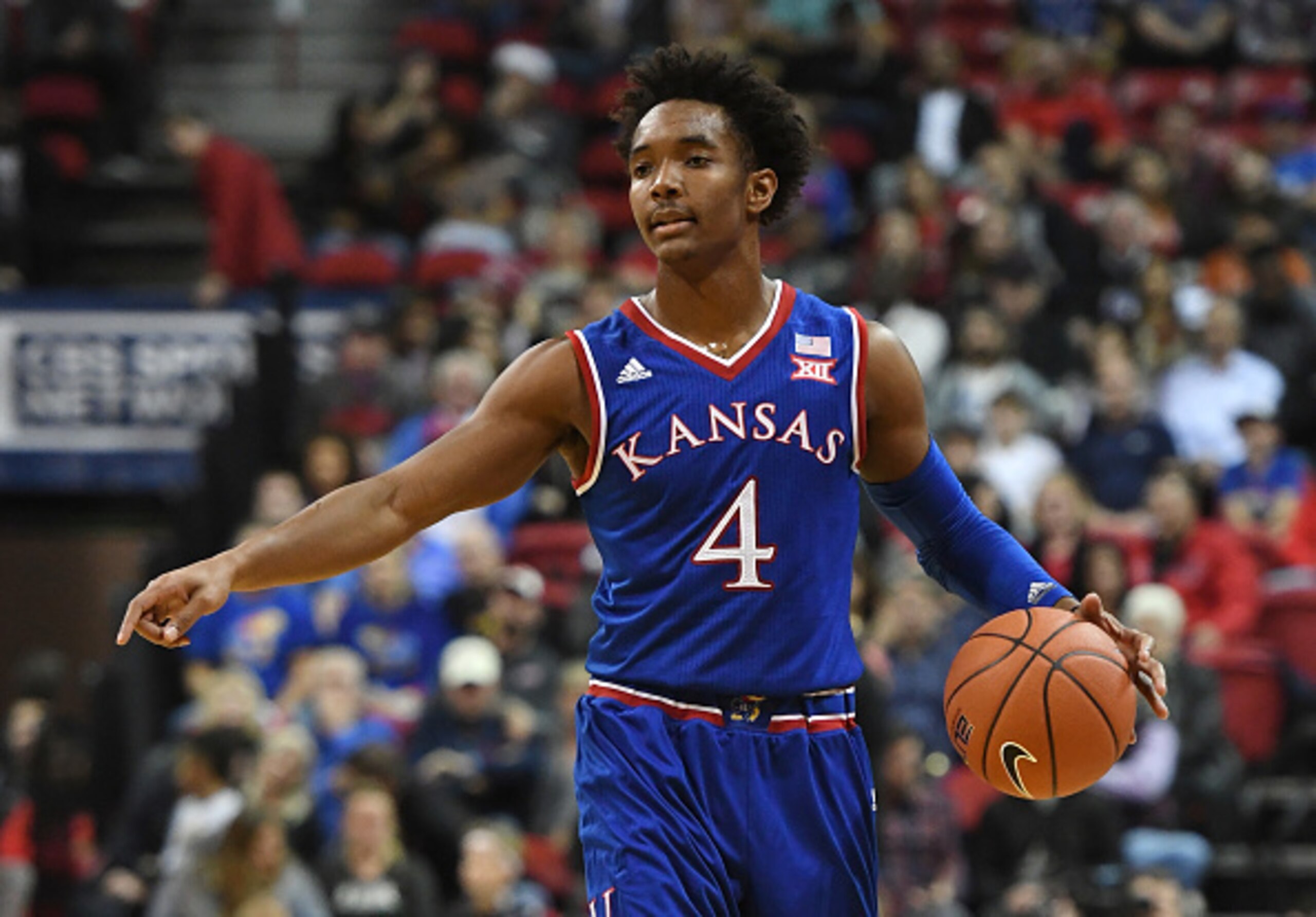
No. 50: Devonte' Graham (Kansas, PG, 6'2", Junior)
Devonte' Graham's lack of size and explosiveness will keep him from drawing first-round interest, but his shooting, playmaking and defense should get him into Round 2. He'll compete for backup minutes somewhere.
No. 49: Caleb Swanigan (Purdue, PF, 6'9", Sophomore)
With huge improvements made to his jumper and conditioning, Caleb Swanigan has suddenly emerged as one of the most productive players in the country. Nobody has more double-doubles after his 25-point, 17-rebound effort in Tuesday night's win over Michigan State. He won't draw first-round looks due to limited quickness and athleticism, but a 50 percent three-point stroke now makes him draftable.
No. 48: Arnoldas Kulboka (Lithuania, SF, 6'9", 1998)
Arnoldas Kulboka averages 14.6 points in Germany's Pro A and just averaged 15.7 points at the U18 European Championships. He shot 39.5 percent through six games, though, and appears too far away from being able to compete physically with NBA players. Consider Kulboka a second-round draft-and-stash option.
No. 47: Jawun Evans (Oklahoma State, PG, 6'1", Sophomore)
Jawun Evans has had a brutal January, but he woke up with 27 points and eight assists against TCU Monday night. His lack of size, explosiveness and shooting prowess is troubling, but he'll draw looks for his ability to break down defenses with penetration.
No. 46: Donovan Mitchell (Louisville, SG, 6'3", Sophomore)
Mitchell's exciting offensive explosions make it easier to overlook the duds he occasionally puts up. He just followed a six-point effort in a loss to Florida State on Saturday with a 29-point clinic in a blowout over Pittsburgh on Tuesday. He's undersized for a 2-guard, but Mitchell's athleticism, handle and shot-making skills are still worth tracking.
No. 45-No. 41
2 of 29
No. 45: Kobi Simmons (Arizona, PG, 6'5", Freshman)
Kobi Simmons made a strong impression (20 points, six rebounds, five assists) during a likely heavily scouted win over UCLA on Jan. 21. He's intriguing due to his size, athleticism and shooting stroke. His returning as a sophomore to improve his floor game (he averages just 2.6 assists) will be a recipe for 2018 first-round interest.
No. 44: Aaron Holiday (UCLA, PG, 6'1", Sophomore)
Aaron Holiday has given UCLA a consistent source of offense (13.0 points in 26.5 minutes per game), even though he's used in just 22.6 percent of his team's possessions while on the floor. A lack of size and explosiveness lowers his ceiling, but as the lead guard next year, with Lonzo Ball off to the pros, Holiday will have a good shot to play his way into the 2018 first round.
No. 43: Chimezie Metu (USC, PF/C, 6'11", Sophomore)
Long and athletic, Chimezie Metu always looked the part physically. He's now starting to play the part, averaging 14.5 points during conference play. His perimeter game looks much improved, but his 12.8 rebounding percentage would rank as one of the lowest among draft-eligible bigs.
No. 42: Tony Bradley (North Carolina, PF/C, 6'11", Freshman)
Tony Bradley has been quiet, but his 22.6 offensive rebounding percentage is still off the charts.
He'll get looks for his hands around the basket and potential to develop into a post scorer. Bradley doesn't offer much upside, though, without shooting range, shot-blocking instincts or explosiveness. A return as a sophomore to expand his offense and strengthen his defense sounds like the obvious move for Bradley.
No. 41: Alec Peters (Valparaiso, PF, 6'9", Senior)
Alec Peters has racked up 80 points over his last three games. He's simply too good for Horizon League competition. But will his offense work against NBA defenders? Peters isn't strong, quick or explosive. He is skilled, though, and he's developed into a versatile, high-IQ scorer.
High-level shot-making ability for a 6'9" forward should give him a chance to stick and contribute. Peters would benefit from going to an established team that allows him to play to his strengths.
No. 40 to No. 36
3 of 29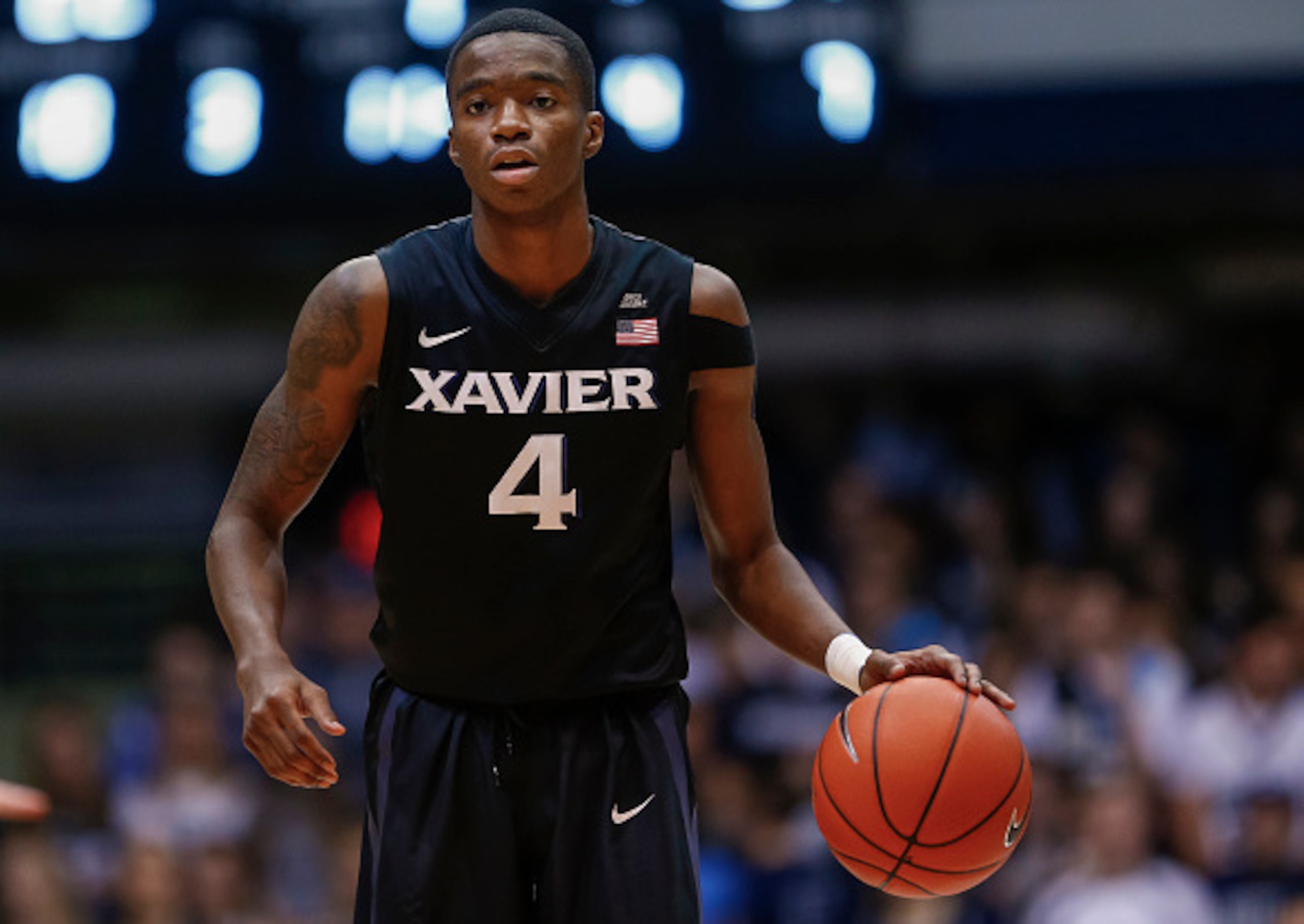
No. 40: Thomas Bryant (Indiana, PF/C, 6'10", Sophomore)
Thomas Bryant hasn't shown enough offensive improvement to guarantee a first-round spot. He's still worth drafting in the 30-45 range based on his tools, energy and potential to become a shooter. Bryant has hit 12 threes this year and sports a smooth jumper.
No. 39: Mathias Lessort (France, PF/C, 6'9", 1995)
Averaging 9.4 points and 6.4 rebounds in just 20.5 minutes per game, Mathias Lessort has emerged as one of the more productive young pros overseas. With his 6'9", 250-pound frame, live motor and wheels, it's worth seeing if his success in Pro A can translate to energizer minutes in the NBA.
No. 38: Edmond Sumner (Xavier, PG, 6'6", Sophomore)
A lack of improvement to his jumper makes it tough to buy into Edmond Sumner's upside. His explosiveness for a 6'6" ball-handler is enticing, and he's shown he can disrupt on defense with quickness and length. It will just be tough for him to offer enough offensively unless he can show he's a threat to make 15-foot jumpers.
No. 37: Jaron Blossomgame (Clemson, SF/PF, 6'7", Senior)
It's hard to believe Jaron Blossomgame is averaging 17.9 points per game and has only made 12 of 55 three-pointers. He's become difficult to cover inside the arc, with his explosive driving ability, post-ups and runners.
He'll need the spot-up three-ball to play NBA wing, but his defensive tools and offensive versatility should convince teams to give his shooting a chance to improve.
No. 36: Luke Kennard (Duke, SG, 6'6", Sophomore)
Luke Kennard's sophomore production isn't a lock to translate to NBA success, given his severe lack of athleticism for a guard or wing. He'll still be worth a look in the late first round for his 6'6" size, 43.8 percent three-point stroke, ball-handling and passing. His skill level and basketball IQ help compensate for limited burst, bounce and strength.

No. 35-No. 31
4 of 29
No. 35: Cameron Oliver (Nevada, PF, 6'8", Sophomore)
Cameron Oliver has created buzz with his athleticism and improved jumper, having already hit 34 threes after sinking 20 as a freshman. Throw in his 3.8 blocks per 40 minutes, and Oliver offers a unique, valued package of shooting and defense.
No. 34: Marques Bolden (Duke, C, 6'11", Freshman)
Marques Bolden finally gave Duke some offense Saturday against Miami (Florida) after failing to record a field goal in three straight games. He'll remain on first-round radars due to his size, 7'6" wingspan and developing post game, but without a jumper, shot-blocking ability, notable athleticism or production, he won't be worth reaching for this year.
No. 33: John Collins (Wake Forest, PF, 6'10", Sophomore)
John Collins has quietly emerged as one of the most productive bigs in the ACC (16.6 points, 8.8 rebounds, 1.6 blocks, 24.4 minutes per game). He's also one of the most athletic. At 6'10", 235 pounds, Collins is explosive around the basket. Most of his scoring comes in the paint, but he may be strong and bouncy enough to get away without having a jumper.
No. 32: Dwayne Bacon (Florida State, SF, 6'7", Sophomore)
Dwayne Bacon's perimeter game is catching up to his physical tools and athleticism. He's already hit more threes (33) than he made all last season (32), and he's added to his mid-range and off-the-dribble arsenal.
A below-average passer and rebounder, Bacon is one-dimensional offensively and will have to carve out a role as a scoring specialist.
No. 31: P.J. Dozier (South Carolina, SG, 6'6", Sophomore)
P.J. Dozier has steadily risen up the draft board. The former McDonald's All-American had a quiet freshman season, but he's picked up his shooting and scoring in a big way, averaging 14.6 points per game on 39.4 percent from three.
Athletic with 6'6" size, handles and the ability to create his own shot, Dozier has become a breakout player to watch during the second half of conference play.
No. 30: Zach Collins (Gonzaga) and No. 29: Josh Hart (Villanova)
5 of 29
No. 30: Zach Collins (Gonzaga, C, 7'0", Freshman)
Zach Collins is flying under the radar despite putting up per-40 minutes averages of 25.3 points, 13.4 rebounds and 3.2 blocks on 64.8 percent shooting. A high-energy 7-footer with a budding skill set, he'll start next year ranked in the top 20, assuming he returns to dominate in a larger role as a sophomore.
No. 29: Josh Hart (Villanova, SG, 6'6", Senior)
Josh Hart bounced back from two quiet games with 25 points against Providence on Saturday. As a senior without the notable athleticism that traditionally fuels upside, he isn't likely to draw top-20 looks. But Hart has improved in every area, from his scoring (19.2 points per game) and shooting (1.9 made threes per game) to his playmaking (3.6 assists per game).
Defensive toughness and offensive versatility should be enough for Hart to stick in a supporting role.
No. 28: Shake Milton (SMU) and No. 27: Justin Jackson (North Carolina)
6 of 29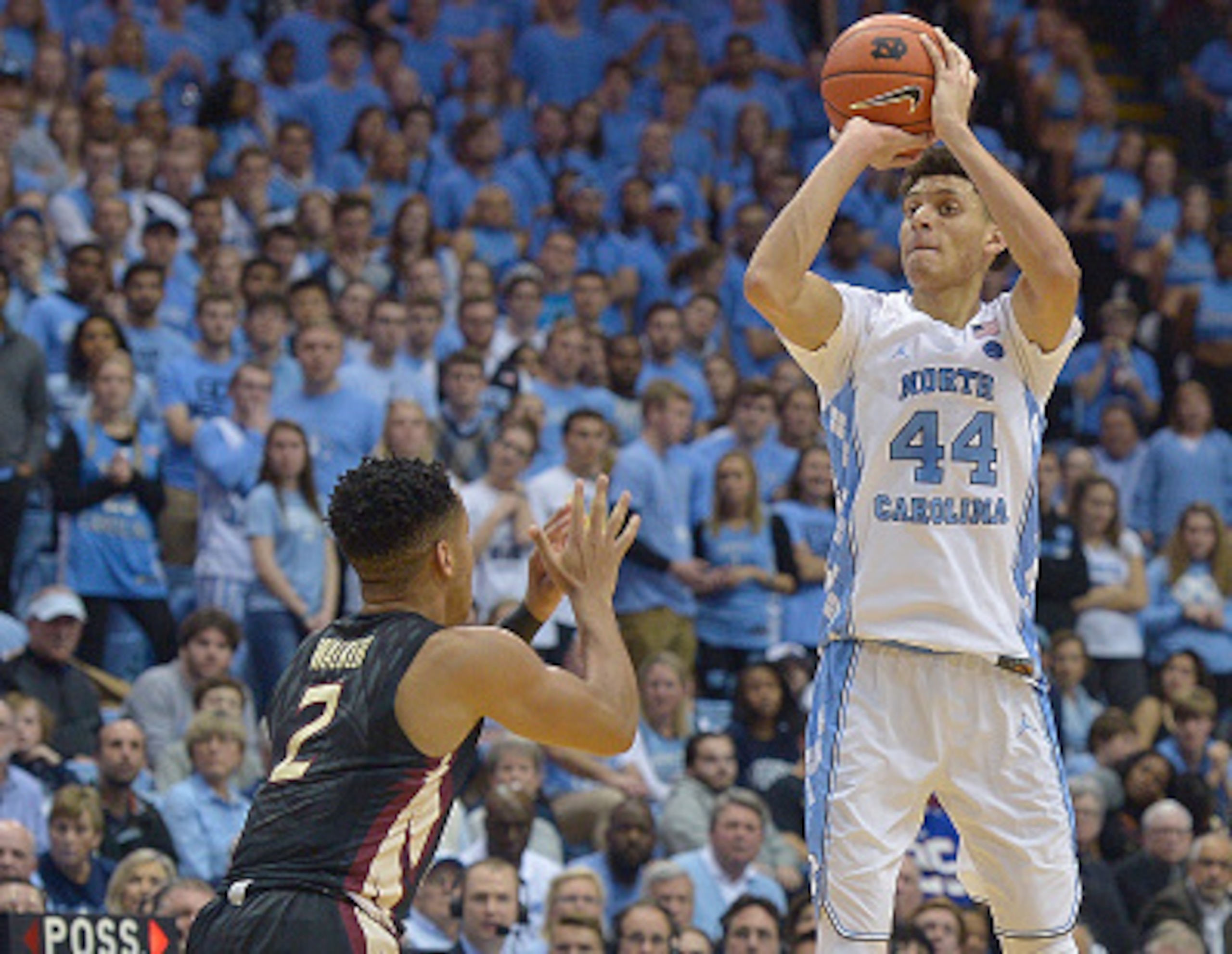
No. 28: Shake Milton (SMU, PG, 6'6", Sophomore)
Shake Milton is starting to cook with 50 total points and 11 assists over his last two games. The NBA lens picks up his 6'6" size (good for a ball-handler) and shooting percentages, including a 41.6 percent three-point mark and 84.2 percent clip from the free-throw line.
He's been relatively quiet in January, and unless he continues to pump in around 20 points per game, scouts will likely want him to return and give more steady production in 2017-18.
No. 27: Justin Jackson (North Carolina, SF, 6'8", Junior)
It's finally clicking for Justin Jackson, who had previously struggled with inconsistency.
He's already hit 52 threes after converting just 35 as a sophomore and 28 as a freshman. Jackson has also done an exceptional job of scoring efficiently within North Carolina's offense, averaging 18.2 points on just a 24.6 percent usage rate.
Jackson picks his spots wisely. He's still not an advanced shot-creator, but his shooting stroke, signature floater and passing should be enough for him to stick.
No. 26: Ike Anigbogu (UCLA) and No. 25: Kostja Mushidi (Germany)
7 of 29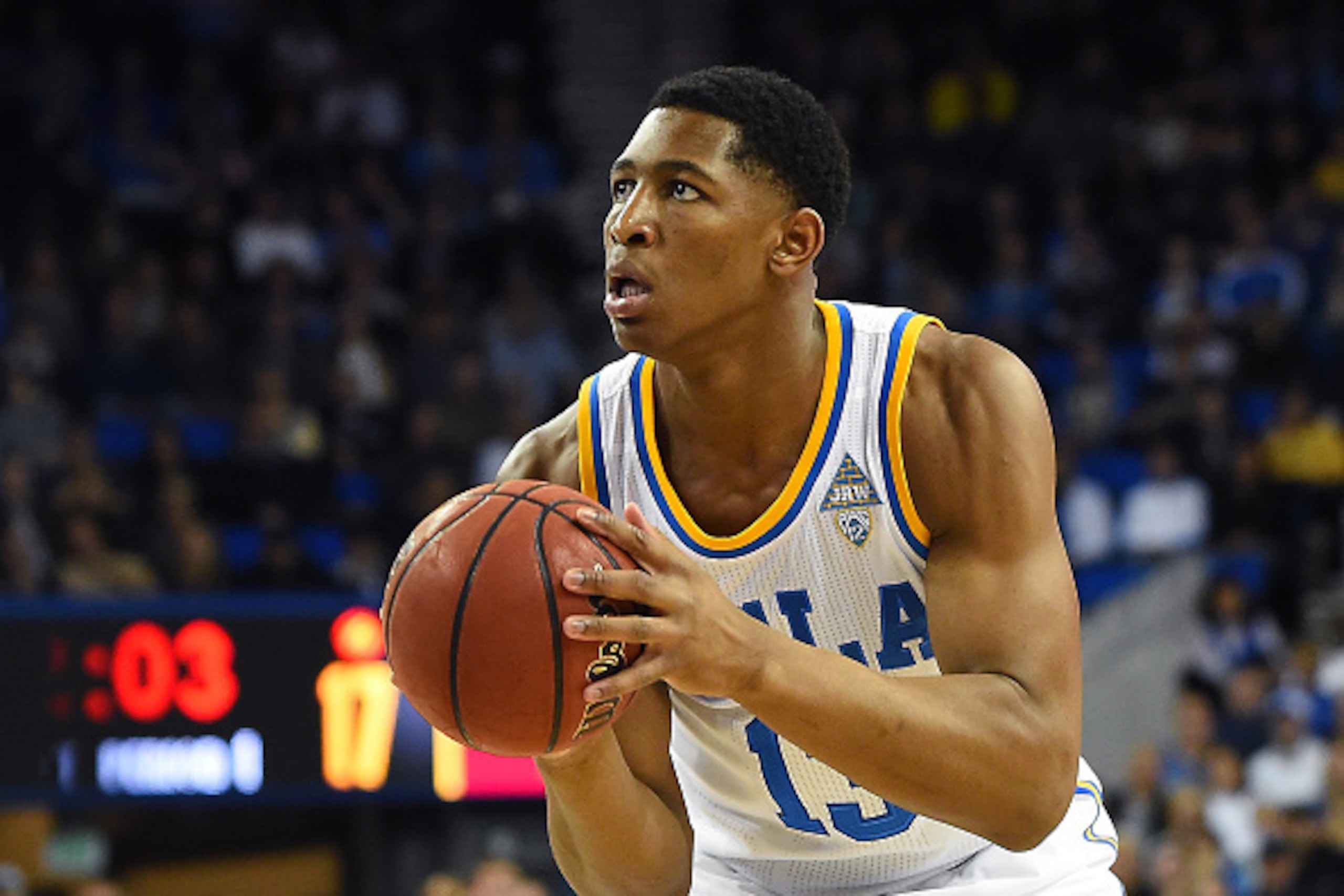
26. Ike Anigbogu (UCLA, C, 6'10", Freshman)
Ike Anigbogu must stay in school to improve his ball skills, but he won't need many adjustments. His role in the pros won't require shot-creating or shooting. He'll earn his minutes with a destructive mix of size, strength, length and athleticism.
He'll look to follow in Clint Capela's footsteps and contribute by running the floor, finishing (61.5 percent field-goal percentage), rebounding (11.9 boards per 40 minutes) and blocking shots (4.4 per 40).
25. Kostja Mushidi (Germany, SG, 6'5", 1998)
Kostja Mushidi has struggled in Serbia since the U18 European Championships, where he was productive but also inefficient. There is obvious talent here, as he has a strong frame, long arms and athleticism to match ball-handling skills, shot-creating ability and shooting range.
But at 18 years old, he's too rough around the edges. Mushidi may want to take another year to tighten his shot selection and improve his shooting. He'll have a better chance at the lottery in 2018.
No. 24: Tyler Lydon (Syracuse) and No. 23: Rodions Kurucs (Latvia)
8 of 29
24. Tyler Lydon (Syracuse, PF, 6'9", Sophomore)
Tyler Lydon has caught fire, averaging 22.0 points on 64.9 percent shooting over Syracuse's last three games. He's now making 43.8 percent of his threes, showing impressive range and shot-making versatility.
Lydon still isn't an adept creator, but he's knocking down jumpers off contested spot-ups, screens and one-dribble pull-ups. Without great toughness around the basket, he'll lean heavily on his shooting in a stretch 4 role.
23. Rodions Kurucs (Latvia, 6'8", SF, 1998)
Considering he's playing for Barcelona's B team in Spain's second division, Rodions Kurucs may need another year before declaring. He's still a standout for his size, athleticism and shooting stroke.
Flashes of scoring versatility at 18 years old drive up his perceived ceiling. A project with NBA tools, a jumper and developing skill set, he'll generate first-round interest whenever he enters.
No. 22: OG Anunoby (Indiana) and No. 21: Bam Adebayo (Kentucky)
9 of 29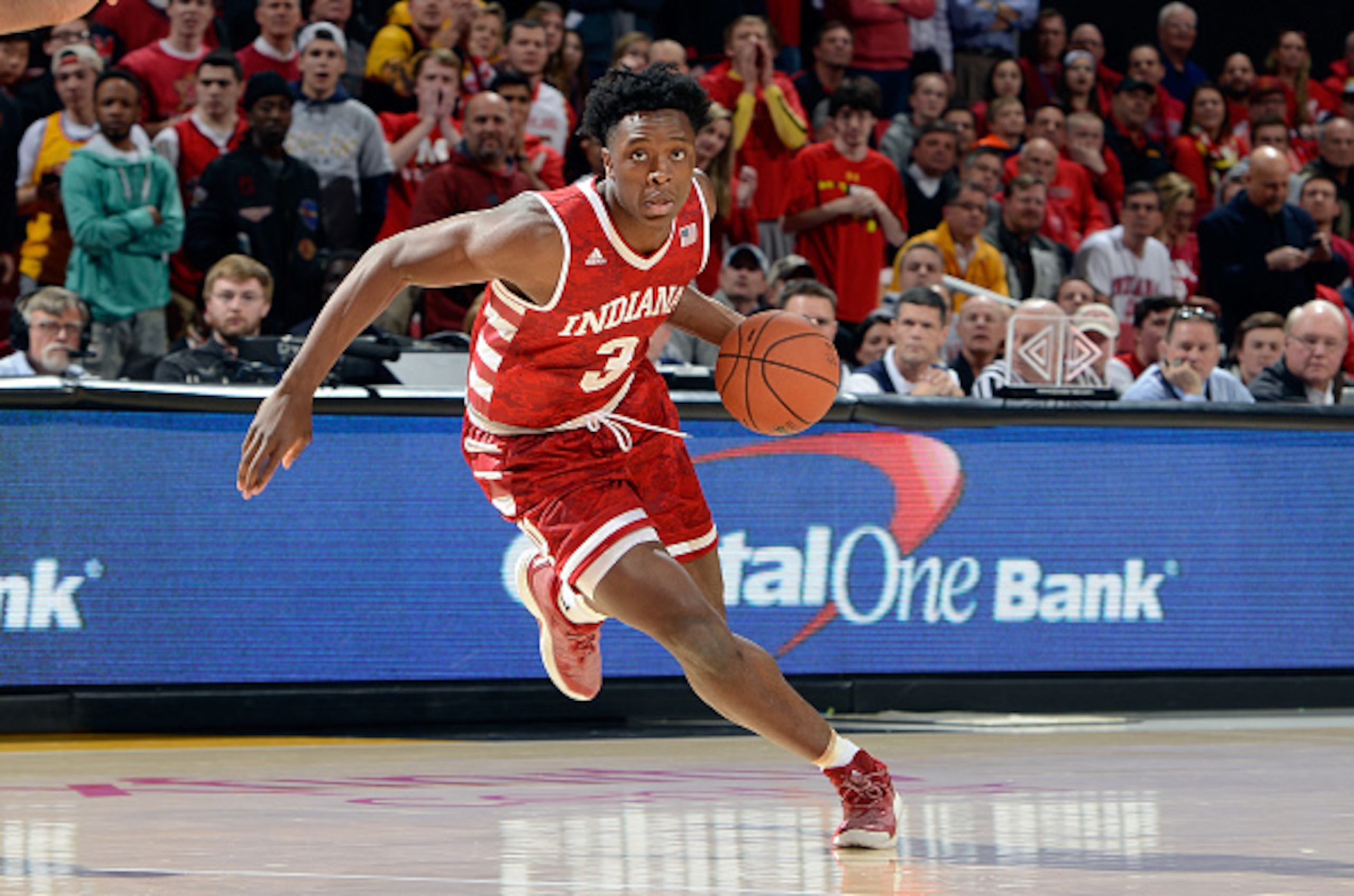
22. OG Anunoby (Indiana, SF, 6'8", Sophomore)
A knee injury ended OG Anunoby's season and his chances of rising into the top 10. He didn't make the giant leap many expected, and now he won't have the opportunity to build on the flashes.
Assuming he returns to full strength eventually, Anunoby's athleticism, defense and shot-making should still register on NBA radars. He'll have a difficult call to make in May regarding whether to declare.
21. Bam Adebayo (Kentucky, C, 6'10", Freshman)
Bam Adebayo has consistently given Kentucky double digits in scoring, having hit the 10-point mark in all but three games. College bigs haven't been able to contain his size, power and explosiveness around the basket. Adebayo has also benefited from the attention Kentucky's guards draw.
As an undersized center, he'd be ranked higher if it weren't for a relatively low 13.6 rebounding percentage and 6.1 block percentage.
20. Terrance Ferguson (Adelaide 36ers, SF, 6'7", 1998)
10 of 29
Terrance Ferguson's top-20 ranking is mostly based on his senior year of high school. The fact he's playing limited minutes against pros in Australia's National Basketball League makes it difficult to dock him for lack of production.
He tied his season high of 13 points on Jan. 19. Despite his 5.2 points per game, Ferguson is carrying his weight at 18 years old.
He'll draw first-round interest for his easy-to-spot mix of size, bounce and shot-making ability. Ferguson doesn't create, but his athleticism, defensive potential and shooting combine for a convincing three-and-D package.
19. Jarrett Allen (Texas, C, 6'11", Freshman)
11 of 29
Jarrett Allen has improved since the start of the season and has emerged as a legitimate offensive threat.
Averaging an impressive 14.9 points on 55.4 percent shooting during conference play, he's given Texas more than just finishes around the basket. Allen has flashed intriguing mid-range touch and moves with the ball, whether it's with a jump hook or running layup off a dribble or two.
His giant 7'5 ½" wingspan also continues to show up on rebounds and challenges inside.
Allen isn't explosive or overly polished, but an improving skill level (and more production) for a mobile, long 6'11" big have put him back on the radar.
18. Johnathan Motley (Baylor, PF, 6'10", Junior)
12 of 29
Johnathan Motley jumped into our top 20 even before his 32-point, 20-rebound game against Texas last Tuesday.
At 6'10", 230 pounds with a 7'3 ½" wingspan, Motley has an NBA body and athleticism. This year, he's sharpened his offensive game, from his post moves to face-up drives and mid-range jumper.
Motley will never be a dominant offensive player, but he's skilled enough to score in a secondary or complementary role—one that asks him to make the open 15-footer, capitalize one-on-one in space and finish at the rim.
In the meantime, teams should be able to count on Motley for rebounding, given his tools and monster 19.3 rebounding percentage.
No. 17: Isaiah Hartenstein (Germany, PF/C, 7'0", 1998)
13 of 29Isaiah Hartenstein's role and production with Zalgiris in Lithuania have wavered, but his play at the U18 European Championships (14.7 points, 9.5 rebounds) should have solidified his status as a first-round pick.
He's physical around the basket and skilled away from it, and Hartenstein's offensive versatility for a 7-footer makes him an obvious draw overseas. A three-point threat, decent ball-handler, advanced passer and strong finisher, he has the potential to become a multidimensional weapon from the 4 or 5.
His challenge will be shot selection as a third, fourth or fifth option within the flow of an NBA offense. Proving he can defend quicker 4s around the perimeter would also go a long way.
No. 16: Robert Williams (Texas A&M, PF/C, 6'9", Freshman)
14 of 29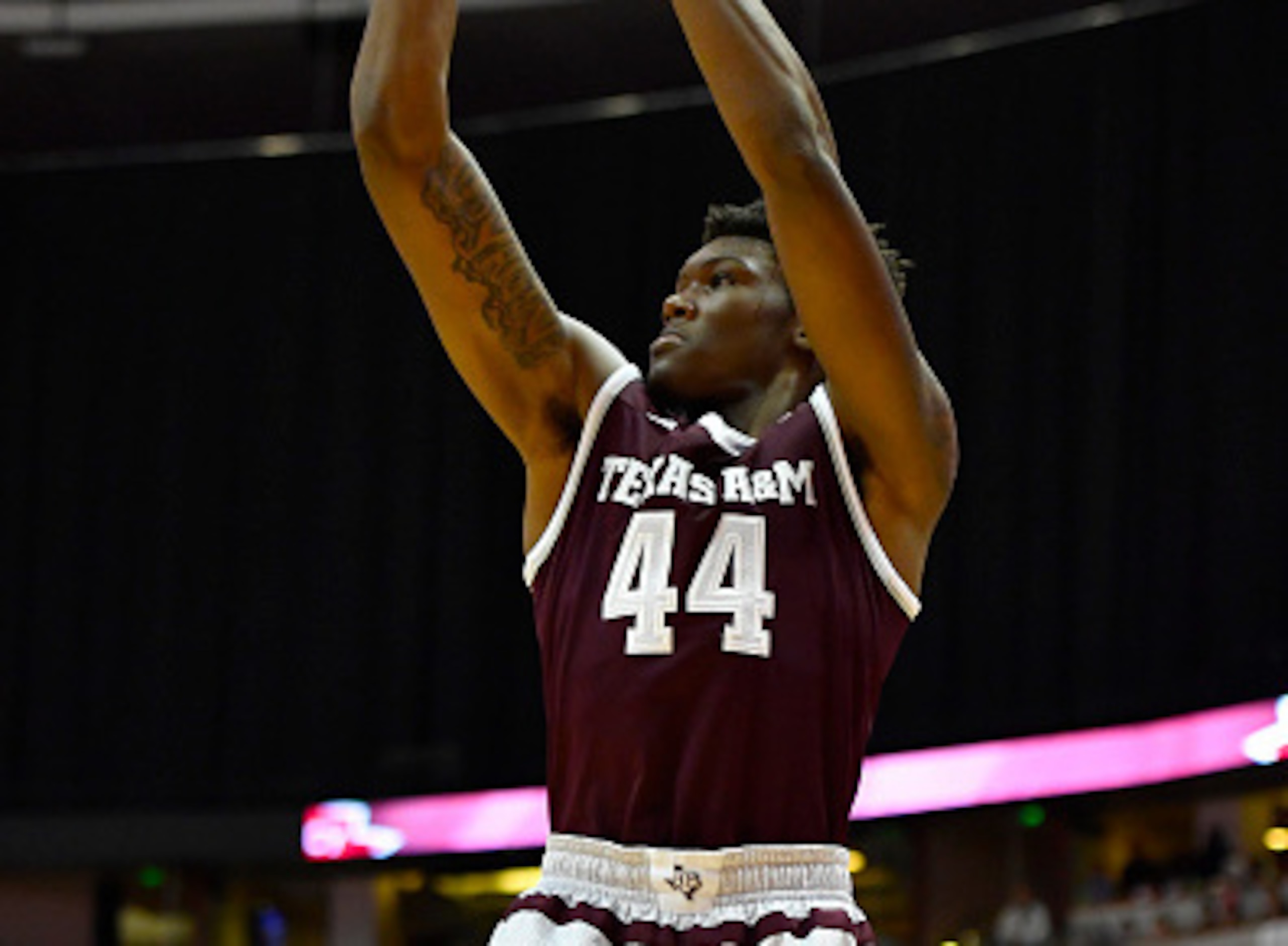
Robert Williams continues to outperform his recruiting rankings (No. 46 by Scout) and strengthen his case as a potential lottery pick.
He's coming off a career game against Georgia on Saturday, finishing with 18 points, 12 rebounds and the game-winning bucket. Williams is still more of an energy player and finisher than he is a scorer, but even without a high skill level, he's finding ways to improvise and consistently convert in traffic around the basket.
Williams has obvious NBA tools, including 6'9", 237-pound size, a 7'4" wingspan, big hands and explosive legs.
Worst-case scenario, teams should feel good about his 59.9 percent field-goal percentage, 11.5 rebounds and 4.4 blocks per 40 minutes translating to strong off-ball activity.
No. 15: T.J. Leaf (UCLA, PF, 6'10", Freshman)
15 of 29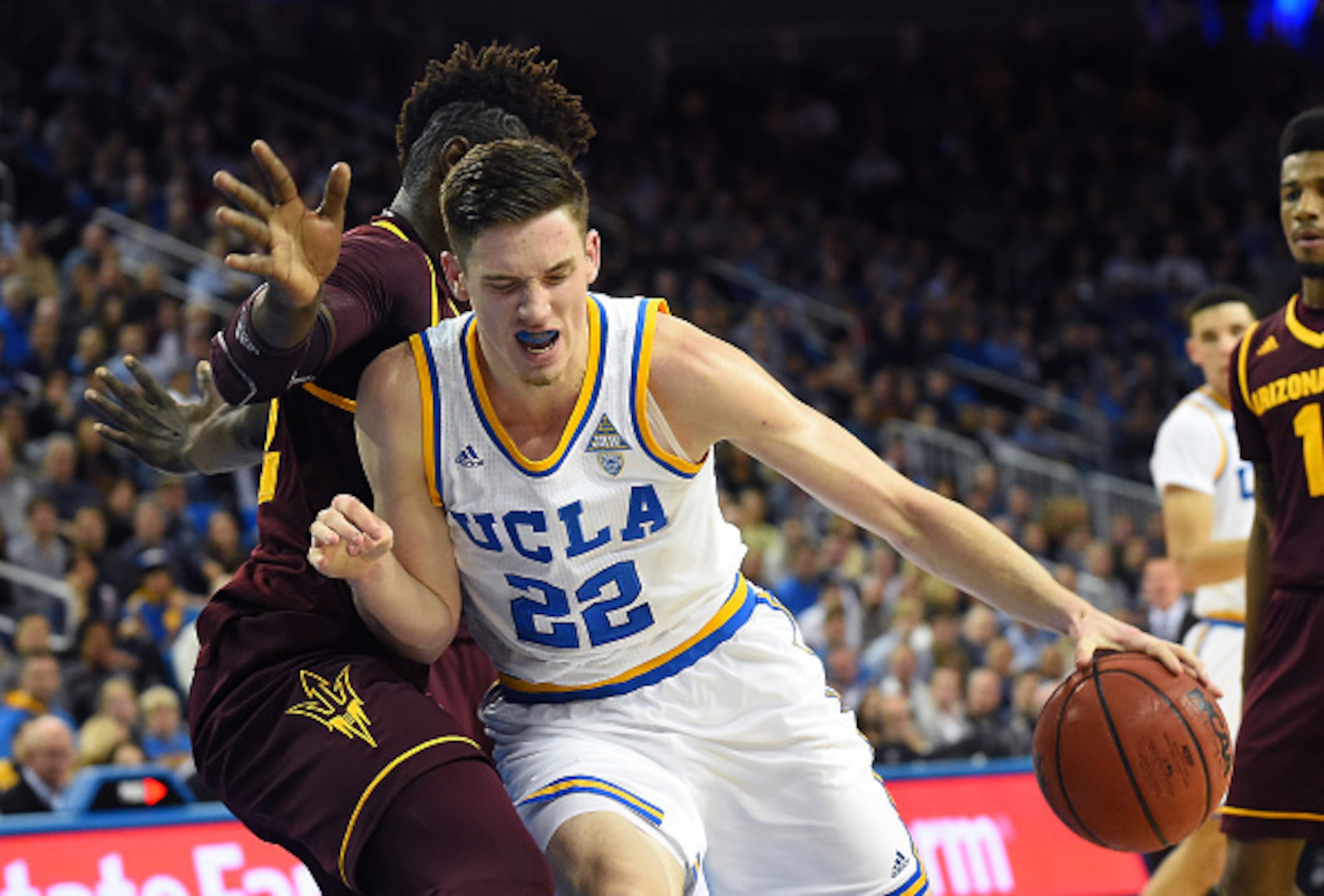
T.J. Leaf continues to climb the board with an offensive game tailor-made for today's NBA.
He offers both shooting and playmaking from the stretch 4 position, having made 21 of 43 threes and averaging 2.8 assists per game. A terrific ball-handler, Leaf consistently shows the ability to create off the dribble into drives, kick-outs and pull-up jumpers.
A lack of strength down low and quickness around the perimeter doesn't bode well for his defensive outlook. But it's getting easier to envision Leaf's carving out a role as an offensive specialist and energizer off an NBA bench.
No. 14: Harry Giles (Duke, PF/C, 6'10", Freshman)
16 of 29
We've reached the point where it's worth questioning whether Harry Giles would have been better off sitting out the season.
Averaging eight fouls per 40 minutes, he's struggled to stay on the floor. And when he has seen time, he hasn't shown much outside of finishing, rebounding and the occasional jump hook.
Giles isn't jumping off the screen or floor the way he did before his second and third knee surgeries. And given his athleticism and tools fueled all the hype—not his skill—there are legitimate concerns over his potential.
There is still a ton of natural talent in Giles, and at some stage, that's worth gambling on. But that stage is starting to look more like the mid-first round than the top 10 or lottery.
No. 13: Miles Bridges (Michigan State, SF/PF, 6'7", Freshman)
17 of 29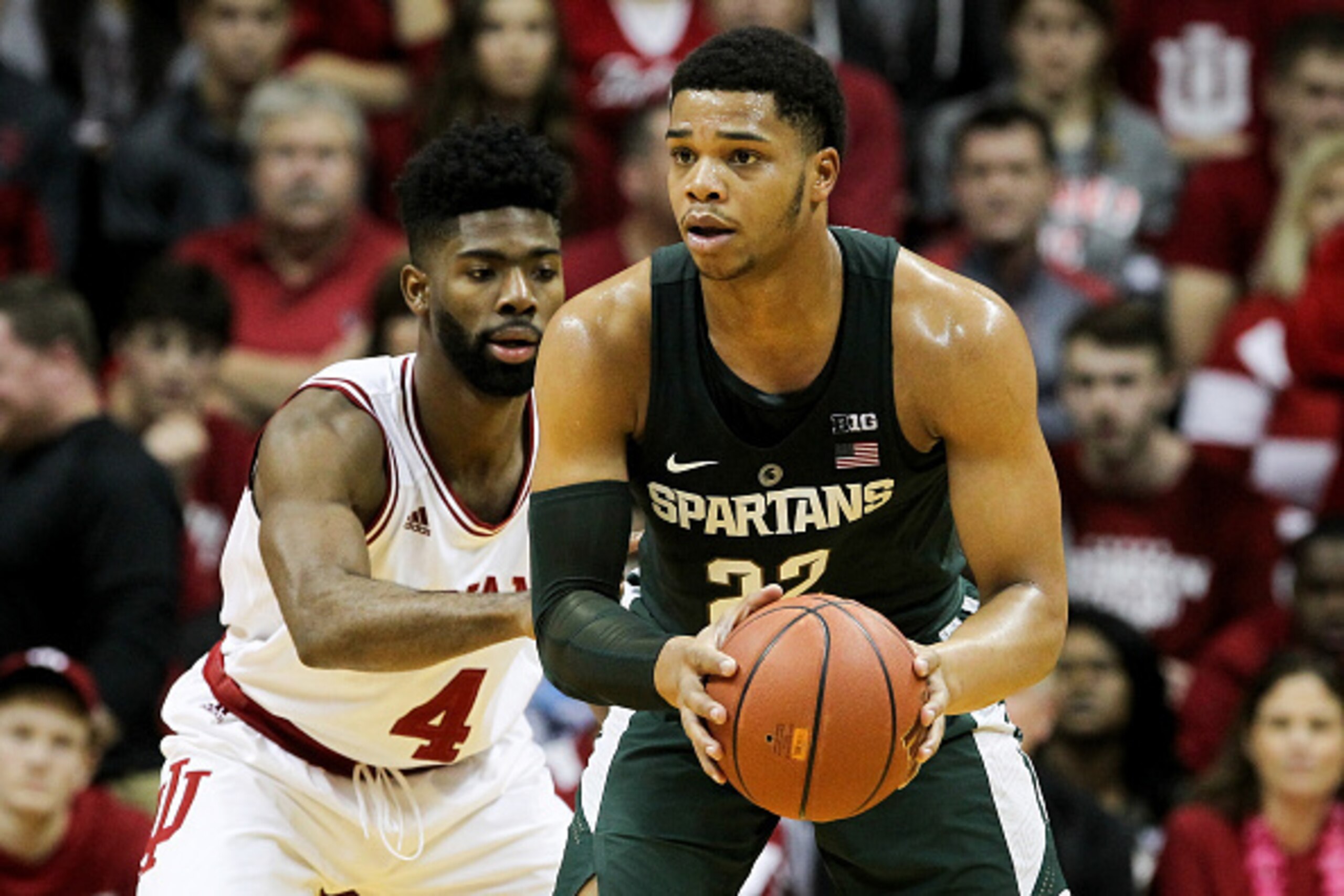
There are too many questions about Miles Bridges' NBA fit for a team to take him in the top 10. But there is also too much upside for him to slide into the 20s.
Bridges is an explosive athlete with a powerful frame—a combination that translates to highlight dunks and easy baskets. He's also closer to 6'6", which is small for a power forward.
He hasn't shown he's skilled enough to play the wing. His 62.2 percent free-throw mark looks like a more accurate reflection of his shooting than his 39.7 percent three-point clip. Meanwhile, he coughs it up 3.1 times per game.
On the other hand, if he can take advantage of his quickness and bounce against 4s and develops into a reliable shooter, he'll become a mismatch.
We could be talking about the next Larry Johnson or Derrick Williams. Valuing him as a mid-first-round pick seems about right.
No. 12: Ivan Rabb (California, PF/C, 6'11", Sophomore)
18 of 29
Averaging 15.1 points and 10.6 rebounds, Ivan Rabb has been the double-double machine we all expected.
Every now and then he disappears, though, like on Jan. 19, when he finished with four points on 2-of-10 shooting in a loss to Oregon.
Rabb hasn't done enough to push for top-five looks, and given the strength of the freshman class, he's fallen despite the production.
Still, his tools, motor, instincts and hands say Rabb is an NBA player. At the least, a team should get a finisher and plus-rebounder who can score around the block. He'll become a steal in the late lottery if his post game and jumper take off.
No. 11: Justin Patton (Creighton, PF/C, 7'0", Freshman)
19 of 29
It hasn't just been flashes with Justin Patton. He's consistently showcased a high skill level to go with his 7'0" size and athleticism.
Shooting 71.8 percent, Patton does most of his work right at the hoop off rim runs, dump-downs and pick-and-rolls, but also low-post moves. He's scoring with footwork and both hands around the block.
Patton looks comfortable on the perimeter as well, having shown the ability to put the ball on the floor or even knock down the open three (5-of-11).
His 14.5 rebounding percentage and 6.3 block percentage are disappointing numbers, particularly since he hasn't faced many next-level bigs. Nevertheless, he still has too much going for him, from his production (21.8 points per 40 minutes) and efficiency to his tools, agility, offensive development and upside.
Patton will be an interesting follow from here on out, with Creighton losing Maurice Watson Jr. (torn ACL)—the nation's assist leader—for the year.
No. 10: Jayson Tatum (Duke, SF, 6'8", Freshman)
20 of 29
Jayson Tatum is slipping because of his inefficiency (43.4 percent shooting, 3.7 turnovers per 40 minutes), which is illuminating questions over his NBA fit. He's highly skilled, though, which, along with his physical tools and quickness, should be enough for him to carve out a pro career.
Tatum has strong defensive tools and advanced shot-creating and shot-making ability. He passes the NBA eye test and averages 16.5 points. He'll score at the next level—the questions are how often and whether he can do so within the flow of the offense.
He relies on one-on-one opportunities and has taken more two-point jumpers than threes, per Hoop-Math.com. Tatum also lacks explosiveness off one foot, shooting a poor 52.4 percent at the rim in transition. And when his jumper is off, he's unlikely to offer much, having totaled 33 turnovers to 23 assists on the season.
Harrison Barnes is an accurate best-case comparison for Tatum, who looks great when he's on and unappealing when he isn't. Considering he won't be featured early as an NBA rookie or sophomore, he'll need to improve his spot-up and three-point shooting (29.5 percent) for an off-ball role.
No. 9: Frank Ntilikina (France, PG, 6'5", 1998)
21 of 29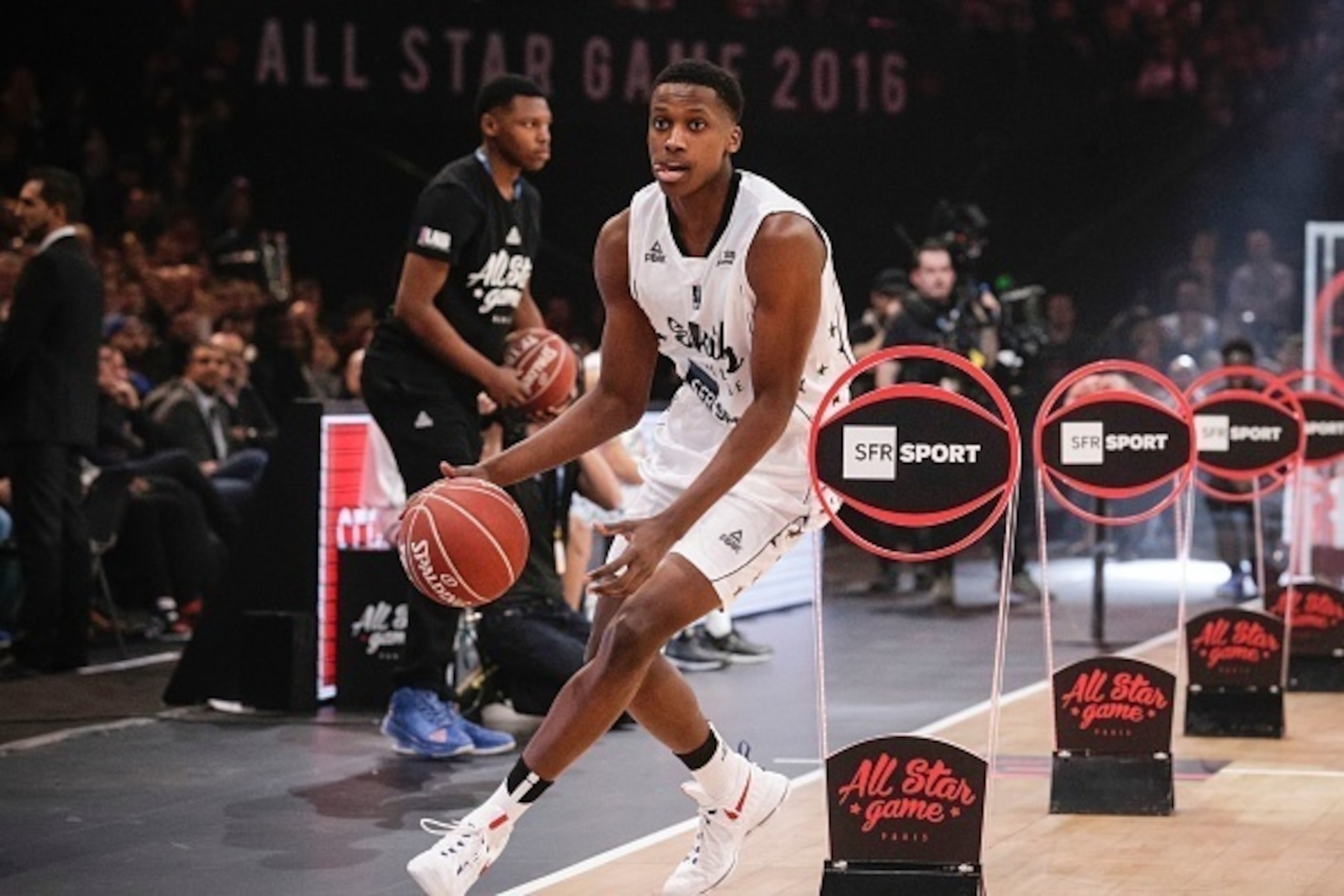
Regardless of what Frank Ntilikina does the rest of the way for Strasbourg IG, he won't stray far from the late-lottery range. There is only so much he can show while playing 15.3 minutes per game off the ball against pros in France's top division.
He confirmed his talent last month at the U18 European Championships, where he won MVP and destroyed other prospects his age.
At 6'5" with long arms, fast hands and quick feet, he projects as the top perimeter defender among draft-eligible guards. And though he lacks flashy playmaking ability, Ntilikina's decision-making and shooting (17-of-29 from three at U18s) remain big pluses on the scouting report.
No. 8: Lauri Markkanen (Arizona, PF/C, 7'0", Freshman)
22 of 29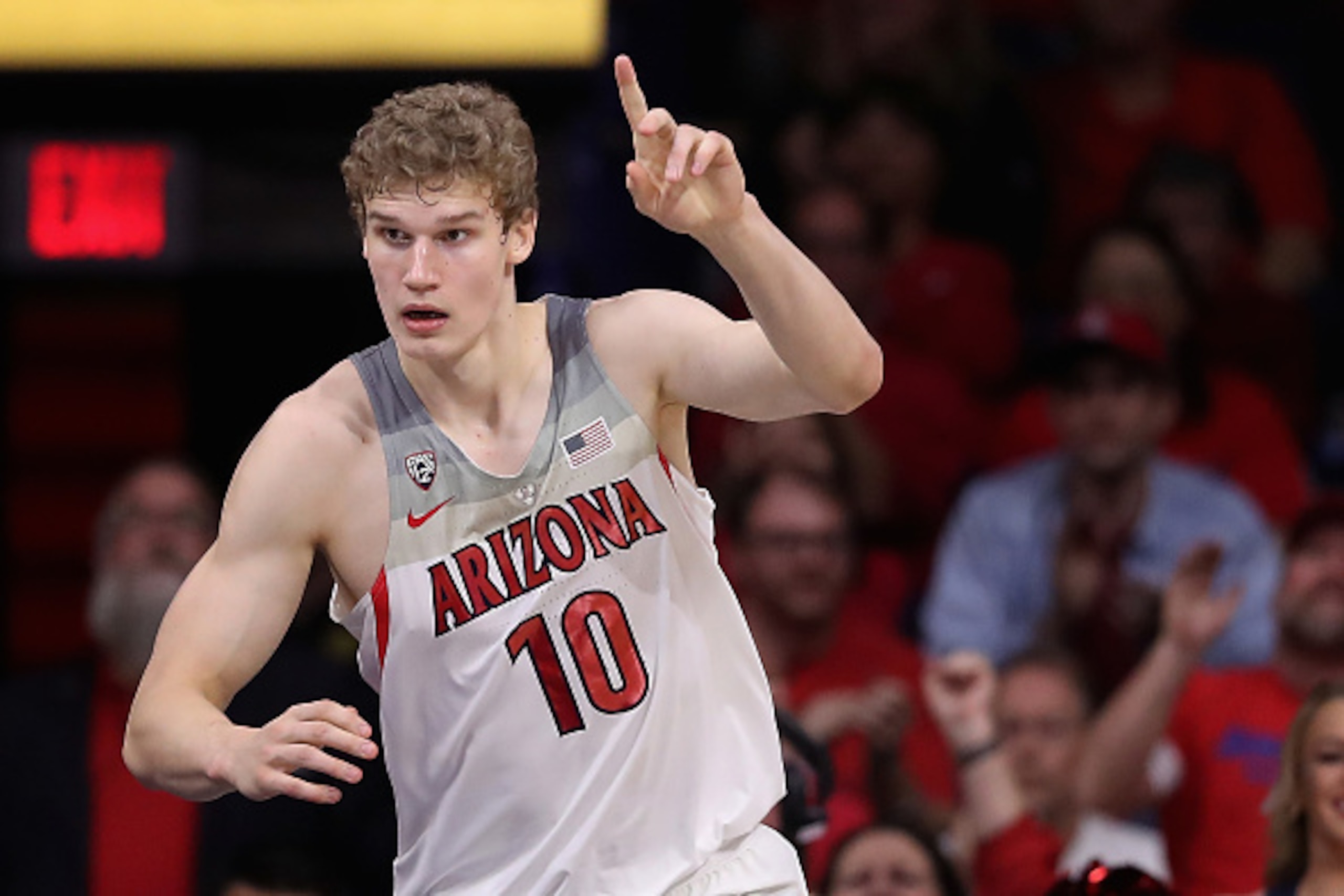
The best shooter in the draft will be a 7-footer. Lauri Markkanen couldn't be hotter. He's made 50 percent of his threes on the season and 16 of 22 over his past four games.
The size and jumper alone should draw interest from lottery teams. But Markkanen has more to his game, including ball-handling skills, agility and the shot-making ability to score off the dribble.
He'd be a top-five candidate if it wasn't for his 9.5 rebounds per 40 minutes and totals of 10 blocks and six steals all season. Markkanen doesn't project as an inside force or rim protector, which hurts his value as a big man.
No. 7: Malik Monk (Kentucky, SG, 6'3", Freshman)
23 of 29
Elite athleticism and shot-making help anchor Malik Monk inside the top 10.
He went off again Saturday with 27 points against South Carolina.
Limited playmaking skills and questionable shot selection will keep him outside the top five, though. Monk continues to live around the arc and rely on knocking down lower-percentage looks.
But his perimeter-scoring arsenal is advanced. There is no question he'll put up points as a pro, mostly by knocking down jumpers off screens, spot-ups, pull-ups and step-backs. When he's on, good defense isn't enough.
If the season ended today, he'd be the only freshman since 1993 to average at least 20 points and shoot 50 percent from the floor, 40 percent from three and 80 percent from the line.
No. 6: De'Aaron Fox (Kentucky, PG, 6'3", Freshman)
24 of 29
De'Aaron Fox continues to blow by defenders despite the fact they know he struggles from the perimeter.
Before leaving early with an ankle injury against South Carolina on Saturday, Fox had hit the 20-point mark in three of four games. He consistently puts pressure on the defense and rim with his speed, change of direction and explosiveness in the lane.
Fox's ability to penetrate, score off drives and set up teammates appears likely to translate to points in the paint and assists. Feisty on-ball defense also boosts his value.
It sounds simple, but whether Fox becomes a top-15 NBA point guard should come down to how much he improves his jumper. He's made just five of 37 threes and 34.5 percent of his two-point jumpers on the season, per Hoop-Math.com.
No. 5: Josh Jackson (Kansas, SF, 6'8", Freshman)
25 of 29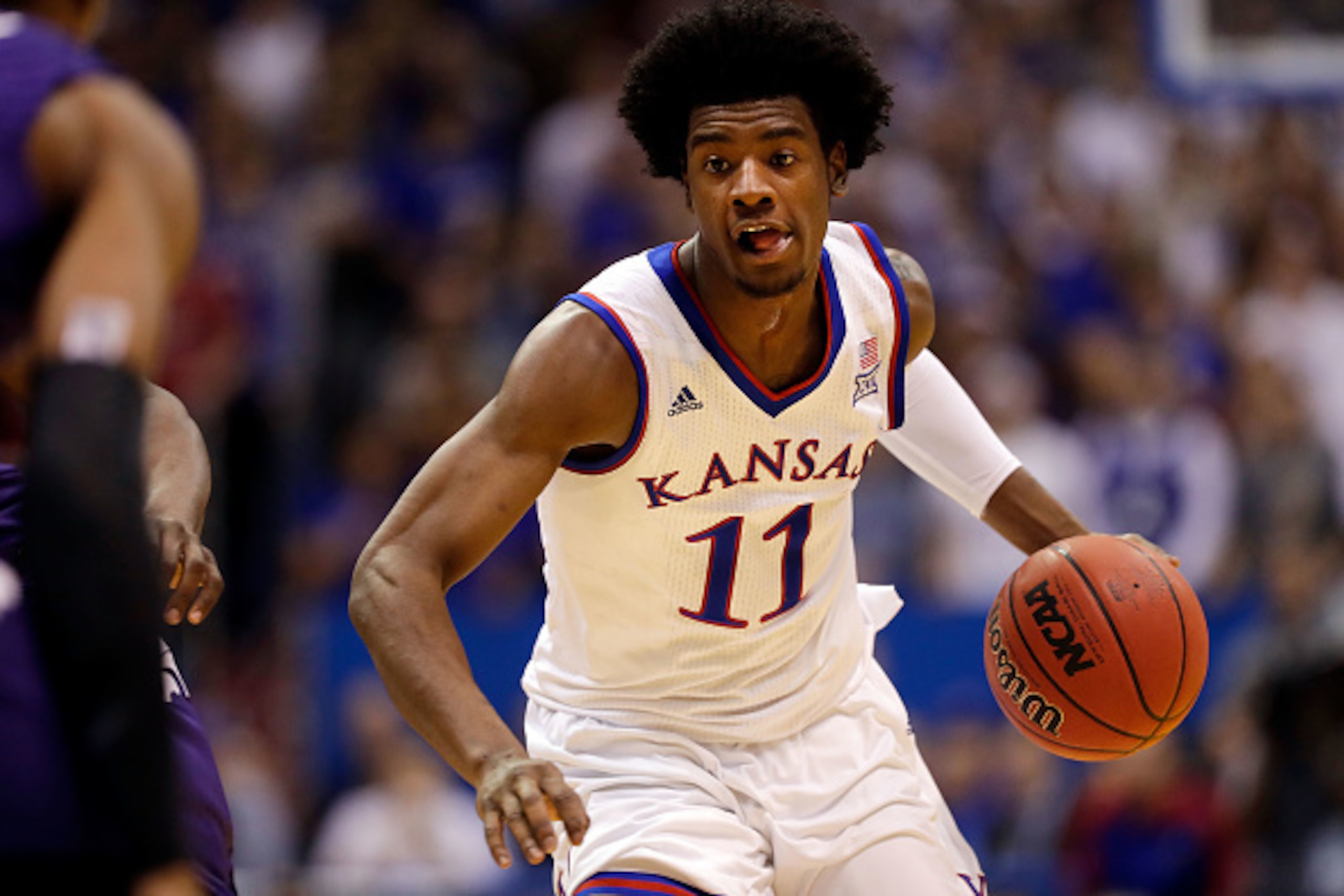
Josh Jackson has been steady, though he's slipped a few spots on our board. For a guard or wing, the 25.6 percent three-point mark and 56.3 percent free-throw clip are concerning, especially when you look at his unsettling shooting mechanics.
Versatility and defense remain Jackson's primary selling points. He may never be a top-20 NBA scorer, but between his transition attack, slashing, playmaking (3.1 APG) and potential to lock up around the perimeter, he covers plenty of ground.
Whether we're talking about a future star or role player could come down to his jump-shot development. Either way, he'll enter the draft with a perceived high floor and correctable weakness, making him a low-risk, high-reward option anywhere in the No. 2 to No. 6 range.
No. 4: Dennis Smith Jr. (North Carolina State, PG, 6'3", Freshman)
26 of 29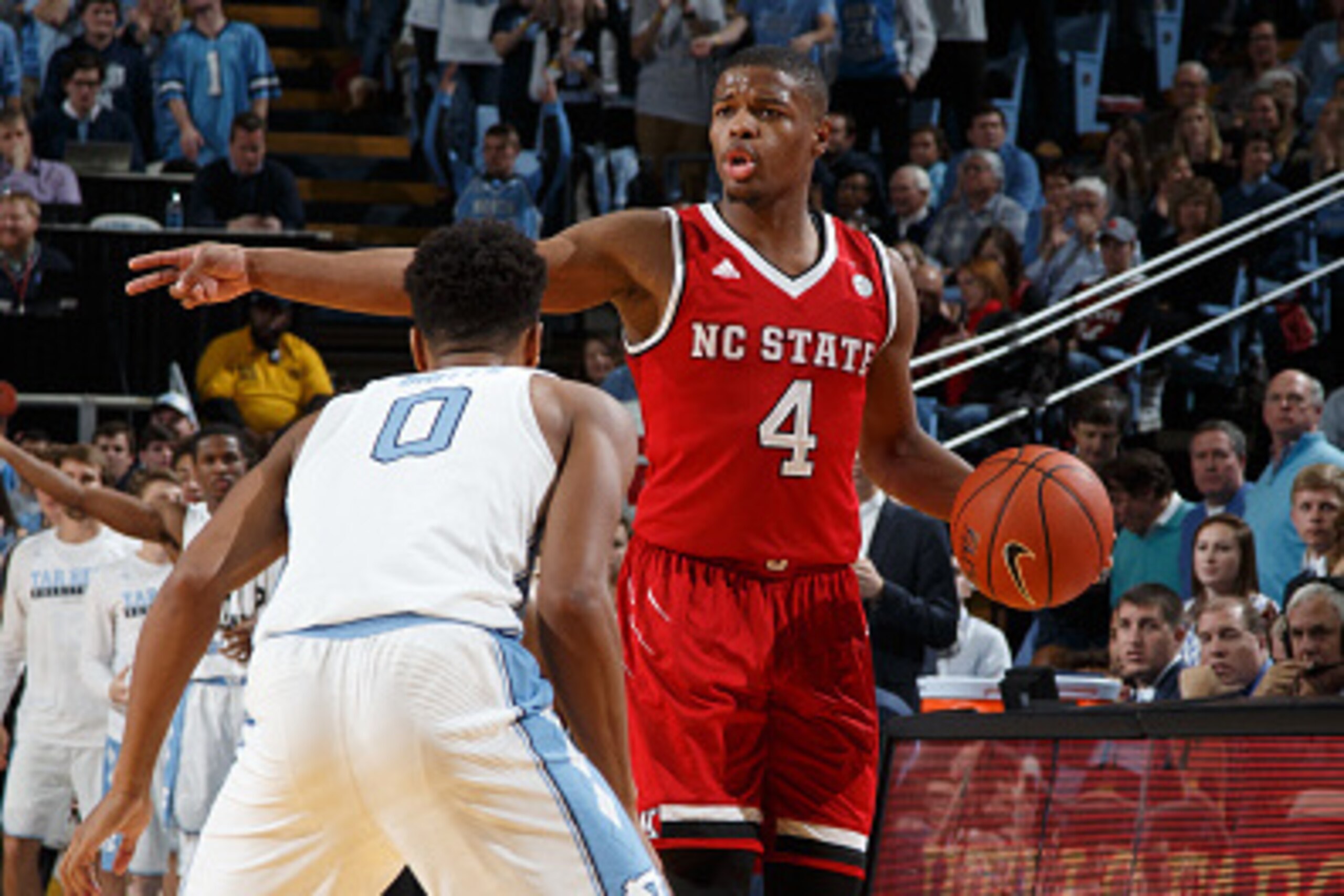
Dennis Smith Jr. put together a signature performance with 32 points in a win at Duke Monday night.
It was needed after a rough month in which the Wolfpack lost four of five games from January 11 to 21. Against Duke, Smith showcased his ability to take over and put constant pressure on the defense with next-level scoring and playmaking.
His quickness and explosiveness also make it easy to imagine his 19.5 points and 6.5 assists per game carrying over to the NBA. Smith has been better than advertised (before the season) as a shooter, having hit 38 three-pointers through 21 games.
He looks like a sure-thing NBA player and likely starter. General managers will just have to ask themselves whether his future production will translate to wins. Smith's decision-making and lack of urgency can be concerning for a player who dominates the ball.
3. Jonathan Isaac (Florida State, SF/PF, 6'10", Freshman)
27 of 29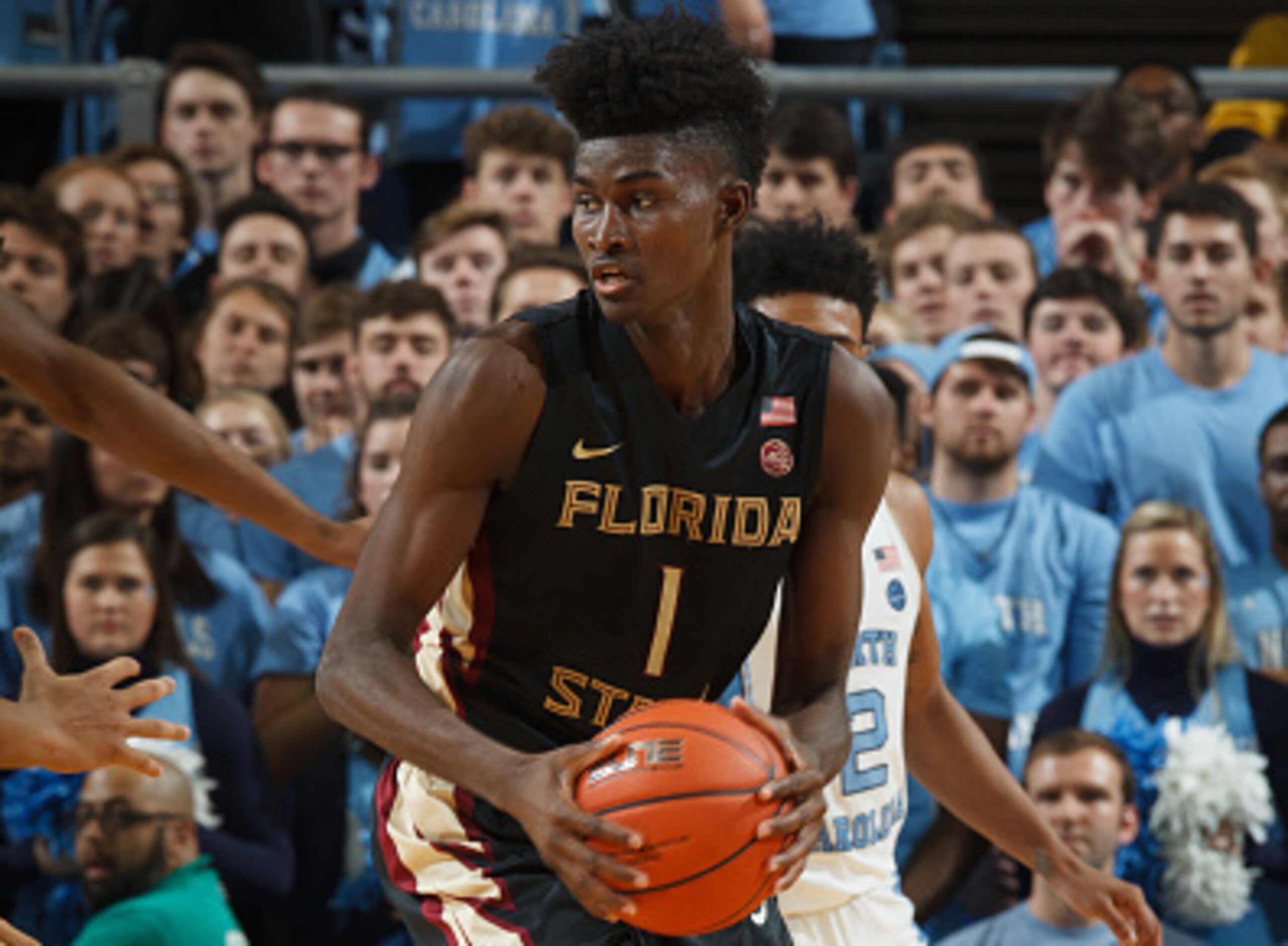
The new No. 1 wing for 2017, Jonathan Isaac has leapfrogged Josh Jackson and Jayson Tatum into the top three.
He's ahead of both as a shooter, having knocked down 20 of 52 three-pointers (38.5 percent) and shot 82.4 percent from the line. There also aren't many small forwards who can match his 6'10" size and 7'1 ¼" length.
It's all coming together for Isaac, who's put up at least 16 points in three straight games.
One of his more undervalued strengths is that he scores within the offense. He isn't shot-hunting; rather, he's taking them in rhythm, averaging 21.2 points per 40 minutes on just a 21.9 percent usage rate.
He's established himself as a strong rebounder as well (12.5 per 40 minutes), showing the willingness to go after loose balls in traffic and the ability to bring them in.
Isaac started the year in the top 10 based on his long-term potential, which the eye test quickly confirms. The consistent, efficient production wasn't expected, though.
2. Lonzo Ball (UCLA, PG, 6'6", Freshman)
28 of 29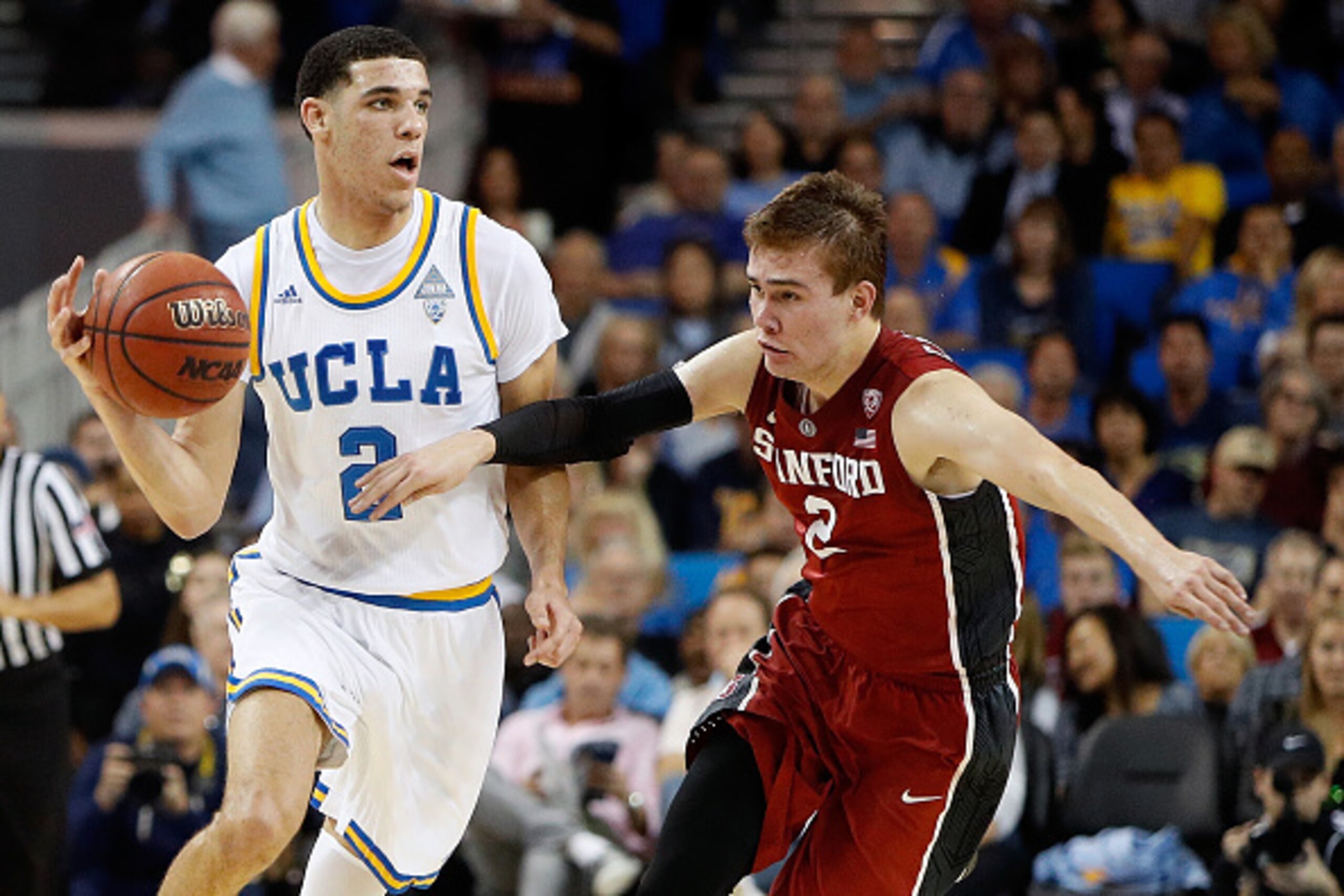
Lonzo Ball hasn't stopped making three-pointers, which was a big factor in determining his ranking.
He sunk four more in UCLA's loss to Arizona on Saturday.
Praising his passing has become a repetitive exercise. All scouts are aware of his incredible ability to find the open man and make the game easier for teammates.
And that still drives his value as a potential top-three pick. Whoever drafts Ball won't do so expecting a 20-point scorer. Instead, that team will covet his unteachable strengths as a 6'6" athletic ball-handler who creates quality looks with his vision and basketball IQ.
The perimeter shot-making just puts him over the edge.
A lack of mid-range game will make it tough for Ball to score in volume. Of his 58 made two-point field goals, 56 have come right at the rim, per Hoop-Math.com.
It's not a stat that will deter a team from considering him in the top five, though. The idea that Ball is so unique will make general managers ignore trivial details.
1. Markelle Fultz (Washington, PG, 6'4", Freshman)
29 of 29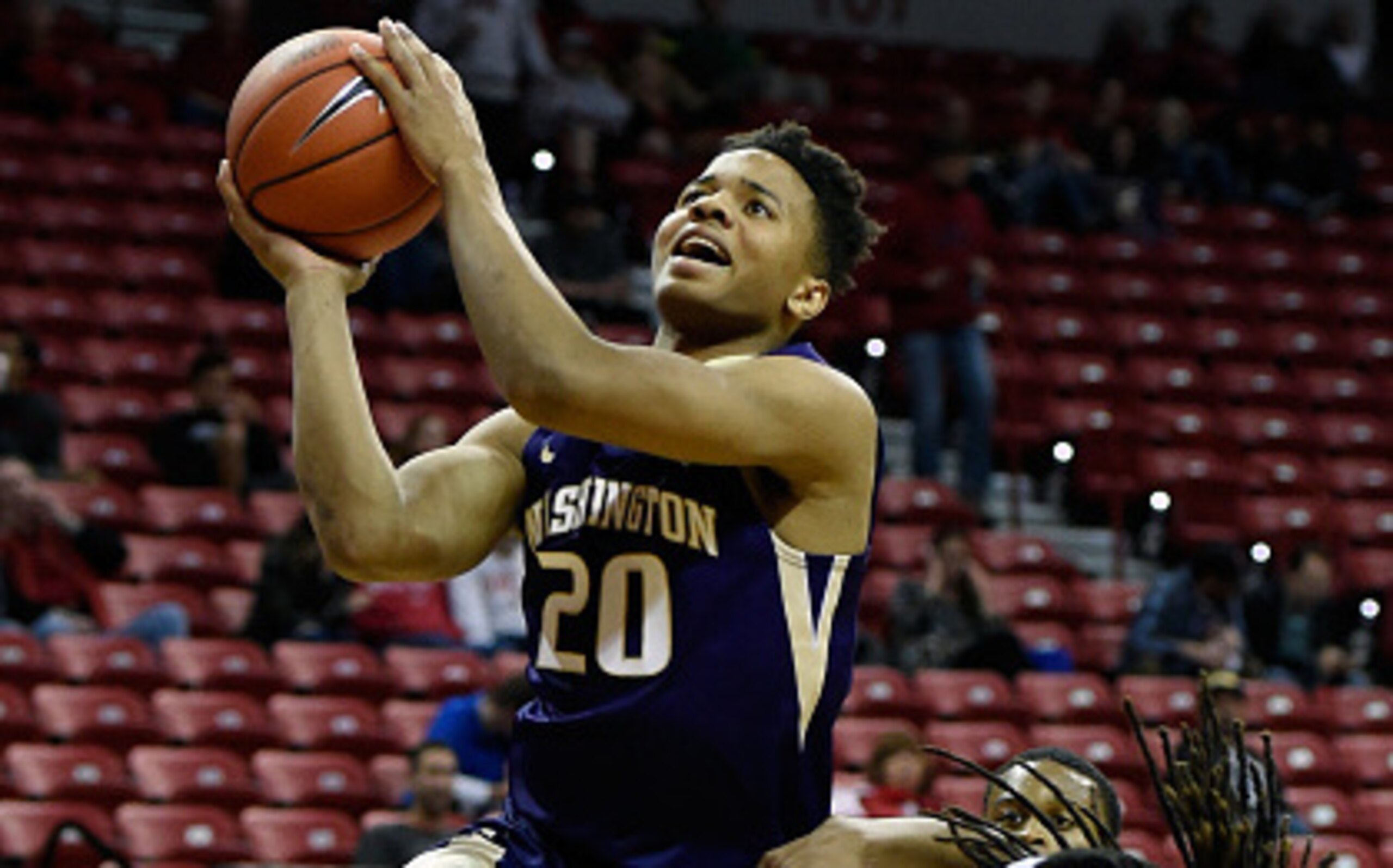
Markelle Fultz's seat atop the draft board remains secure. He's only strengthened his case since starting the year at No. 1.
Fultz has scored at least 30 points and shot over 50 percent in three straight Pac-12 matchups.
There aren't any worrisome holes in his game, and though Washington's 9-10 record is somewhat of a turnoff, it's not a reflection on Fultz, who's averaging 23.4 points and 6.1 assists on 49.2 percent shooting and 41.7 percent from three.
It's too early to call him James Harden 2.0, but that's the type of scoring and playmaking package he'll bring to an NBA backcourt.
All stats accurate through games played January 23 and courtesy of Hoop-Math.com, RealGM.com, Sports-Reference.com and DraftExpress.com.


.jpg?w=2560 "Commanders May Change Logo 👀")

.jpg?w=2560 "Seahawks Have No Plans to Move")
