Janoris Jenkins' Ascent to Stardom Isn't Your Typical Redemption Narrative
NEW YORK — It's a Thursday afternoon in late December, days before the New York Giants' Week 17 matchup in Washington, and Janoris Jenkins—excuse us, "Jackrabbit"—is standing in front of his locker at the team's training center, fielding questions.
There's one about the bruised back that sidelined him the previous week, another on preparing for the upcoming playoff run. A host of other football cliches are lobbed before, finally, a reporter asks him something more pertinent:
Where did you get the hat?
.png?w=2560)
.jpg?w=2560 "Saints Football")
.JPEG?w=2560 "Ravens Heroic Brigance")
"I made it," Jenkins says. It's a bucket hat, Giants blue, with a lowercase white "ny" stitched to the front. It looks like the kind you might see people wearing around a pool on the Upper West Side, only the top has been cut out so Jenkins can thread his black dreadlocks up and over the rim.
"So don't steal it now," he adds.
The questions then move back to football. Jenkins says he's excited for the playoffs—that one of the reasons he signed with the Giants last spring was to become a champion. That they offered him a five-year, $62.5 million contract in the offseason, a deal that included $28.8 million in guaranteed money and a $10 million signing bonus, certainly played a role as well. Still, the quote is perfect filler for a weekday tabloid practice write-up.
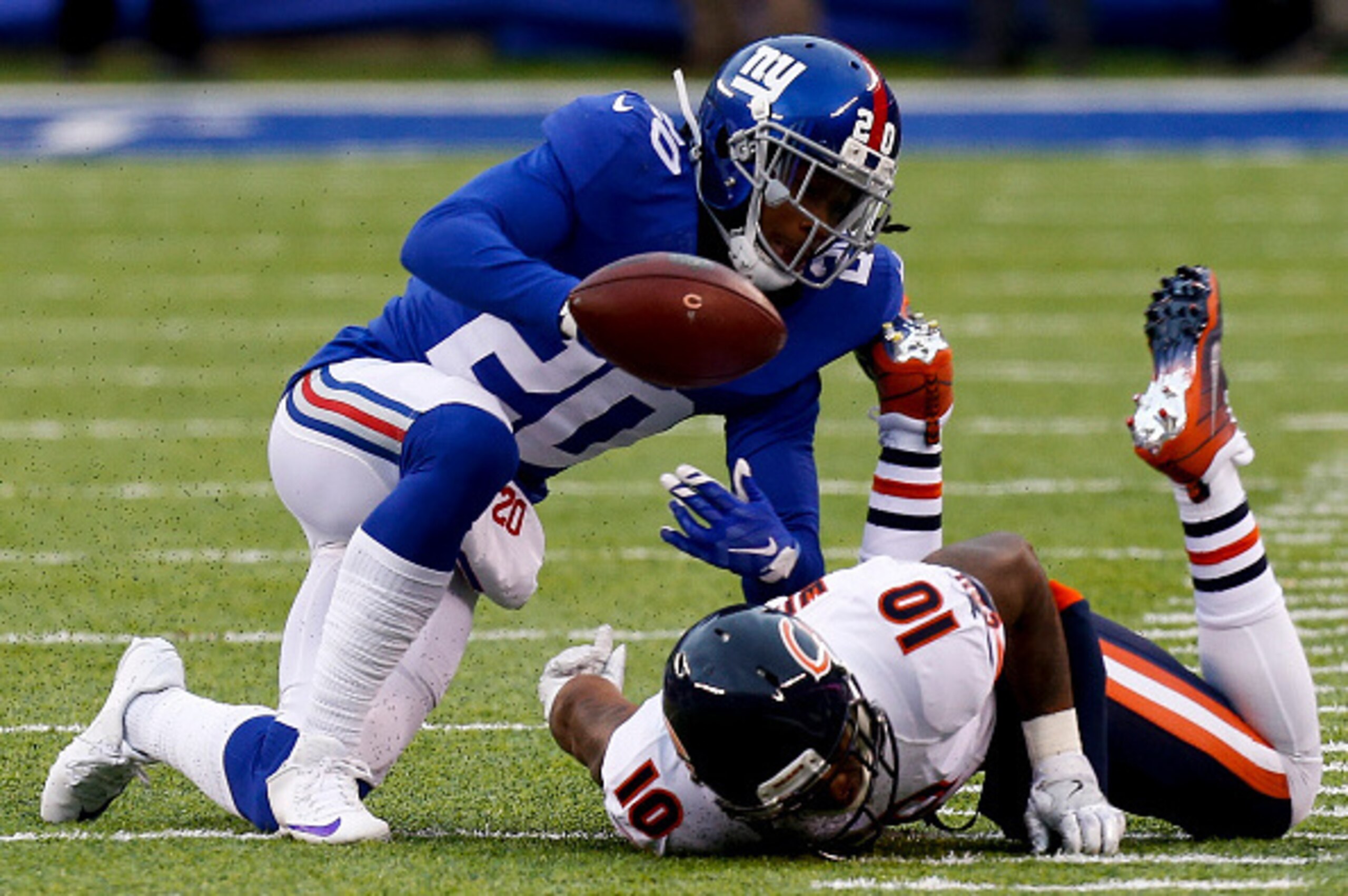
It's not crazy to think the Giants could be embarking on another one of their dazzling winter runs. Or that Jenkins could be the one to propel them there. He's been a one-man wrecking crew all season, the team's antidote to both the myriad prolific aerial assaults that populate today's league and to the Giants' bumbling offensive attack (No. 22 according to Football Outsiders).
How good has Jenkins been in his first year in New York? He allowed completions on half of the passes thrown his way during the regular season—fourth-best among cornerbacks, according to Pro Football Focus, which also rated him as the seventh-best corner in the NFL. If not for Jenkins, it's unlikely the Giants leap from 30th last year to No. 2 this year in Football Outsiders defense rankings, and near-improbable they finish the year 11-5.

"I play this game as if anything can happen at any time," Jenkins says at one point during the scrum. "You just have to prepare for the worst and hope for the best.
"I got the best out of my situation."
It's a telling answer, one begging for a follow-up.
Afterward, a reporter tries to ask one. He approaches Jenkins. He tells him he's profiling him. He asks if he'd be willing to speak for a few minutes one-on-one.
"Man, I don't want no story done on me," Jenkins says. He then walks through the double doors that separate the locker room from the team showers and treatment areas before turning around to share one last thought:
"You can write the truth, but ain't nobody want to hear it."
The truth?
Well, the first thing you should know is that he isn't kidding about the whole "Jackrabbit" thing.
Take this story, courtesy of Giants offensive lineman Adam Gettis.
"One of the first days I was here I was like, 'Jackrabbit, what's up?'" Gettis says. "And he got all excited and was like, 'Man, you know my name? And I was like, 'Of course I know your name, Janoris.' And he goes, 'It's Jackrabbit. It's Jackrabbit.'"
Gettis is far from the only Giants employee to be scolded this season for addressing Jenkins by the name printed on his birth certificate. Staffers, teammates, even coaches during team meetings have felt the Jackrabbit's wrath.
Then there was his postgame interview with NBC following the Giants' 10-7 Week 14 win over the Dallas Cowboys. Jenkins had played perhaps the best game of his career. He'd held Dallas star receiver Dez Bryant to one catch for 10 yards. He also picked off a Dak Prescott pass and forced a fumble (on the one ball Bryant did hold on to), all on national TV. After the win, it was his turn to receive some much-deserved shine.
"This guy over here is Janoris Jenkins," NBC sideline reporter Michele Tafoya said after completing her interview with Giants receiver Odell Beckham Jr.
"Jackrabbit," Jenkins responded, immediately and matter-of-factly, hands clutched behind his back. "Jackrabbit."
Like we said, he takes this Jackrabbit stuff seriously. But don't laugh, at least not before learning why Jenkins holds this strange nickname so dear.
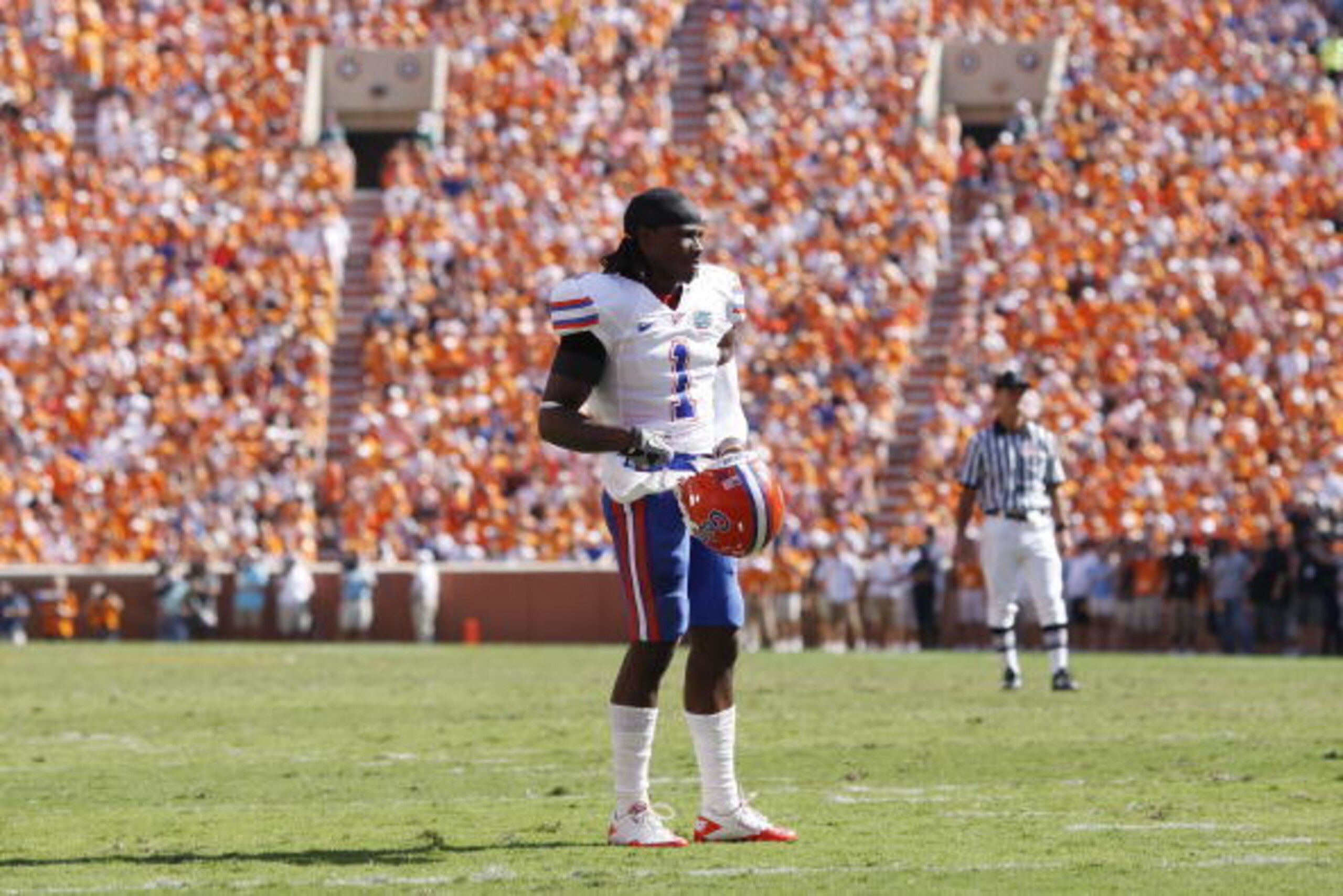
It was bestowed upon him during his freshman year at the University of Florida. He has Vance Bedford, then a defensive backs coach for the school, to thank. Bedford was amused by the way Jenkins—always a gifted athlete but a bit raw in the lead-up to his first season as a Division I football player—would aimlessly dart and dash around the field. And so the Jackrabbit was born.
The name was more prescient than Bedford realized. Jenkins was raised in Pahokee, Florida, a city officially part of South Florida but culturally closer to the rugged life of the Glades than the glitzy one found in Miami Beach. Pahokee is in the heart of what is known as Muck City, a stretch of rough sun-bathed streets where the primary exports are sugarcane and professional football players.
The former helps produce the latter.
Boys in Muck City grow up hunting rabbits. Chasing might be a better word. The rabbits come out after the sugarcane is set ablaze; they run wild in the dark and sticky muck that gives the area its name.
The boys spend countless childhood hours running after these rabbits, sprinting up and down and back and forth—trying, as Pahokee native and Marshall defensive back Dontrell Johnson says, to do the equivalent of "catching a fly in the phone booth." All the while they foster a mix of muscles and grit that's sent more than 60 Muck City youth to the NFL.
The rabbit-chasing also allows Muck City's boys to feel like men.
"That's how we used to put money in the bank," says Jenkins' cousin and Bears linebacker Pernell McPhee, a fellow Pahokee High School grad. McPhee used to sell rabbits for two dollars a pop. Today they go for five.
"It makes you feel like an entrepreneur," says Jenkins' friend and former high school teammate, Anthony Sheppard.
Beneath the vaudeville of a professional athlete's asking to be addressed by a mammal-like sobriquet lies something deeper.
Jenkins isn't trying to turn himself into a wrestling character, an Ochocinco 2.0. The name means something. It represents where he came from, but also how he found a way out. Chasing jackrabbits enabled Jenkins to become the Jackrabbit, and becoming the Jackrabbit allows Jenkins to pay homage to his beloved Muck.
The name is Jenkins' way of sharing his story.
It should come as no surprise that it's been misjudged.
Sandy Cornelio remembers everything about that late April day.
He remembers making the nearly five-hour trek north to Gainesville with Janoris' father, William Sr. He remembers sitting in the office of Will Muschamp, then the Florida Gators' new head football coach, and being told that Janoris, having been arrested for the second time in three months and third time in two years, was being kicked off the team (Muschamp declined to comment for this story).
He remembers feeling like he'd failed Janoris, and then filing back into his 2007 black Infiniti M35, him behind the wheel, William up front and Janoris in the back seat, radio turned all the way down.
Cornelio had first met Janoris five years earlier in the halls of Pahokee High School. He was 26 at the time, recruiting for the United States Army, and saw Janoris messing around and not in class. Cornelio introduced himself, told Janoris he should consider enlisting. Janoris said he wasn't interested, and anyway, why should he join the military? In a few years he'd be playing in the NFL.
It was a response Cornelio had become accustomed to hearing, but he also found himself drawn to Janoris, to his passion and sincerity and drive. Something about Cornelio appealed to Janoris too (aside from his dark skin, bald head and glasses that, years later, would lead Janoris to refer to him as "Turtle"); he peppered him with all types of military questions, asked him why bin Laden hadn't been captured yet (he had a keen interest in 9/11) and what kind of bad guys the army went after instead.
That summer Cornelio traveled with Janoris from football camp to football camp. He's been a second father to him ever since.
As Cornelio's Infiniti crept down the Ronald Reagan Turnpike, past all the gas stations and palm trees that line the highway roads, he thought about all Janoris had been through, how close he was to fulfilling what he'd boasted to Cornelio back in the Pahokee High hallway that day they first spoke. He glanced through his rearview mirror at Jenkins, 22 years old at the time but still just a scared and desperate kid, exhaustion having overcome him, fast asleep in the back seat.
Cornelio was disappointed. Of course he was. "But at the moment I had to understand the person I was dealing with and how everyone was going to flip on him," he says. "Rather than me try to beat him up, instead we decided to map out a plan and calm him down."
"Do you want to be great or work in the cornfields with your father?" Cornelio asked Janoris. The choice, he said, was his to make.
By the time Janoris awoke, about an hour later, Cornelio and William had fielded phone calls from four different Division II football coaches. Janoris chose North Alabama, where he wound up starring for head coach Terry Bowden. Bowden's father, Bobby, said Janoris reminded him of a player he had coached at Florida State: Deion Sanders.
One year later, Janoris was sitting in his parents' Pahokee home when he heard NFL Commissioner Roger Goodell call his name. The Rams had selected him in the second round of the draft. He was officially a professional football player—and cashing checks with more zeroes than he'd ever seen.
You're familiar with this story by now, right? Maybe not Jenkins', per se, but certainly with the Troubled Athlete Who Finds Redemption tale.
You know how these sagas go: Athlete grows up in tough neighborhood but thanks to sports is able to get out. His future is bright, only he stumbles, accumulates some baggage along the way (acts as vicious as rape and as innocuous as smoking weed all get tossed into the same category) and gets tagged with the dreaded label of head case.
It takes years to overcome.
But of course, overcome he does. He matures. He grows up. Maybe he finds God, too. It's at this point of the story that the upward arc of Athlete Redemption Narrative begins, where the quotes from coaches and the like come in. They tell us just how much our Athlete has changed over the years. They credit this evolution for the athlete's thriving. Everyone hugs and smiles and sings "Kumbaya."
You can write the truth, but ain't nobody want to hear it.
What's that truth?
Perhaps it's that Jenkins' story reveals more about us than him.
The first arrest came in June before his sophomore year.
Jenkins was closing out a Friday night in a downtown Gainesville nightclub when, his attorney later said, a fight broke out between around six people. Jenkins, according to his attorney, tried to break it up, but one of the brawling men tried to snatch his gold chain off his neck. Jenkins responded, according to the police report, by striking the man in the head.
Gainesville police responded to the scene. They ordered the fight to stop. One officer drew his taser gun. Jenkins smacked another man in the face. The officer fired his taser at Jenkins, but the probes came loose, and so Jenkins began running away, only to stop and surrender himself after about a block.
He was the only one cuffed that night. The police charged him with affray and resisting arrest without violence. The first charge was dropped by the state attorney's office; Jenkins signed a deferred prosecution agreement for the second.
The next arrest came in January 2011, not two months removed from the final game of Jenkins' junior season and from Urban Meyer's announcement that he was stepping away from coaching. Police had found Jenkins with less than 20 grams of weed in the bathroom of a Gainesville nightclub. Then, that April, police found him smoking marijuana while he was sitting in a parked car.
That was the end of his Florida football career.
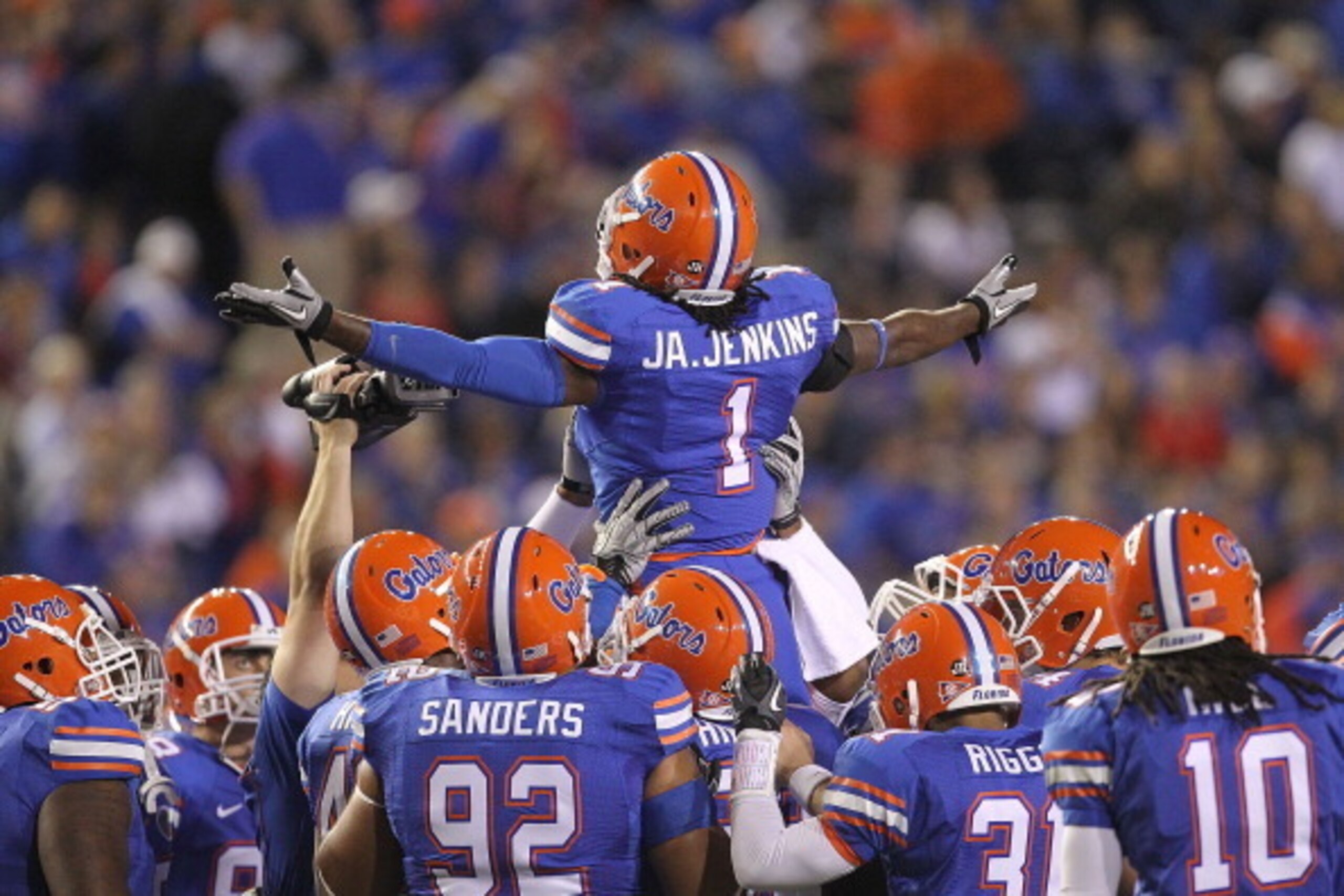
"Muschamp is a my-way-or-the-highway type of guy," Terry Bowden says. Bowden knew Muschamp; he gave him a job as a graduate assistant in the mid-'90s at Auburn, and so he called him before offering Jenkins a spot at North Alabama. Muschamp said he had no personal issues with Jenkins, that he really didn't know much about him.
"But we're a new regime," he added. "I had to take a stand."
Bowden then went through his Rolodex. He reached out to Chuck Heater, the cornerbacks coach at Florida under Urban Meyer. He asked him the same questions: Was Janoris belligerent? Was he uncoachable? Would bringing him to North Alabama be a mistake?
"Before I signed him, I wanted to find out all the things you can't find out in a newspaper," Bowden says, "and not one person I spoke to told me to stay away from Janoris."
"We really didn't have any problems with him," Heater says. "I told Terry that."
What Bowden learned instead were reasons why Jenkins had slipped, how a shoulder injury had kept him from practicing, how less time on the football field meant more time on his own, how he didn't have much of a relationship with the team's new coaching staff.
Not excuses, but explanations.
"The mistakes made by him, those social mistakes, are the type made by youths all over the world," Bowden says. "And it doesn't ruin their lives."
Bowden figured Janoris, like most American kids, should get a second chance too.
It was Jeff Fisher's first year at the helm on the Rams. The draft would set the foundation for everything to come.
Fisher was interested in Jenkins. Many teams were. Jenkins had all of the physical gifts a coach could want. In high school he'd routinely shut down big 6'5" tight ends as well as speed demons like future NFL wideout Travis Benjamin.
In college he earned a job as one of Florida's starting cornerbacks as a true freshman. There were times at North Alabama, where Jenkins played both offense and defense, that he'd react so quickly Bowden would forget which side of the ball Jenkins had lined up on.
"His football instincts are some of the best I've ever seen," Bowden says.
Most experts had Jenkins pegged as the second-best cornerback in the draft. He'd passed every one of his weekly drug tests at North Alabama (despite a predraft report that claimed he told NFL teams he continued to smoke marijuana while there, which Jenkins denied). But still, questions abounded.
That's when the investigators, from numerous NFL teams, descended upon Pahokee.
"They wanted to know if Janoris was in any gangs," Donald "Blaze" Thompson, Jenkins' coach at Pahokee High, says. "They wanted to know if he had issues with drugs, was he a problem in school, was he ever suspected of a crime?"
Thompson told each one the same thing: that Janoris had graduated high school early so he could spend more time on Florida's campus—that's the kind of drive he had. That Janoris wasn't a perfect kid but also not the person who got arrested twice at school. As for the first arrest—he was pulled into that fight and afterward ran across the street to sit down. Remember, he'd say, the "resisting arrest" charge came with an addendum of "without violence."
Cornelio shared the same message. Bowden, too.
"I told them that when we weren't playing football, all Jenkins wanted to do was stay in and play video games on his big-screen TV," he says.
That, it seems, was all Jeff Fisher and the Rams needed to hear.
If this were the typical Athlete Redemption story, this section would talk about how Jenkins transformed himself and rewarded Fisher's faith.
But life isn't beholden to stale sports cliches.
Jenkins' NFL career got off to a fast start. He picked off four passes as a rookie. He returned three of them for scores. He was on his way to proving all of the doubters wrong, as they say, to morphing into a big-play machine.
He did, but for opposing teams. He ceased making plays and instead started surrendering them. He allowed 22 touchdowns in his four years with the Rams (according to Pro Football Focus), the third-worst mark in the NFL over that span.
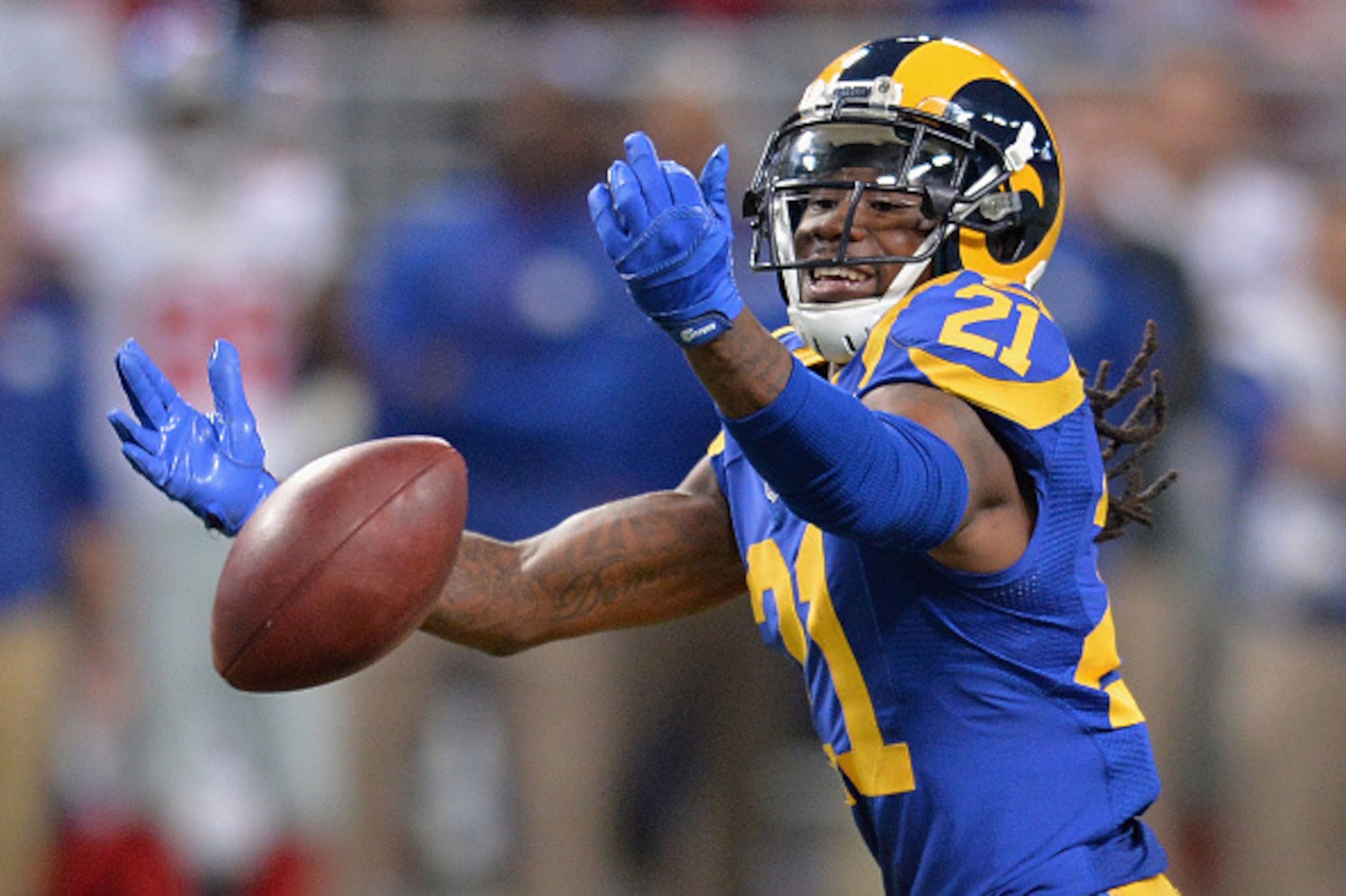
The questions about all that so-called baggage never went away.
In July 2013, The MMQB ran a story that detailed all of the steps the Rams were taking to keep Jenkins "on the right track."
It talked about how the franchise had enlisted former defensive back turned pastor Aeneas Williams to serve as a mentor. It claimed that members of Jenkins' support circle were annoyed that he was spending the offseason in Orlando with the mother of one of his children and not in St. Louis with the team. It noted how the organization was peeved over his returning to OTAs underweight. It showed pictures of him licking some kicks and flashing his grills.
The story was framed with an optimistic tone. But it also made clear that many in the NFL world felt Jenkins' success would depend on his willingness to conform.
"We certainly have some stereotypes and misconceptions," Bowden says. "People see the dreads and gold teeth and make assumptions."
Cornelio says this is a conversation he and Jenkins have had many times. "Do you realize most people, if they saw you walking through their neighborhood, they'd think you were about to rob them?" he'll say.
"I don't care," Jenkins will respond. "I gotta live and be me."
So he'll keep his hair long and adopt strange-seeming names. He'll talk to the media about his "baby mamas," the four women with whom he's fathered five children.
"It's a blessing to me," Jenkins told Paul Schwartz of the New York Post in May after signing with the Giants. "Because you got to look at it, I got five kids. I'll be there for five kids. I can take care of five kids. I could see if I wasn't able to be there, I wasn't able to be around, hang out with 'em or nothing, then it would be a problem, but I don't have those type of problems."
His friends back up this claim.
"He's a good father," Sheppard says. "The moms all get along, the kids all know each other, they travel to his games together. He sees them a lot. They’re well taken care of."
Janoris Jenkins, now 28, is the same guy he always was. And if there's one thing he's shown this year, it's that there's nothing wrong with that.
A few days after signing with the Giants, Jenkins met up with Sheppard and some other friends at a park in Pahokee. Normally, Jenkins prefers to avoid football talk, but on this night he broke his rules.
"He started saying, 'It's Clamp Season,'" Sheppard says. "He was going on about how he wanted to prove that he’s worth the deal."
Five years ago, Janoris Jenkins was thought to be radioactive. Now here he was discussing his plans on fulfilling the expectations that came stapled to his new megadeal.
The cliche place to go with all this would be to attribute this newfound sense of responsibility to the long-awaited maturation of Jenkins, the former troublemaker. But that's a simple answer to a complex topic.
What about Jenkins changed? How has the kid who couldn't stay out of trouble in tiny Gainesville managed to thrive in New York City?
Maybe we're asking the wrong question.
You can, after all, commit a crime without being a criminal and break the law without being an outlaw. At Florida, Jenkins was a flawed kid trying his best to navigate a difficult world. Today, like most of us, he's a flawed adult doing the same.
Sure, he's grown a bit. All boys do upon becoming men. But there was no grand metamorphosis, no internal flip of a switch, as if human beings operate on some sort of linear curve.
Instead, turn the microscope inward, and ask yourself the following:
What if Jenkins today was living the same lifestyle but hadn't this year earned his first career Pro Bowl nod? What if since inking a big deal with the Giants he'd done nothing differently off the field but struggled immensely on it? What then would the narrative be? How much of the coverage would lay the blame on his having multiple baby mamas and the rest of his occasionally flamboyant ways?
That Jenkins, five years after being kicked out of school, was able to make a Pro Bowl team certainly says a lot about him.
But our insistence on shoehorning his success into a nuance-less redemption tale says even more about us.
Yaron Weitzman is a Bleacher Report contributor and writer in New York. Follow him on Twitter: @YaronWeitzman.
.jpg?w=2560 "Green Bay Steelers Football")
.jpg?w=2560 "Training Camp Storylines Football")