

Vincenzo Montella Is AC Milan's Iron Fist in a Velvet Glove
Vincenzo Montella is confounding expectations at AC Milan.
Appointed head coach in the summer with the remit of bringing beauty back to the club, he was widely considered the right man for the job for a number of reasons.
First, between 2012 and 2015, his Fiorentina were one of the most aesthetically pleasing sides to watch in all of Serie A. Second, everything about Montella, from his sharp dress sense to his aura of cool, oozes sophistication.
TOP NEWS

New NFL contenders starting to emerge after Week 4

Deion Playbook Found at Hotel
.jpg?w=2560 "Cardinals Giants Football")
NFL investigating 2 referees for separate viral exchanges
He also arrived at the San Siro with distinct views on how football should be played, something he touched on in an interview with La Gazzetta dello Sport in March (h/t Football Italia).
“I don’t believe in formations,” he remarked. “I believe a lot in philosophy; it’s fundamental to have one. You choose it and bring it forward with conviction. ... Over the years I’ve noted that to play well you need to run less than the opponent.”

In a time when football has become hyper-physical, with high pressing, counter-pressing, aggressive defending and fast transitions dominating the game, Montella has steadfastly preached a style built on possession.
But his Milan have so far contrasted his footballing vision. While elements of his elegant style are clearly being put into place, he is also making his mark on the team in unexpected ways.
As discussed in this previous post, Montella has come to rely upon an ugly backbone.
Seventeen-year-old goalkeeper Gianluigi Donnarumma is not yet the ideal goalkeeper when it comes to building possession, but his reactions and command of the penalty area are outstanding.
Grizzled centre-back Gabriel Paletta suffers from a similar technical deficiency, but his wholehearted, aggressive style has complemented the more refined Alessio Romagnoli at the heart of Milan’s back four. And in midfield, Juraj Kucka, an abrasive dynamo, has been effective in both attacking and defensive phases.
These individuals could barely be further from Montella’s image, but they have been three of Milan’s best players since the coach came in. Together they have formed a solid, if unexciting, spine to the team. In turn, Montella has only encouraged the mentality of effort alongside artistry.
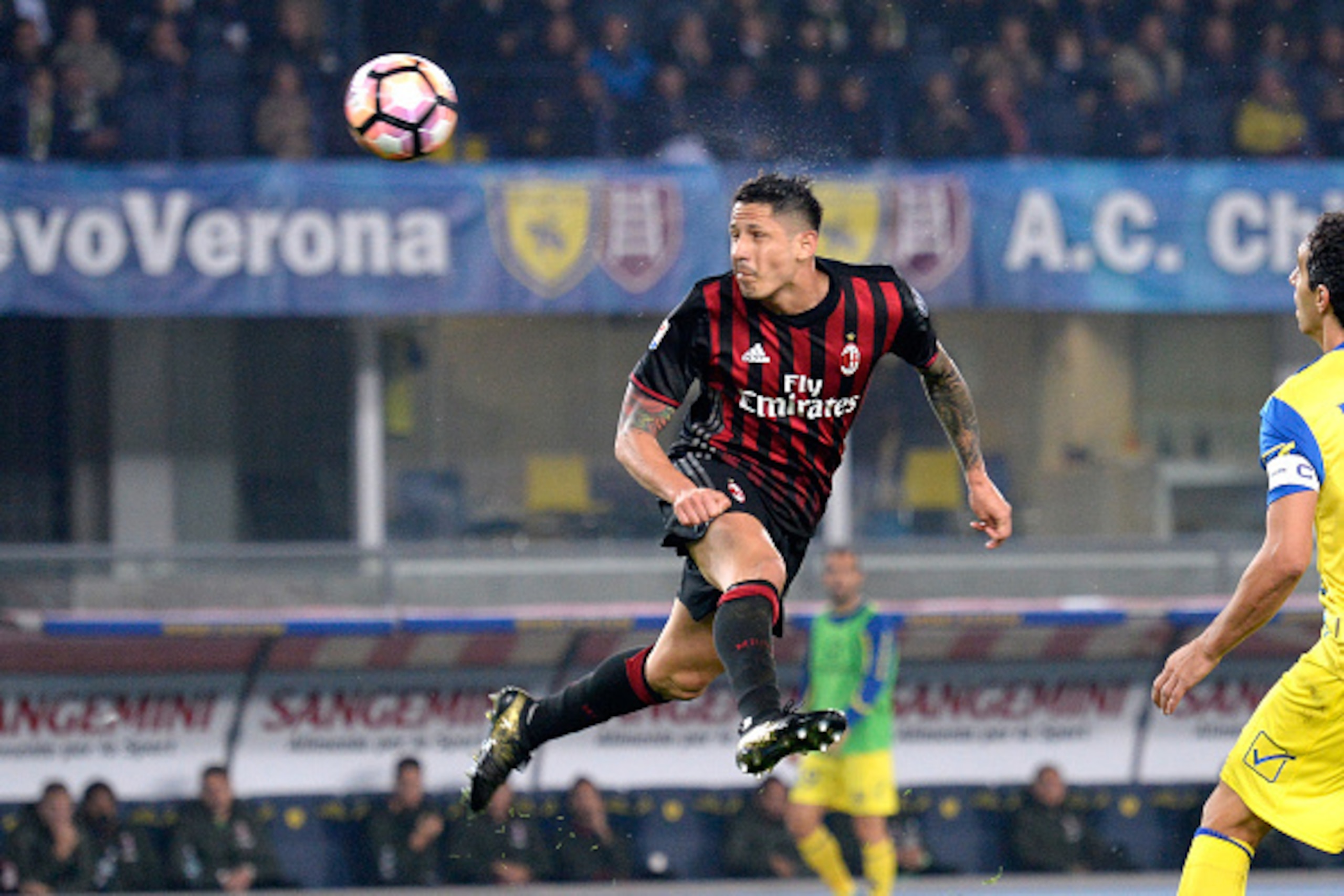
Speaking after the 3-1 win over Chievo last Sunday, he singled out Gianluca Lapadula for praise despite the fact that the striker, standing in for the rested Carlos Bacca, had less touches than any other Milan starter.
“Lapadula played with great temperament and hunger,” Montella told Mediaset Premium (h/t Football Italia). “He gave his all and was exhausted by the end. He really helped his team-mates, and I am very happy with him.”
Considering the importance Montella has traditionally placed on possession, his lauding of a player who had so little of the ball was noteworthy. It perhaps showed that, though he was brought in to imbue Milan with a more entertaining playing style, he is unwilling to compromise on the more rustic principles embedded last season by Sinisa Mihajlovic.
This marriage of new and old ideals means Milan are now drawing games they used to lose, and winning games they used to drop points in.
On the opening day of the season, they nearly threw away a 3-1 lead against Torino in a capitulation so typical of the team in recent seasons. Seemingly unable to cope with the pressure, they gave away a penalty in the dying embers of that game. Donnarumma stepped up to save, and Milan won.
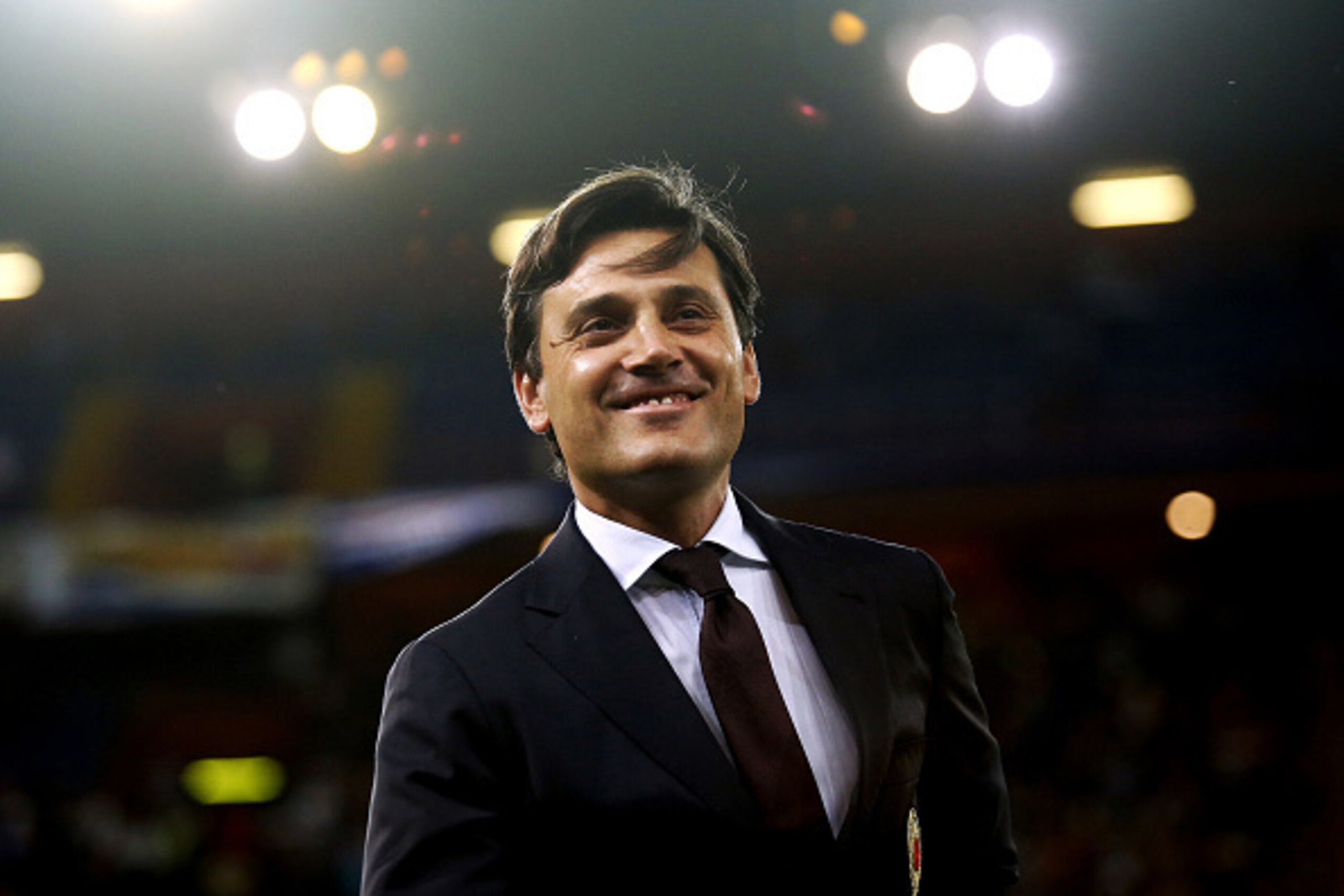
If that moment of individual brilliance doesn’t inspire, perhaps the 4-3 victory at home to Sassuolo was a better example of the seemingly improved resistance brought about by Montella.
After starting well and taking a 1-0 lead, Milan went 3-1 down early in the second half. In the past, the towel would have been thrown in, but this time the team found a way back. Paletta, another member of the ugly core, scored the winner with a header.
Visits to Chievo have tended to yield negative results in recent seasons; Milan hadn’t won, or scored, on their last three trips to the Stadio Marc’Antonio Bentegodi. All of this changed last weekend. Kucka opened the scoring with a thunderbolt from outside the penalty area before putting in an exceptional display of astute defensive work and penetrative attacking runs to lead his team to a 3-1 win.
This change of script has a lot to do with Montella’s conscious decision-making to ensure results. With his in-game changes, the 42-year-old has been positively ascetic, looking to secure leads often at the earliest possible opportunity.
With a 1-0 lead at home to Lazio on 67 minutes, he brought off winger Suso for central midfielder Manuel Locatelli. He made a similar decision at around the same time in the 0-0 draw away to Fiorentina, bringing on Locatelli for forward M’Baye Niang and, later in that same game, he introduced left-back Luca Antonelli for attacking midfielder Giacomo Bonaventura.
After 70 minutes away to Chievo, Montella took off lone striker Lapadula and brought on playmaker Jose Sosa. And, with nine minutes of normal time remaining and a one-goal lead to protect, he sent on battling midfield ball-winner Andrea Poli to replace Suso on the right wing.
Milan aren’t harder to beat by coincidence, but by design. Montella’s pragmatic substitutions are evidence of a points-over-pleasure policy he appears to have adopted early on in his tenure with the club.
The coach has also worked to ensure that, while many consider his preferred style of play to be enlightened, he is no laissez-faire leader. Indeed, his man management has been decidedly firm, something best showcased by his treatment of top scorer Bacca following a disagreement after the bitterly disappointing 1-0 defeat to Udinese at the San Siro.
After that loss, Montella resolved not to allow for complacency, calling for an improved mentality. “I expect anger, pride and responsibility, in addition to the technical and tactical aspects, which are secondary,” he told reporters. “No one is untouchable in this team.”
And, as if to hammer home the point, he dropped Bacca for the next game, a tricky clash with Sampdoria at the Stadio Luigi Ferraris.
According to La Gazzetta dello Sport (h/t Football Italia), the striker had complained about the quality of service, or lack thereof, he was receiving from team-mates. Montella proposed that the Colombian should instead focus on his own positioning.
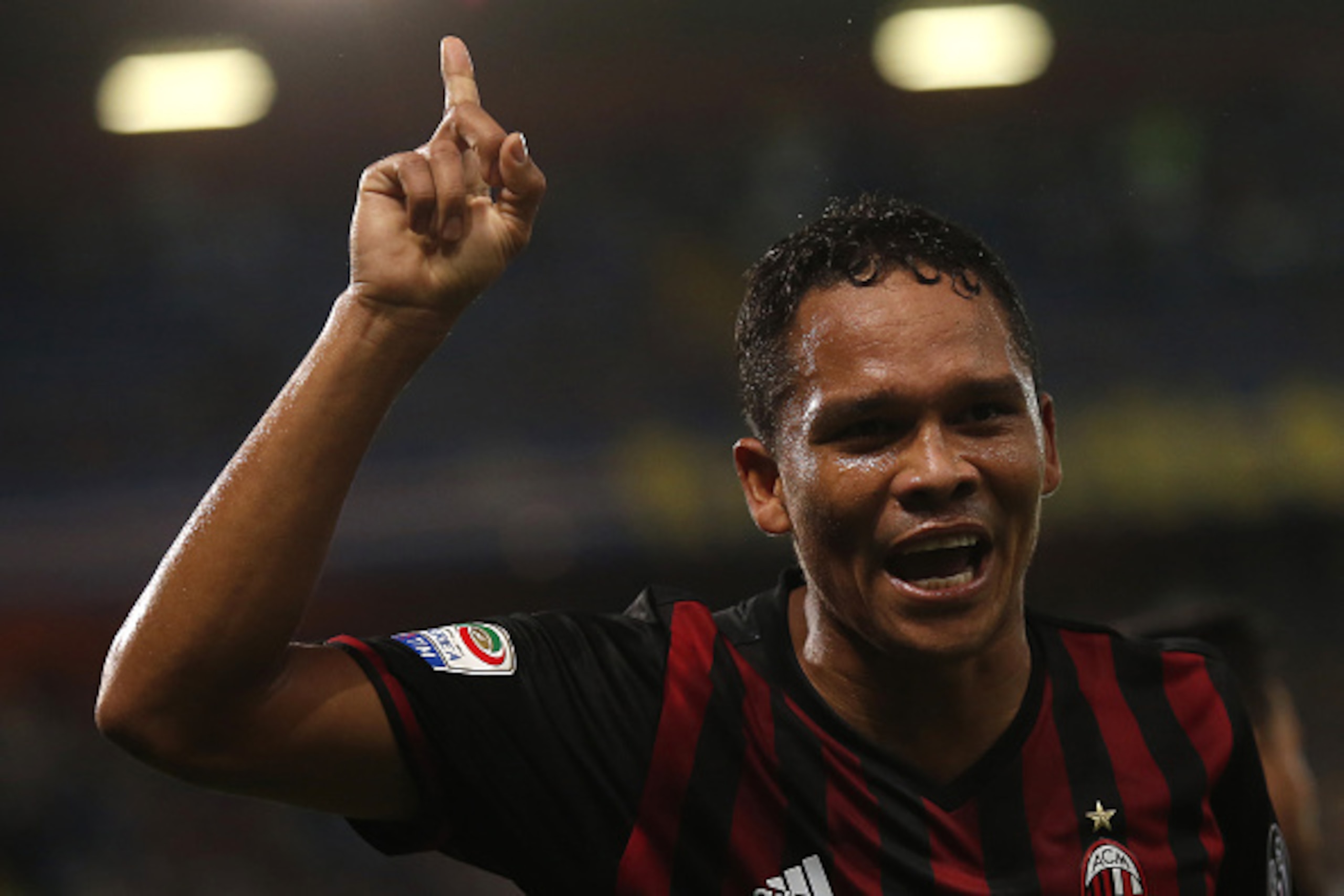
Bacca was out, and Lapadula was in. But, with the score tied at 0-0, Bacca was brought on and, evidently motivated by his short spell on the sidelines, went on to score the only goal of the game. “I respect the coach’s decision,” the poacher told the press afterwards. “I need to do my talking on the pitch.”
Having made his presence felt with the squad, Montella, whose persona is usually calm and collected, also hasn’t been afraid to show his feelings during games; he was sent off at half-time of the Sassuolo game for remonstrating with referee Marco Guida.
Outwardly, Montella has often resembled a nonchalant idealist. But, upon close scrutiny, there appears to be an iron fist concealed within his velvet glove.
Key players within his team’s spine are solid, built primarily for functionality. He celebrates work rate just as much as he does skill. His tactics are infused with pragmatism, his man-management is authoritative, and it is now clear that he possesses a fiery touchline persona.
All of this isn’t necessarily what Milan signed up for. But the most important thing is, thanks to Montella, they are winning again.
All statistics provided by WhoScored.com unless otherwise stated.
.jpg?w=2560 "Titans Giants Football")



.jpg?w=2560 "Ward Nearly Walks Out of Presser 😳")
.jpg?w=2560 "Tyreek makes another cryptic post amid Chiefs rumors")