

AC Milan's Ugly Backbone Proves Instrumental Once Again in Victory over Chievo
Beauty is hard to define. What constitutes it is a question that remains unanswered to this day. In football, the same debate rages, though there does exist a widespread understanding of what elements generally makes up "beautiful" play.
Usually, it involves a fluidity of movement, an intricacy in possession and an ability to improvise in tight situations. It is dynamic, hard to track and exhilarating to watch. By these loose conventional standards, AC Milan are more beautiful now than they were last season or even the season before that.
TOP NEWS

Billboard Trolls Man City 👀

New NFL contenders starting to emerge after Week 4
.jpg?w=2560 "Cardinals Giants Football")
NFL investigating 2 referees for separate viral exchanges
However, there remains an underlying ugliness to this Milan. The team’s spine, including goalkeeper Gianluigi Donnarumma, centre-back Gabriel Paletta and central midfielder Juraj Kucka, is far from easy on the eye. But these players are proving integral to Vincenzo Montella’s side. Indeed, Milan may not have won on Sunday without them.
Chievo away is the sort of game the Rossoneri usually do not win. In fact, it is exactly the game that they don’t win when you take recent seasons into account. Prior to Sunday’s trip, in each of their last three visits to the Stadio Marc’Antonio Bentegodi, Milan had failed to pick up three points. More than that, they had failed to score, with each clash resulting in a turgid 0-0 draw.
This uninspiring run was broken on Sunday, as Montella’s side won 3-1 to charge wholeheartedly into Serie A’s Champions League qualification spots. There’s no likelihood of nosebleeds just yet, as the season is still only eight games old, but there is plenty of room for optimism. And the hope comes from the least likely of sources.
Montella came to the club in June with a proviso of engendering a fresh style of play more in line with the club’s spectacular recent history than the functional end product offered during Sinisa Mihajlovic’s ill-fated reign last term. If not the idealistic fluency of Arrigo Sacchi’s team, the sweet efficacy of Fabio Capello and Carlo Ancelotti’s Milan teams was to be Montella’s benchmark.
And the 42-year-old has had some success in this respect.
Milan’s buildup is now more patient and effective, with fewer thoughtless long balls and aimless, panicked clearances and more measured short passes and considered positioning. In the same vein, their approach to the final third is based more on interchanges, fluid movements and combinations between players as opposed to sparks of individual brilliance.
All of this was on show, to an extent, against Chievo. However, it is Montella’s embracing of his side’s more functional players that ultimately won Milan the game.
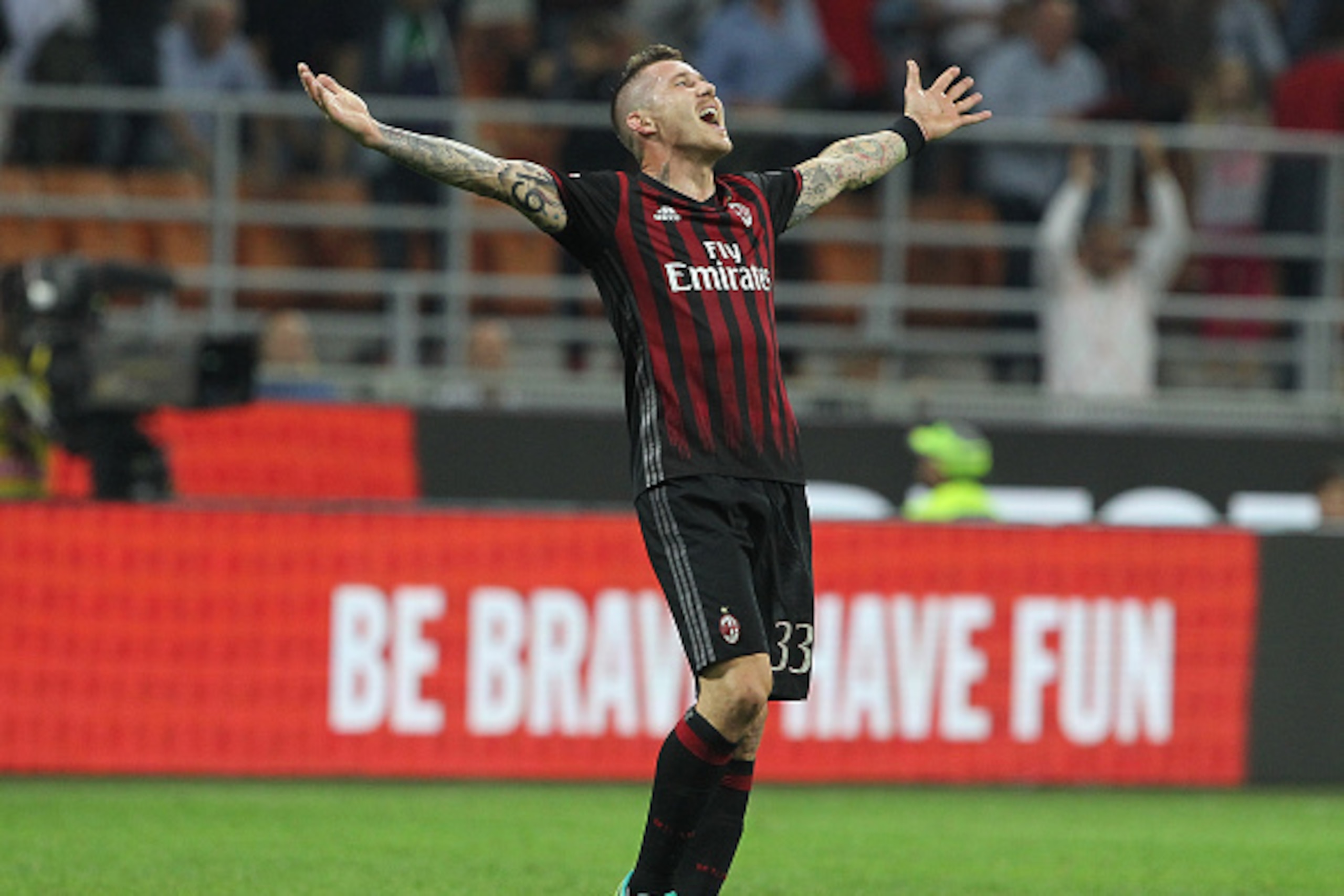
Just before half-time, the uncouth Kucka unleashed a strike he is highly unlikely to replicate. Picking up the ball in a moment of attacking transition, he drove forward in his typically ebullient, slightly chaotic manner. Brushing off the attentions of several markers, a thought crossed his mind: What if I took a shot? While most Milanisti were undoubtedly begging him not to entertain the notion, and his team-mates were seeking a pass, the Slovak had already made up his mind.
He proceeded to lash home an unstoppable finish, with his weaker left foot, from outside the box, avoiding deflections off Chievo defenders. Stefano Sorrentino didn’t stand a chance; the home side’s goalkeeper could only flail helplessly as the ball careened beyond him, hitting the net and bouncing back out.
There was nothing elegant or sophisticated about the goal. It was unexpected, sudden and ferociously forceful. In many ways, it embodied Kucka. A midfield dynamo whose first instinct is to move forward, he has somehow become a vital component of Montella’s team in spite of the fact that, stylistically, he seems to almost entirely juxtapose the coach’s philosophy of composed, controlled possession.
Aside from the goal, he was Milan’s best player against Chievo. Dropping back to form a midfield two alongside the inexperienced 18-year-old Manuel Locatelli, he provided the necessary defensive protection and forward surges to prove productive in both phases.
He made more tackles than any of his team-mates—three—while with two key passes and one dribble, he was also one of the more threatening offensive players in red and black.
Behind him, the equally crude Paletta put in a remarkably dogged performance in central defence alongside the more technically astute Alessio Romagnoli.
As a fairly limited centre-back who spent last season on loan at Atalanta, where he failed to impress, Paletta was not envisioned to be an ideal fit for Montella’s ideas. His passing is basic; while he has no issue finding a team-mate, he rarely plays incisive balls through the opposition’s press. Against a Chievo side that often opted to defend high up the pitch and pressurise Milan’s back four, this could have been an issue, but the 30-year-old was generally unmoved.
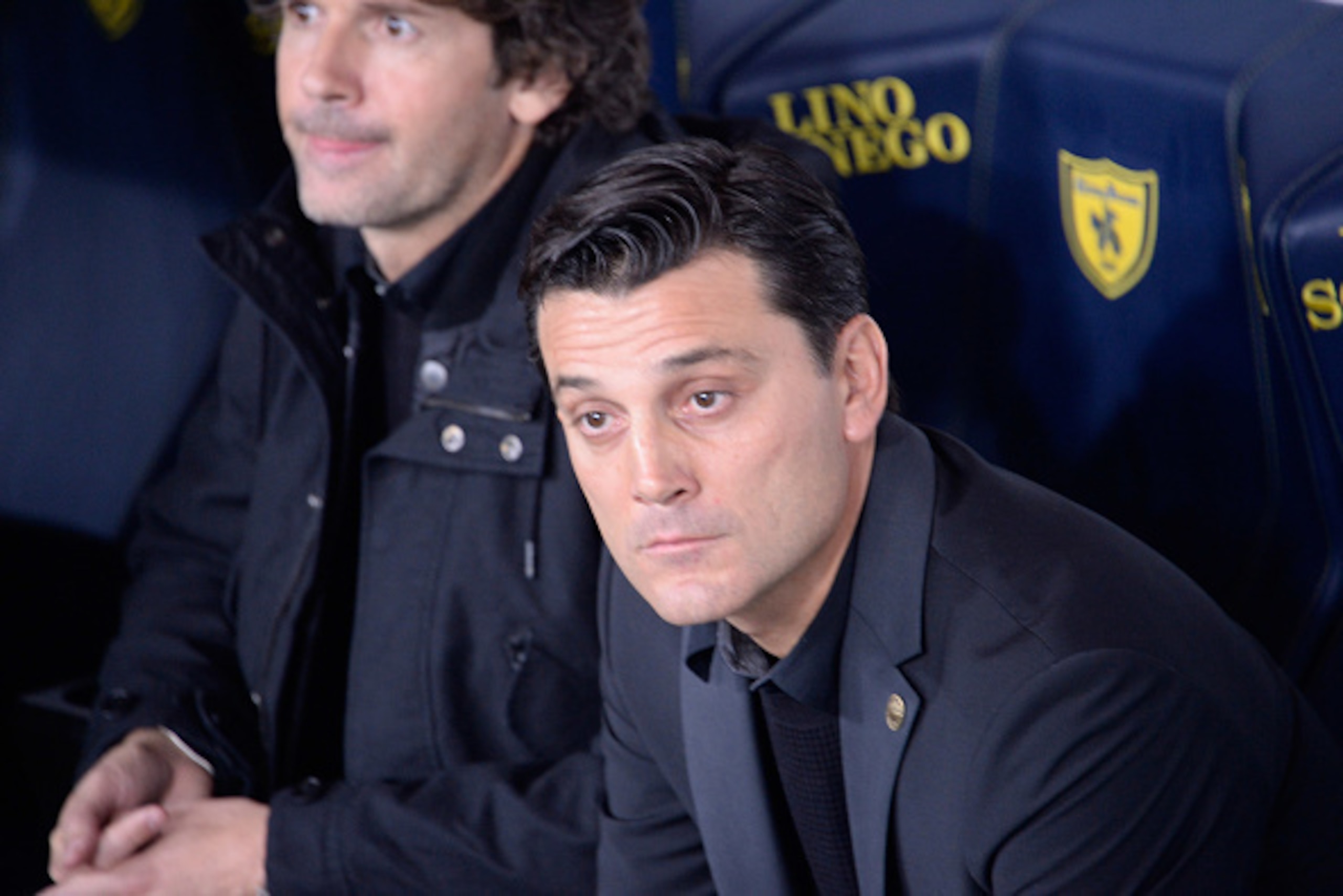
His commanding, all-action display included two tackles, two interceptions and six clearances. And, while it was his foul that led to Chievo’s opening goal via a Valter Birsa free-kick, it was also his slight touch that prevented a clean scoring opportunity as Milan’s hosts sought to add a second late on.
Reinforcing Paletta was the 17-year-old Donnarumma, a goalkeeper whose remarkable composure belies his tender years. But while the youngster is unflustered on the ball, he remains far from the sweeper-keeper Montella may want him to develop into to further Milan’s ball-playing intentions. His distribution is occasionally wayward and positioning askew, but his reactions and dominance of the penalty box are exceptional.
A recent poll on Calciomercato.com suggested that 43 per cent of Milan fans want the teenager to replace the injured Riccardo Montolivo as team captain.
Handing someone so young the armband would be a huge decision and is one Montella would be wise not to take, though the 'keeper, who once again showed the commanding aura, organisational qualities and fan engagement against Chievo that many great footballing leaders showcase, is already an obvious long-term candidate for the role.
Donnarumma, Paletta and Kucka, while having their limitations, have proved to be consistent, effective and no-nonsense. Such characteristics aren’t what many predicted would be associated with Montella’s Milan, but it is this rugged spine that drove the team on to a first away win over Chievo since March 2013.
This hardened underbelly was only added to on Sunday by the presence of Gianluca Lapadula up front. The 26-year-old has failed to assert himself upon the lineup or scoresheet since his arrival in the summer, but in his tenacious battling and relentless running at the Bentegodi, he showed traits that have been missing from the Rossoneri’s attacking options in previous years.
He will undoubtedly be relegated to the substitutes' bench once Carlos Bacca is back to full fitness, but he was singled out for praise by Montella postgame.
"Lapadula played with great temperament and hunger," the tactician told Mediaset Premium (h/t Football Italia). "The team didn’t give him much support, while he gave his all and was exhausted by the end. He really helped his team-mates, and I am very happy with him."
Milan are much more fun to watch under their new coach, though perhaps more important is that there is now an increased grinta, or grit, infused throughout the team.
The journey toward beautiful football is underway. But until it is fully embedded, Montella looks set to embrace the ugly.
All statistics provided by WhoScored.com unless stated otherwise.

.jpg?w=2560 "Titans Giants Football")

.jpg?w=2560 "Cam Ward Impatient at Presser 😳")

.jpg?w=2560 "Buzz: Tyreek Eyeing November Return")