

Why Giants' Red-Zone Woes May Stand in Way of Winning NFC East
Over the last two weeks, the New York Giants have had a massive problem offensively: punching in the football when the field gets shorter. Against the New Orleans Saints and Washington Redskins, the team scored two touchdowns in eight red-zone trips, which doesn't even include their decision to knee out a series and kick a field goal for the win against the Saints.
Point blank, if New York only converts 25 percent of its red-zone drives into touchdowns, they won't be winning a majority of their games this season. According to TeamRankings, the Giants had the third-worst red-zone percentage in the league last season with a 44.4 percent touchdown rate.
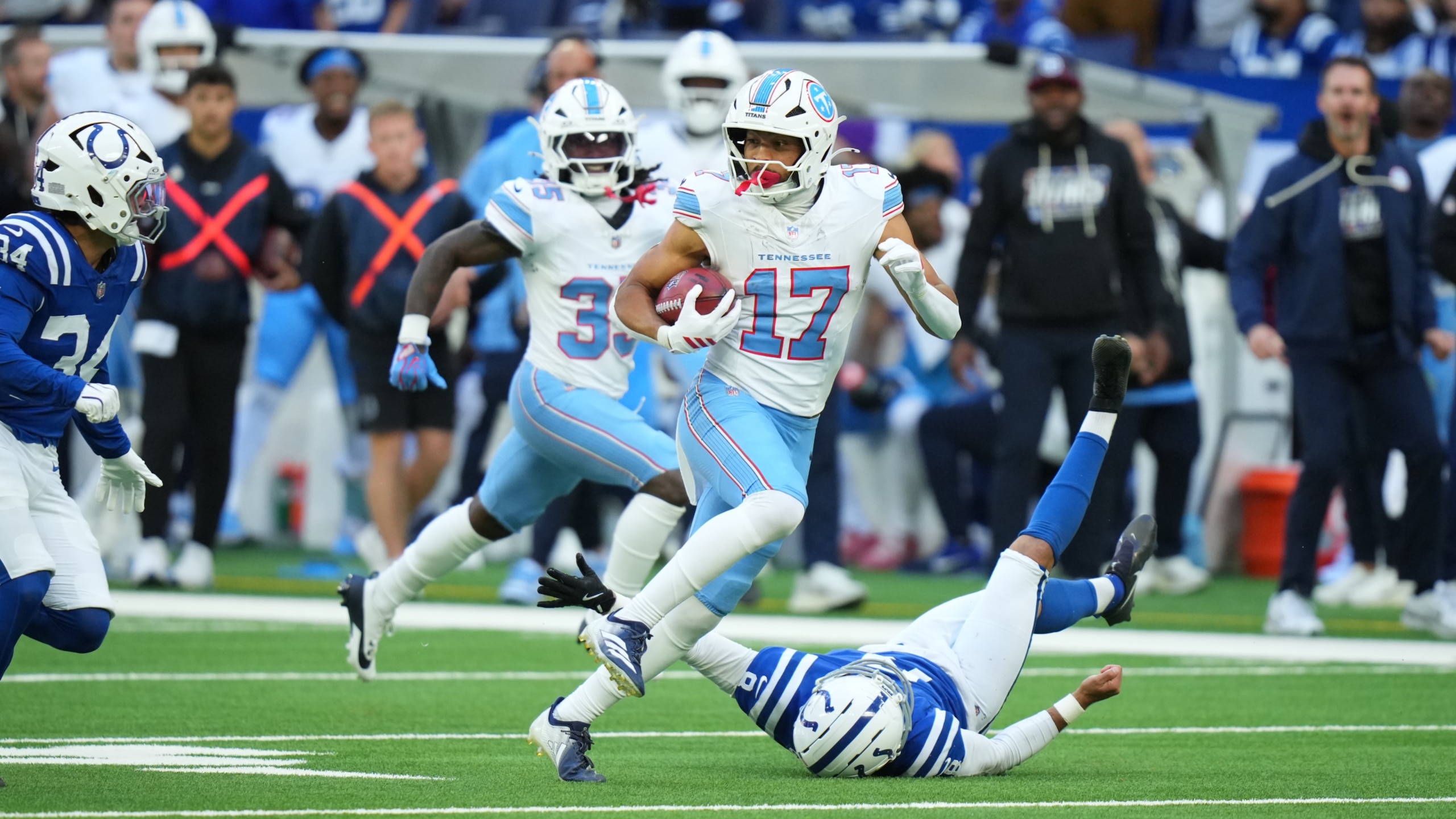
The only teams equal or worse than New York? The Dallas Cowboys, San Francisco 49ers and Cleveland Browns, who combined for a 12-36 record in 2015. Something has to change, and it has to change quickly.
The root of their problem is simple: They want to run their offense through receiver Odell Beckham, their top pass-catching target, and running back Shane Vereen, their top backfield threat. On paper, that makes sense, but when put into execution, balls are being forced.
On their opponent's side of the field this season, second-round rookie receiver Sterling Shepard—not Beckham, who has zero touchdowns—has been the team's top big-play threat. Why is that? Because when Shepard gets the ball in his hands, it is typically based out of concepts rather than isolated routes.
In the way the league is built in 2016, most NFL defenses play a majority of their time, even in the red zone, in single-high safety looks, with either Cover 3 or Cover 1 concepts. This gives a "middle of the field closed" look to an offense, which negates for the potential of a post route thrown into the middle of the field.
There are two options to go from there as a passing game. You can either play one-on-one vertically down the sideline, betting on your own outside receiver, or you can try to use a combination of routes to send a man open, depending on if it's a man (Cover 1) or zone (Cover 3) look post-snap.
Even against the Cowboys in Week 1, when New York was two-of-two converting red-zone drives into touchdowns, their mentality was clear. They wanted to get the ball to Beckham vertically.
Unfortunately, this hasn't worked for them this season, a reflection of their results of 2015. For example, the squad went with a back-to-back fade route and speed out route to Beckham in the fourth quarter against Dallas when down six points.
The problem is that only gave the Eli Manning-to-Beckham connection around five yards from the sideline to make their magic work. The margin for error on plays of that nature is very, very small, and led to back-to-back incompletions.
While red-zone calls, by nature, involve constricted space for passing lanes, the Giants weren't helping themselves by calling plays with the primary read being a speed out, utilizing only five yards of space horizontally, when they could have ran concepts that tested the other 48 yards on the field with more room to breath.
On 3rd-and-goal, head coach Ben McAdoo ditched the sideline approach to passing the ball, instead calling Manning's third throw to come from a snag concept, a triangle read that forces defenses to stretch vertically and horizontally in two ways with three routes. The result? A touchdown to receiver Victor Cruz, a noted route-runner, which gave them the lead and an eventual one-point win to kick off the season.
With the quick breaks of their trio of great route-runners in Beckham, Cruz and Shepard, the team shouldn't be relying on vertical routes, especially considering that Cruz, who measured in at his pro day at five-eighths of an inch over 5'11", is the longest receiver of the bunch.
Theoretically, if you were to draw up how this offense would work most efficiently in the red zone, you would hope they could execute combination routes—like triangle concepts, double slants or slant-flat "pick plays" against single-high coverage—utilizing their receivers' best traits. If a team then starts to play two high safeties to pick up the high routes, it's time to run the ball, as they only make getting into run fits more difficult with two defensive backs that far off the ball.
To no surprise, the Giants' most explosive runs in the red zone have come against two-high safety looks. Against Dallas, their other red-zone touchdown went to Shepard, who was able to score off a modified slant-flat concept that sent him first to the flat, just to turn up on a wheel route on the sideline:
With the cornerback vacating the area to cover the slant from the outside receiver, Shepard was able to create enough room to high-point the ball before the man covering him was able to get his head around and track it, a much more effective way of attacking the sideline than simply running a goal-line fade or a speed out.
The Giants forcing the ball to receivers, rather than allowing coverage to dictate who should get the ball, has been their issue all season, even if they did manage to execute on two plays in Week 1. In the last two weeks, they have scored just 43 points while their NFC East rivals have scored 63 (Philadelphia), 58 (Dallas) and 52 (Washington).
Season-long, only two other NFC teams have scored fewer points than New York and posted a winning record. Those teams are the Seattle Seahawks and Los Angeles Rams, squads noted over the last few years to have dominant defenses, and they both scored 37 points a piece last week alone, six points shy of the Giants' last two games combined.
With all of that being said, public perception matters little, whereas sportsbooks have a tangible investment on being correct when valuing teams: their own wallets on a grand scale. According to Odds Shark's updated numbers, Dallas, New York and Philadelphia have the same odds, 22-1, to win the Super Bowl, which ranks them as the ninth-most likely teams in the league to bring home the Lombardi Trophy.
From a power-ranking standpoint, those who are strongly invested in being correct say there is little to no difference between those three squads, who are a combined 7-2, but that Washington, at 1-2, is a distance behind.
That might be problematic, as Dallas only plays three out-of-division playoff teams from 2015 in their remaining schedule, while New York and Philadelphia have four on their slate. With Philadelphia having a leg up on New York, with their 3-0 record compared to the Giants' 2-1 record, you can make the case that New York is behind the eight ball in the trio.
The margin for victory is razor-thin in the NFL, as the Giants have learned by playing in three straight games decided by three or fewer points this season. If they are just one loss behind the lead in a competitive NFC East, they could be the third team in the division.
With only two wild-card spots available for the four NFC divisions, the game of musical chairs could be brutal, as there are eight teams with 2-1 records or better in the conference and just six slots to fill at the end of the season. If New York comes in third in the NFC East, you can kiss their playoff hopes goodbye, as a division hasn't sent three teams to the NFC playoffs since the 2007 regular season.
The Giants need to tighten up their red-zone efficiency to clock into the playoffs, and they have no time to waste. With a 2-1 record, sitting a game behind Philadelphia and holding the current tiebreaker over Dallas in-division, the Giants will be making a two-game road trip to Minnesota and Green Bay, who are a combined 5-1 this year, with the Packers' lone loss coming to the Vikings.
According to Football Outsiders' sabermetric DVOA (defensive-adjusted value over average), Minnesota has the third-best defense in the league, ranking fourth overall in pass defense and run defense, while Green Bay has a top-10 mark and boasts the league's strongest run defense. That's a big jump in competition compared to Dallas, which ranks 23rd overall, New Orleans, which ranks 30th, and Washington, which ranks 25th.
Per Odds Shark, the Giants opened up as 3.5-point underdogs against Minnesota for their Monday Night Football matchup, a game that has already been bet up to 4.5 points on most books now. If they lose that game, they will have little momentum rolling into Green Bay, who would be coming off of a bye week as the Giants come off a short week of rest.
The Giants offense needs to get more efficient when neck-and-neck with the end zone, and they need to do it in a less-than-ideal situation on the road against two of the more dominant defenses in the league. If they drop down to 2-3, that may not be a hole they can climb out of in the NFC East.
Philadelphia leads the league with a plus-65 point differential, with the next best mark NFL-wide being plus-36. Both the Eagles' and the Cowboys' rookie quarterbacks have a total of zero interceptions over six games, a mark of steady production through the air, which the Giants lack.
This isn't a hard adjustment for New York to make, as their offense has worked best when running combination routes against single-high safety looks and running against two-high looks in compressed space, but the offense's focus on making Manning-to-Beckham work needs to go out the door. If not, expect more kicking net abuse and the Giants' fourth straight losing season.
.jpg?w=2560 "49ers Football")
.jpg?w=2560 "Saints Giants Football")

.jpg?w=2560 "Bold Predictions for 2026-27 NBA Season 🔮")