Magic Outside Maracana: Brazil's Gold Medal Brings Joy to the Streets of Rio
RIO DE JANEIRO — He could hear the rise and fall of the crowd in the distance, the sound of 80,000 fans climbing and spreading into the rainy Brazilian evening.
Sergio Robonte stood at a bar outside of Maracana Stadium, where in minutes Brazil would play Germany in the gold-medal soccer match. Here in the shadow of the massive coliseum, Robonte explained this was the moment Brazilians had been waiting for since the Olympic Games were awarded to Rio seven years ago.
“This is our chance to show the world our greatness,” said Robonte, a 34-year-old Rio native who runs his own business. He wore a yellow Brazilian soccer jersey and had his country’s flag draped over his left shoulder like a toga. “I had to come.”


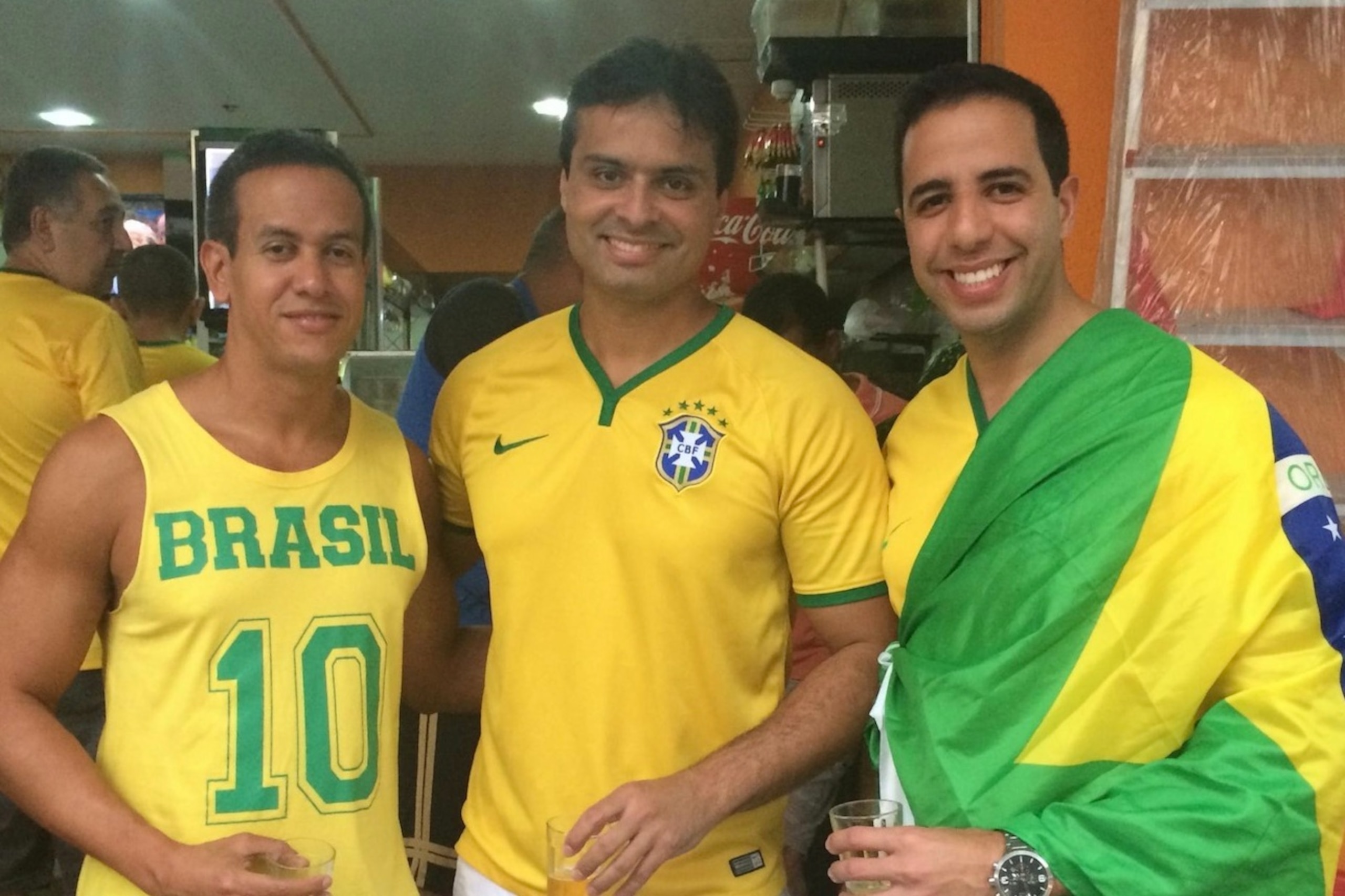
It is hard to overstate the importance of Saturday’s soccer final to Brazilians. Soccer—futebol—is the air Brazilians breathe, the sun in their sports solar system. Brazil has won a record five World Cup titles and the country’s success in the sport is the touchstone point of pride to the entire nation.
From the poor favelas to the tony neighborhoods on the beach, the one common scene you’ll see throughout Rio is little kids kicking around a soccer ball. That ball is the most powerful unifying force in this troubled nation. This is a beautiful thing in Brazil, whose biggest celebrity—athlete or non-athlete—is Neymar, the 24-year-old Barcelona forward who was held out of the Copa America this summer to play as an age exemption in the Olympics, an under-23 tournament.
“Every child in Brazil dreams of playing for our country,” said Bruno Sousa, 32, an engineer in Rio. He, too, was adorned in a yellow Brazilian jersey at the bar. “In our country, soccer is everything. And now we get a chance to get revenge on Germany.”
Indeed, it was the national team’s collapse two years ago against Germany that freighted Sunday’s game with even more importance to these proud Brazilian fans. On July 8, 2014, the Germans administered an epic 7-1 shellacking to the Brazilians in the semifinals of the World Cup, which was played in Brazil.

The two countries hadn’t faced each other since that afternoon, and even though Neymar was the lone player on either of those World Cup teams who started on Saturday, the game offered a delicious shot at redemption for the Brazilians.
There also was the matter of the Brazilians needing something to feel good about. This is a country that has been mocked and bashed around the globe for about two years now. The list of problems here is long: a historic recession, contaminated water, the Zika virus, street crime, political instability, the ever-present smell of sewage, and on and on.
The Brazilians have heard all the verbal jabs, and most will be happy when the rest of the world moves on next week. But Brazil had one chance to punch back: win gold in soccer and definitively show they still could do one thing better than anyone else on the planet.
“Nothing in the Olympics is more important to us than this game,” said Robonte in the bar. “Nothing.”

As the game kicks off pockets of fans are lingering outside the stadium, many watching the action on their phones, riveted. Then it happens: About midway through the first half, Neymar blasts a free kick from 30 yards out into the upper left corner of the goal. It is one of the most gorgeous goals in Olympic history.
The fans outside the stadium are as delirious as the ones inside. They jump and scream and hug and dance the samba. Even stone-faced police officers are suddenly smiling and slapping high-fives. It all looks like a near-religious experience, the way fans raise their arms to the heavens. All the troubles in Rio, for just a few heartbeats, have vaporized into the night.
But then there is despair. Thirteen minutes into the second half, Germany’s Max Meyer slides a point-blank shot past Brazilian goalkeeper Weverton to even the score, the first goal that Brazil has surrendered in the Olympics. At an outdoor cafe near the stadium, wails of “Noooo!” echo through the heavy evening air.

At another little bar, with the stadium aglow in the dark distance, fans are so absorbed in the action on a television screen it’s as if they’re all watching the birth of their first child. Tension is spread across their faces as the minutes tick down in the second half with the score even at one. No one appears interested in drinking.
The game moves into extra time. The first 15 minutes produce no goals. More fans have now congregated outside the stadium, as if being close to the cathedral that is every bit as sacred to Brazilians as Yankee Stadium is to New Yorkers more fully connects them to this emotionally charged moment.
Many fans look as gassed as the players. On the field, Neymar is limping so badly in the second period of extra time he struggles to move. Inside the stadium the referee’s whistle blows, signaling penalty kicks.
The first four shooters for each team score. Every time a Brazilian player smashes the ball into the back of the net a roar rises from the stadium that can be heard at a bar two blocks away. It’s 4-4 in the penalty shootout.

Then Weverton, the Brazilian keeper, guesses correctly and lunges to his left for the save on Germany’s Nils Petersen. In the jam-packed bar there is an explosion of noise that seemingly rockets all the way to the nearly full moon hanging in the sky; men and women leap up and down as if on pogo sticks. Strangers hug. “This is it!” a man yells in English.
On the bar’s lone television screen Neymar approaches the ball for the kick that could deliver Brazil its first Olympic gold medal in soccer. Scores of fans wrap their arms around each other, everyone’s eyes blazing with intensity. A few men turn away from the screen, unable to bear the pressure of the kick.
Neymar strikes the ball into the net. Immediately a few grown men sob, some dropping to their knees. Everyone is hugging. Several people dash out into the street, running around because they don’t know what else to do.

It feels like a wildest dream has been realized. The bartender hands out free drinks, passing out Skol beers as fast as he can. It’s easy to imagine bars across Rio running out of alcohol in the coming hours.
“This is beautiful, just perfect,” a middle-aged man decked out in Brazil’s yellow and green yells above the din. “All is right now.”
For over an hour they dance and sing and embrace in the bar. No one wants to leave. They are wholly together, joy radiating on all their faces, as if that is the only emotion available tonight, all their problems temporarily washed away by that beautiful ball.
It is magic to behold.


.jpg?w=2560 "Report: Darnold Could Miss 3-6 Weeks")
.jpg?w=2560 "Week 2 Start 'Em, Sit 'Em Decisions")