

Texans vs. Panthers: What's the Game Plan for Carolina?
Last season, the Carolina Panthers started on the road in Florida and picked up a victory. They followed that up with a convincing, double-digit win in their home opener to start the season 2-0.
That sounds like a great road map for starting a season, and it’s precisely what the Panthers will try to do against the Houston Texans on Sunday, but it hasn’t always been that simple. In their 20-year history before 2015, the Panthers have opened the season 2-0 only five times—or, in other words, precisely what random chance would indicate an average team would do.
.jpg?w=2560 "Saints Giants Football")
| 1996 | vs. ATL, 29-6 | @NO, 22-20 | 12-4 | Loss in NFC Championship |
| 2002 | vs. BAL, 10-7 | vs. DET, 31-7 | 7-9 | None |
| 2003 | vs. JAX, 24-23 | @TB, 12-9 | 11-5 | Loss in Super Bowl |
| 2008 | @SD, 26-24 | vs. CHI, 20-17 | 12-4 | Loss in Divisional Round |
| 2014 | @TB, 20-14 | vs. DET, 24-7 | 7-8-1 | Loss in Divisional Round |
Of course, the Panthers don’t want to be an average team—they want to win the division for the third year in a row. Starting 2-0 is a great way to accomplish that task. Since 1990, when the NFL playoffs expanded to 12 games, 128 of the 204 teams that have started 2-0 have made the playoffs, or 62.7 percent.
How will the Panthers get that 2-0 start when the Texans come to town? Let’s take a closer look.
Offensive Game Plan
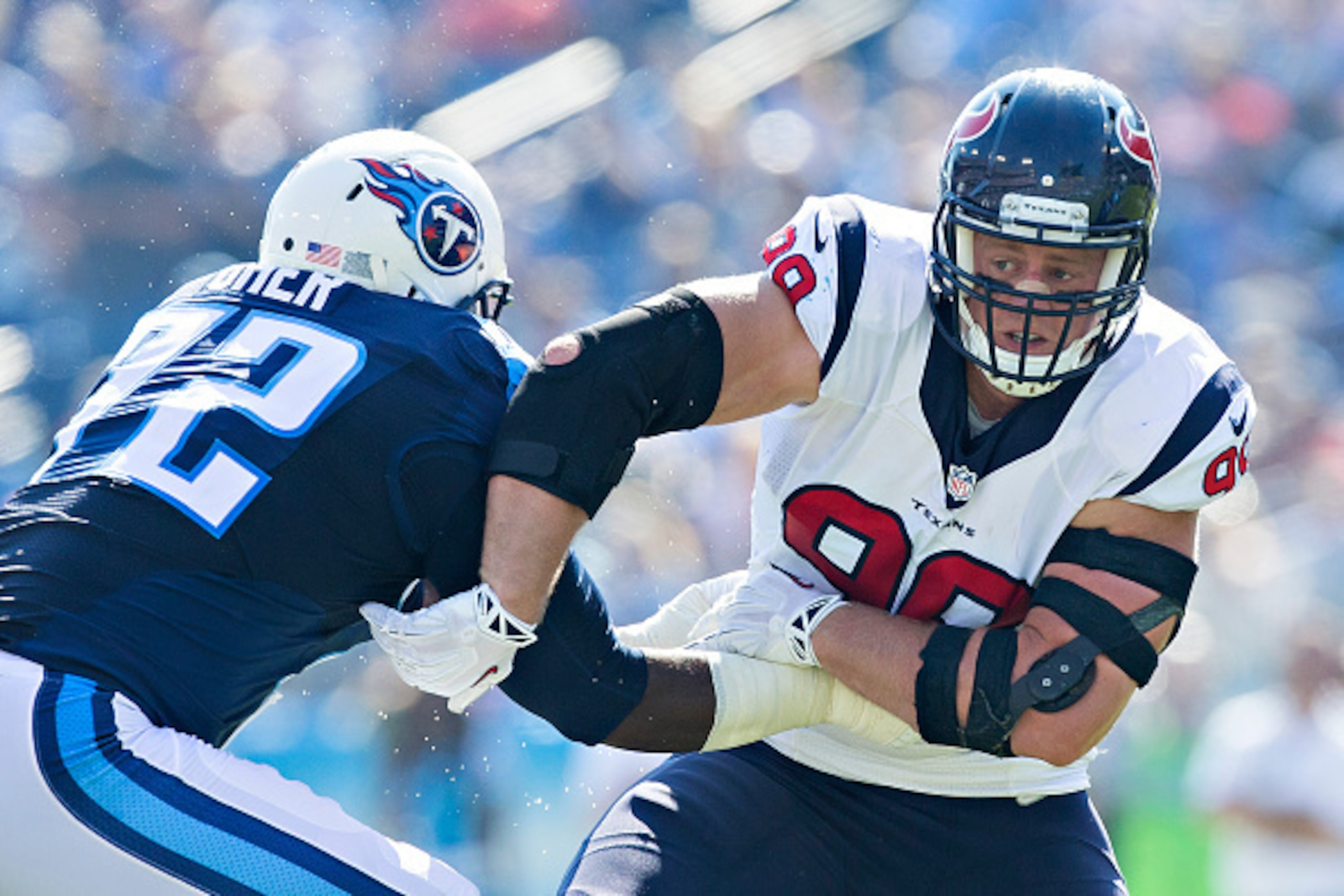
When playing the Houston Texans, your first duty is always to stop J.J. Watt. Watt is arguably the best player in football, especially if you consider all positions to be equally valuable. While I would rather have a top-flight quarterback thanks to the importance of the position, Watt’s incredible pass-rush prowess and far-above-average abilities in run defense make him a franchise cornerstone.
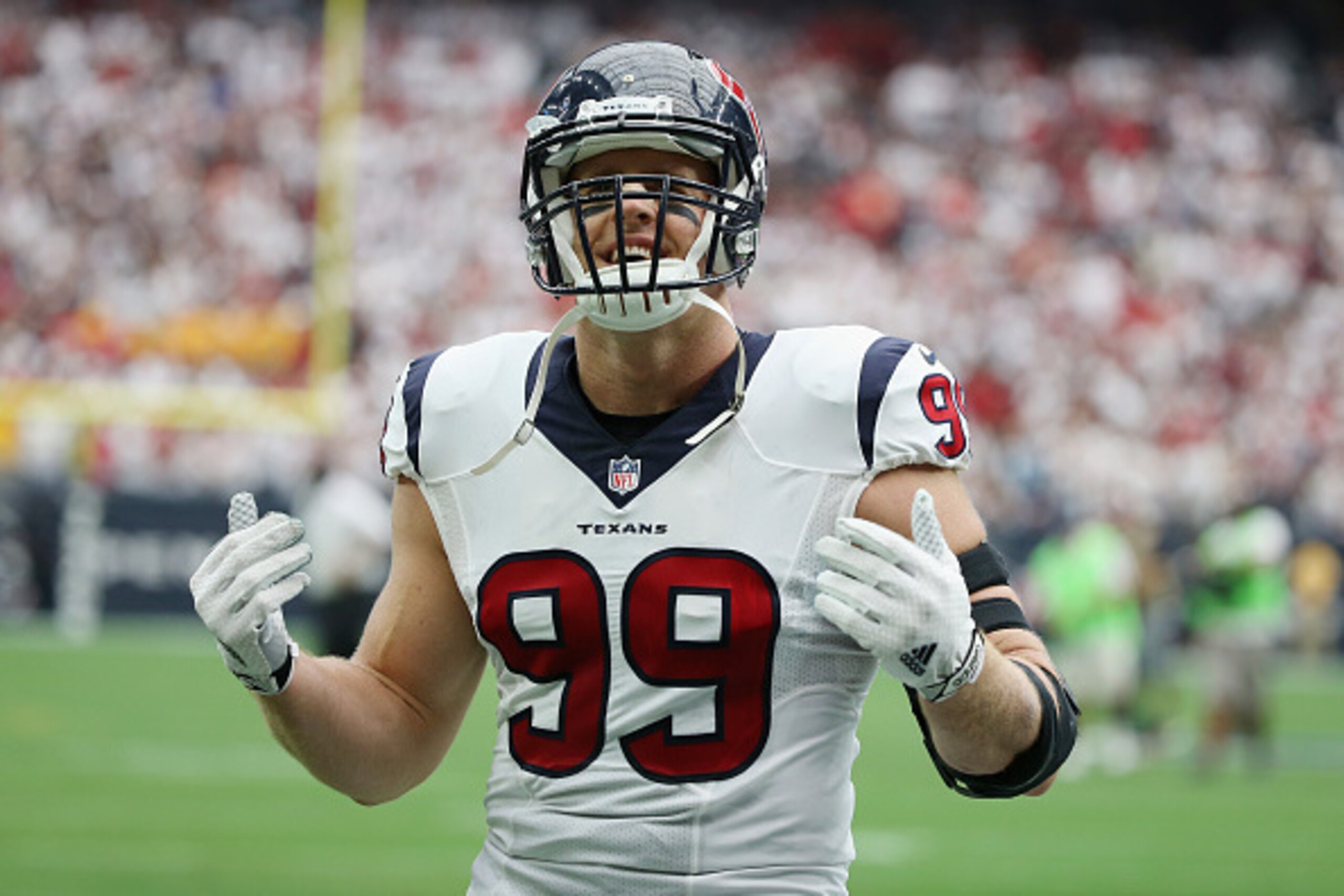
It’s nearly impossible to stop Watt. He has 13 sacks in his last six games. Pro Football Focus has him charted with 31 defensive “stops”—solo tackles that constitute an offensive failure—over the same time period.
He’s only graded out negatively in PFF’s grades once in his last 16 games, hitting a low point of minus-0.4 in a game where he still had five quarterback pressures. He hasn’t had an out-and-out bad day since the first half of his rookie season.
To make matters worse, he’s schematically diverse. Watt lines up all over the formation, as this table from ESPN shows. While Watt normally lines up in a 5-technique position—on the outside shoulder of the offensive tackle—he’s been known to shift to defensive tackle or even as a standup linebacker as the situation warrants. The Texans move him all around the field to create mismatches.
On the Panthers’ offensive line, that means the offensive tackles. Michael Oher has matched up against Watt and the Texans on a yearly basis, thanks to his career in the AFC, and Watt has consistently won those battles. While not all of Oher’s snaps have come lined up directly across from Watt, Oher’s struggled with the entire Texans pass rush:
| 2011 | 6 | 0 | 1 | 1 | +0.9 |
| 2011 | Div. | 3 | 0 | 3 | -4.0 |
| 2012 | 7 | 0 | 1 | 3 | -3.7 |
| 2013 | 3 | 2 | 0 | 1 | -4.9 |
| 2014 | 8 | 1 | 1 | 4 | -4.3 |
| Total | N/A | 6 | 3 | 12 | -16.0 |
Of course, Watt won’t only be going against Oher. He’ll also get to line up against Mike Remmers, who had a decent game last week. Remmers has never encountered a pass-rusher as good as Watt, and he struggled in last year’s playoff matchup with the Seahawks and their ferocious defense.
One way to help Oher or Remmers would be to double-team Watt, bringing in other players to help block, or at least chip Watt on their way to their passing routes. The Chiefs had some success by devoting multiple linemen to Watt.
On this play, they triple-team him; that’s not something you can do on every play, but sometimes you simply need to devote resources to stop a man like Watt.
Of course, when you do that, you’re leaving yourself short on blockers to deal with the rest of the defense. Watt is by far the best player on the defense, but by devoting doubles to him, you’re asking the rest of your linemen to win one-on-one matchups with players like Vince Wilfork, Whitney Mercilus and Jadeveon Clowney.
The Chiefs were able to win those battles more often than not, which is what allowed them to come out on top. Watt had seven QB pressures against Kansas City, per PFF, but the rest of the team combined had just five.
That’s the philosophical way for dealing with Watt. Accept that he’s going to get his numbers because he’s amazing, but realize that he can’t make a play on literally every snap. Win your other one-on-one battles at the line of scrimmage, and there will be opportunities for the offense to make plays.
Against this defense, “plays” might mean smashmouth football right up the gut behind Andrew Norwell, Ryan Kalil and Trai Turner. There’s no sense messing around with too many outside runs or delayed cuts against a team with the outside speed of the Texans; just hand the ball to Jonathan Stewart and run behind the best three offensive linemen you have.
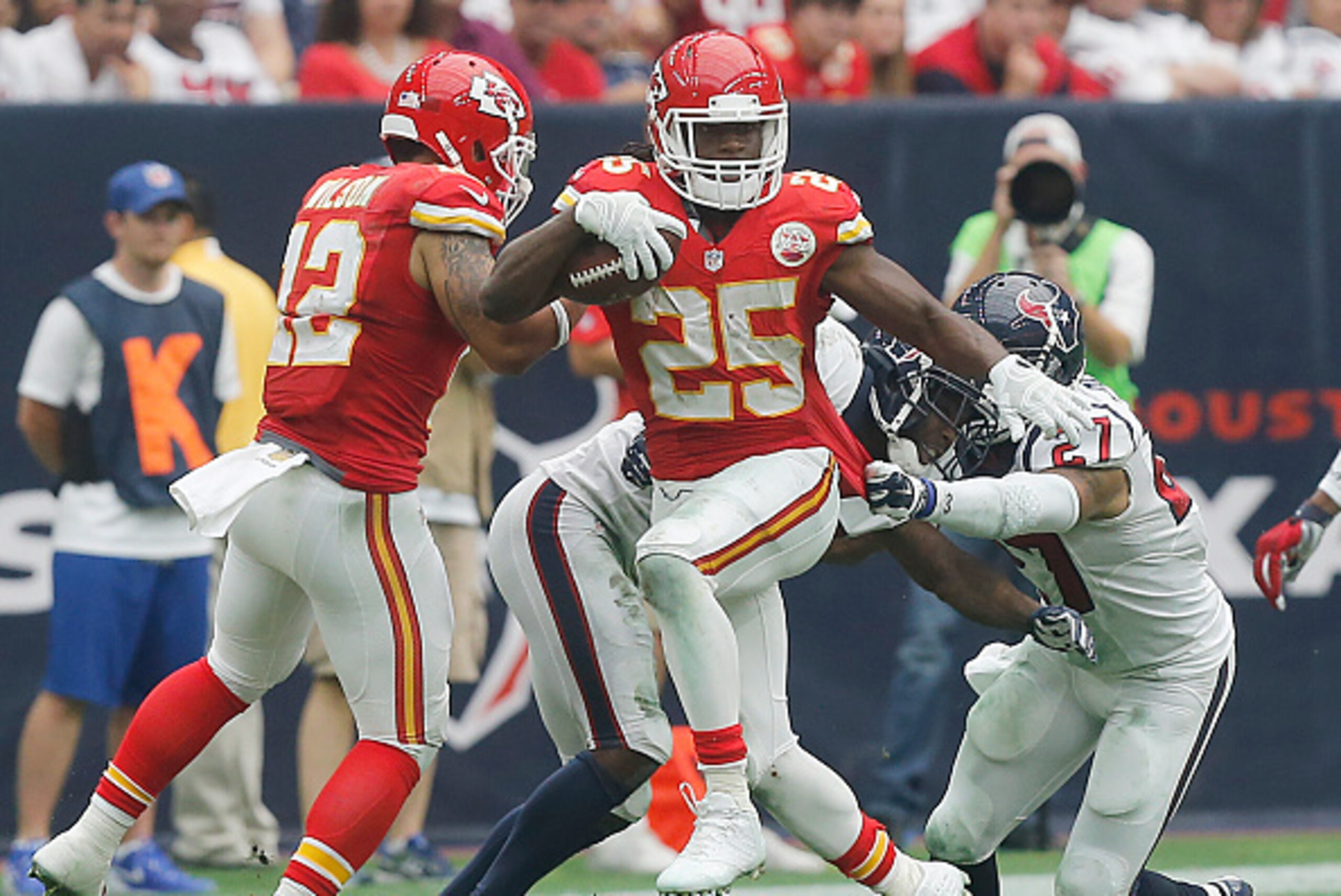
Kansas City only rushed for 97 yards against Houston, or just 3.0 yards per carry. However, a lot of the Chiefs' carries came late in the game when they were trying to run out the clock, and thus Houston could sell out to stop them.
After taking a 27-6 lead in the second quarter, the Chiefs called 19 runs and 15 passes, which counts as “run-crazy” in the modern NFL. They also were quarterbacked by Alex Smith, who never saw a checkdown he didn’t like. As such, Houston could play closer to the line of scrimmage and be better suited to stop runs.
Even with all that, however, the Chiefs still managed 3.3 yards per carry running up the gut, per Pro Football Reference, targeting Wilfork, Brian Cushing and Akeem Dent. If the Panthers can just loosen up the box a little bit more, they could have some success heading straight ahead against Houston.
The Chiefs only attempted three passes deep all game, completing just one to Jeremy Maclin. With the Panthers still likely starting Ted Ginn and Philly Brown at receiver, they are better suited to test the Texans deep, thus opening up room in the box. However, the passing game won’t focus around either Ginn or Brown if the Panthers are clever.
Greg Olsen had just one reception against Jacksonville, though he had a touchdown called back due to a penalty as well. Expect that to change against Kansas City, as tight end Travis Kelce had a six-reception, 106-yard day, victimizing safeties Quintin Demps and Rahim Moore. He managed this despite being asked to block more often than going out into routes, to better stop the Texans’ front seven.
Cam Newton to Olsen could be a big play this week, which would help propel the Panthers to victory in this one. That would open up the box, allowing Stewart to find running room, and generally overcome the Texans’ tough defense.
Defensive Game Plan
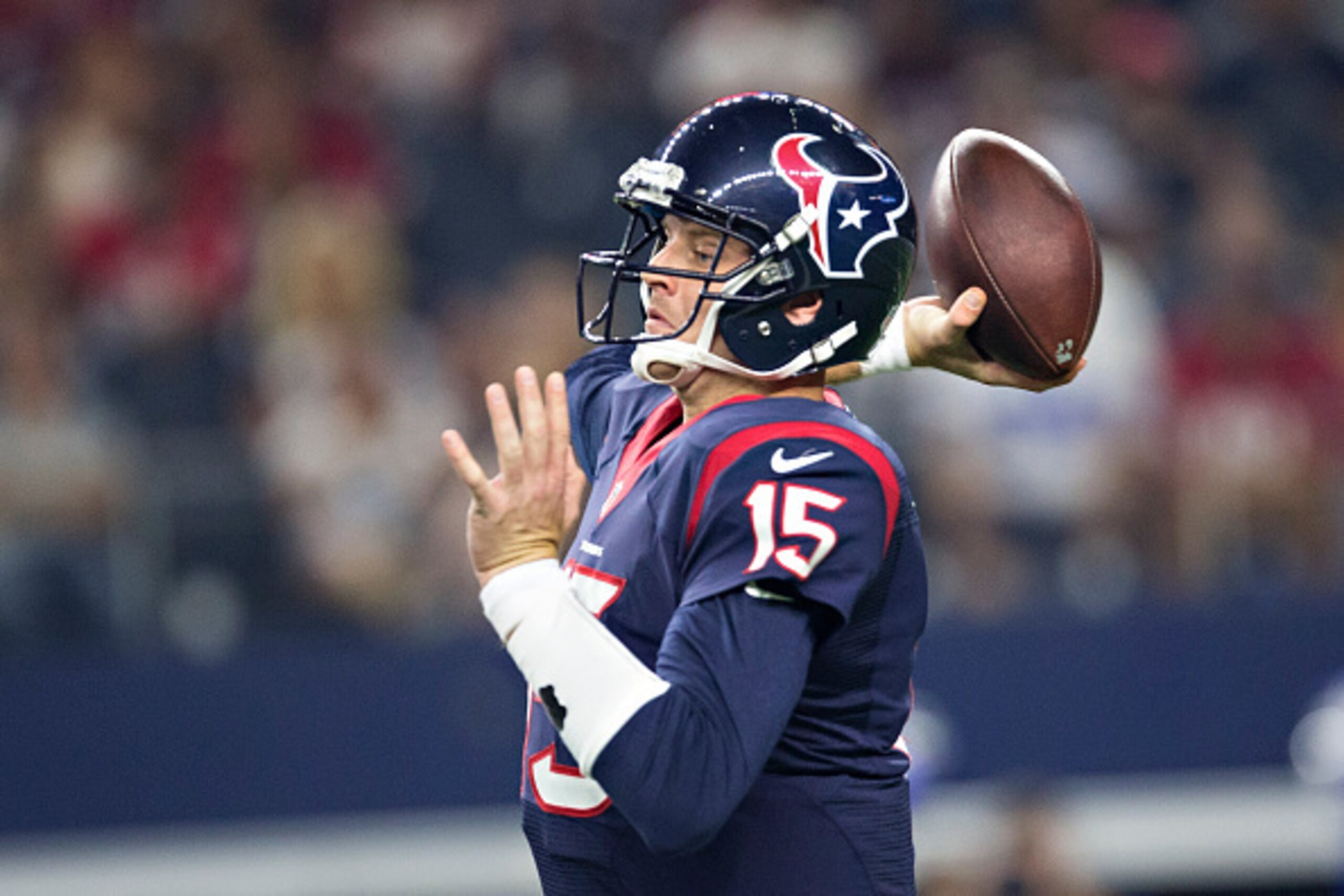
When a team’s starting running back is out of commission, it tends to lean heavier on its passing game. When it has a quarterback controversy, it tends to lean heavier on its rushing attack. But what happens when both are problematic?
That’s the conundrum facing the Texans in this one. Arian Foster is still not ready to begin the season, leaving Alfred Blue and Jonathan Grimes to carry the load. They’re also shifting quarterbacks after just one game with Ryan Mallett taking over for Brian Hoyer.
While Hoyer really didn’t play all that badly against Kansas City, the Texans did move the ball more with Mallett under center:
| Brian Hoyer | 59 | 282 | 4.8 | 9 |
| Ryan Mallett | 16 | 107 | 6.7 | 11 |
There’s a bit of a problem directly comparing the two, though. Mallett came in with the Texans down 27-9. The Chiefs had been playing a prevent-type defense for at least the two previous drives and were more than content to let Mallett move the ball down the field.
Yes, Mallett took advantage of the situation to give a spark of life to the offense and get them within an onside kick of having a chance to pull off the comeback, but you can’t directly compare the two players’ performances.
When evaluating a new quarterback like Mallett, it’s good to see what sorts of players he relies on. This will be his third start for Houston, and he’s attempted 88 passes as a Texan. Where have those passes gone?
| DeAndre Hopkins | 22 | 14 | 178 | 1 |
| Andre Johnson | 21 | 10 | 104 | 0 |
| Garrett Graham | 10 | 6 | 75 | 1 |
| Damaris Johnson | 13 | 8 | 42 | 0 |
| Jonathan Grimes | 6 | 4 | 34 | 0 |
| Alfred Blue | 4 | 3 | 20 | 0 |
| Cecil Shorts | 1 | 1 | 20 | 0 |
| Keith Mumphery | 2 | 1 | 17 | 0 |
| Keshawn Martin | 2 | 1 | 6 | 0 |
| J.J. Watt | 1 | 1 | 2 | 1 |
| Nate Washington | 1 | 0 | 0 | 0 |
| Ryan Griffin | 2 | 0 | 0 | 0 |
Perhaps not surprisingly, Mallett likes hitting his top receiver, DeAndre Hopkins, early and often. Hopkins is the best receiver on Houston, especially now with Andre Johnson off in Indianapolis. Hopkins is not only Mallet’s top target, but he has the most yards per target and is Mallet’s No. 1 deep target. It’s worth noting, however, that Mallet’s only completed three of his 15 deep pass attempts, per PFR, and two of those went to the departed Johnson.
That’s why I’m very interested to see how Mallett and free-agent acquisition Nate Washington work together. Washington’s averaged 15.4 yards per reception in his NFL career, which is in the top 15 over the past decade among qualified players, according to PFR. Hopkins is at that same career mark, but Washington’s outperformed Hopkins in each of the past two seasons.
Washington was also clearly the deep threat for Hoyer. He caught six passes for 105 yards against Kansas City, all of them from Hoyer. Mallet’s one throw at him went incomplete, and was a short pass, besides.
While Josh Norman will be matched up with Hopkins most of the day, Houston’s best chance of some offensive oomph is to get the Mallett-to-Washington connection against Charles Tillman. That’s a potentially explosive connection, but it’s one with absolutely no history or chemistry at the moment. A sudden burst of energy there would be huge for Houston, but it seems unlikely.
In the running game, the potential return of Star Lotulelei will help the Panthers control the offensive line, but it looks like Luke Kuechly will miss the game—he’s currently listed as doubtful, as of the time of this writing, per Jonathan Jones of the Charlotte Observer.
Last week, A.J. Klein came in for Kuechly, and Joseph Person of the Charlotte Observer reported on Thursday that he would get the start this week as well if Kuechly can’t go. Rookie David Mayo, the backup on the depth chart, would be made active for this one but wouldn’t get the start. Klein handled himself well against Jacksonville, but he’s no Kuechly.
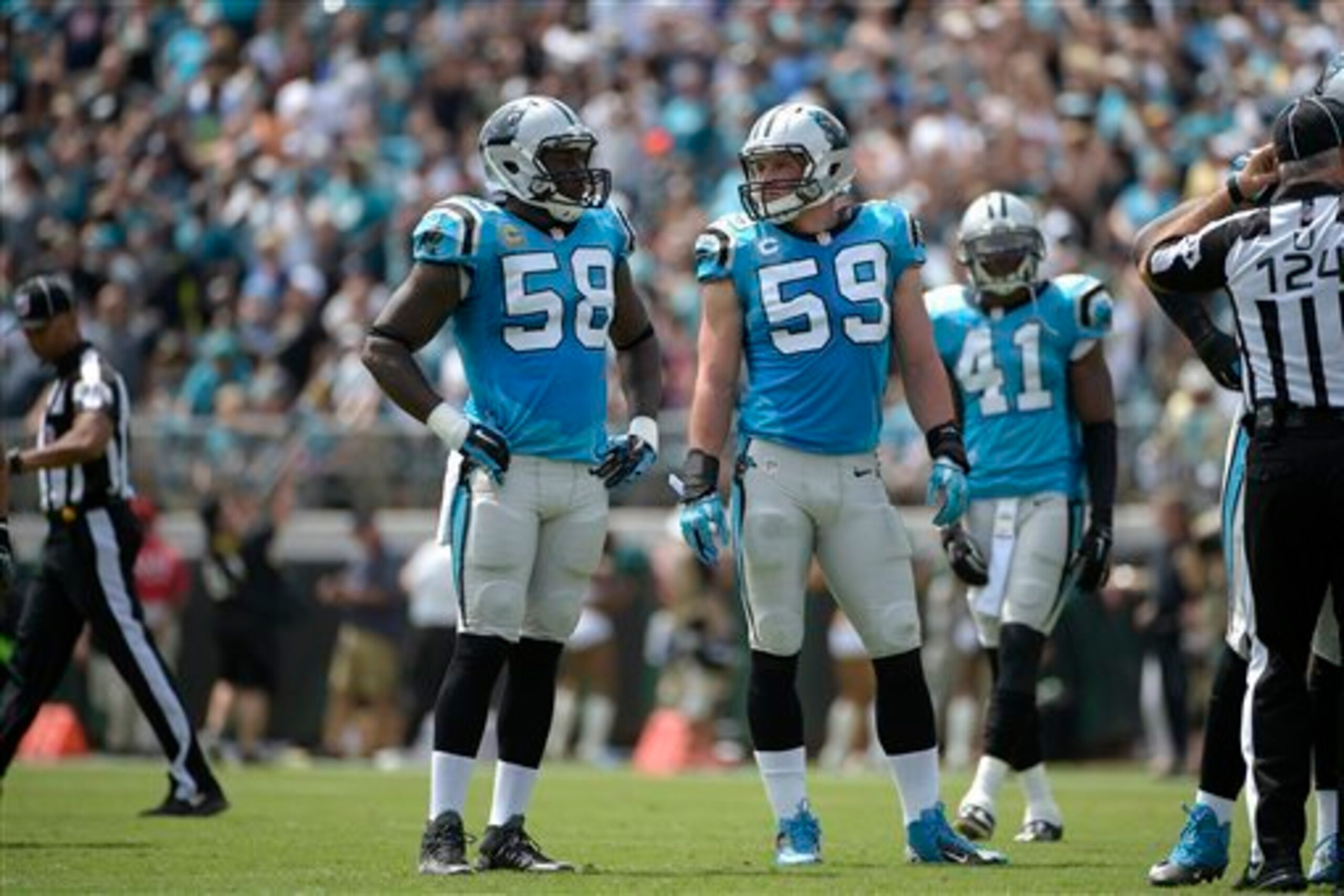
That puts a lot of pressure on Thomas Davis to lead the defense. It also likely brings more room for Shaq Thompson to play coverage in nickel formations; you’re not taking Davis or Kuechly out to keep a rookie like Thompson in, but coverage is his specialty. It will be interesting to see how the linebackers cope.
Whoever is in at linebacker, and whether or not Lotulelei actually gets his first start, the Texans’ offensive line is in flux. Left tackle Duane Brown is questionable, and sources tell the Houston Chronicle's Aaron Wilson that he’s unlikely to play, though technically he is still a game-time decision.
That would put Chris Clark in the game, either at left tackle or at right tackle, with Derek Newton moving across the line. Left guard Xavier Su’a-Filo is also out with a calf injury, leaving the banged-up Jeff Adams as the starter; he’s been limited with an abdominal injury, per Wilson.
The makeshift offensive line is one of the reasons Brian Hoyer was pulled. The Chiefs recorded five sacks in the game and consistently found ways to pressure the quarterback. They were a little stronger in run blocking, allowing their rushing attack to pick up 4.7 yards per carry on the ground, but again, the Chiefs were playing against the pass for most of the second half as the Texans tried to catch up. Take away Grimes’ 21-yard rush in the second quarter, and they averaged just 3.8 yards per carry.
Mallett is not the most mobile quarterback in the history of the NFL. He’s not going to be able to run out of too much trouble if Charles Johnson and company can overwhelm the banged up Texans’ offensive line. Consistent pressure seems possible, and will quash any chances of the Texans pulling this one out.
Key Players and Matchups
Carolina RB Jonathan Stewart
Stewart received a rest day on Wednesday at practice, but was a full participant starting on Thursday, per Person of the Charlotte Observer (h/t CBSSports.com). He received 18 of Carolina’s 21 carries against Jacksonville and should have a similar workload going forward.
Of course, Stewart only averaged 3.1 yards per carry against Jacksonville, a far cry from what he was able to do toward the end of last season. In fact, he hadn’t had such an ineffective day since the first two weeks of last season, each of which saw him rush for less than three yards per carry. With the passing attack still in limbo, the Panthers need their stud from last season, and more plays like this one:
Houston RB Alfred Blue
The Texans split up their running game fairly evenly against Kansas City, with Blue, Grimes and Chris Polk all receiving between five and nine carries. Blue really burst onto the scene as a sixth-round rookie with a 156-yard game against the Cleveland Browns, but he only averaged 3.1 yards per carry last season.
He was better against Kansas City, though, putting up 42 yards on his nine carries. That’s an extremely small sample size, but he was arguably the most promising of the three-headed monster Houston had at running back last week. Suffice it to say, the Texans will be looking forward to the return of Arian Foster.
The Jaguars put up 96 yards on the ground against Carolina, running at 4.6 yards per carry. If Blue and his cohorts can bounce up to that level, the Texans will have a shot in this one.
Houston DE J.J. Watt
Watt is really good, and nothing seems to slow him down.
No one has yet found a way to force Watt into having a bad day, and he has an average day about once per season. All you can do is double-team him, assign running backs and tight ends to chip him and hope you can win all the one-on-one matchups elsewhere. You can beat the Texans without stopping Watt. That’s good, because otherwise, there would be no beating the Texans.
Carolina LB Thomas Davis
Thomas Davis isn’t quite the same level of player as Luke Kuechly, but he’s still one of the top 4-3 outside linebackers in the game. With Kuechly most likely missing this contest, Davis’ leadership and play will be even more important than it normally is.
Davis and the Panthers defense held the Jaguars to just 75 yards after halftime—without Kuechly—and Davis sealed the game with a late interception on a tipped Blake Bortles pass. It will be up to him again to lead. After all, as he said, via ESPN.com's David Newton, “This defense is not about one man. That’s how it’s been over the years and that’s how it’s going to continue.”
"Great leap and catch by @ThomasDavisSDTM!!! #KeepPounding https://t.co/gelOd7KcRo
— CAR Panthers News (@CarPanthersNews) September 13, 2015"
Carolina LB A.J. Klein
Replacing a superstar like Kuechly is never easy, but Klein played solidly against Jacksonville. He recorded six tackles while playing heavily in pass defense in the second half. He obviously wasn’t up to the standards Kuechly sets, but he was more than adequate.
Remember, Klein was a starter last season, and he played solidly. In theory, drafting Shaq Thompson was an upgrade over Klein, but Klein is not in and of himself a poor player—that is, he wasn’t replaced because he wasn’t up to snuff. Klein can play all three linebacker slots, so moving inside isn’t a huge issue. As long as he continues to play with the workmanlike efficiency he did last season, he should be a serviceable replacement for a game or two.
Prediction
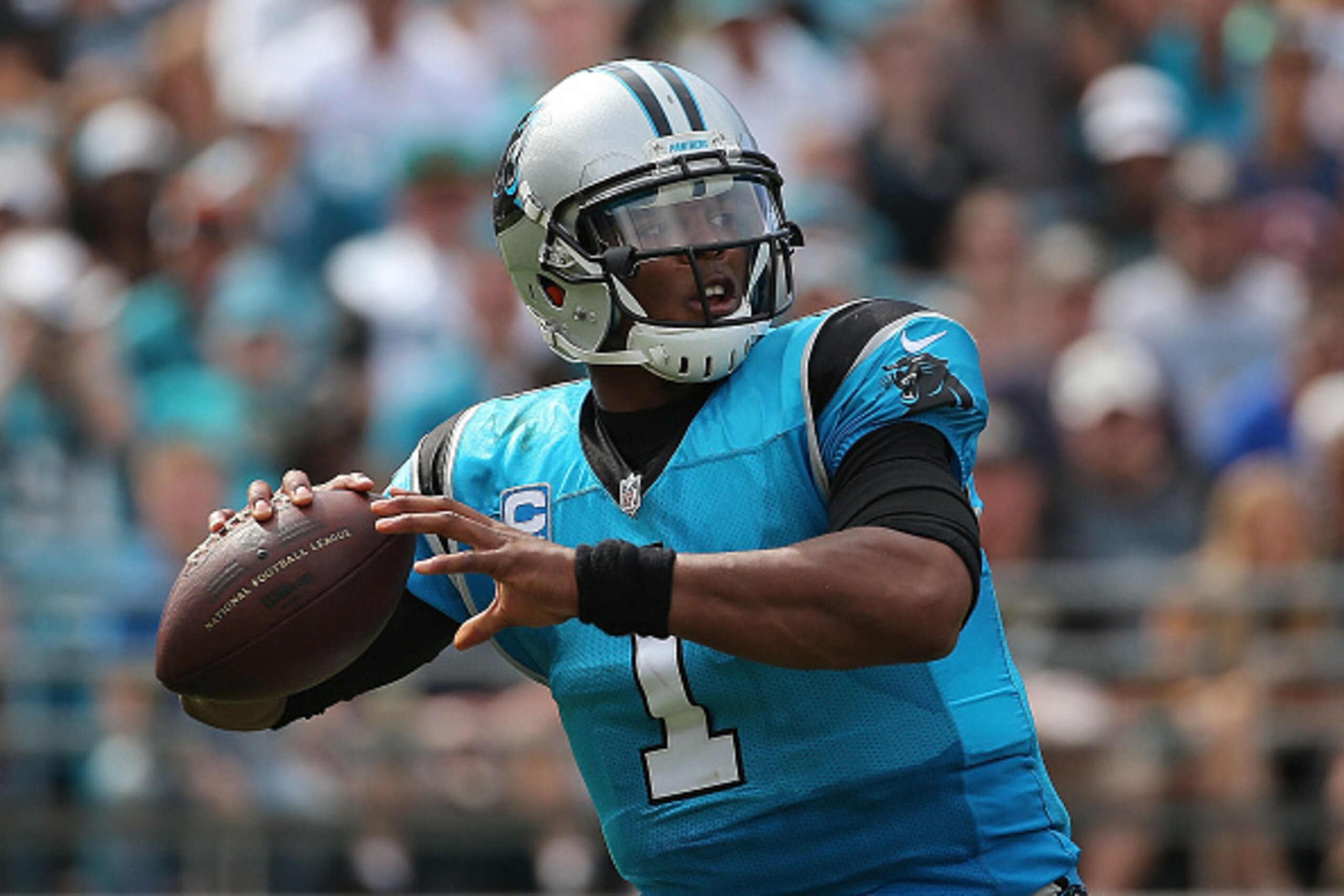
I can’t bring it on myself to predict a team, minus their star running back and with an active and ongoing quarterback controversy, to pick up a win on the road against a playoff team from the year before.
You have, in Houston, an offense that sputtered for most of the first half, only picking up when the Chiefs went into a prevent shell toward the end. Yes, Mallett entered at the same point, but I’m chalking that up to correlation, not causation.
Mallett isn’t going to lead a scoring drive every time he’s on the field. I’ll admit that he has more potential than Hoyer to break out, but that’s simply because we know more about Hoyer. Last year, Mallett proved himself to be scatter-shot with a big arm, and I’m not going to let two drives in a losing effort against Kansas City fully alter my perception of him.
Yes, Watt is amazing, but he’s only one player. Alex Smith was able to throw three touchdown passes against Houston, and Cam Newton is a better player than Smith. Sure, they have different specialties—Smith never saw a checkdown he didn’t like, while Newton sometimes appears to be trying to throw the ball out of the stadium—but if Smith could find holes in Houston’s coverage, I believe Newton will be able to, as well.
Plus, Newton is much more active with his legs, something which Smith hasn’t done much of since leaving Utah. He was able to dance his way out of sacks against Jacksonville, and while Houston is notably better, Newton should be able to stay upright enough in this one.
Olsen will have his first big game of the season, the defense will hound Mallett into mistakes and the Panthers will come away with a home victory.
Final score: Carolina 24, Houston 13.
Bryan Knowles is a featured columnist for Bleacher Report, covering the Carolina Panthers. Follow him @BryKno on twitter.
.jpg?w=2560 "49ers Football")

.jpg?w=2560 "Bold Predictions for 2026-27 NBA Season 🔮")