A Team Transformed: Inside LeBron James' First Season Back with the Cavaliers
It was early on a late March night in Memphis, a little over a month after Kendrick Perkins had left any sore feelings and battle scars behind, and heeded the call from a longtime nemesis. Now the veteran enforcer, hardly the meekest of men, his scowl honed with the help of all-time locker room force Kevin Garnett, hunched down in his chair and hushed his Texas drawl. No need to raise a ruckus while explaining what he had learned about LeBron James since becoming part of James' Cavaliers locker room little more than a month earlier.
"Since I got here, the way he leads is...LeBron is very dominant, even in his conversation," Perkins said. "Even when he speaks, you're like, 'All right, I got you, I got you, all right, I got you.' Everything he do is just dominant."
TOP NEWS
Watch: LeBron's 1st 76ers highlights

NBA Power Rankings Entering Preseason 🔢
Bron Talks Embiid Chemistry
Then, on cue, James bounced by, pulsating beats blaring through his Beats headphones, capturing all the eyes in the room, even as his never strayed from straight ahead.
"You see how he just walked past me in the locker room," said Perkins, one of more than 20 people, on the record or on background, interviewed for this story. "Like, yeah, he sees me, but it was dominant, though. Music bumping loud type s--t, like...."
Carrying the room?
"Exactly," Perkins said, choosing a smile rather than his trademark scowl. "Dominant."
In capturing the way James completely transformed the Cleveland Cavaliers since signing with them one year ago, that is exactly the word that applies.
Setting The Table
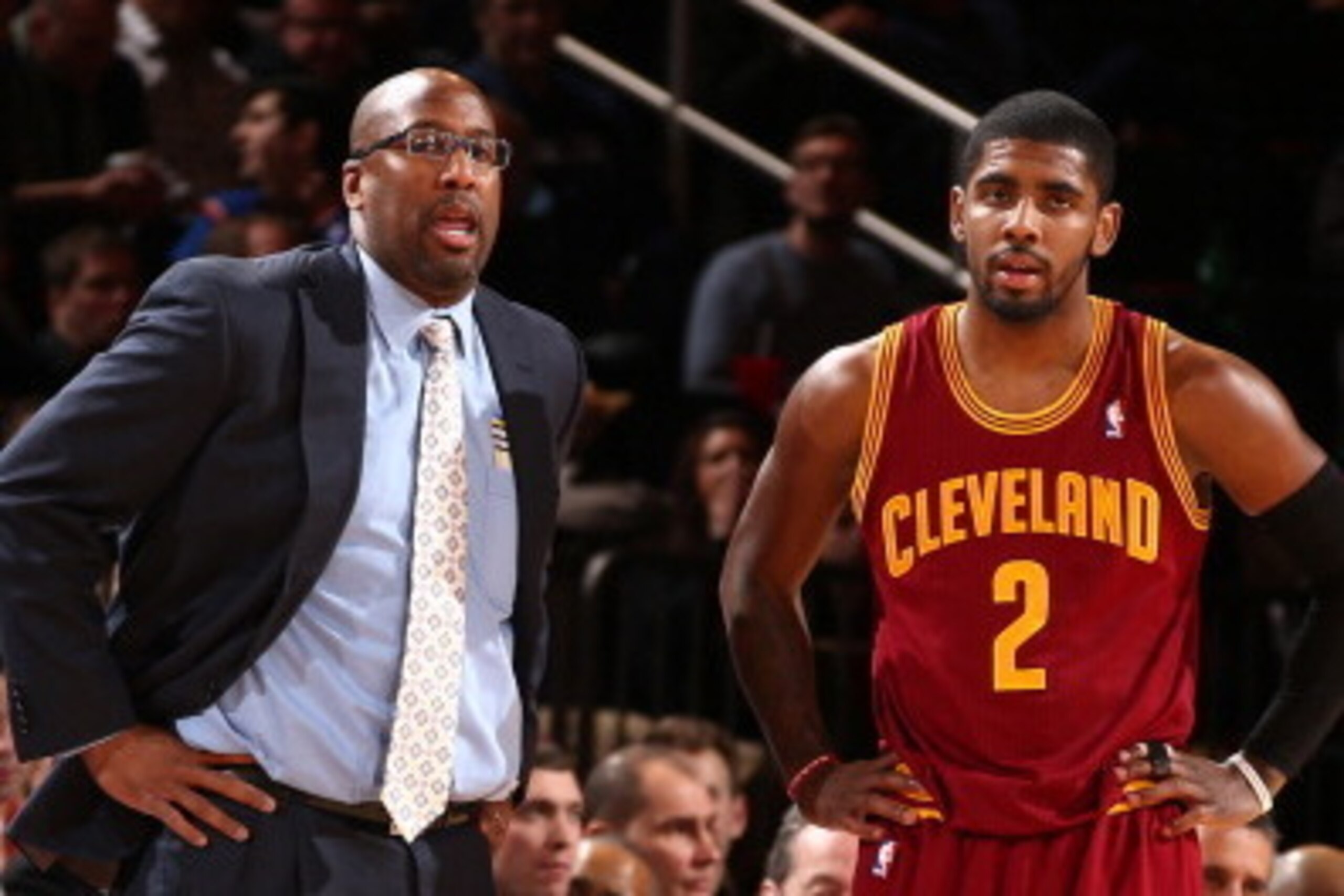
In his July 11, 2014, essay in Sports Illustrated, announcing his return to Cleveland, LeBron James had characterized his four years away, his four years in Miami, as "almost like college for other kids," as four years that "helped raise me into who I am." The organization he left in 2010, however, had not experienced a growth period during his sabbatical, at least not one that was apparent to most observers. There had been only 97 wins against 215 losses, and there had been instability at important levels, with coach Byron Scott fired after three seasons and Mike Brown brought back only to be fired for a second time after merely a year. There had been an infusion of some useful young talent, but not nearly enough considering all the opportunities afforded by the NBA's welfare system, and an absurdly good run of lottery luck. All that young talent had learned to do was lose, and it would take more than a splash of club soda to scrub that stain out.
Thus, it was obvious to James, and all around him, that his basketball brilliance alone would not suffice for this assignment. That was true even though his former Cavaliers teammate, close friend, summer workout partner—and two months after his return, newly appointed Cavaliers shooting consultant—Damon Jones knew that "the vibe" would change immediately because of what he could do on the court. "When he's around," Jones said, "you know you have a chance to do something special."
Rather, this task required a culture warrior. To start to reverse Cleveland's half-century sports curse, he needed to do more than just score a lot of points or grab a lot of rebounds. He needed to rewire his new teammates' brains, altering the way they thought, about collaboration and communication, about work and winning. He needed to do it relatively quickly, since the public's patience with him would come with an expiration date, no matter how he pleaded, and that would only intensify the pressure on everyone around him.
He needed to do it because anything less would resonate as an admission of reliance upon the embedded structure the Heat had provided, the structure he had admired but which he had increasingly found stifling, feeling like a middle manager in Pat Riley's established corporation. After the weary Heat finished a frustrating season with a Finals flop against San Antonio, and prior to opting into 2014 free agency, James had informed associates of his openness to leaving the NBA's "IBM" behind, to embrace his entrepreneurial instincts, to take a shot at serving as the figurative CEO of a startup. Or, in the case of the Cavaliers, a re-startup. All that was left was for the Cavaliers, starting with owner Dan Gilbert, with whom he had been estranged for four years, to present a compelling enough case that they were worthy of his leadership. Which, apparently, during the course of the 2014 free-agent moratorium, they did.
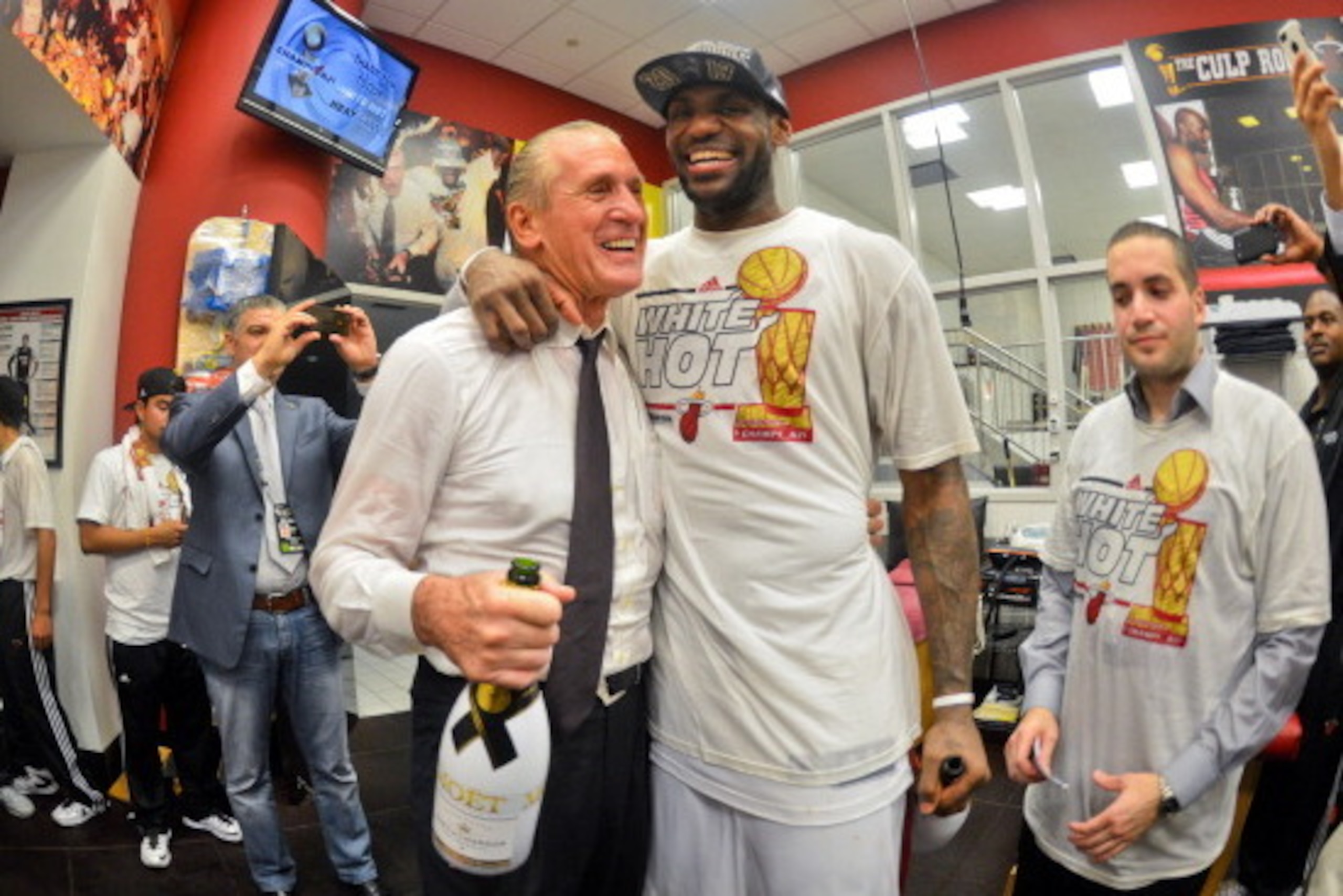
The Cavaliers, for their part, felt they were prepared for him. They certainly felt better prepared than when he went pro in 2003, when those around at the time knew they were getting a gift, in the form of a physically blessed, locally raised prodigy. But they couldn't possibly know then how to approach all that would come after the unwrapping.
There had been considerable turnover since then, when Gordon Gund still owned the franchise and even since 2010, a striking amount especially when compared to the Heat's continuity and stability. But those who had remained felt they were ready, from the corporate level to the court, to be relevant again, with James acting as a multiplier of whatever positive seeds they'd sown in his absence.
But he needed to have grown too, to pull the Cavaliers out of the weeds.
"His mindset, his leadership was a lot different," said Anderson Varejao, the one remaining on-court holdover from James' first Cavaliers foray, at least until Varejao ruptured his Achilles tendon in late December. "I would say more mature."
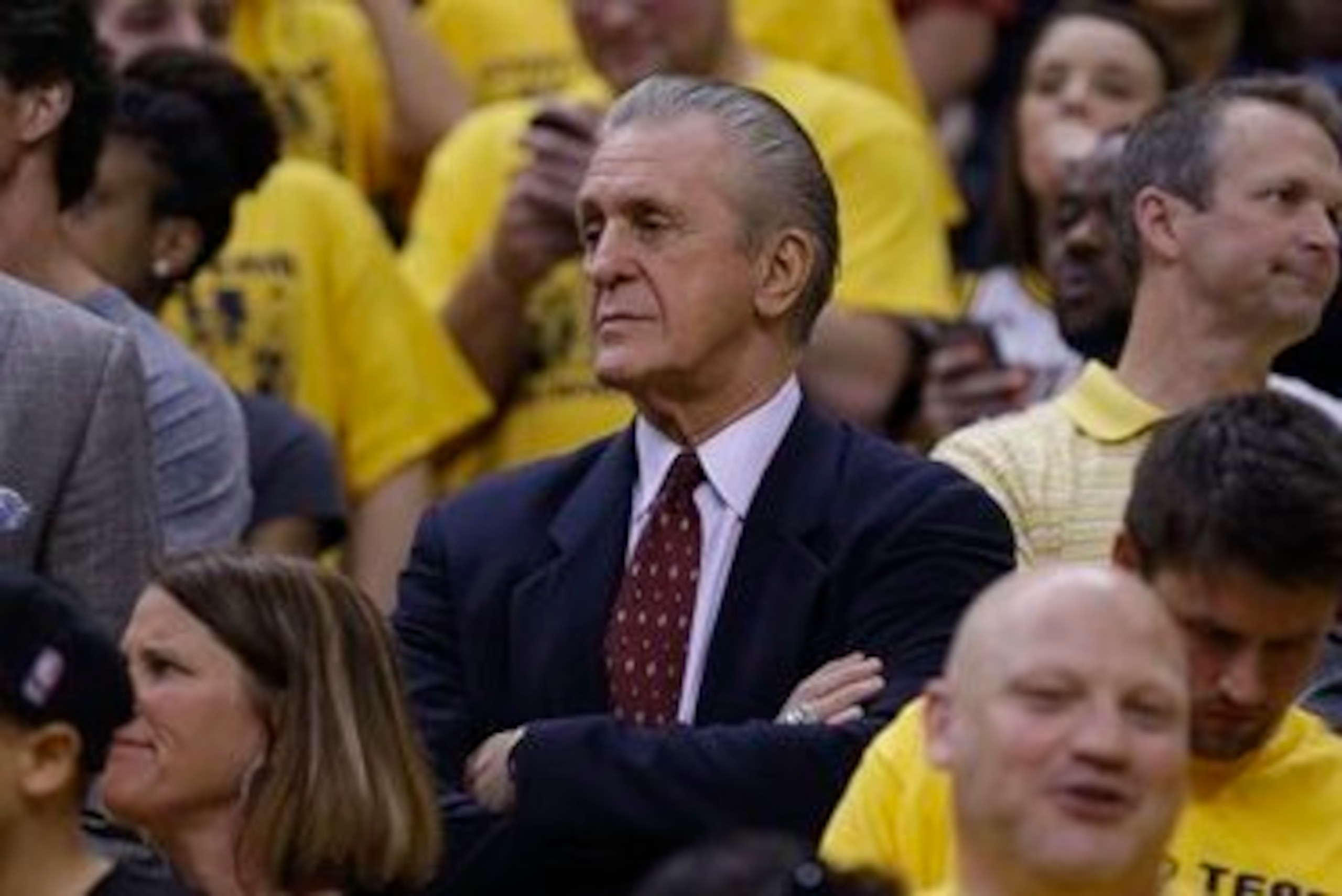
Mike Miller expected this more seasoned James to lead differently than he did when they came to Miami together, when James deferred to others, especially Dwyane Wade and Udonis Haslem, with rings on their resume. And James would. Less restricted. More vocal. More relentless and physical in practice, as if he always had a point to prove.
"Any time you are trying to set a precedent, you lead by example," Miller said. "I think he understands his windows. You know how it is: He's an intelligent dude. He understands timeline, he understands based on where this team is at and where the cap is at; he's smart, he puts that stuff together. But he also understands that as long as he's on the floor, his team has a chance to win."
And he understood much more about winning than in his first seven seasons in Cleveland, when he got to the NBA Finals once, but hadn't taken the Larry O'Brien trophy.
"He kind of learned from how Miami did business," one associate said. "And it was every day, you're accountable, you're doing something. He's more accountable for his day and for his actions."
It has been common, during the course of conversations with those familiar with his previous Cleveland stint and his time in Miami, to hear him called "more serious" upon his return, and for others to spotlight his sharper focus, better time management and a greater clarity of what mattered and what didn't, what he could and could not control. And many say that, in those areas, he was shaped for the better by some elements of the Heat's approach, and specifically by what he observed as "the top to bottom mentality" it took to truly succeed. As one associate put it, "When I say everybody beats to the same drum (in Miami), I mean everybody, literally from the parking attendant to (a top executive). If you don't, I feel sorry for you. There is no flexibility. It is all to the same drum. And, with that being said, he didn't bring that here, but that was needed to help him get to this."
There is much more separation between the basketball and business sides in Miami, so much so that James rarely came into direct contact with anyone from the latter, other than ownership. That wouldn't be the case in Cleveland, where the lines more commonly blur (the Cavaliers call their approach "humanistic") and where James would have more casual opportunities to interact with officials in the sales, marketing and community relations departments.
And while he didn't impose his ideas, he did let team employees know when he'd seen and liked a banner campaign or an in-house video, making special mention of those that presented the team in a collective, rather than individualistic, way. His desire to bring recognition to his teammates stood out to those who had worked with him in younger days. He tried to take that same collective approach to many of his media availabilities, even on the many practice days he was the only one of the Cavaliers' three leading stars who chose to address the gaggle of press.
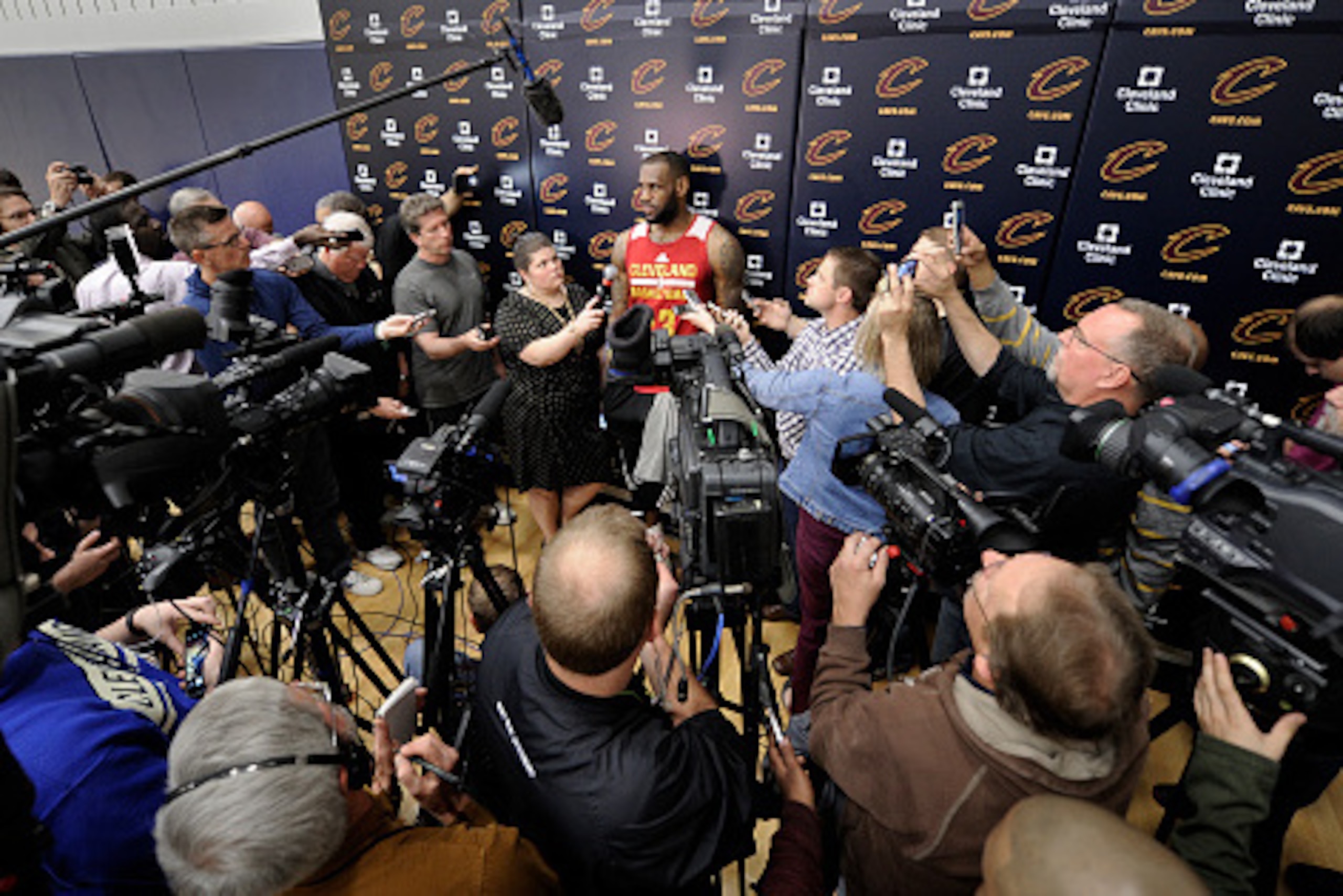
And during those sessions, James seemed to Cavaliers officials to be much more comfortable in his skin than the person they'd previously known, much more skilled at shaping the dialogue, redirecting the day's discourse and getting messages out, whether to teammates, coaches, management or the league. That shouldn't have been a surprise either, considering he had come back after much more practice.
In Miami, even superstars are expected to speak every day, with Wade long observing that standard, and James (who had shut out the media for much of the 2009-10 season) not only abided but went above and beyond, speaking even on days the Heat suggested he skip. His accessibility would taper some once back in Cleveland, in terms of frequency and length, and tighten some, with fewer unmonitored opportunities. But it was still enough of an improvement from his prior Cavaliers stint that he would earn the local media's "Good Guy" award, and would leave Fred McLeod, the Cavaliers' play-by-play announcer since 2006, shaking his head, not at something James said, but at his savvy during those sessions.
"It's almost like he likes being mentally challenged," McLeod said. "He never puts anybody down, but he's heard every question. You're never gonna catch him off guard."
He needed, however, to do that to his teammates at times.
And that's what he did on Labor Day.
The Campaign to Change Hearts and Minds
The labor, in preparation for the 2014-15 season, had begun more than a month before, some of it outside of Ohio, in Los Angeles and other locations. But that holiday weekend, in Independence, Ohio, in the impressionable eyes of Tristan Thompson, is when his methods initially, impactfully began working on others.
"He was the first one in the gym at 9 o'clock, had a full drip of sweat. We were just walking in, getting ready to start," Thompson recalled. "I think that first encounter really changed the whole culture of our franchise. When your best player, and arguably one of the best players to ever play this game, is in the gym at 9 a.m. on Labor Day, that just says a lot...It was me and Kyrie (Irving), Delly (Matthew Dellavedova) for sure, Dion (Waiters), it was a couple other guys. When we saw that, we were like, this is real. What he wrote in that letter is serious; he's not joking around. He wants to bring us somewhere where we're never been, and he wants to elevate our game, so we knew we need to come in and do our job."
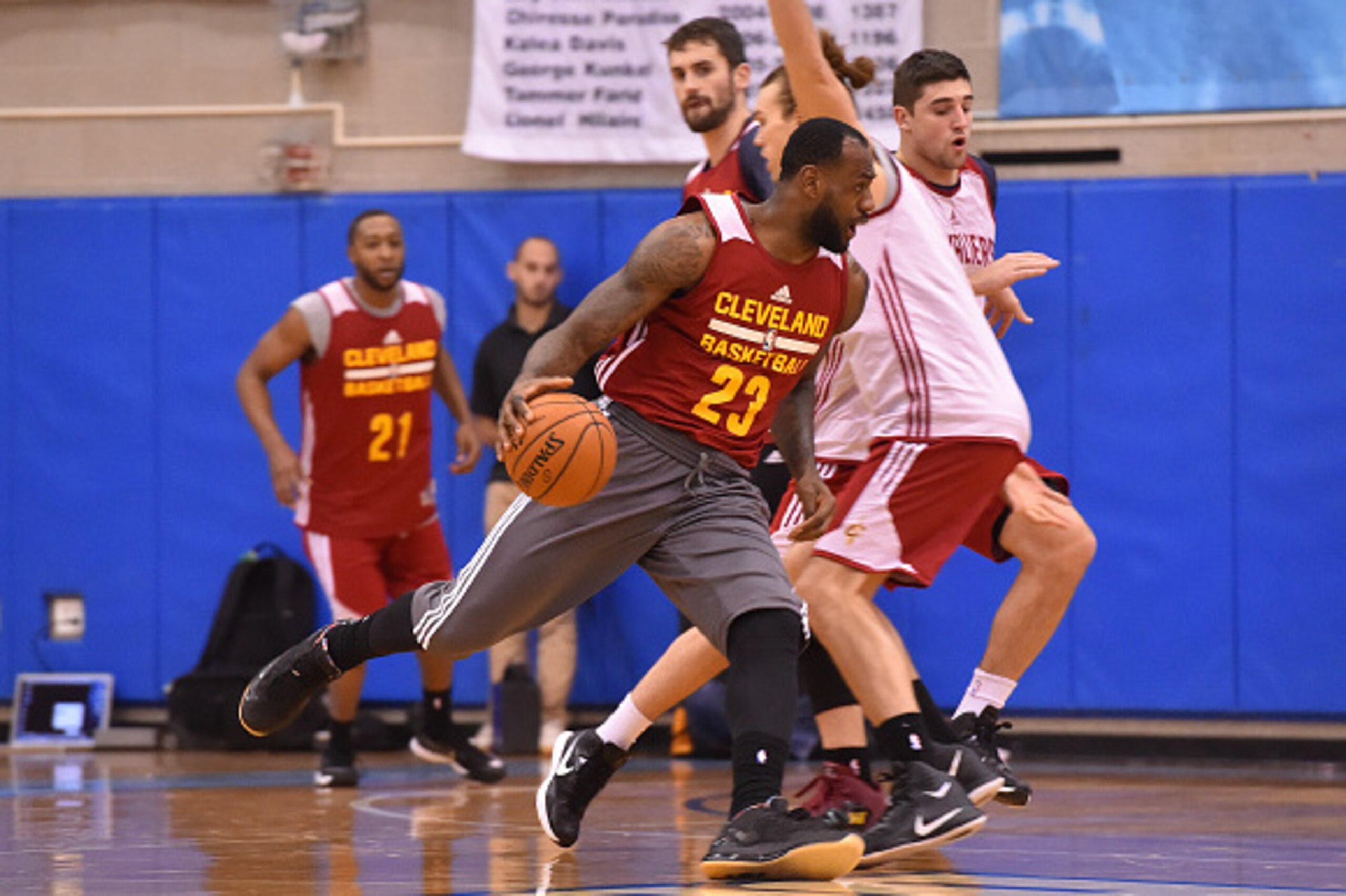
Koby Altman, who, after serving as an assistant coach at Columbia University, had come over in 2012 and been promoted to director of pro personnel a year later, believed that the Cavaliers had "a culture of work" prior to James' return. But James fortified and accelerated it, said Altman, when he started doing so in plain sight inside the practice facility, because "he's the type of leader who brings people with him," because "people want to be around him." They see him in the weight room, in the cold tub, on the floor getting up extra shots. They are brought into the fold, but also made to understand the expectations.
"It was, from the very beginning, making guys aware of the fact that what they put into September reveals itself in June," general manager David Griffin said. "This is when we build our habits, this is when we build what we're going to be."
That was true even though it wasn't quite clear who would be a big part of what they would become.
Take the case of Joe Harris, the affable guard drafted in the second round, prior to James' arrival. Harris was among those regularly at the Cleveland Clinic Courts before and through Labor Day, playing with the likes of Alex Kirk, Dwight Powell, Malcolm Thomas, John Lucas III and others, watching James do skill and weight work, all the while always feeling like James was spying on them, making sure they weren't taking a moment off. Harris was nervous when they first met, even while trying to act casually, but James put him at ease by playfully poking fun at him.

"He was talking about Virginia, and messing around with me about playing the worst brand of basketball," Harris said. "And I was boring to watch. And honestly, I didn't even expect him to even be aware of who I was. But this dude is literally aware of everything that is going on; he knows everyone and what they're doing. If someone is in the gym, he knows why they are there, why they are supposed to be there, or why they shouldn't be there. He just knows everything. This guy is on top of his s--t. With everything. It's crazy. He doesn't miss anything. And he is constantly checking."
The fact-finding was an ongoing enterprise during the preseason, as James continually tried to create connections with this largely fresh set of teammates in all sorts of settings, getting a sense of how they would react to all kinds of circumstances. Prior to the first training camp practice, he requested a players-only meeting. He outlined what he expected out of every other player, from Kyrie Irving to Kevin Love to those nearer the rear of the roster, telling those hopefuls they better stay as engaged as the stars, understanding every set and situation better than anyone else, in case someone got hurt, so the team wouldn't miss a beat. "Don't think that I won't know if you're not working," he told Kirk and Harris, among others. Harris knew from that earlier introduction not to underestimate James' reconnaissance.

Still, James didn't want to rule only by fear but also lead through fun, so he was one of the ringleaders for the storytelling and ribbing that occurred throughout a 10-hour flight to Brazil. It was there the Cavaliers would face his former team for a preseason game, after he organized workouts on Copacabana Beach.
"The experience of that was really helpful," Griffin said. "We were fortunate that trip happened when it did, because it enabled LeBron to do the things he does to generate that sort of galvanized intensity."
Other preseason group gatherings, back stateside, were even more relaxed, typically initiated by a mass text from himself or an associate. Sometimes, it would be an invitation to his Bath, Ohio, estate in the evening to sip wine in the backyard. Sometimes, it would be a call to a restaurant relatively close to the team's Independence practice facility or to a hotel on the road. Sometimes, as many as a dozen players would join James and his other friends for one of these outings. And while the gestures served a communal purpose, by eliminating any perception that he, as an international icon, viewed himself above others not of that ilk, it also satisfied a well-known quirk of his personality: his craving for company. One close confidant, in fact, says, playfully, that he suspects that James has "separation anxiety. Like, he cannot be away from people. If you notice, it's very seldom you catch him by himself. It's like the blanket of the guys."
These guys were quite different from most of those who had helped mold him in Miami—mostly younger, mostly unattached, with the absence of familial responsibilities freeing them for more bonding.
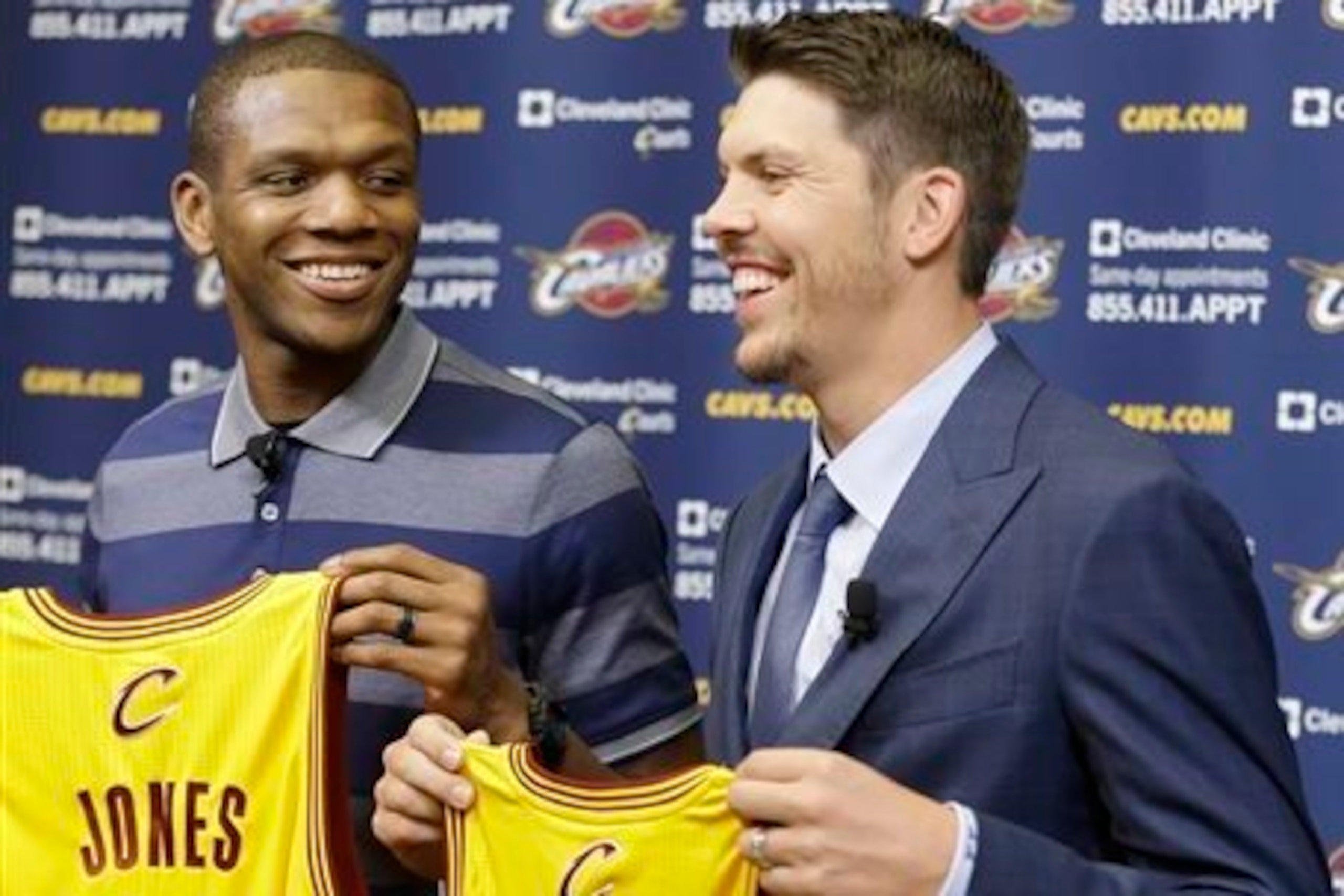
Two, of course, were exactly the same, known quantities and trusted confidants. James had made it a mission to populate the premises with professional veterans whom the more callow Cavaliers could emulate. He never did get Ray Allen to join him in Cleveland, as Allen chose instead to stay back in Miami, running the causeway rather than the hardwood. But he had convinced Miller to leave a comfortable role in Memphis after one successful season, and James Jones to leave his hometown Heat after six seasons. And he had convinced the Cavaliers to enlist them not only as shooting options, but message carriers for his core beliefs of preparedness and connectivity, lieutenants in his culture-changing cause.
After all, they knew best what the rest of the Cavaliers, at every level, were in for.
"You know how it is: You get LeBron, you are expected to compete, you are expected to improve, you are expected to produce," Jones said. "That's from everyone, from management to coaches to players. You are now responsible. You have access to the world's best player and you have to maximize him. Because we didn't have two years for a guy to develop; it was about the now. And anything short of maximizing the pieces around him, the organization around him, is really unacceptable if your goal is to win.
"So I think a sense of urgency came with him—players, coaches, management, the fans. Everyone knew that now is the time. So a focus came in everything that we did. So time management became key, being efficient. You don't want to waste time. Because there's no two ways about it. We will be judged at the end of the day on how successful and effective we were, in this small window. That's obviously the burden of having the world's best player."
That had already begun to play out, prior to the season, on the player procurement side, not only with the acquisitions of Jones and Miller and Shawn Marion, but also with the trade of top overall pick Andrew Wiggins for Love. For four years, the Cavaliers had put a premium on the long-term process. Now that outlook was obsolete. It became imperative, in Altman's words, to secure "more grown men" who could help them "go after this thing" now.

Fortunately, the supply was expanding to meet demand. With LeBron on the roster, the world opened up for the Cavs, and all the old barriers broke down. "He immediately established Cleveland and this franchise (as) a destination for high-level players and free agents alike," Altman said. "From a scouting perspective, he opened up a new range of possibilities. ... And now, you're trying to evaluate team needs that complement LeBron's skill set, and the possibilities become almost endless when you think of who wants to come play with the guy."
The jovial Miller and erudite Jones, close friends who moved their families into the same suburban neighborhood, knew what it took to win with this guy, and James knew they were the right people to reveal that to others. "LeBron wanted some of the veterans to make sure that we worked with some of the younger guys," Miller said. "It's hard for one guy to work with everybody."
Miller has been a popular teammate at each of his six prior stops, including two in Memphis, primarily because of his positivity and flexibility, his knack for clicking with players of all ages, backgrounds and demeanors. Irving had a reputation of being aloof with teammates in his first three seasons, becoming an increasingly frowning face of a struggling franchise. But he and Miller hit it off from the start, and that allowed Miller to serve as a hands-on mentor, finding Irving consistently receptive to his counsel about the mindset required to win in the league, not just star in it.
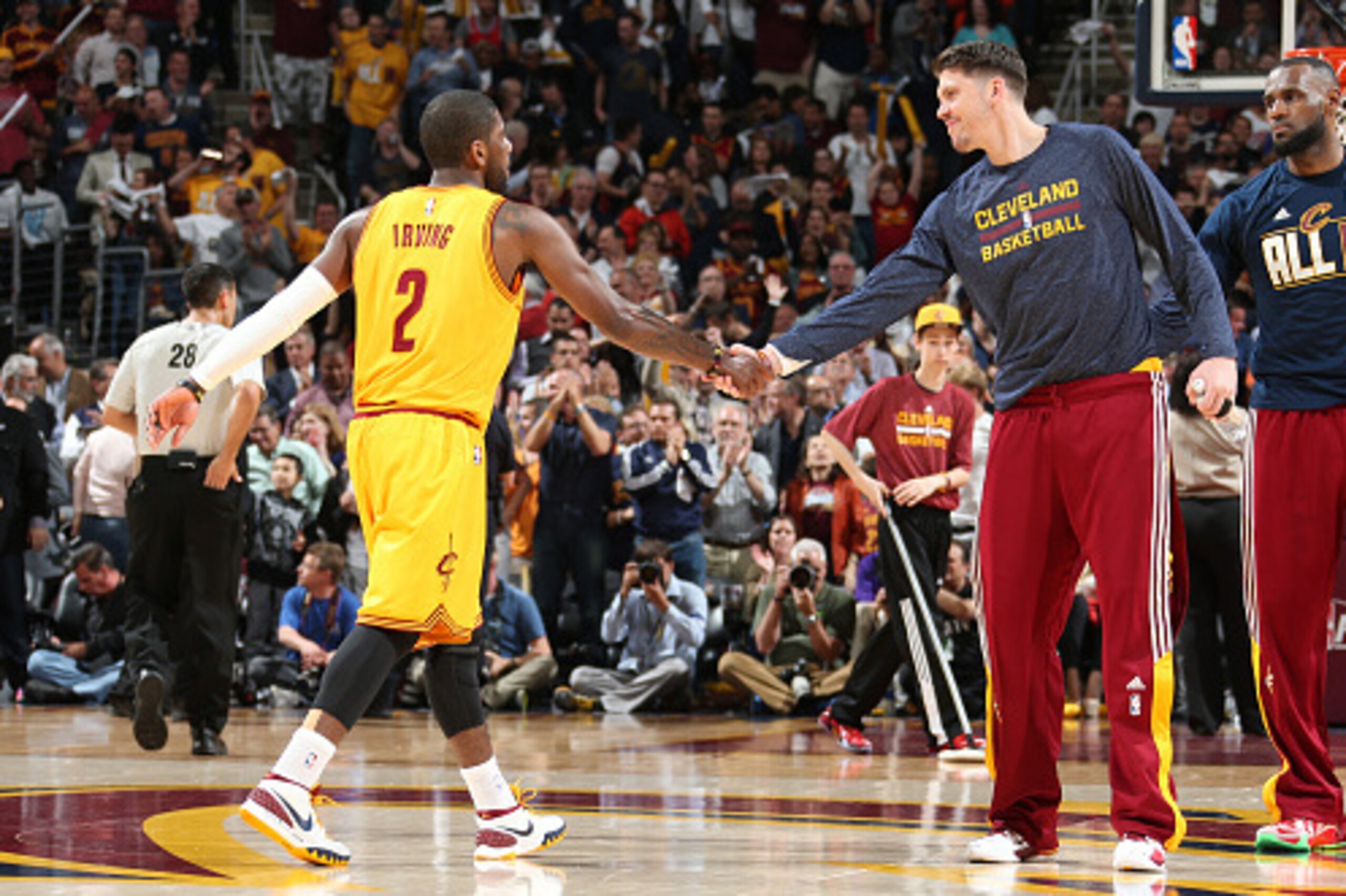
Meanwhile, Marion continued to harp on the need for better communication, particularly on the back line of the defense, particularly from Thompson, who is quiet by nature. Marion has never been shy about sharing, even while knowing there's a learning curve. "I think everything has to be addressed and approached immediately," Marion said. "And then you have a way of winning from a veteran's standpoint, that rubs off on the guys who haven't won before, in their mentality and their whole approach. And most of the time, when you've been successful, they follow suit. It's pretty sweet, when you see how guys are actively trying to learn the game and get better. It's amazing. We have answers for them. And if we don't have answers, we can get answers. When you are actively seeking out help, you can get help."
Jones' help came in assorted ways, whether educating about union activities, instructing on shooting form or telling a teammate to turn to face the coach who is speaking.
While the urgency was roughly equivalent to what Jones experienced while playing with the Heat, the Cleveland roster called for different methods, even with less external noise surrounding the team. In Miami, he said, players compressed, which allowed them to eventually overcome most of the adversity. "Every player was built for and enjoyed that type of situation," Jones said. "Mentally, the guys that were there seemed like they were born and created to be in that environment. Whereas here, when you have young guys that haven't been tested, that haven't been proven, mentally they are still learning how to focus."
In Miami, Jones felt that "we were at the stage of our careers where we knew who we were. ... [W]hen you tell D-Wade, I need you to play your game, Chris (Bosh), I need you to play your game...he knows what type of game he needs to play to win.
"Here, you just have guys who have played basketball, not winning basketball. So they don't know how to win. So when you tell Kyrie, I need you to go out there and make winning plays, you have to give him the leeway to be able to make mistakes, and learn how to make winning plays. Whereas in Miami, when you tell a guy to make winning plays, whether it is taking a charge or diving for a loose ball, he knows. So that is the process, those are the steps we had to take in the last year."
And, for sure, some of those steps would be stumbles.
Growing Pains
When Austin Carr, the former Cavaliers star guard turned television analyst, gushes about how James has tutored and elevated his teammates since returning, he, too, speaks of preparedness, but also about "understanding the moment, and what the moment means."
Yet there were countless moments during the 2014-15 that it seemed James might go mad.
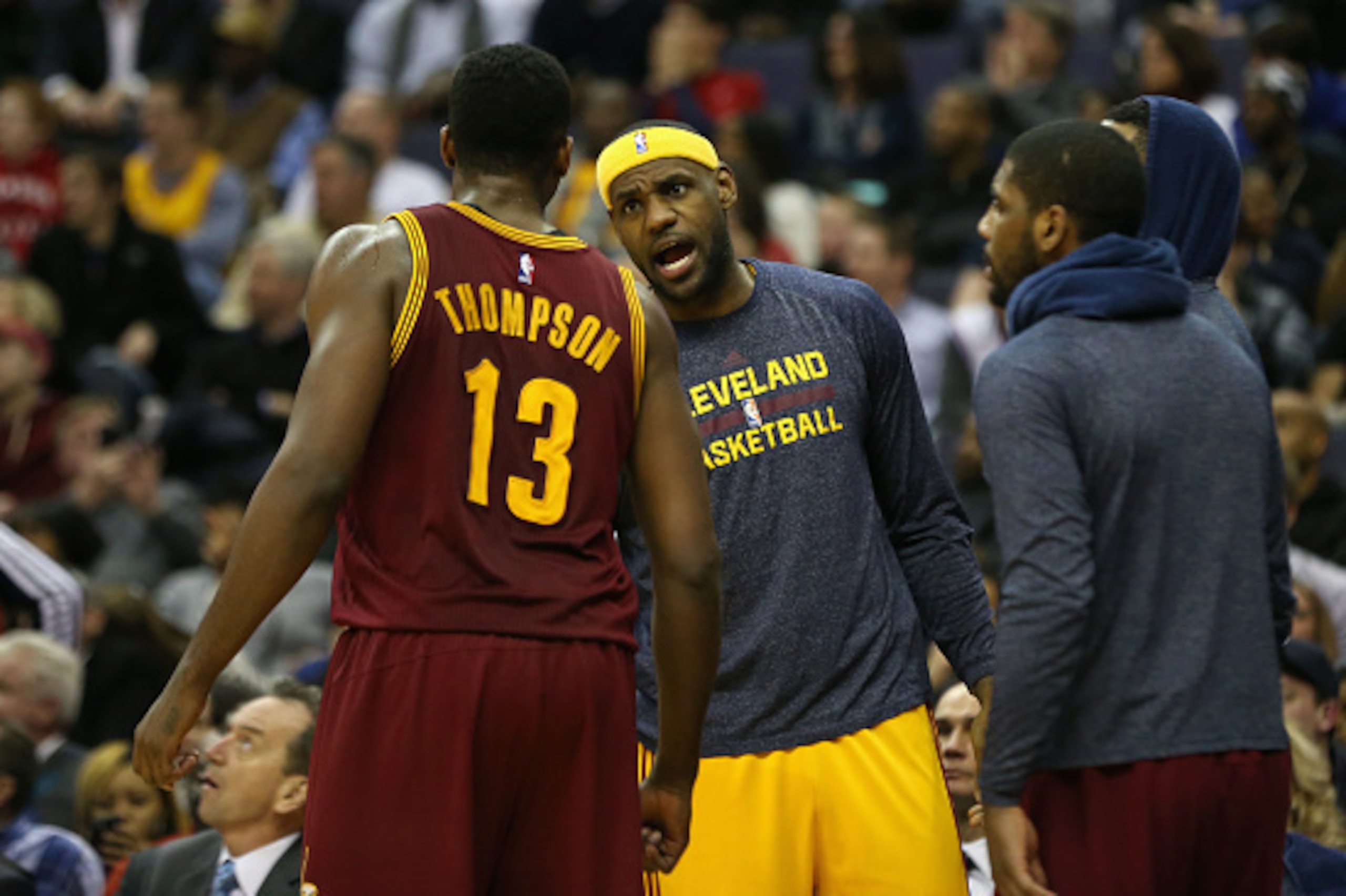
For brevity's sake, the setting of Washington, D.C., will suffice, back on Nov. 21, 2014. James had spent that morning responding, through the media, to Love's concerns about touches, while admitting, regarding the team's slow start, that keeping patience with the process was "my biggest test" since "I have a low tolerance for things of this nature. ... It's not tomorrow, it's not down the line; I want to win now. So it's a fine line for me." Then he spent much of the game with his palms up in frustration as Irving and Waiters dribbled in circles, ignored teammates and hoisted errant shots, and spent much of the postgame period with his head down and shaking, his arms extended across the top shelf, trying to wrap them around the idea that he was captaining a 5-6 team.
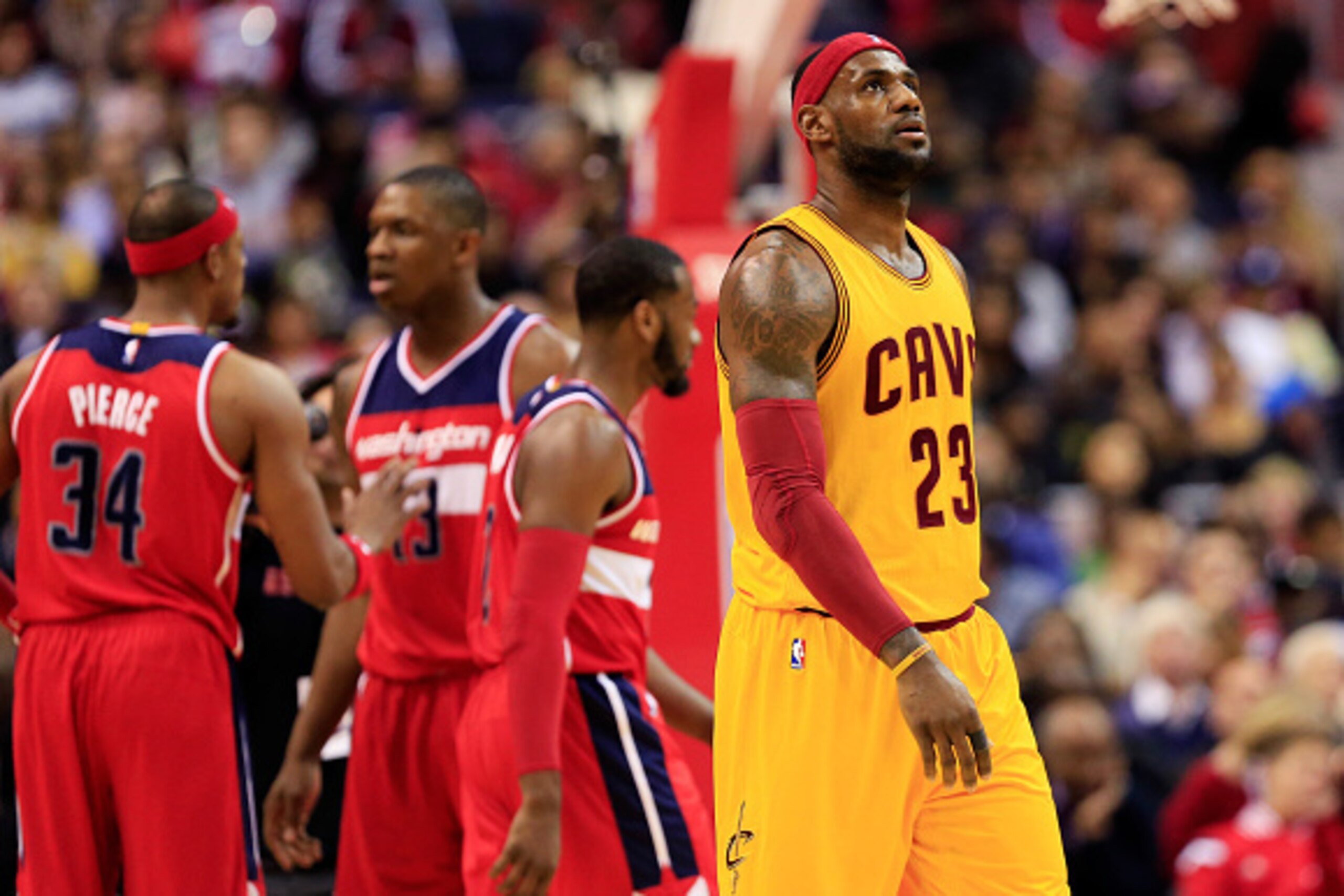
Then, the next night, after the Cavaliers squandered an 18-point lead to lose by 17 to Toronto, he called the team's psyche "fragile." That wasn't all that seemed fragile. The whole enterprise did.
"You can't make anyone feel losing the way you feel it," Jones said. "I can't describe it. I can try to push. I can kind of prod. I can give insight. But at the end of the day, you have to experience loss to really understand and respond to it. And at that point, the frustration was more of the guys not responding to it the way you need to, in order to win.
"It is frustrating to try to, as much as you can, lead by example, talk about it, express it, tell it, write it, show it, and for guys to still not (get) it. It was a point where we are coming from a winning environment, and losses for us are inevitable but for us, are unacceptable. You deal with it but you never accept the loss. And here, guys had to accept losing to be able to function, because losing was a part of everything that they did, every day, every game. They were close enough but not good enough. So they had to learn how to become uncomfortable with losing."
As the New Year approached, the team had turned around some, to 18-12, even after an emotional loss in Miami on Christmas, one in which James seemed more closely connected to former teammates, especially Wade, than most of his current ones. But by then, the season had already taken a considerable toll on James, a toll that had manifested itself in myriad ways. The physical trouble had become increasingly obvious, his aching back and knee curtailing his explosiveness. Many around him, though, were more focused on root causes, specifically those that were mental and spiritual. They believed he was bearing too many burdens, as the team looked to him for suggestions on matters large and small, everything from scheduling to travel, that the Heat never had. "So he's expected to put on all these hats," one associate recalled, "and, oh by the way, be the best player on the floor for 45 minutes every night. So it was a lot on him early on."
James had continued to tell confidants it was cool, that he had welcomed the opportunity for input, that he knew this is what he'd signed up for, but in combination with teammates still struggling to lose their losing habits, it was plain to see that something was off. Even so, there were no obvious clues that he'd be taking time off. Until he did.
After speaking to the media following a Dec. 30 morning shootaround in Philips Arena, largely about what he and the Cavaliers needed to do in the upcoming contest, he sat out the loss to the Hawks that night. Then he waited for Jones and Miller to shower, bellowed out verses of "The Gambler" ("You got to know when to hold 'em, know when to fold 'em") with them on the way to the bus and disappeared into the night. Back to Miami, for recuperation, of mind, body and soul, in no particular order.
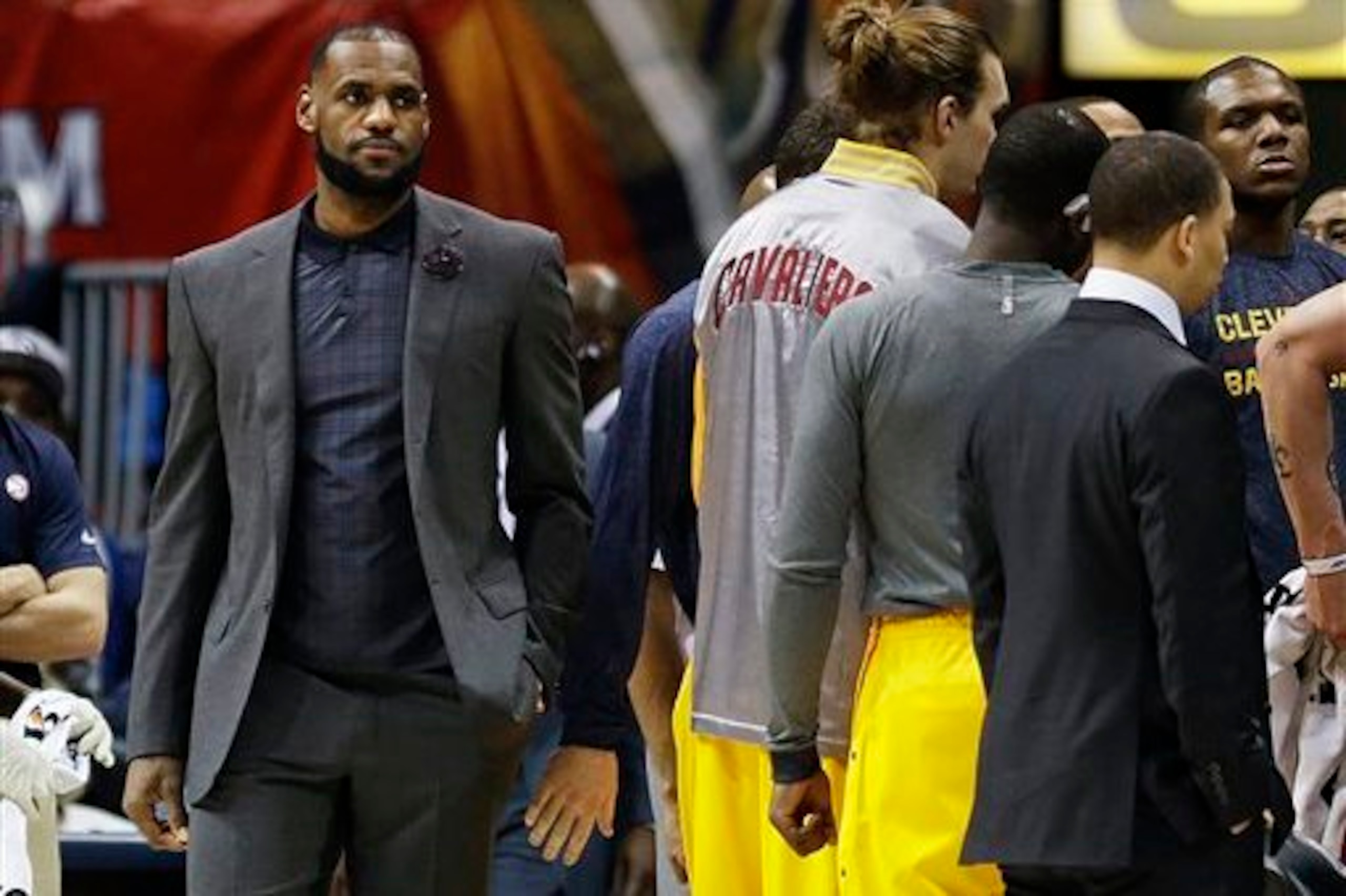
He wouldn't be seen again publicly until Jan. 7, in Cleveland, prior to the Cavaliers' loss to Houston. And while he would accompany the Cavaliers for their five-game West Coast swing, he wouldn't play again until Jan. 13 in Phoenix, by which time some critical things had changed.
The Trades
None close to James said he wanted the Cavaliers to lose at any stage, but some do suspect he was fine with a little collective failure along the way, as long as some lessons came out of it. Even Griffin, while insisting "I never would have told you that he wanted us to suffer," credits James for the overall, long-term vision, and "recognizing that you can't be 'stick' all the time, that sometimes you need to let guys have their leash a little bit, and let them have their run," and that "OK, they'll see."
"This is experiential to a large degree," he added.
If that was true early in the season, when James was on the floor, it was certainly so when he left them to fend for themselves. They didn't fare well, losing seven of eight games in James' absence, even with Love and Irving playing. They fell back to .500—and then under when they lost to the Suns in his return.
It was natural, under such circumstances, with the season slipping away, for points to get across easier. It also didn't hurt that James came back like a coiled spring. "With a purpose," an associate said. "Just really, really, locked in. And if you weren't a part of that, or if you didn't follow suit, then he really didn't mess with you. 'I'm not gonna waste my time.' We have only three months before playoff time. And he was serious about winning."

So were the Cavaliers. They had made their urgency apparent again during James' rehabilitation period, striking a pair of connected trades that, when initially run by James as possibilities, struck him as extremely unlikely. He wasn't against the swaps. Quite the contrary. He just didn't think Griffin could fill Cleveland's three consensus needs—athletic perimeter defender, spot-up shooter, skilled rim protector—in one fell swoop, and by parting with only one rotation piece, the ball-dominant Waiters, whose repeated resistance to team concepts had become a "downer" for James, according to an associate. The Cavaliers were in Philadelphia, just prior to Waiters' introduction in front of his hometown fans, when Griffin consummated the first trade, for Iman Shumpert and J.R. Smith. It was two days later, when the Cavs were hosting Houston, when Griffin completed the second, for Timofey Mozgov, creating the Cavaliers 2.0 subset of what was already James' Cleveland 2.0.
Contrary to the absurdly common perception, James didn't make the trades. But, in addition to getting ownership's approval, Griffin knew well what James thought of all three players prior to pulling the trigger, just as he had in adding pieces in the offseason, when, according to Griffin, they found themselves to be "very like-minded about the kind of players we wanted around and the types of pieces we wanted around. So it made the targets we had very easy to understand."
It was also easy to understand why James liked these three particular players, because, in personality and playing style, they were all suited to complement him well.
During an early December road trip that included a stop in Brooklyn, James had broken from custom to attend an NBA game as a spectator, watching the Knicks face the Trail Blazers. After Shumpert took a shot in front of him at Madison Square Garden, James told an associate he would love to have that type of three-and-D game on his team.
He had known Smith since the latter was in high school, and while he knew of Smith's off-court incidents, he felt the Cavaliers locker room, led by him, could keep everything in line; plus, as one of his Miami favorites, Chris Andersen, has said, James "likes guys with swag."
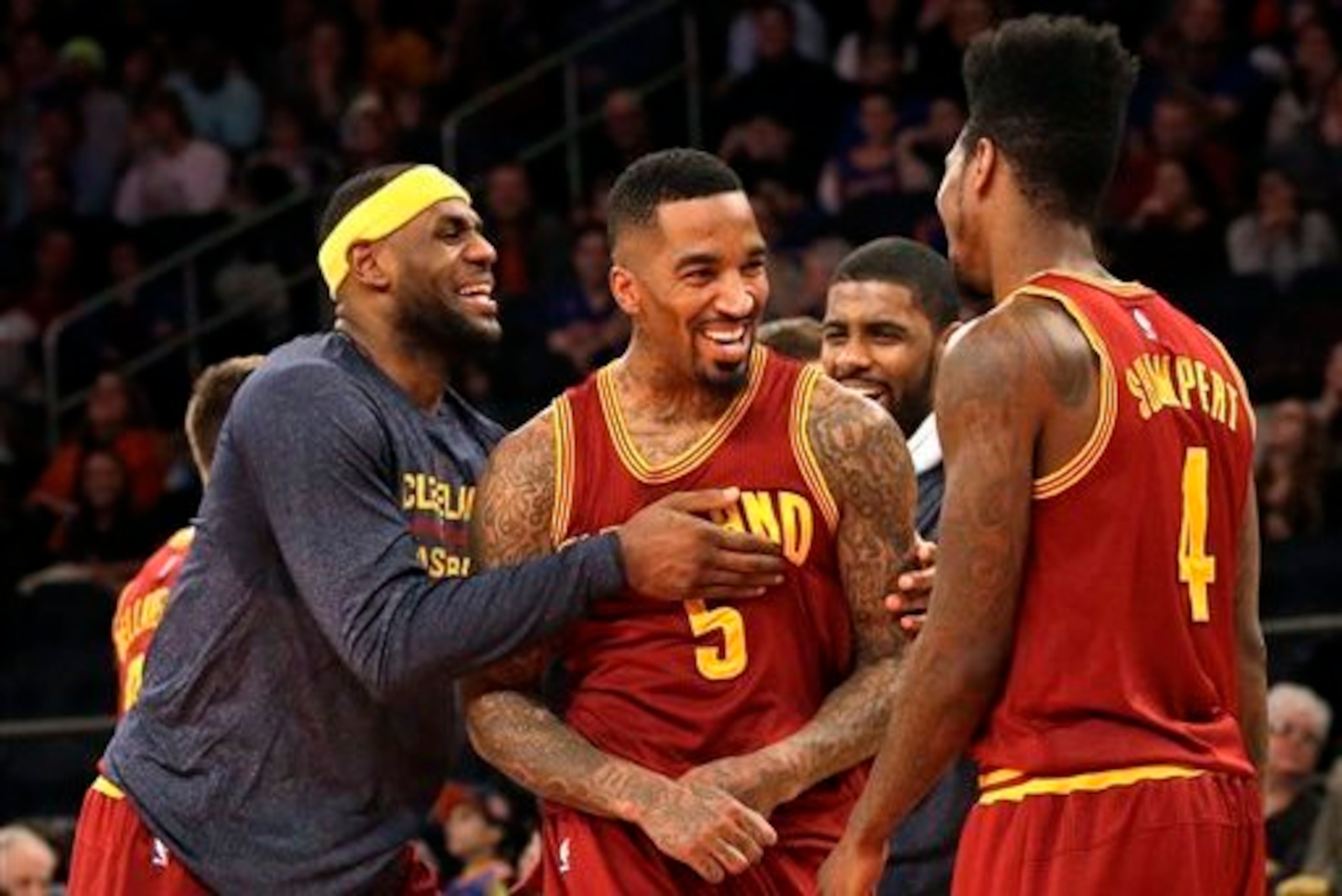
And while he wasn't as intimately familiar with Mozgov as others in the Cavaliers organization—they had been stalking him for a couple of years, feeling he'd been underutilized in Denver—he had reviewed enough tape to see skills, in terms of footwork and touch, unusual for a man that size. Of course, he wasn't completely aware of Mozgov's enormity until he arrived at the team's hotel in San Francisco on Jan. 8. James kept looking up and up and up, telling an associate that this mountain of a man is "what I need," and that Mozgov reminded him of his old pal Zydrunas Ilgauskas.
So it was on that West Coast trip, when James' return to health was coupled with the injection of talent, that James' mood significantly perked up, that he had, as one teammate put it, "much more life. He thought we could actually win now." He clearly had more confidence in those around him, from the front office on down, rewarding Griffin for the risk-taking with praise in public and more regular, friendly brushes on the back.
The three new players not only filled obvious holes, once Shumpert was ready to return from shoulder rehabilitation, but all also had something to prove: Smith and Shumpert had been headed nowhere in New York, Smith was a salary dump, and Mozgov had never before been seen as a central NBA piece.
According to Jones, the team also had a better idea of what everyone else was supposed to do. That made it easier for players as well as the coaches to hold other players accountable, when they stepped out of their designated lanes. Still, the personnel and personality changes required some more tweaks to the culture, so James didn't take the team-building for granted, especially since if he didn't remain serious, Smith could stray.
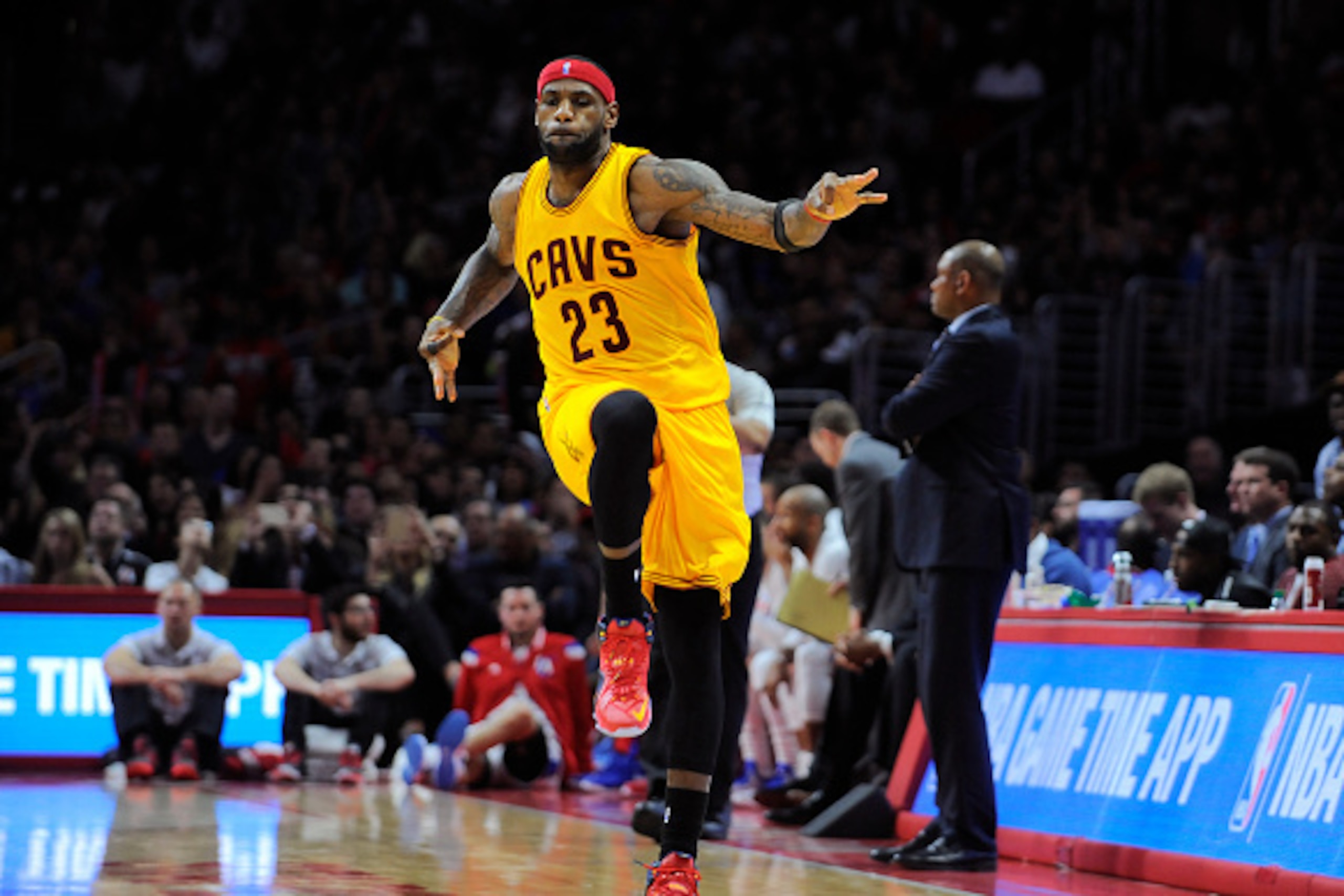
Still, he saw some value in downtime too. And beyond his health, and the trades, there was another pivot point, or at least some seem to think so. After the loss to Phoenix on Jan. 13, the Cavaliers flew to Los Angeles, where they spent three nights and played two games. On one of those nights, several players accepted one of those last-minute invites to chill with James and his crew at the Montage Beverly Hills hotel. Nothing crazy. Just some wine, some appetizers, some conversation and some music, with Randy Mims, a partner in James' LRMR Management company, handling some of the DJ duties.
Oh, and with Beyonce and Jay Z just happening to stop by.
Maybe some got the message:
Sometimes—OK, most of the time—it pays to embrace the culture James creates.
"You have to get behind him and follow him as best you can," said Damon Jones, who knows this as well as anyone, "because you know you're going to go to a lot of places."
The Plan Comes Together
The reloaded, recommitted Cavaliers went back to Cleveland after sweeping both teams in Los Angeles, then beat the Bulls, and then the Jazz. In the win against Utah, the man James and his teammates were already calling "Mozzie" recorded 16 points and 11 rebounds, shoving Jazz defenders around in the paint, pleasing James, who would soon also start calling him a "a walking double-double" and the best traditional big man he'd paired with, since Ilgauskas.
Maybe the most polite, too.
As he lumbered through the hallway to the Quicken Loans Arena exit, Gloria James, LeBron's mother, was walking the other direction. She smiled and looked skyward at the towering center.
"You're playing real well!"

Mozgov smiled sheepishly.
"Just trying to do my best," he said, in his booming one-note, Russian baritone.
He was, and the Cavaliers, especially after Shumpert's insertion, were jelling into one of the best teams in the NBA, winning 12 straight starting with those two in Los Angeles, 18 of 20, and, in all, 34 of 43, before winning 12 of 14 in the postseason to take the conference crown.
"He took the misfits to the Finals," Miller would later quip, in self-deprecating style, during the eventual Cavs-Warriors series.
James did so even with Love missing all of the second round against Chicago and the Eastern Conference Finals against Atlanta. But he couldn't take them to the title, not after Irving was sidelined for good after Game 1, not even while averaging 35.8 points, 13.3 rebounds and 8.8 assists in the series, albeit with well below his typical efficiency. The team's depth certainly showed some cracks, some of it explainable due to absences of Love and Irving, and some a result of age, wear or lack of trust (from coach David Blatt).
The culture had not cracked, however. It looked much healthier than it had earlier in the season, at least in terms of the spirit with which Thompson, Dellavedova and others played. The Cavaliers had morphed from a soft squad, mentally and physically, and especially defensively, to one that only had a shot due to its stinginess and toughness.
That evolution would seem to set the stage for a much easier start next season, with James able to point to that progress together, rather than needing Miller and Jones (provided both are around, with Miller opting in but a trade candidate and Jones still a free agent) to help him share stories about others. But it's never smooth for a James team, simply due to the scrutiny, and that figures to continue on at least two fronts.

Several times over the length of the season, James' relationships with Blatt and Love showed their own share of fissures, too, and the media were more than willing to dive in. Even those close to James concede that some of his culture-creation tactics, such as the infamous "fit in" or "fit out" tweet, didn't work as well on Love as on others.
It's safe to say that the soap opera isn't on permanent hiatus, even after Love—following a poolside pow-wow with James—re-signed for five years, a decision that suggests he's not especially queasy about their ongoing collaboration. It also should alleviate James' concerns, which he expressed to many confidants, especially early in the season, that Love wasn't ready to put winning first.
In the same way, Blatt simply surviving the offseason won't be enough to convince many that James is enamored with everything about him, or that Blatt has job security going forward, even though it's not clear how much it matters, since James has always placed much more emphasis on his teammates than his head coach. The latter is peripheral if he's pleased with the guys on the court and is connecting with others on the staff.
James' associates continue to insist that this particular perceived rift has been overplayed. Yes, cameras caught James challenging Blatt during some stressful situations in the playoffs, but they say if he didn't respect Blatt, he would ignore the coach, rather than exchange any words at all. "LeBron doesn't tell people what to do for the sake of telling people what to do," one said. "He's looking for you to give him insight, and tell him what to do, and he wants to give you what he feels, and come together somewhere in the middle."
They similarly resist the perception that he wields power for its own sake, a narrative that gained steam during this free-agent period, as it was reported that he was holding off signing his own contract until teammates (specifically Thompson) got paid handsomely, even with Gilbert already shoulders deep into luxury-tax territory.
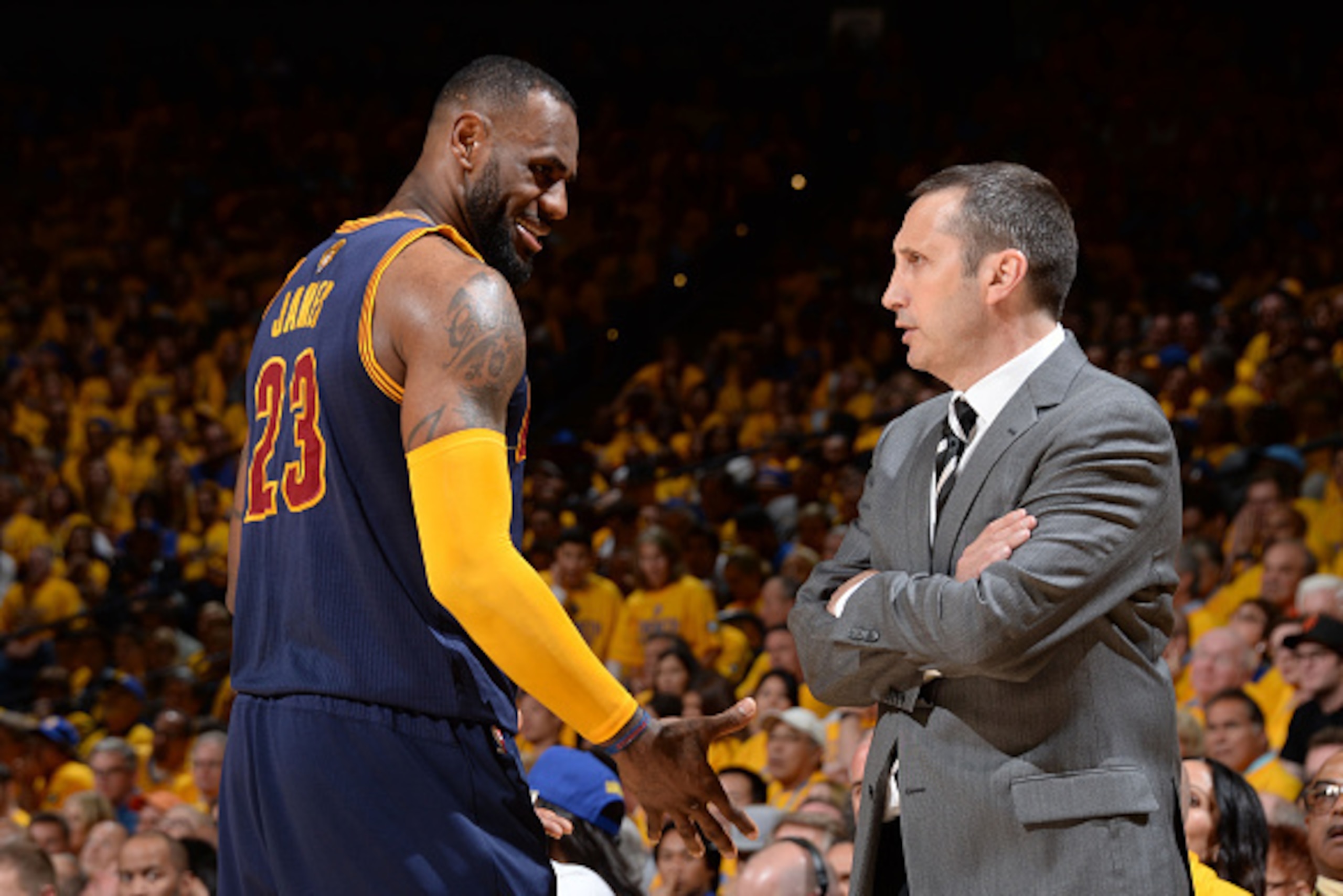
There's no question, though, that James believes he not only knows which players best fit his game and his team, but also how to bring out their best. Some guys are simple, like Thompson or Mozgov. Some, such as Love and Irving and Smith—should he return—may require more maintenance. Love, after all, was a spectator as the Cavaliers embraced a scrappier identity in the postseason. Irving impressed many of his teammates with his maturation throughout the season, especially in the way he began to utilize them more. Still, they want to see the Cavs point guard continue to take notes, so he can take the best possible care of his body, to give himself the best chance to finish.
Talk to anyone who knows James, and they'll say his culture shaping isn't close to finished, that he will be equally relentless next season, whether most of the core returns intact, or whether former teammate Mo Williams is just the start of a slew of additions. But at least, now, the foundation is established.
"This first year was new for everybody," Varejao said during the Finals, which he watched while rehabbing, after his December surgery. "With him back, and the guys that came with him, they changed everything. Now we are trying to win a championship. I really think, next year. Because this year was more like seeing how the team would respond with everybody, with Kyrie, with Kevin Love, the vets that came with him, even with the Dion situation, the trades and everything. I believe everybody now knows a lot better what we may need next season to win."
Whether Varejao is part of the "we" is in question, with his name rumored in trade talks. But the core likely will return, and they better be ready, even down to Harris, who will spend some time on the Cavs' summer league team before James is back in his ear.
"Not that he gets on me a lot," Harris said, smiling. "But he will get on me for certain stuff. Like I said, he expects me to know everything that's going on. If I have a mental lapse, it's like I don't have that much margin for error as some of the other veteran guys."
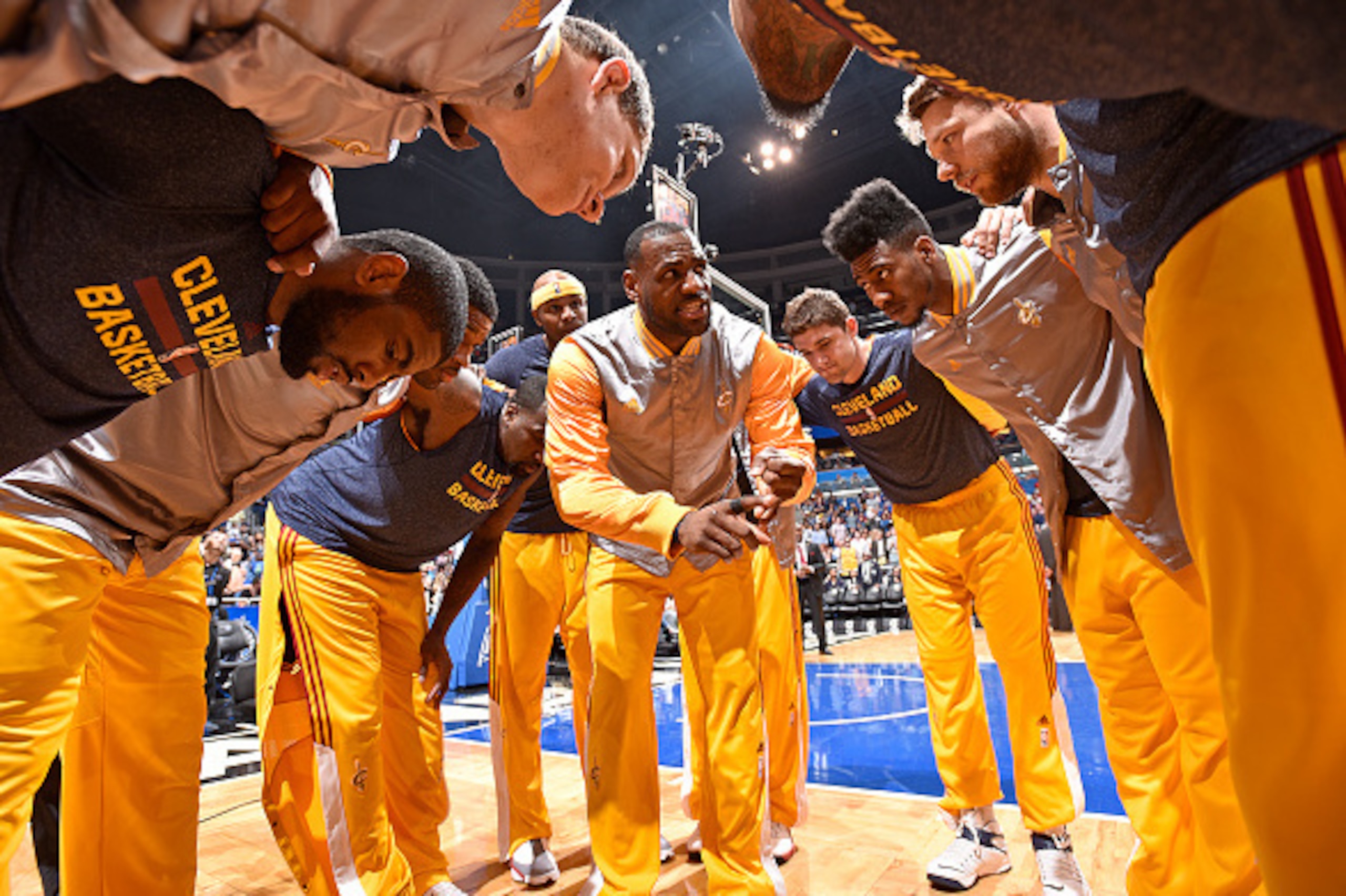
Like, during the Boston series, when Irving was nursing a foot injury, and Dellavedova was running the Cavaliers offense, so Harris was getting some of the scouting reps, running the Celtics' sets.
"I was just kind of, listening to the coach, waiting for him to tell me what to do," Harris said. "And I would do it. But there was one time I didn't wait for everybody to get set up, and I went too early. And 'Bron was like, 'Joe, what the hell are you doing? Make sure that everybody is set before you get going!' But it doesn't matter who it is, he's on you, and making sure you're locked in and focused, as much as he is."
Because dominance doesn't ever take a day off.
Ethan Skolnick covers the NBA for Bleacher Report and is a co-host of NBA Sunday Tip, 9-11 a.m. ET on SiriusXM Bleacher Report Radio. Follow him on Twitter, @EthanJSkolnick.

.jpg?w=2560 "Seahawks Have No Plans to Move")
.jpg?w=2560 "Insiders: Cowboys Overpaid for Porter")
.jpg?w=2560 "Every Trade's Best Trade Asset 🔁")
.jpg?w=2560 "Top NFL Trade Targets")