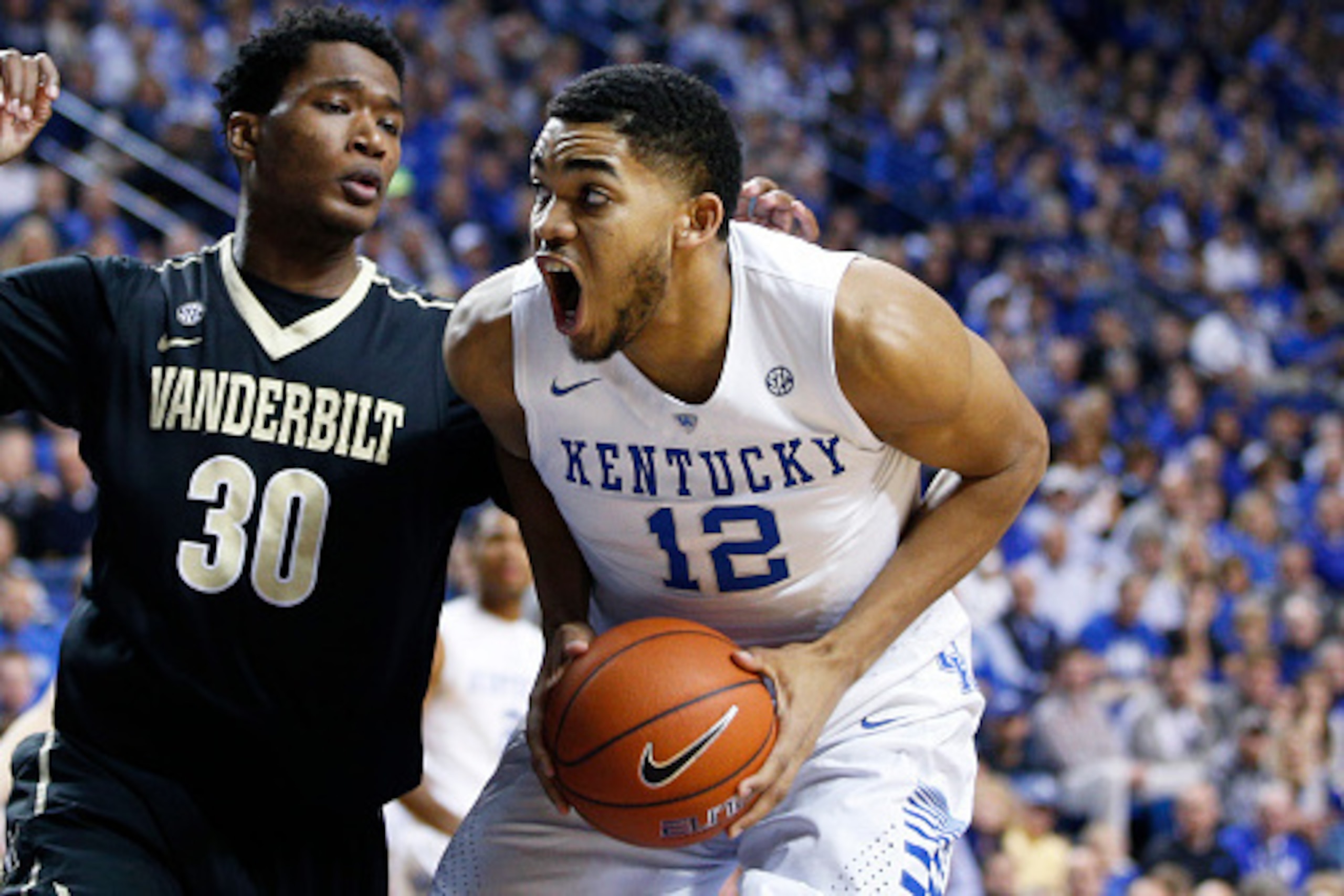

NBA Draft 100 Series: Ranking the Top Prospects of the 2015 Class
The projected 2015 NBA draft looks deep, with star power at the top and plenty of potential serviceable role players as you move further down the board.
The NBA Draft 100 metric measures each prospect based on a number of factors that account for everything from athleticism to room for growth. Each position has different criteria related to the traditional responsibilities tied to it.
Though some prospects played multiple positions, we assigned each prospect to the position we project him to play most at the next level.
Please note that slight adjustments were made for international and mid-major prospects.
If two players received the same total score, we used "Upside" as the tiebreaker. If there was still a tie, we chose the player who ranked higher on Jonathan Wasserman's big board.
Draft Results + Big Board
1 of 101SCORING SYSTEM
We used five categories to evaluate the each position. Each category is also assigned a different weight based on significance, with a formula to reflect each prospect's performance in a particular category.
POSITIONAL RANKINGS
To see how we scored each category for every position, click the links below:
100. Juan Vaulet, Argentina, 6'6", SF, 1996
2 of 101Physical Tools / Athleticism
At 6'6", 200 pounds, Juan Vaulet's physical tools and athletic ability won't scare anyone away, but they won't win him any additional support either. He can run, jump and slide—he just isn't overly explosive.
Scoring
Vaulet averaged 16.7 points per 40 minutes, threatening most as a face-up driver and cutter off the ball. He lets his athleticism and motor do most of his talking, as opposed to one-on-one ball skills.
Shooting
Vaulet didn't flash much shooting potential, having made just two three-pointers in 34 games. He also shot just 66.7 percent from the charity stripe.
Defensive Potential
He's a high-energy player with long arms, which bodes well for his defensive outlook.
Upside
Vaulet is only 19 years old and still has plenty of time to polish up his offensive game. He's a project with room to grow, though his upside tops out as a low-end bench player.
Overall
Vaulet kept his name in the draft, which makes you wonder if he received a second-round assurances. If he goes undrafted, he could be a sneaky pickup for a summer league team.
99. Sir'Dominic Pointer, St. John's, 6'6", SF, Senior
3 of 101
Physical Tools / Athleticism
Sir'Dominic Pointer is a strong run-and-jump athlete, but at 6'6 "and 192 pounds, he's undersized for a player who also lacks the versatility to play 2-guard.
Scoring
Pointer is coming off his best year as a scorer, having Averaged 15.8 points per 40 minutes. He's dangerous in the open floor and can make plays around the rim as a finisher and cutter. However, his one-on-one game is not particularly threatening.
Shooting
Zero shooting range will really hurt Pointer's NBA chances. He made just two threes as a senior and 21 total in 3,660 career minutes at St. John's. He'll need to show he can knock down jumpers in predraft workouts.
Defensive Potential
Pointer's biggest selling point is His potential defensive. He became a defensive playmaker for St. John's, where he racked up 2.2 steals and 2.8 blocks per 40 minutes as a senior. Pointer covers a lot of ground and can be disruptive from the baseline out to the arc.
Upside
With no current offensive game, Pointer's only chance at making the NBA will be as a defense-minded energizer.
Overall
He'll have a shot at the second round due to his defense and physical tools. A team might feel it can play Pointer if it sticks a stretch 4 next to him for spacing.
98. Stefan Nastic, Stanford, 6'11", C, Senior
4 of 101
Size for Position/Athleticism
At 6'11", 238 pounds with a 7'2 ½" wingspan, Stefan Nastic has plenty of size for an NBA center, but he's lacking in the much strength, quickness and athleticism departments.
Scoring/Shooting
Nastic averaged 18.1 points per 40 minutes as a redshirt senior this past season. His most appealing strength may be his mid-range touch. He knocked down 45.2 percent of his two-point jumpers, per Hoop-Math.com, and shot 75.4 percent from the free-throw line. Nastic can score over the shoulder, but he lacks the ability to separate and struggles against length and after contact.
Defense/Rim Protection
Nastic's 3.8 percent block percentage highlights his minimal defensive potential. He doesn't project as a shot-blocker or physical interior defender.
Rebounding
Nastic is a below-average rebounder for a center. His 12.7 percent total rebound percentage is the lowest of any top-20 player at his position.
Upside
Unfortunately, Nastic just isn't an NBA talent. Unless he goes to Europe or the NBA D-League and earns the reputation as an automatic mid-range shooter, I wouldn't count on him making a roster any time soon.
Overall
He'll most likely go undrafted on June 25 and look to catch on with a summer league team.
97. LeBryan Nash, Oklahoma State, 6'7", SF, Senior
5 of 101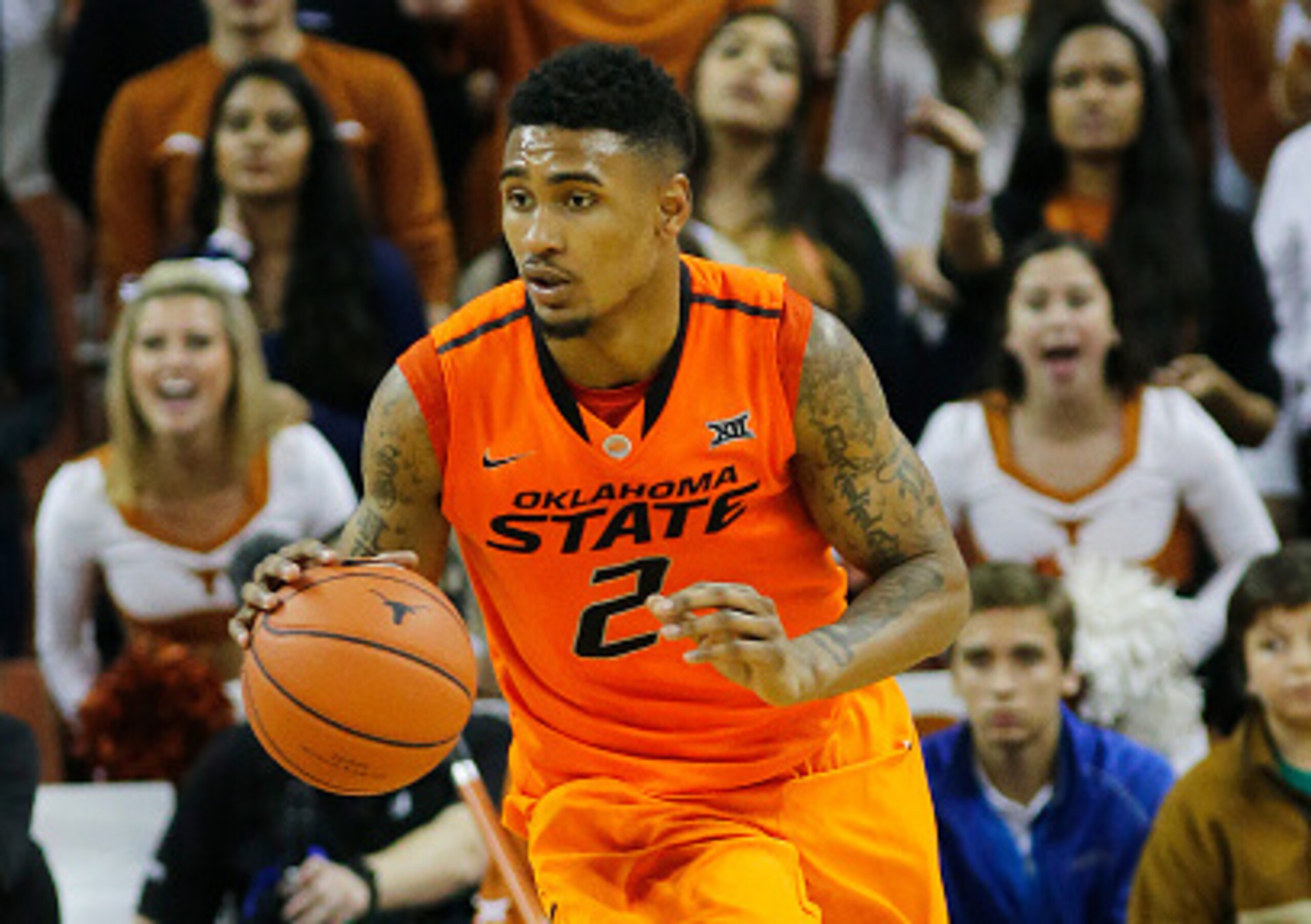
Physical Tools/Athleticism
At 6'7" and 235 pounds, LeBryan Nash has an NBA body for a small forward. He's strong and athletic, though his feet aren't the quickest.
Scoring
Nash is a versatile scorer who can create his own shot out to 18 feet. He prefers to face up and attack, spin off line drives, separate in the post and knock down short- to mid-range jumpers. Per 40 minutes, Nash made 7.2 two-point field goals and averaged 21.7 points. He also got to the line an impressive 9.0 times per 40 minutes. Nash tends to force up bad shots from time to time, but he's a versatile scorer inside the arc.
Shooting
Unfortunately, Nash never developed any shooting range through four years at Oklahoma State. It got to the point where he just stopped taking threes. This past season, he finished 2-of-20 from downtown after failing to make a three his entire junior season. He did make 40.6 percent of his two-point jumpers, per Hoop-Math.com, a good number. But it's tough to ignore his lack of production as a three-point shooter.
Defensive Potential
Nash has decent tools but has been inconsistent on defense. He'd probably be better off defending NBA power forwards, though he'd be giving up a few inches.
Upside
The fact that he'll be 23 years old at the end of June but still hasn't proved much as a shooter is troubling. He also isn't a plus defender or playmaker. Nash may actually be able to make a decent living in Europe, where his scoring ability would hold more value.
Overall
Nash's best shot at getting drafted is by catching fire in a workout and getting coaches to buy the possibility of improvement. Odds are he lands overseas or in the D-League.
96. Kenneth Smith, Louisiana Tech, 6'3", PG, Senior
6 of 101
Size for Position/Athleticism
At 6'3", 180 pounds, Kenneth "Speedy" Smith has a solid frame and size for a point guard. His physical profile comes into play mostly on defense, where his long arms, quick hands and feet translated to 258 steals in 140 career games. However, despite the nickname, Speedy isn't the quickest off the bounce, nor is he explosive. In 1,190 minutes as a senior, he made just 22 shots at the rim, per Hoop-Math.com.
Passing/Facilitating
Smith's 7.1 pure point rating, which measures his assists (7.4 per game) to turnovers (2.5 per game) relative to each other, ranked No. 2 in the country, per RealGM.com. He's a natural facilitator and true pass-first ball-handler. Smith's bread and butter is ultimately his ability to run an offense and set the table for teammates.
Scoring
Though an excellent passer, Smith offers little as a scorer, having averaged just 7.8 points per 40 minutes. He only shot 37.9 percent from the floor, and outside the floater, he has little ability to create his own shot. Point guards who can't score have not fared well in the pros lately. Kendall Marshall would likely be his best NBA comparison offensively.
Shooting
He's become a decent shooter, having made 35 of 96 threes (36.5 percent) and raised his free-throw mark as a senior to 77.0 percent from 65.5 percent.
Upside
Smith offers minimal upside without the ability to score. Best-case scenario: He finds a roster spot because of his feistiness as a third ball-handler.
Overall
He's getting workouts, but Smith just doesn't look the part for a player at the game's most competitive position. He'll go undrafted and hope to make a name for himself in the D-League or overseas.
95. Shannon Scott, Ohio State, 6'1", PG, Senior
7 of 101
Size for Position/Athleticism
Standing 6'1", 185 pounds, Shannon Scott has average size to go with good—not great—athleticism. His best attribute in this department is his lateral quickness. He's a solid on-ball defender who can stay in front of ball-handlers.
Facilitating/Passing
Despite sharing a backcourt with D'Angelo Russell, Scott averaged 5.9 assists, showing a good feel out of pick-and-rolls and a generally strong comfort level facilitating in the half court. Scott also has sharp vision in transition, where he picked up 39.2 percent of his dimes, per Hoop-Math. On the downside, he turned the ball over too much (21.2 percent turnover percentage).
Scoring
His 11.2 points per 40 minutes was sadly a career high. After four years, Scott hasn't developed much as a scorer or shooter.
Shooting
He did look capable of pulling up off the dribble but shot just 41.2 percent from the floor and 28.4 percent from downtown. Scott's lack of range really hurt his outlook.
Upside
Because he can rise above the rim, manage an offense and defend opposing point guards, he'll get some looks, even if he goes undrafted this June. But no shooting range or scoring ability will make it tough for him to stick.
Overall
Scott didn't receive an invite to the combine and remains unlikely to get drafted this year. He'll have a chance to generate buzz in the D-League if he doesn't receive any appealing offers overseas.
94. Nikola Radicevic, Serbia, 6'5", PG, 1994
8 of 101Size for Position/Athleticism
At 6'5", Nikola Radicevic has strong size for the position, but a lack of athleticism and explosiveness are red flags. He could have a tough time turning the corner, finishing and defending.
Facilitating/Passing
The most appealing aspect of Radicevic's game is his ability to create shots for teammates off ball screens. His numbers weren't overwhelming—Radicevic put up a 27.5 percent assist percentage. But he's clearly a crafty playmaker off the dribble.
Scoring
Radicevic only averaged 13.6 points per 40 minutes. He picks up most of his buckets off sneaky drives and floaters, but finishing in traffic looks like a real weakness.
Shooting
He only shot 31.2 percent from three and made 1.3 triples per 40 minutes. He also shot just 64.6 percent from the line. To have a realistic shot at finding the NBA, Radicevic will need to improve his jumper.
Upside
His size and facilitating ability are both intriguing, but limited burst will make it tough on him. Backup point guard looks like his best-case outlook as a pro.
Overall
He received valuable exposure playing in a lineup with Kristaps Porzingis and Guillermo Hernangomez in Spain. Most international scouts should be fully aware of Radicevic, who'll be a second-round draft-and-stash option.
93. Matt Stainbrook, Xavier, 6'11", C, Senior
9 of 101
Size for Position/Athleticism
Matt Stainbrook measured 6'9 ½" in socks at the Portsmouth Invitational. He's a big boy at 283 pounds, but he is a below-average athlete from every possible angle.
Scoring/Shooting
Stainbrook has go-to moves in the post, where he can score with his back to the rim or finish at tough angles below it. And though not exactly a shooter, he can knock down mid-range shots and miscellaneous looks around the key.
Defense/Rim Protection
Stainbrook's 2.9 percent block percentage from his senior season is painfully low. His inability to get off the ground and his short arms for a center (7'0 ½" wingspan) really restrict him defensively.
Rebounding
He wasn't a bad or great rebounder this past year, given his average of 10.4 rebounds per 40 minutes and 16.1 percent total rebound percentage. However, he wasn't much of a factor on the offensive glass.
Upside
Stainbrook's lack of athleticism will likely be too severe to overcome. Consider him a long shot to earn an NBA training camp invite.
Overall
Don't expect Stainbrook to get drafted. He could have a better chance of making a name for himself in track and field.
92. Sam Thompson, Ohio State, 6'7", SF, Senior
10 of 101
Physical Tools/Athleticism
Sam Thompson just might be one of the top athletes in the 2015 NBA draft class. He can explode off the ground and jump out of the gym. At 6'7" and 200 pounds, he's thin, but his physical tools won't be the issue if he can't find an NBA job.
Scoring
Thompson was never much of a scorer. The 10.2 points per game he averaged as a senior were a career high. Thompson's jumper, handle and shot creativity never quite developed through his four years at Ohio State. He generates most of his offense in the open floor or cutting to the basket.
Shooting
Thompson had a discouraging year as a shooter. He made 22 of 84 three-point attempts (26.2 percent) after converting at an average 35.5 percent clip as a junior and a strong 40.4 percent as a sophomore. The fact that he's never shot above 71 percent from the free-throw line suggests there is a real issue with his stroke.
Defensive Potential
Though mediocre on offense, Thompson was a terrific college defender who guarded multiple positions. He plays with an in-your-face approach and can irritate opposing ball-handlers and scorers.
Upside
Considering his offensive game never developed, it seems unrealistic to think it will suddenly come around as a 23-year-old rookie. He'll get looks based on his elite athleticism and defense but will remain a long shot to crack a roster.
Overall
Thompson simply isn't good enough offensively to attract real NBA attention. He could have a chance to play overseas, where his athleticism may hold more value.
91. Joshua Smith, Georgetown, 6'10", C, Senior
11 of 101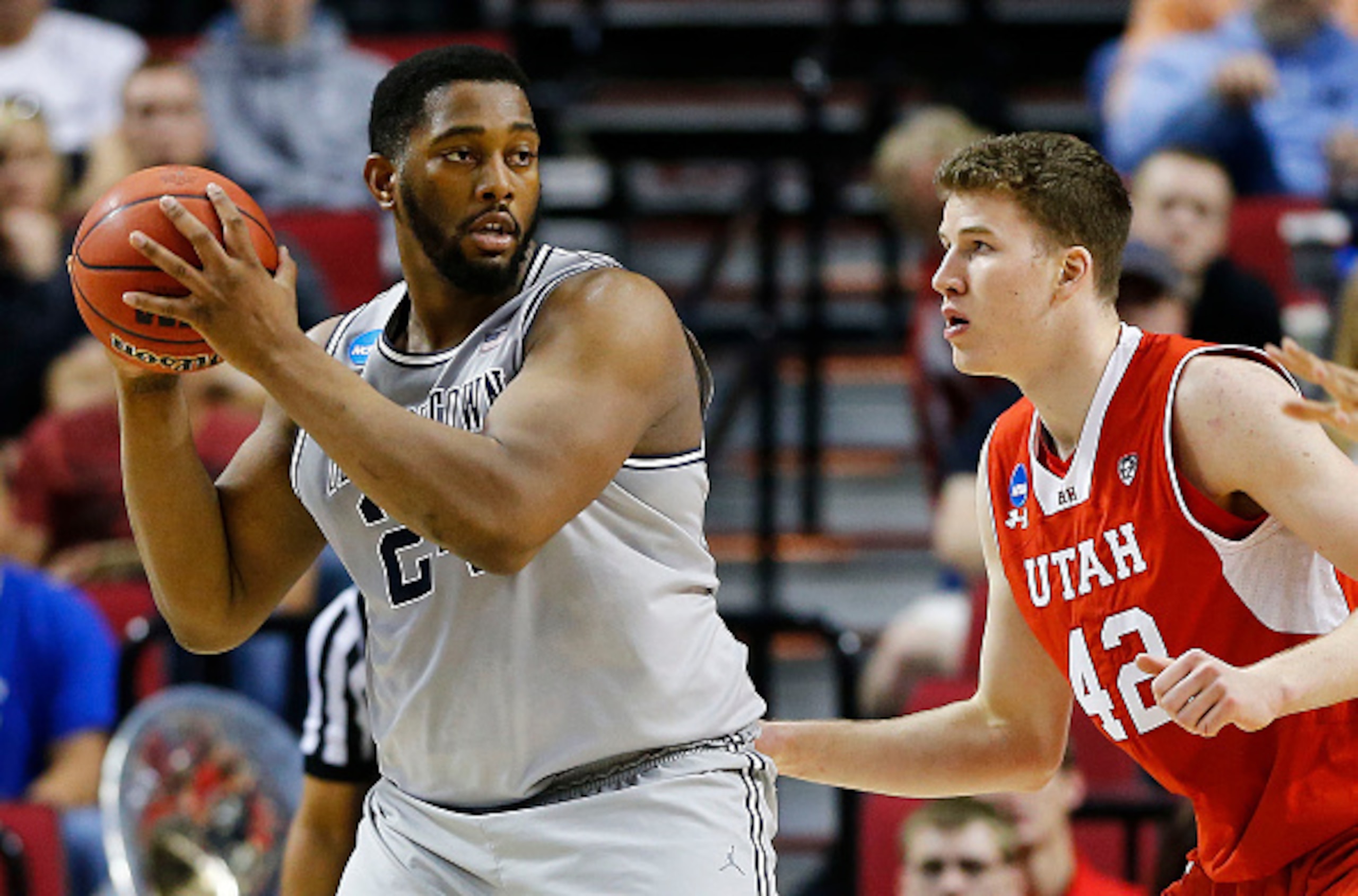
Size for Position/Athleticism
While his 6'10" size and 7'3" wingspan both fit the mold of an NBA center, Joshua Smith has never managed to keep his weight in check. He's listed at a whopping 350 pounds. Conditioning, athleticism and mobility are major concerns that may prevent NBA teams from even giving him a look.
Scoring/Shooting
There was never any doubting Smith's skills. With terrific hands in the post, he has an excellent feel for the rim and can score over either shoulder. He isn't a threat to face up or shoot, but he uses his size to gain position and his touch to finish over defenders. He actually averaged 21.0 points per 40 minutes for Georgetown as a senior.
Defense/Rim Protection
Smith isn't much of a defensive factor. His 3.9 percent block percentage from this past season is distressingly low for a near-7-footer, while his lack of foot speed led to him picking up a ridiculous 6.8 fouls per 40 minutes.
Rebounding
Given all the space he took up in college, Smith's rebounding numbers were fine. His 17.0 percent total rebound percentage is actually one of the better marks among centers.
Upside
Already 23 years old, Smith is running out of time to prove himself. He'll need to transform his body, but having failed to do so over the last five years, it seems unlikely.
Overall
Smith won't get drafted this June after failing to receive an invite to the combine. Whether he can make any money playing basketball could come down to his work ethic over the next year.
90. Kevin Pangos, Gonzaga, 6'2", PG, Senior
12 of 101
Size for Position/Athleticism
Kevin Pangos' underwhelming physical tools and limited athleticism will be tough for him to overcome. He actually has decent size at 6'2" but isn't particularly strong, while a severe lack of quickness and explosiveness could make it tough to beat defenders off the dribble at the next level, wherever that may be.
Facilitating/Passing
Pangos' 23.4 percent assist percentage was below-average compared to other point guards. He did register an impressive 5.4 pure point rating, per RealGM.com, after averaging 5.7 assists to just 1.6 turnovers per 40 minutes. He's a smart passer—just not a dynamic playmaker.
Scoring
Pangos' scoring average per 40 minutes has gradually declined since his freshman year. He's more of a shooter than a scorer, having made just 1.4 two-point field goals and averaged 11.6 points per game.
Shooting
Pangos' ability to shoot is what might ultimately give him a chance. He nailed 2.5 threes per 40 minutes at a lights-out 43.1 percent clip. It marked the fourth consecutive year Pangos has finished at least 40 percent from deep.
Upside
He could have a tough time earning an NBA roster spot, given the questions surrounding his ability to hold up physically at each end of the floor. Still, he has adequate size, a convincing jumper and sharp passing skills. Pangos might be able to earn some attention in the D-League, the way former teammate David Stockton did before signing with the Sacramento Kings.
Overall
He's likable for his underdog athletic limitations, competitiveness and consistency. But Pangos doesn't offer upside or an immediate solution. Don't count on his getting drafted. He'll spend next year in the D-League or Europe.
89. Aaron Harrison, Kentucky, 6'6", SG, Sophomore
13 of 101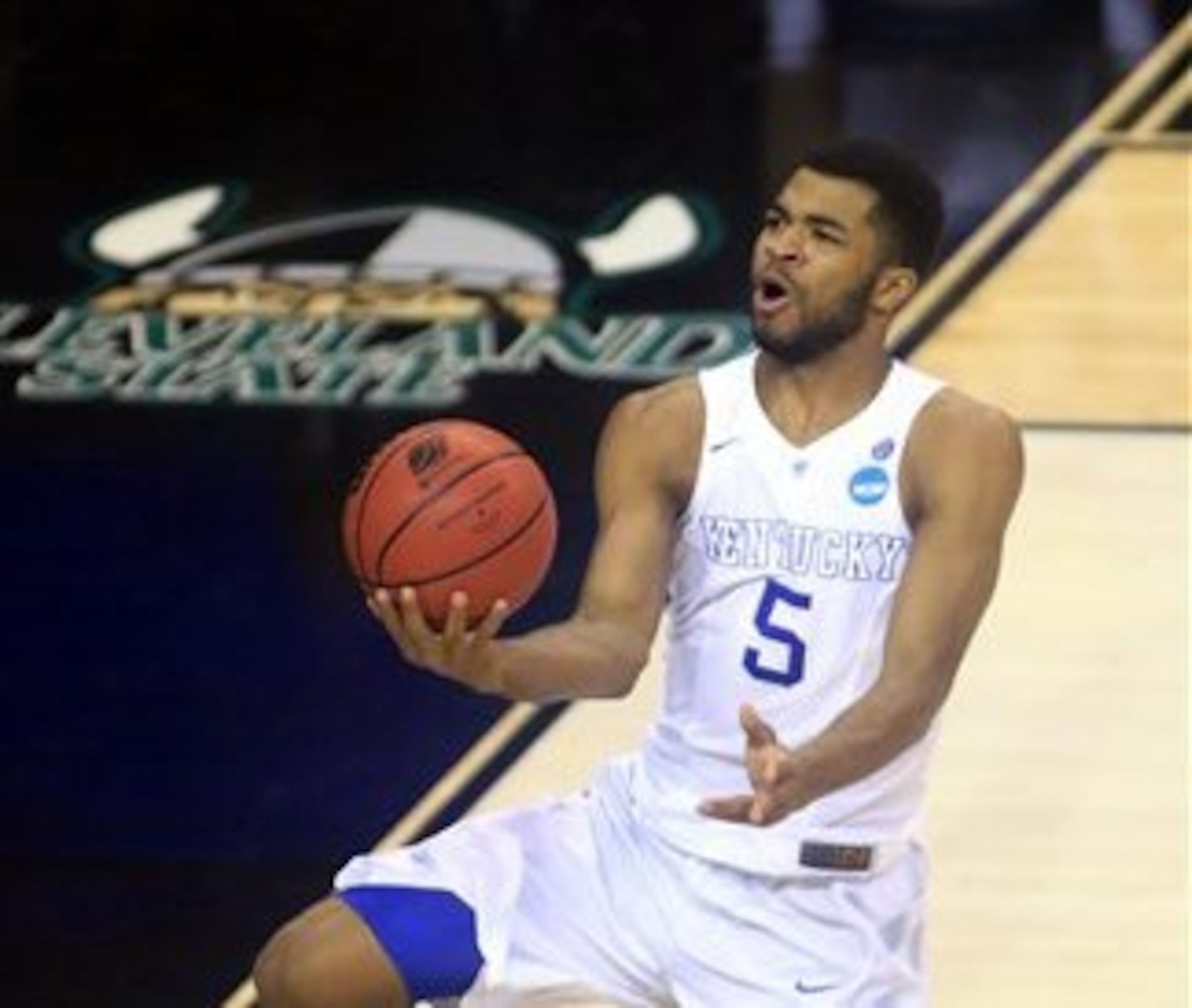
Size for Position/Athleticism
Aaron Harrison has the 6'6" size and body of a prototypical NBA 2-guard, but he isn't athletic, quick or explosive. He also doesn't get to the basket or charity stripe often, having averaged just 4.0 free-throw attempts per 40 minutes with Kentucky as a sophomore.
Scoring
Harrison is a perimeter scorer who has done a great deal of offensive damage in the half court off spot-ups and pull-ups. He isn't a threatening shot-creator, but he can complement his playmaker and post men as a shot-maker and cutter. On the down side, most of his looks are low-percentage shots. His 42.3 percent field-goal clip as a freshman dipped to just 39.5 percent as a sophomore.
Shooting
Despite taking 187 threes and 106 two-point jumpers to just 77 shots at the rim, per Hoop-Math.com, Harrison has been an erratic shooter. He hit just 31.6 percent of his looks from downtown and finished the year with a disappointing .514 true shooting percentage.
Playmaking
Harrison can handle the ball and pass, but his inability to lose defenders off the dribble limits his playmaking ability. He averaged 2.2 assists per 40 minutes.
Upside
With questionable athleticism, no real one-on-one game and an unreliable jumper, Harrison is facing tough odds to become a star in the NBA. He'll have a chance at making a roster and sticking if he can start hitting threes more consistently, though.
Overall
Harrison struggled at the combine, and it could have knocked him off draft boards. He'll be hoping for someone to pull the trigger in the 45-60 range. Expect to see him in the D-League next season.
88. Wayne Blackshear, Louisville, 6'5", SF, Senior
14 of 101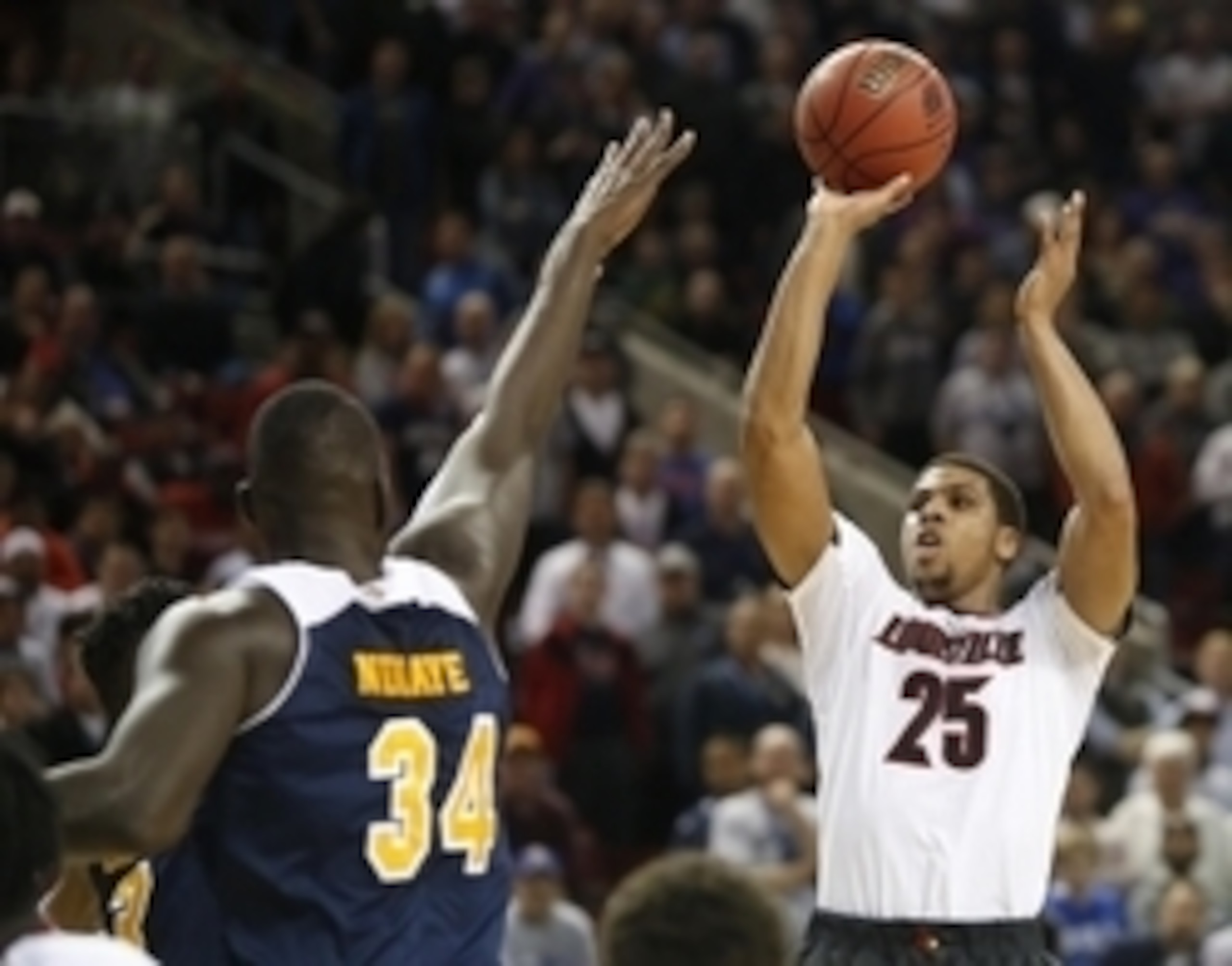
Physical Tools/Athleticism
Wayne Blackshear is slightly undersized for a small forward, a position he's likely to play due to his stiff off-the-dribble game. But he has a strong 215-pound frame and above-average athleticism.
Scoring
Blackshear was somewhat inconsistent in terms of his impact during his four years at Louisville, but he showcased promising shot-making ability. He converted baskets off spot-ups, pull-ups and straight line drives. Playing mostly off the ball, Blackshear averaged 14.7 points and 2.6 made two-point field goals per 40 minutes.
Shooting
Blackshear's shooting stroke passes the eye test, though the consistency just isn't there. He made 2.1 threes per 40 minutes as a senior, but shot just 33.1 percent from deep.
Defensive Potential
Blackshear doesn't have the reputation of being the smartest defender, and he could have trouble on the perimeter against quicker wings. He's capable of holding his own on that end in the Association, but he's not likely to be considered a defensive asset.
Upside
He'll be 24 years old in February, making him one of the older players eligible for the draft. If Blackshear makes it in the NBA, it will be due to his athleticism and shot-making skills. However, his inability to offer much else, as well as his age, keep his ceiling in check.
Overall
Blackshear has been attending workouts, but the chances of him getting drafted seem slim. He's a perimeter scorer with an inconsistent jumper and little defensive potential, likely making him D-League material.
87. Amir Williams, Ohio State, 6'11", C, Senior
15 of 101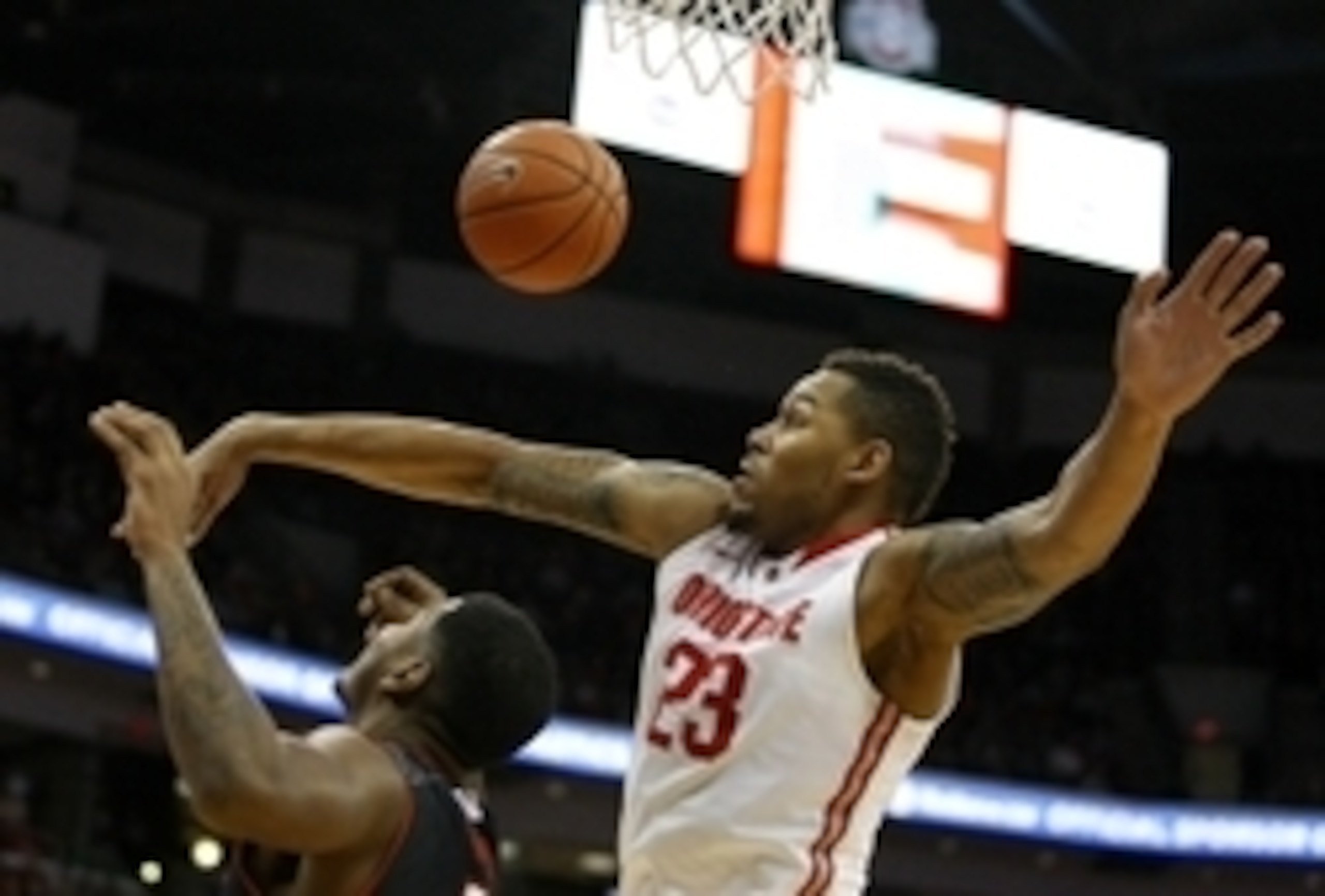
Size for Position/Athleticism
Amir Williams passes the eye test with 6'11", 257-pound size and a 7'3" wingspan. But he isn't a standout athlete by any means, as he lacks leaping ability and quickness.
Scoring/Shooting
Williams averaged just 13.0 points per 40 minutes as a senior, rarely taking a shot that wasn't right at the rim. Per Hoop-Math.com, 84.4 percent of his shots were at the rim. His over-the-shoulder hook is really the only move in his arsenal. Otherwise, Williams doesn't create shots or knock them down outside the paint.
Defense/Rim Protection
Though his 3.2 blocks per 40 minutes from this past season aren't bad, his defensive impact wasn't always felt. Just having long arms isn't likely to translate to rim protection at the next level.
Rebounding
Williams wasn't a big-time rebounder, a result of questionable toughness and athleticism. He averaged 9.6 boards per 40 minutes.
Upside
He just doesn't do enough things well. His measurements check out, but Williams lacks the offensive game, athleticism and defensive consistency to become relevant in the draft conversation.
Overall
He'll be a fringe second-rounder hoping to hear his named called in the 50-60 range, but chances are Williams ends up in the D-League or overseas.
86. Norman Powell, UCLA, 6'4", SG, Senior
16 of 101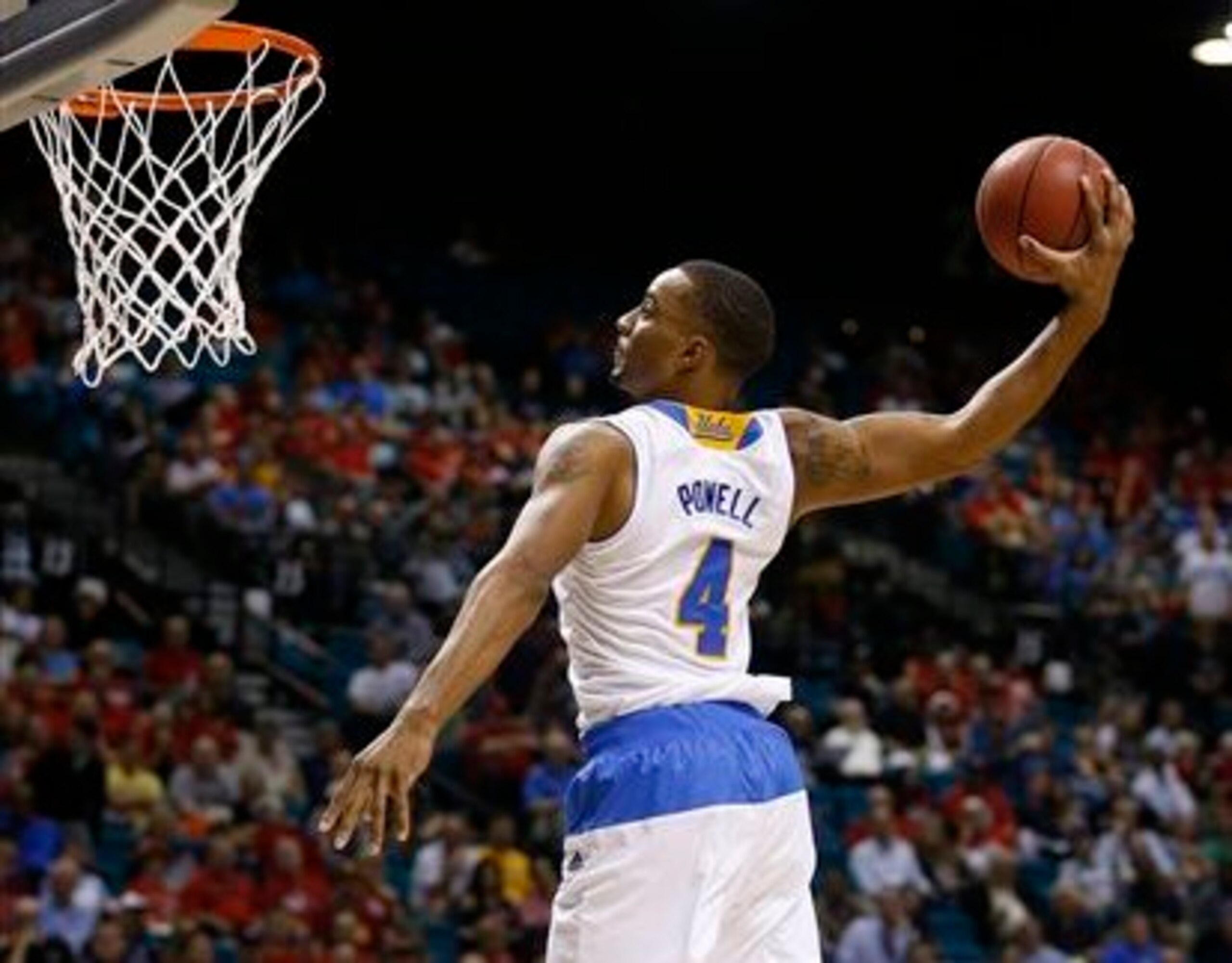
Size for Position/Athleticism
At 6'4", Norman Powell is undersized for a shooting guard who can't play the point or a combo guard role. However, a 6'11" wingspan and explosive athleticism help make up for that inch or two in height. While his ability to get up above the rim shines in transition, his strength, length and foot speed also translate to lockdown defensive potential.
Scoring
Powell has continued to expand his offensive game, having raised his scoring average with each successive season at UCLA. This year, he put up 19.0 points per 40 minutes, thanks to an electric attack game and developing mid-range arsenal. Still, he isn't a sharp enough one-on-one player, which makes his jumper even more important.
Shooting
Unfortunately, he hasn't found a consistent rhythm from behind the arc, where he shot 31.9 percent as a senior. Sadly, that was his best three-point shooting year since his freshman season. He finished with a so-so .540 true shooting percentage—significantly lower than the .611 percent he put up as a role-playing junior.
Passing/Playmaking
Powell averaged 2.4 assists per 40 minutes this past season with the Bruins. He can make plays as a passer, but he's not a playmaker.
Upside
Powell's offensive upside is limited, given his size, struggles with creating shots and shaky jumper. However, he has terrific defensive tools and instincts. He will have the chance to earn the reputation as a specialist like Memphis Grizzlies 2-guard Tony Allen did.
Overall
His defense doesn't show up in the NBA Draft 100 score, but it's something that will get him drafted. He's a second-round option anywhere from No. 31 to No. 60.
85. J.P. Tokoto, North Carolina, 6'6", SG, Junior
17 of 101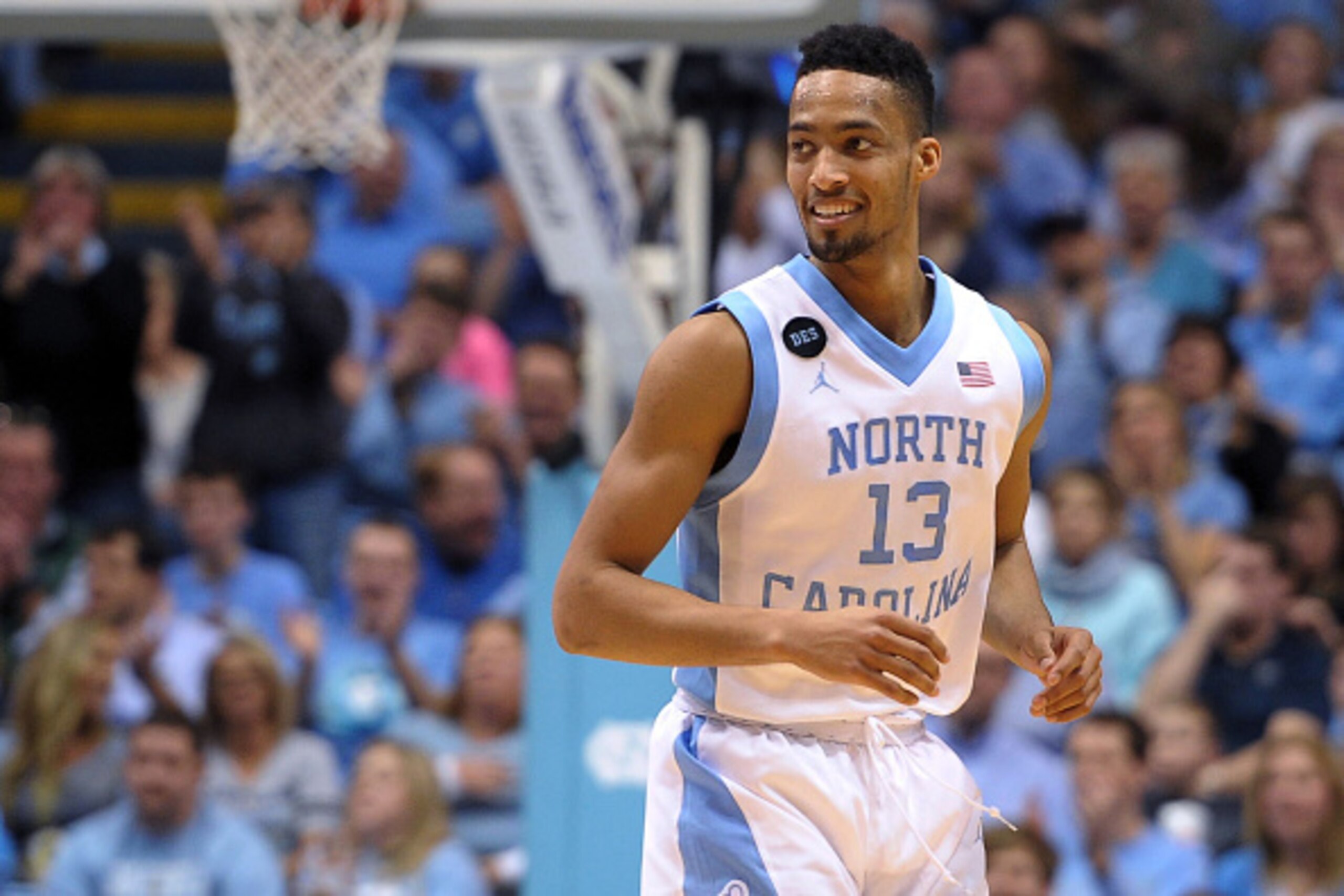
Size for Position/Athleticism
J.P. Tokoto has average 6'6" size, but he possesses next-level athletic ability. He's a bouncy above-the-rim leaper and is exceptionally quick laterally, which could allow him to guard both wings and ball-handlers in the pros.
Scoring
Tokoto isn't much of a scorer, having never averaged in double figures through three years at North Carolina. He struggles to create and make shots away from the basket, doing most of his work off the ball by making plays with his athleticism. His field-goal percentage of 42.8 and .484 true shooting percentage reflect his offensive inefficiency.
Shooting
Having no jumper limited him in college, and if he doesn't add one quickly, it could keep him out of the pros. Tokoto made just 12 threes all year, after making eight as a sophomore and one as a freshman.
Playmaking
Tokoto has terrific passing instincts, which might be his best offensive attribute. He averaged a career-high 5.9 assists per 40 minutes as a junior. However, his 20.7 turnover percentage is far too high. He can be frustrating to watch with his occasionally careless decision-making.
Upside
Without much of a scoring game or shooting stroke, Tokoto's upside is minimal. His ability to defend and pass (4.3 assists per game) could hold some value, but unless he becomes a bigger spot-up threat from outside, his chances won't be great.
Overall
Tokoto's poor shooting and scoring numbers destroyed his NBA Draft 100 grade. However, some of those subpar numbers were due to his role in North Carolina's offense. If he can convince teams his jumper isn't broken in workouts, his athleticism, defense and offensive potential may land him in the 30-45 draft range.
84. Yanick Moreira, SMU, 6'11", C, Senior
18 of 101
Size for Position/Athleticism
At 6'11", 220 pounds, Yanick Moreira's physical tools stand out at the college level. He moves well for his size, though he lacks strength and explosiveness.
Scoring/Shooting
Moreira averaged 18.2 points per 40 minutes as a sophomore, scoring mostly within five feet off catch-and-finishes or low-post entry passes. He's not overly skilled, but he'll occasionally score out of pick-and-rolls, with a jump hook or a fallaway. However, he shot just 64.0 percent from the free-throw line and doesn't show much touch on his shot.
Defense/Rim Protection
Moreira blocked 1.9 shots per 40 minutes this past season. He hasn't exactly established himself as a promising rim protector.
Rebounding
His rebounding numbers were fairly average, having pulled in 10.6 boards per 40 minutes. A lack of bulk and lift work against him in 50-50-ball situations.
Upside
He'll be 24 years old in July, and without any strengths to differentiate himself, Moreira doesn't offer any upside.
Overall
Moreira has worked out for a few teams, but he's unlikely to get drafted. He's generated zero buzz in May and June. He'll have to hope for an offer overseas to make some money.
83. T.J. McConnell, Arizona, 6'2", PG, Senior
19 of 101
Size for Position/Athleticism
T.J. McConnell doesn't have great size, athleticism or explosiveness, which in his case, limits his offensive ceiling. But McConnell shows good strength and a willingness to play through contact. He also moves well laterally, something that shows up on defense.
Facilitating/Passing
McConnell's 6.8 pure point rating ranked No. 4 in the country, per RealGM.com, after he averaged 8.2 assists to just 2.7 turnovers per 40 minutes. McConnell is an excellent decision-maker, and though he's not the most threatening playmaker, he always seems to make the right pass and find the open man.
Scoring
McConnell is a facilitator—not a scorer. He averaged just 13.6 points per 40 minutes. On the bright side, he made 55.7 percent of his two-pointers this year, showing the ability to finish and make shots on the move despite lacking above-the-rim burst.
Shooting
His three-point percentage declined in three consecutive years (shot just 32.1 percent from three as a senior). Shooting is a weakness that could ultimately keep him from cracking a rotation.
Upside
As a non-scoring, below-average athlete at 6'1", McConnell's upside is obviously limited. However, with great toughness, intangibles and passing instincts, he'll have a chance to compete for a backup gig if he proves he can make enough open jumpers.
Overall
It might ultimately be better for McConnell if he actually goes undrafted, which would allow him to pick from summer league offers he's likely to receive. He won't start off in the NBA but will certainly have the chance to get there eventually.
82. Dwayne Polee, San Diego State, 6'7", SF, Senior
20 of 101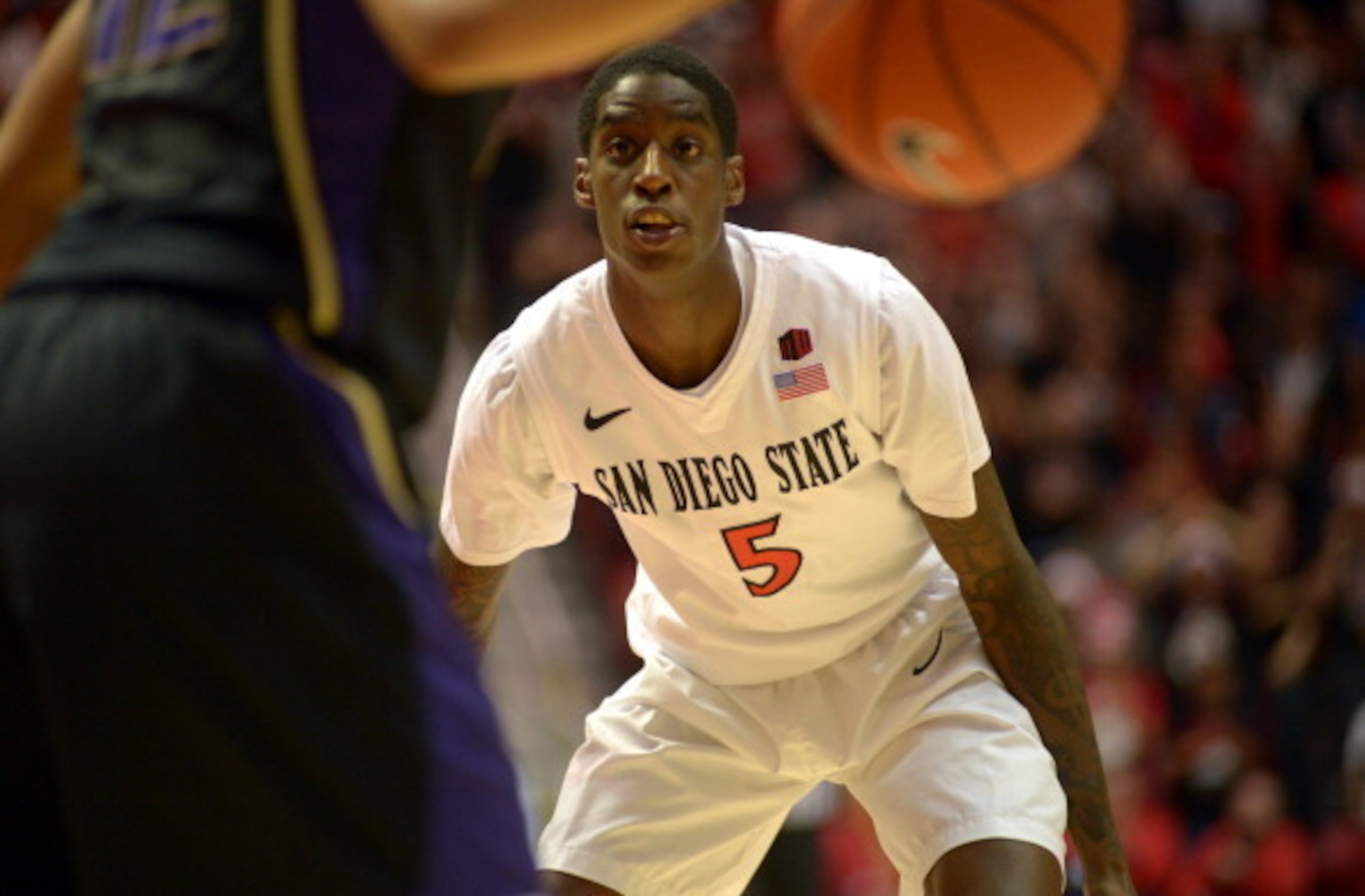
Physical Tools / Athleticism
Dwayne Polee is a big-time athlete with NBA explosiveness and hops. He also has solid 6'7" size, though he's on the skinny side at 200 pounds.
Scoring
Polee isn't a dynamic shot creator or scorer off the dribble. He only averaged 15.1 points per 40 minutes and shot an ugly 40.8 percent inside the arc as a senior. Polee is at his best in transition or spotting up, but he struggles finishing or making plays in traffic.
Shooting
He took a major step backward this year, having shot just 29.4 percent from three after shooting 39.1 percent as a junior. On the bright side, he's more than capable of knocking down long-range shots, having made 2.0 threes per 40 minutes.
Defensive Potential
Polee plays with a tremendous motor, and with long arms and quick feet, he has promising defensive potential. He averaged 2.6 steals per 40 minutes.
Upside
Already 23 years old, Polee regressed in 2014-15, which knocked him off the NBA radar. He'll need to prove he can make outside shots in workouts for teams to consider adding him.
Overall
Wings that struggle to shoot and score have very little chance of carving out a long-term role in the Association. He'll likely go undrafted and hope to receive some offers from overseas.
81. Royce O'Neale, Baylor, 6'6", SF, Senior
21 of 101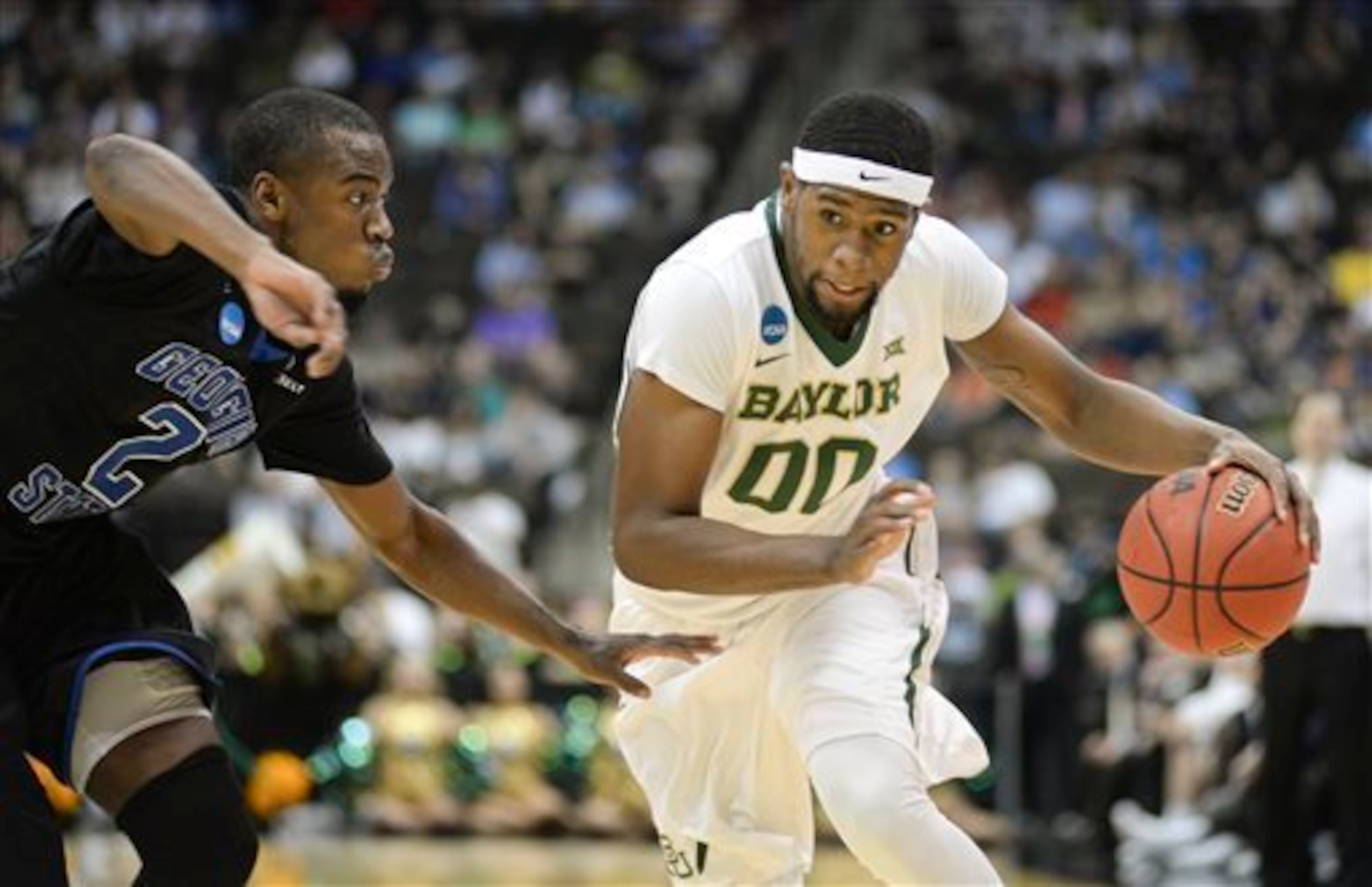
Physical Tools/Athleticism
Royce O'Neale isn't very explosive (25" standing vertical), but he's a fluid athlete. At 6'6", 215 pounds with a 6'10" wingspan, there isn't much to nitpick regarding his physical profile.
Scoring
O'Neale has never been regarded as a scorer. He averaged just 12.6 points and 2.2 made two-point field goals per 40 minutes this past season. O'Neale doesn't project as a player who's going to create his own shot in the half court.
Shooting
O'Neale really improved his shooting stroke over the years, having hit 49 of 112 three-point attempts during his senior season at Baylor. He wasn't a volume shooter, but he capitalized as a spot-up threat and still hit 1.8 threes per 40 minutes.
Defensive Potential
He doesn't project as a lockdown defender, but with strong physical tools, he shouldn't have an issue holding his own as a pro.
Upside
O'Neale is already 22 years old, but if his accurate shooting and above-average passing can carry over, he has some role-player potential to strive for.
Overall
O'Neale has been working out with teams, and if he impresses the right one, he'll have a chance at getting drafted somewhere in the 45-60 range. Expect to see him in the D-League next season, assuming he's willing to go there.
80. Quinn Cook, Duke, 6'2", PG, Senior
22 of 101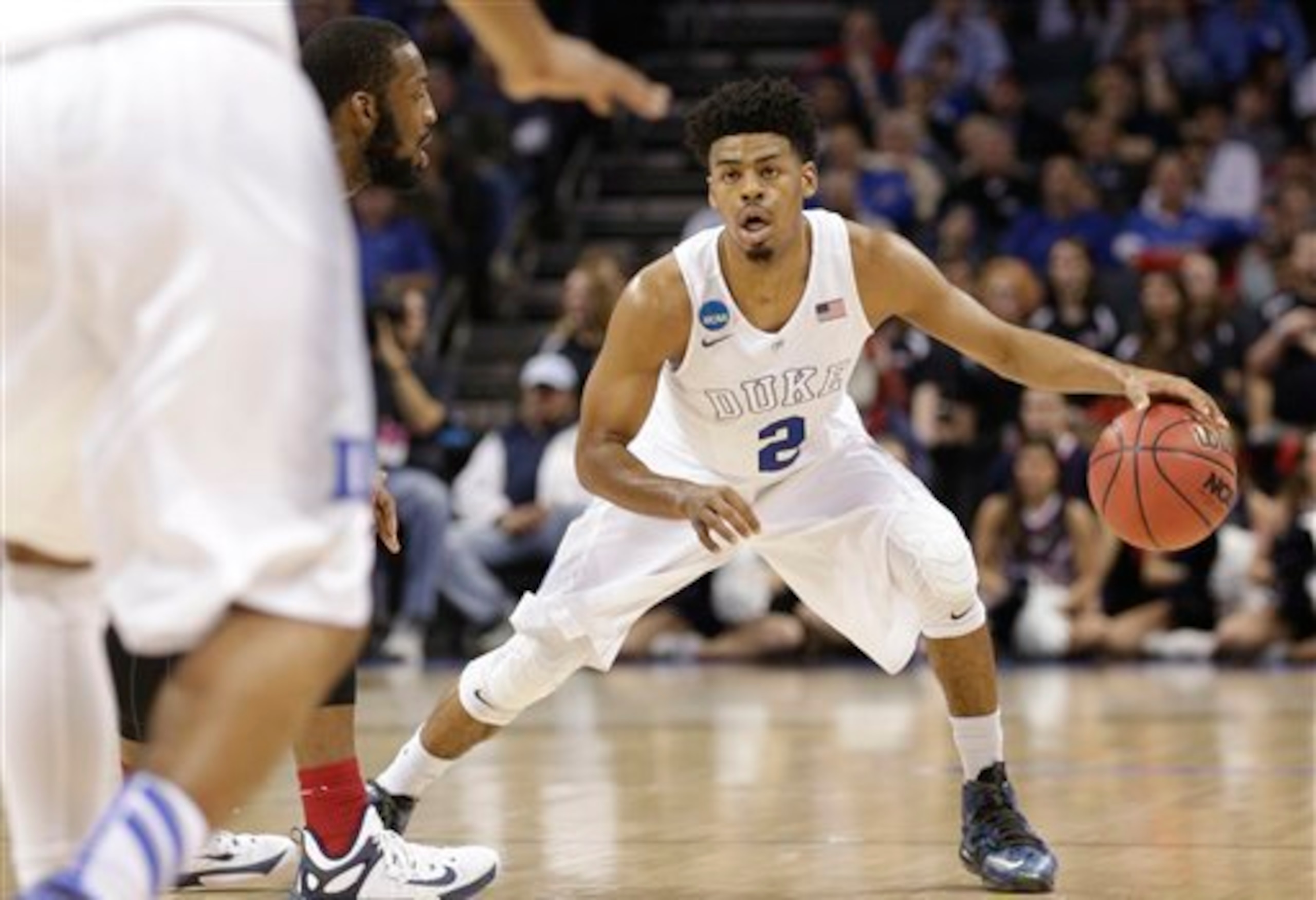
Size for Position/Athleticism
Quinn Cook has average 6'2" size for a point guard, but he isn't particularly quick, athletic or explosive.
Facilitating/Passing
Alongside freshman Tyus Jones, Cook played off the ball in a spot that didn't ask him to create much. Forced to share a backcourt, Cook finished with 50 fewer assists this year compared to last—despite playing 354 more minutes. He can pass it around, but Cook isn't your typical breakdown, drive-and-kick, pick-and-roll point guard.
Scoring
Cook averaged an impressive 15.3 points per game on 53.6 percent inside the arc. He thrives in transition and is always a threat from outside or with the floater in between. However, Cook may have a much tougher time finishing at the next level.
Shooting
He knocked down 2.9 threes per 40 minutes, showing excellent shot-making ability and shooting range.
Upside
Without blow-by burst or the size to play shooting guard, Cook, 22 years old, doesn't offer any upside. Maybe his shooting stroke and handle will allow him to compete for a roster spot, but poor physical tools, below-average athleticism and questionable playmaking ability cloud his outlook.
Overall
He'll have a shot at going in the second round to a team that values his experience, jumper and open-floor instincts. But Cook should find himself in the D-League or Europe next season.
79. Luka Mitrovic, Serbia, 6'8", PF, 1993
23 of 101Size for Position/Athleticism
At 6'8", Luka Mitrovic is slightly undersized and plays mostly below the rim, but he moves well and demonstrates sound footwork. Still, his physical tools and athleticism won't win over any NBA general managers.
Scoring/Shooting
In 74 games between Euroleague and the Adriatic League, Mitrovic has averaged 15.9 points per 40 minutes. He works as the roll man off ball screens, a cutter around the basket and a spot-up shooter around the perimeter. Mitrovic has made 51 threes this year, but he's shot only 28.5 percent from downtown. He has made 79.8 percent of his free throws and shows promising mechanics on his jumper, however. Mitrovic isn't a dazzling one-on-one player, but he passes and finishes plays within his team's offense.
Rebounding
Mitrovic is averaging 9.4 rebounds per 40 minutes. The question is whether his size and average athleticism will allow him to hold his own in the NBA paint.
Defensive Activity/Potential
He's collected 1.7 steals per 40 minutes, although his 1.57 block percentage, per RealGM, suggests he's a non-factor defensively around the basket.
Upside
Mitrovic is already 22 years old and doesn't offer much upside, though if he can improve his long-range shooting consistency, his versatility could hold some value.
Overall
If Mitrovic is drafted, it will be somewhere in the late second round by a team not impressed with whoever is left on the board.
78. Alan Williams, Santa Barbara, 6'8", C, Senior
24 of 101
Size for Position/Athleticism
Alan Williams takes up a ton of space in the paint, thanks to his massive 261-pound frame and 7'2" wingspan. But at 6'8", he's undersized and can barely get off the ground (28 ½" max vertical). And it's tough to see him playing power forward in the NBA.
Scoring/Shooting
Williams has been dominant at times in the post, where he combines strength, footwork and touch. The best thing going for him is his improving jumper. He made 40.7 percent of his two-point jumpers, per Hoop-Math.com, and 76.8 percent of his free throws.
Defense/Rim Protection
Williams' physical tools were just too overwhelming against the mid-major frontcourts he faced. He averaged 1.5 steals and 2.2 blocks per 40 minutes. But his lack of size, lateral foot speed and explosiveness are bound to limit him in the NBA.
Rebounding
Though the competition he faced was underwhelming, Williams consistently controlled the glass. He pulled in 14.5 boards per 40 boards in 2014, which was somehow the lowest mark of his career.
Upside
Williams has NBA potential based on his strength, post game and promising mid-range jumper. However, his margin of error is tiny due to his below-average height and athleticism.
Overall
He'll get second-round looks from teams that believe he has Glen Davis-type ability.
77. D.J. Newbill, Penn State, 6'4", SG, Senior
25 of 101
Size for Position/Athleticism
D.J. Newbill doesn't fare too well in the physical tools and athleticism department, where his 6'4" frame and lack of explosiveness are can't-miss flaws. Without size, length (6'6" wingspan) or burst, he's never been much of a factor in the draft conversation despite having such a productive college career.
Scoring
He's become more potent from one year to the next, having averaged 22.3 points per 40 minutes as a senior. Newbill has a tight handle that allows him to change direction, shake defenders and create shots for himself. He made 90 two-point jumpers at an efficient 41.3 percent clip, per Hoop-Math.com. However, he shot just 58.6 percent at the rim, a result of limited springs.
Shooting
Newbill shot 37.0 percent from three and made 1.9 triples per game. He can knock them down off the catch or dribble, but he's never done so at a standout rate.
Passing
Newbill frequently had the ball in his hands, but he did more than just score. His 3.3 assists per 40 minutes is an above-average number for a 2-guard.
Upside
The big question is whether he can separate as a 6'4" below-the-rim shooting guard. If he can get his shot off, he'll have a chance at landing a role as a backup scoring specialist.
Overall
Newbill's uninspiring physical tools raise questions as to whether his game will work in the pros. He'll get looks in the second round or as an undrafted free agent, but he will likely have a better shot at making money overseas.
76. Darion Atkins, Virginia, 6'8", PF, Senior
26 of 101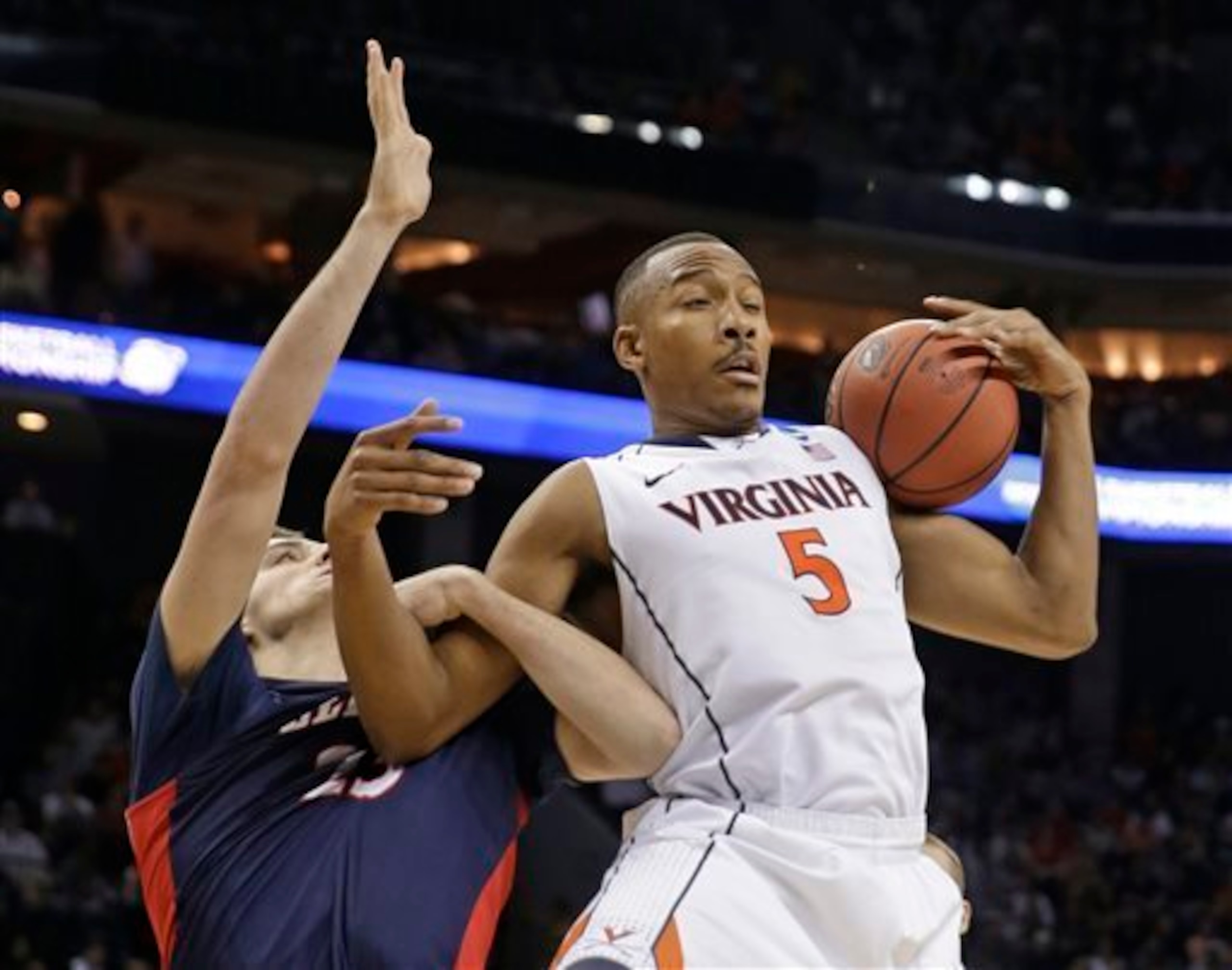
Size for Position/Athleticism
Darion Atkins is slightly undersized, having measured at 6'7" in socks, though his 7'2" wingspan and diesel 240-pound frame are both big pluses.
Scoring/Shooting
Atkins was more of a finisher than a scorer at Virginia, averaging only 12.8 points per 40 minutes as a senior. His opportunities came mostly off drive-and-dumps, offensive rebounds and the occasional low-post entry pass. He struggled from the free-throw line, knocking down just 52 percent of his attempts, though he did make 40 percent of his two-point jumpers, per Hoop-Math.com, even if most were fairly short range. For what it's worth, Atkins was a standout at the Portsmouth Invitational, where he averaged 20 points in three games.
Rebounding
Atkins was an average rebounder through four years in college. As a senior, he grabbed 10.0 boards per 40 minutes, an underwhelming average.
Defensive Activity/Potential
Atkins averaged 1.4 steals and 1.8 blocks per 40 minutes. He's earned the reputation of being a hard-working defender.
Upside
Atkins is gaining steam following Portsmouth. The only problem is that he doesn't do anything to differentiate himself. Developing his jumper and earning a reputation as a defender could earn him an invite to summer league or training camp.
Overall
Unfortunately, Atkins doesn't offer enough to attract much NBA interest. He'll either play in the D-League or hope to receive offers from overseas.
75. Corey Hawkins, UC Davis, 6'2", SG, Senior
27 of 101
Size for Position/Athleticism
Nothing about Corey Hawkins' physical attributes is particularly appealing from an NBA standpoint. At 6'2", he's extremely undersized for a 2-guard, while his athletic ability appears average at best. He lacks quickness attacking north and south and explosiveness around the rim.
Scoring
Hawkins put up giant numbers in the Big West conference, having averaged 25.1 points per 40 minutes while shooting 51.4 percent on his two-point attempts. He can knock down shots in a variety of different ways. Hawkins spent time spotting up around the arc, handling the ball and generating offense with his pull-up jumper and floater.
Shooting
After making just 32.2 percent of his threes as a junior, Hawkins emerged as one of the country's deadliest snipers in 2014-15. He shot a sensational 48.8 percent from downtown and hit 3.5 triples per 40 minutes.
Passing/Playmaking
Hawkins' 25.3 assist percentage was strong for a 2-guard. However, it's worth noting he had the ball in his hands a ton, using 32.2 percent of his team's available possessions when he was on the floor. He also averaged 3.6 turnovers per 40 minutes. Still, his ability to handle the ball and make things happen off ball screens plays to his combo guard potential.
Upside
Hawkins' upside is limited due to below-average physical tools and athleticism. He'll also be 24 years old in August. His best shot to succeed will be as a shot-maker off the bench.
Overall
Hawkins received an invite to the NBA combine, which means that scouts and teams are aware of his senior-year production. He will have a chance of being drafted in the 45-60 range, but he's likely to spend the next year overseas or in the D-League.
74. Chasson Randle, Stanford, 6'2", PG, Senior
28 of 101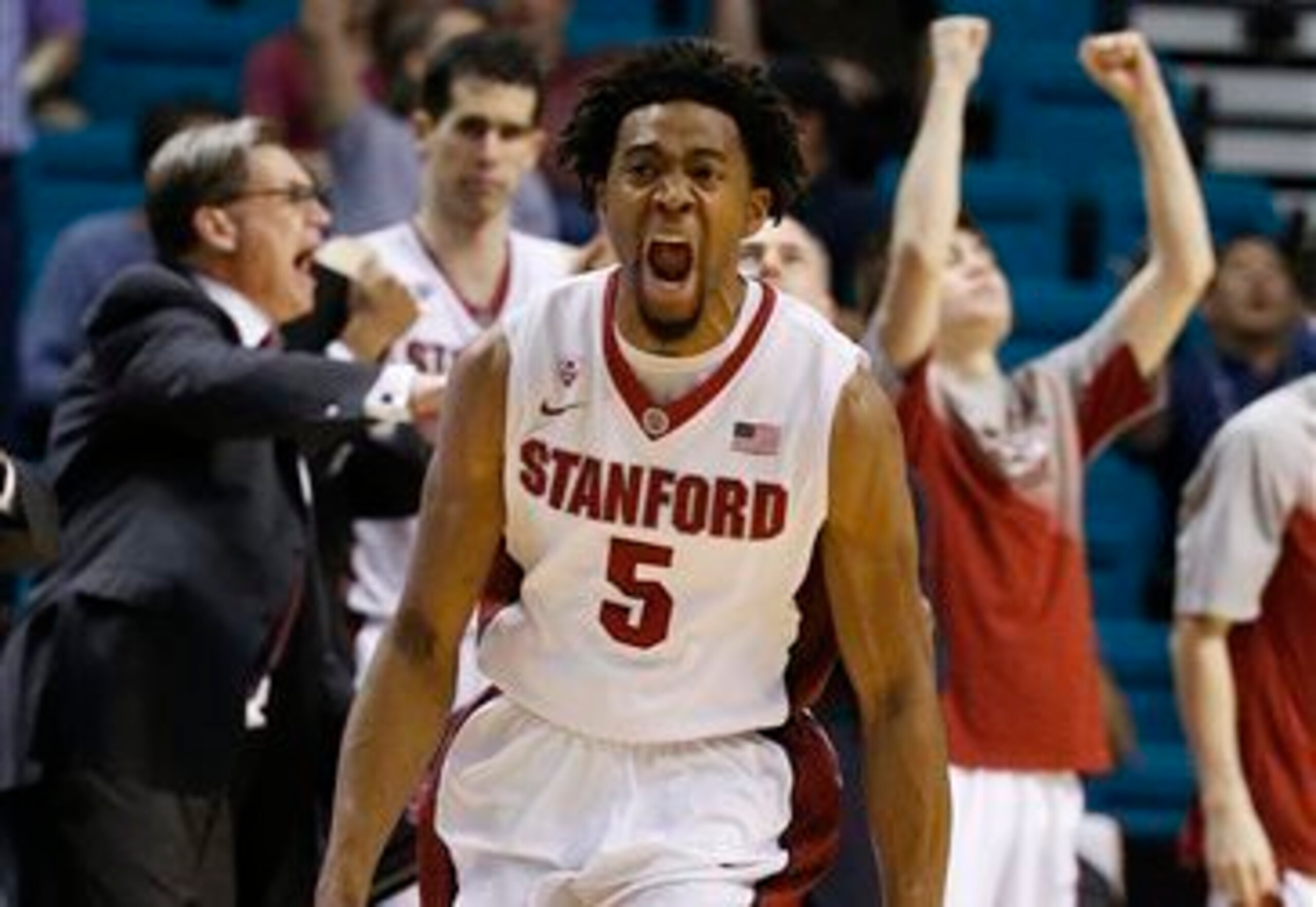
Size for Position/Athleticism
Chasson Randle has adequate size for a point guard—just not blow-by speed, athleticism or explosiveness. He shot a poor 52.2 percent at the rim, per Hoop-Math.com.
Facilitating/Passing
He isn't much of a distributor, given his 3.3 assists per 40 minutes and 18.8 assists percentage, per Sports-Reference.com. Stanford relied on Randle to score, and though that will be his role at whatever level he ends up playing at, his size will likely force him to play the point.
Scoring
If Randle gets drafted, it will be due to his scoring and shot-making ability. He averaged 21.5 points per 40 minutes. Randle is dangerous around the perimeter, and though he doesn't get very high off the floor, he's shown the ability to hit off-balance looks. Still, he shot just 40.3 percent on 16 shots per 40 minutes. Inefficiency has really clouded his production.
Shooting
He knocked down 2.7 threes per 40 minutes at a 36.3 percent clip. In four years, Randle nailed 304 threes. Shooting is his most promising offensive skill.
Upside
Maybe Randle can pull a Langston Galloway, but it's a long shot. His best-case scenario is as a shot-maker off the end of a bench. He'll need the right team and fit for it to happen.
Overall
Randle's production is likely to be overlooked in the draft, given his physical limitations. He looks poised for the D-League or Europe.
73. TaShawn Thomas, Oklahoma, 6'8", PF, Senior
29 of 101
Size for Position/Athleticism
TaShawn Thomas has a wide 240-pound frame and long 7'2" wingspan, but at 6'8", he lacks size for a big man who plays mostly below the rim. He shows good footwork and sneaky mobility, but Thomas' 30 ½-inch vertical was the fourth lowest at the NBA Draft Combine.
Scoring/Shooting
Thomas saw his role shrink after transferring from Houston to Oklahoma, averaging just 15.6 points per 40 minutes in 2014-15. Thomas is a skilled post player who can separate with a number of back-to-the-basket moves, but he's never developed a reliable jumper or shooting range. Thomas made just 33.8 percent of his two-point jumpers, per Hoop-Math.com, and 69.1 percent of his free throws. He also hit only two threes in four years, suggesting he won't be capable of filling a stretch 4 role in the NBA.
Rebounding
This past year, Thomas wasn't as active on the boards as he had been in the past. His career-worst 8.8 rebounds per 40 minutes were on the low side for a power forward looking to get drafted.
Defensive Activity/Potential
Thomas uses his length to contest and block shots (2.0 per 40 minutes), but calling him a plus defender would be a stretch.
Upside
Limited burst, a lack of height and a questionable jumper don't bode well for Thomas' NBA potential. Teams looking for a physical big man who can score in the post might be willing to give him a second-round look. Even in the best-case scenario, however, we're talking about an end-of-the-bench power forward.
Overall
A below-average athlete, rebounder, defender and shooter, Thomas' odds of getting drafted are slim. He'll play overseas or in the D-League.
72. Julian Washburn, UTEP, 6'8", SF, Senior
30 of 101
Athleticism/Physical Tools
Julian Washburn checks out physically for a wing with 6'8" size and above-the-rim athleticism. He's on the skinny side at 210 pounds but certainly passes the eye test.
Scoring
Washburn is coming off his least productive offensive season at UTEP, having averaged 12.2 points per 40 minutes. He struggles to create and efficiently finish inside the arc, where he shot 43.3 percent. Washburn also rarely gets to the line for a wing (2.3 free-throw attempts per 40 minutes).
Shooting
Though he regressed as a scorer, Washburn had his best year as a shooter, having made 40 threes at a 38.1 percent clip. He's been erratic from the line and up-and-down from outside throughout his career, but statistically, Washburn's senior season as a shooter was promising.
Defensive Potential
Washburn is a tough, versatile defender who's quick enough laterally to stay in front of wings, guards and ball-handlers. You could argue defense is Washburn's most appealing attribute.
Upside
Washburn is a long shot to make the NBA, but continuing to improve his jumper will improve his odds.
Overall
All it takes is one team to admire his defense and versatility. Even if Washburn doesn't hear his name called, he'll have a chance to make some noise overseas or in the D-League.
71. Andrew Harrison, Kentucky, 6'6", PG, Sophomore
31 of 101
Size for Position/Athleticism
Andrew Harrison offers a mixed bag in the physical-tools-and-athleticism department. At 6'6", he has mismatch size for a ball-handler, as well as an NBA body. However, he lacks athleticism, quickness off the dribble and explosiveness around the basket. Harrison shot a poor 53 percent at the rim this season, thanks to an inability to elevate high above it. Separating against NBA defenders, both on the perimeter and inside, may be a challenge for him moving forward.
Facilitating/Passing
Harrison improved as a decision-maker in 2014-15, having lowered his turnover percentage to 15.7 percent from 20.3 percent. His 5.6 assists per 40 minutes were nothing to write home about. Harrison has good vision on the move within the offense but is not a dynamic playmaker one-on-one.
Scoring
That lack of athleticism shows up in the scoring department for Harrison, who struggles to create high-percentage shots for himself. He averaged 14.6 points per 40 minutes but shot an ugly 37.8 percent from the floor—the second straight year he failed to crack 40 percent.
Shooting
Harrison was more accurate as a shooter in 2014-15. He made 38.3 percent of his threes and a promising 79.2 percent of his free throws. His mechanics are also promising. There is no reason Harrison can't become an above-average shooter by the time he peaks.
Upside
Harrison doesn't have nearly as much upside as many once thought he did out of high school. Still, with excellent size for the position as well as a high skill level, his lack of athleticism may not completely destroy his outlook. If he can become consistent on the perimeter and continue improving his decision-making, he'll have a chance at landing a backup gig in the pros.
Overall
Harrison looked sharp at the combine and won a ton of big games in two years at Kentucky. He's not the lottery pick most thought he was out of high school, but as a 6'6" point guard with a high skill level and terrific track record, he'll still go somewhere in the 25-50 range.
70. Juwan Staten, West Virginia, 6'1", PG, Senior
32 of 101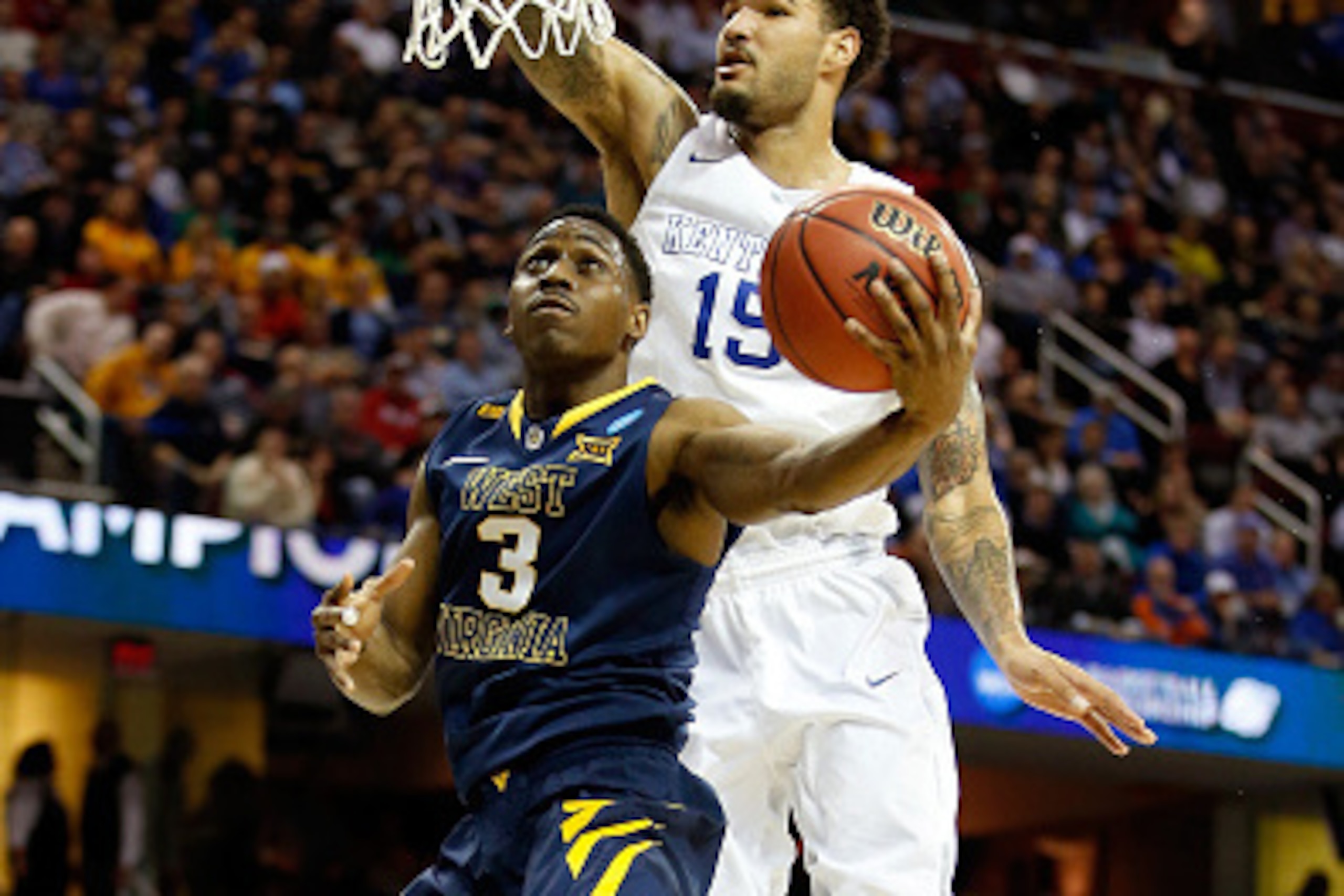
Size for Position/Athleticism
Though West Virginia lists Juwan Staten at 6'1", he measured under 6'0" this past summer at the LeBron James Nike Skills Academy, per DraftExpress. However, Staten makes up for that inch or two with explosive athleticism and blurry quickness.
Facilitating/Passing
Staten's numbers as a distributor took a hit this year, though his 31.8 assist percentage is still good for a player who's leaned on heavily to score. Staten has shown he can run an offense, set the table and take care of the ball (12.6 percent turnover percentage).
Scoring
Staten scored 18.2 points per 40 minutes, having done the most damage as an attacker and pull-up shooter (40.5 percent on two-point jumpers, per Hoop-Math). He blends speed and shiftiness with hops and body control.
Shooting
The big question with Staten is his shooting range. He made just 21 threes in 30 games his senior year, which was actually an improvement from the six he hit in 33 games as a junior.
Upside
He'll be entering next season at 23 years old, so the questions regarding his jumper and three-ball are a little more serious. His size will also be a significant obstacle to overcome. However, Staten's athletic ability is the real deal. He's going to be tough to stay in front of at any level. We're still talking about end-of-the-bench potential, but Staten does possess some intriguing NBA qualities. Becoming a bigger threat from behind the arc will be a must.
Overall
Staten wasn't at the combine but has been working out for teams. He'll need to impress in these workouts to get one to bite in the second round.
69. Terry Rozier, Louisville, 6'2", PG, Sophomore
33 of 101
Size for Position/Athleticism
Terry Rozier's skill set and strengths suggest he's a shooting guard, but unless he's the next Eric Bledsoe, his 6'2" size will make it tough for him off the ball. For a point guard, he's an excellent athlete with great quickness off the bounce and explosiveness around the basket.
Facilitating/Passing
Despite playing a big role in Louisville's offense, Rozier didn't show much as a playmaker, nor did he have many opportunities to do so. Having shared a backcourt with Chris Jones for most of the year, Rozier played a lot of 2-guard. Still, Rozier's 19.7 percent assist percentage and 3-2 assist-to-turnover ratio are pretty scary numbers. He finished the year with a negative pure point rating of minus-0.55, per RealGM.com.
Scoring
Rozier, who averaged 19.5 points per 40 minutes, was Louisville's go-to and leading scorer. He showed he can knock down pull-ups and floaters. And Rozier was tough to stop in transition, where he made 63 field goals within the first 10 seconds of a possession, via Hoop-Math.com. However, Rozier took 14.5 shots per game and shot 41.1 percent from the floor. He struggles with shot selection and shooting consistency—bad signs for a point guard who also lacks facilitating and passing instincts.
Shooting
Rozier made 48 threes, but his 30.6 percent three-point mark wasn't very convincing.
Upside
Rozier's ceiling reaches a new level if he can convert into a full-time point guard. Otherwise, he's an undersized scorer, which can work in a combo guard role off the bench, but usually nothing more. However, if Rozier proves that his weak assist percentage was a result of his role in Louisville's offense, he's athletic and tough enough to play regular minutes.
Overall
A team who believes it can morph Rozier into a facilitator could take the chance on him late in the first round. But most teams would likely feel a lot safer grabbing him in the second.
68. Wesley Saunders, Harvard, 6'6", SG, Senior
34 of 101
Size for Position/Athleticism
At 6'5", 215 pounds, Wesley Saunders has a strong NBA body. However, his athleticism and explosiveness are below-average compared to most successful 2-guards in the Association.
Scoring
Saunders can handle the ball and create shots, both for teammates and himself. With a sound mid-range pull-up and floater game, he averaged 19.3 points per 40 minutes on a respectable 45.3 percent clip.
Shooting
He made a huge jump as a shooter in 2014-15, having hit 42.5 percent of his threes after making just 10 of 34 triples as a sophomore. The 31 threes he made this year were more than he hit his first three seasons combined. However, Saunders doesn't get much elevation on his jumper. It will be worth monitoring, specifically whether it affects his ability to get his shot off moving forward.
Playmaking
Saunders' 31.7 assist percentage was the highest among 2-guards. He's developed into a legitimate threat as a passer and playmaker, having averaged 5.0 assists per game 40 minutes as a senior, which helps differentiate him from the pack.
Upside
He'll be 22 years old to start his rookie year, but if his jumper is for real, Saunders would have intriguing shot-making and playmaking versatility. He'll get offers from Europe if he doesn't attract interest from NBA teams.
Overall
Saunders hasn't generated much draft buzz over the past few months. He'll likely receive offers to play overseas if he chooses not to go the D-League route.
67. Treveon Graham, VCU, 6'6" SF, Senior
35 of 101
Physical Tools
Treveon Graham has a strong 6'6" frame, but a lack of athleticism and quickness are serious limitations. He shot just 50 percent at the rim, per Hoop-Math.com. Excellent body control off moves like spins and Euro-steps allowed him to score in college, but his inability to explode off the floor will make it difficult for him to separate in the pros.
Scoring
Graham averaged at least 22 points per 40 minutes for the second straight season. He isn't a creative one-on-one scorer but can make shots off pull-ups and curls and is a crafty finisher around the key. However, he only shot 42.8 percent from the floor as a senior. Graham struggles to create high-percentage shots against a set defense.
Shooting
Graham hit 2.6 threes per 40 minutes on 38.1 percent shooting from downtown. He made a nice jump as a shooter after regressing as a junior, when he shot 33.7 percent from three-point range. Graham has a confident release, and if he's able to find an NBA home, he'll likely have his jumper to thank.
Defensive Potential
Though an effective defender in college, Graham's lack of lateral quickness doesn't bode well for his NBA outlook. He projects as an average defender at best.
Upside
There isn't any upside attached to Graham's uninspiring athletic ability. And though he put up a lot of points at VCU, nothing stands out about his game. Graham has the physical build, but whether he makes it as a pro will depend on how reliable he can be as a complementary shot-maker and finisher within an offense.
Overall
He'll get plenty of workouts, but there is no guarantee Graham will get drafted. He'll most likely be in the D-League or overseas next season regardless.
66. Aaron White, Iowa, 6'9", PF, Senior
36 of 101
Size for Position/Athleticism
Aaron White isn't very strong (220 pounds) or explosive, but at 6'9", he's quick and mobile.
Scoring/Shooting
White showed he can make shots from just about every spot on the floor, averaging 20.9 points per 40 minutes on 52.1 percent shooting as a senior. However, he wasn't very accurate in the mid-range, having shot just 30.6 percent on two-point jumpers, per Hoop-Math.com. He did shoot an average 35.6 percent on 59 three-point attempts. White is ultimately at his best facing up, getting out on the break and finishing on the move.
Rebounding
A lack of strength limits White's presence under the boards. He pulled down only 7.3 rebounds in 31.5 minutes per game.
Defensive Activity/Potential
White was more effective defending away from the basket than he was as a rim protector, finishing with 45 steals compared to just 16 blocks. He moves well laterally but doesn't have the body to man the paint defensively.
Upside
White doesn't offer much upside without a convincing jumper, a post game or rebounding instincts. He can pick up buckets in line drives and open-floor chances, but that may not be enough to crack an NBA roster.
Overall
Versatility will make White a second-round option, but he's no sure thing to get drafted. Summer league will be his best opportunity to make a team.
65. Larry Nance Jr., Wyoming, 6'9", PF, Senior
37 of 101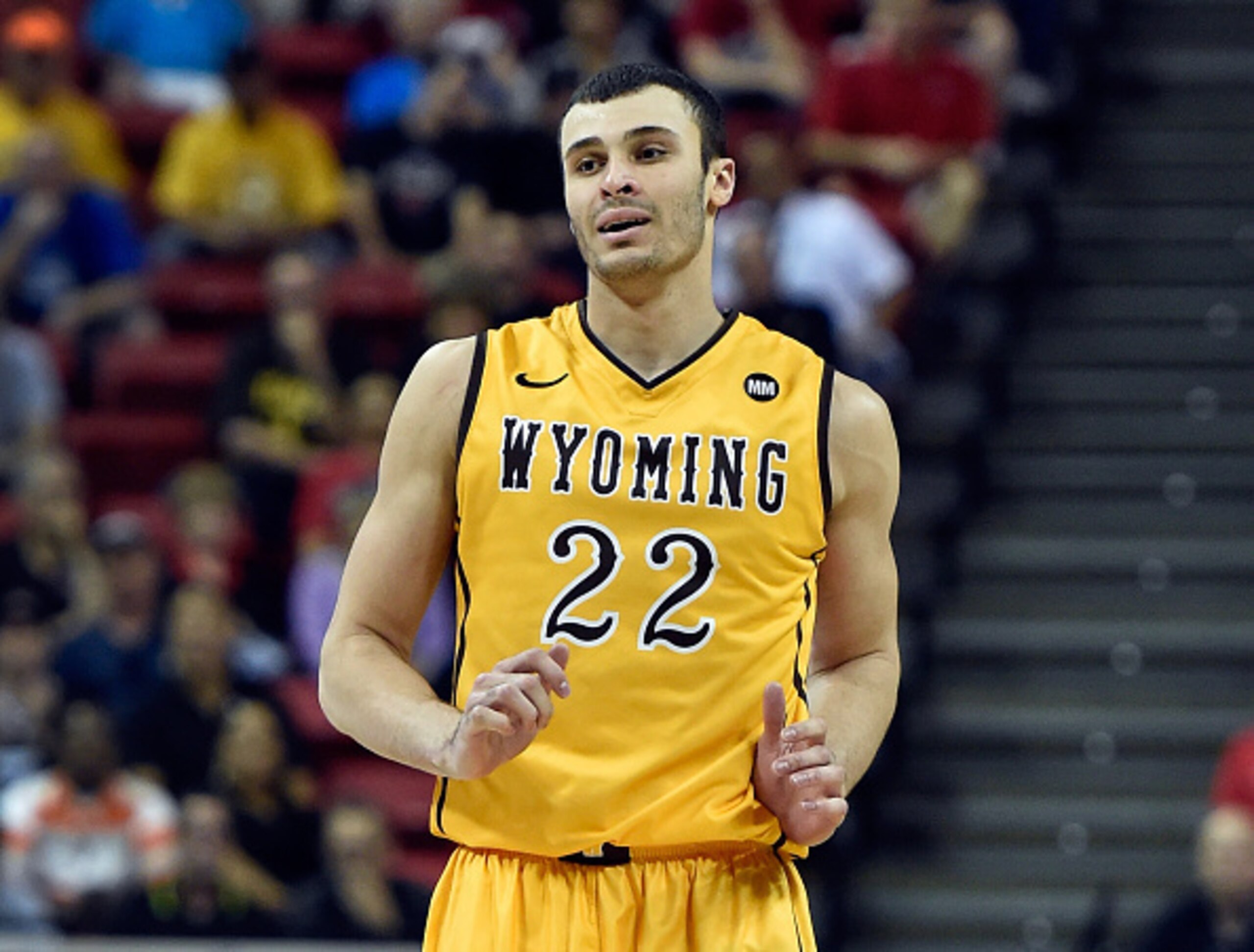
Size for Position/Athleticism
Larry Nance Jr. is one of the more athletic power forwards in the class. He got up for a 37 ½-inch vertical at the combine and generated tons of highlights over the years. He measured in just under 6'9", which isn't great. But with a 7'1 ½" wingspan, his size isn't too troubling. Still, he'll need to add strength to his 227-pound frame. He also tore his ACL in February 2014.
Scoring/Shooting
Nance averaged 18.4 points per 40 minutes as a senior, showing the ability to score in the post and off cuts, dump passes and offensive rebounds. He doesn't have much shooting range, but he's capable out to 15 feet. Nance shot 36.5 percent on two-point jumpers, per Hoop-Math.com, and an excellent 78.6 percent from the line. Still, most of his offensive production was a result of athleticism and energy in a league that lacks noteworthy rim protectors.
Rebounding
Though his numbers have never been great, he does a nice job of tracking down loose balls and cleaning the defensive glass. Still, his 8.3 rebounds per 40 minutes from this past season are poor relative to those of the other power forward prospects..
Defensive Activity/Potential
Nance blocked 1.4 shots and grabbed 1.4 steals per 40 minutes. He's tough enough to defend the post. However, he could have trouble with quicker forwards in face-up situations.
Upside
In the best-case scenario, Nance projects as an energizer who can make things happen around the basket. His ball skills just aren't sharp enough at this point in time.
Overall
Nance will be a late-second-round option for a team that values his athleticism, motor and basketball genes.
64. Michael Frazier II, Florida, 6'4", SG, Junior
38 of 101
Size for Position/Athleticism
Michael Frazier II possesses adequate athleticism, though his 6'4" size is a potential issue. If he were a few inches taller, his NBA outlook would likely be brighter.
Scoring
Frazier averaged just 12.1 points and 16.5 per 40 minutes as a junior while only making 1.6 two-point field goals and 2.3 free throws per game. He showed little ability to create or get to the basket, though he's athletic enough to finish off cuts, one-dribble pull-ups and open-floor opportunities.
Shooting
If Frazier makes it to the NBA, his jumper will carry him there. He made 3.0 three-pointers per 40 minutes at a solid 38.0 percent, which was actually a career-low clip. Frazier shot above 44 percent from deep during each of his first two seasons. He's an elite sharpshooter.
Playmaking
Frazier averaged 2.4 turnovers to 1.9 assists per 40 minutes. He's not a good passer or threatening playmaker, which clouds his role-player potential.
Upside
His upside tops out as a shooting specialist. Every team could use another shooter, but Frazier will have little margin for error without the ability to offer anything else.
Overall
As a shooting specialist, Frazier could go anywhere from the late first round to the late second round. It all depends on just how good of a shooter teams think he'll be. If he can light it up in summer league, he may have a chance at making a roster in need of his specialty.
63. Nikola Milutinov, Serbia, 7'0", C, 1994
39 of 101Size for Position/Athleticism
At 7'0" with a 7'3" wingspan, Nikola Milutinov has the requisite measurements of an NBA center, but he isn't particularly strong (220 pounds), quick or athletic.
Scoring/Shooting
He's averaging 15.0 points per 40 minutes between Adriatic League play and Eurocup this season, though he was especially good in April and May. Milutinov has good hands and a decent skill level, with the ability to score over the shoulder and occasionally knock down the short- to mid-range jumper. Still, he'll have to add strength and continue improving his touch (59.9 percent from the free-throw line). He already has a good feel for finishing off dump passes, pick-and-rolls, offensive boards and cuts around the basket, though.
Defense/Rim Protection
Milutinov doesn't block too many shots—just 1.2 per 40 minutes. Of course, he's just 20 years old playing against pros, but he doesn't get the lift or have the foot speed you typically see from NBA rim protectors.
Rebounding
Milutinov is an excellent rebounder, having averaged 11.7 boards per 40 minutes. He even racked up 20 in a game against Mega Vizura on May 23.
Upside
He lacks the bulk and athleticism that make you think he can really have his way in the NBA paint. But between his ability to finish and rebound, along with the room he has to improve offensively, Milutinov has some big-man role-playing potential.
Overall
Teams with more than two picks (Boston Celtics, Philadelphia 76ers and Minnesota Timberwolves) could be most likely to draft and stash Milutinov in the second round.
62. Ryan Boatright, Connecticut, 6'0" PG, Senior
40 of 101
Size for Position/Athleticism
At 6'0", 175 pounds, Ryan Boatright doesn't possess the explosiveness to fully make up for his lack of size. He shot just 52.3 percent at the rim in the half court, per Hoop-Math.com. However, he's quick and shifty off the dribble, which allows him to break down defenses and create his own shots.
Facilitating/Passing
Boatright is more of a shoot-first point guard. His 0.43 pure point rating, 25.3 assist percentage and 3.8-2.4 assist-to-turnover ratio are each fairly underwhelming. To his credit, Boatright's role has been to score, but after four years at Connecticut, his facilitating instincts have never made a strong impression.
Scoring
With Shabazz Napier off to the pros, Boatright stepped in to average 19.5 points per 40 minutes as Connecticut's lead guard. He was more efficient on the perimeter than he was within the teeth of the defense. Boatright struggles to finish inside and connect in the mid-range, having made just 30.4 percent of his two-point jumpers, per Hoop-Math.com.
Shooting
Boatright has tremendous confidence as a shooter. He made 41.1 percent of his threes and 2.8 triples per 40 minutes.
Upside
Boatright doesn't offer any upside, given his unconvincing physical tools and track record as a facilitator. However, between his ball-handling skills and shooting stroke, he could have a chance to emerge deep off a bench as a scoring spark.
Overall
Boatright stood out at the combine, and given his production and experience at Connecticut, it wouldn't be crazy if a team picked him in the second round. Either way, he'll likely start his career in the D-League or overseas.
61. Marcus Thornton, William & Mary, 6'3", SG, Senior
41 of 101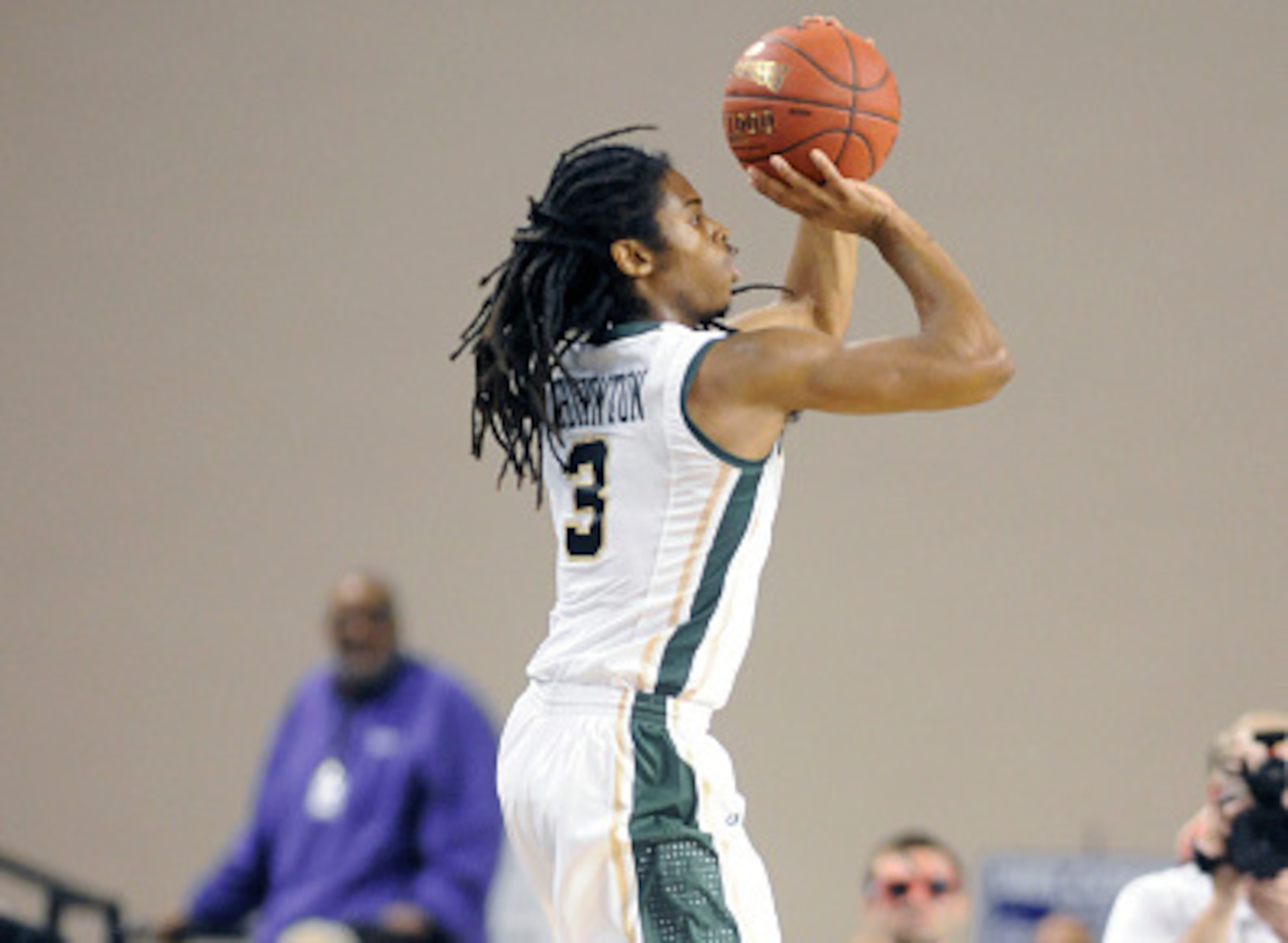
Size for Position/Athleticism
At 6'3", Marcus Thornton is more of a combo guard than a 2-guard, where he's severely undersized. Though he did get up for a wild 43" max vertical at the combine, you don't see many 177-pounders succeed off the ball in the pros.
Scoring
Thornton was a scoring machine in the CAA, where he averaged 20 points per game as a senior. It marked the third year in a row he averaged at least 18 points. He has a tight handle, as well as the ability to create and make shots from all three levels. He even shot an efficient 51.8 percent inside the arc, where he made shots on the move or separated into jumpers. However, more than half of his field-goal attempts came from behind the arc.
Shooting
He drained a whopping 102 threes at an excellent 40.2 percent clip—the third consecutive season he's made at least 90 threes and finished above 40 percent from deep. Those numbers are up there with some of the best shooters in the country.
Playmaking/Passing
Thornton's role was to score, so we didn't get to see much passing and playmaking from him. That poses a problem to evaluators who don't believe he's big enough to play shooting guard. He averaged just 2.9 assists to 2.3 turnovers per game.
Upside
Though a super athlete who can light it up from deep, Thornton is stuck between positions, without the size for a 2 or the facilitating instincts of a 1. He also failed to stand out in five-on-fives at the combine. Still, his ability to make shots and generate offense could earn him training-camp invites this summer.
Overall
Despite all his production, Thornton could be a long shot to get drafted. You just don't see many 6'3" scorers with no point guard skills find roles in the Association. Look for him in the D-League or overseas next season.
60. Brandon Ashley, Arizona, 6'9", PF, Junior
42 of 101
Size for Position/Athleticism
Brandon Ashley has standard size at 6'9", though his 7'3 ¾" wingspan is tremendous. Still, he lacks explosiveness. He'd be considered a below-average athlete for the NBA position.
Scoring/Shooting
Ashley can score in a variety of ways, whether he's knocking down mid-range jumpers in the pick-and-pop game, spinning off line drives or attacking from the short corner. He averaged 17.6 points per 40 minutes and shot 43.5 percent on two-point jumpers this past season, per Hoop-Math.com. On the negative side, he isn't particularly strong with his back to the basket or convincing from behind the arc, having knocked down just 26 threes in three years. And despite his ability to face up, his ball-handling skills are shaky.
Rebounding
Arizona didn't get much from Ashley under the boards. His 7.5 rebounds per 40 minutes are the fewest of any of our top 20 power forwards. Credit his underwhelming rate to limited burst, size and strength.
Defensive Activity/Potential
Ashley is capable defensively, both on the perimeter and in the paint. However, it's tough to imagine him guarding NBA wings, while most power forwards will be bigger, stronger and more athletic. He averaged just 0.9 blocks and 0.9 steals per 40 minutes as a junior.
Upside
Ashley doesn't offer much upside, but his offensive feel for the game and mid-range shooting stroke could hold value. He's a forward who can put the ball in the hole from multiple angles.
Overall
Ashley could go anywhere from the early second round to the undrafted-free-agent pool. He might generate more interest from teams overseas, where his offensive skills may be in greater demand.
59. Branden Dawson, Michigan State, 6'7", PF, Senior
43 of 101
Size for Position/Athleticism
At 6'7", 230 pounds, Branden Dawson is more of a power wing than a true 3 or 4. He's strong, athletic and plays with a big-time motor. It's worth noting that he tore his ACL in 2012.
Scoring/Shooting
Dawson was never much of a scorer, as creating shots is not his forte. This past year, he averaged 15.7 points per 40 minutes, doing most of his damage as a finisher, cutter and weapon in transition. The big knock on Dawson is his suspect jumper and range. He didn't make one three-pointer in 3,456 career minutes during his four years at Michigan State. In addition, he shot only 49 percent from the free-throw line this past season.
Rebounding
Dawson is an active presence on the glass. He grabbed 12.1 boards per 40 minutes, racked up 41 putbacks, per Hoop-Math.com, and registered a terrific 17.9 total rebound percentage.
Defensive Activity/Potential
Dawson is undersized compared to most NBA 4s, but his motor and athleticism translated to 1.6 steals and 2.2 blocks per 40 minutes.
Upside
Without a jumper or post game, Dawson's shot at making an NBA living will be as an energizer. He can rebound, defend and finish. In the best-case scenario, he develops into a Ronnie Brewer-type role player.
Overall
He'll draw second-round looks, but Dawson will likely spend the next year in the D-League or overseas. Teams may ultimately rather draft and stash an international player with more long-term upside.
58. Dez Wells, Maryland, 6'4", SG, Senior
44 of 101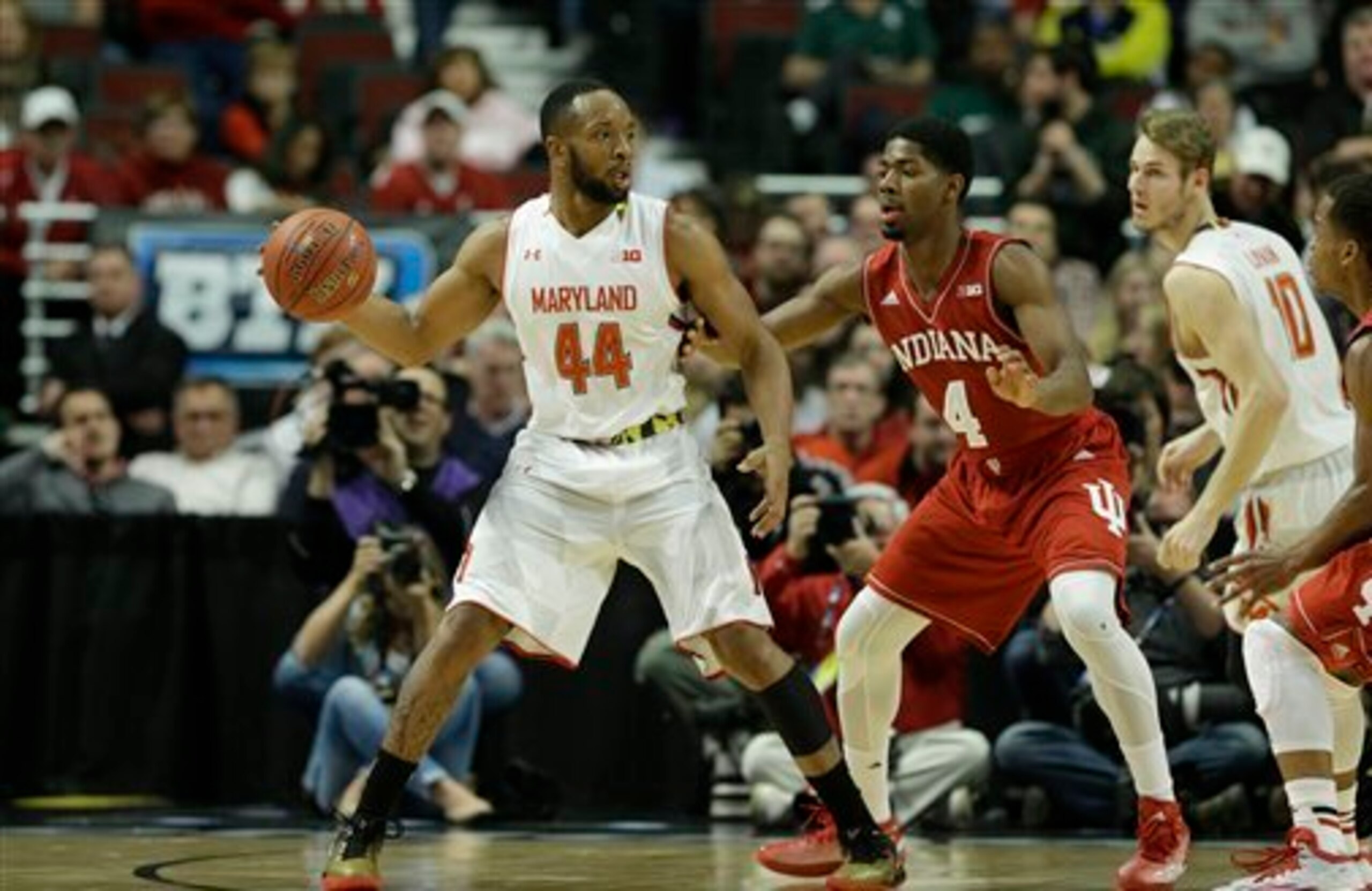
Size for Position/Athleticism
Dez Wells measured 6'4" at the combine, so there are questions concerning his size. But he makes up for an inch or two in height with a strong build and explosive athleticism. He's tough to stop around the basket and is quick off the bounce.
Scoring
Wells didn't improve too much offensively as a senior. Still, he put up 19.8 points per 40 minutes, and he remains at his best attacking the rim, where he can play through or over contact. However, he only shot 31.6 percent on two-point jumpers, per Hoop-Math.com. His in-between game and perimeter-scoring ability are both limited.
Shooting
Wells only took 49 threes as a senior, but he made an impressive 25 of them. When he has the time and room to set his feet, he's shown he can knock them down. But that 51.0 percent mark from downtown is from a tiny sample size. He struggled in the mid-range and shot below 35 percent on threes as a sophomore and junior, suggesting this past season was likely an anomaly rather than a sign of things to come.
Playmaking
An underrated passer, Wells' 23.7 assist percentage was one of the better marks among the 2-guards in this year's draft class. He has strong vision for a wing player.
Upside
Wells is already 23 years old, and there are still significant holes in his offensive game. However, he has intriguing defensive tools and slashing potential on offense. It's not out of the question that a coach believes in his shooting potential and values his energy, athleticism and toughness.
Overall
Wells will be on second-round radars, though an unproven jumper and shaky decision-making for a 23-year-old could turn scouts away. He'll most likely start next year in the D-League or Europe.
57. Keifer Sykes, Green Bay, 6'0", PG, Senior
45 of 101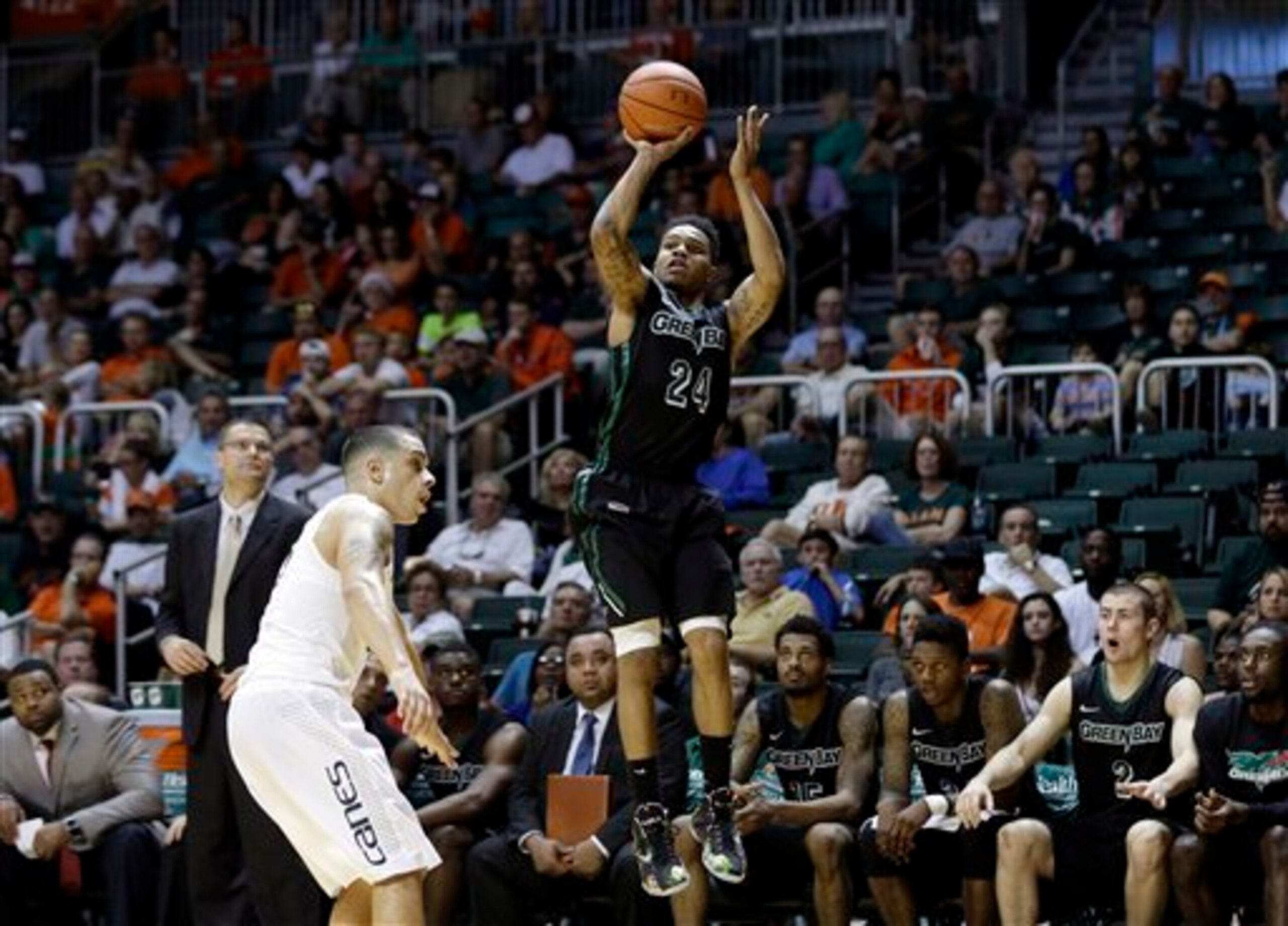
Size for Position/Athleticism
Keifer Sykes always had size working against him. But at 6'0", he's likely one of the top athletes and leapers among the eligible point guards. Sykes is quick, elusive and bouncy around the rim. If only he were a few inches taller, he'd likely have generated a little more NBA buzz.
Facilitating/Passing
Sykes is a scorer in a point guard's body. He averaged just 4.5 assists per 40 minutes despite being used in 28.4 percent of Green Bay's possessions, per Sports-Reference.com. But he does a good job taking care of the ball. Despite carrying such a heavy offensive load, he only turned the ball over 2.5 times per 40 minutes.
Scoring
A microwave scorer, Sykes put up 18.6 points per game or 21.2 points per 40 minutes. He's at his best attacking and weaving through traffic. Sykes gets to the line at a good rate (6.3 times per 40 minutes), and he's comfortable with the floater and pulling up off the dribble (40.1 percent on two-point jumpers, per Hoop-Math.com), where he gets excellent elevation and separation.
Shooting
Unfortunately, he shot just 31.1 percent from three—the second year in a row he's finished below 32 percent. At his size, he'll need that three-ball to start working if he wants a crack at the NBA.
Upside
Sykes certainly packs the athleticism and burst to play at the NBA level. The question is whether he can make enough shots outside and hold his own running an offense. If he does, Sykes' spark-plug potential could land him a roster spot. I'd imagine he'll put up a lot of points in the D-League in 2015-16, if that's where his career path takes him.
Overall
Sykes might have hurt himself at the combine after struggling in five-on-fives. He could go undrafted, though it shouldn't completely kill his chances of ever playing in the NBA. He'll start off his career in the D-League or overseas.
56. Cady Lalanne, Massachusetts, 6'10", C, Senior
46 of 101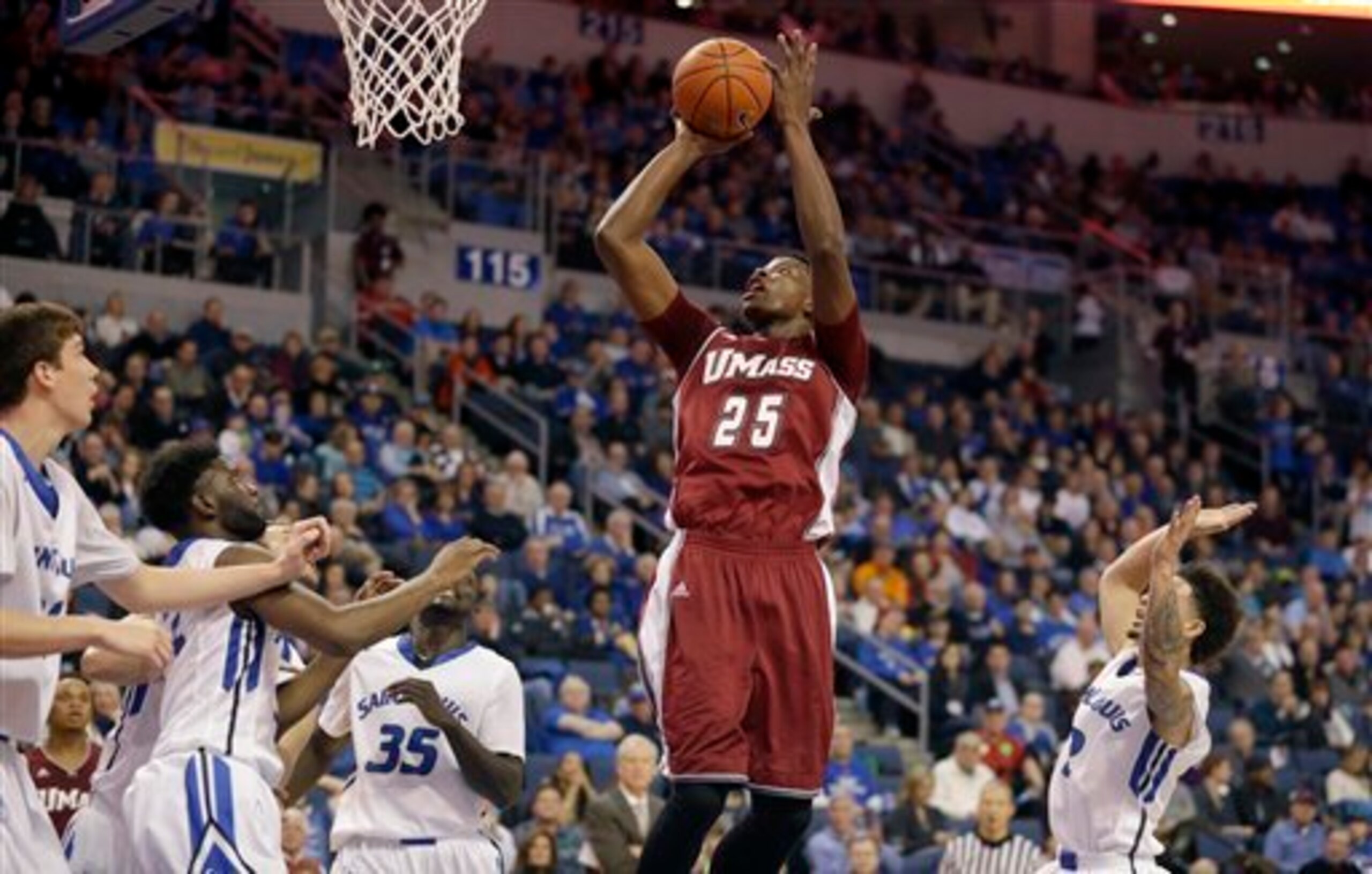
Size for Position/Athleticism
Cady Lalanne checks out physically with a 6'10", 241-pound frame and an enormous 7'5" wingspan. He isn't the greatest athlete, but he moves well enough to keep the alarms from sounding.
Scoring/Shooting
He's not a great scorer, having averaged just 15.9 points per 40 minutes as a senior. But Lalanne was fairly efficient (55.2 percent shooting) at doing what he does best—finishing around the paint off low-post moves, tips, cuts and dump-offs. As a shooter, he's capable in the mid-range, but he hasn't been consistent through his four-year career at Massachusetts.
Defense/Rim Protection
Lalanne blocked 2.6 shots per 40 minutes this past season, which you can credit to his length and energy. You just don't see many 7'5" wingspans on players under 6'11".
Rebounding
Lalanne is active around loose balls at the rim, where he averaged 13.1 rebounds per 40 minutes. He's a threat to tip in a miss (48 putbacks, per Hoop-Math.com), while his 23.4 percent defensive rebound percentage remains strong relative to other centers.
Upside
Lalanne's selling point focuses on his length, motor and ability to make things happen in the paint. He finishes, rebounds and blocks shots. Becoming a real shooting threat in the mid-range would improve his chances of making a roster, whether it's this summer or another one in the future.
Overall
Lalanne could get mid-second-round looks. He'll be one of the players hoping to stand out in summer league, which could lead to a training camp invite.
55. Chris Walker, Florida, 6'9", PF, Sophomore
47 of 101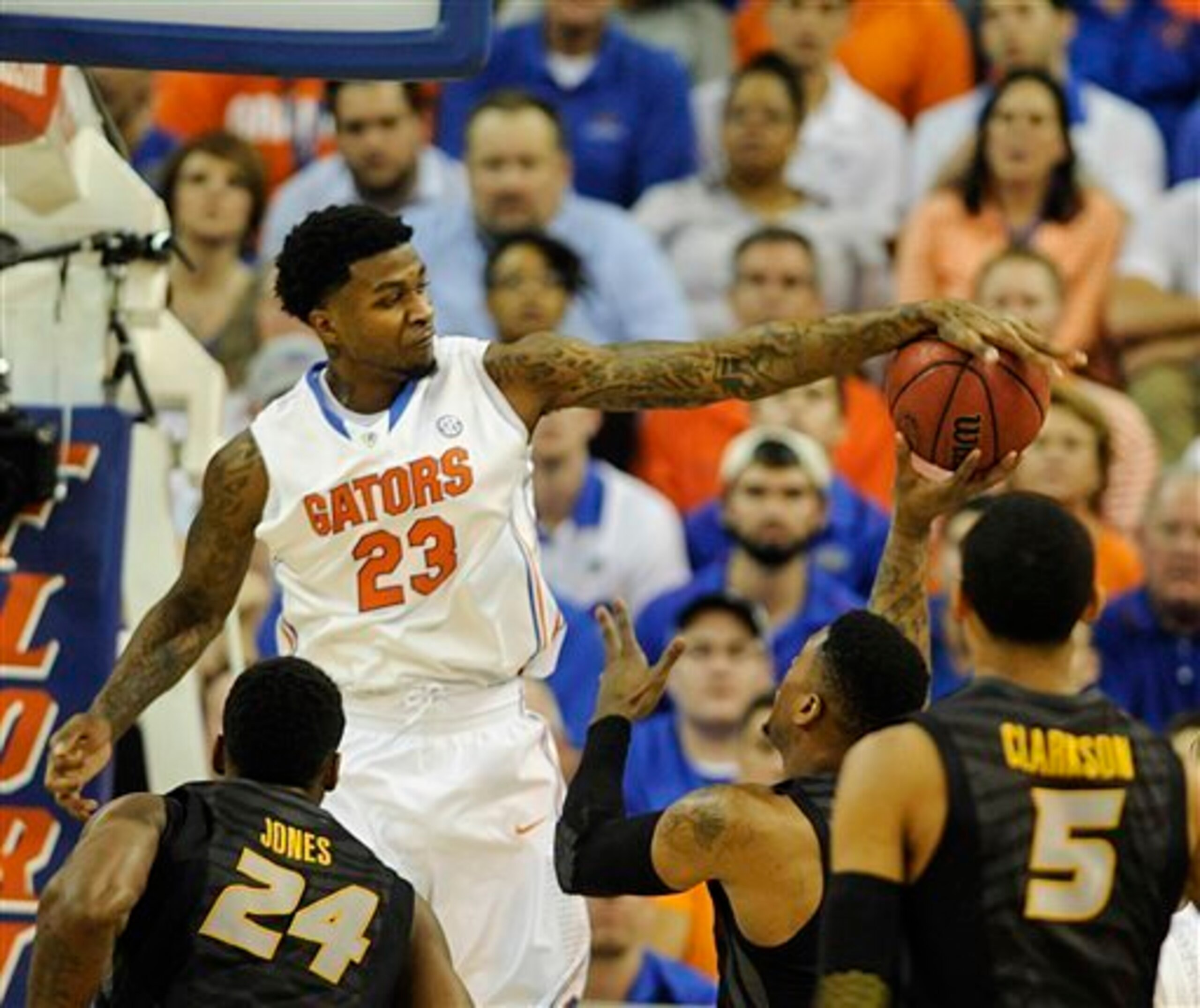
Size for Position/Athleticism
Chris Walker's physical tools (6'9 ¼" size, 7'2 ¾" wingspan) and bouncy athleticism have been well-documented since his days as a McDonald's All-American. But he weighed in at just 208 pounds at the combine, which was lighter than some guards. His lack of strength will be a major concern.
Scoring/Shooting
In two years at Florida, Walker showed very little offensively. He averaged just 12.8 points per 40 minutes as a sophomore while shooting 38.6 percent from the free-throw line. Walker has limited ball skills, from his post game to his handle and jumper. His buckets came mostly on finishes or hooks on the low block.
Rebounding
Walker grabbed 9.5 rebounds per 40 minutes, a fairly average number among power forwards. Given his skinny frame, grabbing boards will only get tougher for him, whether he ends up in the NBA, the D-League or overseas.
Defensive Activity/Potential
The best number on Walker's resume is his 3.2 blocks per 40 minutes. His length and hops can be disruptive around and above the rim.
Upside
Upside has been the only thing keeping Walker in the draft conversation. But considering how little progress he's made physically and fundamentally, he's not a very enticing gamble for general managers. It's tough to imagine him touching an NBA floor anytime soon.
Overall
Walker didn't do anything in two years at Florida to give teams a reason to draft him. Athleticism alone won't seal the deal, especially given his slender frame and nonexistent production.
54. Jonathan Holmes, Texas, 6'9", SF, Senior
48 of 101
Physical Tools/Athleticism
Jonathan Holmes has a strong 6'9", 242-pound frame for a power forward, though his athleticism (31-inch max vertical) and skill set suggest he can play the 3.
Scoring
Holmes isn't much of a shot-creator. He only made 3.0 two-pointers per 40 minutes and shot just 44.3 percent inside the arc. Holmes also struggled finishing at the rim, shooting 53.3 percent, per Hoop-Math.com.
Shooting
Despite his role as a stretch forward, Holmes only shot 33.1 percent from downtown. And in four years at Texas, he never finished a season above 33.3 percent. He did make 43 threes in 32 games as a senior, and his mechanics look fine. Right now, he's a shot-maker. To stick in the pros, he'll need to evolve into a knockdown shooter.
Defensive Potential
Holmes has the tools to guard both forward positions. He moves well enough laterally, while his size and strength could work against most 4s. He's no lockdown defender, but his versatility and toughness are both big positives.
Upside
If Holmes can become a more reliable shooter, he'll have the chance to stick as a versatile stretch forward off the bench.
Overall
Holmes looks the part, but he's never been a consistent enough shooter for a player who doesn't score one-on-one. Hell be a second-round option for a team that thinks his jumper is better than what the numbers say.
53. Travis Trice, Michigan State, 6'0", PG, Senior
49 of 101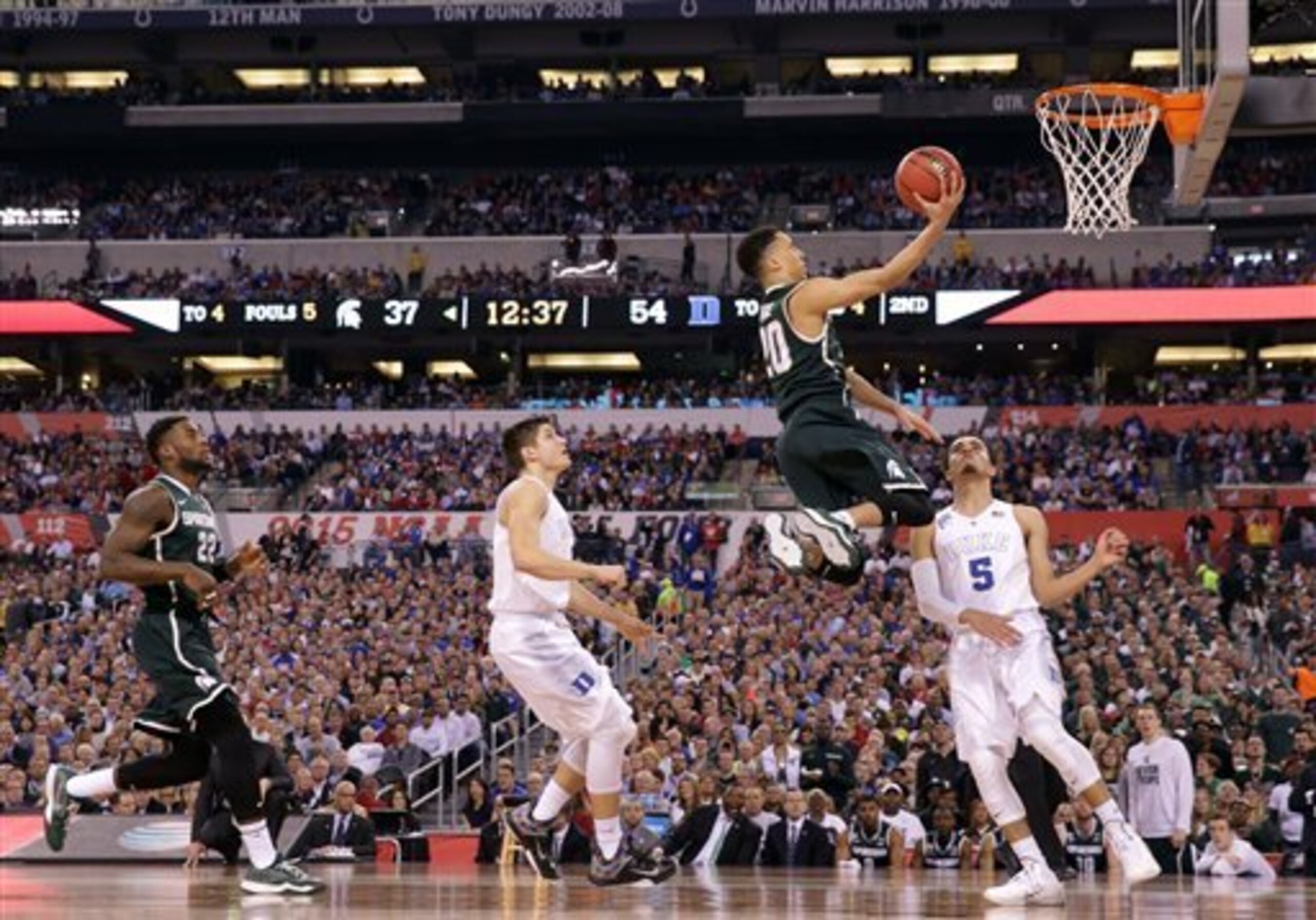
Size for Position/Athleticism
At 6'0" without much burst or above-the-rim springs, Travis Trice doesn't score well in physical tools and athleticism. He plays a nice, balanced game but ultimately lacks the blow-by speed and explosiveness of most NBA point guards.
Facilitating/Passing
Trice registered a strong 31.2 assist percentage as one of a few guards in Michigan State's starting lineup. His 10.8 turnover percentage and 4.9 pure point rating were also solid numbers. Trice doesn't wow you with playmaking ability, but his passing skills are sharp.
Scoring
Trice has improved dramatically as a scorer over the past three years, having gone from 10.3 points per 40 minutes as a sophomore to 13.1 points as a junior and 18.3 points per 40 minutes as a senior. He really struggles at the rim, where he shot a dreadful 42.9 percent in the half court, per Hoop-Math. A 39.7 percent field-goal clip reflects Trice's inability to create good looks for himself.
Shooting
He nailed a career-high 2.8 triples per 40 minutes at a respectable 36.9 percent clip. His jumper will be huge for him moving forward, even if it's in the D-League or overseas.
Upside
There isn't any upside tied to Trice, given his athletic limitations and age (22 years old). However, he can handle the ball, pass and shoot. If he can hold his own defensively, he has some low-end potential as a ball-mover and shot-maker.
Overall
Trice's lack of size and athleticism has kept him out of the NBA draft conversation. He's worked out for teams, though his odds of getting picked are slim. Look for him to start his career in Europe or the D-League.
52. Terran Petteway, Nebraska, 6'6", SG, Junior
50 of 101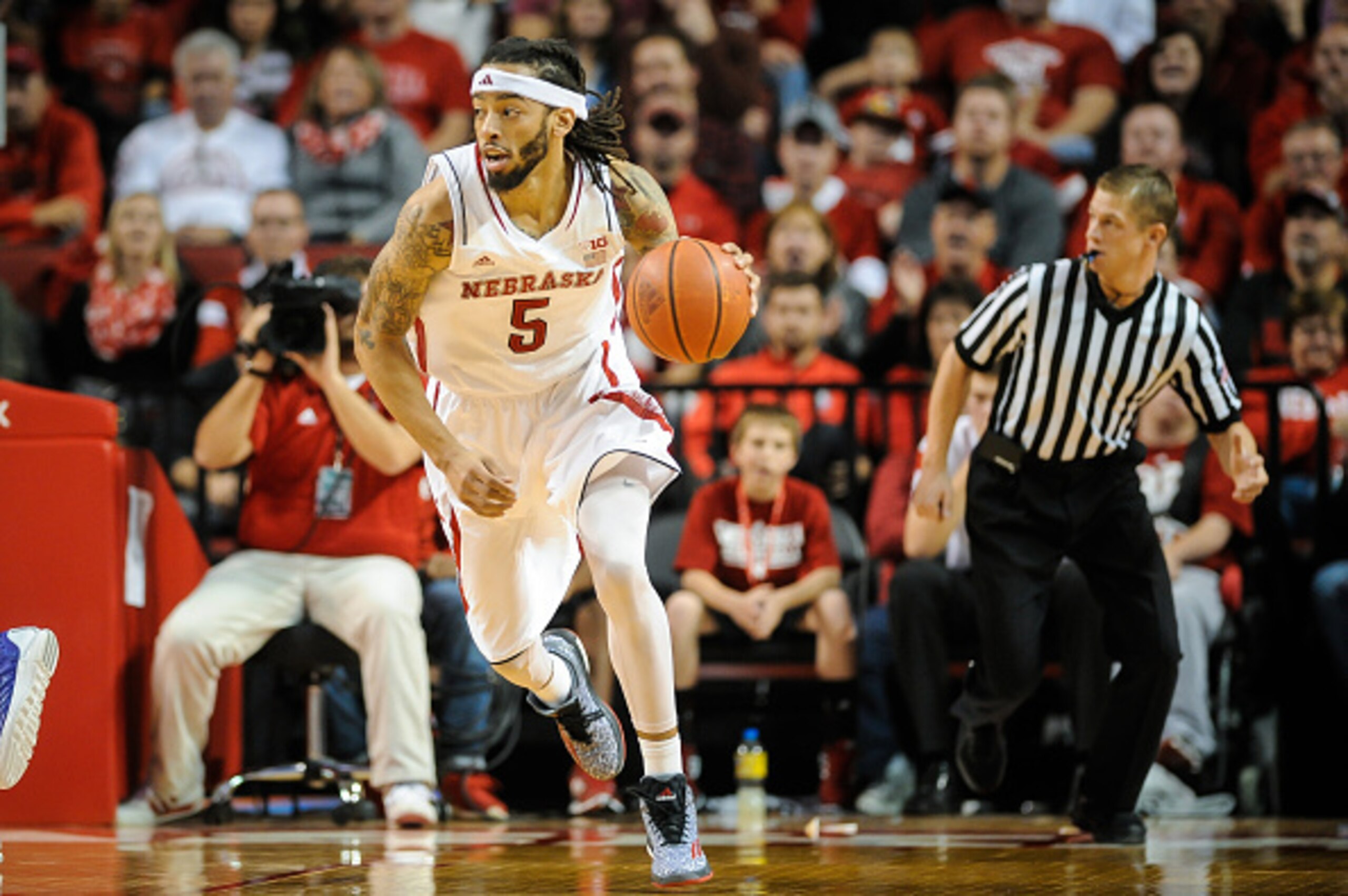
Size for Position/Athleticism
At 6'6", 209 pounds, Terran Petteway passes the eye test with good size for a projected 2-guard. Athletically, he's average at best in terms of his quickness and explosiveness. He also isn't great when it comes to finishing after contact.
Scoring
Petteway didn't make the improvements that a draft-stock boost would have required in 2015. After averaging 22.8 points per 40 minutes as a sophomore, he put up 20.8 as a junior, failing to become more consistent and efficient. He shot just 39.6 percent from the floor and registered a below-average .512 true shooting percentage. However, his skill set is sharp. He can create his own shot moving north, south, east and west off drives, step-backs and pull-ups. Unfortunately, many of the looks he creates for himself are difficult to make with regularity.
Shooting
He shot just 31.3 percent from downtown, which marked the third straight year he finished below 33 percent. It hasn't stopped him from launching bombs—Petteway attempted 8.0 triples per 40 minutes. He did make 68 threes in 31 games, so there is no denying his range and shot-making ability. But again—we haven't seen the convincing consistency.
Playmaking
Petteway is a better passer than he's given credit for, partly because of the questionable shots he takes. But he averaged 3.2 assists per 40 minutes and showed he can create out of pick-and-roll situations.
Upside
If Petteway can ever turn his streaky shooting into consistent scoring, he could have a chance of carving out a spot on a roster. But there isn't much margin of error for high-volume, low-efficiency shooters like him.
Overall
He'll receive second-round looks, but Petteway's shot selection and inefficiency can be a major turnoff. However, teams in Europe might value his offensive skills. If he chooses to pass on the D-League, he should be able to find a job overseas.
51. Shawn Dawson, Israel, 6'6", SF, 1993
51 of 101Physical Tools/Athleticism
Shawn Dawson is a smooth athlete who can explode for dunks, finish at tough angles and alter his body in midair. Listed at 6'6", 195 pounds, adding strength will be a priority moving forward, especially considering he's already 21 years old.
Scoring
Dawson has improved his ball-handling to the point where he can change directions and get to the rack. He shows impressive shot-making ability off two feet and touch off one on the move. On the year, Dawson is averaging 21.7 points per 40 minutes on an impressive 53.8 percent shooting inside the arc.
Shooting
To date, Dawson is hitting 1.5 threes per 40 minutes, but he isn't quite there yet as a shooter (34.2 percent from three). Still, it's good to see gradual improvement. He'd been below 30 percent from deep the previous two years.
Defensive Potential
Dawson's reputation on defense isn't great, with his awareness and effort having come into question. But in terms of tools and playmaking ability, he's flashed promise.
Upside
A late bloomer, Dawson's name has risen in the draft conversation in 2015, particularly blowing up over the past few months. He would be a senior in college, so it's fair to question how much room he has left to grow. But if he continues to make strides, his athleticism, slashing ability and shot-making skills could hold NBA value.
Overall
With so many international prospects withdrawing at the last minute, Dawson could have a real chance of getting drafted. He'll be a second-round option for teams uninterested in wasting a pick on a college senior with no upside.
50. Anthony Brown, Stanford, 6'6", SF, Senior
52 of 101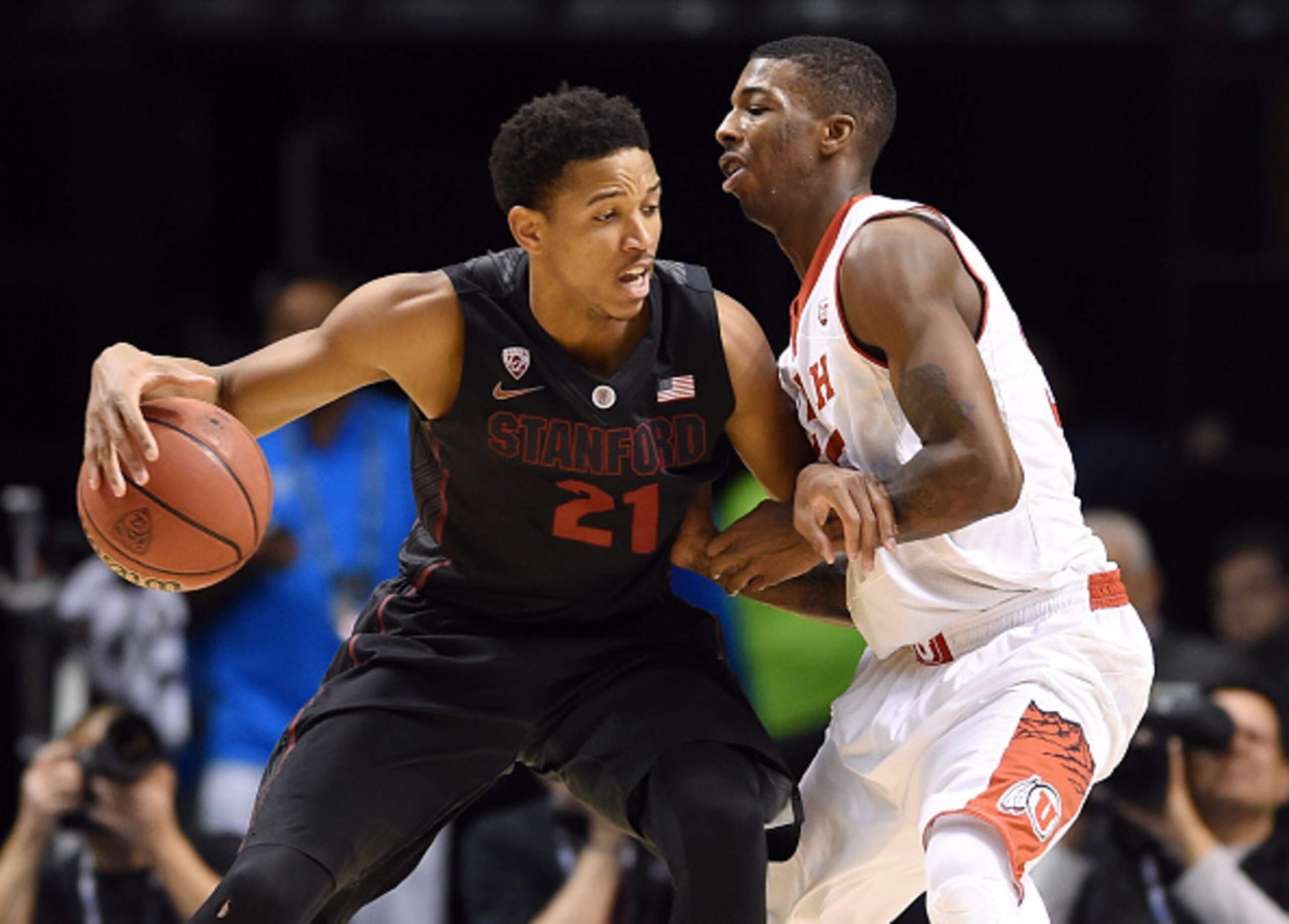
Athleticism/Physical Tools
Anthony Brown has average size for a wing at 6'6" and 215 pounds, though he isn't overly athletic or quick off the dribble. He plays mostly below the rim and out on the perimeter.
Scoring
Brown only made 2.9 two-pointers and averaged 16.6 points per 40 minutes. Brown is a shot-maker—not a scorer. He doesn't project as a player who's going to create his own shot.
Shooting
Brown could be one of the draft's top shooters, having shot at least 44 percent from downtown in back-to-back seasons. His mechanics are clean, and when his feet are set, he doesn't miss too many clean looks from deep.
Defensive Potential
Brown doesn't exactly project as a lockdown or plus defender, but he's not a liability. He has the tools to guard 2s and 3s.
Upside
If Brown gets drafted and finds a way to stick, he'll have his jumper to thank. Best-case scenario, we'll be talking about a shooting specialist whose only job is to knock down threes and hold his own defensively.
Overall
Brown was't overly impressive at the combine. His NBA life will depend on the jumper. Chances are it's good enough for the second round, but he shouldn't be anyone's Plan A.
49. Dakari Johnson, Kentucky, 7'0", C, Sophomore
53 of 101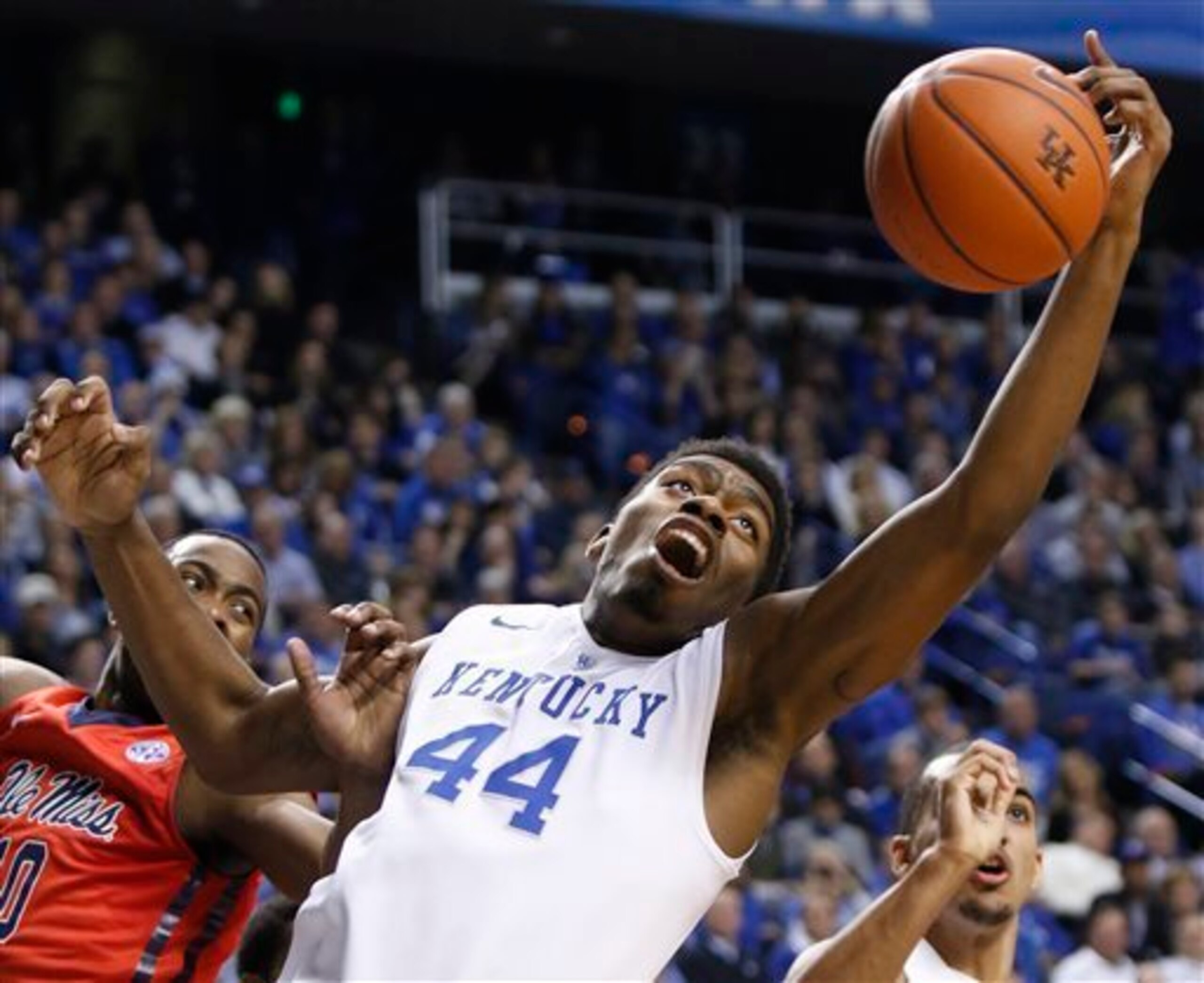
Size for Position/Athleticism
Dakari Johnson's measurements are strong—7'0" size, 7'2" wingspan, 9'4" standing reach. However, he weighed in 265 pounds with the highest body fat percentage at the combine. He is also an average athlete at best. He'll need to get in better shape to maximize his mobility and leaping ability.
Scoring/Shooting
Rarely does Johnson take a shot outside the paint. He goes to work on the low block, where he has one basic over-the-shoulder hook. He lacks counter moves and fluidity in the post, and he hasn't shown much of a jumper in two years. He scored 15.6 points per 40 minutes on 50.6 percent shooting from the floor and 62.5 percent from the free-throw line as a sophomore.
Defense/Rim Protection
Johnson blocked 2.3 shots per 40 minutes this past season. His physical tools alone made it difficult for opposing frontcourts to get clean looks at the basket. He doesn't project as a shot-blocker in the NBA, but teams could covet his overall interior defensive presence.
Rebounding
That presence is also felt on the glass, where he grabbed 11.3 rebounds per 40 minutes. Given all the space he took up, loose balls just happened to find him at Kentucky.
Upside
Limited athleticism, questionable conditioning and a raw offensive game keep Johnson's ceiling in check. In the best-case scenario, we're likely talking about a backup center. But he'll still have improvements to make, both to his body and skill set, before we can comfortably refer to Johnson as an NBA player.
Overall
Johnson could get looks from teams that are drafting late in the first round. Keep an eye on the Memphis Grizzlies at No. 25 or the Los Angeles Lakers at No. 27, in particular. Otherwise, expect him to go somewhere within the first 20 picks of Round 2.
48. Rondae Hollis-Jefferson, Arizona, 6'7", SF, Sophomore
54 of 101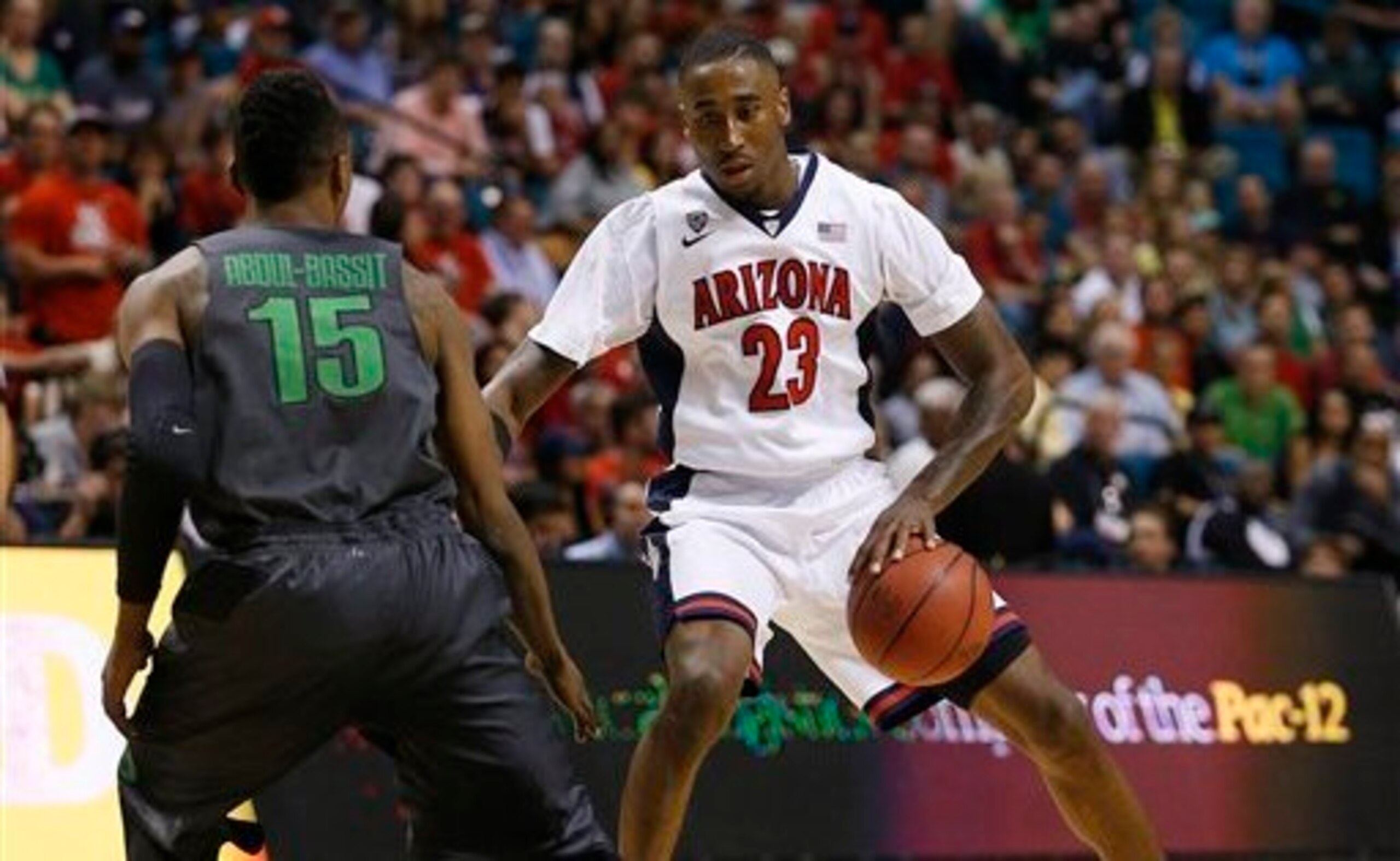
Physical Tools/Athleticism
With 6'7" size, a 7'2" wingspan, quick feet and explosive athleticism, Rondae Hollis-Jefferson checks out physically from every angle.
Scoring
Hollis-Jefferson is at his best offensively in the open floor. In the half court, he can be effective cutting, slashing and driving in straight lines, but he struggles to create his own shot, both as an attacker and perimeter scorer. He averaged 15.7 points per 40 minutes as a sophomore.
Shooting
He'd be a lot higher on most draft boards if only he could shoot. Hollis-Jefferson made a total of eight three-pointers over his two-year career at Arizona, despite averaging at least 25 minutes per game each season. He also shoots poorly from the charity stripe, having knocked down just 70.7 percent of his freebies as a sophomore. This is a major issue for him offensively, as you just don't see many starting wings in the NBA who can't stretch the floor.
Defensive Potential
Hollis-Jefferson will likely go in the first round due to his lockdown defensive potential. He's capable of blanketing three positions, including the opposing team's top perimeter scorer or ball-handler. His lateral quickness and length are both exceptional.
Upside
Without much of an offensive game, team fit could play a big role in Hollis-Jefferson's development and outlook. But his defense should be strong enough to hold value in a specialist role.
Overall
Hollis-Jefferson's NBA Draft 100 grade is low due to his inability to score and shoot. But his lockdown defensive potential should still generate mid-to-late first-round interest. On the other hand, his weaknesses could make him vulnerable to slipping.
47. Pat Connaughton, Notre Dame, 6'5", SG, Senior
55 of 101
Size for Position/Athleticism
Pat Connaughton has standard 6'5" size for a 2-guard, but his 215-pound frame is strong. He stole the show during athletic testing at the NBA combine, when he jumped up for a ridiculous 44" max vertical. An incredible athlete, he was even taken in the fourth round in the 2014 MLB draft as a pitcher.
Scoring
Connaughton is more of a spot-up threat than a scorer, though he has the body control to finish runners around the key. He did almost all of his work finishing plays off the ball, whether it was as a cutter or perimeter shooter. He averaged 14.1 points per 40 minutes on 53.7 percent shooting inside the arc.
Shooting
Connaughton's stroke is as pure as it gets. With perfect mechanics, he made 2.8 threes per 40 minutes at a 42.3 percent clip. Between his athleticism and jumper, he offers shooting specialist potential.
Passing/Playmaking
He's a high-IQ wing who makes the right plays, but he isn't much of a threat off the dribble. He's a ball-mover, not a playmaker, having averaged just 1.7 dimes per 40 minutes as a senior.
Upside
If Connaughton sticks in the NBA, his jumper and athleticism will make it happen. He doesn't have any significant upside, but as a sniper to bring off the bench, he'll have a chance to carve out a minor role.
Overall
Connaughton was off the radar until the combine, where he improved his chances of getting drafted. Teams that view him as a specialist could target him anywhere in the second round.
46. Tyus Jones, Duke, 6'2", PG, Freshman
56 of 101
Size for Position/Athleticism
Though Tyus Jones is one of the most skilled point guards in our top 20, his lack of athleticism and standout quickness is really working against him. His first step off the bounce isn't explosive. And neither is his last one up toward the rim, where he shot just 55.6 percent, per Hoop-Math.com. Jones also struggled regularly defending the perimeter, particularly fighting through screens and containing dribble penetration.
Facilitating/Passing
His numbers would have likely been better had he not shared a backcourt with senior Quinn Cook. Jones' 27.5 percent assist percentage didn't stack up very well with the other top point guards. However, he's an excellent passer and decision-maker out of pick-and-rolls and has flashed terrific vision in the open floor. His 5.1 pure point rating also ranked No. 16 in the country, per RealGM.com. If we were using the eye test to assess Jones' passing and facilitating, he'd have scored higher. But his numbers just weren't very impressive.
Scoring
As a scorer, Jones' best attribute from an NBA standpoint is the pull-up jumper, which he made 43 percent of the time, per DraftExpress' Jonathan Givony. Unfortunately, his 13.9 points per 40 minutes was low compared to most point guards. Jones didn't finish well at the rim, shot just 44 percent on twos and was erratic from outside.
Shooting
Jones hit 47 threes in 39 games at a 37.9 percent clip. Though he's inconsistent, his outlook as a shooter appears promising. Jones' mechanics' and shot-making ability are both encouraging.
Upside
Jones' skill level is exceptionally high, but his athletic limitations will make it difficult for him to defend and separate as a scorer. However, Jones' high basketball IQ and feel for the game are too strong to ignore. He's a sharp enough ball-handler and passer to back up an NBA starter. To become a starter himself, Jones must continue improving his jumper, as it's a shot he'll have to rely on heavily without above-the-rim burst.
Overall
Jones' numbers weren't reflective of his impact and promise. He's going to get looks in the mid-first-to-late-first round, even if his upside isn't that enticing. Expect the Houston Rockets, Dallas Mavericks and Cleveland Cavaliers to take a look.
45. Josh Richardson, Tennessee, 6'6", SG, Senior
57 of 101
Size for Position/Athleticism
Josh Richardson looks likes a prototypical 2-guard with 6'6" size and a nice bounce to his step. He can get up above the rim for big-time finishes and slice to the rack in the half court or open floor. His skinny 200-pound frame would be the only concern physically.
Scoring
A threatening mid- and long-range scorer, Richardson averaged 17.7 points per 40 minutes as a senior. He can knock down shots off curls, pull-ups and spot-ups, and he flashed slashing potential from the wings. Richardson only took 18.8 percent of his shots at the rim, though, per Hoop-Math.com. He doesn't get there often off the dribble and averaged just 3.9 free-throw attempts in 36.3 minutes.
Shooting
Richardson can shoot, though he hasn't been consistent enough to earn the reputation as a shooter. After making 34 percent of his threes as a junior, he shot 35.9 percent as a senior. He hit 1.6 threes per 40 minutes, which was fairly average among 2-guards.
Playmaking
He averaged an impressive 4.0 assists per 40 minutes, showing the ability to find teammates off the dribble. Tennessee actually used Richardson as one of its primary ball-handlers this past season.
Upside
Richardson is a late bloomer whose game continues to improve. However, he had trouble playing after contact, and if he doesn't improve his shooting consistency, he could have a tough time standing out.
Overall
Somehow, Richardson didn't receive an invite to the NBA combine. However, between his size, scoring and playmaking, he'll certainly get second-round looks. If not, he'd be one of the top rookie free-agent candidates after going undrafted.
44. Tyler Harvey, Eastern Washington, 6'4", SG, Junior
58 of 101
Size for Position/Athleticism
Tyler Harvey's 6'4", 181-pound frame and average athleticism have held him back in the NBA draft conversation. He's undersized for a natural shooting guard and lacks the ability to handle the point.
Scoring
Questionable physical tools from an NBA perspective didn't prevent Harvey from leading the country in scoring this past season. The Eastern Washington product averaged 23.1 points per game (25.0 points per 40 minutes) on an outstanding .643 true shooting percentage. He was flat-out unstoppable on the perimeter, where he showed the ability to create shots and separate from defenders for makable jumpers out to 28 feet. Though he didn't get to the rack much, he made 46.7 percent of his two-point jumpers, per Hoop-Math.com, consisting of pull-ups, step-backs and runners.
Shooting
Harvey also led the country in three-pointers made, hitting 128 of them on the year. And he did so efficiently, shooting 43.1 percent from downtown. With a sweet lefty stroke and plenty of range, his touch is reminiscent of Michael Redd's.
Playmaking
Harvey only averaged 2.8 assists per 40 minutes, though it's worth noting his job was to put the ball in the hole. Still, he doesn't project as a player who'll be setting up teammates for buckets.
Upside
With limited size and strength for a perimeter-oriented scorer, there are questions as to how well his game will translate to the pros. But it's just impossible to ignore his shot-making skills. Harvey could be one of the biggest sleepers in this draft if he's able to overcome the physical transition. He has the potential to become an instant-offense spark off a bench.
Overall
Harvey struggled badly in five-on-fives at the combine, where for the first time in two years, he wasn't featured in the offense. He'll need to shoot well in workouts to maximize his chances of getting drafted. Regardless, he'll be able to continue his career in the D-League or overseas.
43. Daniel Diez, Spain, 6'8", SF, 1993
59 of 101Physical Tools/Athleticism
Daniel Diez has a strong upper body for a wing to go with excellent 6'8" size. He's not overly explosive, but he's agile and plays with a live motor. Diez's activity level and strength also translated to 9.2 rebounds per 40 minutes this season with Gipuzkoa Basket in the Spanish ACB.
Scoring
One of the more productive players in the ACB, Diez averages 12.1 points in 29.6 minutes on an impressive 48.0 percent shooting. He isn't a go-to option, but Diez does a nice job of picking up buckets off spot-ups, slashes, cuts and fast breaks.
Shooting
Diez has become an extremely accurate shooter, having hit 58 of his 140 three-point attempts (41.4 percent) this season. He's made serious strides with his jumper in 2014-15, which has improved his chances of getting drafted.
Defensive Potential
Though not the best athlete, Diez makes up for it with mobility and energy. He doesn't project as a plus defender but should be able to hold his own against other role-playing wings.
Upside
Diez has some interesting role-player potential thanks to his shooting stroke, ability to finish off the ball and rebound. Despite already being 22 years old, he should still receive second-round consideration.
Overall
He'll be a second-round, draft-and-stash option without much upside. However, Diez's promising role-playing potential should be enough to get some team to bite.
42. Mouhammadou Jaiteh, France, 6'11", C, 1994
60 of 101Size for Position/Athleticism
Mouhammadou Jaiteh isn't a standout athlete in terms of quickness and explosiveness. However, his physical tools pass the NBA eye test. He measures 6'10 ½" with a 7'3" wingspan and 247-pound frame.
Scoring/Shooting
Jaiteh had a strong year in France, where he averaged 19.6 points per 40 minutes on 59.9 percent shooting. Though still raw, he has improved his over-the-shoulder game in the low post, which is ultimately his bread and butter offensively. But he still lacks fluidity with his moves, as well as a reliable shooting stroke, having knocked down just 59 percent of his free-throw attempts.
Defense/Rim Protection
Jaiteh doesn't do a great job of holding his ground. He can allow opposing players to finish through him. His 0.92 blocks per 40 minutes and 2.27 percent block percentage rank right near the bottom of the top 20.
Rebounding
Though his defensive numbers are poor, Jaiteh really cleaned the glass, having pulled in 11.5 rebounds per 40 minutes and put up an 18.28 percent total rebound percentage.
Upside
Without an advanced offensive game and questions regarding his defense, Jaiteh's ceiling isn't overwhelmingly high. But his interior presence could potentially hold value in a backup role that asks him to finish and rebound.
Overall
Jaiteh will be a draft-and-stash option for teams that are selecting in the second round. The Minnesota Timberwolves and Philadelphia 76ers each have two picks in the 31-37 range. Watch out for them.
41. Cedi Osman, Macedonia, 6'8", SG, 1995
61 of 101Size for Position/Athleticism
Cedi Osman has excellent 6'8" size and smooth athleticism for a wing who can handle the ball. He isn't particularly explosive around the rim, though his body control translates to pretty finishes in the open floor. He could stand to put on some muscle, but he's held his own against pros in Euroleague.
Scoring
Osman is a versatile scorer who can make set shots off two feet and runners off one. Playing at a high level overseas, he averaged 15.1 points per 40 minutes, though it's come on 41.9 percent shooting from the floor.
Shooting
He has shooting potential, having made 54 threes in 63 games. Despite his 34.2 percent mark from downtown, Osman has a convincing stroke that should only improve.
Playmaking
Osman is actually a better passer than his assist numbers (63 assists in 63 games) suggest. He shows strong vision in the open floor and on the move, though he hasn't had much of a chance to create.
Upside
Osman's upside is limited, but his versatility could work well off an NBA bench. Though he doesn't excel in any one area, he has the potential to become a jack-of-all-trades role player.
Overall
He's an ideal draft-and-stash candidate, given his role for Anadolu Efes and the quality of competition he'll face. Osman should be in line for big minutes over the next few years in Euroleague. He'll be an option anywhere outside the top 20.
40. Chris McCullough, Syracuse, 6'9", PF, Freshman
62 of 101
Size for Position/Athleticism
A torn ACL ended Chris McCullough's college career just 16 games into his freshman season. But before going down, he flashed terrific athleticism for a 6'9" forward with a giant 7'3 ¼" wingspan. Still, McCullough weighed just 199 pounds at the combine, and though he's been inactive for five months, he'll need to add a lot of bulk over the next few years.
Scoring/Shooting
McCullough was at his best finishing off cuts, drives, lobs and dump passes around the basket. He also flashed a promising mid-range jumper, even though it cooled off over his final eight games. However, McCullough doesn't have a frame built for the post, where he lacks refined moves to begin with. And he has only a small sample size's worth of sharpshooting for scouts to evaluate.
Rebounding
With long arms, good hands and a quick jump, McCullough was active on the glass. His rebounding numbers fell off in his last handful of games, but his 9.8-per-40 average isn't bad.
Defensive Activity/Potential
McCullough put up some big numbers in Syracuse's zone. He averaged 2.4 steals and 2.9 blocks per 40 minutes. Between his length and quickness, he covers a lot of defensive ground.
Upside
A versatile defender, promising mid-range shooter and productive player around the basket, McCullough's eye-opening potential doesn't come without risk. He's fresh off major surgery after playing mostly against inferior nonconference competition. McCullough looks like one of the bigger boom-or-bust prospects in this year's draft.
Overall
An eight-game slump before going down helped put out the fire he created through his first eight games. A torn ACL on top of that should keep teams in the top 20 from reaching, but a playoff team that can afford to wait and develop McCullough could take a chance on him anywhere after that.
39. Gabriel Olaseni, Iowa, 6'10", C, Senior
63 of 101
Size for Position/Athleticism
Gabriel Olaseni is a fluid run-and-jump athlete with decent 6'10" size and an excellent 7'3 ½" wingspan. But for an NBA center, he'll need to add weight to his 223-pound frame.
Scoring/Shooting
He isn't a skilled scorer, though he did average 17.3 points per 40 minutes on 52.0 percent shooting as a senior. Olaseni does most of his work off the ball as a finisher, as opposed to creating shots himself. He also increased his free-throw percentage to 75.0 percent as a senior (up from 61.5 percent as a freshman).
Defense/Rim Protection
Olaseni's long arms translate to rim protection, where he blocked 3.4 shots per 40 minutes. Unfortunately, foul trouble (5.8 fouls per 40 minutes) contributed to his minor 18.6-minute-per-game role. He can naturally block shots, but he needs to improve as an actual defender.
Rebounding
His 10.3 rebounds per 40 minutes and 14.7 percent total rebound percentage are both average numbers relative to other centers.
Upside
He's 23 years old, and despite his decent numbers, Olaseni doesn't bring much to the table offensively. He'll look to land on a summer league team and hopefully generate interest as an interior specialist.
Overall
Olaseni wasn't invited to the NBA combine, but he's been getting predraft workouts with teams. Still, despite his high NBA Draft 100 score, he remains a borderline second-round option.
38. Michael Qualls, Arkansas, 6'5", SG, Junior
64 of 101
Size for Position/Athleticism
At 6'5", 210 pounds with a wingspan that stretches beyond 7'0", Michael Qualls has an NBA 2-guard body to go with elite-level athleticism. His ability to elevate high above the rim and hang in the air has led to dozens of jaw-dropping highlights.
Scoring
Qualls made significant offensive strides as a junior, having raised his scoring average to 21.1 points per 40 minutes and his true shooting percentage up to .562. He still has to improve his in-between game, as he shot just 28.0 percent on two-point jumpers, per Hoop-Math.com. But he's tough to stop when given a lane to hit, and he made 5.8 free throws per 40 minutes.
Shooting
He regressed slightly as a shooter in 2014-15, which is one of the reasons he hasn't generated much draft buzz. Qualls' three-point percentage dipped from 35 percent as a sophomore to 33.3 percent this past season. Still, the fact that he made two threes per 40 minutes highlights his shot-making ability. He's capable of knocking down long-range bombs, but he'll have to become consistently threatening to make a mark in the pros.
Passing/Playmaking
He averaged fewer than two assists per game while playing 30.2 minutes. Qualls isn't a playmaker.
Upside
Qualls continues to make gradual progress, and with superhero-like athleticism and textbook 2-guard physical tools, there is upside for coaches to tap into. However, he'll need to become a more reliable shooter to maximize his chances.
Overall
Unfortunately, Qualls tore his ACL during a pre-draft workout, per ESPN's Jeff Goodman, which could really hurt his chances of being drafted. He'll have his work cut out for him over the next two years, but after a full recovery, I'd expect his name to resurface on NBA radars.
37. Joseph Young, Oregon, 6'2", SG, Senior
65 of 101
Size for Position/Athleticism
The obvious obstacle for Joseph Young to overcome as a shooting guard will be his 6'2" size. Though he can handle the ball, he lacks the traditional facilitating instincts to run the point. However, he is an excellent athlete who can get up above the rim and blow by defenders.
Scoring
This marked the third consecutive year Young averaged at least 18 points per game. He can generate offense at will, with the ability to create and make shots from all over the floor. It's made him unstoppable for stretches in the college game. Nobody could guard him in this year's NCAA tournament.
Shooting
Young knocked down 2.5 threes per 40 minutes, and though his 35.7 percent three-point shooting percentage this year was average, his career 39.0 percent mark on 739 attempts is convincing. The fact that he shot 92.5 percent from the charity stripe as a senior only enhances his credibility as a shooter.
Playmaking
Young's ability to handle the ball and create off the dribble leads to assists on the move. He dished out 4.1 assists per 40 minutes as a senior.
Upside
As a 6'2" scorer who is turning 23 years old two days after the draft, Young's upside remains limited. The hope for him will be to carve out a career as an offensive spark off a bench.
Overall
There is no doubting Young's talent or skills—just his place in the NBA. A team that is willing to overlook his questionable position could take a chance on him in the late first round. Otherwise, he should be locked into Round 2's top 20. Bet on him making an NBA appearance at some point within the next two years.
36. Guillermo Hernangomez, Spain, 6'11", C, 1994
66 of 101Size for Position/Athleticism
Guillermo Hernangomez won't blow anyone away with athleticism, but he's nimble and agile for a 6'11", 255-pounder. For a center, he passes the NBA eye test from a physical perspective.
Scoring/Shooting
Hernangomez has a strong feel for the game offensively, where he can make open shots around the key or improvise and finish on the move. He has some touch to work with in the mid-to-short range. He plays back-to-the-basket ball in the post, where he can turn and score over either shoulder. He's also a target in the pick-and-roll game. Hernangomez averaged 20.5 points per 40 minutes between Eurocup and Spanish ACB play.
Defense/Rim Protection
Hernangomez totaled just 18 blocks in 50 games, averaging 19.7 minutes in each. That's an alarmingly low rate for a big man his size.
Rebounding
Though not a dominant defender, Hernangomez grabbed 11.6 rebounds per 40 minutes. His 18.45 percent total rebound percentage is one of the better marks among eligible 2015 centers.
Upside
Hernangomez's uninspiring athleticism and poor defensive instincts limit his perceived upside. But it's tough to write off his physical tools, offensive game and production while playing at a high level. He has the potential to find a role as a backup NBA big man.
Overall
It's possible teams drafting in the 20s give Hernangomez a look, but he'll likely be taken in the second round as a draft-and-stash pick. He should be in line for big minutes next year overseas.
35. Arturas Gudaitis, Lithuania, 6'10", C, 1993
67 of 101Size for Position/Athleticism
Guillermo Hernangomez won't blow anyone away with athleticism, but he's nimble and agile for a 6'11", 255-pounder. For a center, he passes the NBA eye test from a physical perspective.
Scoring/Shooting
Hernangomez has a strong feel for the game offensively, where he can make open shots around the key or improvise and finish on the move. He has some touch to work with in the mid-to-short range. He plays back-to-the-basket ball in the post, where he can turn and score over either shoulder. He's also a target in the pick-and-roll game. Hernangomez averaged 20.5 points per 40 minutes between Eurocup and Spanish ACB play.
Defense/Rim Protection
Hernangomez totaled just 18 blocks in 50 games, averaging 19.7 minutes in each. That's an alarmingly low rate for a big man his size.
Rebounding
Though not a dominant defender, Hernangomez grabbed 11.6 rebounds per 40 minutes. His 18.45 percent total rebound percentage is one of the better marks among eligible 2015 centers.
Upside
Hernangomez's uninspiring athleticism and poor defensive instincts limit his perceived upside. But it's tough to write off his physical tools, offensive game and production while playing at a high level. He has the potential to find a role as a backup NBA big man.
Overall
It's possible teams drafting in the 20s give Hernangomez a look, but he'll likely be taken in the second round as a draft-and-stash pick. He should be in line for big minutes next year overseas.
34. Vince Hunter, UTEP, 6'8", PF, Sophomore
68 of 101
Size for Position/Athleticism
At 6'7 ½", 208 pounds, Vince Hunter has a small forward's body, though his strengths and limitations suggest he'll play power forward at the next level. Hunter is a quick, above-average athlete who plays with tons of energy. He's undersized and lacks strength, but that hasn't stopped him from eating up college frontcourts.
Scoring/Shooting
Hunter was extremely productive against Conference USA competition, having averaged 20.9 points per 40 minutes. The majority of his offense came from the charity stripe to the baseline, where he scores off finishes, cuts, drives, putbacks and transition opportunities. Hunter also got to the line 8.8 times per 40 minutes, as he's relentless around the basket. However, his inability to shoot has really clouded his outlook. He was a combined 4-of-12 from three in two years and shot just 21.7 percent on two-point jumpers as a sophomore, per Hoop-Math.com, along with 60.2 percent from the free-throw line.
Rebounding
One of the top rebounders in the country, Hunter's motor, athleticism and nose for the ball translated to 13.0 boards per 40 minutes and a phenomenal 19.1 total rebound percentage, the No. 1 rank among the top 20 power forwards featured here. His activity on the glass alone could be something NBA teams covet.
Defensive Activity/Potential
Hunter has demonstrated the versatility to guard both forward positions. And he can make things happen at the defensive end, where he averaged 1.7 steals and 1.4 blocks per 40 minutes.
Upside
His size and perimeter scoring ability are big question marks. However, Hunter has the potential to become a spark plug who crashes the glass, defends and finishes plays around the basket. He looked great at the NBA combine, and it wouldn't be surprising if a general manager takes a chance on him in the second round.
Overall
Having no true position or proven jumper makes Hunter nothing more than a second-round flier. Teams that covet his energy and rebounding ability could give him a shot in the 45-60 range.
33. Delon Wright, Utah, 6'5", PG, Senior
69 of 101
Size for Position/Athleticism
At 6'5", Delon Wright has the size to operate over the defense. He's also quick and instinctive moving laterally, which shows up on defense. However, Wright is an average athlete, from his explosiveness to his length and strength.
Facilitating/Passing
Wright managed Utah's offense efficiently. He shows great poise and the patience to wait for plays to develop. Wright does most of his damage off ball screens, where he can slow the game down with the hesitation dribble and pick apart defenses. Wright registered a solid 33 percent assist percentage while turning it over just 2.3 times per 40 minutes. On the downside, he isn't a breakdown guard who's going to create easy shots for teammates off blow-by drive-and-kicks. Wright picks up his dimes within his team's offense.
Scoring
Wright averaged 17.5 points per 40 minutes on 50.9 percent shooting. He takes quality shots which mostly come within 15 feet. Wright has a strong runner-and-floater game but is not an adept scorer off two feet.
Shooting
Wright only hit 26 threes in 35 games his senior year, which was actually an improvement from his junior season, when he made just 12 triples. He also shows little ability to stop and pop off two feet, a shot NBA point guards traditionally lean on. Instead, Wright opts for floaters or runners—tougher shots to hit over rim protection.
Upside
At 23 years old, Wright only seems to be have so much room to improve. Plus, he isn't the greatest athlete, and his shooting stroke remains a question. His best NBA attribute could be his defense against a ball-handler. Chances are Wright can step into a game and contribute as a rookie, but it's tough to envision him developing into anything more than a high-end backup.
Overall
Wright should get looks in the mid-to-late first round. Chicago, Cleveland, Memphis and San Antonio all seem like sensible destinations. If Wright slips to the second round, he won't last long.
32. Kevon Looney, UCLA, 6'9", PF, Freshman
70 of 101
Size for Position/Athleticism
Kevon Looney has good 6'9 ¼" size for a power forward who's comfortable on the perimeter. He also uses his lengthy 7'3 ½" wingspan at both ends of the floor. On the downside, he weighs just 222 pounds and lacks the strength to play after contact. Conditioning is another area in which he'll need to improve, as his motor had the tendency to fade.
Scoring/Shooting
Looney lacks offensive polish, though his skill set covers a lot of ground. He isn't much of a back-to-the-basket post scorer, but he can face up and stick a jumper or put the ball on the floor. Looney averaged 15.0 points per 40 minutes, which was below average for most power forwards. He was capable but erratic as a shooter, having made 22 of 53 threes and having shot 25.7 percent on two-point jumpers, per Hoop-Math.com, along with 62.6 percent at the free-throw line.
Rebounding
Looney has a terrific nose for the ball, particularly on the offensive glass, where he converted 54 putbacks, per Hoop-Math.com. He averaged 11.9 rebounds per 40 minutes, always finding himself in the right place at the right time. He has great instincts and length to thank.
Defensive Activity/Potential
With those long arms, Looney can contest shots around the rim, though he doesn't have the body to bang. He does have some interesting perimeter-defense potential against slower-footed wings.
Upside
He's a project with upside and risk, given his offensive versatility and lack of a true position. At this point, Looney isn't strong enough to play the 4 or quick enough 25 feet away to be a wing. However, if he adds strength and continues to sharpen his offensive skills, he could eventually evolve into a mismatch.
Overall
Looney will need a year in the D-League, regardless of which team selects him. His lack of polish and true position could keep him from going in the lottery. Expect Looney to go somewhere in the 15-25 range.
31. R.J. Hunter, Georgia State, 6'6", SG, Junior
71 of 101
Size for Position/Athleticism
R.J. Hunter has good 6'6" size for a 2-guard, but he isn't overly explosive. And at 185 pounds, a lack of bulk and strength is evident.
Scoring
Hunter averaged 21.3 points per 40 minutes—the third year in a row he's finished above 20 points per 40. He can put the ball in the basket from every spot and angle on the floor. He doesn't create much one-on-one separation, but he doesn't need to. Hunter has that coveted ability to knock down contested jumpers. He also made 60 more free throws as a junior than he did as a sophomore. However, he shot just 39.5 percent from the floor, his worst mark in college. He takes a lot of difficult shots, though he was the focus of every opposing defense he faced in the Sun Belt Conference.
Shooting
He had an off-shooting year, making just 30.5 percent of his threes. However, Hunter knocked down at least 70 triples for the third straight season. He has beautiful mechanics, unlimited range and tough shot-making skills. He's a better shooter than his numbers from this past year might suggest.
Playmaking
Hunter made strides as a playmaker in 2014-15, having dished out more assists (126) than he did his first two years combined. He averaged 3.9 assists per 40 minutes, thanks to a high IQ and strong feel for the game.
Upside
Hunter's NBA value lies in his ability to make jumpers off movement. A skinny frame may limit his ability to take contact, which hurts his chances of developing into a featured starter. But he still offers starter potential as a complementary scorer and shooter. He projects more as a third, fourth or fifth offensive option than a first or second.
Overall
Hunter could end up going anywhere from the late lottery to late first round. He should be highlighted on draft boards of teams that are looking to add shooting and complementary offense.
30. Darrun Hilliard, Villanova, 6'6", SF, Senior
72 of 101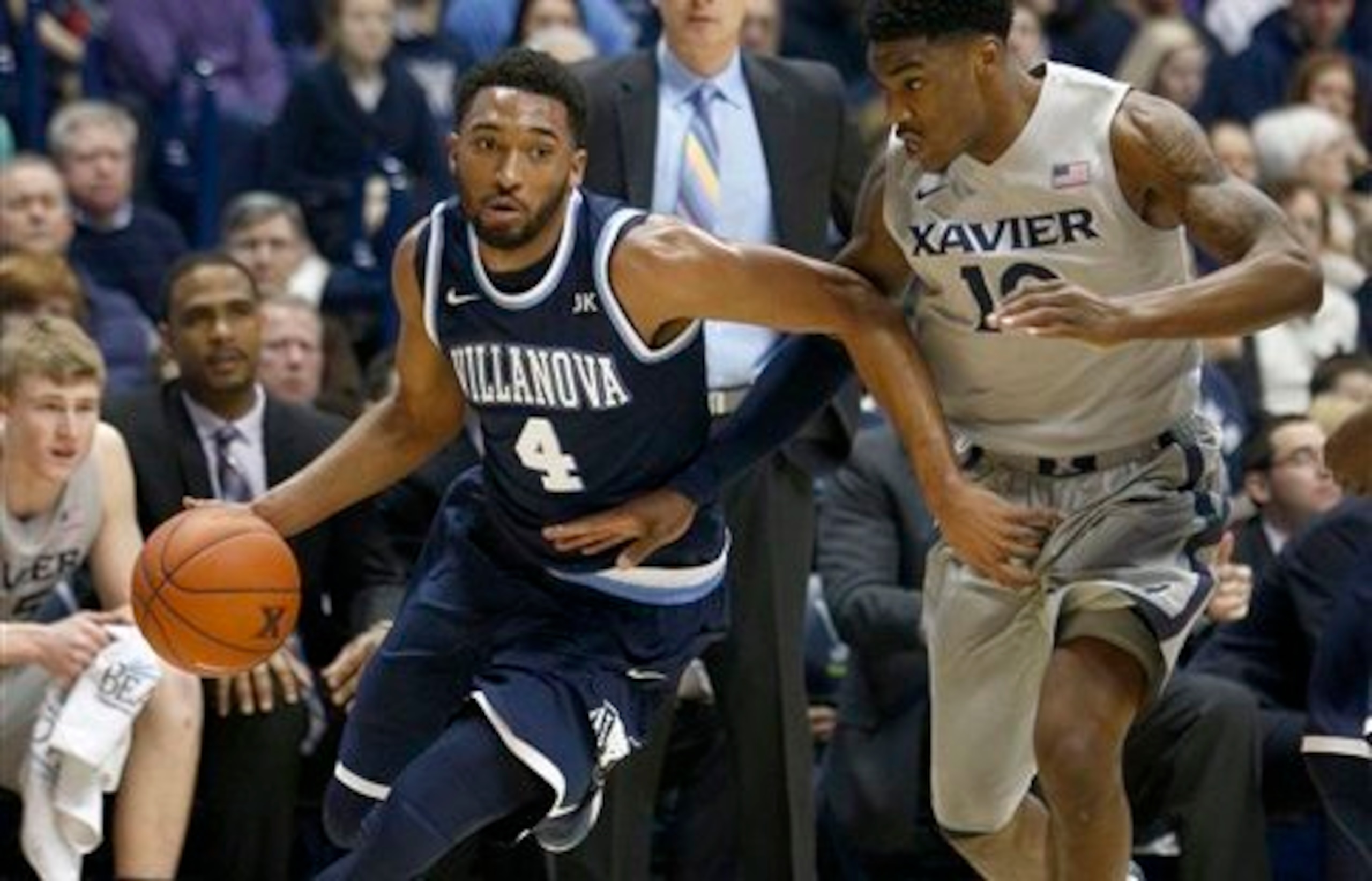
Physical Tools/Athleticism
Darrun Hilliard has adequate size at 6'6", 215 pounds, but he's fairly average athletically. He can play above the rim when given the momentum to rise up, though he isn't particularly quick or explosive.
Scoring
Hilliard averaged exactly 14.3 points per game for the second straight year, having added little to his offensive repertoire. Still, he can clearly put the ball in the hole. He's a finesse scorer who can handle the ball and knock down difficult shots away from the basket. Hilliard spends most of his time on the perimeter, having averaged just 2.9 free-throw attempts per game as a senior. His field-goal percentage also fell to 44.0, though his .576 true shooting percentage from this past year is still respectable.
Shooting
Hilliard has a good-looking lefty stroke that's become his offensive bread and butter. He hit 3.1 threes per 40 minutes at a convincing 38.7 percent clip.
Defensive Potential
Hilliard was an effective wing-defender at the college level. There is nothing special about his tools, but his defensive IQ is sharp. Defense will be part of the package he offers to NBA teams.
Upside
Hilliard's value comes in the form of shot-making. He's also a smart, capable defender. He'll have the potential to find a role as a low-end, role-playing reserve.
Overall
He didn't receive an NBA combine invite, and he hasn't generated much buzz. But it's impossible to ignore Hilliard's shot-making ability and defense. He'll be a prospect to watch in summer league if he doesn't get picked in June.
29. Olivier Hanlan, Boston College, 6'4", PG, Junior
73 of 101
Size for Position/Athleticism
At 6'4", Olivier Hanlan is a bit undersized for a 2-guard, but at the point, where he's improved, he can pose some problems. Though not an explosive athlete, he's quick enough to get to his spots on the floor and strong enough to take contact.
Facilitating/Passing
Hanlan was Boston College's go-to scorer as well as its primary playmaker. As a junior, he raised his assist percentage to 29.1 percent from 20.1 percent as a sophomore. With the ability to handle the ball, change direction and lose defenders, he can draw help and find open finishers and shooters on the move. Hanlan is still more of a scorer than a distributor, but he's threatening enough off the dribble to bring the ball up and initiate the offense.
Scoring
A scoring machine in the ACC, Hanlan averaged over 20 points (20.8) per for 40 minutes for the second consecutive year. He's a tough cover attacking the basket and over ball screens, where he can drive, pull up or step back into a makeable jumper.
Shooting
Hanlan nailed 2.2 threes per 40 minutes at a 35.3 percent clip. He's threatening from outside, though his mechanics are suspect. He might need to make some adjustments to improve his range and consistency.
Upside
He isn't a pure facilitator, while a lack of explosiveness may limit his effectiveness offensively. But Hanlan is skilled enough with the ball to make a case for himself as a potential playmaking reserve.
Overall
Hanlan struggled at the combine and hasn't generated much buzz since. He should still be considered a second-round option in the 45-60 range. Plenty of teams could use guards who can score and create, even if it's in a 10-minute-per-game role.
28. Trey Lyles, Kentucky, 6'10", PF, Freshman
74 of 101
Size for Position/Athleticism
At 6'10 ¼", 241 pounds, Trey Lyles has good size and even better mobility for a power forward. He's not overly explosive, but he's athletic and consistently demonstrates eye-opening body control as a finisher.
Scoring/Shooting
Lyles is very polished offensively, though you wouldn't necessarily refer to him as either a scorer or a shooter. He averaged 15.1 points per 40 minutes (low for a top-20 power forward), showing the ability to finish around the basket and knock down mid-range shots. Lyles hit 39.2 percent of his two-point jumpers, per Hoop-Math.com, but his range didn't extend past the 20-foot mark, and he made just four of 29 three-point attempts. His field-goal percentage of 48.8 percent was also on the low side.
Rebounding
Lyles grabbed 9.1 boards per 40 minutes, which is neither great nor alarming. He can grab the rebounds in his area, but you wouldn't peg him as someone capable of dominating the glass. His 13.3 total rebound percentage was fairly low.
Defensive Activity/Potential
He's a high-IQ defender, and he moves well. However, there are questions as to whether he's strong enough to challenge down low (0.8 blocks per 40 minutes) or quick enough to defend the perimeter.
Upside
Lyles isn't a can't-miss athlete, but his mid-range jumper, low-post skills and mobility are NBA-friendly. He projects as a pick-and-pop power forward who runs the floor and finishes the plays that find him in the offense.
Overall
Credit Lyles' lack of production to a limited role in Kentucky's loaded lineup. His NBA outlook actually seems a lot brighter than his NBA Draft 100 score, given his size, skill level and intelligence. He's expected to generate late-lottery interest without falling outside the top 20.
27. Cliff Alexander, Kansas, 6'9", PF, Freshman
75 of 101
Size for Position/Athleticism
As a forward who is super athletic with a giant 7'3 ½" wingspan and strong 239-pound frame, the only knock on Cliff Alexander physically is the fact that he measured 6'8 ½" at the combine. Otherwise, Alexander is a monster.
Scoring/Shooting
Alexander lacks offensive polish in just about every area across the board. His post game is fairly basic, and he hasn't shown much in terms of a jumper. Alexander does most of his damage off finishes, rebounds and transition opportunities. Though he averaged 16.2 points per 40 minutes, creating his own shot is not a strength of his.
Rebounding
Rebounding looks like Alexander's most appealing strength. His energy, athleticism and length translated to 12.0 boards per 40 minutes and a solid 16.8 total rebound percentage.
Defensive Activity/Potential
Alexander's on-ball defense and technique weren't very impressive, but he did block 3.0 shots per 40 minutes. Alexander can be active and disruptive around the basket.
Upside
Undersized without much of an offensive game, Alexander projects more as an energizer than a scorer. His ceiling just isn't as high as it appeared before the season. Still, his ability to finish, rebound and make plays on loose balls should hold NBA value.
Overall
Alexander missed Kansas' final nine games with eligibility issues. Before that, he had practically fallen out of coach Bill Self's rotation. He could get a late-first-round team that thinks he's a value pick to bite, but the second round seems like a safer projection. Alexander isn't ready to make an immediate impact in the pros.
26. Jordan Mickey, LSU, 6'8", PF, Sophomore
76 of 101
Size for Position/Athleticism
Jordan Mickey is an above-average athlete with a 37 ½-inch max vertical. He's slightly undersized at 6'8", but he helps make up for a lack of height with a 7'3 ¼" wingspan. Mickey also has a rock-solid frame at 238 pounds.
Scoring/Shooting
Mickey's offensive game improved over the past year, when he averaged 17.7 points per 40 minutes and made 39.7 percent of his two-point jumpers, per Hoop-Math.com. Down low, he doesn't quite have go-to moves, but he does a nice job of finding ways to score over the shoulder. Mickey made only one three-pointer in two years, and he'll need to continue improving his mid-range jumper, especially given his below-average size for the interior.
Rebounding
Mickey's excellent instincts around the rim translated to 11.4 rebounds per 40 minutes and 49 putbacks, per Hoop-Math.com.
Defensive Activity/Potential
Mickey's core strength is shot-blocking, as his timing is simply unteachable. He led the country with 3.6 blocks per game (4.1 per 40 minutes). Mickey just has a natural nose for the ball, along with the length and hops to make plays on it.
Upside
Improving his jumper will be huge for Mickey, who lacks the size to consistently generate offense in the post and paint. However, between his defense, rebounding and growing offensive game, his versatility could carry him to a long career as a high-end reserve.
Overall
Mickey's strong showing at the combine may have landed him on late-first-round radars. Though his upside looks limited, you get the impression that his game has a good shot of translating to a bench role. He should be snatched up within the first 10 picks of Round 2.
25. Rashad Vaughn, UNLV, 6'5", SG, Freshman
77 of 101
Size for Position/Athleticism
Rashad Vaughn has the 6'5" size working for him. Unfortunately, he's an average athlete with limited explosiveness. He shot just 47.1 percent at the rim in the half court, per Hoop-Math.com. His 6'6" wingspan is also underwhelming.
Scoring
Vaughn lived up to his reputation as a pure scorer out of high school, having averaged 22.1 points per 40 minutes in his first year at UNLV. He finished second among freshmen in per-game scoring, trailing only Ohio State's D'Angelo Russell. Vaughn is a threat to create his own shot from all over the floor, though he does most of his work on the perimeter. On the downside, many of his shots are of the low-percentage variety. He finished with an uninspiring .547 true shooting percentage.
Shooting
He was fairly inconsistent, but it's tough to argue against his 2.9 three-pointers per game on 38.3 percent shooting. Vaughn has NBA-caliber range and shot-making ability.
Passing/Playmaking
He averaged 1.9 assists per 40 minutes, doing little to sell himself as a playmaker.
Upside
A lack of burst, which prevents him from blowing by defenders or finishing at the rim, limits his upside. On the bright side, he's still just 18 years old. And his 6'6" size and high offensive skill level are encouraging. Gary Neal would be a good baseline comparison for Vaughn, who projects as a scorer off the bench.
Overall
Vaughn's stock should rise during workouts, where he'll showcase his infinite range and silky-smooth jumper. Look for him to generate interest starting at the back end of the lottery.
24. Montrezl Harrell, Louisville, 6'8", PF, Junior
78 of 101
Size for Position/Athleticism
Montrezl Harrell is a powerful, explosive forward who blends strength with above-the-rim athleticism. That combination translated to him finishing at an 80.9 percent clip at the rim this past season, per Hoop-Math.com. However, he's a bit undersized at 6'8", though his 7'4 ¼" wingspan and tremendous motor help make up for a few inches in height.
Scoring/Shooting
Harrell isn't a polished post scorer, and he's now struggled with his jumper for three straight years. He averaged 17.9 points per 40 minutes, doing most of his damage as a finisher off dump passes, lobs, cuts, offensive rebounds and transition opportunities. But he made just nine of 37 threes and shot below 60 percent from the free-throw line for the third straight season.
Rebounding
He's a physical, active presence on the glass, though his numbers dipped during his junior season (14.5 total rebound percentage, 10.4 rebounds per 40 minutes). Still, he can provide activity and second-chance opportunities, having notched 43 putbacks as a junior, per Hoop-Math.com. However, the Kenneth Faried comparisons should end with his college career.
Defensive Activity/Potential
Harrell was a decent defensive playmaker, having blocked 1.4 shots and racked up 1.1 steals per 40 minutes. His defensive contributions came mostly in the form of physical play and toughness.
Upside
Harrell hasn't improved his shooting touch from outside, and without much of a post game for an undersized power forward, he's not likely to do much scoring in the NBA. However, his ability to finish, pound the glass and make things happen in the paint could hold value in an energizer role.
Overall
Harrell will draw looks in the late teens, but odds are that he winds up going somewhere in the 20s. He just doesn't offer enough upside to trigger a reach.
23. Jarell Martin, LSU, 6'9", PF, Sophomore
79 of 101
Size for Position/Athleticism
Jarell Martin is a stud athlete with explosive hops and a strong 6'9 ¼", 239-pound frame. The only knock on him physically is his underwhelming 6'9" wingspan.
Scoring/Shooting
Martin is a tough cover, given his ability to face up and attack or use his strength to bully defenders around the basket. He averaged 19.3 points per 40 minutes this past season while shooting 50.9 percent overall. Martin is capable in the mid-range, having made 50 two-point jumpers, per Hoop-Math.com, but he hit only 14 of his 52 three-point attempts and shot 69 percent from the free-throw line. He also lacks a back-to-the-basket post game.
Rebounding
Inconsistent under the boards, Martin had spurts when he controlled the glass and others when he wasn't a factor. His 10.5 rebounds per 40 minutes look better than his 14.1 rebound percentage. Keeping his motor revved will be the key moving forward.
Defensive Activity/Potential
Martin doesn't offer much defensively. He finished with 23 blocks in 33 games as a sophomore, showing questionable instincts both on and off the ball.
Upside
Martin offers intriguing upside fueled by athleticism, quickness, power and inside-out versatility. But without a post game, he'll need to improve his shooting range as well as his overall decision-making and energy.
Overall
Martin's lack of a true position should keep teams from reaching on him in the top 20. It may even make him vulnerable to slipping outside the first round. Look for Martin to go somewhere in the 20-40 range.
22. Jerian Grant, Notre Dame, 6'5", PG, Senior
80 of 101
Size for Position/Athleticism
Jerian Grant has excellent 6'5" size and good quickness. He can climb the ladder and get up above the rim, though calling him explosive would be a stretch. Grant ultimately has the size and skill set to play off the ball at the 2, but he's a bigger mismatch at the point, a position he's become qualified to play full time.
Facilitating/Passing
Grant's facilitation stood out more than anything this past year. He averaged 6.7 assists to just 2.2 turnovers in 37.1 minutes per game, which translated to the No. 8 pure point rating (6.2) in the country, per RealGM.com. Grant was a playmaking machine off ball screens, where he flashed terrific vision and passing instincts on the move.
Scoring
His scoring attack is behind his passing game, but Grant can still put up points. He averaged 17.8 of them per 40 minutes, showing the ability to make shots from all three levels within the defense. Grant's 59.2 percent true shooting percentage, per Sports-Reference.com, is very strong for a guard. He finished at the rim at a 73.1 percent clip, per Hoop-Math.com, and flashed the ability to separate one-on-one into mid-range jumpers (40.3 percent on two-point jumpers).
Shooting
Grant wasn't as accurate from downtown (31.6 percent) but did make 50 threes in 38 games. At this point, he's capable from outside, but don't consider Grant a shooter just yet.
Upside
Grant will be 23 years old by the start of next season, so it's fair to question how much he'll improve from here. Without any major holes in his game, it's certainly possible his strengths continue to strengthen. Even if they don't, his size, ball-handling and passing skills should lead to a backup gig at the very least. But having the versatility to play either backcourt position improves his odds of finding a full-time role. Grant has starting NBA potential if he can land on a team with an opening in the backcourt.
Overall
Grant could go anywhere from the late lottery to the late-first round. He's one of the rookies you'd expect can help a team right away. Look out for the Thunder and Houston Rockets, contenders that may be looking for additional ball-handlers for 2015-16.
21. Sam Dekker, Wisconsin, 6'9", SF, Junior
81 of 101
Athleticism/Physical Tools
In addition to possessing above-average athleticism, Sam Dekker has terrific 6'9" size with a 6'11.5" wingspan. He's also added significant strength to his frame over the years, weighing in at nearly 220 pounds at the combine.
Scoring
Dekker shouldn't be considered a go-to scorer, but he did an excellent job of picking up buckets opportunistically off drives, cuts and spot-ups during his junior year at Wisconsin. He was very efficient inside the arc, knocking down 63.9 percent of his two-point attempts. Dekker averaged 17.9 points per 40 minutes while sporting a .605 true shooting percentage.
Shooting
Dekker was erratic from outside for the second straight year. He made 50 threes, so he's certainly capable, but he finished at 33.1 percent after hitting just 32.6 percent as a sophomore. Becoming consistent as a long-range shooter will be the key to his NBA success.
Defensive Potential
He isn't a lockdown defender, but his size and mobility should allow him to take on the game's bigger wings. Coaches may also be able to stick him on hybrid stretch 4s given his 6'9" height.
Upside
The inability to create lowers his ceiling, but Dekker flashed promising role-player potential stemming from his versatility, shot-making ability and basketball IQ.
Overall
Dekker's NCAA tournament breakout launched him into the lottery conversation. He's more of a safe bet than an upside pick. He'd work well on a team like the Oklahoma City Thunder, who would allow him to play to his strengths and away from his weaknesses as a playmaker.
20. Devin Booker, Kentucky, 6'6", SG, Freshman
82 of 101
Size for Position/Athleticism
Devin Booker has a solid 2-guard body at 6'6", 206 pounds. He's a decent athlete with better lateral quickness than vertical explosiveness. Booker had the fastest lane agility and shuttle-run times at the combine, though he only got up for a 34½" max vertical. However, his body control on the move allows him to finish below the rim.
Scoring
Booker doesn't create his own shot well in the half court. He can take a dribble or two and pull up, but he rarely gets to the basket. He averaged just 1.7 free-throw attempts in 21.5 minutes, and he only made 13 shots at the rim in the half court all season, per Hoop-Math.com. However, he averaged 18.7 points per 40 minutes. Booker is proficient as an off-ball scorer, with the ability to make shots off curls, cuts, fast breaks and spot-ups.
Shooting
With clean shooting mechanics, Booker hit 2.8 threes per 40 minutes on 41.1 percent shooting. He gets strong elevation and balance, and he'll have the size to get his shot off in the pros. His jumper will be his go-to weapon in the NBA.
Playmaking
Booker's inability to beat defenders off the dribble limits his playmaking ability. He totaled just 42 assists in 38 games.
Upside
The inability to create against a set defense keeps his ceiling in check. However, Booker has complementary-scoring potential in the form of J.J. Redick.
Overall
Plenty of teams are looking for shooting, starting with the Detroit Pistons at No. 8. Don't expect Booker to fall past the Boston Celtics at No. 16. He'll have the best chance of succeeding if he winds up on a playoff team surrounded by playmakers and scorers.
19. Richaun Holmes, Bowling Green, 6'10", PF, Senior
83 of 101
Size for Position/Athleticism
Richaun Holmes has an NBA body and tools consisting of a 6'9 ½", 243-pound frame, 7'1 ½" wingspan and 9'0" reach. He's athletic and quick, which makes him tough for most big men to contain.
Scoring/Shooting
Holmes had a breakout year offensively, having averaged 20.5 points per 40 minutes and shot 39.2 percent on two-point jumpers, per Hoop-Math.com. He even hit 18 of 43 threes. Holmes can score with his back to the basket or facing up in the mid-range, where his first step and body control allow him to attack and finish on the move. He also consistently picks up buckets off dump passes, cuts and offensive boards.
Rebounding
Holmes is a strong rebounder who pulled in 16.3 percent of the available boards while he was on the floor. He has a live motor as well as the length and athleticism that should translate to rebounds at every level.
Defensive Activity/Potential
The MAC Defensive Player of the Year, Holmes' 11.2 block percentage ranks with some of the best in the country.
Upside
Holmes' gradual improvement suggests there could be more to come. He has textbook physical tools, a developing inside-out game and tremendous defensive instincts. The competition he faced wasn't great, but assuming Holmes goes in the second round, he could be one of the top value picks in this draft.
Overall
Holmes is on the rise, and though the first round might be a stretch, he could be one of the draft's biggest second-round sleepers.
18. Rakeem Christmas, Syracuse, 6'10", C, Senior
84 of 101
Size for Position/Athleticism
Rakeem Christmas measured just less than 6'10" at the combine, but his spectacular 7'5" wingspan helps make up for a few inches in height. He also has a strong basketball body at 243 pounds. He moves better running up and down the floor than he does side to side. He's an above-average athlete for a center, though his 29" standing vertical ranked in the middle of the pack at the combine.
Scoring/Shooting
After three years of being an afterthought in Syracuse's offense, Christmas emerged as a go-to option in 2014-15, averaging 20.4 points per 40 minutes. He developed terrific back-to-the-basket footwork and learned to finish with both hands. Christmas has the ability to separate into high-percentage shots over his shoulder or attack using his first step and a dribble. He didn't take many jumpers, but when given the green light, he knocked down a handful of them in five-on-five action at the combine.
Defense/Rim Protection
Christmas blocked a lot of shots as an anchor in the zone. We didn't see him often in one-on-one situations, but his 8.5 percent block percentage and 2.9 blocks per 40 minutes are both tremendous. His length should come in handy for him defensively in the pros, but he'll have to make a big adjustment moving from zone to man-to-man. He averaged 3.9 fouls per 40 minutes.
Rebounding
He was a good rebounder at Syracuse—not a great one. Christmas put up a 14.9 percent total rebound percentage and pulled in 10.6 boards per 40 minutes as a senior.
Upside
Christmas will turn 24 in December, so it's fair to question how much he'll improve. Then again, you don't typically see players break out at 23 years old, either. He projects as a physical backup big who can man the paint, score down low and occasionally knock down jumpers.
Overall
Christmas has put himself on the late-first-round radar for teams that are searching for immediate frontcourt help. The Brooklyn Nets, whom Christmas has worked out for, could be a team to watch at No. 29.
17. Kelly Oubre, Kansas, 6'7", SF, Freshman
85 of 101
Athleticism/Physical Tools
Kelly Oubre is an electric athlete with above-the-rim bounce and quickness along with a 7'2" wingspan. He will just need to add bulk to his skinny 203-pound frame.
Scoring
At this point, Oubre is more of a shot-maker than a scorer. He isn't a particularly threatening one-on-one player, mostly picking up buckets off spot-ups, slashes and line drives with the game slowed down. He's at his best in transition, where he can slice to the rack and finish.
Shooting
Oubre wasn't overly consistent from outside but has a very promising shooting stroke with a clean, lefty release. He made 34 threes in 36 games at an average 35.8 percent clip. Oubre's jumper should eventually become a major weapon in his offensive arsenal.
Defensive Potential
Oubre struggled at times with defensive awareness and energy, but his natural talent and tools are tough to argue with. He's quick, extremely long, and at 6'7", he'll be able to match up with 2s and 3s. Oubre will just need to improve his motor and IQ.
Upside
Oubre isn't quite ready to make an immediate NBA impact after playing just 21.0 minutes per game as a freshman. But between his physical tools, top-notch athleticism and shot-making ability, he offers starter potential as a two-way wing.
Overall
Oubre is a lottery talent who just doesn't have the production to show for it. If he goes within the top 14, which is possible, it's due to his upside. However, the fact he struggled with shooting inconsistency, shot creativity and effort could result in a mini-slide into the late teens.
16. Myles Turner, Texas, 6'11", C, Freshman
86 of 101
Size for Position/Athleticism
Myles Turner's measurements are strong, specifically his 6'11 ½" size and giant 7'4" wingspan. He has great hands, but his gait has raised questions. He doesn't exactly glide down the floor or explode off the ground. He could also stand to add muscle, as he struggled playing through contact.
Scoring/Shooting
Turner averaged 18.3 points per 40 minutes as a freshman, though inconsistency plagued him throughout the year. Some of it had to do with his role, but his preference for the perimeter also factored in. On one hand, Turner has a promising shooting stroke, having made 17 threes and shot 83.9 percent from the free-throw line. He can catch, square up and shoot from just about every spot on the floor, whether he's spotting up or working from the high post. On the other hand, he rarely pounded it down low, and though his jumper is smooth, it was also erratic. Turner just took too many tough shots for a player who was usually the tallest on the floor.
Defense/Rim Protection
Turner's 12.3 percent block percentage is one of the top numbers in the country. His blend of length and instincts translated to 4.7 blocks per 40 minutes. He was a big shot-blocker in high school, and it carried over to his one-year stint at Texas. He has intriguing defensive potential as a rim protector as a pro.
Rebounding
Though he lacks strength and explosiveness, it's tough to argue with Turner's numbers on the glass, as he averaged 11.8 boards per 40 minutes. He gobbled up a ton of loose balls, even though he shared the paint with another center in Cameron Ridley.
Upside
There aren't many big men who can stretch the floor and protect the rim. If Turner continues to improve his shooting stroke, ball skills and body, we could be talking about one of the more unique players in the NBA. Otherwise, he could end up stuck between the 4 and 5 positions, without the strength to bang in the paint or mobility to play power forward.
Overall
Turner will need a year in the D-League or watching from the bench. He presents somewhat of a risk in the top nine, but he could potentially offer great value after that. He should generate real consideration, starting with the Miami Heat at No. 10.
15. Justin Anderson, Virginia, 6'6", SF, Junior
87 of 101
Physical Tools/Athleticism
Justin Anderson has above-the-rim bounce and a diesel 231-pound frame. That combination of strength and athleticism fuels his effectiveness and drives his potential.
Scoring
Anderson is a shot-maker, not a scorer. He doesn't handle the ball or create, having made only 3.1 two-point field goals per 40 minutes as a junior. Anderson did most of his damage as a shooter, cutter and line-driver, which is what he projects to do at the next level, too.
Shooting
After struggling as a shooter through two years at Virginia, everything seemed to click for Anderson in 2014-15. He shot a lights-out 45.2 percent from downtown, made 2.6 threes per 40 minutes and registered an impressive .610 true shooting percentage. In one offseason, he changed the mechanics on his jumper and consequently improved his NBA outlook dramatically.
Defensive Potential
Anderson is a physical defender who can keep his man in front of him. He'll have the ability to give both 2s and 3s trouble on the wing with his strength and relentless motor.
Upside
If it turns out Anderson's three-ball is legitimate, he's a good bet to last and potentially start down the road as a three-and-D wing. But given how limited he is offensively without the jumper, his margin for error as a shooter will be small.
Overall
Anderson has emerged as a first-round prospect. An inability to create will keep him out of the lottery, but for teams seeking out shooting and toughness—perhaps the Chicago Bulls at No. 22—Anderson should receive heavy consideration.
14. Robert Upshaw, Washington, 7'0", C, 1994
88 of 101
Size for Position/Athleticism
Robert Upshaw put up some can't-miss measurements at the combine, where he came in at 7'0" and had the biggest wingspan (7'5 ½"), standing reach (9'5") and hands (10" by 11"). Though not an explosive athlete, he moves well and plays above the rim.
Scoring/Shooting
Upshaw averaged 17.6 points per 40 minutes on 59.3 percent shooting this past season. He scored mostly off catch-and-finishes, cuts around the basket and putbacks. He didn't show off a great shooting stroke, having knocked down just 43.4 percent of his free throws, or an advanced post game. But he was efficient around the basket without playing outside his comfort zone.
Defense/Rim Protection
Upshaw was leading the country in shot-blocking before getting dismissed from Washington in January. He was putting up some jaw-dropping numbers: 7.2 blocks per 40 minutes and a 17.4 percent block percentage. He has the physical tools and defensive instincts to become a feared NBA rim protector.
Rebounding
He was also a monster on the glass, given all the space he takes up down low. Upshaw pulled in 13.1 rebounds per 40 minutes and registered an outstanding 18.7 percent total rebound percentage.
Upside
Having been kicked out of Fresno State in 2013 and Washington in 2015, there are obvious concerns regarding his character. He's also not a top-flight athlete and remains raw offensively. He'll enter the draft as a major risk, but Upshaw also offers plenty of potential reward as a defensive anchor. He's 21 years old, so he still has time to grow and mature.
Overall
Upshaw is a first-round talent with red flags that may keep teams from even considering him in the second round. But all it takes is one general manager to overlook the concerns and covet his upside. No prospect's draft range is more unpredictable than Upshaw's. A patient team may hope Upshaw suddenly matures the way Hassan Whiteside did with the Miami Heat.
13. Frank Kaminsky, Wisconsin, 7'1", C, Senior
89 of 101
Size for Position/Athleticism
Robert Upshaw put up some can't-miss measurements at the combine, where he came in at 7'0" and had the biggest wingspan (7'5 ½"), standing reach (9'5") and hands (10" by 11"). Though not an explosive athlete, he moves well and plays above the rim.
Scoring/Shooting
Upshaw averaged 17.6 points per 40 minutes on 59.3 percent shooting this past season. He scored mostly off catch-and-finishes, cuts around the basket and putbacks. He didn't show off a great shooting stroke, having knocked down just 43.4 percent of his free throws, or an advanced post game. But he was efficient around the basket without playing outside his comfort zone.
Defense/Rim Protection
Upshaw was leading the country in shot-blocking before getting dismissed from Washington in January. He was putting up some jaw-dropping numbers: 7.2 blocks per 40 minutes and a 17.4 percent block percentage. He has the physical tools and defensive instincts to become a feared NBA rim protector.
Rebounding
He was also a monster on the glass, given all the space he takes up down low. Upshaw pulled in 13.1 rebounds per 40 minutes and registered an outstanding 18.7 percent total rebound percentage.
Upside
Having been kicked out of Fresno State in 2013 and Washington in 2015, there are obvious concerns regarding his character. He's also not a top-flight athlete and remains raw offensively. He'll enter the draft as a major risk, but Upshaw also offers plenty of potential reward as a defensive anchor. He's 21 years old, so he still has time to grow and mature.
Overall
Upshaw is a first-round talent with red flags that may keep teams from even considering him in the second round. But all it takes is one general manager to overlook the concerns and covet his upside. No prospect's draft range is more unpredictable than Upshaw's. A patient team may hope Upshaw suddenly matures the way Hassan Whiteside did with the Miami Heat.
12. Christian Wood, UNLV, 6'11", PF, Sophomore
90 of 101
Size for Position/Athleticism
Christian Wood has tremendous 6'10 ½" size and a 7'3 ¼" wingspan for a power forward. He's a bouncy athlete with a quick first step and good body control. However, at 216 pounds, a lack of strength is a serious concern.
Scoring/Shooting
Wood had a number of offensive explosions this year that highlighted his offensive upside. He averaged 19.3 points per 40 minutes, showing the ability to face up from outside and either shoot or attack his man. Wood made 25 threes and shot 44.8 percent on two-point jumpers, per Hoop-Math.com, along with 73.6 percent from the free-throw line. Unfortunately, Wood's skinny frame makes it tough for him to finish after contact or separate with his back to the basket.
Rebounding
Wood was a constant on the glass. Despite limited strength, his above-the-rim presence translated to 12.2 boards per 40 minutes and an excellent 17.0 total rebound percentage.
Defensive Activity/Potential
Wood was active defensively, having blocked 3.3 shots per 40 minutes. Between his foot speed, size, leaping ability and length, he has promising tools for pick-and-roll coverage and rim protection. On the downside, his steal rate was incredibly low (11 steals in 33 games), and he didn't display the sharpest defensive IQ.
Upside
Wood has starter potential powered by mismatch physical tools, offensive versatility and above-average athleticism. But without the bulk to bang down low or the polished skills for the perimeter, he's also a bit of a risk.
Overall
His NBA Draft 100 score isn't quite indicative of his draft stock. Wood is still raw and needs a year to build his body and refine his skills. He could go to a gambler in the mid-first round, or he may slip into the 25-35 range.
11. Bobby Portis, Arkansas, 6'11", PF, Sophomore
91 of 101
Size for Position/Athleticism
At 6'10 ½" and 246 pounds with a 7'2" wingspan, Bobby Portis has an NBA profile for a power forward. However, he isn't overly explosive or light on his feet and can struggle to separate from defenders as a driver and leaper. Portis' 31 ½-inch max vertical was one of the lower numbers at the combine.
Scoring/Shooting
Portis is coming off a monster year offensively, having averaged 23.4 points per 40 minutes while shooting 53.6 percent overall. Highly skilled, he can separate into shots in the post or spread the floor as a pick-and-pop spot-up shooter. With a natural stroke that should only improve, he knocked down 37.6 percent of his two-point jumpers, per Hoop-Math.com, as well as 14 of his 30 three-point attempts.
Rebounding
Portis made a significant leap as a rebounder in 2014-15. He pulled in 1.9 more rebounds per 40 minutes than he did as a freshman and increased his total rebound percentage to a strong 16.8 percent from an uninspiring 13.5 percent.
Defensive Activity/Potential
Despite standout physical tools, Portis blocked just 50 shots in 36 games. He doesn't get off the ground very high and isn't likely to become a factor in rim protection.
Upside
Portis' skill set is tailor-made for the NBA 4, where he can shoot over defenses in the mid-range and operate with his back to the basket from the low or high post. However, a lack of athleticism and defensive potential limits his upside. Still, Portis is one of the safer first-round prospects with the talent to become a solid NBA starter.
Overall
Portis could be an under-the-radar option for teams drafting late in the lottery. The Utah Jazz at No. 12 and Atlanta Hawks at No. 15 could be teams to watch. Don't bet on Portis falling past the Toronto Raptors at No. 20.
10. Willie Cauley-Stein, Kentucky, 7'0", C, Junior
92 of 101
Size for Position/Athleticism
With 7'0 ½," size and a 7'3" wingspan, Willie Cauley-Stein has ideal physical tools to match an elite level of athleticism. You just don't see players his size who can run, jump and slide side to side like him, who is explosive leaping vertically and lightning-quick laterally.
Scoring/Shooting
Cauley-Stein lacks ball skills and the ability to create his own shot. Occasionally, we'll see a jump hook or short-range jumper, but he doesn't project as a center whom coaches will run plays through. Instead, his offensive contributions come in the form of easy buckets, whether they are dunks off dump passes, lobs, offensive rebounds or transition opportunities. He shot at least 57 percent from the floor for the third straight season.
Defense/Rim Protection
Cauley-Stein is arguably the best all-around defender in this draft. While he has the foot speed to switch onto guards, he projects as a rangy, disruptive rim protector. He registered a 7.1 percent block percentage, which was actually the lowest of his career. Cauley-Stein spent more time defending the perimeter this year with Karl-Anthony Towns down low, but he still managed to block 2.6 shots per 40 minutes.
Rebounding
He finished his junior season with a 14.5 percent total rebound percentage, which is right around his sophomore and freshman numbers. Cauley-Stein doesn't carve out space, but his size and leaping ability translate to 50/50-ball victories.
Upside
Centers don't need a refined offensive game when they're as big, athletic and good defensively as Cauley-Stein is. He reminds me of Nerlens Noel on defense and DeAndre Jordan on offense. I'd count on Cauley-Stein eventually emerging as a long-term starter at center.
Overall
According to DraftExpress' Jonathan Givony, Cauley-Stein's 2014 ankle injury hasn't healed properly, and it has some teams hesitant. Still, don't expect him to get by Indiana at No. 11. If he winds up on a team with established talent to play off, he'll have a great chance of thriving.
9. Stanley Johnson, Arizona, 6'7", SF, Freshman
93 of 101
Athleticism/Physical Tools
Stanley Johnson already looks the part of an NBA wing with 6'7" size and a 242-pound frame. He has nearly 45 pounds on someone like Andrew Wiggins, who plays the same position. Johnson is also an above-average athlete, though he's isn't overly explosive.
Scoring
As a freshman, Johnson emerged as Arizona's go-to option, averaging 19.4 points per 40 minutes. He can score from all three levels, with the ability to spot up, pull up or attack the basket and get to the line. Moving forward, he'll need to improve his shot selection and creation against a set defense. He also had trouble finishing at the rim, shooting just 52.7 percent, per Hoop-Math.com.
Shooting
Johnson cooled off down the stretch but finished the year shooting a respectable 37.1 percent from downtown. He made 1.6 threes per 40 minutes, looking comfortable and natural as a shooter both off the catch and the dribble. After his freshman season, scouts have to feel good about Johnson's shooting potential.
Defensive Potential
Johnson will be able to match up with any guard or wing in the league. And when he's engaged, the Arizona product can really lock down. He'll just need to stay engaged and aware to maximize his monster defensive potential.
Upside
Johnson is rock solid in almost every facet of the game. He projects as a two-way wing and an overall safe bet thanks to his defensive tools, a promising jumper and developing offensive repertoire.
Overall
With a handful of lottery teams in the market for a wing, Johnson could really go anywhere from Nos. 5-10. He's one of the safest options in this year's field. He'll also become a serious value pick if he ends up going to Charlotte at No. 9 or the Miami Heat right after.
8. Mario Hezonja, Croatia, 6'8", SG, 1995
94 of 101Size for Position/Athleticism
Mario Hezonja possesses a near flawless blend of 6'8" size, a strong frame, long arms and explosive athleticism. And it shows up at both ends of the floor, whether it's on a driving dunk in the half court or a chase-down block on defense. He projects as the ultimate mismatch at the 2-guard position, which he should be able to play based on his versatile skill set.
Scoring
Playing at a high level against pros and quality competition, Hezonja, 20 years old, doesn't get the opportunity that most prospects received in college. Still, he's showcased the ability to create shots off the dribble. He has even been used as a pick-and-roll ball-handler, given his ability to drive, pull up or pass. He's averaging 15.2 points per 40 minutes with limited touches. And he's managed to register a strong .570 true shooting percentage, per RealGM.
Shooting
Even without the opportunity to gain much shooting rhythm, Hezonja shoots 37.3 percent from downtown on 2.8 threes made per 40 minutes. He even shot 8-of-8 from downtown in a game back in February. He has deep range, and he's more than just a spot-up threat, as he has the ability to shoot off step-backs and off-ball movement.
Playmaking
Hezonja's 3.04 assists per 40 minutes don't tell the whole story. He's an excellent ball-handler with good vision and passing instincts.
Upside
Perfect physical tools, spectacular athleticism, a dangerous jumper and versatile scoring attack fuel some can't-miss upside. If Hezonja continues polishing up his one-on-one game, we could eventually be talking about the top wing from the class.
Overall
He's a top-five talent in the 2015 draft. Whether he actually goes top five will come down to how much the New York Knicks at No. 4 and Orlando Magic at No. 5 think he'll fit into their plans. Otherwise, expect the Sacramento Kings, Denver Nuggets or Detroit Pistons to take him in the top eight.
7. Emmanuel Mudiay, China, 6'5", PG, 1996
95 of 101
Size for Position/Athleticism
Emmanuel Mudiay aces the NBA eye test with a terrific 6'5", 200-pound frame, a 6'8" wingspan and above-the-rim athleticism. He packs great burst, lightning quickness, strength and mismatch size.
Facilitating/Passing
Mudiay is a true point guard who can set the table and create shots for teammates off the dribble. He's at his best out of pick-and-rolls, where he can hit the roll man or pop, while his speed and vision in the open floor leads to easy buckets. In 12 games overseas, Mudiay registered a 31.8 percent assist percentage (7.5 assists per 40 minutes). However, decision-making has been a well-documented weakness since his days in high school. And it's still the case today, as he turned the ball over 3.3 times in 31.5 minutes a game overseas.
Scoring
Mudiay is at his best attacking the rim off ball screens and transition opportunities. He can make shots in a variety of different ways around the basket and key. He's also a capable mid-range shooter and scorer in the runner-and-floater game. There isn't much defense played in China, but Mudiay's 22.8 points per 40 minutes were still impressive.
Shooting
His jumper remains a major question mark. He hit just 13-of-38 threes and only 27-of-47 free throws. Last spring, Mudiay shot a combined 1-of-11 from downtown in the McDonald's All-American Game, Jordan Brand Classic and Nike Hoop Summit. He'll need to work on his mechanics to eventually take that next step as a shooter.
Upside
Mudiay has plenty of upside because of his physical tools and athleticism. His ceiling reaches All-Star heights, though his ability to hit it will come down to just how much he can improve as a decision-maker and shooter. Jrue Holiday, Michael Carter-Williams and Tyreke Evans are comparable names that come to mind.
Overall
Mudiay will get looks from every team drafting in the top six. His upside is just too big. Mudiay would seemingly fit best with the Los Angeles Lakers at No. 2, given the lack of talent he'd have to play off in Philadelphia and the triangle offense in New York. If he slides, it won't be past the Kings.
6. Justise Winslow, Duke, 6'6", SF, Freshman
96 of 101
Physical Tools/Athleticism
At 6'6", 225 pounds, Justise Winslow has a terrific physical profile for a small forward and possesses tremendous quickness, strength and athleticism to go with it.
Scoring
Winslow is still a bit raw offensively, as he wasn't a player Duke often isolated or asked to create. Winslow averaged 17.3 points per 40 minutes, doing most of his work slashing, cutting and spotting up off the ball. He'll need to improve his handle and mid-range game, having shot just 26.9 percent on two-point jumpers, per Hoop-Math.com.
Shooting
Winslow actually shot much better than most would have anticipated following his high school career. He made a three in 33 of 39 games, converting 41.8 percent of his attempts. Winslow has a nice, lefty stroke but only shot 64.1 percent from the free-throw line and showed no signs of a pull-up game.
Defensive Potential
Winslow has excellent defensive tools (6'10" wingspan), awesome foot speed and a relentless motor. He forces turnovers and offers the versatility to guard three positions. Winslow has the potential to become a lockdown NBA wing.
Upside
If he can sharpen up his ball skills and continue improving his jumper, we could be talking about a two-way All-Star small forward.
Overall
Winslow will go top-nine in the draft due to his potential. He could even go as early as No. 4 to New York. But like Kawhi Leonard out of San Diego State, Winslow's best chance of succeeding will be on a team that offers him talent to play off of as well as time to develop.
5. Kristaps Porzingis, Latvia, 7'0", PF, 1995
97 of 101
Size for Position/Athleticism
You just don't see many 7-footers as athletic and mobile as Kristaps Porzingis. He runs, moves well laterally and can get up high above the rim. However, at 220 pounds, Porzingis is awfully skinny. He gets moved around easily on the interior and struggles to finish after contact. A lack of strength is Porzingis' big red flag.
Scoring/Shooting
Porzingis is a unique scorer for a player of his size. His ball skills, particularly on the perimeter, are very impressive. He's shown the ability to rise and fire for a jumper, separate into one or attack the rim in line drives. He averaged 20.5 points per 40 minutes between Eurocup and Spanish ACB play. He also shot 75.2 percent from the free-throw line and 35.9 percent from downtown, having made 42 threes in 50 games. Porzingis ultimately projects as a stretch big who can shoot, score off the dribble or finish lobs, cuts and putback opportunities at the rim.
Rebounding
His skinny frame works against him under the boards, where his 13.66 rebound percentage is below average for the position. However, his physical tools still translate to tips and slams on the offensive glass.
Defensive Activity/Potential
Porzingis doesn't block a ton of shots, but his size, foot speed and leaping ability bode well for his defensive outlook. Though he may struggle when manning the post, he has the potential to become an asset in pick-and-roll coverage and a disruptive weak-side rim protector.
Upside
Few eligible prospects have higher ceilings than Porzingis, whose blend of size, mobility, hops and skills is fantastic. He'll need to add strength to maximize his offensive versatility, but we could one day be talking about a serious offensive mismatch.
Overall
Unless the Philadelphia 76ers reach at No. 3, it's tough to picture Porzingis going in the top four, but the Orlando Magic seem like a real suitor for him at No. 5. He'd ultimately fit in Orlando, Sacramento (No. 6 pick), Denver (No. 7 pick) or Detroit (No. 8 pick). All four teams could use frontcourt athleticism and shooting.
4. Jahlil Okafor, Duke, 6'11", C, Freshman
98 of 101
Size for Position/Athleticism
Listed at 6'11", 270 pounds with a 7'5" wingspan, Jahlil Okafor is a handful in the paint, where his size, strength and length are simply too much. His first step is quicker than his lateral foot speed. He is agile, though he lacks explosiveness.
Scoring/Shooting
Okafor is as skilled in the post as anyone we've come across in years. He uses his strength to gain position, his footwork to separate and his touch to finish from every angle. With go-to moves and counters, he can turn, spin or face up and score while moving left or right. Okafor projects as an option that coaches can feature against a set half-court defense. The only concern is his lack of shooting touch with two hands on the ball. He didn't take many jumpers and shot a disastrous 51.0 percent from the free-throw line.
Defense/Rim Protection
At times, Okafor didn't show great effort or instincts as a rim protector, as he blocked a low 4.5 percent of two-point shots when on the floor. He also struggled in pick-and-roll coverage. He has the tools to be effective, but after one year at Duke, he just doesn't seem to have the awareness yet.
Rebounding
Okafor completely overpowered opposing bigs on the offensive glass, where he grabbed 3.5 rebounds per game and put back a whopping 62 misses, according to Hoop-Math.com. But the same can't be said at the defensive end. His 18.2 percent defensive rebound percentage was on the low side for a big man.
Upside
Okafor could have the chance to become one of the game's premier post players, and he could likely help a team right away on offense. However, centers who don't protect the rim well lose value points in the NBA. His questionable defense, limited explosiveness and poor shooting touch are working against him. But his scoring attack from foul line to baseline may allow him to make an Al Jefferson-like impact in the pros.
Overall
Okafor will get strong consideration from the Minnesota Timberwolves at No. 1. If they go with Karl-Anthony Towns, it's tough to picture the Los Angeles Lakers passing on Okafor at No. 2. He won't slip past the New York Knicks at No. 4.
3. Cameron Payne, Murray State, 6'2", PG, Sophomore
99 of 101
Size for Position/Athleticism
Cameron Payne has average 6'2", 180-pound size. He's quick off the bounce and getting out in the open floor, though he won't blow anyone away with explosiveness. Overall, Payne looks the part of an NBA point guard, but it's his skill level that drives his potential—not his physical tools or athleticism.
Facilitating/Passing
Payne proved himself to be a terrific orchestrator at the point, where he can create shots for teammates off dribble penetration, ball screens and secondary-break opportunities. He's excellent in pick-and-rolls, showing a great feel for freezing the defense with hesitation and threading the needle as a passer. Payne registered an elite 40 percent assist percentage (No. 6 in the country), which translated to 7.4 assists per 40 minutes. His vision in the open floor is also strong. Payne often likes to push the tempo and find his teammates before the defense can set (45 percent of his assists come within the first 10 seconds of a possession, per Hoop-Math.com).
Scoring
Nobody had an answer for Payne in the scoring department. He put up 25.1 points per 40 minutes (20.2 points per game) and ranked first in the country in points produced per game, per Sports-Reference.com (a stat that also accounts for assists). Payne proved to be incredibly dangerous making shots off the dribble, from pull-ups to floaters and runners. He made a whopping 99 two-point jumpers at a red-hot 45.6 percent clip, per Hoop-Math.com.
Shooting
Payne has a good-looking stroke that connected on 37.7 percent of his threes. It's not an overwhelming number, but he did nail 2.4 triples per game. With deep range and pull-up shot-making ability, Payne's jumper could be a big weapon for him as a pro.
Upside
Payne isn't a freak athlete, but point guards don't have to be (Chris Paul, Tony Parker, Steve Nash). His skill level could eventually carry him to a starting gig or All-Star game. The fact that he continues to improve makes you wonder just how good he'll actually become.
Overall
His stock hasn't stopped rising since February. There is a good chance Payne hears his named called in the lottery, with the Indiana Pacers, Phoenix Suns and Oklahoma City Thunder all real possibilities.
2. D'Angelo Russell, Ohio State, 6'5", PG, Freshman
100 of 101
Size for Position/Athleticism
Though he's likely to spend time playing both on and off the ball, D'Angelo Russell's 6'5" size should work quite well at the point. His 6'9.5" wingspan is also a big plus. Russell is a good athlete—not an explosive one. He's quick and shifty moving east and west, and when given room to build momentum, he can get up above the rim attacking north and south.
Facilitating/Passing
Russell is a fantastic passer with exceptional vision, timing and accuracy. He managed to register a 30.1 percent assist percentage (5.9 assists per 40 minutes) as Ohio State's go-to option while sharing a backcourt with Shannon Scott. If he wasn't relied on so heavily to score, you get the impression he could have dished out a lot more dimes. Facilitating wasn't exactly Russell's primary job, but with a high basketball IQ and terrific feel for the game, he still has promising game-management ability.
Scoring
Arguably the most skilled freshman guard in the country, Russell can create and make shots from every spot on the floor. Having averaged 22.7 points per 40 minutes, Russell showed everything from step-backs and pull-ups to post-ups, nifty drives and floaters.
Shooting
Russell was also lethal as a shooter. He made 44 percent of his shots off the dribble, per DraftExpress' Jonathan Givony, and 41.1 percent of his threes (95 made threes, 3.2 per 40 minutes).
Upside
With the size to play both backcourt positions as well as spectacular passing instincts and an advanced, polished scoring arsenal, Russell has the potential to develop into one of the game's most dynamic offensive weapons. He looks like a mix between Goran Dragic and James Harden. If Russell hits his ceiling, we could be talking about a routine All-Star and franchise lead guard.
Overall
He'll get consideration at No. 1 or No. 2 overall, but assuming the Minnesota Timberwolves and L.A. Lakers go big, look for Russell to go No. 3 to Philadelphia or No. 4 to New York. He'd be ideal for the Sixers and Knicks.
1. Karl-Anthony Towns, Kentucky, 6'11", C, Freshman
101 of 101
Size for Position/Athleticism
At 6'11", 250 pounds with a 7'3" wingspan, Karl-Anthony Towns has textbook physical tools to go with above-average athleticism and mobility. He can be overwhelming on the interior and nimble on the perimeter. His foot speed (and skill set) may even allow him to play some power forward in the pros.
Scoring/Shooting
Towns' offensive versatility is tremendous. He's shown the ability to score with his back to the basket in the post or away from it in the mid-range, where he can shoot—he hit 43.1 percent of his two-point jumpers, per Hoop-Math.com, and went 81.3 percent from the free-throw line—pass or put the ball on the floor. Towns averaged 19.5 points per 40 minutes on 56.6 percent shooting. He's still on the raw side, but his post game and touch seemed to have improved with every month of the season.
Defense/Rim Protection
His 11.5 block percentage ranked up there with some of the best in the country. Towns blocked 4.3 shots per 40 minutes, showing the ability to shrink the rim he's defending due to his length, athleticism and instincts. However, he's still learning how to defend, given his 5.6 fouls per 40 minutes.
Rebounding
Towns was a factor on the glass whenever he took the floor. He used his big body to move defenders and his springs to go after loose balls. He racked up 12.7 rebounds per 40 minutes and registered an 18.5 percent total rebound percentage.
Upside
Nobody in the 2015 draft class has a higher ceiling than Towns, who can score in the post, stretch the floor as a shooter, control the glass and protect the rim. It might take a year or two for everything to come together, but if it does, we could be talking about a two-way cornerstone and long-term NBA All-Star.
Overall
If he doesn't go No. 1 to the Minnesota Timberwolves, consider him a lock to the L.A. Lakers at No. 2. And it shouldn't matter to Towns, who's likely to succeed in any setting.
All advanced statistics via Sports-Reference.com, unless otherwise noted. All player measurements via NBA.com, Sports-Reference.com or DraftExpress.


.jpg?w=2560 "NFL Panic Meter for Every Fanbase's Anxiety Levels")