What the Los Angeles Clippers Must Do to Pull 1st-Round Upset vs. Spurs
The Los Angeles Clippers are facing steep odds as they seek to climb out of a 3-2 series hole against the San Antonio Spurs. Entering a win-or-go-home Game 6, the Western Conference's No. 3 seed needs to stave off elimination on the Spurs' home court Thursday night (9:30 p.m. ET on TNT) in order to swing things back to Hollywood for a decisive Game 7.
Just how much of an uphill battle are the Clippers fighting, you ask?
ESPN's Ben Alamar has the answer:
.png?w=2560 "Oklahoma City Thunder v Los Angeles Lakers - Game Four")

Basically, the cliff L.A.'s attempting to scale doesn't just have a sharp gradient—it's also littered with hazardous hurdles that have proved difficult to clear.
So as the Clippers prep to achieve the improbable and steal back-to-back games against the defending champions, they'll need to ramp up their execution and patch up holes that prevented them from securing a 3-2 advantage Tuesday night.
Get the Most out of Late-Game Griffin
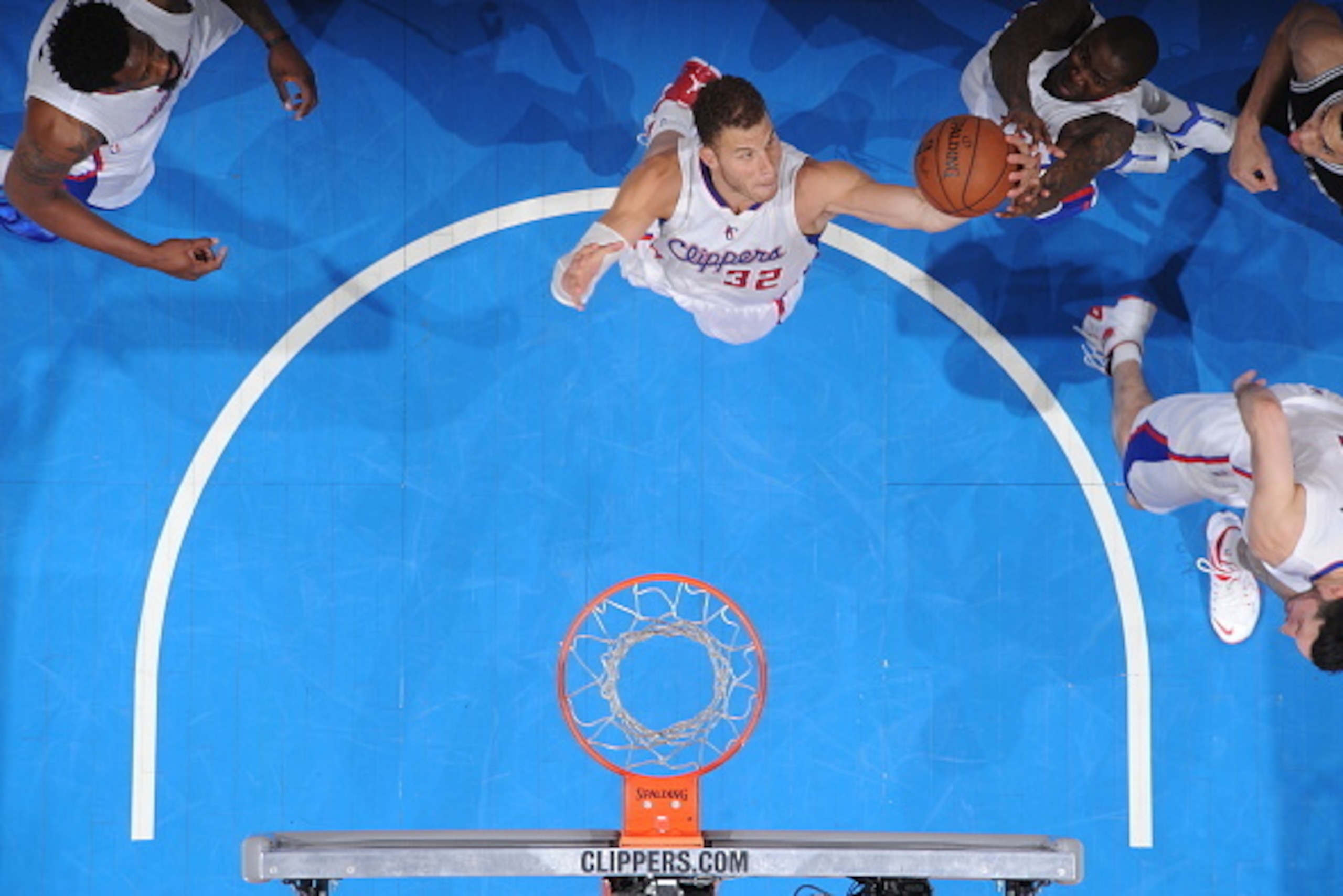
Let's get this out of the way: Blake Griffin has been awesome through five games. And that's probably selling his efforts short.
Following a 111-107 Game 5 loss, he's averaging 23.8 points, 13.4 rebounds and 7.2 assists. The last player to post those figures over the course of a postseason was Oscar Robertson in 1963.
Not only has Griffin's face-up game impressed, but his big-to-big passing with DeAndre Jordan also has consistently provided the Clippers offense with an added dimension the Spurs have had difficulty stopping.
"[Griffin] is playing out of his mind right now," Tim Duncan said, according to Sports on Earth's Michael Pina. "He's hitting his mid-range shot, and then on the break he's using his dribble, and drawing and kicking real well, and passing real well. I'm just trying to get him out of his comfort zone and not let him get to the basket when I could. He missed a couple open jumpers."
But his carrying such a heavy load comes at a hefty price when the fourth quarter rolls around.
Griffin's playing an insane 41.2 minutes per game—up 4.4 minutes from the Clippers' 2014 postseason run, which spanned two rounds. Accordingly, Blake's effectiveness has spiked during the game's first two quarters before his efficiency has suffered a minor setback in the third frame and a breathtaking drop-off in the fourth.
| 1st Quarter | 6.8 | 53.8% | 0.8 |
| 2nd Quarter | 7.4 | 57.7% | 0.4 |
| 3rd Quarter | 7.0 | 48.0% | 0.6 |
| 4th Quarter | 2.3 | 19.0% | 1.3 |
"I mean, down the stretch everybody's tired," Griffin said, per Pina. "So, [fatigue is] not a…it's a factor, but it's a factor for everybody. So it's not really an advantage or disadvantage for anybody, I don't think."
Players on both sides may be exhausted, but that is one precipitous decline in productivity that can't be ignored.
However, with few able bodies available to supplement Griffin's all-around supremacy, the Clippers have no choice but to hope he snaps out of the late-game funk and carries them down the stretch.
Find Some Steady Bench Production
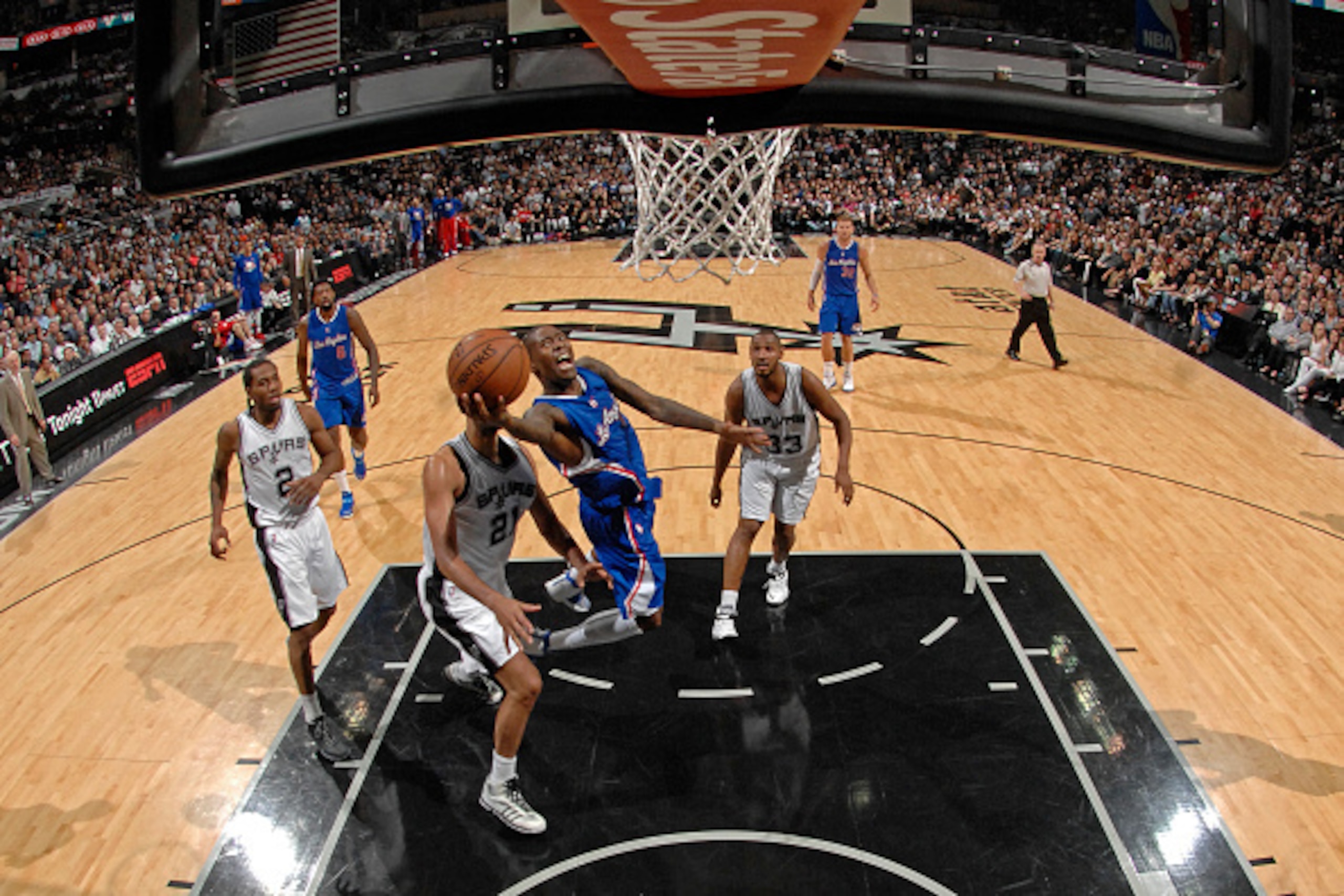
As Griffin and his starting-five friends expend every last ounce of energy they have trying to keep the Clippers afloat, Doc Rivers' regular rotation has been restricted to eight bodies: the usual suspects (Griffin, Chris Paul, Jordan, J.J. Redick and Matt Barnes), plus Jamal Crawford, Austin Rivers and Glen Davis off the bench.
With the bench going just three men deep—save for garbage-time minutes—Clippers starters have logged an average of 36.6 minutes per game. That's the most among Western Conference teams and second to the Chicago Bulls—and we know how much Tom Thibodeau enjoys running his players into the ground.
By contrast, Rivers' reserves are playing an average of 12.4 minutes per game, the lowest among all qualified playoff teams.
And right now, the Clippers need bench production in the worst way. Their backups are shooting a hair over 40 percent from the field and just over 20 percent from three.
But if the past five games have been any indication, Crawford and Austin Rivers undoubtedly have substantial influence on the team's ultimate success.
| Jamal Crawford | 32 | 56.5% | 24 | 23.0% |
| Austin Rivers | 18 | 72.7% | 17 | 36.8% |
Scoring stability is just part of the equation, though. Success from the Clippers' guards also gives the starters a reprieve from shouldering such a sizable cut of offensive responsibility.
Just look at their 114-105 Game 4 win in San Antonio. After Rivers erupted for 16 points on 7-of-8 shooting in 17 minutes, Paul couldn't have been more grateful.
"It was amazing," he said, according to NBA.com's Shaun Powell. "The rest I was able to get in the second quarter and even the fourth quarter was unbelievable and was due to Austin. Without his production, we don't win the game."
The Clippers' tired legs are crying out for unsung heroes to emerge. And with their season on the line, all eyes are on Crawford and the younger Rivers to provide the necessary boost.
Improve Half-Court Execution

Execution, execution, execution.
At the end of the day, that's what's going to keep the Clippers alive or push them toward an early vacation.
After finishing with the NBA's top-ranked offense (109.8 points per 100 possessions) during the regular season, Los Angeles' ability to pelt the Spurs with buckets from all angles has been hindered significantly throughout the first round.
Specifically, the Clippers are purveying the West's second-least efficient offense in the playoffs, generating just 100.6 points per 100 possessions.
The reason for that dramatic slide, according to Grantland's Zach Lowe, has to do with San Antonio's relentless pressure on and off the ball:
For the Clippers, early offense is crucial. When they can get into their sets and move the ball quickly and precisely, shots fall at a rapid rate.
But when the Spurs lock down and send the Clippers scrambling as time winds down, the bottom falls out.
| 22-18 seconds (Very early) | 63.9% | 42.9% |
| 18-15 seconds (Early) | 52.8% | 42.9% |
| 15-7 seconds (Average) | 54.8% | 42.1% |
| 7-4 seconds (Late) | 30.0% | 16.7% |
| 4-0 seconds (Very late) | 33.3% | 14.3% |
The sweet spot for L.A., evidently, is the middle of the shot clock. If the Clippers' first or second actions are successful, they can score in that range of 15 to seven seconds outlined above.
It's when those routes to the hoop are shut off that L.A. self-destructs.
As the Clippers get set to fight for their playoff lives, keep an eye on the time it takes for shots to fall once they cross midcourt. If they can run sets seamlessly within the first 10-12 seconds after a change of possession, tactical adjustments could result in a return trip to Staples Center for Game 7.
If not, spring tee times will come calling.
All statistics are current as of April 29 and courtesy of Basketball-Reference.com and NBA.com unless noted otherwise.
Alec Nathan covers the NBA for Bleacher Report. Follow him on Twitter @AlecBNathan.
.jpg?w=2560)
.jpg?w=2560 "Ranking Every Team's Path to Playoffs 🗺️")
.jpg?w=2560 "Grading SmackDown Before SummerSlam")

.jpg?w=2560 "McVay Hints at Donald Return")