
Russell Westbrook's Heroics Not Enough to Save OKC's Season
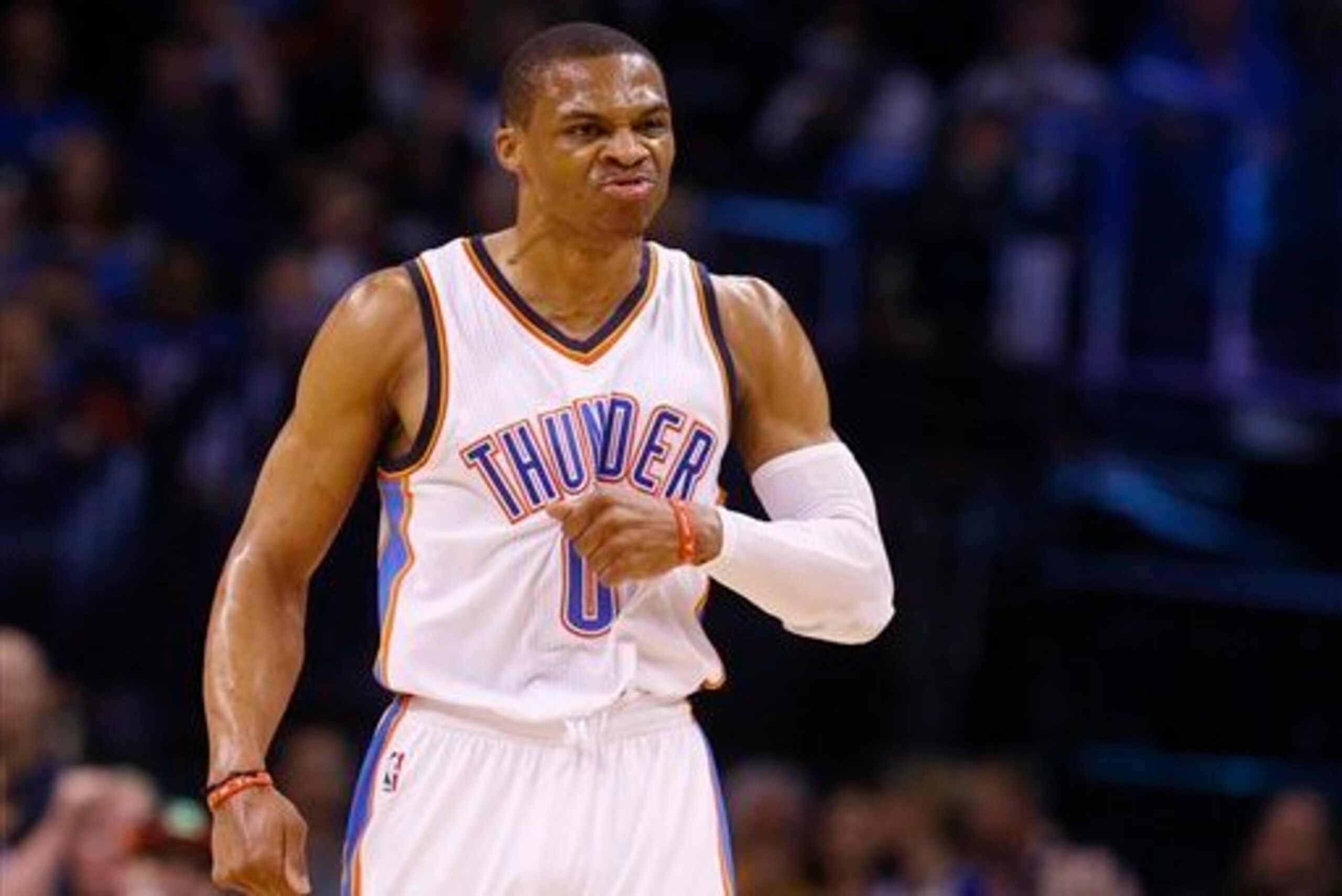
Yet again, Russell Westbrook was heroic. And yet again, his heroism wasn't enough to save the Oklahoma City Thunder.
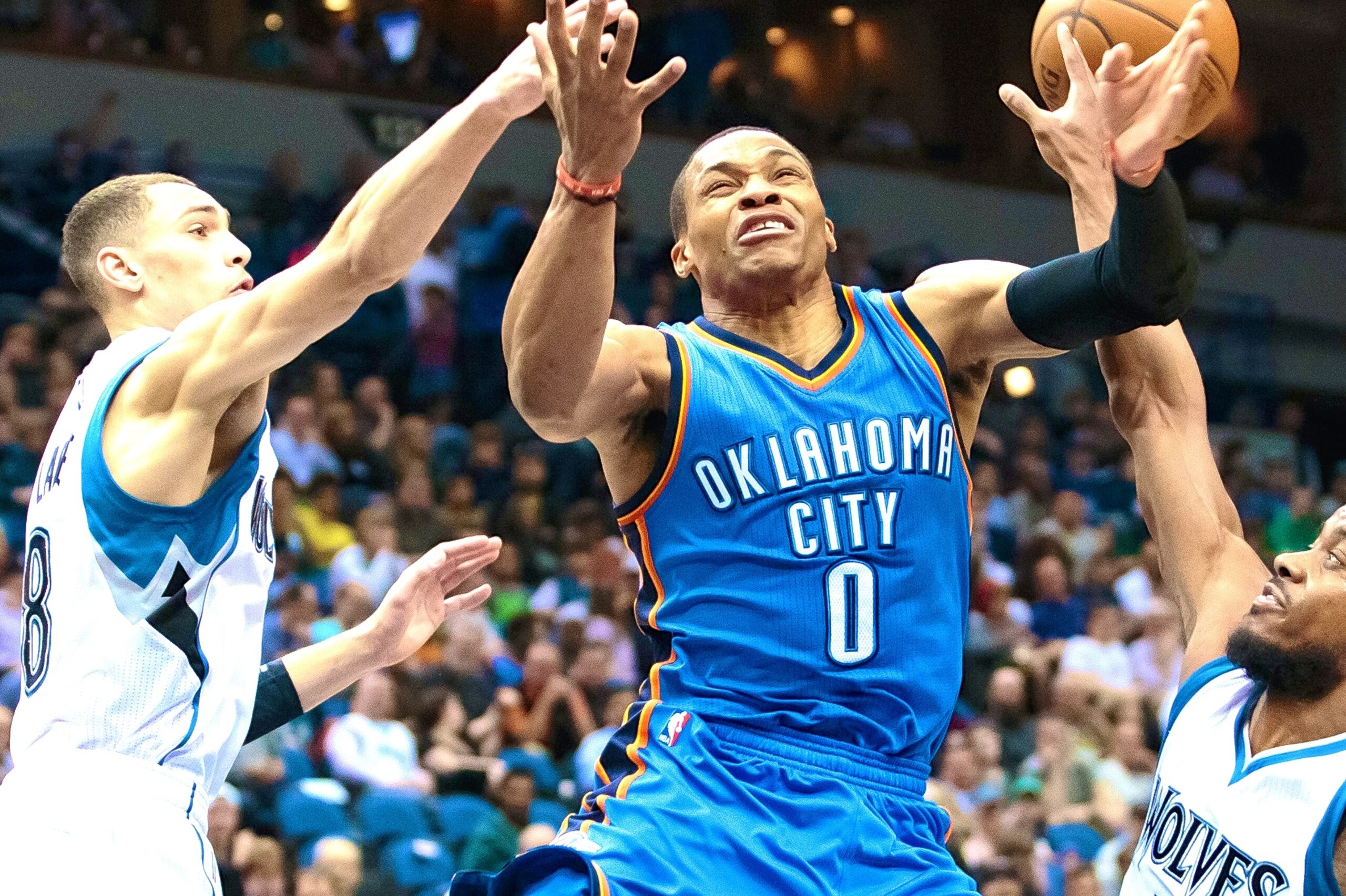
Westbrook amassed 37 points, eight rebounds and seven assists in a 138-113 throttling of the clearly checked-out Minnesota Timberwolves, but his efforts were ultimately meaningless. Because as Westbrook and the Thunder were walking all over the Wolves, the New Orleans Pelicans were improbably surging past the San Antonio Spurs to secure ownership of the No. 8 playoff seed in the Western Conference.
TOP NEWS
Offseason Grades for Every Team 🍎
Weight Clause in Duren Offer

Ben Simmons 'Truth' on 76ers Era 👀
When the buzzer sounded in New Orleans, the Pelicans had punched their ticket to the dance.
And Westbrook, despite throwing fiercer haymakers than anyone in the league all season long, officially punched out.
Appropriately, Russ retired with a bang, blitzing the Wolves with a record-setting first quarter, per ESPN Stats & Info:
And, of course, he turned in the highlights.
To be clear, nothing about Westbrook's night against the disinterested Wolves, specifically, was heroic. According to David Aldridge of Turner Sports, Minnesota didn't exactly dial in early:
But what Westbrook did to drag his team to that point—hauling a banged-up, beaten-down cast of role players to within inches of a postseason visit—was the stuff of legend.
The 11 triple-doubles. The relentless competitive spirit. The rescinded technical fouls.
All of it was part of Westbrook's beautifully tragic 2014-15 season—a season that won't result in a playoff berth but will definitely linger in the minds of fans for a long time to come.
The numbers were impressive, as Darnell Mayberry of The Oklahoman noted:
Just don't expect Westbrook, a competitor to the end, to feel great about an individual honor.
Here's his reaction after learning of his scoring title, per Royce Young of ESPN.com:
But as eye-popping as Westbrook's statistics were this year, the way he accumulated them was the bigger story.
To put it simply, Westbrook achieved a level of basketball ferocity we simply hadn't seen before. Sure, we'd watched the likes of Allen Iverson take on bigger foes, hit the deck countless times and rise to attack again.
And we'd seen notorious competitors like Michael Jordan and Kobe Bryant seemingly will their teams to victory through the power of their resolve alone.
But the raw, animalistic, uncompromising aggression with which Westbrook approached his job this season was something new. It was fascinating to watch him charge right up to the line between aggression and chaos, and it was even more enthralling when he leaped over it.
The results were often spectacular.
He scored 54 points on 43 shots on April 12.
He registered a triple-double six times in an eight-game span from late February to early March.
He spent the final two months of the season at a dead sprint.
Of course, the Thunder lost that game to the Indiana Pacers on April 12, and they went just 4-4 during the eight-game triple-double binge just mentioned.
Overall, OKC went just 16-12 after Kevin Durant's season ended on Feb. 19.
The comparison between Westbrook's final game, the loss to the Wolves and his overall season isn't a perfect one; he couldn't control what the Pelicans did against San Antonio. But it's hard to deny the symmetry of Westbrook playing his heart out, doing everything within his power to take over the contest and ultimately falling short.
There's obviously a bigger question here about the point at which a single player's total control of a game becomes counterproductive. The Thunder's season would make a fantastic case study on the idea of working harder but not necessarily being smarter.
Granted, OKC didn't have Durant or Serge Ibaka for the stretch run, and the supporting cast on hand wasn't exactly star-studded.
But there were still countless instances of Westbrook forcing the issue, taking contested threes when he was too tired to drive and disinclined to pass. It's been said countless times: Often, Russ tried to do too much.
Maybe the results of his one-man attack were better than whatever the Thunder could have achieved with a more evenly distributed approach. And maybe we should look to head coach Scott Brooks for answers to our questions about why Westbrook wasn't supported by any recognizable offensive structure.
The Thunder will hopefully have a long discussion this summer about the efficacy of relying on superstars to win games on the strength of talent alone—especially with the success of teams like the Spurs, Golden State Warriors and Atlanta Hawks showing the value of system ball.
Though the Thunder will no doubt be disappointed with the results of their 2014-15 season, you'd have to think hope will outweigh their regret.
Westbrook took the final step toward superstardom this season. If he can maintain his unrivaled competitiveness and aggression alongside a healthy Durant and Ibaka next year, it's difficult to overstate what might be possible for OKC.

Imagine Westbrook playing like he did this season, only instead of jacking up contested 28-footers and mailing it in on defense because he's exhausted, he leans on Durant until he gets his wind back. And if the Thunder can finally implement some kind of modern NBA offense, there's almost no limit to the different ways KD and Russ could destroy defenses.
Every good hero movie, even the ones that end in disappointment like Westbrook's, needs a sequel.
The NBA better be ready for the OKC blockbuster coming next year.


.jpg?w=2560 "49ers FB Fined for Beer Celly")