Reassessing Vikings' Offseason Plan and Breaking Down What's Left to Address
The Minnesota Vikings' offseason isn't much in terms of excitement or the on-paper Super Bowls that many teams seem to win, but it's clear that there's a plan involved, even if it won't be executed by the end of this year. Given the behavior shown by this front office and coaching staff, we can begin to guess what they will do based on what they've done so far.
First, a brief review of offseason moves is in order.
Minnesota Vikings' Re-signings
TOP NEWS
NFL Season Shaping Up To Be Unpredictable 🗣️
.jpg?w=2560 "Texans Titans Football")
Cam Ward Says He's Not A Loser
.jpg?w=2560)
Texans Trade for MHJ
The Vikings re-signed a number of players, none of whom are expected to start, but some of whom can be critical depth going forward.
The most important of those re-signings was a former Arena Football League player entering age 31: Tom Johnson. A shockingly effective defensive tackle in rotation, it would have been easy to expect Johnson not only to be cut in training camp, but not to be picked up by another team.
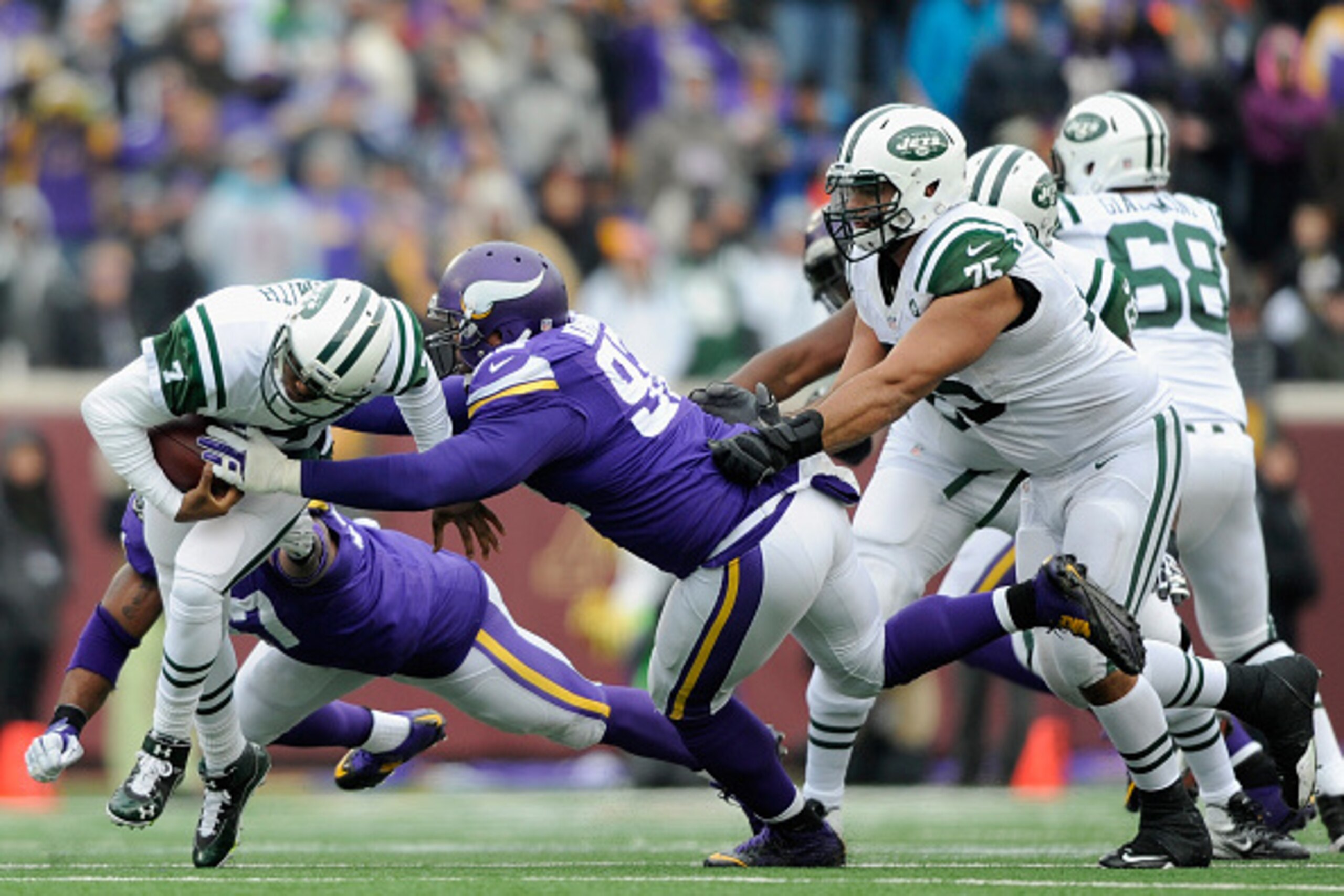
Instead, he had the fifth-most sacks per snap of any defensive tackle with at least 25 percent of their team's snaps, per Pro Football Focus. That's more than Gerald McCoy and Aaron Donald.
Back in March, I ranked him as the top free-agent re-signing by the Vikings:
"It's not just Johnson's sack production that stands out—prodigious alone for having more sacks per pass-rushing snap than all but eight defensive tackles with at least 250 pass-rushing snaps, per Pro Football Focus—but also his consistent ability to pressure the quarterback and alter the passing game.
Accumulating 30 total quarterback pressures is good for any defensive tackle, but for a rotational player, it's astounding. In that same set of defensive tackles with at least 250 pass-rushing snaps (37 total), Johnson again ranked ninth in pressures per snap behind Aaron Donald, Henry Melton, Johnathan Hankins, Ndamukong Suh, Stephen Paea, Kyle Williams, Gerald McCoy and Jay Ratliff.
Though a rotational player who will be expected to match his snap count from last year (about 450, per PFF), his impact and the cheap, risk-free nature of the deal earns him the top spot.
"
In addition, the Vikings re-signed potential starting guard Joe Berger and last year's starting running back, Matt Asiata. Cullen Loeffler, the long snapper, was also signed to a contract for one year.
Those re-signings don't reveal much about the Vikings' plan for next year, but letting linebacker Jasper Brinkley walk does. The Vikings did not contact Brinkley much throughout the free agency process, per Chris Tomasson of the St. Paul Pioneer Press, until the last minute to offer a one-year deal. He instead took a two-year deal in Dallas.
The Vikings are clearly willing to move on from him at inside linebacker, and such movement could mean there's already a plan in mind for one of the two linebacker positions that seem to be unsettled. The Vikings' willingness to go after Brinkley for a small amount may mean that plan could use depth, but it does not require the player who played there last year.
The Berger re-signing, along with re-signing restricted free agent Mike Harris (who played both guard and tackle for the Vikings last year as injuries piled up) may provide clues into the guard battle, which we'll discuss a bit more below.
Minnesota Vikings' free-agent imports
Aside from re-signing a number of players who were on the roster last year, the Vikings did bring in some players through free agency. The most intriguing player in that group is one who did not play in the NFL last year, but rather the German Football League and the Polish American Football League the year before.
Babatunde Aiyegbusi is a curious prospect, and the Vikings seem more than willing to tap alternative talent pools in order to expand their roster. At 351 pounds, his measureables stand out. From his pro day video (done at the University of Texas-San Antonio), frame-by-frame analysis produces the following measureables (put next to Phil Loadholt, who is equally tall but 30 pounds lighter, for comparison):
| Babatunde Aiyegbusi | 5.21 | 2.96 | 1.78 | 26 | 9'2" | 5.24 | 8.21 |
| Phil Loadholt | 5.45 | 3.03 | 1.83 | 26 | 8'9" | 4.77 | 8.8 |
But he won't have much impact this year and likely doesn't figure into any short-term plans for the Vikings. He, like many players, could be an act of stockpiling assets because that is generally a good thing to do.
Aside from that, they brought in a backup quarterback, Shaun Hill. There is no larger plan here when it comes to the veteran backup—they simply needed to bring in someone to competently back up the starting quarterback.
The Vikings signed a potential starter at safety in Taylor Mays, though, that result would be a major disappointment. For all of his extraordinary athleticism, Mays is a poor safety and has been for years.
Fans got to see Taylor Mays struggle with for a spot on Cincinnati's roster in 2013 on Hard Knocks, which followed a 2012 season where he was demoted from the starting job after one week and benched for 32-year-old Chris Crocker—whom the Vikings cut last year.
Mays has never had a starting job for a full season. As a second-round pick, he was installed as the starter in Week 4 of his rookie year and then benched for Reggie Nelson.
The next year, he saw very few snaps.
In 2012, not only did Mays lose the starting job after Week 1, he saw starting snaps two other times that year and was subsequently moved back to the bench shortly afterward. He did not start in 2013 or 2014; instead, fifth-round pick George Iloka took those snaps.
The signing here is likely for special teams value instead of as a real starting option, and should provide depth to a thin safety corps. He can also provide snaps at linebacker in nickel situations, something he's done in Cincinnati before.
The Vikings signed another possible linebacker/safety player in Brian Peters, who is listed as a linebacker by the Vikings but played safety in the CFL. The addition of both of these players as well as having Dom DeCicco on the roster (a college safety converted to linebacker) may mean this could be a new position the Vikings want to install in certain packages.
Terence Newman is the most recent signing. Familiar with head coach Mike Zimmer, the soon-to-be-37-year-old cornerback is not likely to start, if only because his season was good but not particularly better than Josh Robinson's.
Aside from developmentally stunting a young player by playing stopgap who is at best marginally better than the player he replaces, Newman could play the role Crocker played for the Vikings last year, which was to help install the scheme.
Cut despite being the starting safety all of camp and in the preseason, Crocker was much more of a mentor than impact starter, and that seemed to be his intended role all along. Like Crocker, Newman has lost several steps and could be a liability against the faster receivers in the NFC North.
Besides, he doesn't have physical advantages over Captain Munnerlyn or Robinson, as he is the same height. Schematic knowledge is one advantage, and so are experience and instincts, but those may not be enough to overcome the speed, upside and developmental value of playing the younger players.
Beyond that, they signed another depth and special teams signing in Casey Matthews, a linebacker who never impressed for the Eagles, but he is at least good at the ancillary duties of a bench player, like performing on the coverage and field-goal units.
Perhaps the most impactful (yet quiet) free-agent signing is long snapper Kevin McDermott, who has experience with punter and holder Jeff Locke—both were at UCLA. The current long snapper, Loeffler, is coming off of a terrible year and didn't have a stellar 2013 either.
If McDermott wins the job, we could see a commensurate improvement in Jeff Locke's punting, a big problem with the Vikings' ability to win the field position game.
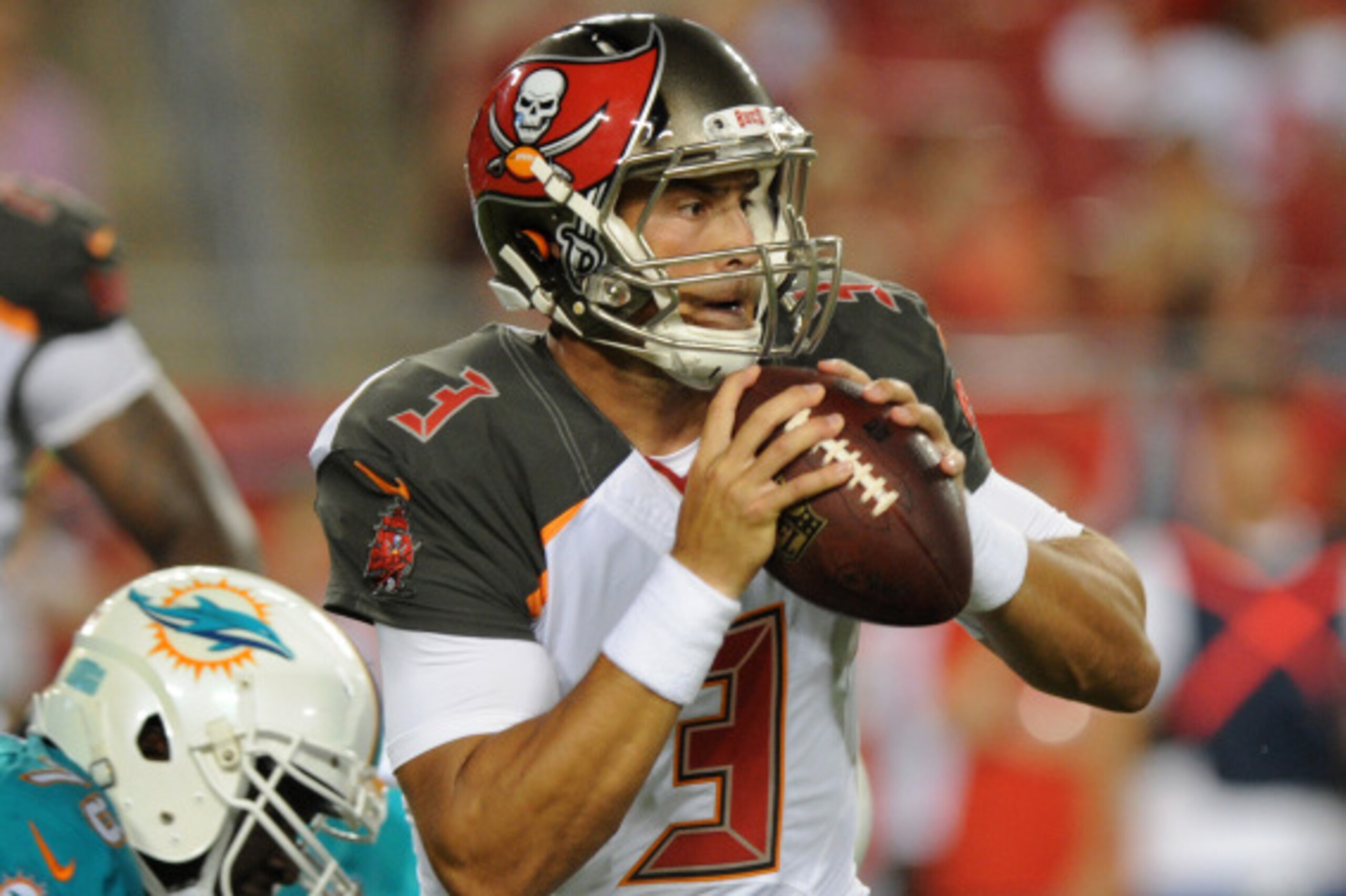
The Vikings also saw fit to sign development quarterback Mike Kafka, an athletic player with prototypical size and an intriguing arm. If the Vikings do not manage to draft a developmental quarterback late in the draft, Kafka may end up with the third roster spot.
With Kafka comes Caesar Rayford, a defensive end signed on the same day as Kafka, formerly of the Dallas Cowboys. Rayford has the kind of build that Mike Zimmer looks for in a defensive end. Both Rayford and Kafka were participants in the NFL Veteran Combine.
Rayford is in competition with Justin Trattou for a roster spot, not Brian Robison.
The final addition to mention was the first to happen, a waiver wire pickup for tight end Brandon Bostick, formerly of the Packers. Though famous for his boneheaded play on an onside kick in the NFC Championship Game, Bostick brings with him some marginal backup experience as a versatile tight end for the Packers.
Given Chase Ford's excellent play last year, it is unlikely that Bostick challenges for the third tight end spot behind Kyle Rudolph, Rhett Ellison and Ford. But he could force the Vikings to carry four tight ends if he performs well enough in camp.
Minnesota Vikings' trades
The Vikings made two trades: one to move Matt Cassel for extra picks and another to grab Mike Wallace for a draft selection. Cassel was slightly expensive for a backup, but importantly, he wanted to compete for a starting job, which he could do in Buffalo.
More importantly, grabbing assets for a player who (if all goes well) shouldn't see any snaps is a good move that allows roster building at the margins. That is, teams should make this kind of move not because a fifth-round pick is necessarily valuable in one instance, but if they make these types of moves again and again, they are likely to stumble upon a hidden gem.
On the other hand, the move to get Mike Wallace was paired with a move to cut Greg Jennings.
Even if Wallace and Jennings were equally good players, this functionally lost the Vikings a fifth-round pick in order to add an additional cap hit of $4.9 million (Wallace's $9.9 million cap hit, plus the dead money from Greg Jennings' contract—$6 million—is $4.9 million more than the $11 million hit they would have had by not making the trade and keeping Jennings).
While there are different long-term implications (Jennings would have incurred a dead money hit if cut next year, Wallace would not), they are minor (Jennings' hit would have been small). More importantly, as I previously wrote, Wallace does not add offensive diversity:
"More importantly, it is unlikely there is someone on the roster who can evolve into Greg Jennings’ role as a possession receiver, as almost all the receivers currently on the roster (and certainly the presumptive top four—Mike Wallace, Charles Johnson, Jarius Wright and Cordarrelle Patterson) show a development pattern much closer to Wallace’s than Jennings'.
Wallace may be one of the best players to perform his role, but the upgrade from a player on the Vikings’ roster attempting to fulfill that role to Wallace himself is much smaller than the downgrade from Greg Jennings to whoever can fulfill that function.
The speedster from Miami is one of the best at what he does when his game is on point, but that doesn’t make his skill set unique among the players on the roster, just better at what they do.
Those diverse talents would otherwise open up the Vikings playbook to a wider variety of options, and though Jennings was underperforming in Minnesota, the idea of grabbing a rich man’s version of the receiver profile already on the roster—also massively underperforming in a different city—is ridiculous.
With no receivers capable of running real routes on the roster—especially intermediate ones that should serve to be crucial on third down—the Vikings offense remains one note.
"
This should make a receiver with possession capabilities a need, but not necessarily a high priority. Filling roles is important, but feeling confident in the talent on the roster at the position, regardless of role, may mean waiting on a receiver in the draft (at least next year).
Minnesota Vikings' cuts
The Vikings cut a few players who only would have been depth if they made it through training camp, like guard Jordan McCray and linebacker Justin Anderson.
Minnesota also parted ways with practice squad quarterback Pat Devlin (who was activated for a short time), replacing him with a different athletic quarterback in free agency. Again, this does not mean the Vikings need to draft a late-round developmental quarterback, but the Kafka signing doesn't prevent it.
More important are the cuts of starters. Greg Jennings was discussed above, and it leaves some holes as far as skilled route diversity goes, but it may have been part of a larger plan to make the 2016 free agency period easier. (Along with having to avoid the potential dead money of cutting him next year, Chad Greenway won't be on the books.)
The other one is more interesting, and it happened earlier. Guard Charlie Johnson was let go by the Vikings after three mediocre years (and one extension). Though his raw talent level is better than that of many backups in a league starved for them, his contract would have been far too much (even at $2.5 million) for what the NFL pays backup interior offensive linemen.
Letting go of a player, even a bad one, usually signals either a young backup ready to take over or an aggressive plan to fill the spot.
Whatever the Vikings were in free agency, they certainly weren't aggressive. And given the Vikings' tendency to draft guards late (almost every year, and never before the fifth round), it is unlikely that they'll attempt to immediately fill this hole in the draft.
What's Left to Address
The Vikings will not address all if their positions of need in one offseason, and they would not have been able to, even with a more aggressive free-agency plan.
Yesterday, in breaking down positions of need in order to evaluate Stephone Anthony, a linebacker from Clemson, as a potential Vikings fit, we looked at who is on the roster and whether or not they are needs:
""
- Guard: David Yankey, Mike Harris and Austin Wentworth competing for the job, alongside veteran Joe Berger
- Wide receiver: Charles Johnson and Cordarrelle Patterson still have the ability to develop into quality starters
- Safety: Antone Exum remains a tantalizing option, and the Vikings are high on Andrew Sendejo, who started at the end of the season to replace Robert Blanton—an assignment-sound player by himself
- Defensive end: Third-round pick Scott Crichton didn’t see much of the field, but is only entering his second year
- Cornerback: Captain Munnerlyn’s great years in Carolina were no fluke and Josh Robinson was far better than advertised
- Running back: Jerick McKinnon looked great during the season, and Adrian Peterson may yet still play for the Vikings
In addition to that is linebacker, where Greenway has struggled and Jasper Brinkley has left in free agency. The Vikings have Audie Cole and Gerald Hodges, both of whom played outside linebacker spots for Minnesota last year to replace injured players and did well.
Hodges had significant issues when asked to be the defensive signal-caller, a role that Audie Cole performed well. Anthony Barr could take those duties, and Greenway could still start despite his underperformance and reclaim those responsibilities as well.
Either way, the Vikings don't lack for brains at the linebacker position with whom they have on the roster. But they could do with more.
Three of the positions of need (safety, guard and defensive end) have players that Minnesota Vikings fans haven't seen more than glimpses of as their potentially most promising replacement. A fifth-round pick, a sixth-round pick and a defensive end who took 16 snaps last year are probably not all going to work out, even if individually it is easy to see the potential in all of them.
Another position (wide receiver) is severely underdeveloped, but it's certainly not lost. The "three-year receiver rule," one that allowed Victor Cruz and Demaryius Thomas to blow up, may apply to Patterson, who has even less experience at the receiver position than either of those two—and Thomas went to Georgia Tech.

Charles Johnson has enormous deficiencies in his game, but he did look great for stretches last year. Not everyone has a completely rounded-out game when they perform well in the NFL, and Johnson may just be good enough in the areas he's strong in to balance out his weaknesses.
There is no real "known" need, but the assumption that the Vikings are interested in defensive backs and linebackers seems fairly widely held by national media. It's in part motivated by the extensive contact the Vikings have had with both sets of position groups in a list compiled by the Star Tribune.
So far, it seems like the Vikings' plan is to draft positions they think are in the worst shape but let players fight it out for those positions of need and prove that they are talent, not potential. Which is to say, let the young roster develop and then weed out the ones who don't develop quickly enough by next year.
With the Vikings' broad pattern of selecting late-round linemen, don't expect a guard early in the draft. One could imagine with Greenway being restructured instead of cut that outside linebacker may not be a selection early on. But that could just be the cost of mentorship—or a sign of a lack of confidence in their outside options behind Greenway (which seems unlikely).
Minnesota has a bad left tackle in Matt Kalil, but there's real reason to think he's not as bad as he has been in the last two years. His rookie year was good, and he could tap into the talent there, and the last five games of this last season were better than the previous 27.
In that case, the popular picks for offensive linemen like Brandon Scherff, La'el Collins or Andrus Peat may not play out. Besides, cutting a guard on the off chance the lineman you like is there seems more reckless than general manager Rick Spielman has shown to be.
The best option may be trading down in the draft to grab an inside linebacker and cornerback with the early picks or potentially a safety. Otherwise, expect a year with lots of young players struggling, while a few shine.
Players like Benardrick McKinney, Byron Jones and Eric Rowe could end up competing for a starting job, or Eric Kendricks, Jalen Collins and Adrian Amos. Either way, the Vikings could parlay themselves, like they seem to want to, into a late first-round pick and multiple top 75 selections.
Remember, you can't fill all the needs in one draft, especially when the need list is long and full of uncertainty.
.jpg?w=2560 "Broncos Chargers Football")
.jpg?w=2560 "Cardinals Giants Football")