

What Recent History Suggests About Minnesota Vikings' 2015 NFL Draft Plan
Since Rick Spielman was officially named the Minnesota Vikings general manager in 2012, the NFL draft has been a source of limitless, on-edge entertainment for the fans who bleed purple and gold.
Entertainment maintains some importance—due to the draft's incidental marketing of both prospects and teams—but Spielman and Vikings nation would surely trade a one-night extravaganza for the state's first Super Bowl.
But, the Minnesota GM may have potentially found a way to do one while working toward the other.
.jpg?w=3840 "Rams Ravens Football")
.jpg?w=3840 "Buccaneers Seahawks Football")
.jpg?w=3840 "Titans Football")
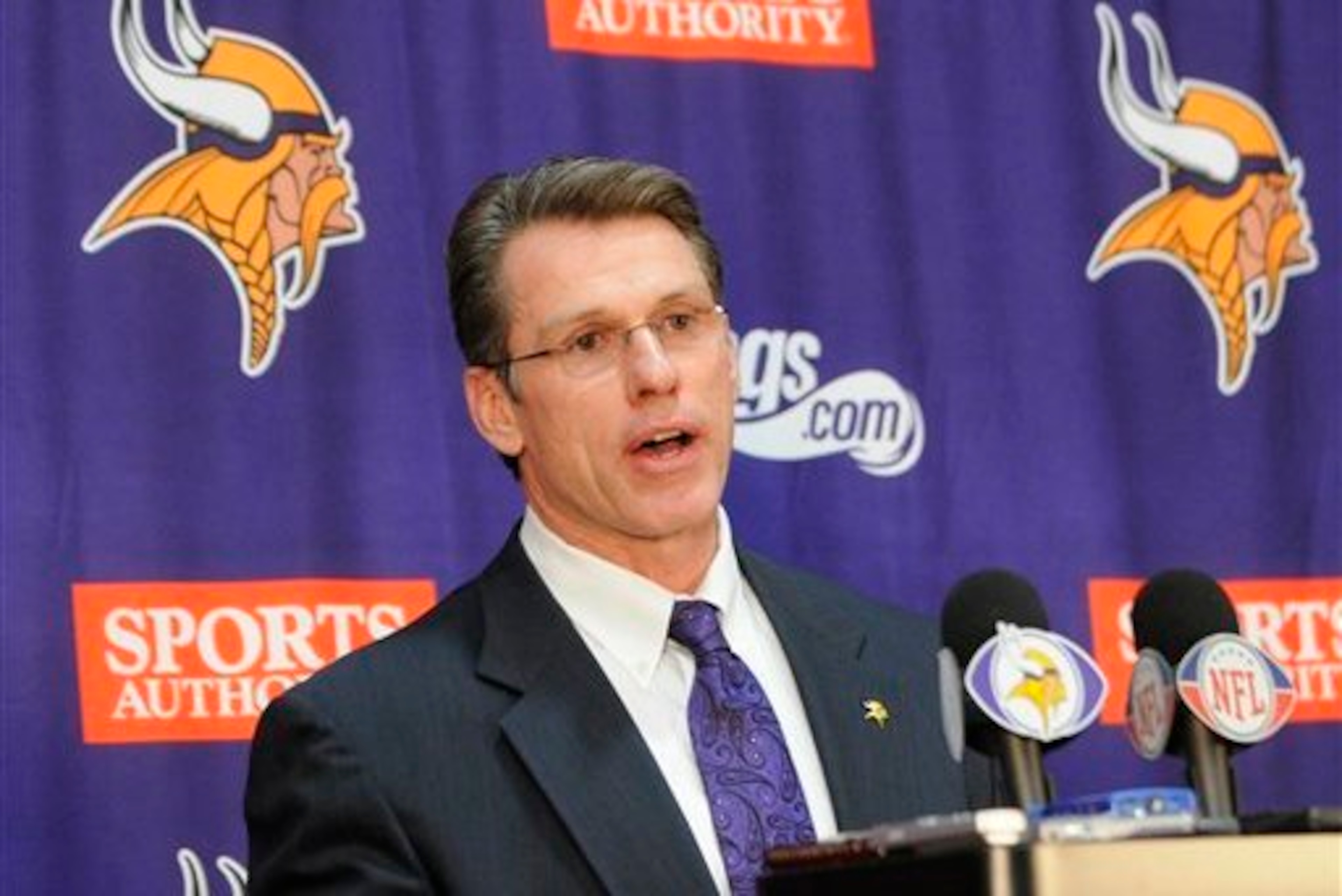
In order to determine a pattern, one must first establish a starting point.
Spielman—according to Jeremy Fowler, now of ESPN.com—has "always [been in charge of] the draft" since being hired as the team's vice president of player personnel on May 30, 2006. However, he was merely one leg of the team's "triangle of authority" until his promotion to GM on Jan. 3, 2012.
While he didn't acquire total control until 2012, Spielman still deserves credit for drafting Adrian Peterson at No. 7 in 2007 (and shame for drafting Christian Ponder at No. 12 in 2011). Using his first season as Minnesota's official general manager, however, marks an ideal reference point for discussion based on recency (three draft classes).
This isn't to say Spielman's draft performances from 2006-11 don't carry any weight in this conversation; these years will be referred to in the event there is an insufficient amount of evidence to reach a definitive point.

To be direct, the term "recency," as it relates to this analysis, refers to Spielman's draft strategies in 2012, 2013 and 2014. However, some data demand additional points of reference found in his draft strategies from 2006-11. Spielman's one year (2004) at the helm of the Miami Dolphins, however, has no merit in this analysis. The only benefit it adds to Spielman's strategic ability is an additional year of draft experience, which cannot be accurately quantified because the value of experience is subjective.
2012: The Beginning of a Trend

Spielman did not wait long to exercise his power as captain of the Vikings' ship. Looking back now, few Minnesota fans should be surprised to learn his first executive draft-day decision was a trade.
Seemingly knowing exactly what the Cleveland Browns were planning with their No. 4 overall selection, the first-year GM baited a dysfunctional franchise into trading for his No. 3 selection.
In exchange, the Vikings received Cleveland's first- fourth-, fifth- and seventh-round selections (Nos. 3, 118, 139 and 211) and proceeded to select offensive tackle Matt Kalil with the Browns' No. 4 overall pick.
Cleveland would draft running back Trent Richardson with the Vikings' pick, which didn't change Minnesota's plans, as it acquired the player it wanted all along. This transaction allowed Spielman enough stability to orchestrate a trade with the Baltimore Ravens and select safety Harrison Smith with the 29th overall pick.
| Round | Pick Number | Position | Player | College |
| 1 | 4 | OT | Matt Kalil | USC |
| 1 | 29 | S | Harrison Smith | Notre Dame |
| 3 | 66 | CB | Josh Robinson | UCF |
| 4 | 118 | WR | Jarius Wright | Arkansas |
| 4 | 128 | TE | Rhett Ellison | USC |
| 4 | 134 | WR | Greg Childs | Arkansas |
| 5 | 139 | CB | Robert Blanton | Notre Dame |
| 6 | 175 | K | Blair Walsh | Georgia |
| 7 | 210 | LB | Audie Cole | N.C. State |
| 7 | 219 | DE | Trevor Guyton | California |
Kalil and Smith were the highlights of the 2012 Vikings class, but Spielman received plenty of value with his middle- and late-round selections as well.
Josh Robinson, Jarius Wright, Rhett Ellison, Robert Blanton, Blair Walsh and Audie Cole have produced varying degrees of success at the NFL level. Robinson, maybe the greatest disappointment of the group (relative to round selected and contribution), remains in line to start in 2015 alongside Wright, Walsh, Blanton and (potentially) Cole. Furthermore, Ellison has been highly successful in a niche role as a run-blocker.

This draft strategy and class of prospects merely serves as an introduction to Spielman's drafting prowess.
During his inaugural year as GM, Spielman displayed an ability to execute low-risk, high-reward trades and briefly noted the level of importance placed on "critical-role" positions (left tackle). In addition, college programs he holds in high regard (Notre Dame) were recognized along with a variety of other less-apparent factors that will become more clear as data is compiled.
However, Spielman also hinted at a misconception of an appropriate time to address special team needs, which has resulted in sacrificed draft value throughout his tenure.
2013: The Continuation of a Trend

Two first-round selections weren't exciting or franchise-altering enough for the then-second-year Vikings GM. Not only did Spielman "call" his 2012 Day 1 performance, he elected to stimulate the pot with three first-round picks in 2013.
Seattle Seahawks general manager John Schneider had been making a name for himself along the West Coast in the years leading up to the 2013 draft. He began his tenure in 2010, and by the end of the 2014 season, his mid-round draft prowess had led to the first Super Bowl in franchise history and consecutive championship game appearances.
Schneider's greatest mistake to date (plausibly his only mistake), however, came at the hands of Spielman. And it has the potential to be remembered in the same likeness as the Herschel Walker trade Minnesota ended up on the wrong side of nearly three decades ago.
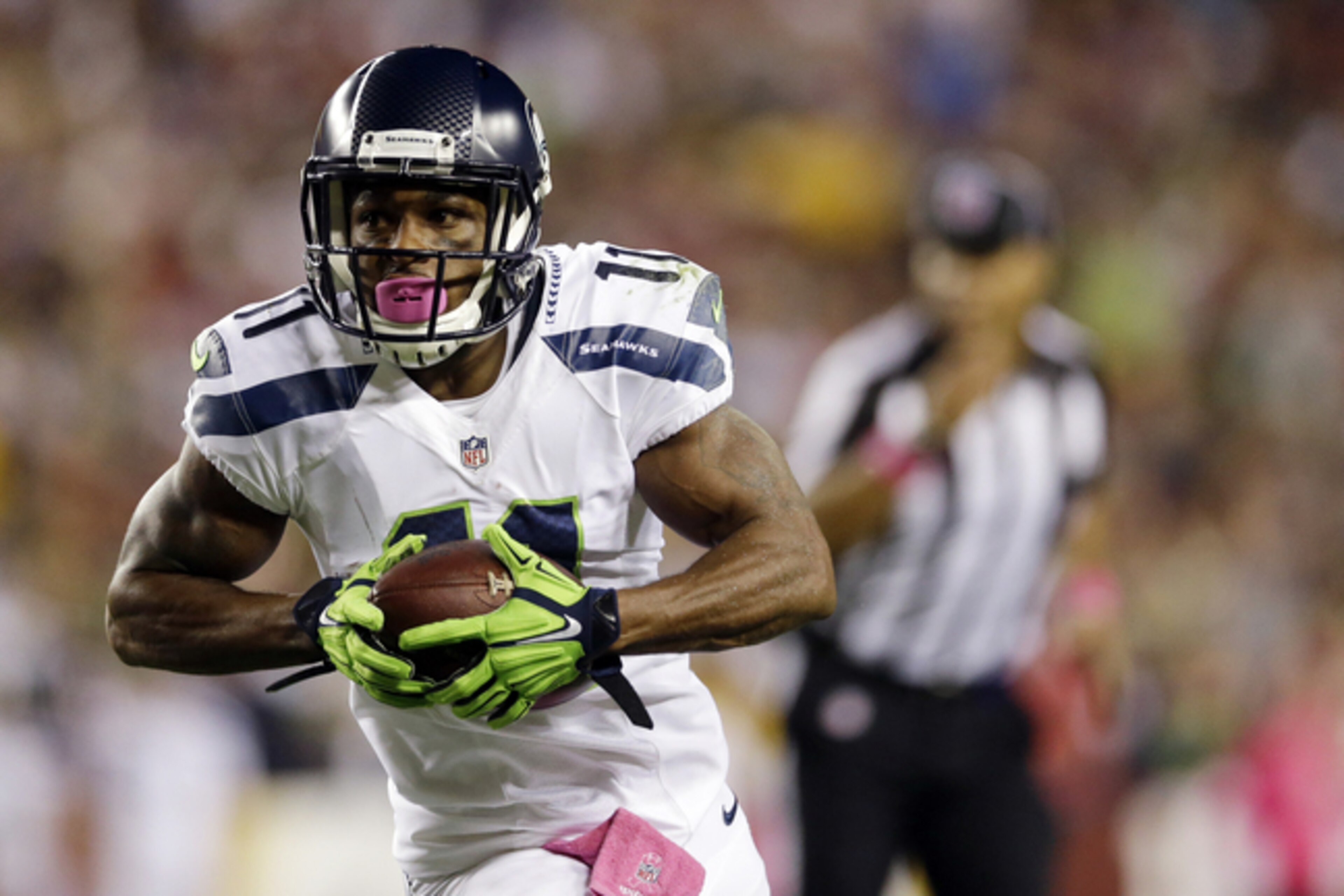
In dire need of a playmaker, the Seahawks GM traded his 2013 first-round pick (No. 25 overall), a 2013 seventh-round selection (No. 214) and a mid-round 2014 choice (ultimately determined as pick No. 96) in exchange for the unparalleled talent and offensive versatility of Percy Harvin.
At the time of the trade, Vikings fans were vocally speculative of Spielman's decision, but the headache-freeing transaction has already had a positive impact on the direction of Minnesota's franchise.
Harvin would play an important role in Seattle's 2014 Super Bowl championship (one of two games he played in all year), and Schneider managed to flip the salary-cap destroying wideout for a conditional sixth-round pick. Still, Spielman and the Vikings appear to be the true winners.
In a series of draft events that can no longer be deemed anything other than a fluke, Florida defensive tackle Sharrif Floyd, a projected top-five selection, fell all the way to Minnesota's pick at No. 23 overall.
"I went through a thousand scenarios at the 23rd and 25th pick, and I can tell you honestly he [Floyd] was not in one of those scenarios," Spielman told reporters back in late April 2013—per Jon Krawczynski of The Associated Press.
And this was only the beginning of an outstanding Day 1 performance by Spielman.
He next used the No. 25 selection acquired from Seattle to draft Florida State's Xavier Rhodes, a lengthy cornerback who has already proven capable of significantly limiting the opposition's top receiving threat. But Spielman wasn't done just yet.
In a move that will serve as a benchmark for the unpredictable manner in which he goes about drafting wide receivers, the Minnesota GM mortgaged a large portion of his remaining 2013 draft picks for game-breaking Tennessee wideout Cordarrelle Patterson.
The Vikings sent pick No. 52 (LB Jamie Collins), 83 (CB Logan Ryan), 102 (WR Josh Boyce) and 229 (DT Everett Dawkins) in exchange for the No. 29 overall selection used to draft Patterson. Minnesota would eventually have pick No. 229 returned to it following multiple Day 3 trades, which namely resulted in LeGarrette Blount wearing a Patriots jersey.
| Round | Pick Number | Position | Player | College |
| 1 | 23 | DT | Sharrif Floyd | Florida |
| 1 | 25 | CB | Xavier Rhodes | Florida State |
| 1 | 29 | WR | Cordarrelle Patterson | Tennessee |
| 4 | 120 | OLB | Gerald Hodges | Penn State |
| 5 | 155 | P | Jeff Locke | UCLA |
| 6 | 196 | G | Jeff Baca | UCLA |
| 7 | 213 | ILB | Michael Mauti | Penn State |
| 7 | 214 | G | Travis Bond | North Carolina |
| 7 | 229 | DT | Everett Dawkins | Florida State |
This class still has room to grow, but a couple of its additions have already made their mark. Floyd and Rhodes are centerpieces of their respective levels of the Vikings defense, and flashes of Patterson's potential have been put on display as well.
Before his unprecedented rookie success, Patterson was widely understood to be an extremely raw talent in need of time to develop his basic fundamental receiving skills. Essentially, Patterson's game-changing rookie performances led to his bar being set too high for his developmental curve.
Chalking Jeff Baca, Travis Bond and Dawkins up as wasted late-round picks doesn't hurt nearly as much knowing Minnesota potentially acquired an above-average starter at each defensive level and a developmentally challenged wide receiver with significant upside.
Gerald Hodges, a fourth-round upside selection, has finally managed to remain consistently healthy and appears ready to take on an impact role in 2015. Furthermore, the Vikings could feature a 2013 draft selection at each level of their defense in Floyd, Hodges and Rhodes as soon as next season.
However, Spielman's strange obsession with over-drafting special teams players does put a bit of a damper on a class filled with great talent and top-notch value selections. Punter Jeff Locke wouldn't have been worthy of a fifth-round pick even if he had become an above-average punter; the fact that he is arguably the worst punter to complete two full seasons in NFL history, per Pro Football Focus, makes this pick really sting.
Above all though, this looks like another class of multiple solid starters and, potentially, a pair of future All-Pros.
2014: The Vindication of 2011
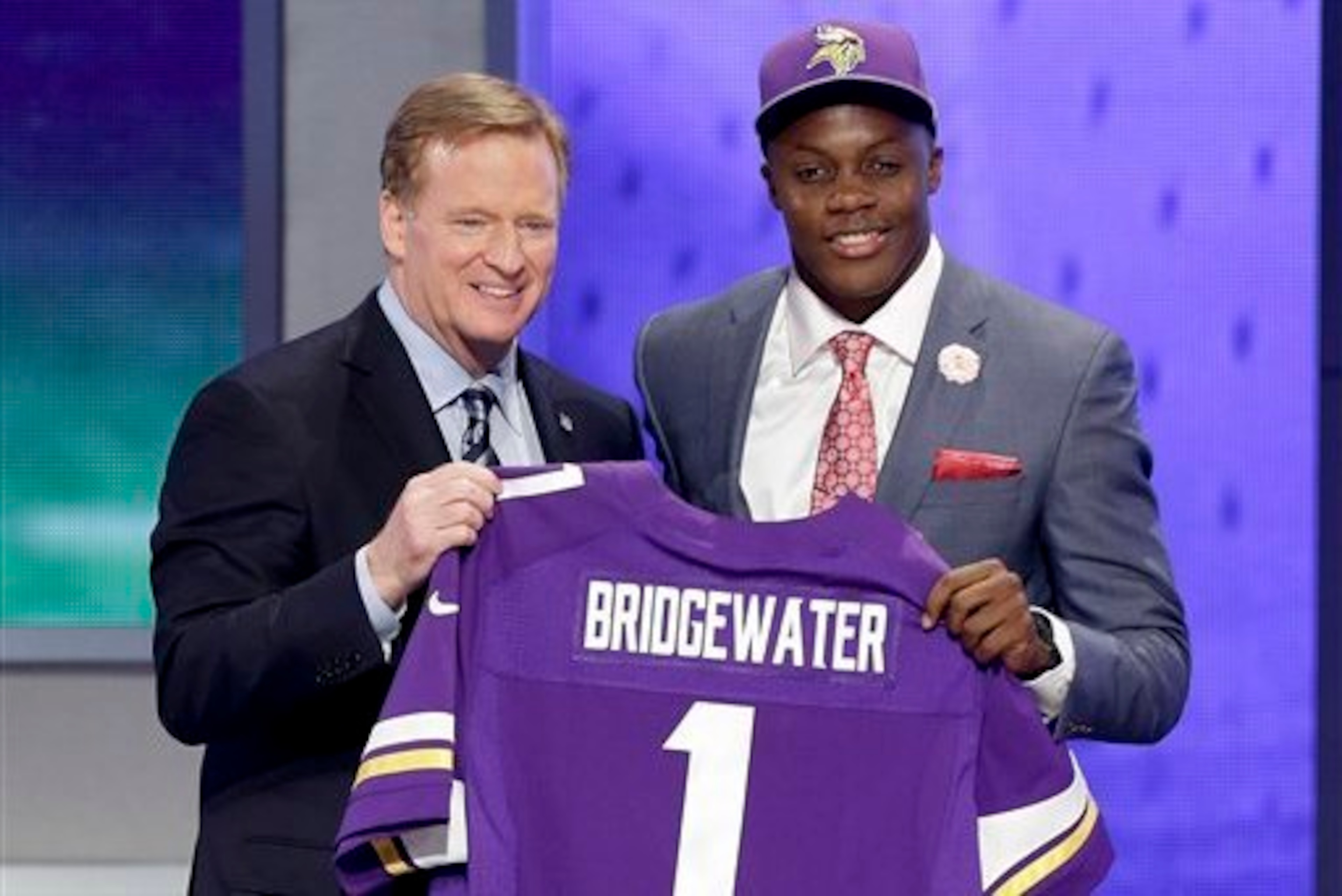
Yes, the trend from 2012 and 2013 continues into 2014. But, this year was about so much more for Spielman and his scouting team than simply making two first-round selections again; the Vikings seemingly found the franchise quarterback that had forsaken them for at least a decade if not more.
| Round | Pick Number | Position | Player | College |
| 1 | 9 | OLB/Edge | Anthony Barr | UCLA |
| 1 | 32 | QB | Teddy Bridgewater | Louisville |
| 3 | 72 | DE | Scott Crichton | Oregon State |
| 3 | 96 | RB | Jerick McKinnon | Georgia Southern |
| 5 | 145 | G | David Yankey | Stanford |
| 6 | 182 | CB | Antone Exum | Virginia Tech |
| 6 | 184 | CB | Kendall James | Maine |
| 7 | 220 | DT | Shamar Stephen | Connecticut |
| 7 | 223 | OLB | Brandon Watts | Georgia Tech |
| 7 | 225 | CB | Jabari Price | North Carolina |
Despite maintaining a critical need at quarterback, Spielman elected to forego addressing this positional deficiency in favor of making linebacker Anthony Barr the team's first outside linebacker selected in the top 20 since Chad Greenway was selected 17th overall in 2006.
This choice would have marked an awful time for Spielman to break his tendency of nailing down "critical needs" with first-round selections (Kalil, Floyd, Rhodes), but he made a trade at the end of Day 1 to select Teddy Bridgewater with pick No. 32.
With that said, Minnesota was in need of an outside linebacker and edge-rusher to replace the departed Jared Allen. Still, the Vikings could have started Hodges or Audie Cole without severe repercussions, but another season of Christian Ponder as the team's "franchise quarterback" had the potential to cost Spielman his job.
By acquiring Bridgewater, Spielman addressed both a definitive need on offense and defense with first-round selections, a strategy he utilized in both 2012 (OT Kalil, S Smith) and even more so in 2013 (DT Floyd and CB Rhodes, WR Patterson). He then proceeded to add depth with both third-round selections (DE Scott Crichton, RB Jerick McKinnon) as he did by selecting Robinson at pick No. 66 in 2012.

In both 2012 and 2014, the Vikings added insurance for a player (CB Chris Cook 2012, DE Brian Robison 2014) who failed to meet expectations during the previous season. Strangely, neither Robinson nor Crichton was able to capitalize on either obtainable starting roles.
McKinnon, on the other hand, fits a positional bill similar to wide receiver—relative to Spielman's draft history. Running back—Peterson (Round 1, 2007), Toby Gerhart (Round 2, 2010), Ryan D'Imperio (Round 7, 2010), McKinnon (Round 3)—represents a "wild card" draft position for Spielman.
Wide receiver—Sidney Rice (Round 2, 2007), Aundrae Allison (Round 5, 2007), Jaymar Johnson (Round 6, 2008), Harvin (Round 1, 2009), Joe Webb (Round 6, 2010), Stephen Burton (Round 7, 2011), Wright (Round 4, 2012), Greg Childs (Round 4, 2012) and Patterson (Round 1, 2013)—is the other.
Neither skill position boasts a definitive track record, draft tendency or even an unintentional consistency to be misconstrued as a strategy. Spielman has drafted a running back (Peterson) in the first round with the position firmly solidified (Chester Taylor), and he traded away a surplus of draft selections for an undeveloped wide receiver (Patterson) just one month after signing a big-name pass-catcher (Greg Jennings) to a five-year contract worth up to $47.5 million.

The only realistic explanations for these selections are Peterson's categorization as a generational talent and Patterson being a parallel replacement to the (at the time) recently traded Harvin.
While these explanations offer clear motives—and could very well be definitive truths—they fail to explain drafting Gerhart in the second round (with a 25-year-old Peterson) or adding Wright (slot receiver) to supplement a receiving core of Harvin (slot), Jerome Simpson (vertical) and Michael Jenkins (possession).
As inconsistent as Spielman is with drafting running backs and wide receivers (in terms of timing, round and relative to need), he is methodical in his approach to acquiring offensive guards.
Never once in his entire career—this includes his draft classes from 2007-11—has Spielman selected a guard earlier than the fifth round. In fact, he has never drafted an interior lineman earlier than the fifth round.
Spielman has drafted just one center throughout his entire general managing career: 2012 first-team All-Pro John Sullivan (Notre Dame) with pick No. 187 overall (sixth round) in 2008.
The Minnesota GM has no issue paying the price for a book end offensive lineman though, as Kalil was a first-round pick and Phil Loadholt (2009) was a second-round pick.
Simply, Spielman has spent all six of his non-quarterback first-round selections since 2012 on positions that either exclusively strive to hinder a quarterback's performance (ball-hawking free safety, pass-rushing defensive tackle, man-to-man cornerback, pass-rushing outside linebacker) or considerably increase the potential for a signal-caller to be successful (dominant pass-blocking left tackle, dynamic open-field wide receiver).
His seventh and final first-round selection was the ever-elusive quarterback position itself.
These seven players were selected to be franchise cornerstones, and Spielman completed the set (relative to the schemes of Turner and Zimmer) with the selection of Bridgewater.
Tying Everything Together
The Vikings will enter the 2015 draft with pressing needs at cornerback, guard and linebacker. Even if Minnesota doesn't budge on Peterson, the volatile nature of the situation in combination with McKinnon's offseason back surgery, which he has (fortunately) fully recovered from—according to the St. Paul Pioneer Press—should force Spielman to seek backfield depth.
In a class containing potentially double-digit running backs capable of having an immediate impact, adding quality positional depth during Day 2 of the draft shouldn't be an issue. However, Spielman's erratic running back draft history may lead to an unexpected early-round selection.
Additionally, there are potentially four or more pro-ready guard prospects embedded in this strange variety of NFL hopefuls. Despite a high likelihood of a starting-caliber guard being available on Day 2, the Vikings have reportedly been tied to just three interior line prospects—Oklahoma's Daryl Williams (guard), San Diego State's Terry Poole (guard) and Georgia Tech's Shaq Mason (guard/center).
"That's Rick. He's as thorough as they come," Pittsburgh Steelers general manager Kevin Colbert said a few months prior to the 2012 NFL draft. "He believes in the work and believes in the research," per Fowler.
Considering Minnesota's current depth chart, few would fault Spielman for seeking an interior offensive line prospect a few rounds earlier than he characteristically would. When pressed with an eerily similar situation in 2012, however, the Vikings GM stuck to the "research" Colbert may have been alluding to.
| Name | Round | Year |
| Chris DeGeare | 5 | 2010 |
| Demarcus Love | 6 | 2011 |
| Brandon Fusco | 6 | 2011 |
| Jeff Baca | 6 | 2013 |
| Travis Bond | 7 | 2013 |
| David Yankey | 5 | 2014 |
Following the early March releases of starting guards Steve Hutchinson and Anthony Herrera, Minnesota was expected to address its interior offensive line either by way of free agency or the draft. The acquisition of Geoff Schwartz added depth, and the first-round selection of Kalil allowed Charlie Johnson to move inside to left guard, but a notable issue still remained at right guard.
Spielmen didn't address the position with an early-round selection during the draft, and the subpar cast of Schwartz, Joe Berger and 2011 sixth-round pick Brandon Fusco was forced to compete for the role. Fusco would ultimately win the job, but was highly unproductive in his first season as a starter.
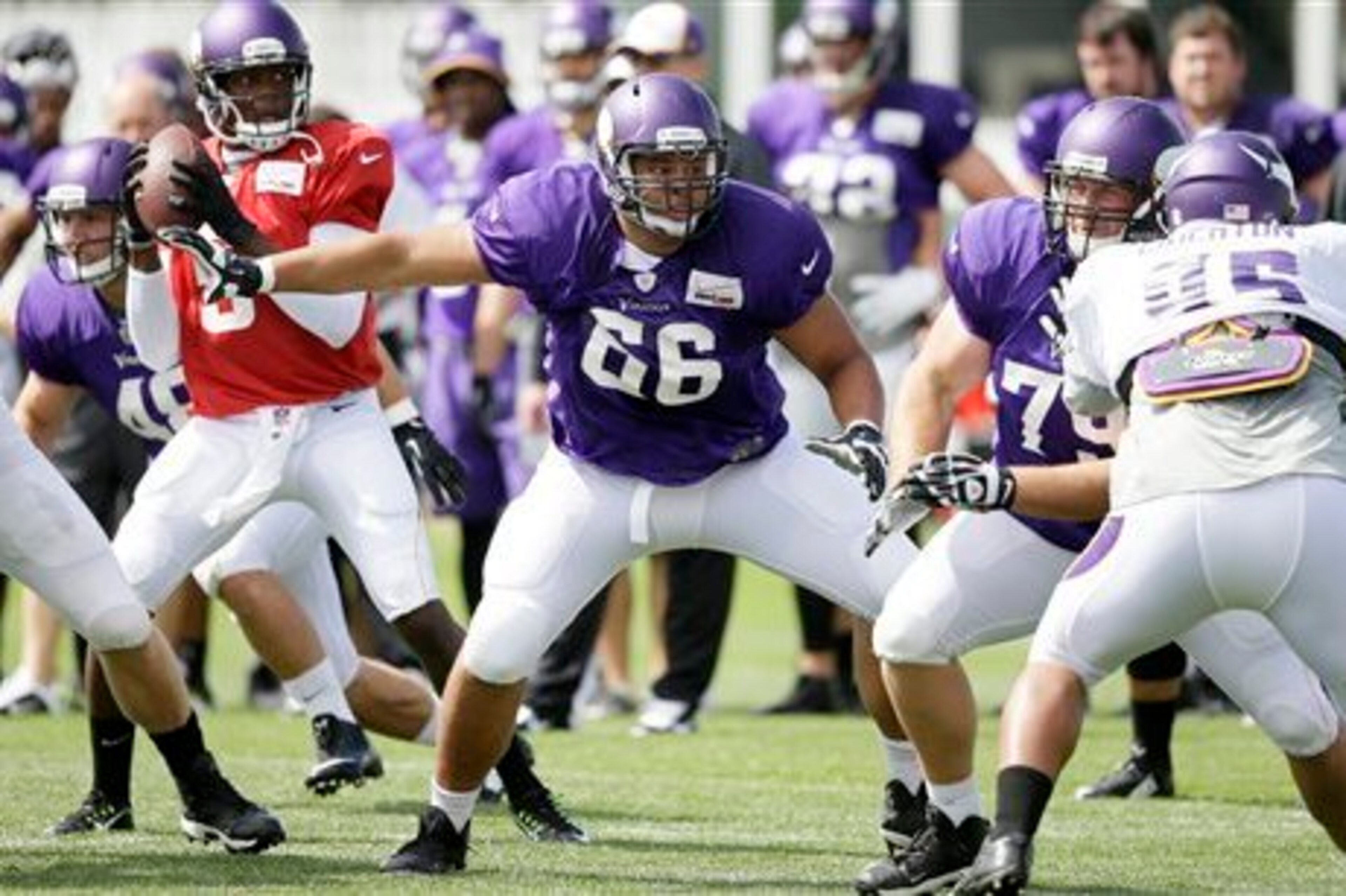
Coming off a 26-snap rookie season, Fusco recorded a negative-12.6 pass-blocking grade and a negative-1.2 run-blocking grade through 964 snaps in 2012, according to Pro Football Focus. Despite his low draft position and subpar full-season performance, Spielman did not acknowledge the guard position until the sixth round of the 2013 draft. Instead, he used his picks to trade up to acquire Patterson and select Hodges in the fourth round.
Minnesota would once again be forced to open the season with Fusco as its starting right guard. This year, however, the formally irrelevant six-rounder went on to have a breakout season, which ultimately earned him a five-year extension this past September.
This year, Spielman and the Vikings chose not to address the interior line position during free agency and now stare down a left guard depth chart of 2014 fifth-round pick David Yankey and the veteran Berger, as the team creeps closer to the 2015 draft.
Considering the notable similarities between Minnesota's current guard situation, and the one Spielman faced with Fusco in 2012, it would be a major upset to see him break draft tendency.
Based on recent history and Spielman's overall draft strategy consistencies, the Vikings should be expected to address positional holes at cornerback and linebacker with their early-round selections. Assuming Spielman doesn't unload his middle-round selections to acquire a second first-round prospect—for the fourth consecutive year—adding depth and stability to the running back, defensive end and cornerback positional depth charts seems most plausible.
| Position | Number of Selections | Highest Draft Round | Highest Drafted Player |
| QB | 1 | Round 1 | Teddy Bridgewater |
| RB | 1 | Round 3 | Jerick McKinnon |
| WR | 3 | Round 1 | Cordarrelle Patterson |
| TE | 1 | Round 4 | Rhett Ellison |
| OT | 1 | Round 1 | Matt Kalil |
| OG | 3 | Round 5 | David Yankey |
| C | 0 | None | None |
| DE | 2 | Round 3 | Scott Crichton |
| DT | 3 | Round 1 | Sharrif Floyd |
| OLB | 3 | Round 1 | Anthony Barr |
| ILB | 2 | Round 7 | Audie Cole |
| CB | 6 | Round 1 | Xavier Rhodes |
| S | 1 | Round 1 | Harrison Smith |
| K | 1 | Round 6 | Blair Walsh |
| P | 1 | Round 5 | Jeff Locke |
| Total | 29 | N/A | N/A |
The answer as to what Spielman will do with the No. 11 overall pick, however, remains unanswered by his disinterest in interior offensive linemen and general strategy to acquiring depth at key positions.
In reference to the above chart, Spielman's seven first-round selections have all solidified a position of critical need, with exception to Patterson, who was selected to improve a slightly above-average group.
Everybody has a different point of view when asked about Minnesota's positional needs, but the areas in critical need of an upgrade, according to the Vikings, are linebacker and cornerback—based on the substantial amount of high-round prospects worked out at this position.
The Vikings have reached out to first-round hopefuls Trae Waynes (Michigan State) and Marcus Peters (Washington), as well as Quandre Diggs (Texas) and consistent draft board-riser Byron Jones (Connecticut), according to Chris Tomasson of the St. Paul Pioneer Press and Andrew Krammer of 1500 ESPN.
Bleacher Report's Dan Hope also caught a glimpse of Jones performing during a one-on-one workout with Zimmer at his pro day:
"Mike Zimmer coaching Byron Jones in DB drills, giving him instructions. #Jaguars representative also coaching him up. pic.twitter.com/h6qFTyfWEz
— Dan Hope (@Dan_Hope) March 31, 2015"
Jones may ultimately join Waynes and Peters in the first round given his truly unbelievable combine and pro day performances—per Mock Draftable. As a result, these three impressive athletes could very well be atop Spielman's big board.
This doesn't mean that Diggs is off the Vikings' radar, however. He shares a special relationship with defensive backs coach Jerry Gray and could be targeted even if Minnesota selects a cornerback with its first-round choice:
"Texas DB Quandre Diggs said he had long chat w/Vikings DB coach Jerry Gray at the Senior Bowl and last night Said he'd love to join Vikings
— Chris Tomasson (@christomasson) February 21, 2015"
Consequently, the Vikings have also been connected to eight linebackers (two inside, three outside, three edge-rushers). Minnesota has shown a strong interest in Shaq Thompson (Washington), but he appears to be the lone first-round caliber linebacker receiving extensive attention:
"More #Vikings visitors starting to trickle in. Count Washington LB and sometimes safety/RB Shaq Thompson among those. Intriguing prospect.
— Darren Wolfson (@DWolfsonKSTP) March 27, 2015"
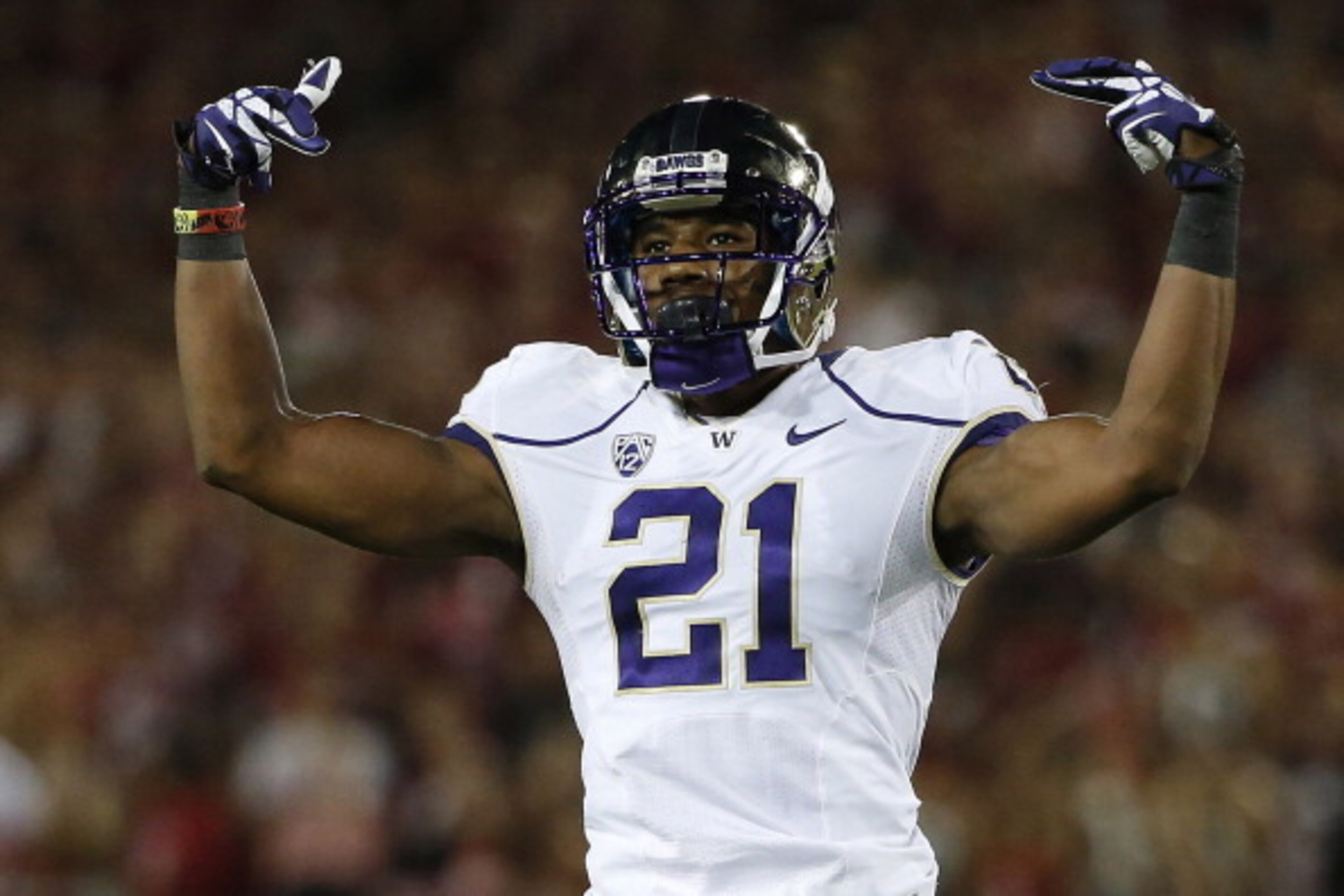
Spielman has made picks at No. 9 (Barr) and No. 12 (Ponder), but never at No. 11. Given the importance of the quarterback position and the significant upside of Barr, a "critical need" player would have to take a draft-day tumble—Randy Gregory (Nebraska) has the potential to do so after failing his combine drug test—for Minnesota to shy away from entertaining trade offers.
With this abundance of information taken into consideration, the most logical answer is for Spielman to move down to the late "teens" picks. In a recent SiriusXM radio show appearance, he seemingly baited teams to discuss a potential trade with him:
"11 in the draft: Spielman "I love that spot. you never know when potential trades come. first pick out of top 10 5th year option money"
— Vikes Fan Page (@Kevin_VFP) March 25, 2015"
This was not an accident or a talking point. Spielman purposefully bragged about the financial benefit of his draft position in order to draw more trade suitors, creating bartering leverage in the process.
In the event that the Vikings do find an eligible trade partner, Minnesota could acquire either one early-round selection (top 50) or multiple mid-round picks (pair of top-100 picks) while still maintaining a high enough first-round selection to draft Waynes, Peters or Thompson.
Plausibility isn't always the answer, though. Ruling out the "wild card" positions in the first round is ignoring Spielman's consistent track record of implausible value selections and unprecedented draft-day trades.
If this analysis has proven anything definitively, it is that Spielman is either consistently unpredictable or methodical in his approach. If his strategy works, he will bleed it dry. And if it fails, the next attempt at accomplishing the same task will be based in a completely unrecognizable approach.
"I understand that you're never going to bat 1.000 in this seat, but you can do everything in your will to make those best decisions," Spielman told reporters during a 2012 press conference. "If you don't learn from the mistakes in your past and you continually make those mistakes, to me you're not doing your job. You're being lazy."
Statistics and draft history courtesy of Pro-Football-Reference, unless otherwise noted.
For more Vikings analysis and discussion, find me on Twitter @RobertReidell.
.jpg?w=3840 "Bills Chiefs Football")
.jpg?w=3840 "Grading Monday Night Raw 🔠")
.png?w=3840 "Jordan Walker Embraced Boos 🤫")