
Can Dallas Mavericks Get Right in Time for NBA Playoffs?
This season has been a roller coaster for the Dallas Mavericks. A midseason trade and several untimely injuries have thrown the team into a state of perturbation, and the clock keeps ticking.
The NBA playoffs are mere weeks away, and there are still a ton of things the Mavs have to figure out in order to have a competitive postseason run.
Here are some scary facts: The Mavs have been outscored by 2.8 points per 100 possessions post-All-Star break, while ranking 20th and 21st in offensive and defensive efficiency, respectively, per NBA's media stats page. It might be a sample size of just 16 games—during which Dallas hasn't been entirely healthy—but it's a worrying trend at a point of the season when title contenders generally step their game up.
TOP NEWS
Brunson Pulls Up to Rucker Park
Ranking Every Team's Trade Assets 📊
Buzz: Kings 'Hesitant' on Kuminga
The brutal schedule continues to be a challenge to deal with. Their average opponent since the All-Star break has had a winning percentage of 0.570. For context, the Sacramento Kings have had the toughest schedule this season with an average opponent wining percentage of 0.518.
Even now that the Mavs have most of their players back, there is still a ton of friction on the floor. It appeared as though Dallas turned the corner following an embarrassing 127-94 home loss to the Cleveland Cavaliers on March 10.
The Mavericks were exposed in that game, succumbed to the pressure and suffered an inexcusable defeat. A three-game winning streak followed, including a spectacular 129-99 victory over the Los Angeles Clippers on March 13. The team finally seemed to be figuring things out, until its most recent losses to the Memphis Grizzlies and Phoenix Suns threw everything in turmoil yet again.
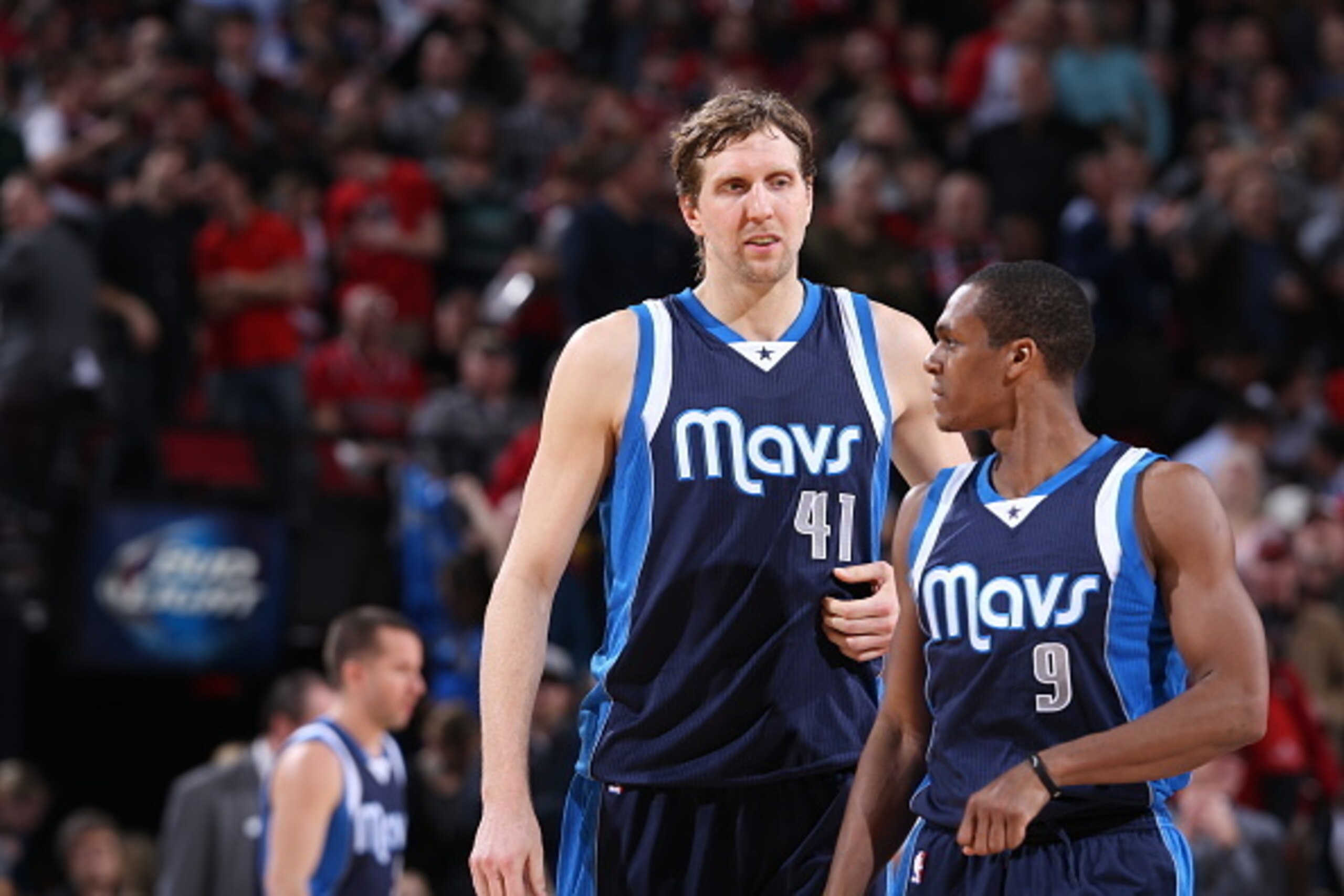
Dallas head coach Rick Carlisle ripped into his team following the poor late-game execution in Sunday's 98-92 loss to the Suns, according to Tim Cato of Mavs Moneyball:
""Look, this is not a Monta Ellis shooting problem," Carlisle said. "This is a Dallas Maverick hard play problem. We don't play hard all of the time. That's the problem. It's pretty clear that's where our inconsistency is. That's where we have to get better. We have to be a more together team. I believe that we can do it. We did it in the second half."
"
When asked about why his team might not be putting forth its utmost effort in every game, Carlisle responded with a cryptic, back-handed comment:
"That's a question you have to ask them. I have my theories but I'm not going to air them out publicly," he said, according to Cato. "In terms of the soul of the team, you have to ask those guys."
The Mavericks locker room has often been a place where veterans are able to call players out and hold each other accountable. Amar'e Stoudemire already did so earlier this season, and Tyson Chandler is known for giving his teammates an earful when they slack on defense. But at some point, the barking and finger-pointing have to lead to tangible amendments, otherwise it just divides the team.
Bryan Gutierrez of MavsOutsider.com put Dallas' choices moving forward in perspective:
"There truly is a long way to go now for the Mavericks. In season that led to excitement and intrigue to hope after the trade, things have turned sour in a hurry. It is going to take effort, sacrifice, and a willingness to turn things around. They will have to stand together as a unit and work together as a team or they will perish as individuals.
"
Winning and solid play solves a lot of the aforementioned chemistry problems. Just a week ago, people were buying into Dallas' resurgence and the notion of the team turning the corner. The mood around the Mavs appeared brighter, and the only way to return to that place is to start winning consistently.
Unfortunately, it's hard to win consistently with an offense as rough as Dallas' is right now. The game against Phoenix made that blatantly obvious. The Mavs battled back from a 17-point deficit, turned it into a lead and faltered down the stretch due to abysmal execution.
There was no creativity whatsoever. Dallas kept feeding the ball to Monta Ellis, who proceeded to drive into a packed lane while jacking up tough shots. There was no off-ball movement. Everyone got out of the way and watched Ellis miss all of his eight shot attempts in the fourth quarter.
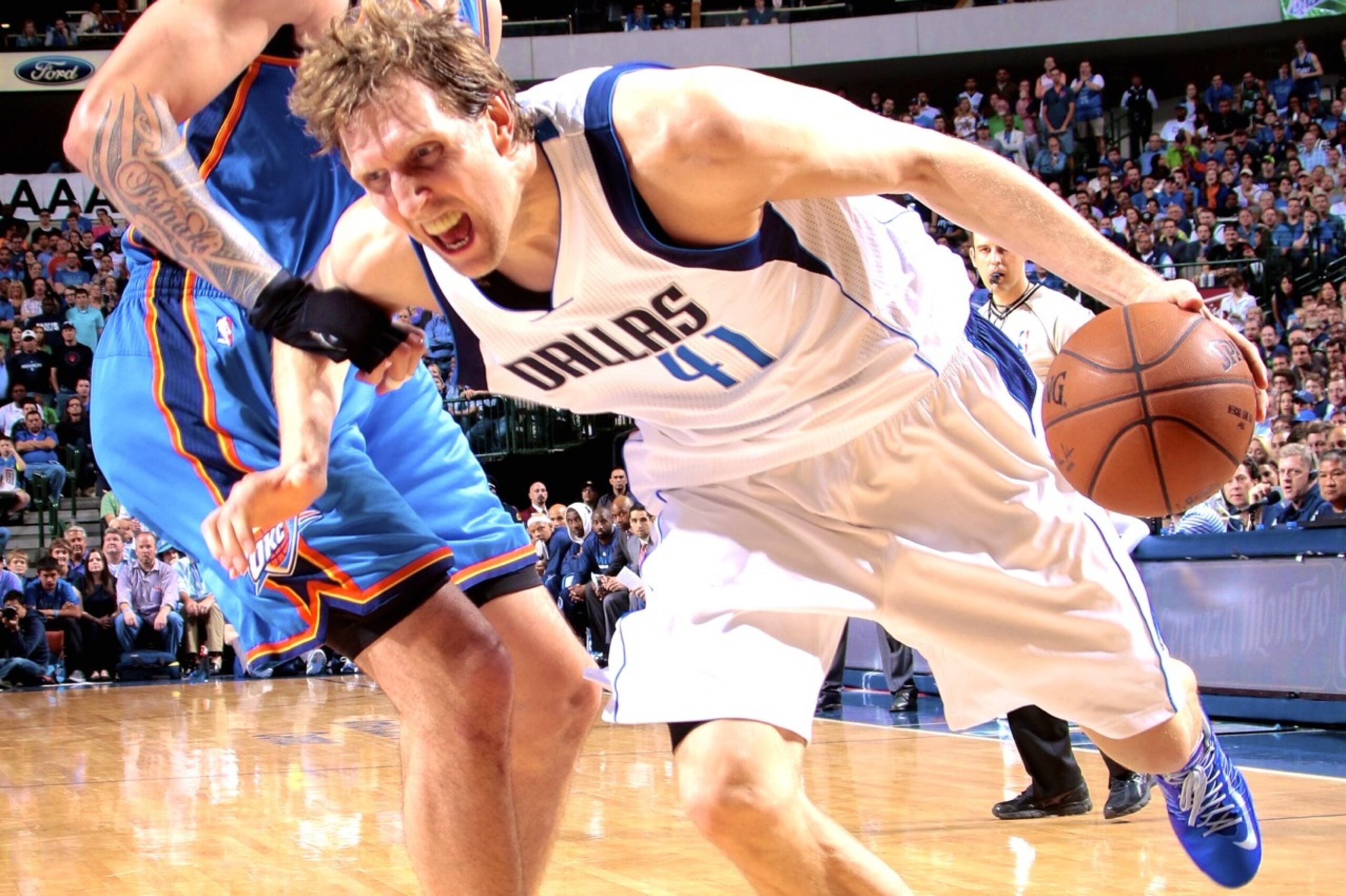
Dallas has a Hall of Fame big man in Dirk Nowitzki and one of the most offensively versatile small forwards in the league in Chandler Parsons. To not utilize them at all in such fashion is a travesty of the highest degree.
Even though there is a lot of finger-pointing in the locker room, everyone shares some of the blame. Carlisle needs to organize the team better and the players need to find a way to co-exist. Even the front office deserves some flack for a bold mid-season move that might backfire.
Integrating Rajon Rondo continues to be a challenge, which was also on display in that game. Carlisle has tried running some nifty plays to minimize the spacing dilemma. Here is an example:
Rondo screens for Chandler, who pops out to catch the ball at the left elbow. Ellis then runs over to set a down screen for Dirk, while Parsons simultaneously makes a cut across the paint. The execution wasn't clean, but there was enough movement and misdirection to create a decent look at the elbow for Nowitzki.
Dallas also ran a quick little play early in the shot clock, with Ellis setting a back screen on Nowitzki's man and Dirk popping out to the left block for a pass and a jumper. Rondo is great at timing his passes on such plays, as he has been hitting spot-up shooters in their pockets his whole career.
However, the Mavs went back to the exact same play the following possession, and it resulted in a turnover and a fast-break opportunity. Defenses are smart enough, especially in the playoffs, to not get fooled by the same trick twice. And when that fails, Dallas reverts to post-ups and pick-and-rolls.
Dirk is great in the post, but he rarely has room to operate with Rondo on the court. This play is the perfect example:
Rondo gives the ball to Nowitzki and proceeds to cut to the right corner. His defender, completely aware of this, chooses to abandon him and stays to help on Dirk. Nowitzki is forced to kick out the ball to the only open man, and the Suns simply scatter away from Rondo and allow him to shoot.
When Rondo is the one providing the entry pass to Dirk on the strong side, this happens fairly regularly. During a crucial possession in the fourth quarter, Dallas ran an identical isolation post-up play as the one in the video above. Phoenix's Eric Bledsoe completely abandoned Rondo, snuck up on Nowitzki's blind side and poked the ball out. The Suns received an excellent transition opportunity as a result.
The same thing happens when Dallas players drive off pick-and-rolls. Take a look at this picture:
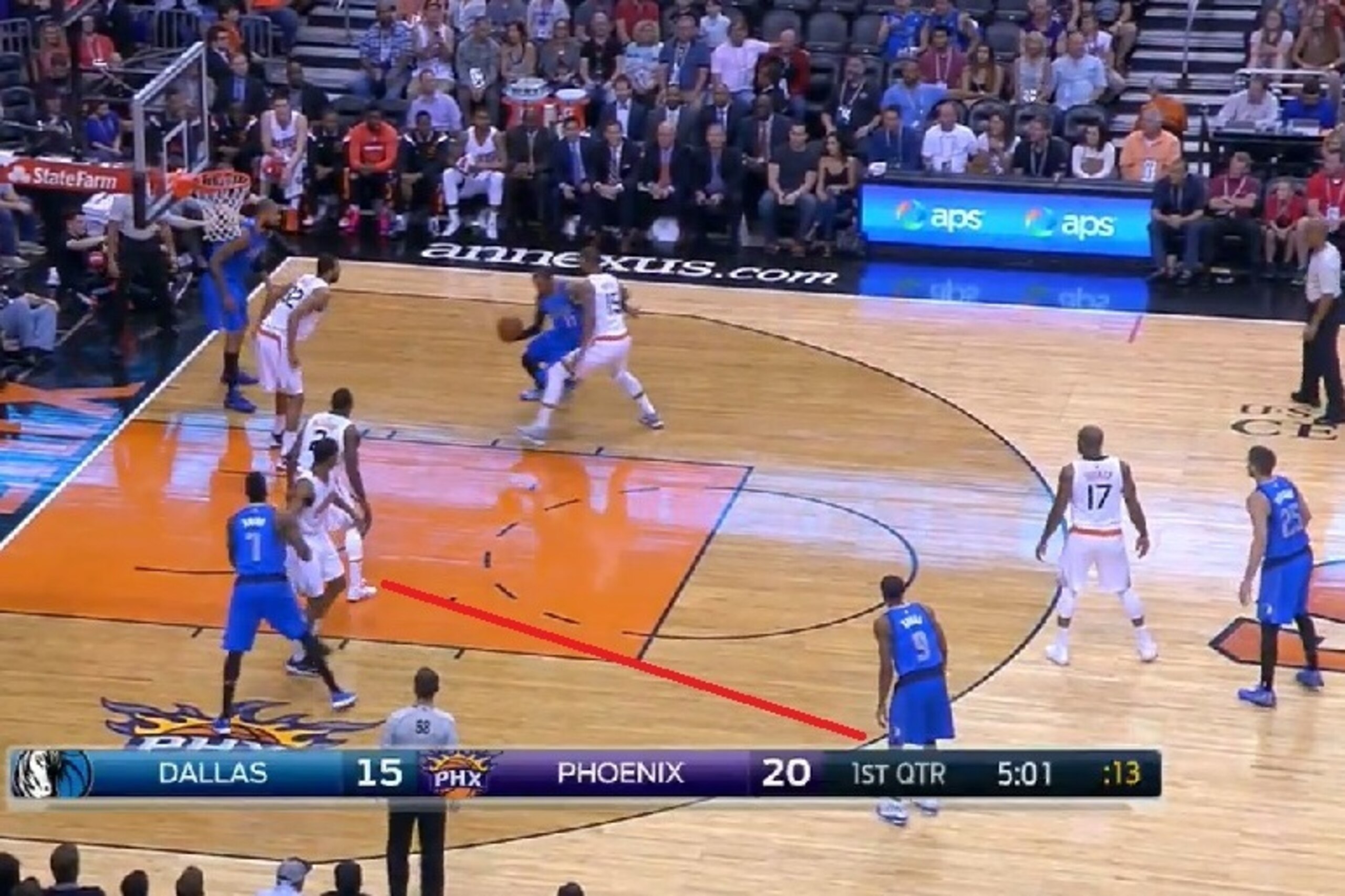
Bledsoe casually abandoned Rondo early in the possession and ventured into the paint while waiting for Ellis' drive. It's a tall challenge to finish at the rim when there is an extra man under the basket.
This trend will only continue in the playoffs, perhaps to an even more extreme degree. If Rondo doesn't have the ball in his hands, he isn't a threat. If he does, Dallas doesn't get to utilize Parsons and Ellis as ball-handlers.
Running more plays alleviates some of this burden, but it eventually makes Dallas predictable as defenses adjust. The Mavs are no longer the team that could spontaneously create an efficient shot anywhere on the floor at any time through ball movement and drive-and-kicks.
The Mavericks haven't exactly made up for their lackluster offense on the defensive end. Al-Farouq Aminu has been a sensational revelation, but that's about it. Dallas did look like an improved defensive team after adding Rondo, but everyone has slipped up lately.
It's hard to pin-point one specific defensive issue, but effort is certainly one. Rondo hasn't managed to keep his direct matchup in front of him on a lot of occasions, while rotations and help defense have been slow as well.
There are a lot of issues for Dallas to iron out in the coming weeks. Carlisle is one of the best coaches in the league, and that carries a ton of weight in a crucial postseason series. He is great at adjusting and finding exploitable flaws in the opposition. There is also the distant hope that Nowitzki will turn it up a notch in the playoffs, even at the age of 36.
It would be silly to completely count out the Mavericks at this point, but everyone needs to be on the same page in order to start plugging the gaping holes. Otherwise, this team's short-term future looks bleak.
You can follow me on Twitter: @VytisLasaitis


.jpg?w=2560 "Report: Falcons LB Tore ACL")