

Brooklyn Nets Must Choose Between Brook Lopez and Mason Plumlee This Offseason
A basketball team is supposed to house players whose skill sets complement one another, but you won't find that concept being put to practice in parts of the Brooklyn Nets roster.
The Nets decided to hold onto Brook Lopez, who will be a free agent this summer, at the trade deadline. Now, they have to figure out how to use him with Mason Plumlee.
At its best, Brooklyn can run with a three-player big-man rotation of the two aforementioned guys and the recently acquired Thaddeus Young. It's not a trio that's lacking in talent, but it is missing some chemistry between the two incumbents.

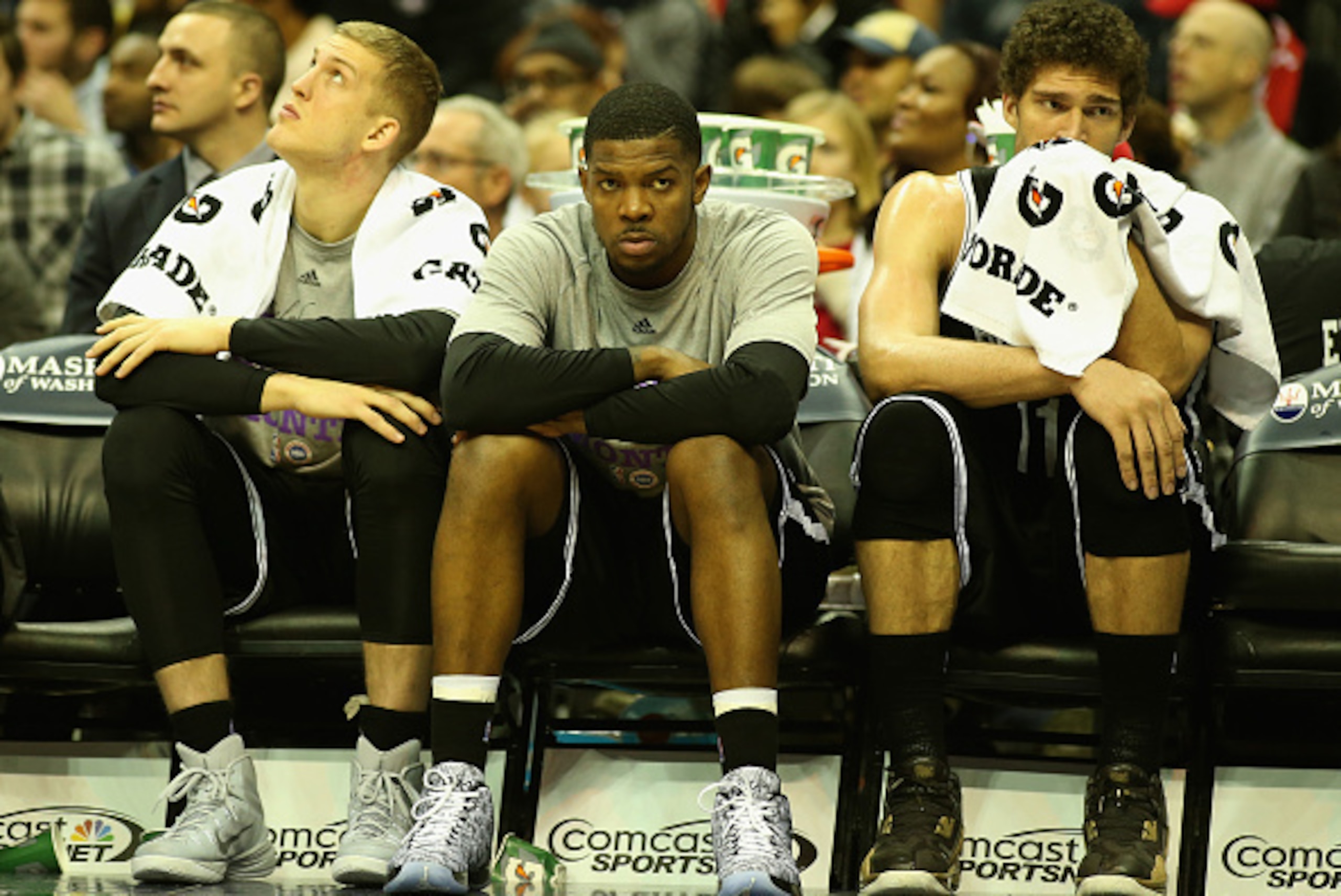
It's an uncomfortable scenario because both Plumlee and Lopez can produce. It just doesn't usually happen when they're sharing the floor. I actually mentioned the Lopez-Plumlee dynamic in my Friday column:
"[Lopez] has shown that he doesn't fit perfectly next to Plumlee. And Lionel Hollins has, for the most part, avoided pairing them together. When the two of them share the floor, spacing becomes convoluted, defense turns secondary, and the Nets get outscored by [17.2 points per 100 possessions.]
Hollins loves himself some defensive-minded bigs, and though Lopez does block a shot every once in a while, he surely isn't in that category. His slow feet don't allow him to get there. So, what is the team to do? Are things about to get awkward?
"
Maybe they are about to become a little frigid. After all, Hollins has mentioned on multiple occasions that he's not the biggest fan of playing Lopez and Plumlee together.
"Let me put it this way: I hope they play better together," Hollins said in early January. "The numbers have shown they haven’t played well together. Our plus-minus numbers are down, our defensive numbers are down, everything when they’re on the court together is not very good for that combination."
Of course, things change. But this might not be one of those "things."
Since Hollins said that quote, he's actually played the Lopez-Hollins combination even more than before—but those lineups continue to struggle statistically, getting outscored by 18.8 points per 100. For whatever the reason, it's not working.
Hollins is a major promoter of lineup data. Sometimes, knowing the information, he'll choose to ignore it. Other times, he'll steadfastly abide by the numbers.
The Lopez-Plumlee combination seems to be in the latter category, and the Nets coach moved his highest-paid big man to the bench early in the season because of it.
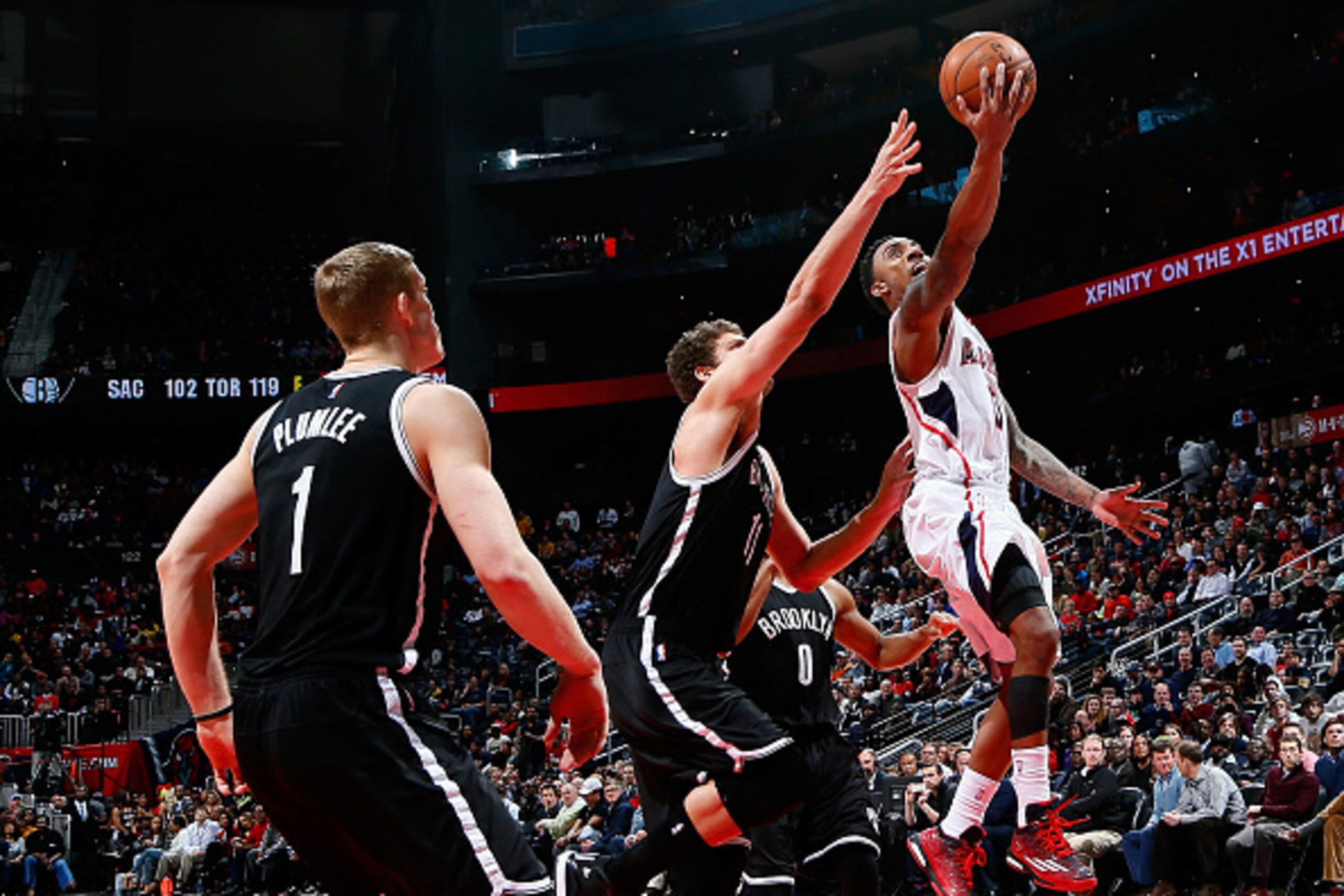
One of the problems with this debate—from a statistical standpoint, of course—is that we haven't seen much of a sample size. Plumlee and Lopez have played 298 minutes together, enough to judge their production (especially when the net rating is that atrocious), but not necessarily enough to where it can't improve.
In Hollins' defense though, the X's and O's back up the rocky journey on which Plumlee-Lopez lineups take the Nets.
I know it's fun and trendy to say Plumlee can play power forward and center, but we're finding more and more evidence that, for now at least, he's strictly a 5-man. It's true on both sides of the ball, too.
Plumlee is so much more effective as a defender when he's manning the rim as opposed to roaming around on the perimeter, where he tends to become more jumpy and doesn't help as effectively. He's quick enough to guard plenty of 4s, but the style just doesn't suit him as snugly as when he defends 5s. On the other side, his lack of scoring ability away from the paint isn't exactly optimal for spacing.
The Nets need Plumlee to develop into a center. The problem is they already have Lopez.

There's a reason Kevin Garnett would play the 4 next to Plumlee, even though he looked far worse defending quicker power forwards. At this stage of his career, KG is a center, but he had to slot into more 4 with Plumlee's flaws showing at times.
This isn't at all to say that Plumlee is an unsuccessful or overrated player. He just isn't someone who works next to Lopez stylistically. After all, there's a reason Brook's shot distribution looks so different this season.
Because Plumlee isn't a scoring threat away from the rim, the other big man needs to fulfill that duty. You can't have two guys clogging up spacing by hanging around the paint all the time. That's how you end up like the pre-waiving-Josh Smith Detroit Pistons. So, the Duke alum has pushed Lopez further out to the perimeter.
Lopez is taking 36 percent of his shots from beyond 10 feet, easily the highest percentage of his career. Only about a quarter of his attempts are coming at the rim, a career low.
We're seeing a new Brook Lopez, and in some ways, this has been good for him.
He's still having a plenty solid year, scoring well, playing passable defense at times and making a bunch of those jumpers (especially out of the pick-and-pop). But this isn't Lopez's game, and it shouldn't be.
His strength comes around the basket, finding crafty ways to loft in floaters, hook shots and his bevy of post moves. Shifting him away from the paint neutralizes some of his best attributes, but it's the Nets' only choice when he's there with Plumlee.
The Nets might have made a mistake holding onto Lopez. We can't know for sure until we find out general manager Billy King's plans for the summer.
Brooklyn is paying Lopez $15.7 million this year. With the cap projected to shoot through the roof before the 2016-17 season, he could see a bunch of money come his way this summer. So, if Hollins and the Nets really do see Lopez as someone who has to come off the bench, then shouldn't the price completely deter them from bringing him back?
The Nets have options. It's just not obvious which one is most enticing to them.
Will they re-sign Lopez, who has a $16.7 million player option for next year, and try to move forward hoping long-time continuity and development from the inexperienced Plumlee will prevail? Will they let Lopez walk and lose him for nothing when they could've traded him at the deadline? Will they bring him back and pull a fast one by trading Plumlee for value at another position?
Brooklyn still has options, but if it holds on to its two young bigs (yes, young; Lopez is still only 26), it has to devise a plan for next season that's more cunning than, "Well, I guess we won't play them together much." That's no way to move forward on a team that already has a limited future.
Your best guys need to be able to play together. At some point, the Nets have to make a definitive choice.
Fred Katz averaged almost one point per game in fifth grade but maintains that his per-36-minute numbers were astonishing. Find more of his work on ESPN's TrueHoop Network at ClipperBlog.com. Follow him on Twitter at @FredKatz.
All quotes obtained firsthand. Unless otherwise noted, all statistics are current as of Feb. 22 and are courtesy of Basketball-Reference.com and NBA.com.

.jpg?w=2560 "Sports Leagues Ask for Protections from Bettors' Threats (AP)")

.jpg?w=2560 "Mahomes Reacts to Bettors Vid 😂")