Can Gurley, Gordon and Coleman Bring Running Backs to the 1st Round Once Again?
INDIANAPOLIS — Great news, Todd Gurley, Melvin Gordon and Tevin Coleman: Some NFL general managers will consider drafting a running back in the first round of this year's draft!
"Yeah, I would," said Arizona Cardinals general manager Steve Keim, whose team may be in the market for a workhorse running back. "Regardless of position: best player available."
More great news, Gurley and Co.: While they never name names, several general managers think there are multiple running backs in this draft who are worthy of a first-round selection!
TOP NEWS
Could Budda Baker Request a Trade?
Top 10 WRs in Coaches/Execs Poll 🙌
One trade idea for every NFL team
"I'd be surprised if a couple of these guys may not go in the first round," said Minnesota Vikings general manager Rick Spielman, whose running back needs hinge on Adrian Peterson's ability to bounce back after playing just one game in 2014 due to a suspension.
"If the scouts grade him as a franchise player or a Pro Bowl type of player, then that's where he's going to go," said Tennessee GM Ruston Webster, whose Titans need just about everything. "There's probably some guys in this draft that have that kind of ability."
That's music to the ears of some ambitious, talented young running backs.
"There are a lot of running backs out here, including myself, who are trying to break that trend," said Wisconsin's Gordon of the first-round running back drought that has lasted since the 2012 draft.
"I want to be the No. 1 pick," Georgia's Todd Gurley said Thursday. "I'm not here to be No. 5 overall or a second-round pick. I want to be the best."

The No. 1 pick may be pushing it. Just getting into the first round has become a major accomplishment, even for a great collegiate runner.
No running back has been selected in the first round of the last two drafts. Offensive guard is generally considered the most interchangeable position on the field, but just as many guards as running backs have been drafted in the first round since 2010.
But this year's running back class is the strongest in years, and several NFL decision-makers envision that running backs will return to the first round.
Gordon rushed for 2,587 yards (the second-highest total in NCAA history) for Wisconsin last year. Coleman gained 2,177 yards from scrimmage for a bad Indiana team. Gurley looked like he would run away with the Heisman Trophy before an ACL tear and the NCAA "Gotcha Squad" slowed him down.
For these guys, a first-round selection means more than status and prestige. First-round picks make more money and sign contracts with fifth-year options. At a position where wear and tear can end a player's career before his 27th birthday, bigger upfront guarantees make a huge difference.
Durability Concerns
There's no consensus among NFL decision-makers on why running backs have experienced this first-round drought.
"There's a myriad of reasons," Tampa Bay Buccaneers general manager Jason Licht said.
"Probably it's the shelf life," Licht added. "Durability is really a concern. Draft a player in the first round, ideally, you want to get to that second contract."
Before Licht's arrival, the Buccaneers drafted Doug Martin 31st overall in the 2012 draft. Martin, a durable runner at Boise State, had a very productive rookie season but has since been plagued by injuries. He rushed for just 494 yards last year. The Buccaneers are unlikely to see much more return on their investment in Martin. That is just one reason why teams try to project a running back's durability.
"Guys that are hurt sometimes have a history of staying hurt," Spielman said. "But was it just one year? Or has he been playing four years, and in all four years he has never been able to complete a season?"
Teams also glean any information they can from medical examinations.
"We'll get a medical report from our doctors," Spielman said, "And [the running back] may not have had any injuries, but they might tell me, 'well, his knee's so shot, don't expect him to last more than three years.'"
Gurley arrives with obvious health risks. He tore his ACL in November and is only participating in medical exams and interviews at this week's combine. Gurley can only jog and perform strengthening exercises in rehab right now. He will not run at Georgia's pro day next month.

An ACL tear will not necessarily scare a team off. As Spielman said, teams look for a pattern of injuries or susceptibility to them, not one specific injury. Gurley hopes to be cleared for training camp, taking inspiration from Peterson's amazing rehabilitation in 2013.
"I'm definitely not Adrian Peterson," Gurley said. "He's a freak of nature. But my goal is to be a freak of nature as well."
Coleman also arrives with injury concerns. He revealed Thursday that he had recent surgery to remove a sesamoid bone from his foot. Coleman played through the painful injury for most of last season but will only participate in the bench press (plus exams and interviews) this week.
Coleman's ability and willingness to play at a high level through pain will impress coaches and executives. But sesamoid injuries are caused by chronic stress, and team doctors will double-check to determine if Coleman is susceptible to recurring problems. At any rate, the high mileage he and Gordon racked up while rushing for over 2,000 yards in college is not a major concern to some general managers.
"Adrian had a pretty good number of carries, but we weren't concerned," Spielman said of a certain freak of nature.
Replaceable Parts
Running backs face other problems beyond a high blowout rate. Some general managers seem to prefer panning for late-round talent rather than taking a big name off the top of the draft board.
"I think it's because people had success getting them later," Webster said. "There's that real need for a quarterback, a pass-rusher, a left tackle. Those type of positions take precedent."
"You can't play without a left tackle," added Webster, who drafted tackle Taylor Lewan in the first round last year, then added running back Bishop Sankey in the second. "You can't play without a quarterback. You need pass-rushers. They're a premium for everybody."
Of the 13 running backs to rush for over 1,000 yards last season, only Marshawn Lynch (selected 12th overall in 2007, before the drought) was a first-round pick. Five of the 1,000-yard rushers in 2014 were second-rounders, three were third-rounders and four were selected later. And one, in Arian Foster's case, went undrafted. The average draft position of the 1,000-yard rushers, Foster excluded, was 82nd overall. That's midway through the third round.
By contrast, the seven first-round picks of the last five years have combined for just four 1,000-yard seasons and four Pro Bowl appearances. Two of the backs, Jahvid Best and David Wilson, have already been knocked out of the league by injuries.
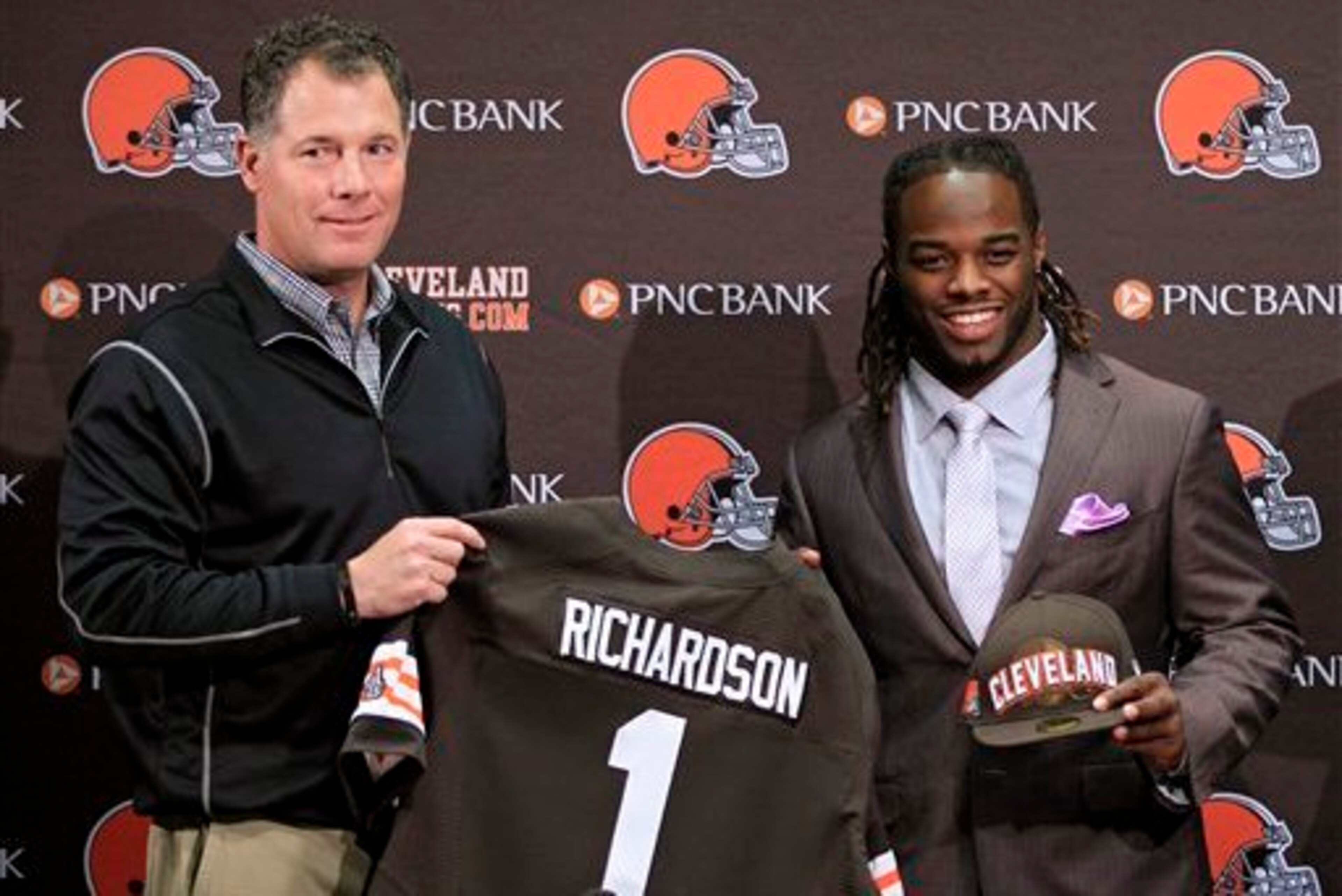
Trent Richardson, taken third overall by the Browns in 2012, is likely to be released (or have his contract voided, according to The Indianapolis Star) by the Colts this offseason. Richardson has become emblematic of the perils of investing a high pick in a running back.
One of those midround 1,000-yarders was Le'Veon Bell of the Steelers, selected 48th overall in 2013.
"There's guys that are available, not only in the first round but the second round, through the seventh and free agency," said Steelers general manager Kevin Colbert. "I think time has proven that there are a lot of great players that weren't top-15 picks."
According to Colbert, the running back depth in this year's draft could work against the prospects at the top.
"Last year with the receivers, it was such a unique group you felt that you could get a really good player further down the line," he said. The Steelers waited until the fourth round to select Martavis Bryant from last year's exceptional wide receiver class, netting a player who caught eight touchdown passes in limited action.
Why invest heavily in Gordon or Gurley when David Cobb or Cameron Artis-Payne, productive runners who shined at the Senior Bowl, will be waiting in the third round?
The difference, of course, is that five wide receivers were drafted in the first round last year. Running backs are just trying to get a little first-round representation.
Cyclical, Not Philosophical
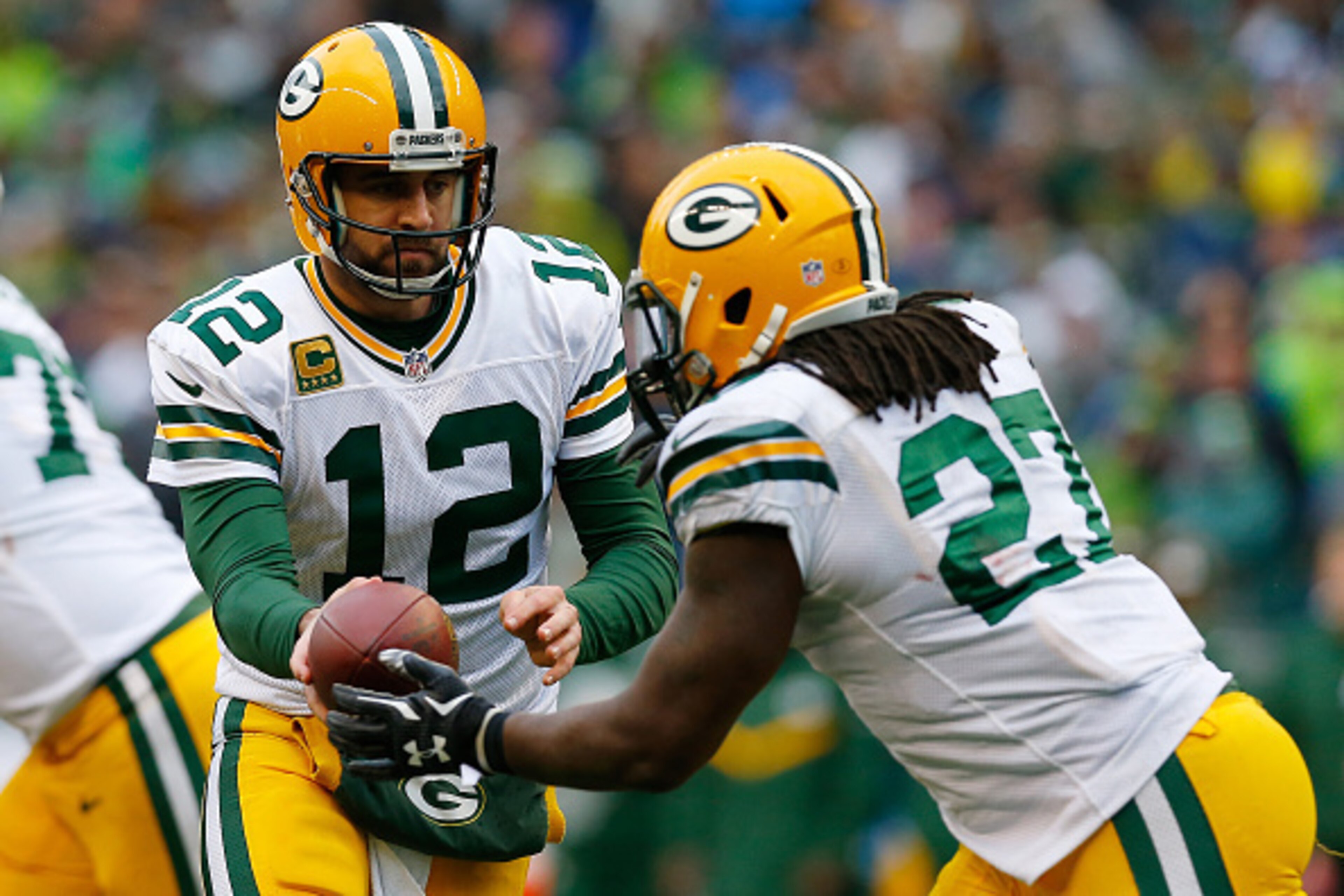
Green Bay Packers general manager Ted Thompson selected Eddie Lacy, another of last year's 1,000-yard rushers, late in the second round in 2013. Thompson doesn't put too much stock in the theory that his peers are skipping running backs in the first round as a matter of principle.
"I think, whether it's this year or two years from now, there'll be a year when five of them go in the first round," he said. "It's cyclical. It's interesting, but it probably doesn't mean anything philosophically."
Of course, if one colleague avoids running backs due to durability concerns and another feels confident he can get a quality ball-carrier later, it allows a prospect like Lacy, who rushed for 1,322 yards and 17 touchdowns in his final college season, to slip into Thompson's second-round clutches.
Maybe this year's crop of big, fast, versatile backs, coupled with the obvious needs of teams like the Cardinals and Colts, will prevent general managers from sitting on their hands or prioritizing other positions on the first night of the draft.
"Over the years, we've talked about devaluing running backs," Keim said. "Very rarely do you see that one bell cow anymore. This year, I think a couple of those running backs at the top have the chance to be special."
Keim's head coach agreed when asked about potential first-round running backs. "I think there's a possibility this year," Cardinals head coach Bruce Arians said. "You might see two."
All it will take is a general manager (or two) with a need at running back who is not put off by durability concerns or the belief that ample talent is available later in the draft…and for backs like Gurley and Coleman to clear medical exams while Gordon and others run well in drills, shine in interviews and assuage fears that they will become injury-riddled disappointments. They just have to convince general managers they deserve to be drafted higher than Bell, Lacy, Jamaal Charles or DeMarco Murray.
No sweat.
"We've been telling people all year that we're capable of being drafted in the first round," Gordon said Thursday. "That's been our goal."
Gurley's goal is set even higher. He stands by his first overall pick assertion. "That may sound ridiculous, but that's the kind of confidence I have in myself," he said.
There was a time when there was nothing ridiculous about a superstar Georgia running back striving for the first overall pick. But that feels like a lifetime ago. These days, Gurley and the others must settle for being included in the first-round conversation.
Mike Tanier covers the NFL for Bleacher Report.
.jpg?w=3840 "Chargers Giants Football")
.jpg?w=3840 "Commanders Football")