
Ranking the Top 2015 NBA Draft Prospects at Every Position
The projected 2015 NBA draft field looks a lot stronger than we initially thought it would back in November.
There are five strong first-round prospects at every position on the board, particularly at center. Teams looking for a future starting big man might not need a top-five selection or even a lottery pick.
Point guard looks like the shallowest position, although with Emmanuel Mudiay leading the way, it's strong at the top.
We're also looking at a promising field of wings, specifically the top five small forwards on the board.
These rankings are based on each prospect's NBA potential and upside—not necessarily their college impact.
Point Guard No. 5: Delon Wright, Utah, 6'5", Senior
1 of 25
Delon Wright entered the year with some major expectations after showing up at Utah in 2013 with very few.
And he's handled them well. Wright has the Utes ranked in the Top 15, while he's putting up solid numbers across the board: 14.2 points, 5.6 assists, 4.5 rebounds and 2.1 steals on 53.2 percent shooting.
Wright plays at his own pace and uses that hesitation dribble to get to his spots on the floor. He shows a great feel for the game as a table-setter, whether he's driving-and-kicking, hitting the roll man off a screen or making the simple pass as a ball-mover around the arc.
His scoring repertoire is still weighed down by a shaky jumper that's connecting at a 27.9 percent clip from downtown. However, he shoots 60 percent inside the arc, where he uses an array of different runners, floaters and pull-ups. And he's making 80 percent of his free throws, which suggests he has room to improve as a shooter.
As productive as Wright has been offensively, it's his defensive tenacity that might hold the most NBA value. At 6'5", he's quick and awfully disruptive.
Wright almost reminds me a little of Orlando Magic guard Elfrid Payton, only he's two years older.
Age certainly won't help Wright's draft stock, but for late first-round teams willing to overlook upside for immediate help, look no further.
Point Guard No. 4: Tyus Jones, Duke, 6'2", Freshman
2 of 25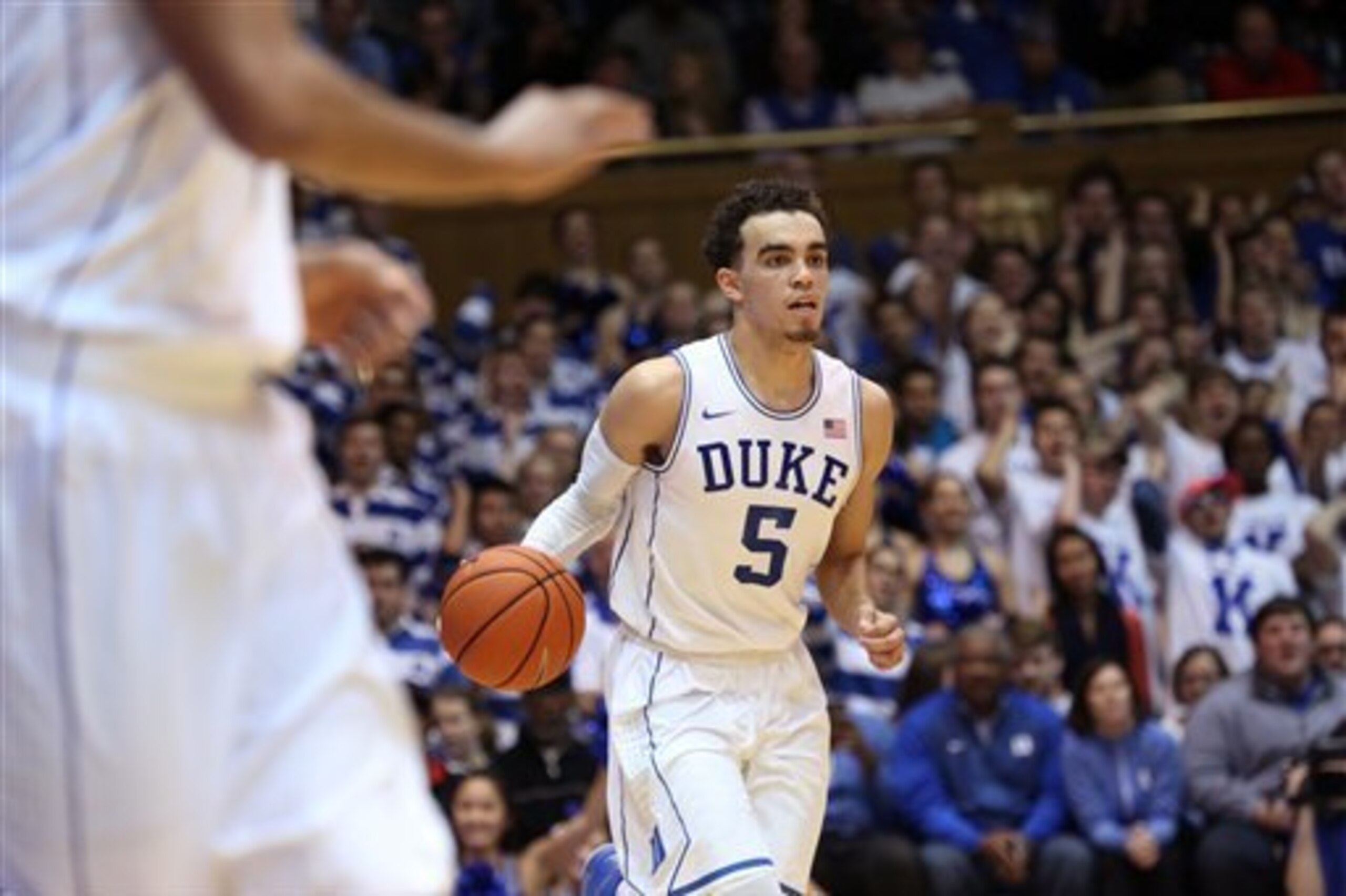
You get the feeling Tyus Jones knows what he's doing out there. He operates with a terrific command and has the ability to get to his spots on the floor and make the play as a passer or scorer.
Jones is ultimately at his best with the ball in transition, where he can push the tempo, weave between defenders and find the open man. He picks up 45.7 percent of his assists within the first 10 seconds of the shot clock, according to Hoop-Math.
His vision and feel for the game are on point, while his shooting stroke has started heating up. He's currently made at least two threes in four straight games, and his long-range percentage is up to 39.5 percent.
Jones isn't particularly athletic. He plays mostly under the rim, which naturally limits his NBA upside. He also struggles to fight through screens or deny penetration at the defensive end.
But he's just too skilled, smart and mature to write off. Jones seems like the type of player who could enjoy a long, successful career as a serviceable backup point guard.
Point Guard No. 3: Kris Dunn, Providence, 6'3", Sophomore
3 of 25
Kris Dunn has put consecutive shoulder surgeries behind him to average 15.1 points, 7.5 assists, six rebounds and 2.6 steals. It's one of the better all-around stat lines in America.
But Dunn also has the look to go with the numbers. At 6'3", 205 pounds, he's a standout athlete with lightning quickness and change-of-direction ability.
He also currently leads the country in assist percentage, a reflection of his ability to set the table for teammates and ultimately find them from all over the floor.
Dunn's jumper still needs improvement, but he's shown the ability to separate in the mid-range and take over stretches as a scorer, as well as slice through the defense and finish around the key.
He can also really get into opposing ball-handlers' grills on defense, where NBA coaches should love his physical, disruptive approach.
However, they won't like his 4.3 turnovers a game. He'll have to adjust his decision-making and continue extending his shooting range, but if Dunn is able to stay healthy, the upside here could be worthy of the top 20.



Point Guard No. 2: Jerian Grant, Notre Dame, 6'5", Senior
4 of 25
Jerian Grant wasn't really in the conversation a year ago, when he was forced to miss Notre Dame's final 20 games with academic issues. But there's always one late-blooming senior who breaks out.
Grant has been one of the most valuable players in college hoops this year (No. 2 in the country in win shares, per sports-reference.com).
While his 17-point-per-game average is obviously noteworthy, it's Grant's productivity and efficiency as a playmaker that's enhanced his appeal as an NBA prospect.
He's averaging 6.2 assists to just 1.9 turnovers, which translates to a top-15 pure point rating in the country. Grant has really developed his point guard IQ, and it's made him a whole lot more attractive.
His scoring prowess doesn't hurt either, though. Grant is shooting a strong 59.1 percent inside the arc, where he can finish at the rim or knock down jumpers in the mid-range.
His three-point shooting has been on and off, but he's making 1.6 triples a game. Still, as a long-range shooter, Grant is more on the capable side—not the proficient one.
Throughout the season, he's hit a number of clutch shots that have showcased his confidence, poise and leadership. At 22 years old, I wouldn't bet on teams reaching too high, but he's certainly proven himself worthy of a look anywhere outside the lotto.
Point Guard No. 1: Emmanuel Mudiay, China, 6'5"
5 of 25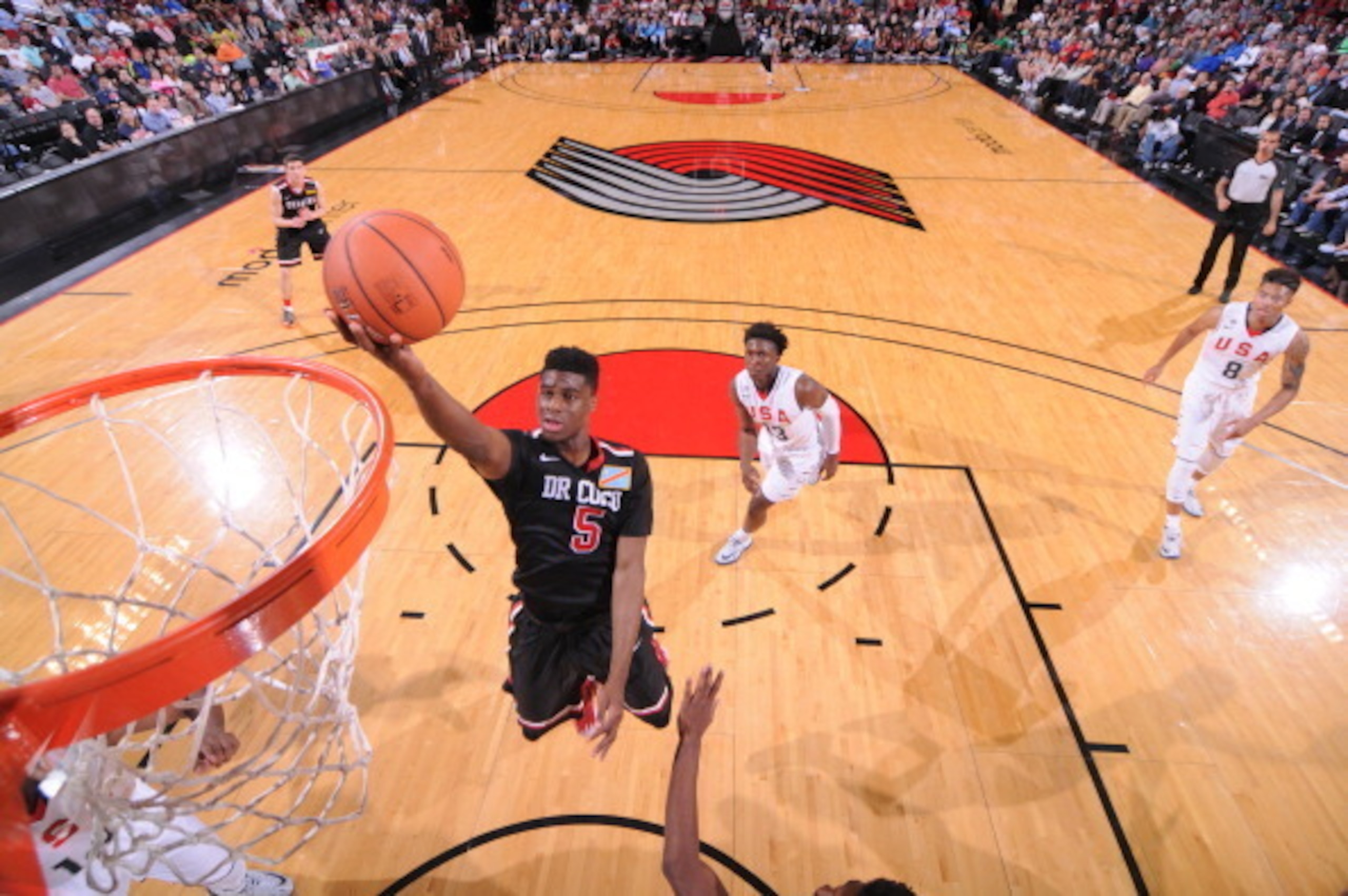
With Ohio State's D'Angelo Russell slotted as a 2, Emmanuel Mudiay easily slides into the top spot on the point guard board.
Though he's sat out ever since injuring his ankle in China back in November, scouts had likely already seen enough.
Mudiay was a superstar high school baller and productive floor general for the 10 games he lasted overseas.
And at 6'5" with smooth athleticism for the position, the 18-year-old projects quite favorably to the NBA.
Mudiay excels out of pick-and-rolls and remains a constant threat to drive-and-dish. Though he typically focuses on setting the table for teammates, he could just as easily take over stretches as a scorer, with the ability to separate and knock down floaters and pull-ups in the mid-range.
His physical tools and burst translate to above-the-rim and acrobatic finishes around the rim, both off the bounce and in transition.
At this stage, he's a capable shooter. Mudiay hit nine threes in China at a 30 percent clip. He has work to do on the jumper, but his mechanics seem fairly normal, and room for improvement is certainly there.
Having held his own against pros abroad, regardless of the quality of competition, Mudiay appears to be one of the more NBA-ready prospects out there. His ceiling is also sky high given the mismatch he presents to most smaller ball-handlers.
Every team drafting in the top five will have likely given Mudiay a look. He offers All-Star-type upside.
Shooting Guard No. 5: Rashad Vaughn, UNLV, 6'6", Freshman
6 of 25
It didn't take long to figure out what Rashad Vaughn brings to the table. He's a pure scorer who can generate offense with a different shot from every spot on the floor.
He's hit the 30-point mark twice in the last couple of weeks (January 24, Utah State; February 7, Colorado State).
Vaughn is more of a perimeter-oriented scorer who tends to fall in love with the jumper. But when it's on, there isn't much defenses can do.
In between, he's shown off the floater and ability to slice to the rack.
However, he's not overly athletic. Vaughn has struggled around the rim, where he shoots just 53.8 percent, per Hoop-Math. His shot selection also leads to all sorts of inconsistency.
Still, NBA teams should certainly value his shot-making ability, even if it's in a role off the bench. I'm not buying into the upside, but he still has something to offer offensively.
Vaughn would ultimately be better off sticking around for another year to tighten up his game and efficiency.
Shooting Guard No. 4: R.J. Hunter, Georgia State, 6'5", Junior
7 of 25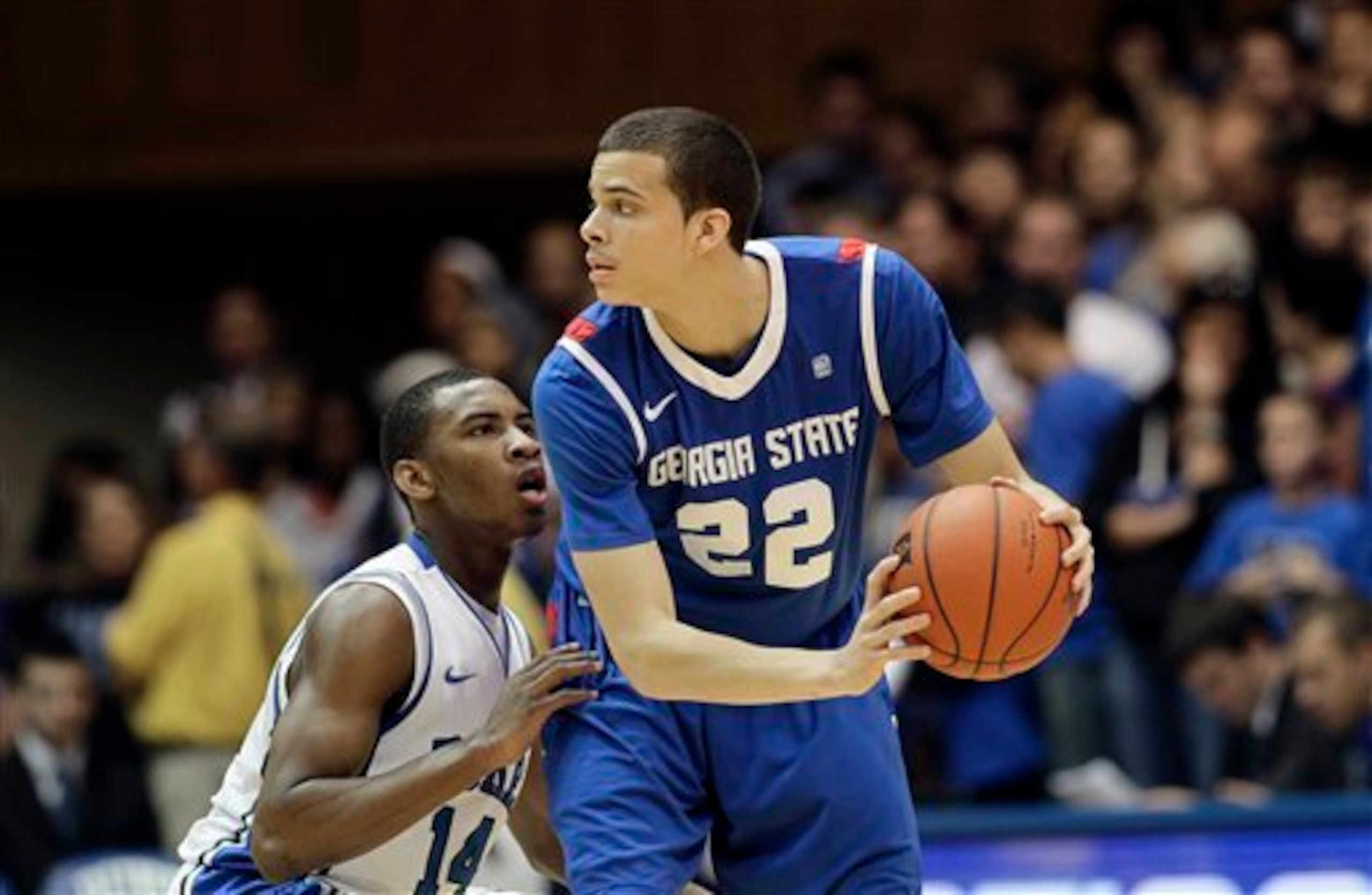
You could look at R.J. Hunter's season through two separate lenses. You're either disappointed he's having a down shooting year, or you're impressed he's still averaging 19.6 points a game despite his three-ball only connecting at a 30.6 percent clip.
We're going to look at Hunter through a glass half-full. He's not relying strictly on his jumper to stay effective. Hunter already has 28 more assists than he had last year, and he's getting to the line two more times per game.
Still, it's Hunter's ability to spread the floor, run off screens and shoot off curls that NBA teams will value. And he'll need to eventually relocate that accuracy.
But given Hunter's shooting history—he nailed 100 threes last season—and mechanics, there's a chance teams view this slump as the result of being a focal point of defenses specifically trying to deny him.
Shooting Guard No. 3: Caris LeVert, Michigan, 6'7", Junior
8 of 25
Caris LeVert lasted just 18 games before going down with an injury to the same foot he had surgery on last summer.
While the jury is still out on LeVert's durability, he did look pretty good when active.
LeVert was averaging 14.9 points and 3.7 assists per game. At 6'7", he offers valuable versatility, with the ability to create, pass, score or shoot.
Michigan often ran LeVert out of pick-and-roll sets, which highlighted his ability to make plays, whether it was as a scorer or facilitator.
He was also shooting above 40 percent from downtown for the second straight year.
LeVert took some heat for not stepping up as "the man" this year at Michigan, but that won't be his role at the NBA level.
If all goes well with rehab, LeVert's talent should justify some love in the mid-to-late first round. He'll be able to fit in anywhere.
Shooting Guard No. 2: Devin Booker, Kentucky, 6'6", Freshman
9 of 25
Arguably Kentucky's most steady contributor, Devin Booker's simple yet effective game has launched him straight into the lottery conversation.
Booker's core strength revolves around his shooting stroke. He's making 46.1 percent of his threes and practically every jumper looks the same. Plus, at 6'6" with decent athleticism, he has textbook size for the NBA position.
Though not particularly creative off the dribble, we've seen flashes of a stop-and-pop game. He actually hit three mid-range jumpers Tuesday night against LSU.
Booker has also been extremely efficient and productive in transition, where he's made nine threes and 20 of 21 shots at the rim.
As the season has progressed, he's also gotten sharper at the defensive end, a reflection of his high basketball IQ and physical tools.
Booker reminds me of J.J. Redick in terms of his strengths as a shooter and scorer. He doesn't offer that All-Star-caliber upside, but every team could use a shot-maker somewhere in the lineup.
Shooting Guard No. 1. D'Angelo Russell, Ohio State, 6'5", Freshman
10 of 25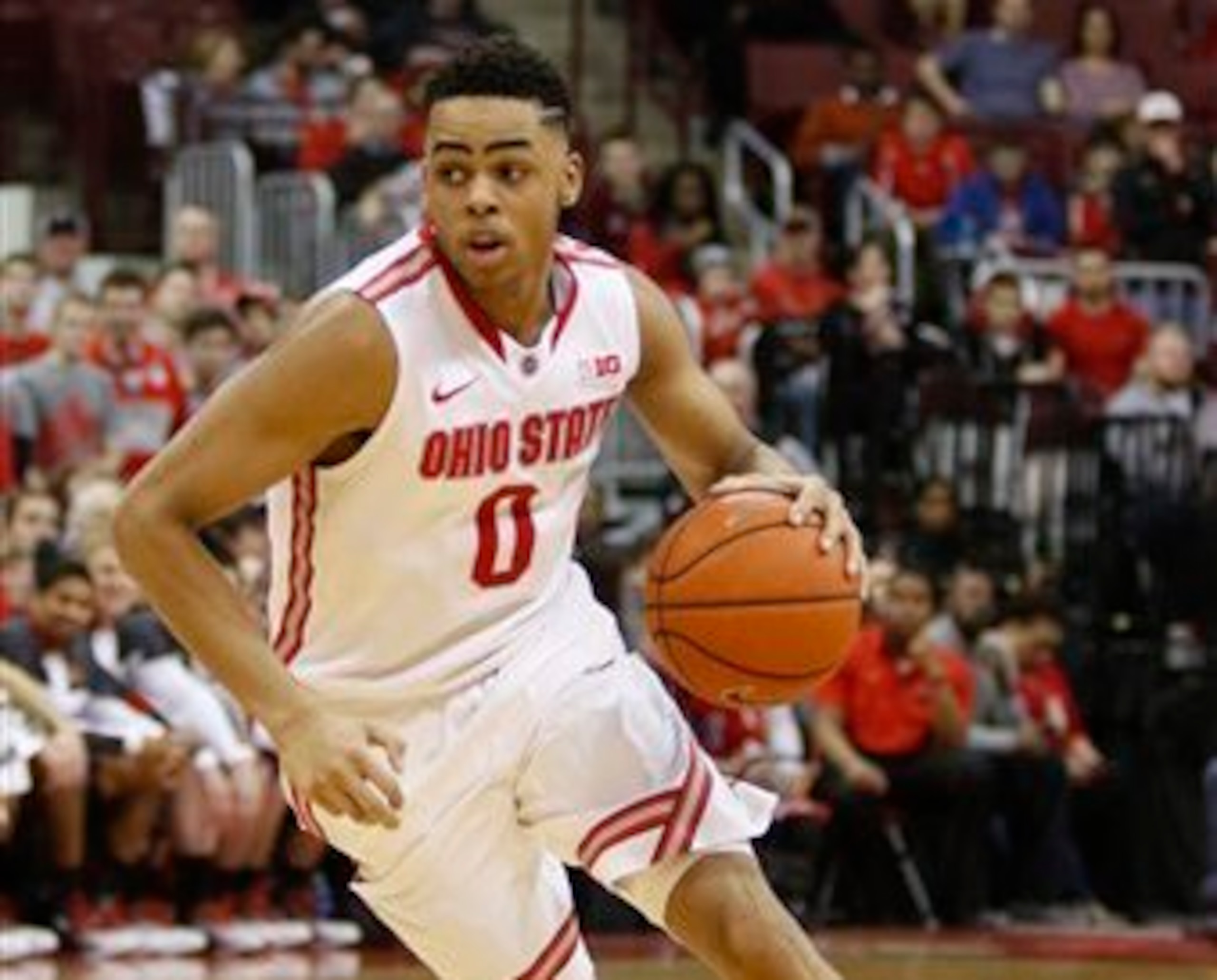
D'Angelo Russell could just as easily be considered a point guard, but we'll stick him at the 2, where he's spent a good portion of his time generating offense at Ohio State.
He's averaging 19.5 points a game to lead all freshmen. Russell just has a knack for putting the ball in the hole, along with the confidence and shot-making ability to let it fly from anywhere. Mid-range pull-ups, three-point pull-ups, fallaways in the post, floaters past the foul line—he's one of those scorers who can take over stretches of a game, which he's done consistently as a freshman.
Russell also shoots 44.5 percent from downtown and makes 2.9 three-pointers per game. Other than the fact that he's 6'5", his shooting stroke is another reason why you can slide him off the ball.
On the ball, we've seen him go into one-on-one attack mode, but he can also run the offense and set the table for teammates.
Averaging 5.4 assists per game, Russell has continually showcased his vision and passing instincts with some incredible thread-the-needle darts.
While most combo guards come with a warning label, Russell's versatility is on another level.
He offers as much star power as anyone in the projected 2015 field. Look for him to earn looks from every team drafting in the top five.
For what it's worth, he'd be our No. 1-ranked point guard as well.
Small Forward No. 5: Sam Dekker, Wisconsin, 6'9", SF, Junior
11 of 25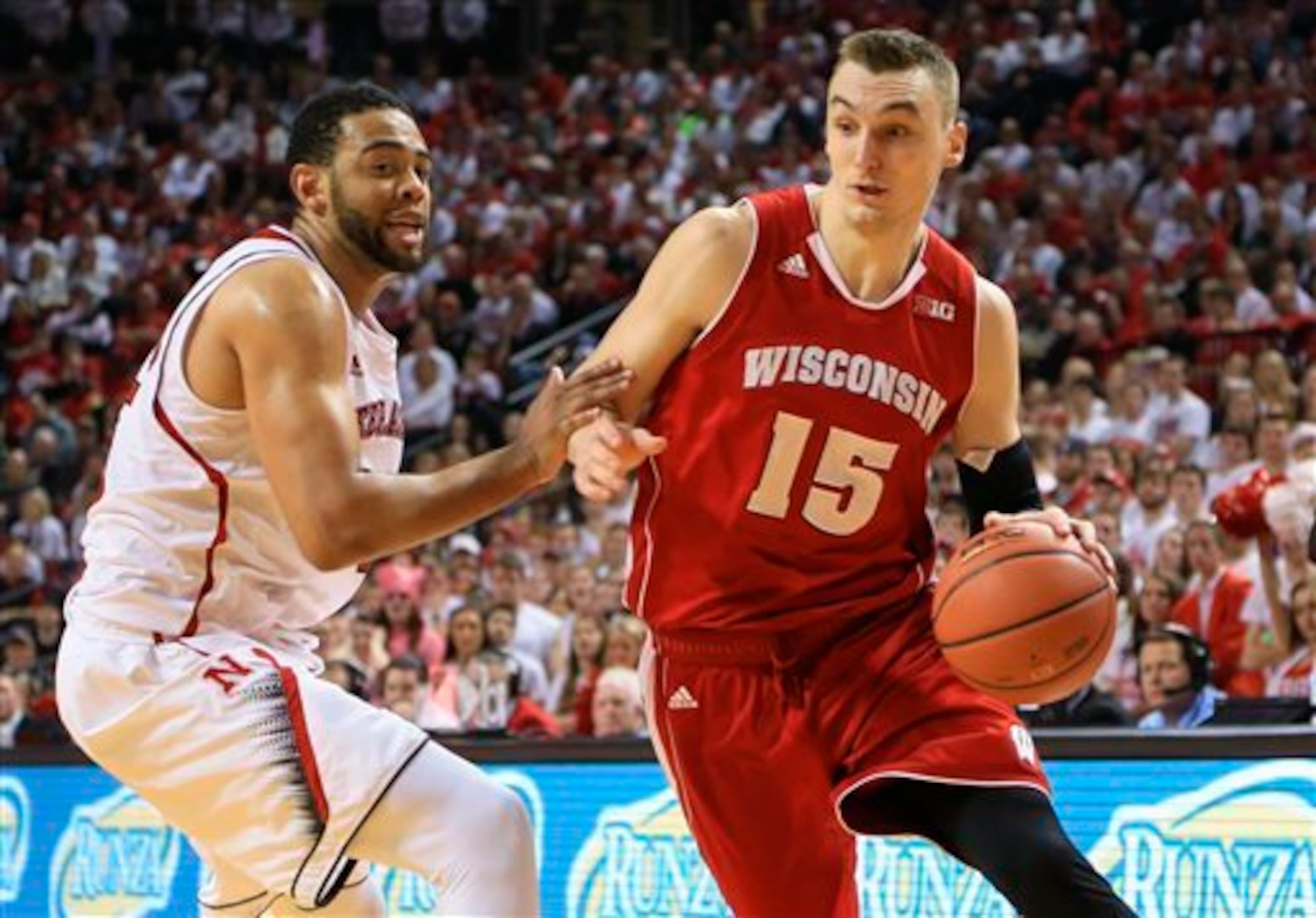
A jack-of-all-trades and master of none, Sam Dekker projects as your classic glue guy or role player. Though not a particularly threatening scorer—he just matched his three-year career high Tuesday with 21 points against Nebraska—it's Dekker's versatility and basketball IQ that hold NBA value.
At 6'9", he has a serious physical profile for a traditional small forward, which allows him to play over the defense as a passer, shooter and finisher.
Dekker has been incredibly efficient inside the arc, shooting 62.9 percent, which ranks No. 3 among prospects (behind Duke's Jahlil Okafor and Louisville's Montrezl Harrell) placed in our midseason mock draft.
Though not a very slick one-on-one player, he can still knock down off-balance shots and finish around the basket.
His three-ball will have to improve. At this stage, he can knock them down, but he hasn't been able to do so with much consistency (34.1 percent from deep this year, 32.6 percent last year).
Dekker's ceiling ultimately isn't too high given his inability to really create, but if you can take him for what he is, he could make for a fine late-first-round option.
Small Forward No. 4: Kelly Oubre Jr., Kansas, 6'7", Freshman
12 of 25
Kelly Oubre Jr. has had his ups and downs, but the upside he's flashed, both throughout high school and in spurts so far at Kansas, should keep him in the lottery conversation regardless.
At 6'7", he's an electric athlete with a sharp-shooting stroke, a blend that always holds NBA value. Oubre plays mostly off the ball, where he can spread the floor as a spot-up threat or attack off the dribble.
In between, he's shown the ability to stop-and-pop or finish off one foot.
He's also been Kansas' second-most productive player in transition despite playing just 18.7 minutes per game.
Oubre happens to have excellent defensive tools as well; he just has to build up his defensive IQ and concentration.
His numbers aren't very impressive given his fluctuating role on a fairly veteran squad. But the flashes have been convincing enough to suggest there's plenty of untapped potential.
Small Forward No. 3: Justise Winslow, Duke, 6'6", Freshman
13 of 25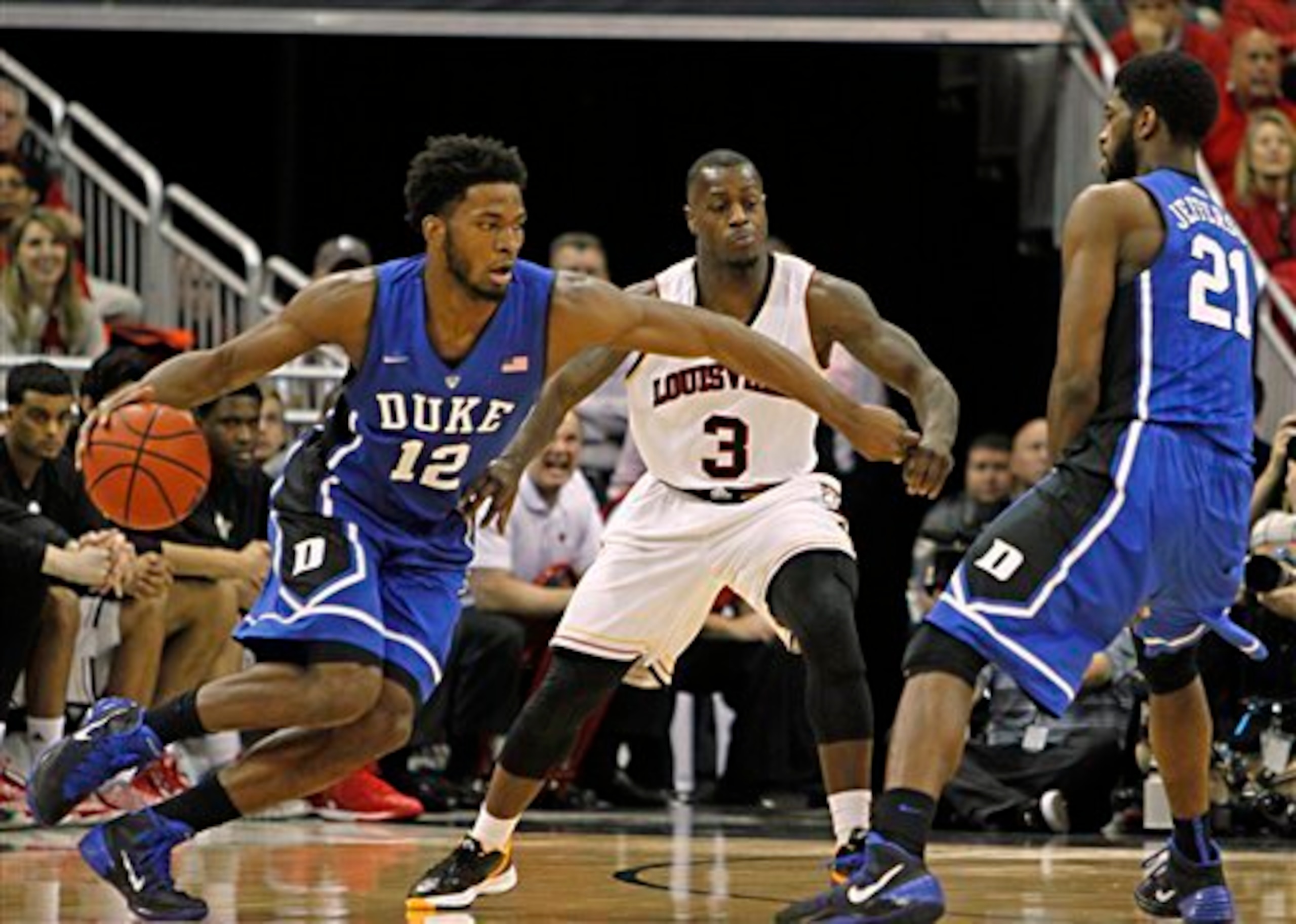
Justise Winslow has established a reputation for himself as being one of those players every coach could use.
Moving forward, he may never be the best on the floor, but he's capable of contributing in areas where others can't. Defense, energy, highlight playmaking fueled by explosive athletic ability—that's Winslow's bread and butter.
At 6'6", 225 pounds, he's built for the NBA wing, where he can guard multiple positions, connect from outside (1.2 three-pointers per game), slash to the hole and get out on the break.
At this stage in his development, he's at his best finishing plays. The hope is that he gradually adds to his ball skills so he can start creating them himself.
Winslow isn't a particularly sharp one-on-one scorer. The fact that he's made just six two-point jumpers all year highlights his inability to stop-and-pop, use the floater or generate offense in the post.
He's a project, but one with a high basement floor given his physical tools, motor and defense. That part of his game is almost guaranteed to translate.
Small Forward No. 2: Stanley Johnson, Arizona, 6'7", Freshman
14 of 25
There really hasn't been much to question about Stanley Johnson, who's averaging 14.6 points on 46.9 percent shooting for a Top 10 team in America.
He's producing while looking the part of a future two-way NBA wing.
At 6'7", 245 pounds, Johnson is a train in the open floor and on his way to the rim. He averages eight free throws per game per 40 minutes.
Johnson is also shooting 39.3 percent from downtown, and he's been equally effective scoring inside the arc, where he's shooting an excellent 49.5 percent on his two-point jumpers (pull-ups, floaters, runners).
Johnson's physical tools and intensity play to his defensive appeal as well. He offers the ability to guard multiple positions. And he's showcased some impressive anticipation when it comes to jumping a passing lane or swooping in as a weak-side thief.
The only real knock on Johnson has been his struggles finishing around the rim, where he's shooting just 50 percent.
But that's not a big enough reason to drop Johnson down your board. He's one of the safer options in the field as a mix between early Paul Pierce and Ron Artest.
Small Forward No. 1: Mario Hezonja, Croatia, 6'8"
15 of 25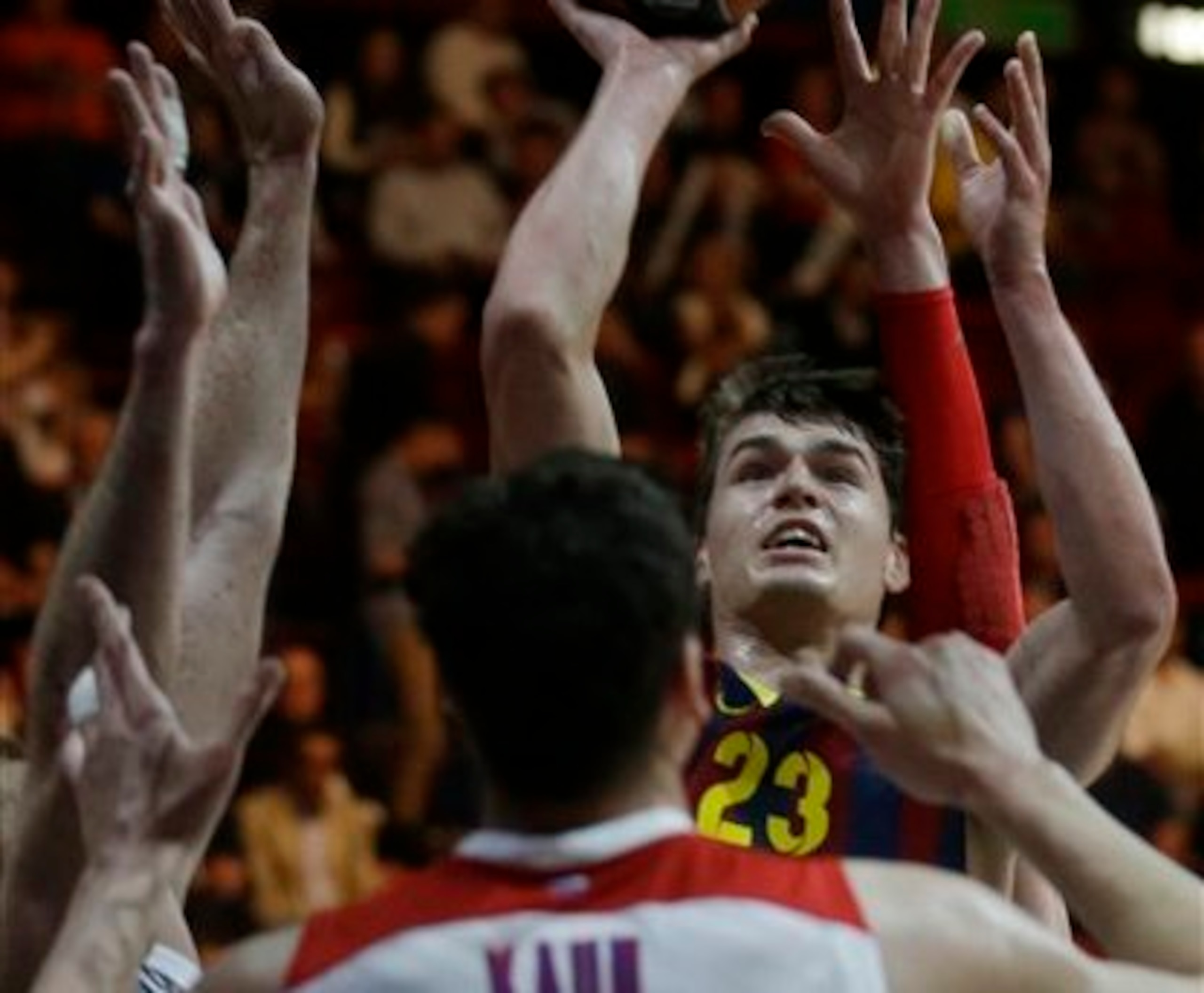
Mario Hezonja's top-10 case has gotten stronger following what's been his most productive stretch since joining Barcelona's senior team in 2013.
Hezonja, a 6'8" wing with spectacular athleticism, just set a Spanish ACB record by finishing 8-of-8 from downtown on February 1. A few days later, he came back to score 22 points against Real Madrid, one of the premier teams in Europe that dresses a number of former NBA players.
With mismatch physical tools, Hezonja offers loads of versatility. He's learned to play off the ball, where he can knock down shots off screens and curls or spread the floor as a shooter.
And he's a solid ball-handler and passer. Barcelona uses him out of pick-and-rolls, which accounts for 23.9 percent of his offense through 13 Euroleague games, according to DraftExpress' Mike Schmitz.
Hezonja also offers lockdown tools and the ability to guard both wing positions.
In terms of natural talent, there aren't many prospects in the projected field with more. There's always some extra risk when drafting overseas, but unless general managers are turned off by his confidence and character, his upside will be tough to pass on outside the top five.
Power Forward No. 5: Montrezl Harrell, Louisville, 6'8", Junior
16 of 25
At this point, scouts should have a pretty good feel for Montrezl Harrell as a prospect. He's improved his strengths with each year—he just hasn't added to them.
Harrell's game revolves around his power, explosiveness and motor around the rim, where he's shooting a whopping 83.8 percent.
His low-post game has gotten better; Harrell can score over the shoulder or face up and make a move. Still, his one-on-one skills are fairly raw and need improvement.
Harrell also plays some physical post defense, which should hold NBA value, and he's bringing in nine rebounds per game.
At 6'8", he's slightly undersized, which is why developing some outside shooting touch would go a long way for him at the next level. Unfortunately, we just haven't seen it through three years in school (60.6 percent from the line, 7-of-33 from downtown).
Harrell projects as an interior specialist and energizer, which plenty of teams could use. I'm just not sure the potential reward he offers is great enough to trigger top-10 or lottery interest.
Power Forward No. 4: Christian Wood, UNLV, 6'11", Sophomore
17 of 25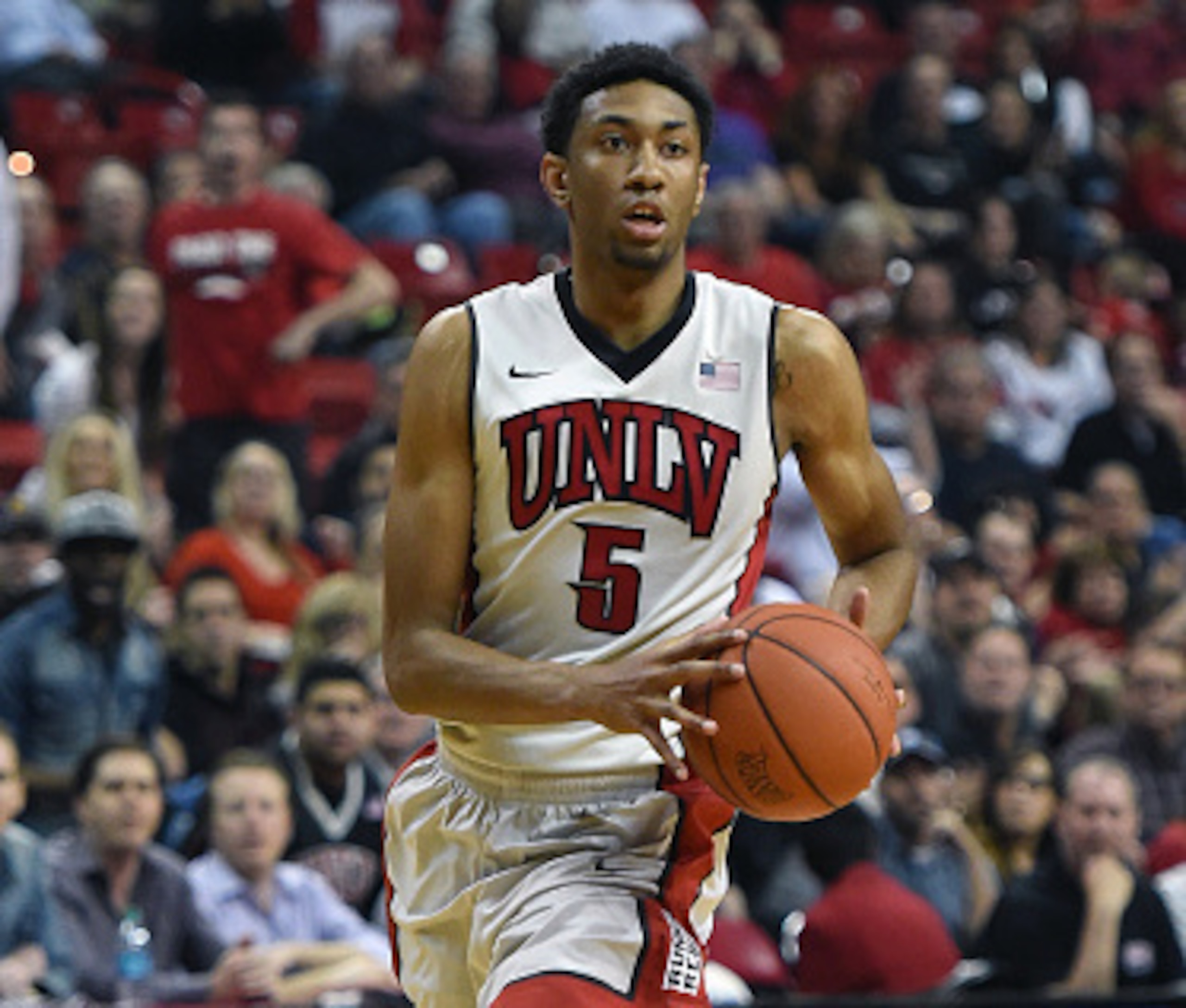
Christian Wood is one of this year's biggest risers, thanks to games like the one he had Tuesday night against Fresno State, when he went for 27 points, 19 rebounds, seven blocks and two steals.
At 6'11", he's a bouncy big man with face-up quickness that's tough for power forwards to stay in front of. He's been impressive around the key, where he demonstrates terrific body control and touch. You'll often see him spin off his man and separate into one-handed push shots or floaters.
Wood has even extended his game out to the three-point arc this season, and though he hasn't been consistent, he has hit 17 three-pointers and a number of mid-range jumpers.
At 220 pounds, he'll need to find that NBA weight room, but he's still averaging 10 rebounds and 2.9 blocks per game. Wood helps make up for a lack of strength with the springs to play above the rim.
Though still raw offensively, the strides he's made, along with the room for improvement that's there, have earned Wood a spot in the first-round conversation.
If he's able to sell teams on his jumper and gradually improving offensive game, top-20 looks shouldn't be out of the question. Expect Wood's name to pick up even more steam during measurements and athletic testing at May's NBA combine.
Power Forward No. 3: Kevon Looney, UCLA, 6'9", Freshman
18 of 25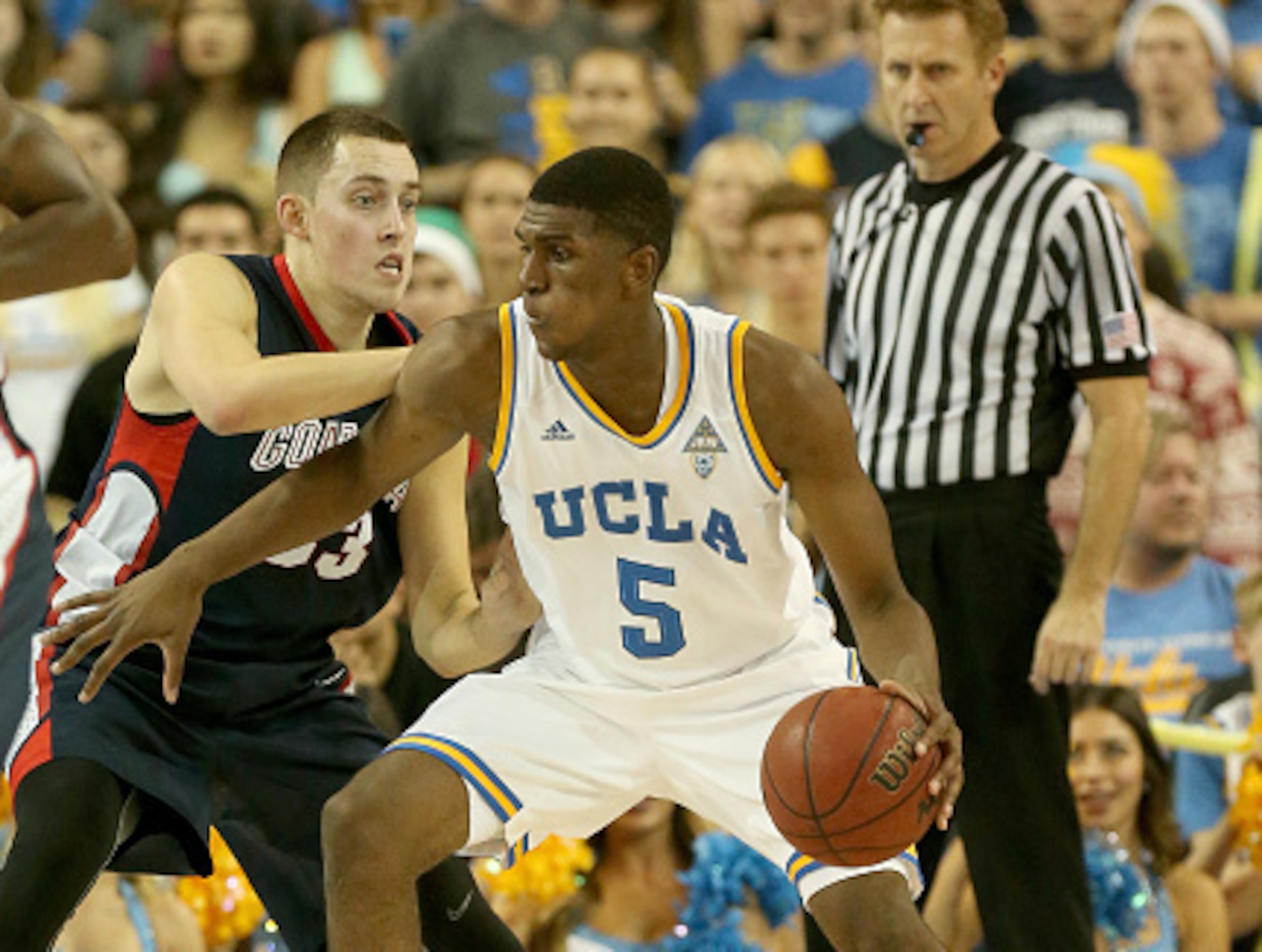
Kevon Looney's versatility is bound to trigger top-10 interest given the upside that could potentially come from it.
He's averaging a double-double at UCLA, which reflects his rebounding instincts more than anything else. Looney has long arms and a strong nose for the ball that's translated to a whopping 39 putbacks in 24 games. That's actually how Looney scores 34.2 percent of his made baskets at the rim.
He's still a work in progress at the offensive end, where he has a raw yet promising inside-out skill set.
At 6'9", Looney has the ability to face up and score on the perimeter, with a tight handle for a big man and a natural shooting stroke. He hasn't quite been able to knock down jumpers with much consistency, while his post game down low is fairly limited. But he's flashed it all in doses.
If you draft him high, it's because you believe those flashes will eventually turn into every-game occurrences.
Power Forward No. 2: Bobby Portis, Arkansas, 6'10", Sophomore
19 of 25
While Bobby Portis' numbers have been terrific (17.9 points, 8.8 rebounds, 56.4 percent shooting), it's his consistency that's strengthened his credibility.
He's scored at least 17 points in 15 of his last 18 games. At 6'10" with long arms and a 242-pound frame, Portis has the physical profile of a pro 4, along with the inside-out skill set that should slide seamlessly into an NBA frontcourt.
Portis has good hands around the rim, though he's also hit 62 two-point jumpers, nine of 18 three-pointers and 75 percent of his free throws (60.4 percent true shooting percentage). He has excellent touch in the mid- to long range, which plays to his pick-and-pop appeal.
He's even upped his rebounding average to 8.8 per game from 6.8 per game. Portis has 10 double-doubles this season after racking up just five as a freshman.
Though not the most explosive player, his offensive game is polished and physical tools sharp. There might be questions about his ceiling and upside, but not his transition to the pros. Portis scores highly on the NBA eye test. Look for him to crack the lottery conversation.
Power Forward No. 1: Kristaps Porzingis, Latvia, 7'0"
20 of 25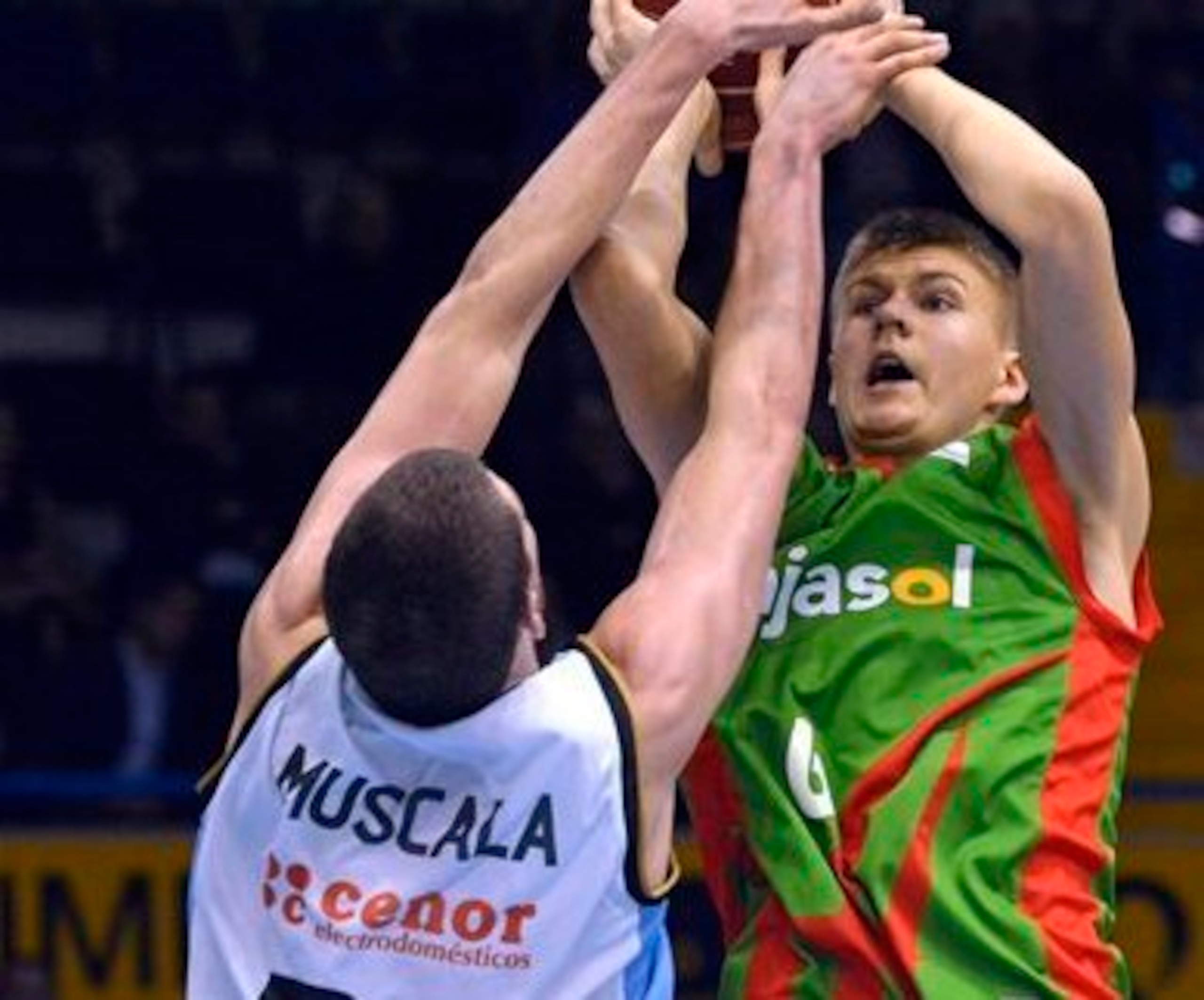
Kristaps Porzingis' 7'0" size, effortless athleticism and perimeter ball skills fuel some pretty enticing mismatch potential. That's where all the Dirk Nowitzki ceiling comparisons come from.
He's 30-of-79 (38 percent) from downtown on the year. Porzingis has a quick, high, concise release on his jumper, which is difficult to contest. Meanwhile, his ability to put the ball on the floor makes it tough for big defenders to close out hard.
Porzingis can take it all the way to the rack (in line drives) or separate in the mid-range or post, where he has touch and good-looking moves as a one-on-one scorer.
Off the ball, his mobility and physical tools translate to easy buckets off cuts, lobs and putbacks.
The big question with Porzingis is strength, which he doesn't have much of at 220 pounds. He's more of a face-up forward than a back-to-the-basket bruiser or rebounder.
Still, he's been putting up some impressive numbers lately overseas, having finished with at least 12 points in nine of his last 13 games.
Porzingis, 19, is a project, but the potential reward that's tied to him hitting his stride is well worth a top-10 look.
Center No. 5: Frank Kaminsky, Wisconsin, 7'0", Senior
21 of 25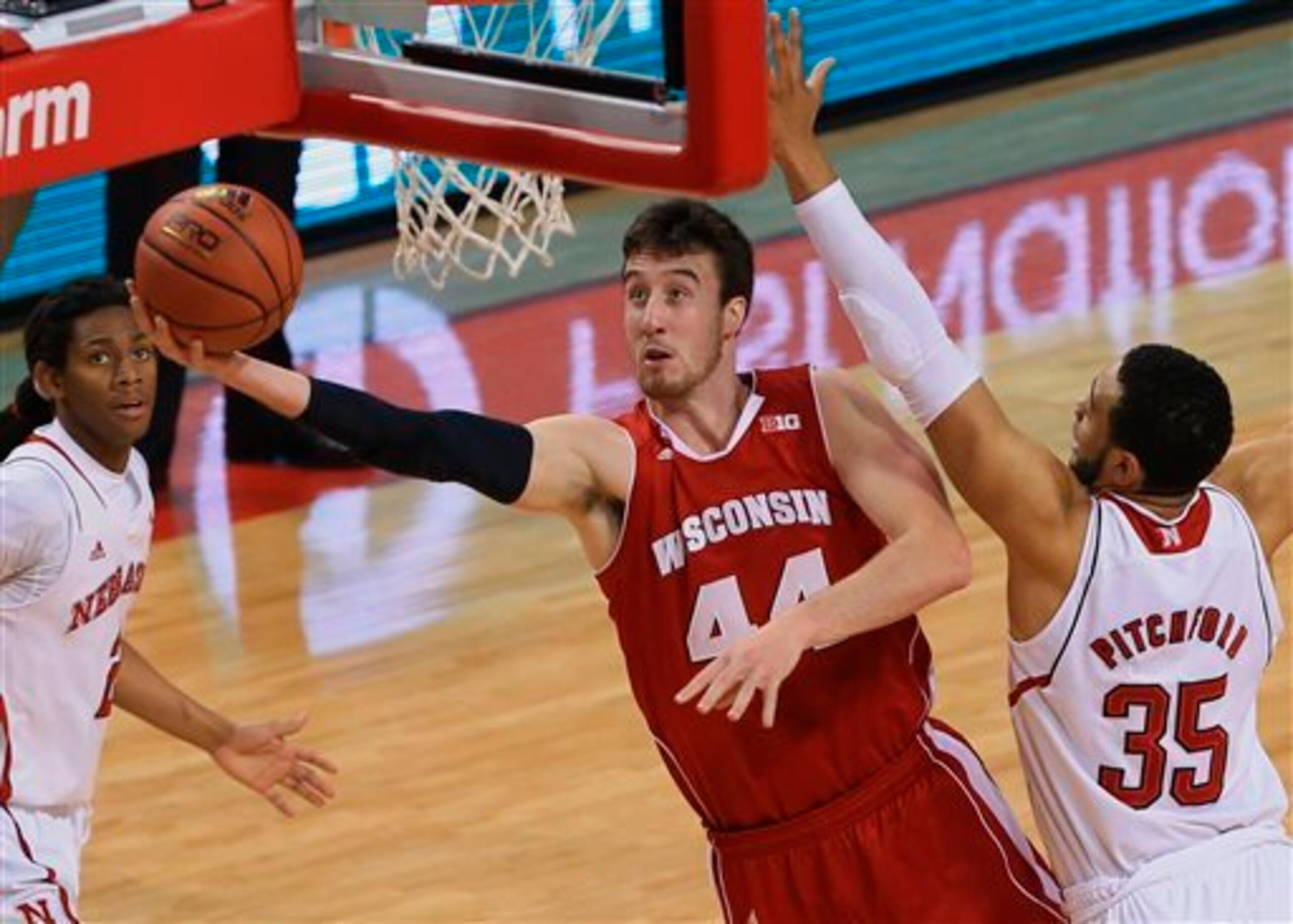
By the time his senior year comes to an end, Frank Kaminsky can rest easy knowing he did everything he could to maximize his draft stock.
He's taken his skill set to a new level, which has helped make it easier to overlook some of his physical limitations, like a lack of athleticism and strength.
Having raised his scoring average to 17.3 from 13.9, Kaminsky's post game looks even more polished, whether he's playing back the rim or shaking his man facing up.
However, it's that 40 percent three-point stroke that should attract lottery attention. Kaminsky projects as a your prototypical stretch big man in the drive-and-kick and pick-and-pop games.
He's even already surpassed his assist total from a year ago and averages 1.2 more rebounds per 40 minutes.
Kaminsky has also made strides at the defensive end, where his rating is over 10 points lower and he's picking up 1.5 fewer fouls per 40.
The fact that he continues to gradually improve only enhances his appeal and likability.
Regardless of how high you think his ceiling reaches, Kaminsky's game is tailor-made for an NBA frontcourt.
Center No. 4: Myles Turner, Texas, 6'11", Freshman
22 of 25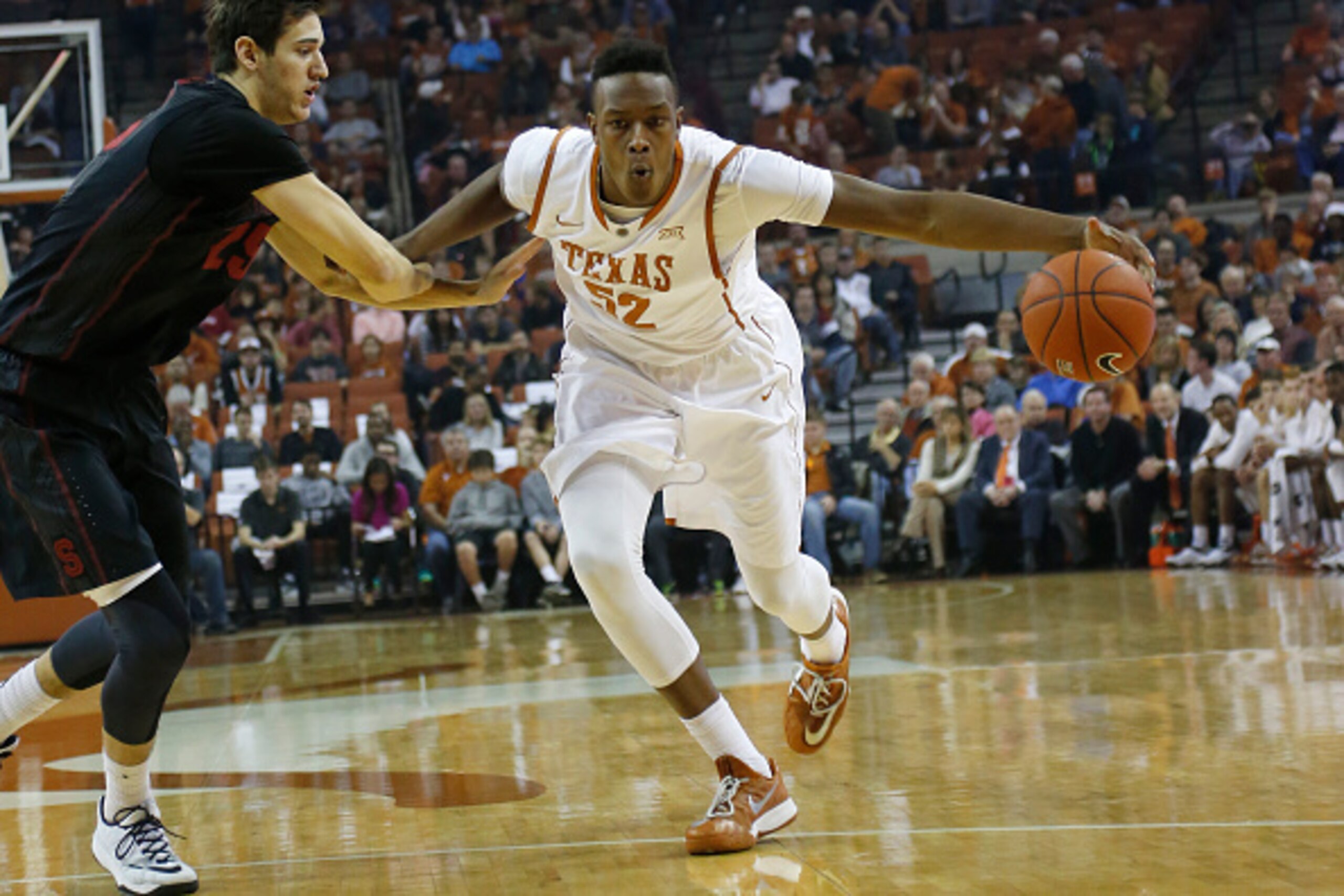
Myles Turner is starting to look like one of the higher-risk, higher-reward options for 2015 lottery teams.
At 6'11", Turner's ability to play out on the perimeter, knock down three-pointers and separate in the mid-range raises his ceiling an extra few stories. He's hit 14 three-pointers and shoots 40.4 percent on two-point jumpers and 85.1 percent from the line.
Turner also blocks 2.8 shots in just 22.2 minutes, which translates to the seventh-best block percentage in the country. He's got terrific length and even better anticipation.
However, at the offensive end, Turner isn't much of a force around the rim, where only 25.7 percent of his shots are taken. He prefers to hang outside the paint, which can explain his tendency to disappear. Twelve times this season he's finished with two or fewer field goals. He just doesn't pick up as many easy buckets as most big men his size should.
Scouts have also expressed concern over his durability given his high school injury history and shaky mobility. "I don't like the way he runs. It's very awkward and labored," one scout told Bleacher Report's Jason King.
NBA teams will no doubt covet Turner's ability to stretch the floor and protect the rim. But there are certainly some questions and red flags that come with him.
Center No. 3: Willie Cauley-Stein, Kentucky, 7'0", Junior
23 of 25
By now, there isn't much mystery when it comes to Willie Cauley-Stein's strengths and weaknesses. But as long as those strengths carry over—and there's no reason to think they won't—his weaknesses shouldn't be overly restrictive.
While his ball skills are still a work in progress, Cauley-Stein's physical tools and athleticism translate to easy buckets and all sorts of defensive versatility.
He finishes everything that comes his way around the rim. Cauley-Stein throws down dunks in situations when most players would need to use low-percentage touch or finesse.
And nobody covers more defensive ground, whether he's blocking shots down low, switching onto guards outside or pressing full court. He sports the second-best defensive rating in the country.
Whether Cauley-Stein's post game improves is fairly irrelevant when you take into account his identity and projected role. He's got Tyson Chandler written all over him if he's able to keep that motor charged.
Center No. 2: Karl-Anthony Towns, Kentucky, 7'0", Freshman
24 of 25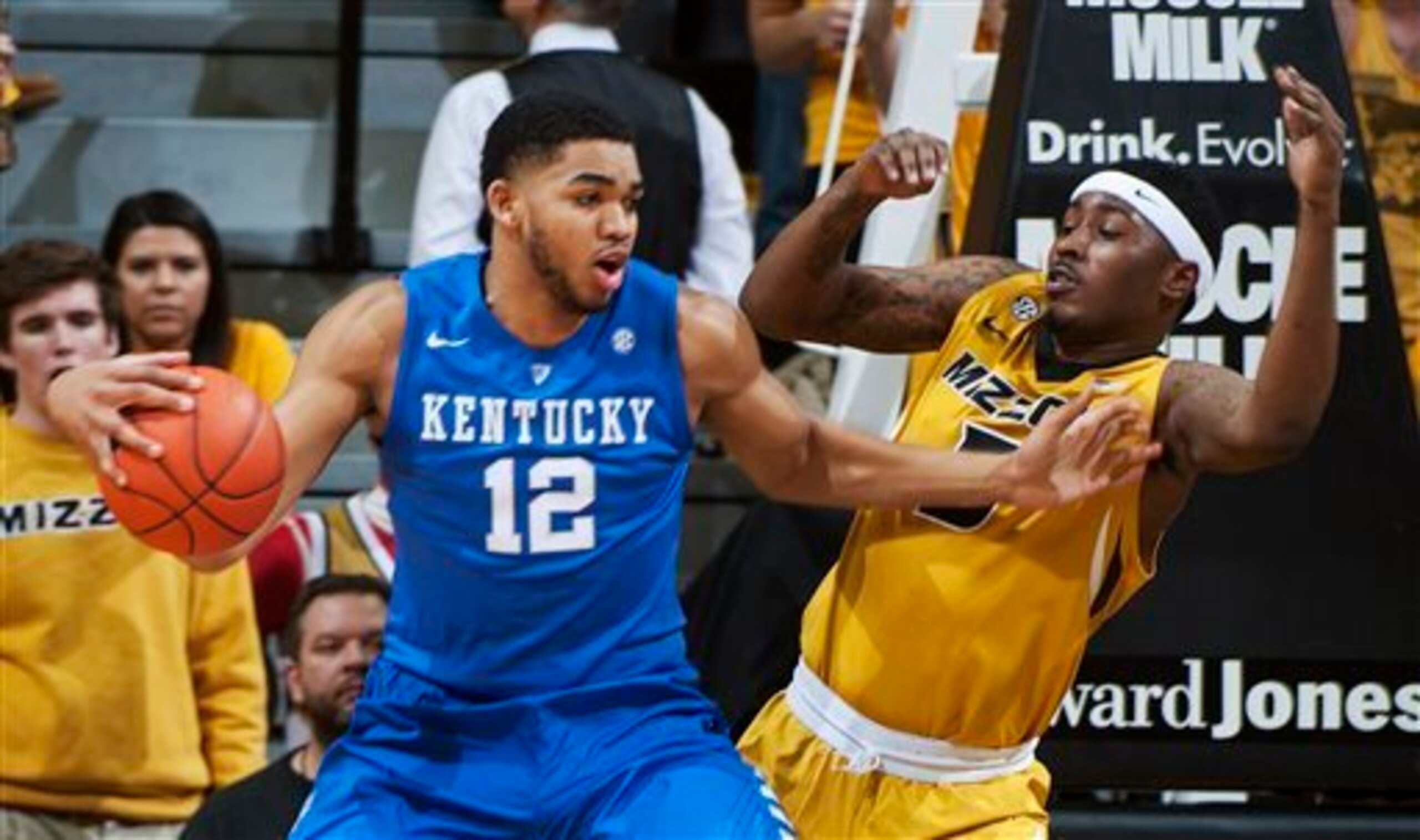
Karl-Anthony Towns seems to be making a push for that No. 1 spot, having finished with double-digit scoring numbers in four consecutive games.
It's significant given how little he's been featured compared to most other prospects expected to generate top-five overall interest.
For the first time all season, he's actually been dominant. And it's been eye-opening.
Towns' upside and identity ultimately revolve around his versatility and two-way impact.
He's a force on the low block at the offensive end, where he can drop-step over his right shoulder or go to the jump hook over his left.
Towns also has a promising shooting stroke. He's actually made his last 14 free throws, and he even nailed a clutch step-back jumper late in the second half Tuesday against LSU.
He's shown terrific instincts defensively as well in terms of rim protection. Towns swats 4.5 shots per 40 minutes, and if he's not blocking shots, he's altering them.
The key for him is whether he'll be able to put everything all together. He's still a bit raw skill-wise when it comes to executing one-on-one. But if he's able to polish up his game, from his post moves to his outside touch, we could eventually be looking at the top player in the class.
Center No. 1: Jahlil Okafor, Duke, 6'11", Freshman
25 of 25
Despite Karl-Anthony Towns' recent run, Jahlil Okafor remains No. 1 on our board. You just can't teach his feel for the game—not to mention that 6'11", 270-pound body or his giant, soft hands.
Averaging 18 points on 66.5 percent shooting, there really hasn't been much opposing defenses have been able to do except immediately double down and force him to pass it off.
Between his back-to-the-basket game and quickness facing up, Okafor's post arsenal is as polished as anyone's we've come across in years.
He projects as a big man you can feature and ultimately run your offense through.
Okafor must improve as a pick-and-roll defender and rim protector, but with world-class physical tools and a tremendous basketball IQ, there's reason to assume he will.
He might not offer the highest ceiling on paper, but there isn't a surer thing in the field.


.jpg?w=2560 "NFL investigating 2 referees for separate viral exchanges")

.jpg?w=2560 "OBJ Calls Out Giants 😳")

.jpg?w=2560 "Love's Body Already 'Tired'")
.jpg?w=2560 "Ward Nearly Walks Out of Presser ▶️")
.jpg?w=2560 "Buzz: Tyreek Eyeing November Return")