Stan Kroenke's Los Angeles Stadium Plan Could Reshape the NFL Forever
For the past 12 seasons, the NFL has been a model of stability, popularity and profitability.
Its eight geographical four-team divisions dovetail nicely with its 16-game regular season and 12-team playoff. Since the NFL achieved this symmetry, competitive quality has been ideal, fan interest insatiable and revenue staggering.
As the Los Angeles Times' Sam Farmer and Roger Vincent reported, though, there's a now a demolition charge strapped to the NFL's stable foundation.
TOP NEWS

Tony Romo Arrested on Suspicion of OWI
.jpg?w=3840 "Raiders Colts Football")
NFL Players in Need of Fresh Start 🙌
.jpg?w=3840 "Eagles Football")
Over-Under Win Predictions For Each Team 🔮
St. Louis Rams owner Stan Kroenke, who owns 60 acres of land in Inglewood, California, has partnered with Stockbridge Capital Group, which owns an adjacent plot of nearly 300 acres. Together, they're planning to build an NFL stadium.
The envisioned City of Champions Revitalization Project would not only have plenty of room for a stadium and parking, but retail, office, hotel and residential space—including a new planned neighborhood.

This isn't the first time a well-moneyed developer has put together the land and investors to build a stadium in the Los Angeles area. Phil Anschutz's planned Farmers Field and Edward Roski's City of Industry plan already have all the permits and licenses in place.
Kroenke doesn't yet, but he does have something neither of the other two has: an NFL team.
It's still technically possible that Kroenke's Rams stay where they are. As Nick Wagoner of ESPN.com wrote, the City of St. Louis still has to offer the Rams a new home by Jan. 28; should the proposed digs not meet Kroenke's requirements, the 10 remaining years on the lease become year-by-year, and he can request permission from the NFL to seek relocation.
As Bleacher Report's Jason Cole reported on TeamStream, Kroenke may relocate whether the NFL approves it or not:
Though nothing's happening in time for next season, it's clear that something's happening soon. With the Oakland Raiders and San Diego Chargers both jockeying for new stadiums—and Los Angeles a potential landing spot for either—the NFL is going to have franchises changing cities.
Given the ever-strengthening possibility of a franchise in London, the eventual probability of an 18-game regular season and the all-but-certainty of an expanded playoff field in 2015, the NFL's taking a wrecking ball to its carefully cultivated balance from all directions.
It's about time.
From the league's inception, franchises have been forming, moving, folding and merging as a matter of course. Since the acquisition of the All-America Football Conference in 1950, though, the league has been more stable. Expansion, relocation and mergers have come in waves.
The AFL-NFL merger in 1970 added 10 teams to the league, and the 1976 expansion added the Tampa Bay Buccaneers and Seattle Seahawks.
From 1982 through 1988, the Oakland Raiders moved to Los Angeles, the Baltimore Colts relocated to Indianapolis and the St. Louis Cardinals moved out to Phoenix.

From 1995 through 2002, the Raiders moved back to Oakland, the Los Angeles Rams moved to St. Louis, the Cleveland Browns moved to Baltimore and re-branded as the Ravens and the Houston Oilers moved to Tennessee and became the Titans. Meanwhile, the Carolina Panthers and Jacksonville Jaguars were founded, and Cleveland and Houston were awarded replacement expansion franchises: the new Browns and the Texans, respectively.
With each wave of changes, the NFL set itself up for another period of aggressive growth, matching franchises to the cities most willing and able to support them with public funds.
Now, though, the American market is becoming saturated. NFL ratings already dominate live TV. Attendance and ticket-revenue growth, per Daniel Kaplan of SportsBusiness Journal, has been roughly flat for years. The only way the NFL can dramatically increase revenue is to dramatically reshape the league.
"We are committed to working towards having franchises that are strong and successful in their existing markets," NFL spokesman Brian McCarthy told Mike Florio of Pro Football Talk. Of course they are or are willing to say so; franchise relocation is unspeakably bad PR.
Nevertheless, it's flat-out nonsensical for the NFL to have had zero teams in the second-largest TV market in the United States for two decades. Say what you will about Los Angelenos' support of their pro franchises, but it's the 13th-largest metropolitan area on the planet and the entertainment center of the English-speaking world.
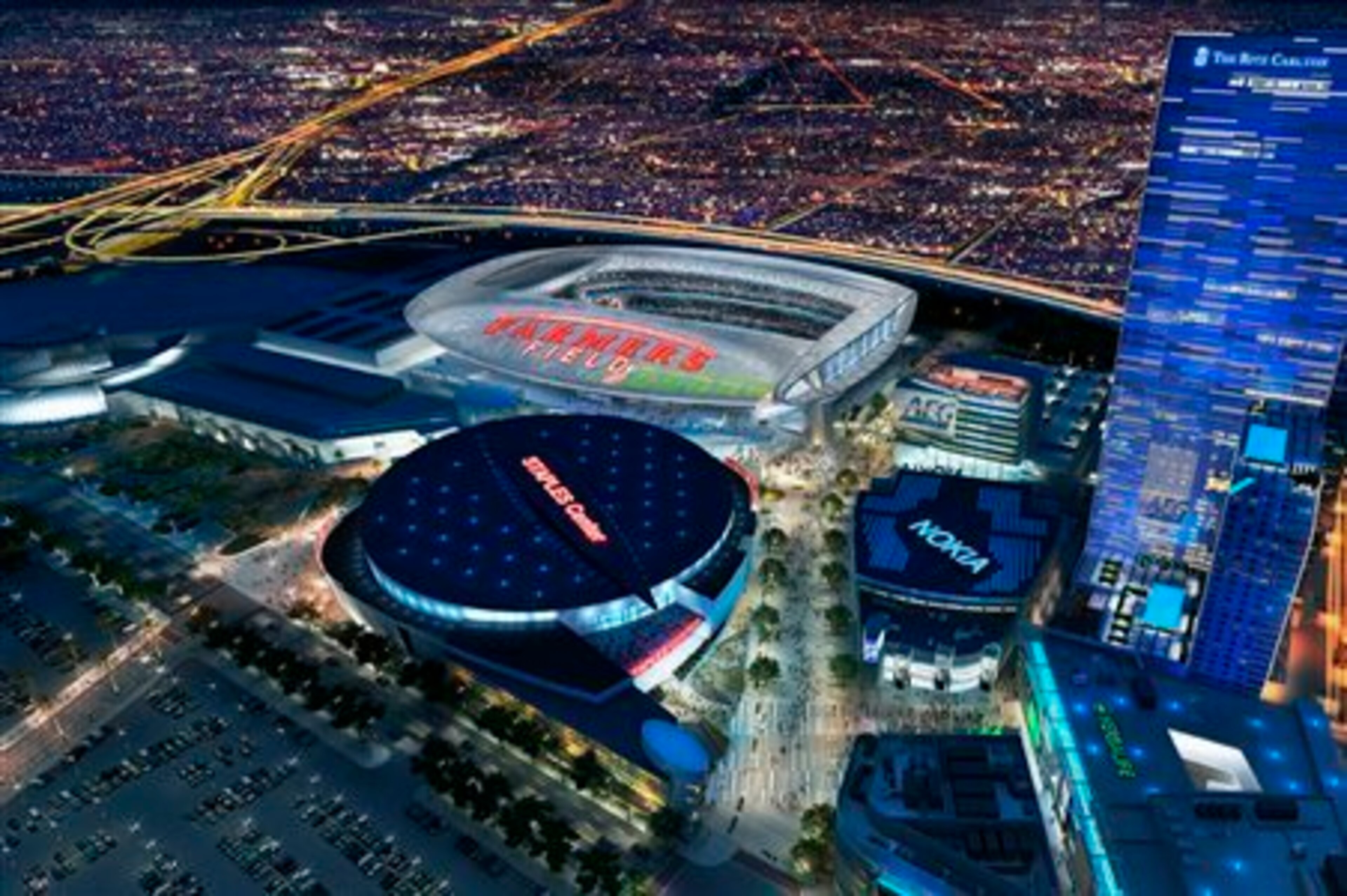
If the NFL is going to reach its goal of $25 billion in revenue by 2027, it simply has to dip into the 12 million wallets in and around L.A.—not to mention those in London, San Antonio, Vancouver or any other major city willing to support a club. Don't think the NFL can't find a billionaire willing to take the City of St. Louis up on its stadium offer, even if Kroenke isn't.
There's an entire generation of fans who've reached adulthood knowing nothing but these dozen years of rock-solid reality. Relocating two or three franchises, adding two or four more and expanding both the post- and regular-season schedule must sound like madness, but it's coming.
"Silent Stan" Kroenke might be the most enigmatic owner in the NFL, but his will to restore the Rams to Los Angeles is now clear, and it's apparently absolute. His new stadium complex may be the trigger to a chain reaction of events that will level the NFL as we know it and lay the groundwork for the global game we'll come to know.
.jpg?w=3840 "Rams Cardinals Football")
.jpg?w=3840 "Patriots Ravens Football")



.png?w=3840 "Ranking the Best Shooters of All Time 🎯")
.png?w=3840 "Jaylen Brown's LeBron Post ✈️")