

Packers Receivers Suffer Rare Case of the Drops in Loss to Bills
On Sunday against the Buffalo Bills, the Green Bay Packers pass-catchers had their worst game in recent history. Armed with two potential Pro Bowl receivers, an MVP front-runner at quarterback and five projected Pro Bowl offensive linemen, it's amazing the squad only completed 40 percent of their passes in the 21-13 road loss.
When rewatching the game, one thing was apparent: Plays were left on the field. The problem wasn't concepts, talent level or Aaron Rodgers, but the execution of physically making catches when Green Bay needed them.

.jpg?w=2560 "Commanders Eagles Football")
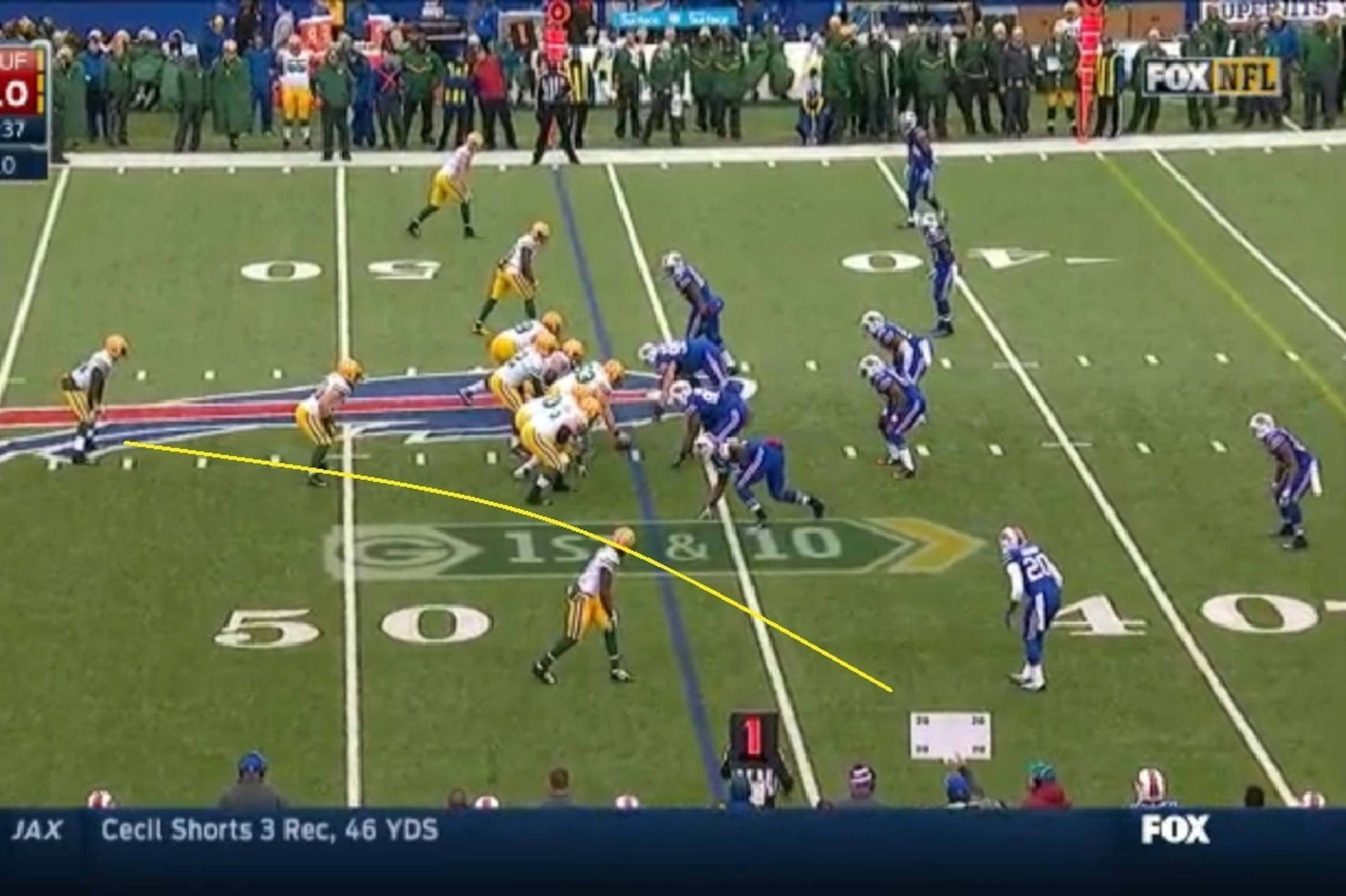
This is the first drop of the game, which occurred on the first pass of the day for the Packers. They didn't even get off on the right foot.
It was a pretty basic throw, with tight end Richard Rodgers split out to the left boundary and running a curl past the sticks on third down. He was in man-to-man coverage, so as long as the timing was right, Rodgers and Rodgers should have connected.

The ball was put on the right spot. As you see here, Richard Rodgers wrapped his hands around the ball at one point. The drop came from his inability to secure the ball through contact. Here, the Packers left about 10 yards on the field and were forced to punt instead of starting with a fresh set of downs.
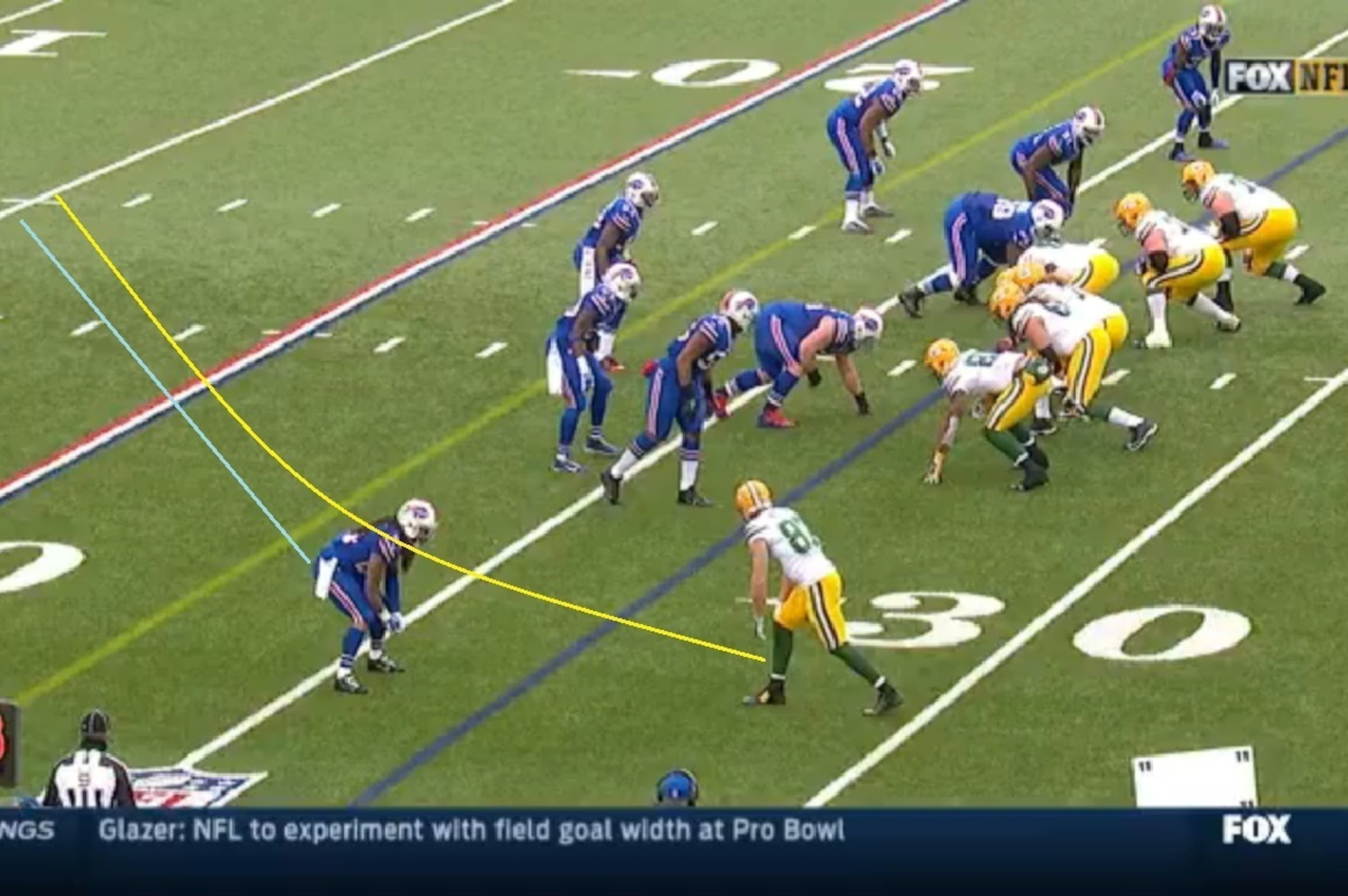
I'm not willing to put this one all on the receiver here. Jordy Nelson, Rodgers' favorite target, ran a slant on this rep. The reason for the call was the vacancy in the middle of the field. On 3rd-and-short, the Bills bunched up near the line of scrimmage, giving Nelson a lot of space to work with inside.
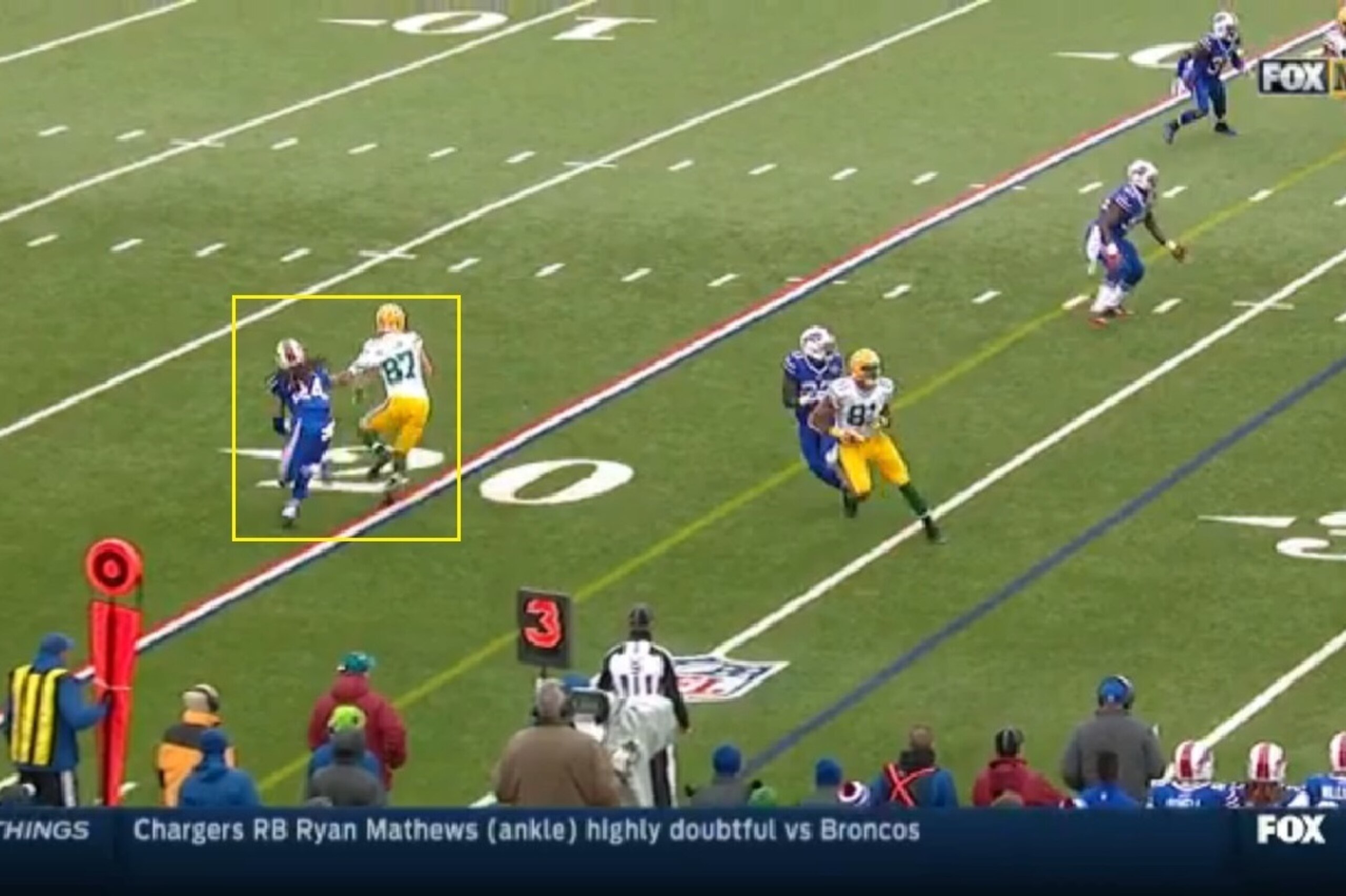
The cornerback covering him clearly should have been called for holding on this play. When you rip the jersey of a premier wideout in the league, you tend to get called for pass interference. The referees let both sides get a little physical throughout the game, though.

Still fighting through contact, Rodgers couldn't connect with his man, as Nelson got his hands on the ball before the pigskin fell to the turf. This play left 12 yards on field.
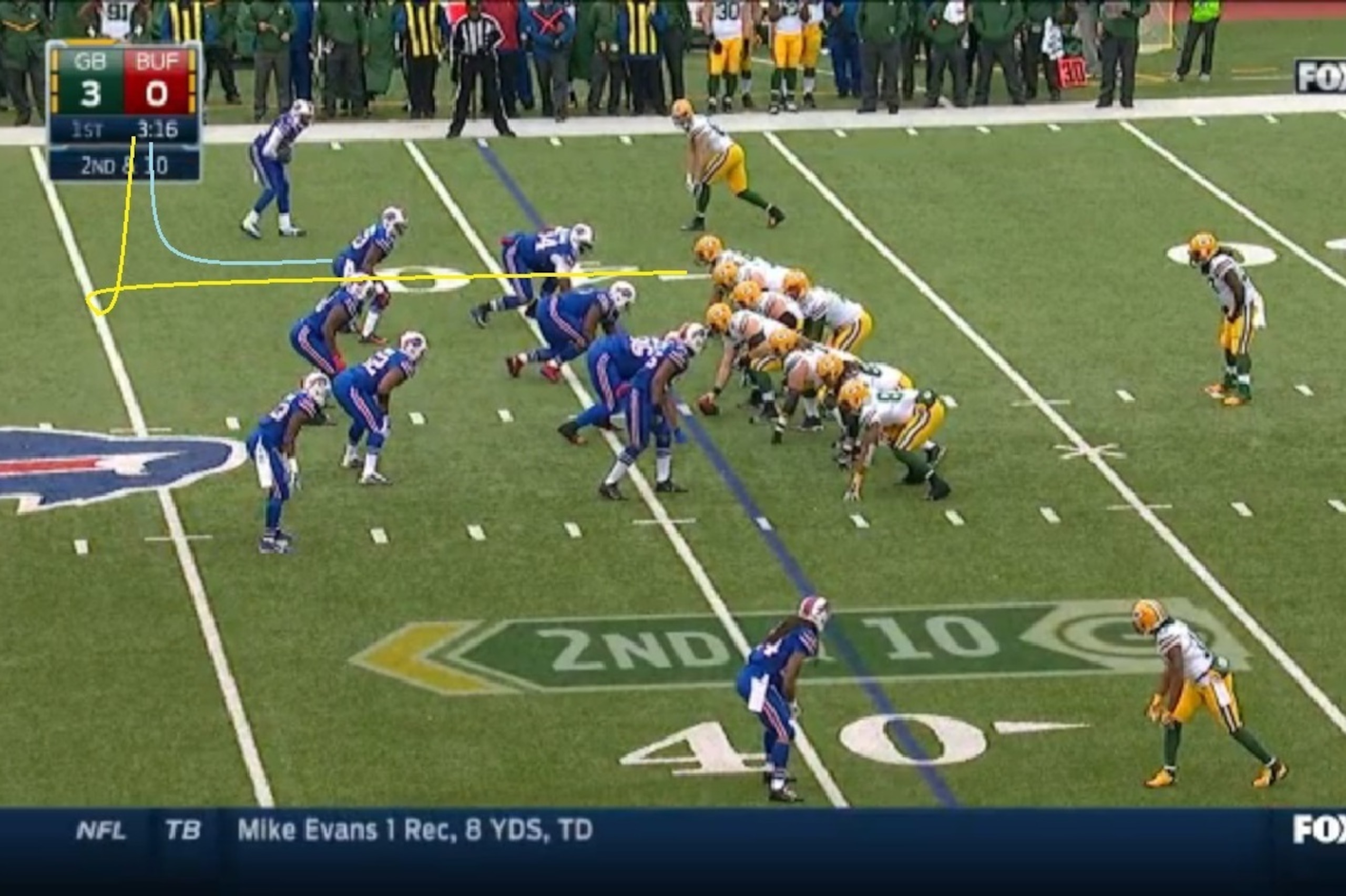
This pass was another play towards Richard Rodgers, who had the first drop of the game. He ran a short curl, then worked to the sideline when it was apparent the route wasn't going to yield results.
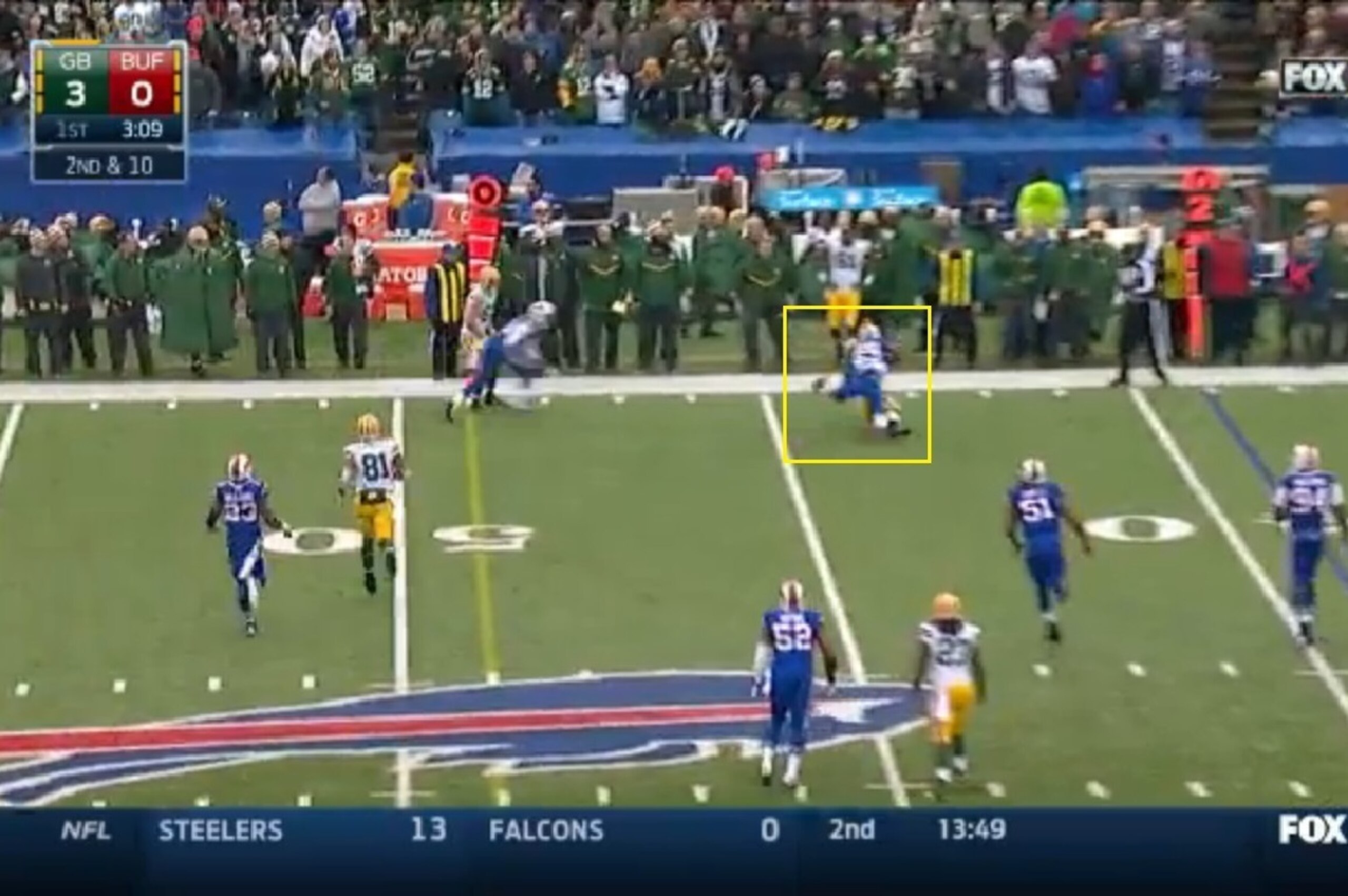
The ball got to Rodgers, it was on the right side of his body in tight coverage and he didn't have to break stride. He wasn't able to secure a perfect throw through contact though, the same as his first drop.
On this second down, he gave up five yards.
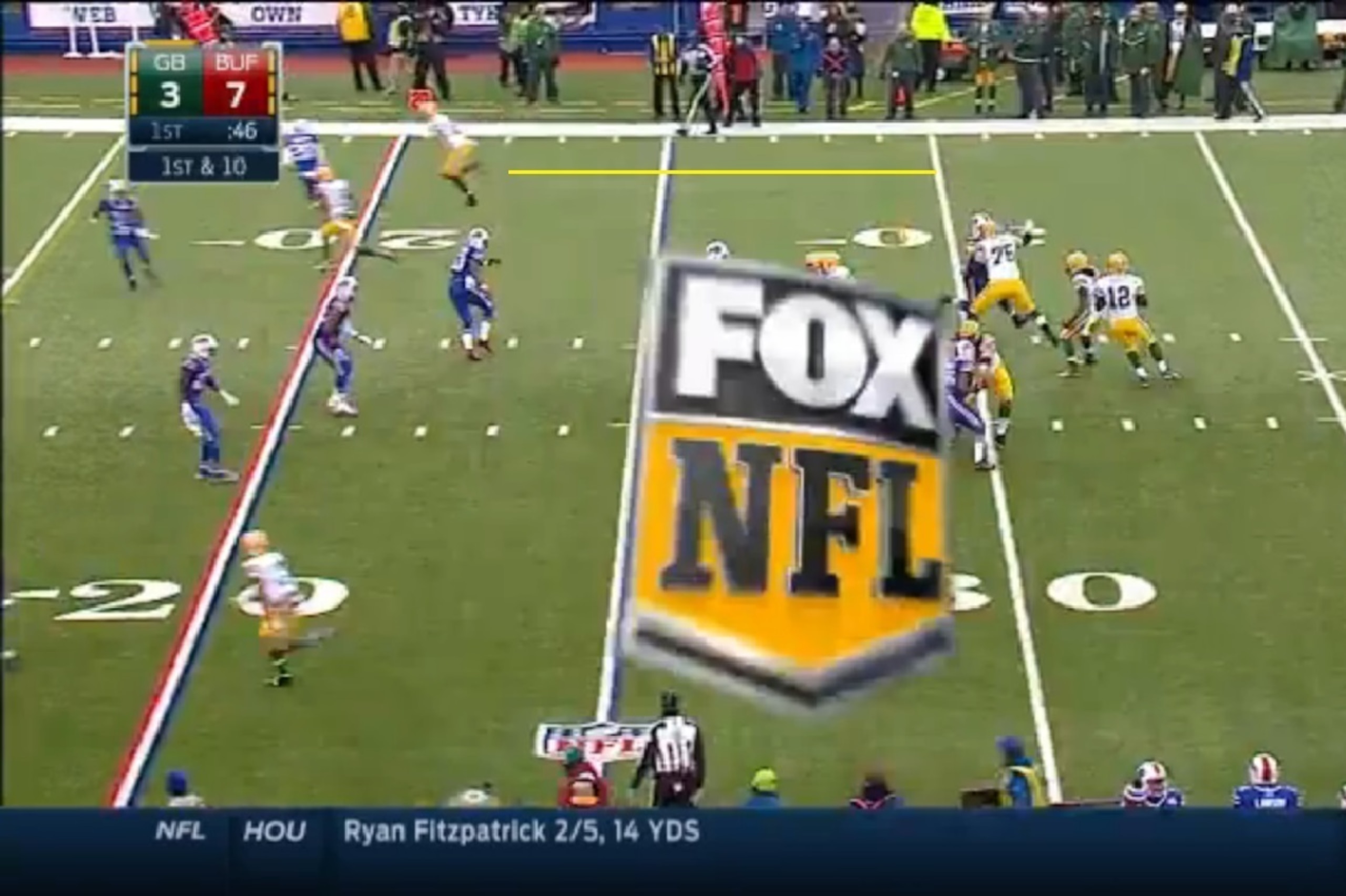
This play occurred in a hurry-up, no-huddle stretch Green Bay had to end the first quarter. As you can see, Nelson was five yards off the line of scrimmage before Fox was even ready to cut back to the play.
Rodgers saw an offsides flag thrown as the snap got off, so he knew he had a free play. With Nelson streaking down the sideline with no risk to his potential benefit, the quarterback let the ball fly.
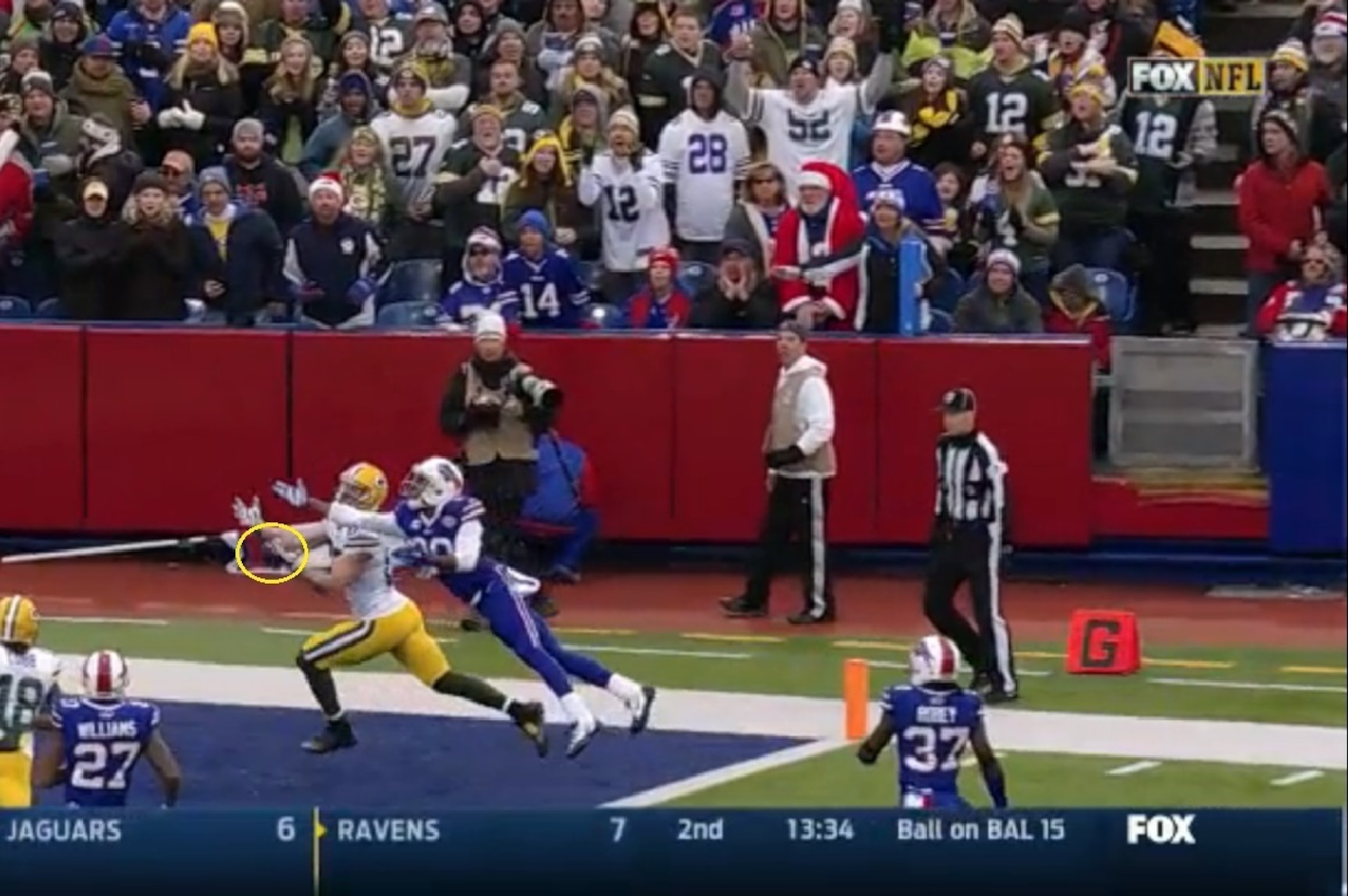
Nelson made a rare mistake, allowing the ball to fall through his hands on the would-be score. Had he managed to come down with the catch, Rodgers adds 26 yards to his day's results and the Packers add six on the board.
A relatively routine play, James Starks, the change-of-pace back for the squad, makes what looks like a boneheaded rep on this snap. Moving to the flat from the backfield, he's a checkdown option in this concept.
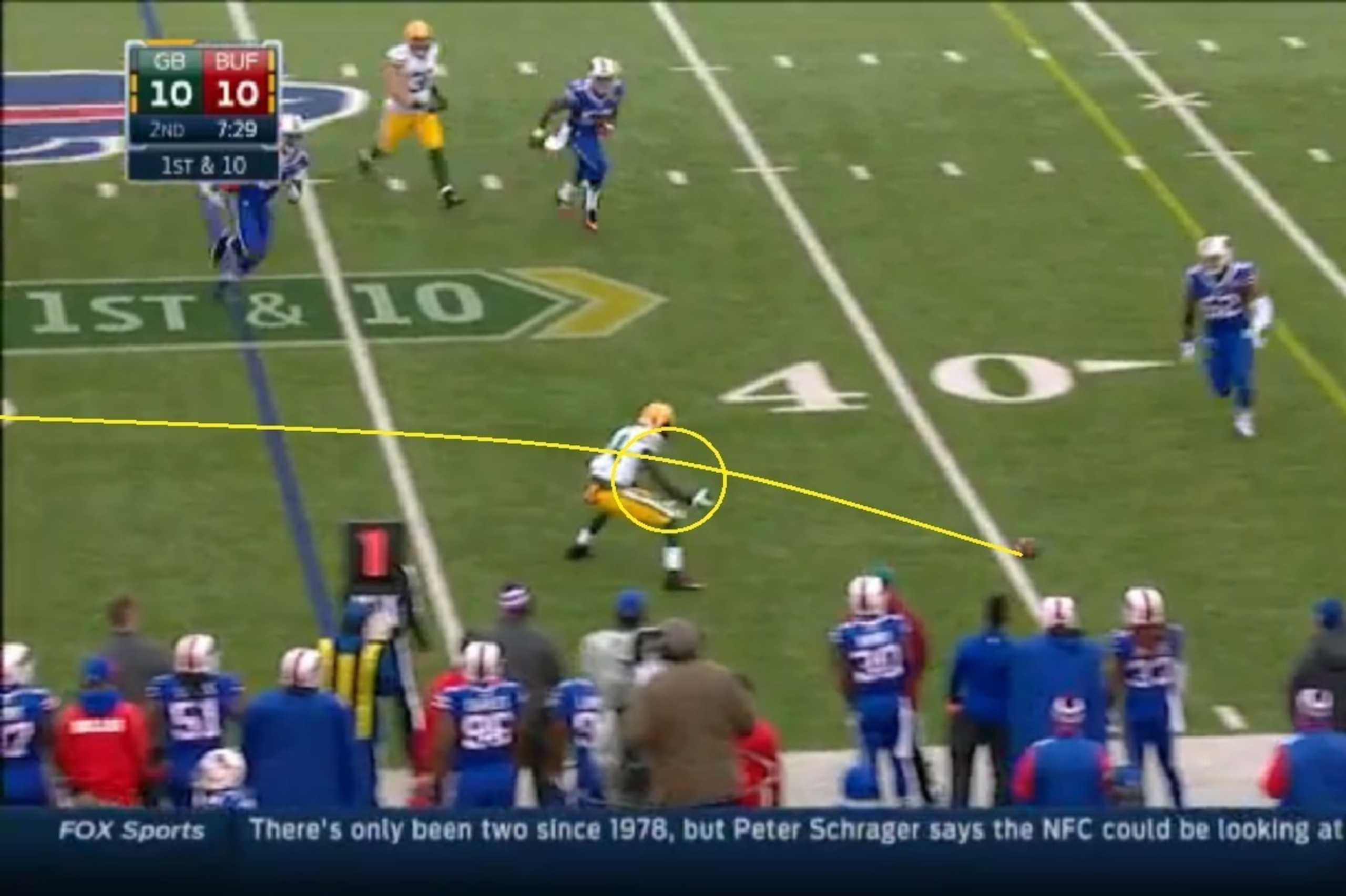
There was no contact on this play. That's what sets it apart from the others. In space, with no one around him, the back simply let the ball fall off his hands. Maybe he was thinking about what he'd do with the ball before he brought it in. Either way, it wasn't a good look for the Buffalo graduate, who would have had a minimum of three yards on the reception.
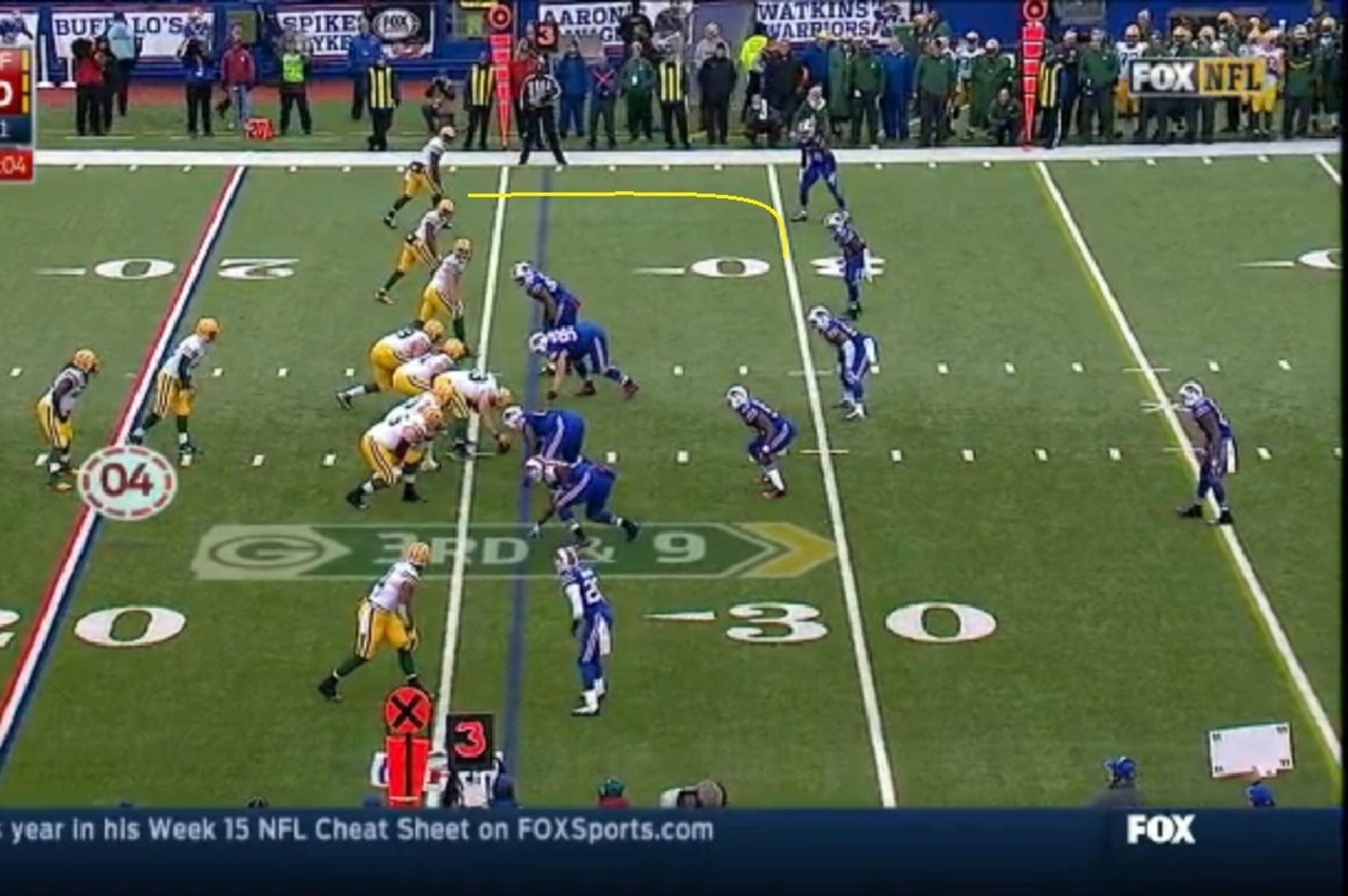
This was another third-down situation. Davante Adams, the rookie from Fresno State, was the X receiver on the play as he ran a route underneath the coverage. The Bills were willing to give anything underneath the sticks. Adams' job was to secure the ball and turn quickly to make up the distance between the first-down marker and the catch point.

When he went for the catch, though, he couldn't keep both hands on the ball. With no one around him, this play was one of the more questionable drops of the day. Increasingly, as the game went on, the drops must have been getting more frustrating for Green Bay. Five more yards left on the field.
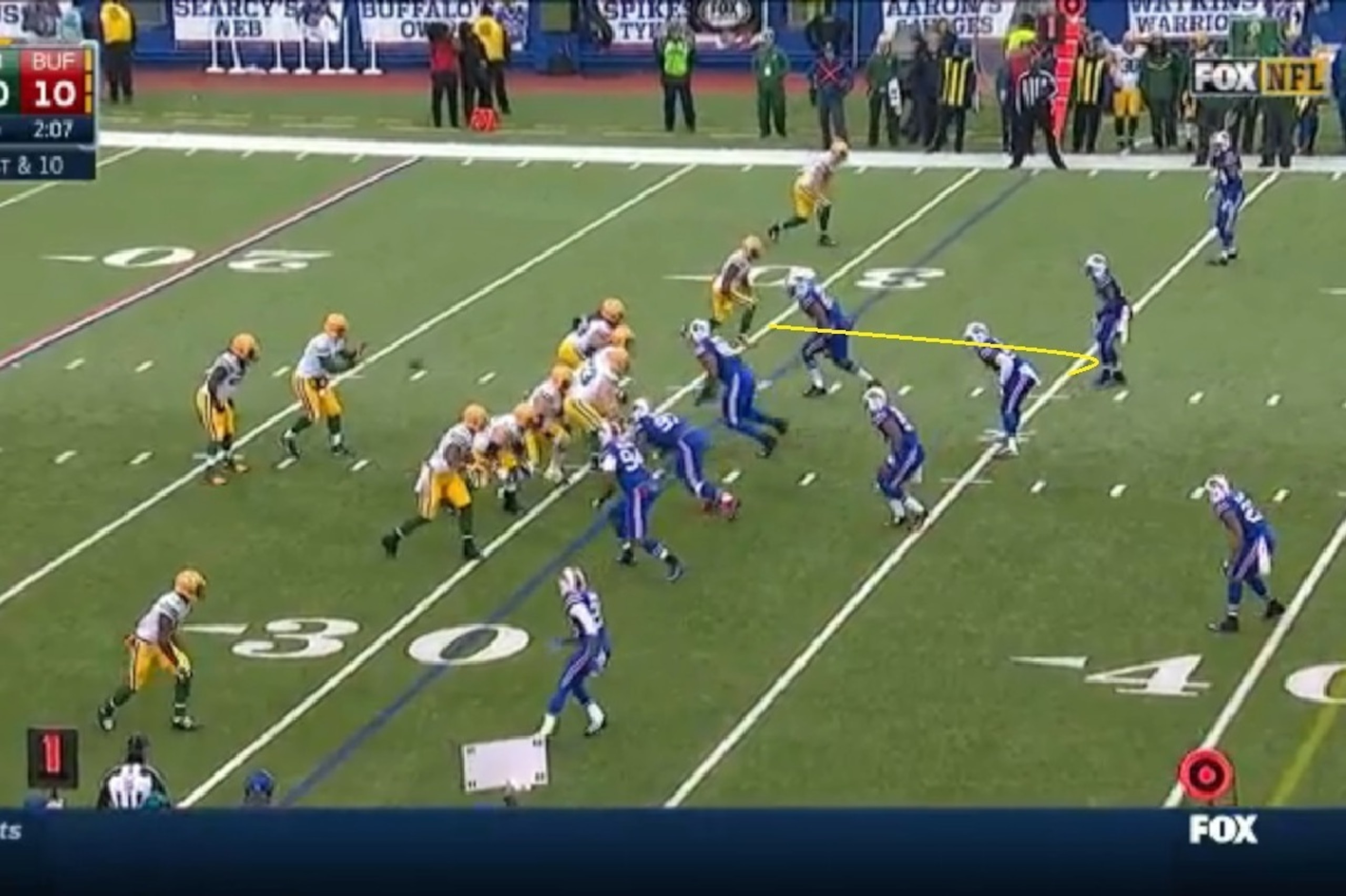
As the first half was coming to a close, the Packers tried to time a quick-hitter on first down. A Rodgers-to-Randall Cobb connection on a short curl was the design.
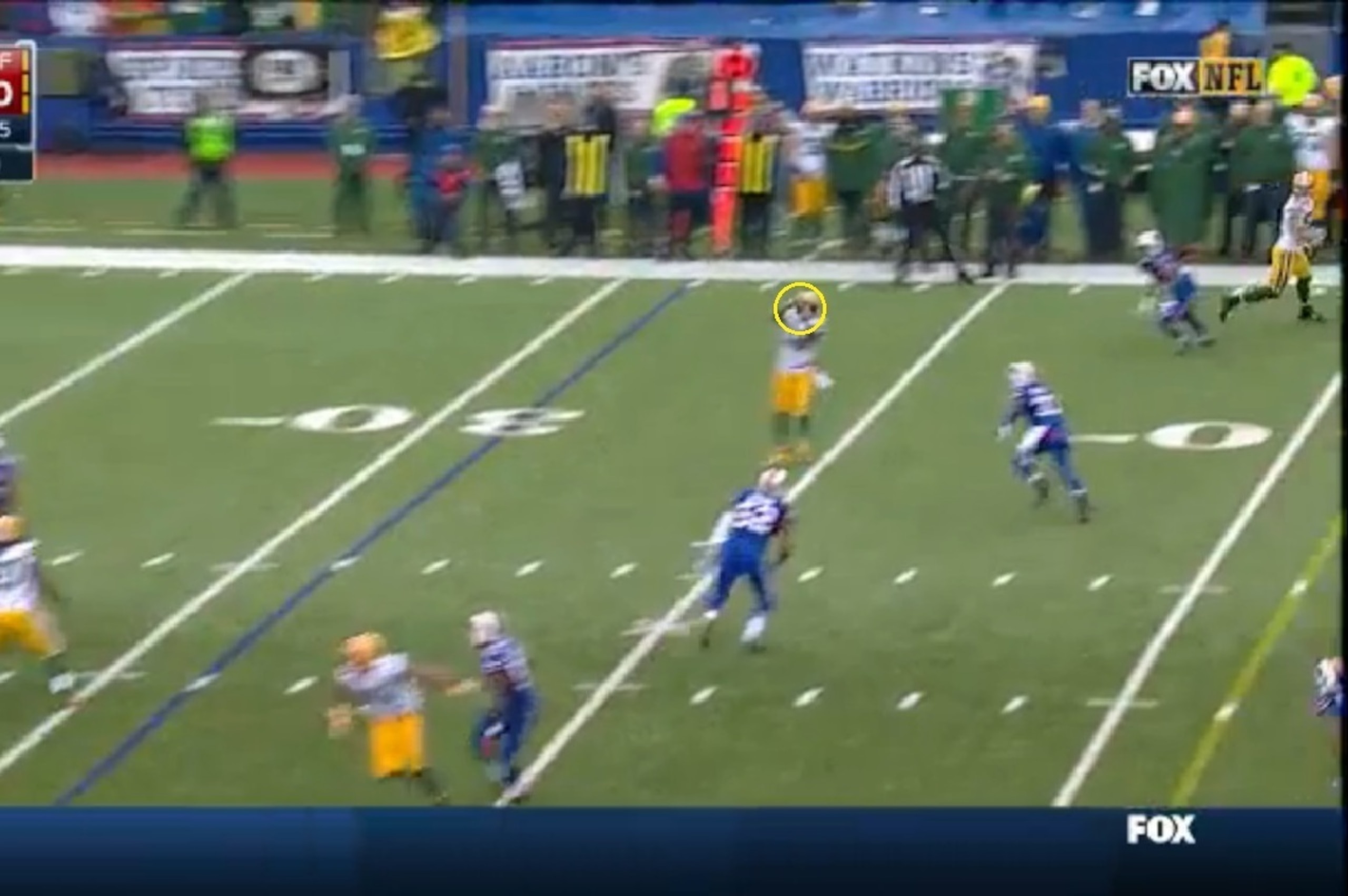
With the ball at eye level, Cobb began to turn his head to the defender closing in on him before locking in the catch. This mistake almost cost Green Bay the drive.
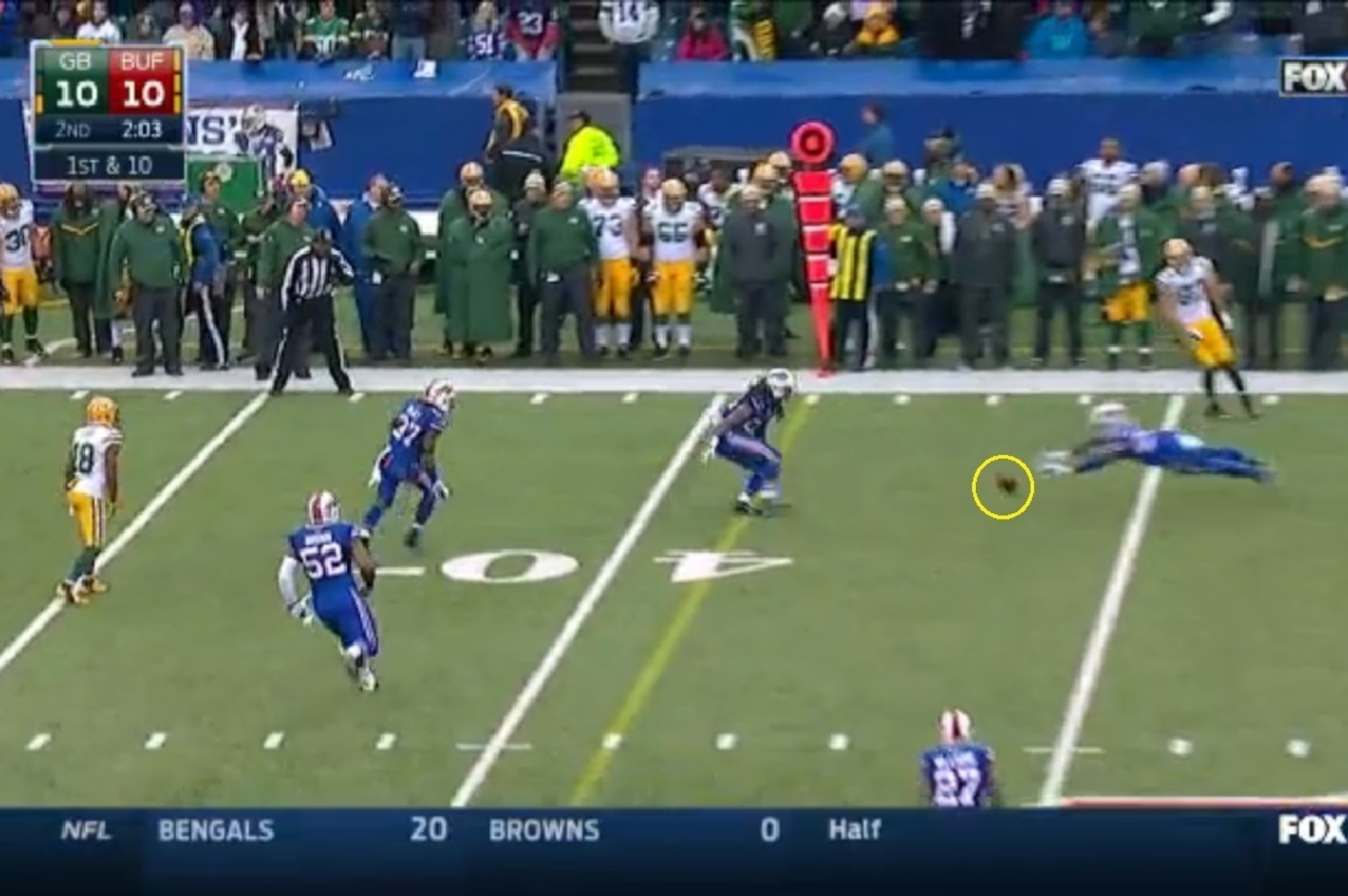
Flying through the air was the deflected pass, which was nearly intercepted. If nothing else, if Cobb had executed, the play would have been a four-yard gain.

This was the worst drop of the game., if not for the lost yardage of the play, then for the impact it could have had. On second down, six yards out of their own end zone, Nelson ran a go route down the sideline.

Beating his man, Nelson could have gone the full 94 yards for the game-tying score. He beat his corner and safeties rarely bring him down from behind. A home run threat, Nelson is second in the league in receptions of 40-plus yards.
With two drops which could have totaled two scores, Nelson must want to burn the tape from this game.
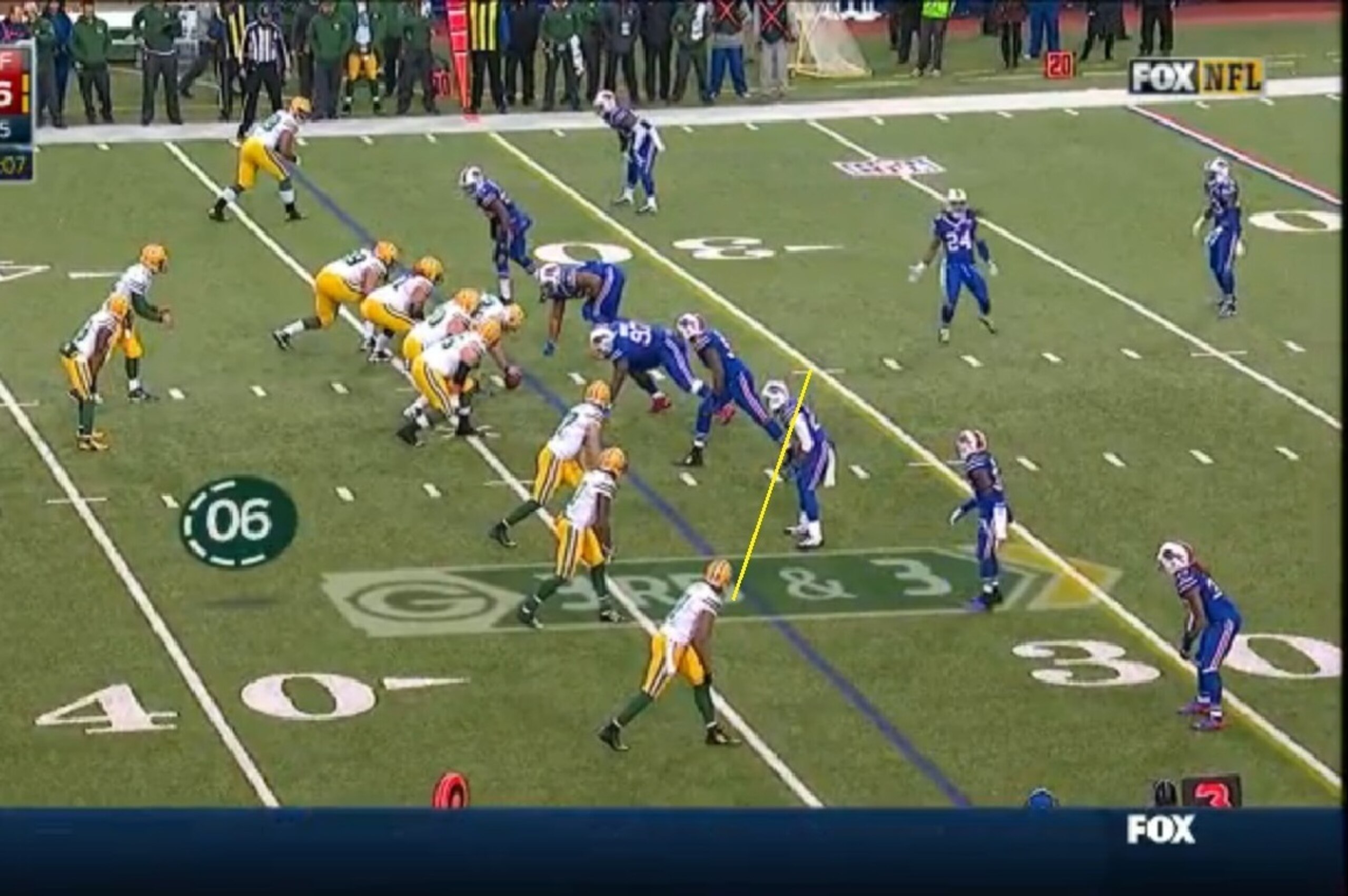
The final drop of the game was the dagger. With the Packers driving, they needed a first down to continue a path which would have given them the lead at the end of the drive.
Jarrett Boykin, who started the season as the third receiver on the squad before Adams replaced him, ran a dart route underneath the two targets in the slot. The hope was with timing, he could slip behind the more vertical threats and get an easy first down.
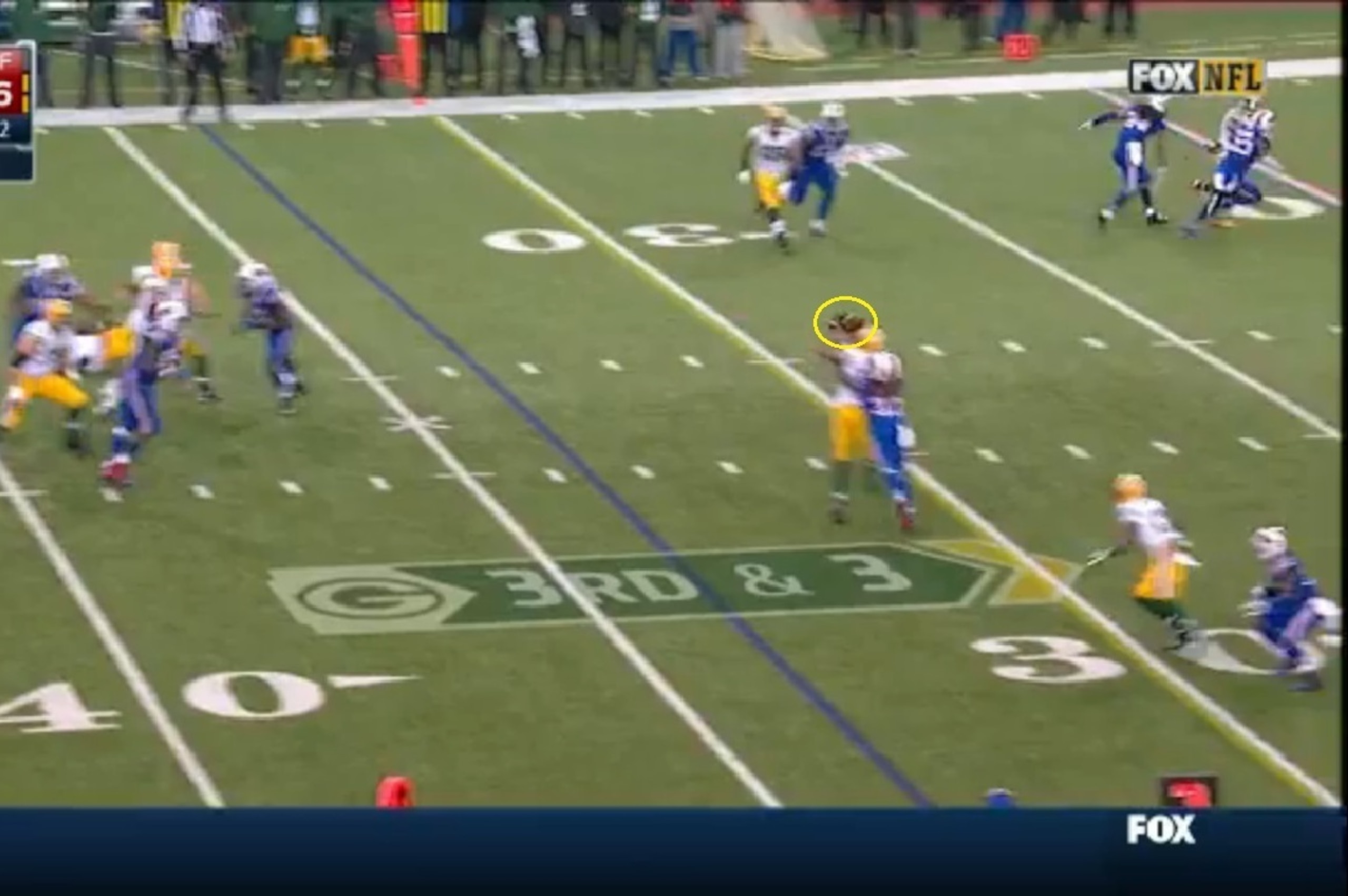
At the catch point, the pass looked correct. Eye level is really where you want to hit receivers. The contact forces an incompletion, but even worse, it volleyed the ball into the air.
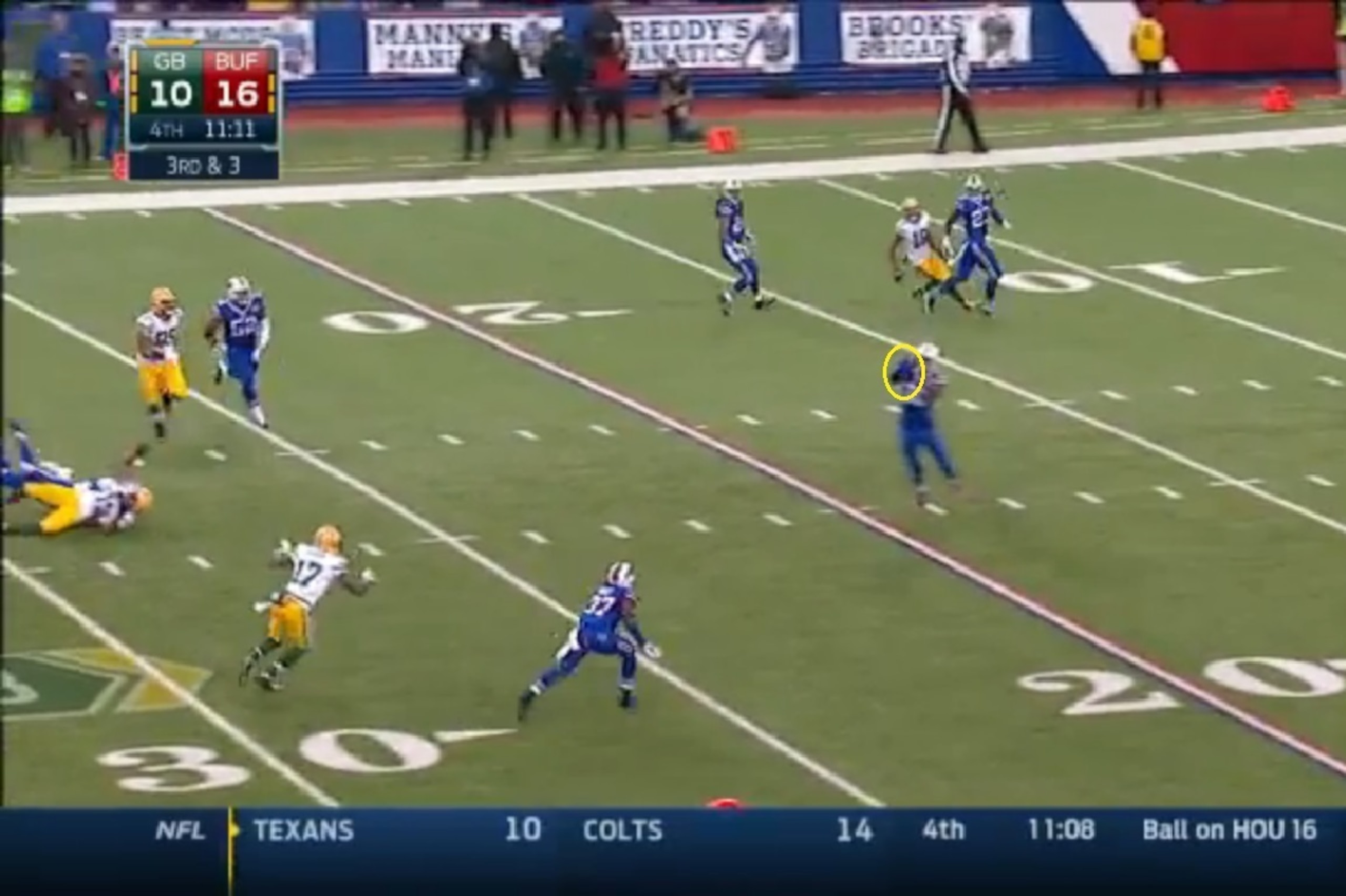
Finding its way to the back end of the secondary, the ball was pulled in for an interception. Not only was a drive taken away, but three to seven potential points were ripped off the board as well.
Final Thoughts
Packers fans should not be worried about Aaron Rodgers' performance on Sunday. Yes, it was less than ideal, but if Green Bay had connected on the uncharacteristic amount of drops they had, no one would have even noticed.
Rodgers' line for the day was 17-of-42 for 185 yards and two interceptions, good for a passer rating of 34.3. By my estimation, if every drop was a completed pass and no yards were added to the play after the catch—just to make it fair—other than Nelson's go route down the sideline, Rodgers' numbers would have been 26-for-43 for 348 yards, two touchdowns and one interception, good for a passer rating of 92.0.
By drops alone, the Packers cost themselves nine completions, 163 yards, two touchdowns and forced an interception. The passer rating difference alone was 57.7 points, 168 percent of Rodgers' actual passer rating during the match.
This game was an outlier by almost any way to measure it. While you can fault the execution of the receivers, it's hard to imagine they'll put up a performance like this ever again.
Look for the narrative to spin this week as Green Bay's passing game "returns" to its previous production.
.jpg?w=2560 "Cowboys Giants Football")
.jpg?w=2560 "Packers Vikings Football")
.jpg?w=2560 "Grading WWE Raw 🔠")
.jpg?w=2560 "Follow WWE Raw 🇲🇽")
