
Ranking the Most Exciting Finishes in Super Bowl History
The Super Bowl has become the planet's biggest sporting event, watched by billions of people worldwide and prompting millions of bowls of bean dip to be made in households from Kansas to Kyoto. However, the game is not always the thrilling clash between conference champions that viewers hope for, which makes the thrilling finishes all the more memorable.
Certain plays have been etched into our collective memory, but it can be easy to forget the actual facts of the endgame. For example, John Elway's famous dive for a first down near the goal line stands out as an iconic highlight, but that play came in the third quarter.
This list looks back at all 48 Super Bowls and assesses how each one of them finished. The 10 most exciting endings in Super Bowl history fall broadly into three narrative categories: failed comebacks, successful comebacks and thrilling plays in the waning seconds of close games.
The top criterion for judgment is overall quality of the game, a consideration that dropped the ranking of Super Bowl V down the list. Go-ahead touchdowns scored late in the game take precedence, as does the historic magnitude of the victory. Go-ahead or game-deciding field goals come next.
Ranging from high drama to face-palming folly, these are the 10 most nail-biting, butt-clenching, breath-holding finishes in Super Bowl history.
10. SB VII: Miami Dolphins 14, Washington Redskins 7
1 of 10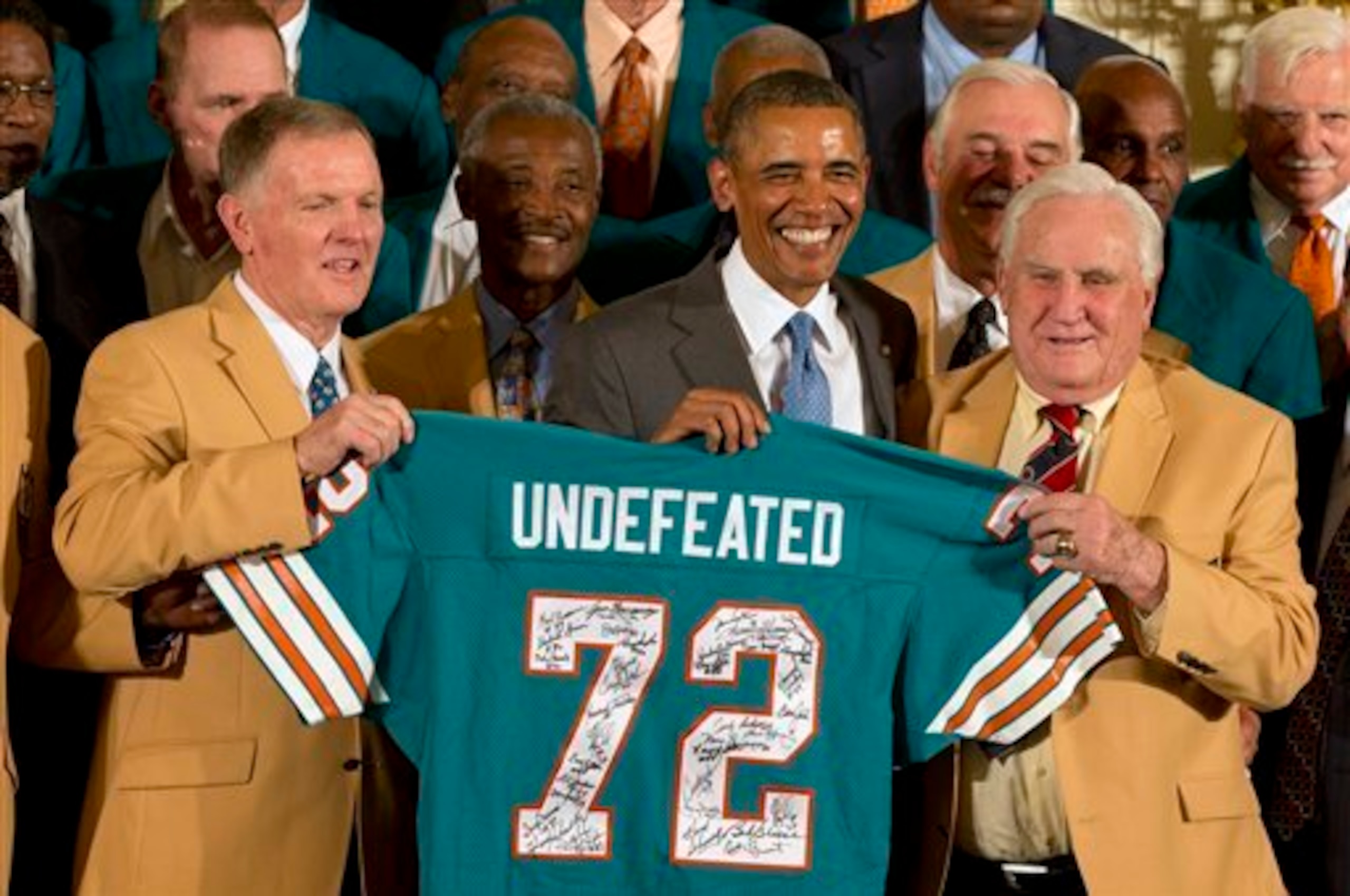
The 1972 Miami Dolphins won all 14 games in the regular season that year and ground out a pair of playoff wins to reach Super Bowl VII. Facing the Washington Redskins, Miami had total control of the game—right up until the kicking team came on to try and extend a 14-0 lead late in the fourth quarter.
Garo Yepremian, an Armenian born in Cyprus, had already booted numerous clutch kicks during the season to help preserve Miami's unblemished record. He came on to attempt the 42-yard field goal with just over two minutes remaining in the game. The result seemed to be in hand, but Yepremian's try was blocked and the ball caromed behind the line to the placekicker's right.
Yepremian alertly scooped up the ball, then disastrously tried to throw a forward pass to a teammate, looking as if he had never before thrown a football in his entire life, as the ball slipped out of the kicker's hands and fluttered up in the air.
By the time the Armenian's comedy of errors had concluded, Washington's Mike Bass had snatched up the errant ball and returned it for a touchdown, narrowing the score to 14-7. Washington kicked away and succeeded in getting the ball back with a chance to drive for the tying TD, but the Dolphins defense stood firm.
The '72 Dolphins remain the NFL's only undefeated team in the Super Bowl era, and they were honored by President Barack Obama in August 2013 because White House visits for pro sports champions were not common in the early '70s, and Richard Nixon was slightly preoccupied at the time with Watergate anyway.
9. SB XLVII: Baltimore Ravens 34, San Francisco 49ers 31
2 of 10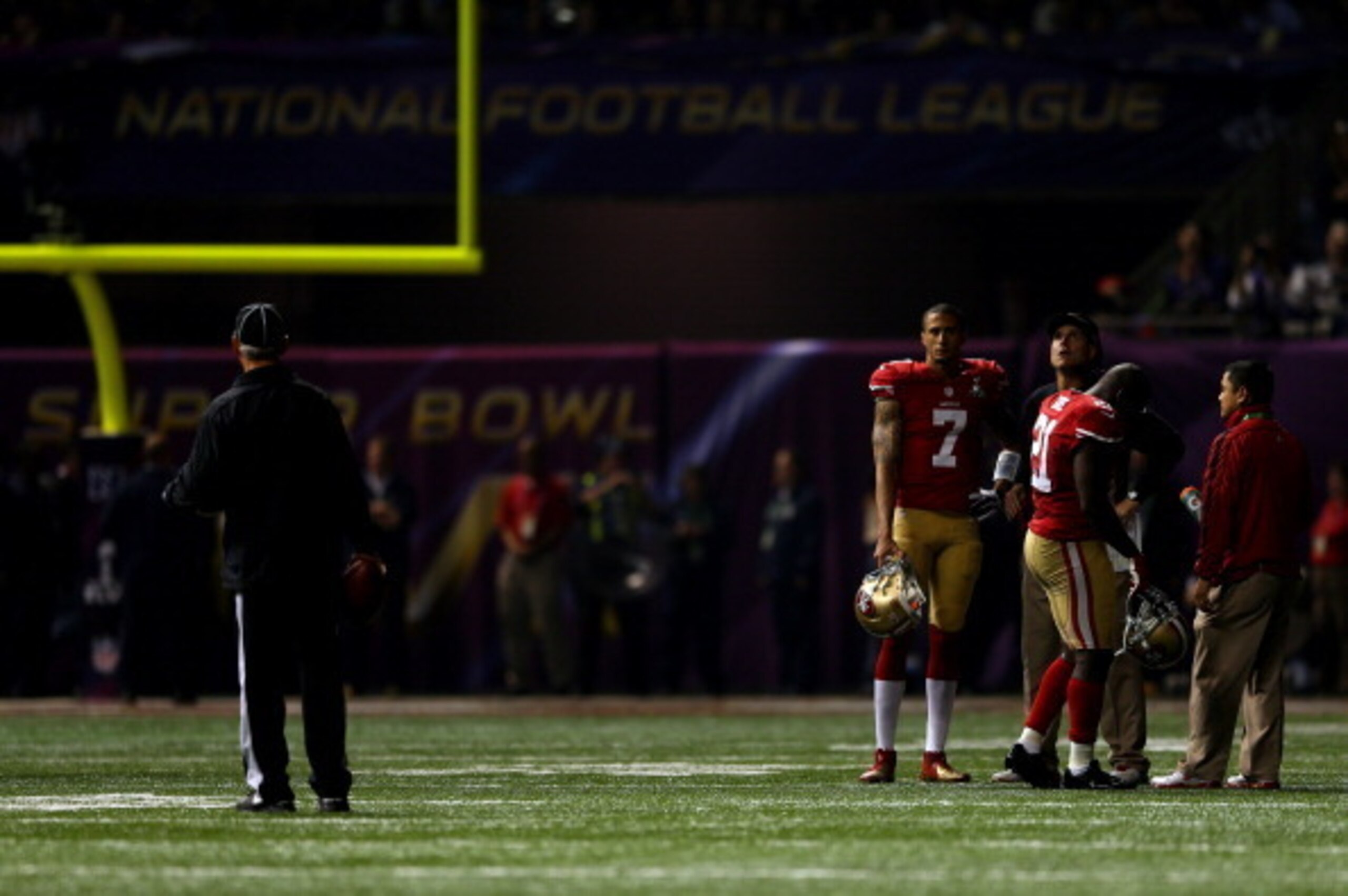
At Super Bowl XLVII, many quipped on social media that the blackout in the Superdome that occurred early in the third quarter had been caused by Beyonce's rollicking halftime show. Some of those people were joking, but it seemed as likely an explanation as any for a power outage during the world's biggest sporting event.
As the game remained halted with limited power running inside the home of the New Orleans Saints, some viewers flipped the channel or merely went back to the kitchen to investigate which of the snacks at the Super Bowl party remained, and whether that cheese dip on the table near the radiator had already veered past the point of acceptable food safety standards.
After all, the Baltimore Ravens led the San Francisco 49ers comfortably when the power dropped out. Ravens quarterback Joe Flacco had tossed three touchdowns in the first half, putting his team up 21-6. Then Jacoby Jones added to that lead by returning the opening kickoff of the second half 108 yards—28-6, game over.
But seemingly lulled to sleep by the 34-minute delay caused by the power outage and the false sense of security created by a 22-point lead, the Ravens looked flat as pancakes when the game resumed and yielded 17 points in five minutes to the Niners.
However, the Ravens woke from their slumber and held on for the victory during a tense fourth quarter. It emerged subsequently that the blackout had been caused by the very device which was intended to prevent such a blackout, so Beyonce was off the hook.
8. SB V: Baltimore Colts 16, Dallas Cowboys 13
3 of 10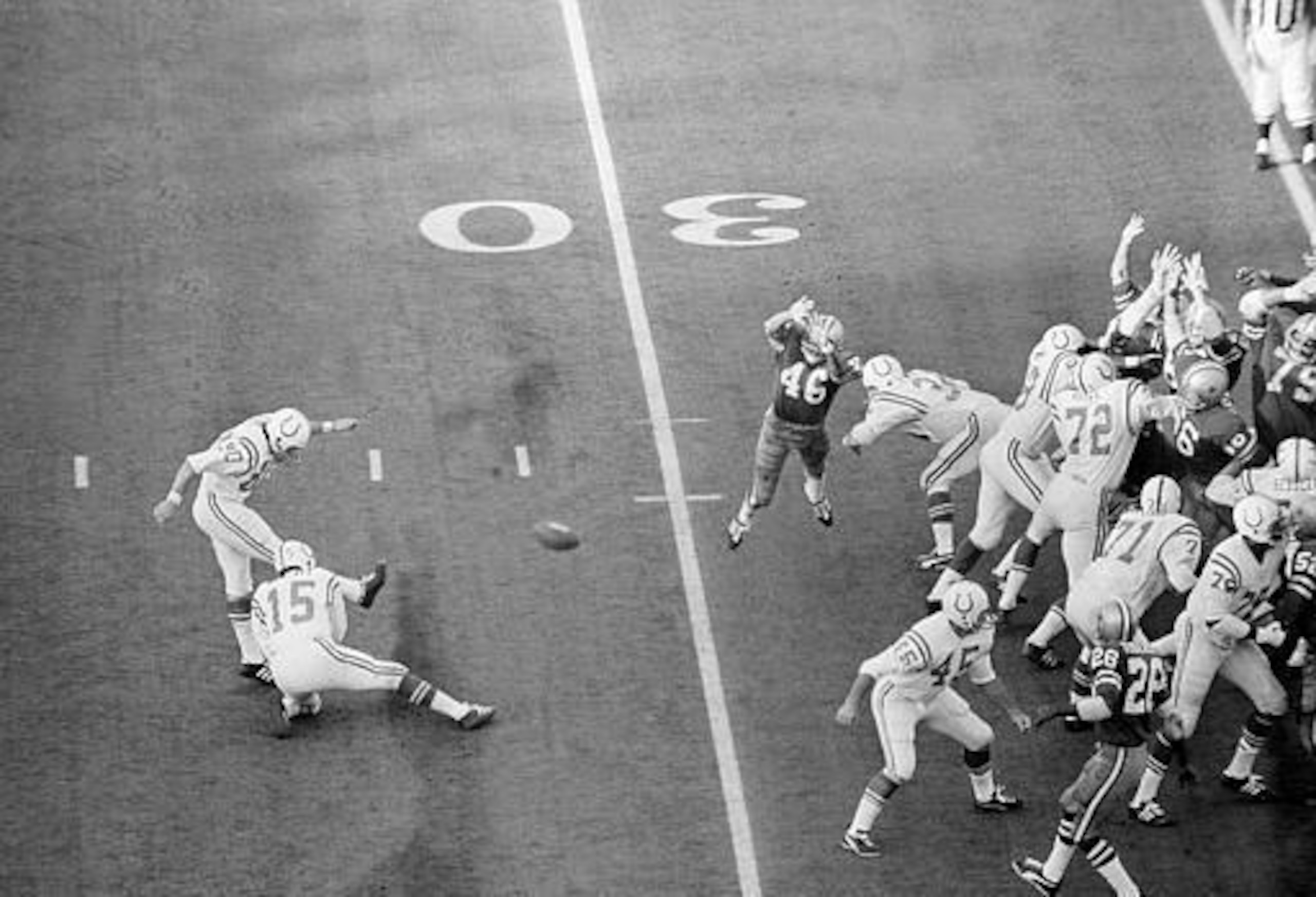
Super Bowl V somehow got lost in the shuffle of history, lacking the tresses and fur coats of Joe Namath, the undefeated drama of the '72 Miami Dolphins or the blinding star power of Super Bowl X.
However, the fifth Super Bowl, the first following the completion of the AFL-NFL merger, very nearly went to overtime. Getting there was a struggle, as the teams combined for 11 turnovers in all. Incredibly, the Colts won the game despite turning the ball over seven times.
In a nod to the defensive domination of the contest, Cowboys linebacker Chuck Howley won the Super Bowl MVP in a losing effort. But Baltimore drank champagne once the final whistle sounded thanks to Jim O’Brien's 32-yard field goal as time expired.
Dallas actually had the ball in the final two minutes, but a costly holding penalty followed by an interception provided the Colts with great field position, setting up O'Brien's heroics.
.png?w=2560)
.jpg?w=2560 "Dolphins Commanders Camp Football")
7. SB X: Pittsburgh Steelers 21, Dallas Cowboys 17
4 of 10
The Dallas Cowboys led the Pittsburgh Steelers 10-7 after three quarters of Super Bowl X, which had been the score since early in the second quarter. Fittingly, the championship game featuring a host of future Hall of Famers saved the best for last.
Pittsburgh started its comeback with a blocked punt for a safety and then scored a go-ahead field goal after receiving the free kick. The "Steel Curtain" defense forced a Roger Staubach interception on the next possession, leading to another Steelers field goal.
Terry Bradshaw seemed to secure the sure victory on a 64-yard touchdown pass to Lynn Swann, capping 14 unanswered points in the fourth quarter and providing Pittsburgh with a 21-10 lead and only three minutes to play.
But with Staubach under center, the Cowboys never felt like they were out of any game, and the Navy man led his team on a quick scoring drive to narrow the gap. Dallas got the ball back with a minute left, but not even Staubach could complete the miracle comeback against such a ferocious defense.
6. SB XXXII: Denver Broncos 31, Green Bay Packers 24
5 of 10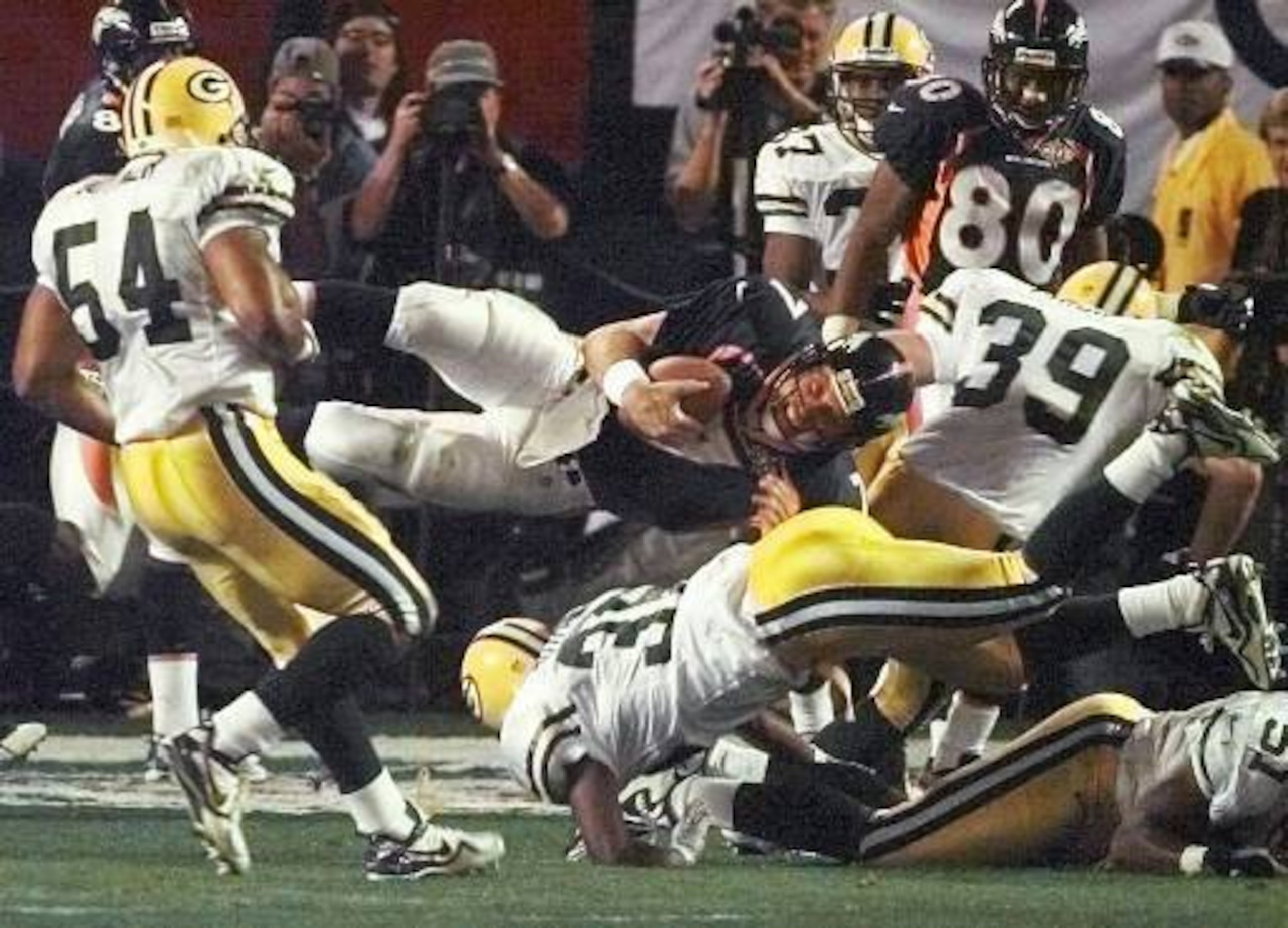
Denver Broncos running back Terrell Davis rushed for a Super Bowl-record three touchdowns and 157 yards, claiming MVP honors, but this contest belonged to Broncos QB John Elway.
Elway was 37 at the time, and Super Bowl XXXII marked his fourth trip to the title game. His Broncos had come up short in Super Bowls XXI, XXII and XXIV, but his fourth try finally came against Brett Favre and the Green Bay Packers.
The game is remembered for a single iconic play, the historically mobile but aging Elway rushing headlong on third down near the goal line and leaping forward with reckless abandon, getting hit and helicoptering forward for the first down and probably the most memorable eight-yard run in Super Bowl history. Davis scored shortly thereafter.
Elway's pedestrian stats through the air—12 completions on 22 attempts for 123 yards, one INT and zero TDs—tell the tale of a rushing-oriented offense, but Favre and the Packers nearly outgunned the championship-hungry Broncos.
Elway's signature highlight came late in the third quarter, but that interception opened the door for Green Bay, as Favre led a scoring drive to knot the game at 24-24.
The teams traded punts until Denver pinned the Pack against their own end zone and got the ball near midfield. A steady diet of Davis led to the winning score inside the final two minutes, giving Elway his first ring and the Broncos a satiating Super Bowl victory.
5. SB XXXVI: New England Patriots 20, St. Louis Rams 17
6 of 10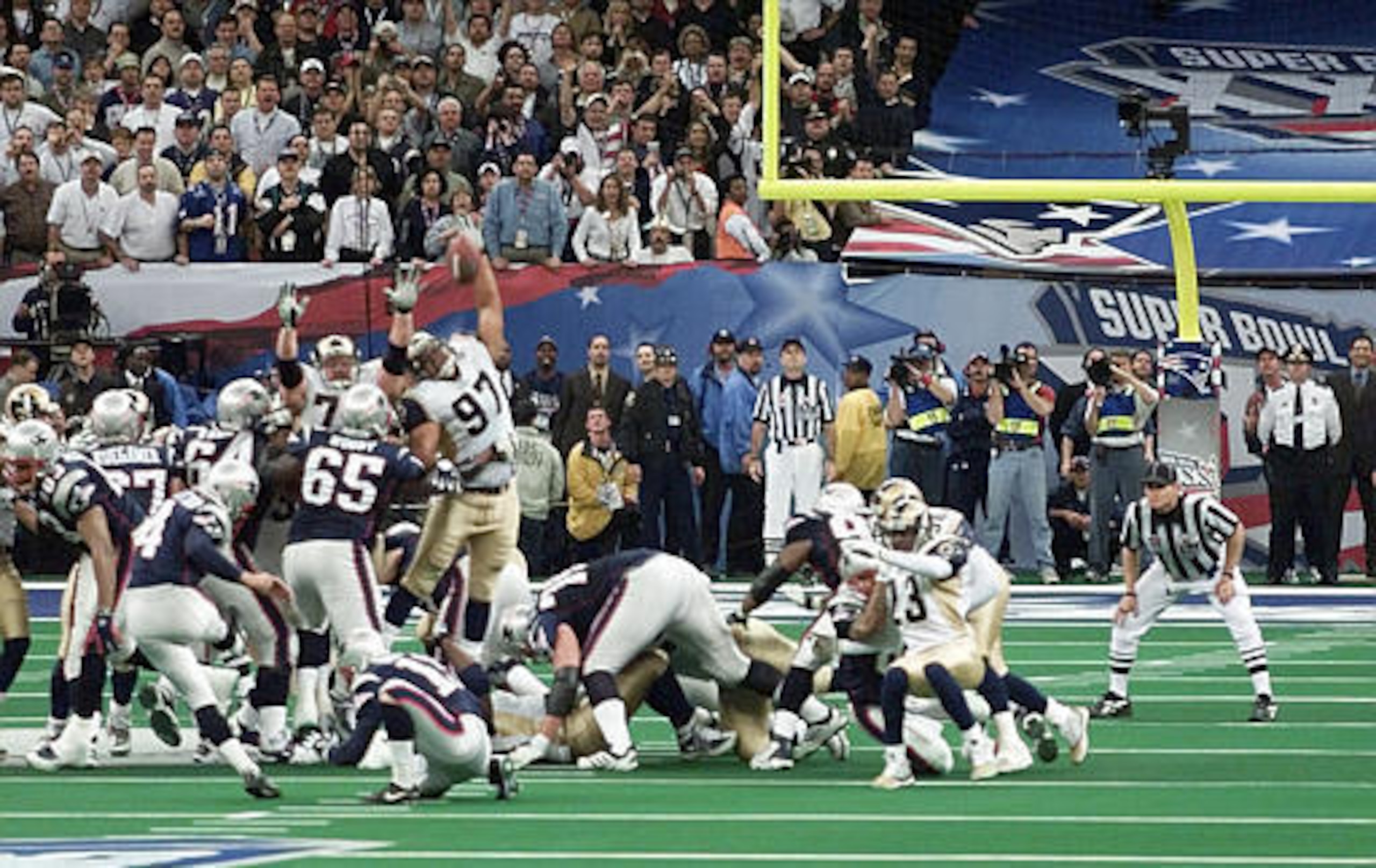
Adam Vinatieri's name is spoken like a curse word by many football fans who root for the Oakland Raiders, St. Louis Rams and Carolina Panthers, among other teams.
The New England Patriots' clutch kicker, who hails from Yankton, South Dakota, never yanked a kick wide when it mattered most, and he etched his name into legend during Super Bowl XXXVI, essentially planting the seed of a dynasty with the accuracy of his right foot.
By the time the Super Bowl matchup rolled around against a heavily favored Rams team, Vinatieri had already kicked the game-tying and game-winning field goals to oust the Raiders from the playoffs amid heavy snow at Foxboro Stadium. With the Super Bowl at the Superdome, however, there was no chance of snow that day.
The game was dominated by the Patriots defense for three quarters, putting the heavy underdogs up 17-3 to start the fourth quarter. But Rams QB Kurt Warner flashed the skills that won him two NFL MVP awards by guiding the Rams to a pair of fourth-quarter touchdown drives to tie the score at 17.
And so began the handsome legend of Tom Brady, as he took the ball with 90 seconds left and piloted a 53-yard drive to the Rams' 30-yard line. Vinatieri trotted on, and his 48-yard kick delivered the first of Brady's three Super Bowl titles.
4. SB XXV: New York Giants 20, Buffalo Bills 19
7 of 10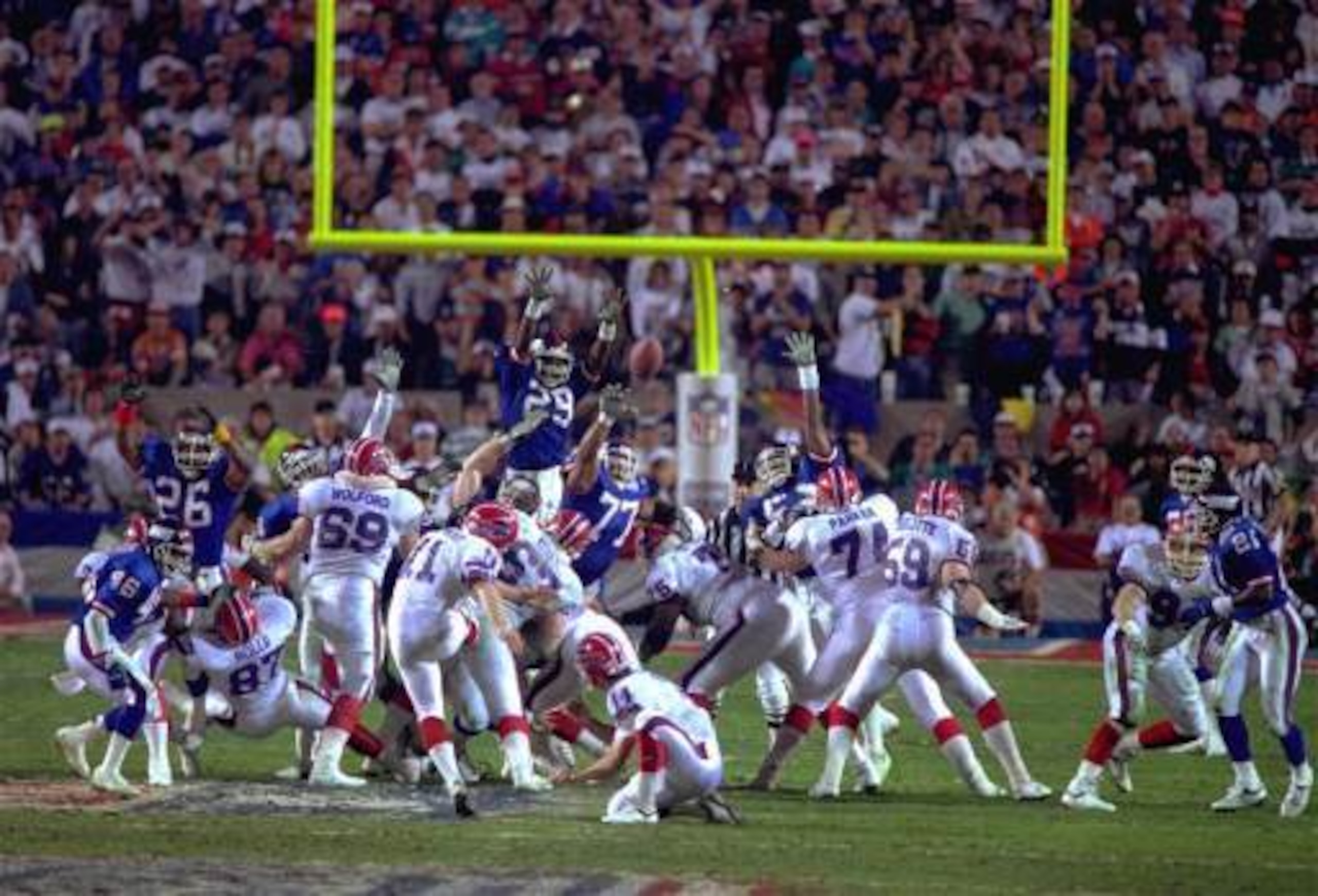
Scott Norwood is the Bill Buckner of Buffalo.
The New York Giants prevailed, 20-19, for a stunning upset victory over the high-powered Buffalo Bills, but the kicker's 47-yard attempt as the final seconds wound down could have delivered a dramatic victory.
Instead, the Bills remain without a Super Bowl title, and the Giants prevailed behind MVP running back Ottis Anderson and backup QB Jeff Hostetler, who played in place of injured starter Phil Simms. The Giants came in and executed a clear game plan: Control the clock and keep the ball out of quarterback Jim Kelly's hands.
Back then, current New England Patriots head coach and delicate genius Bill Belichick was New York's defensive coordinator. He dropped jaws in the locker room when he told his players during Super Bowl preparations, via ESPN.com: "We want Thurman Thomas to run for over 100 yards. I guarantee you we're going to win. I will quit this business if Thurman Thomas runs for over 100 yards and we lose."
Thomas ran for a 31-yard TD to open the fourth quarter, but Matt Bahr's 21-yard kick—aided by an all-out effort from receiver Mark Ingram Sr. on a 3rd-and-13 play—made it 20-19 Giants, which proved to be the winning points.
Thomas ran for 135 yards on only 15 carries and added another 55 yards on five catches. However, Kelly passed for just 212 yards and had zero TDs. Belichick's plan worked, although had Norwood's kick not sailed wide right, perhaps Belichick actually would have quit the business and saved many future NFL opponents the headache of facing him.
3. SB XXIII: San Francisco 49ers 20, Cincinnati Bengals 16
8 of 10
ESPN.com's Larry Schwartz once summed up the greatness of legendary quarterback Joe Montana, writing:
"He was Joe Cool, the unflappable king of the comeback. Take the 1989 Super Bowl against the Cincinnati Bengals. The San Francisco 49ers were down by three points with 3:20 left when Montana spotted—no, not an open receiver—but a personality. 'There, in the stands, standing near the exit ramp,' Montana said to tackle Harris Barton. 'Isn't that John Candy?' And then he led the 49ers 92 yards, throwing for the winning touchdown with 34 seconds left.
"
Yes, not only was Montana unfazed by trailing 16-13 late in SB XXIII, he acted as an amateur paparazzo as well, spying the famous comic in the stands with casual ease.
Perhaps having Jerry Rice on your team helps keep a QB calm, but Montana's ruthless procession down the field spoke to his killer instinct. He led the Niners on an 11-play drive that included nine passes, marching 92 yards for the go-ahead score and leaving Boomer Esiason only a half-minute to respond.
With the defense keying on Rice, Montana found John Taylor in the back of the end zone, giving hard evidence that he is the most clutch QB in NFL history.
2. SB XLIII: Pittsburgh Steelers 27, Arizona Cardinals 23
9 of 10
Super Bowl XLIII actually included two of the most dramatic plays in Super Bowl history, and without both of them, the Pittsburgh Steelers never could have defeated the Arizona Cardinals.
On the final play of the first half, Cardinals QB Kurt Warner threw an interception to linebacker James Harrison, who returned it 100 yards for a touchdown and just barely crossed the goal line for the score as the second quarter expired, falling on top of Cards receiver Larry Fitzgerald and rolling into the end zone in the process.
But even that game-changing play could not lift the Steelers sufficiently. For victory, they required a remarkable late touchdown, with Ben Roethlisberger threading a superb pass to Santonio Holmes in the corner of the end zone, who displayed excellent body control to drag his toes and keep his feet in bounds while securing the catch.
Warner could not lead a comeback armed with only 30 seconds, and Holmes walked away with a ring and MVP honors.
1. SB XLII: New York Giants 17, New England Patriots 14
10 of 10
After Tom Brady and the New England Patriots won their first title in Super Bowl XXXVI, they had become a full-on powerhouse by the time of SB XLII. Brady and the Pats had won three championships in a four-year span, and they sought a fourth Vince Lombardi Trophy as well as the most prolific undefeated record in NFL history with only the New York Giants standing in their way.
Brady and the Pats had set records for offense thanks to a passing attack that included Randy Moss, who caught a ridiculous 23 touchdowns that season.
That's why it seemed equally ridiculous when Giants wideout Plaxico Burress predicted his team would win the Super Bowl 23-17. It had been more than a year of football games since the Pats scored 17 or fewer points.
When the Associated Press relayed Burress' prediction to Brady before the game, he scoffed, via ESPN: "We're only going to score 17 points?" Brady said before chuckling about it. "OK. Is Plax playing defense? I wish he had said 45-42 and gave us a little credit for scoring more points."
As it turned out, the Patriots scored their 14th point with 2:45 remaining in the game, as a Brady-to-Moss TD gave them the 14-10 advantage. Facing an 18-0 Patriots team, it seemed Eli Manning and the Giants would need a miracle to pull off the upset.
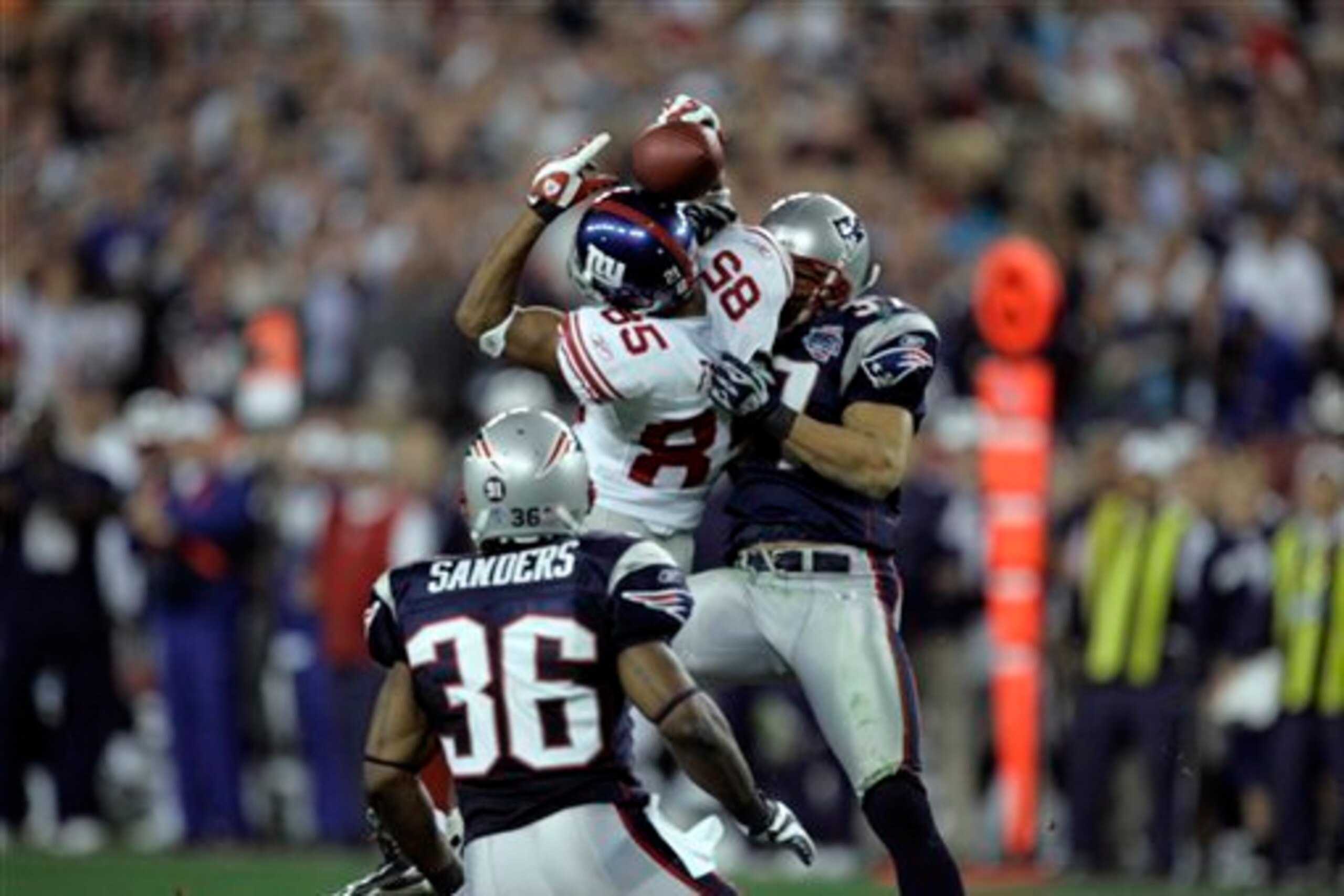
The Giants needed a conversion on 4th-and-1 at their own 37 just to sustain the drive. Then came 3rd-and-5 from their own 44. Patriots pass-rushers swarmed Manning, but suddenly, the Giants QB popped out from the fray, found a little space and heaved downfield for David Tyree, who was momentarily wide open.
By the time the ball arrived, however, Pats safety and notoriously nasty defender Rodney Harrison had draped himself all over Tyree, causing the ball to nearly squirt from the receiver's grasp. But Tyree had one hand on it, which he used to pin Manning's throw to his helmet, and as he fell to the turf and landed awkwardly on top of Harrison, Tyree brought his other hand around to secure the ball and complete the unreal catch.
The G-Men still required another dramatic third-down catch, with Steve Smith alertly turning upfield on an out route and barely reaching the first-down marker. Manning found Burress wide open on the next play for the go-ahead score.
However, Brady still had 35 seconds and three timeouts to work with, needing only a field goal to tie. Overtime seemed likely, given the Pats' prowess, but rookie Jay Alford sacked Brady for a 10-yard loss on second down.
Two more incompletions sealed the deal on the greatest Super Bowl ever played and a lasting legacy for Manning and Tyree, not to mention preserving the '72 Miami Dolphins as the only undefeated Super Bowl champions in NFL history.
The Giants pulled off another comeback win against the Pats in Super Bowl XLVI, but Ahmad Bradshaw's reluctant game-winning touchdown took some of the luster off that finish.
.jpg?w=2560 "49ers Camp Football")
.png?w=2560 "Rival's Hilarious Russ Tribute")
.png?w=2560 "Knicks' Playoff Revenue 😱")