Recent Draft Misses Playing Huge Part in New York Giants' Free Fall
The annual NFL draft might have morphed into a multiple-night, made-for-television spectacular that is responsible for generating millions of additional dollars in advertising revenue for the league, but to its 32 member teams, the draft is and always will be the lifeline.
So what happens when a team doesn’t have a series of successful drafts?
Look no further than the New York Giants as an example of what happens when a club’s draft picks don’t pan out to become part of the organization’s core. More on that, though, in a minute.
What Makes a "Good" Draft Class?
Defining what constitutes a successful draft class is difficult because there isn’t a right or wrong answer. Some, for example, might define a successful class as one that comes in and contributes right out of the chute, while others might look at the number of Pro Bowlers who are born from each class.
Last year, Chris Smith of Forbes did a study that concluded that Reese ranks among the "worst-drafting general managers."
Since Smith did the comparison of Reese’s drafts versus the other 31 NFL teams, we’re going to take a closer look at just the Giants’ draft class and the production New York has gotten from each by using the same criteria Smith used in his study, Pro-Football-Reference.com’s Weighted Career Approximate Value (WCVa).
Per PFR, the WCAv formula is calculated as “100% of the player's best season, plus 95% of his 2nd-best season, plus 90% of his 3rd-best season, plus 85% of his 4th-best season.”
In other words, the number of games each pick contributed to, either as a starter or backup to the team, the higher the number, the better the value.
Out of 38 draft picks, only six players—a list that includes three first-round picks, two second-round picks and one sixth-round pick—has a value of 10 or higher:
| 2009 | 1 | 29 | WR Hakeem Nicks | 36 |
| 2010 | 1 | 15 | DE Jason Pierre-Paul | 28 |
| 2009 | 2 | 60 | OT Will Beatty | 24 |
| 2010 | 2 | 46 | DT Linval Joseph | 21 |
| 2011 | 1 | 19 | CB Prince Amukamara | 12 |
| 2011 | 6 | 202 | LB Jacquian Williams | 10 |
Of those six, two—receiver Hakeem Nicks and defensive tackle Linval Joseph—began the 2014 season with other teams, leaving the Giants with just four players who have made an impact as far as playing time goes.
So much for having a solid foundation, right?
But wait, the picture gets worse because if you consider the areas of weakness on the current Giants team, you will see that the positions where the Giants are struggling the most this season have a direct relationship to the team’s lack of success in the draft in finding players at those spots.
Where Are They Now? An Overview
In the next table, we break the status of where every member of the Giants’ last five draft classes was as Week 1 of the 2014 season.
A couple of notes here. First, we did not look at the 2014 draft class because it is too soon to judge the current year’s class.
In addition, players who began the season on injured reserve, the practice squad or the suspended list are being counted as “out of the league” since they were not in a position to contribute to the weekly action on Sunday.
| 2013 | 2 | 2 | 0 | 3 |
| 2012 | 2 | 3 | 1 | 1 |
| 2011 | 2 | 2 | 1 | 3 |
| 2010 | 1 | 0 | 1 | 5 |
| 2009 | 1 | 0 | 1 | 7 |
| TOTALS | 8 | 7 | 4 | 19 |
To put the above numbers in perspective, of the 38 draft picks exercised by the Giants, over the period sampled, 39.4 percent of those players were on the team’s 2014 opening-day roster; only 21 percent of those picks are starters.
(If you’re interested in taking a walk down memory lane to see who the picks were, Bleacher Report colleague Kevin Boilard prepared an analysis of each draft class under Reese prior to the 2014 draft.)
If we go back to our first table which looks at the best draft picks in terms of contributing, only four of the eight starters—defensive end Jason Pierre-Paul, cornerback Prince Amukamara, left tackle Will Beatty and linebacker Jacquian Williams have proven their value as far as being on-the-field contributors.
When Good Picks Go Bad
Now let’s take a look at the positions that general manager Jerry Reese has targeted over the last five draft classes.

Worth noting here is that a team can assemble a combination of top free agents and first- and second-day draft picks to fill out its starting lineups.
However, when injuries strike—and we all know how the injury bug has hit the Giants harder than a bag of bricks yet again this season—if a team hasn’t drafted well, the drop-off in the talent level can literally break a team’s chances.
Let’s look at two examples.
Cornerback
If there is one position that has really suffered thanks to the combination of injury and lack of depth, it is the cornerback spot, where so far this season, the Giants have lost Amukamara, Walter Thurmond and Trumaine McBride.
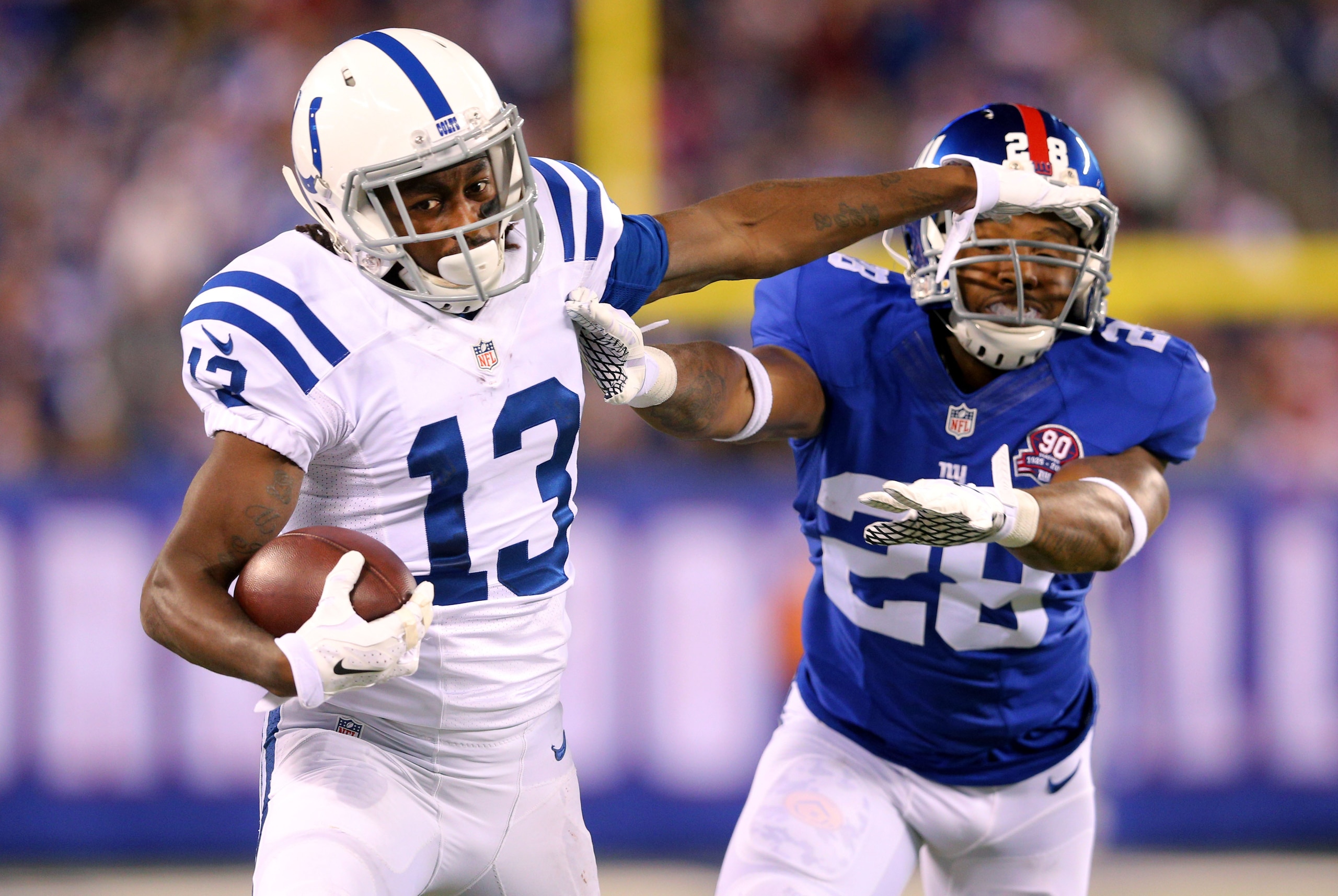
We will point out that Thurmond and McBride, two veteran free-agent signings added in 2013 and 2014 respectively, were likely added after the team realized that its drafted cornerback talent, such as 2012 third-rounder Jayron Hosley, wasn’t going to develop into the player they hoped for.
Offensive Line
Currently, the Giants' offensive line has a minus-25.9 overall run-blocking grade, 28th in the NFL per Pro Football Focus (subscription required).
Reese has spent seven picks on offensive linemen over the last five years, tying it for the top most addressed unit on the team (with the defensive line and defensive secondary).
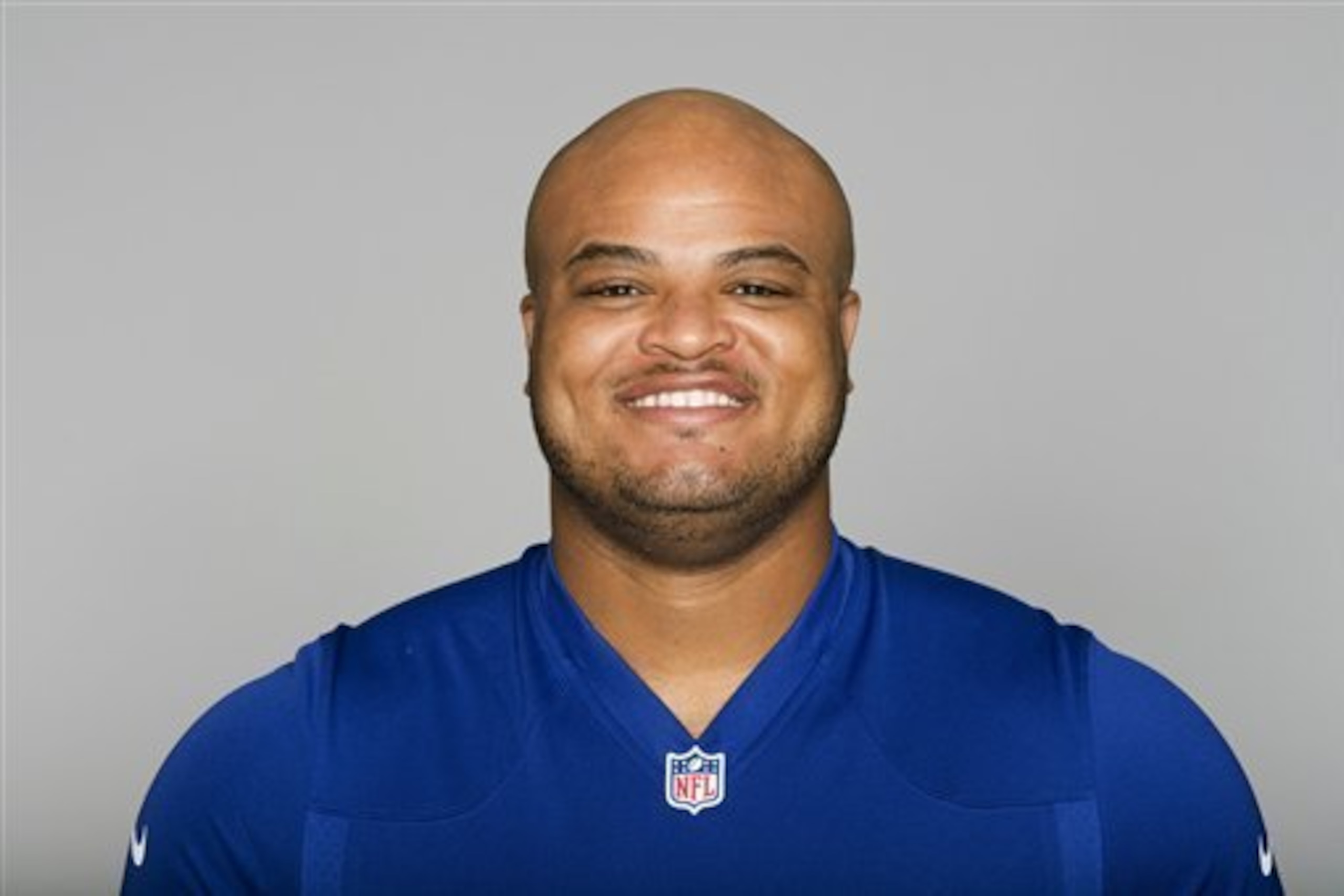
The problem is that of the seven picks spent on offensive linemen, only two, Justin Pugh and Will Beatty, both high-round picks, have made any kind of impact as far as being a consistent contributor on game day.
Of the remaining draft picks—G/T Brandon Mosley, G/C Eric Herman, G/T James Brewer, G/C Mitch Petrus and OT Matt McCants—only two (Brewer and Mosley) are on the 53-man roster; Herman is on the practice squad, and McCants is in Oakland.

Last year when injuries were eating up the offensive line, Herman, a seventh-round pick, couldn’t find his way onto the 53-man roster until the very end of the season, when the team was flat-out of salary-cap space.
Despite having a full offseason under his belt, the team didn’t add Herman to the 53-man roster when it learned it would be without both Geoff Schwartz (temporary injured reserve) and Chris Snee (retired).
Another and perhaps better example is the mystery surrounding Brewer and Mosley’s inability to beat out current starting right guard John Jerry, who, per PFF, is the Giants’ worst run-blocking offensive lineman from the starting lineup.
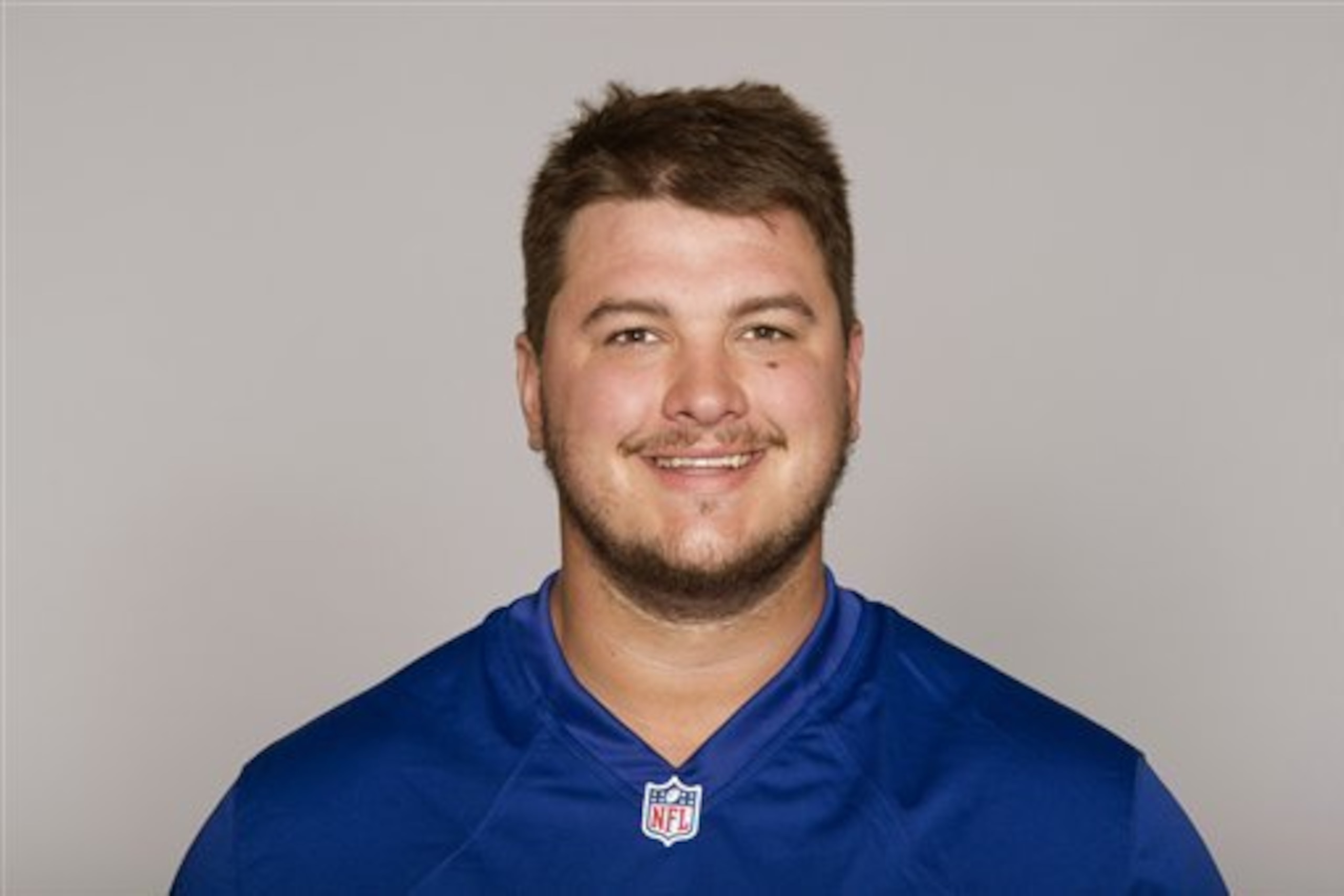
Mosley, a fourth-round pick in 2012 who flashed some last year in relief, has been active for just two games this season, Week 1 and Week 4, taking a total of 10 snaps on offense.
Brewer, who last year was literally handed a starting job but who was unable to hang onto it, is another fourth-round pick, though from the class of 2011. He has yet to earn a game uniform this season.
If Mosley and Brewer can’t progress in their respective developments, why are they still on the roster taking up valuable spots that can be otherwise used at other areas of needs?
The Unanswered Question
When doing studies of this kind, it is impossible to pinpoint why a draft pick, who might have looked so promising on paper, didn’t pan out in the NFL.
Is it work ethic? A lack of being able to grasp the playbook? The wrong fit for the system being run?
On the other hand, is it the front office simply overestimated the potential of the player, creating a situation where a square peg was being forced to fit a round hole?
Whatever the case might be, the Giants' front office needs to do a better job in the draft.
It’s probably not a coincidence that the Giants have only been in the playoffs once in the last five years—the same period in which their drafting was nowhere near being acceptable.
Thus far it looks like it got back on the right track with its 2014 class, but we will need at least another year before we can say for certain if the Giants have finally put a stop to their poor drafting.
Advanced statistics courtesy of Pro Football Focus (subscription required) unless otherwise noted.
Patricia Traina covers the Giants for Inside Football and The SportsXchange. All quotes and information obtained firsthand unless otherwise sourced. Follow me on Twitter @Patricia_Traina.
.jpg?w=2560 "Cardinals Football")