Arsene Wenger Is Paying the Price for Abandoning Arsenal's Winning Formula
Arsene Wenger is paying the price for abandoning the winning formula that once brought him annual success at Arsenal. Gone are the days when he recruited dynamic and athletic midfielders as part of a balanced team playing within a simple tactical formation.
If you want the main reason why Wenger has claimed just one trophy since 2005, and why every dropped point today is treated as a stain on his legacy, changing the formula is why.
It's become so obvious, West Ham United manager Sam Allardyce felt the need to point it out during a recent interview with Express writer Matthew Dunn:
"His first five years were amazing. But I don’t know what happened to him after that.
He seemed to change his whole ethos - I don’t know if it was because he had the new stadium to pay for, you will have to ask him.
It became all about smaller, pretty footballer than it did about the big hard talented footballers who won the ball and won him the key games.
Never mind being able to play, they could mix it, too. He was challenging Manchester United on a regular basis and went a whole season without being beaten. They were fantastic.
Then all of a sudden this change of culture happened where every midfielder seemed to be 5'8" and they lost that steel.
"
Allardyce may want to recheck the time frame. The golden period for Wenger he alluded to actually lasted a little longer than five years.

In fact, it began with the Premier League and FA Cup double secured during the 1997/1998 campaign, and ended with triumph in the latter competition in 2005. That's an eight-season period where Wenger's Gunners won seven major trophies and never finished lower than second in the league.
But time differences and semantics aside, it's hard to fault the basis of Allardyce's critique of Wenger's shift in philosophy and its impact on Arsenal's fortunes. Don't get me wrong, it's an uncomfortable feeling when you find yourself agreeing with Allardyce.
But a quick glance at Arsenal's dangerously unbalanced squads the last few seasons helps make sense of the struggles. Few can deny that diminutive flair-based players have proliferated this team since 2006.
That's when Wenger began to build his squads around pint-sized playmaker Cesc Fabregas. That notion was a wise one, but the means Wenger employed can be questioned.
Rather than partner Fabregas with a complementary physical presence or two, Wenger hoovered up similarly slight technicians. Attacking midfielders such as Alex Hleb and Tomas Rosicky, then Samir Nasri and Andrey Arshavin joined Fabregas in a team top-heavy with technique but short on power and energy.
When it worked, it worked beautifully. To this day, one of the best Arsenal performances I've ever seen is the Fabregas, Rosicky and Hleb-inspired 4-0 away win over Reading in October 2006.

A report of the game from Jon Brodkin of The Guardian reveals how that team structure worked and how it's still relevant today:
"'If we play like that I don't think a lot of teams can do a lot,' said Cesc Fabregas. He, Thierry Henry, Tomas Rosicky and Alexander Hleb were prominent and a 4-1-4-1 set-up gave Reading endless problems, with Arsenal midfielders drifting infield from wide and pouring forward from deep. The system allows Fabregas to get far upfield and Rosicky to create from central areas, and Reading could not cope with such factors.
"
The problem with the 2006/07 team is that it finished fourth and without silverware. Sure, Arsenal did beat eventual champions Manchester United twice and narrowly lost to a full-strength Chelsea in the Carling Cup final. But fourth is still, well, fourth.
That's why it's concerning that Wenger appears determined to recreate the same type of team today. Fabregas and Hleb are long gone, but the current midfield is still overpopulated with players who want to play in the same No. 10 position.
Today's group, at least when fully healthy, contains Jack Wilshere, Aaron Ramsey, Mesut Ozil, Santi Cazorla and Rosicky. You could even throw Alex Oxlade-Chamberlain into the mix as another wannabe advanced central midfielder.
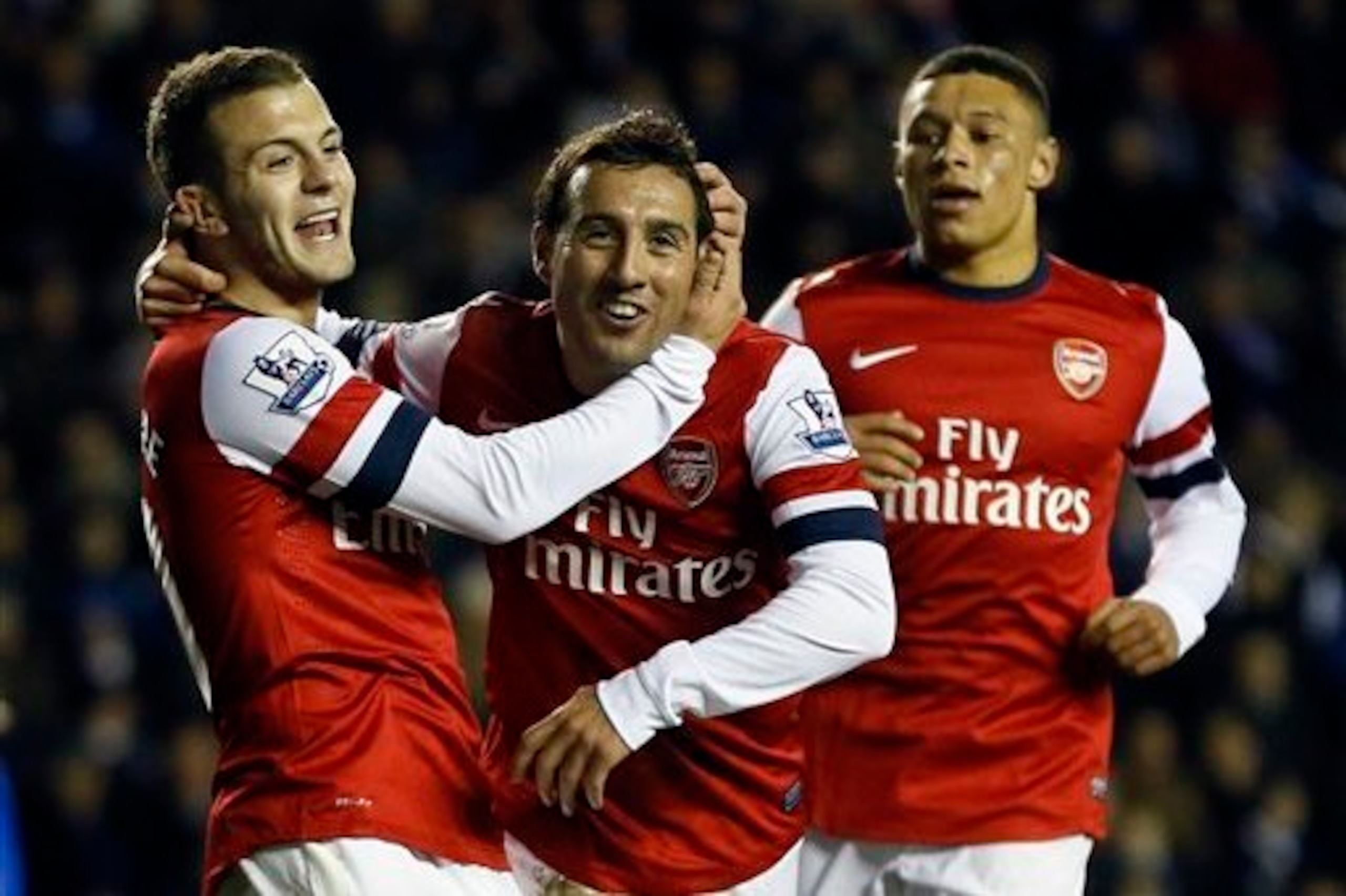
There's no defensive-minded player to balance this group because neither Mikel Arteta or Mathieu Flamini are ideally suited to such a role. In fact, Wenger's insistence on playing with a defensive midfield position in a 4-1-4-1 without the right player to fill it is holding this team back.
That's why there's no shortage of people to tell you Wenger must buy a defensive central midfield player. In the aftermath of Arsenal's latest dropped points, a miserable 2-2 home draw with Hull City, the Gunners were immediately linked with suitable candidates.
Sunday Mirror reporter Steve Stammers wasted no time suggesting a £25 million bid for Southampton anchor man Morgan Schneiderlin will be forthcoming in January:
"Arsene Wenger has been handed an open chequebook for January—and Morgan Schneiderlin is his No.1 target.
The Arsenal manager is not a fan of the New Year window, but he is a big admirer of Southampton’s defensive midfielder.
The France star has been a long-time target of Tottenham and their manager, former Saints boss Mauricio Pochettino.
But now Wenger is ready to pounce for the 24-year-old, who is rated at around £25million.
"
Whether Schneiderlin is the right answer or not, the narrative of this Arsenal squad's need for a midfield minder isn't going away. But finding a destroyer to shield an admittedly crumbling back four isn't the magic fix to all of Wenger's woes.
He needs power players in the middle capable of impacting games at both ends of the pitch. That's what made his 2003/04 Invincibles squad the best in the land.
That squad, one masterfully assembled by Wenger (whether Allardyce wants to credit it or not), had a solid base provided by Gilberto Silva and Patrick Vieira. Both were defensive-minded but equally, particularly in Vieira's case, not shy about breaking forward to link play.
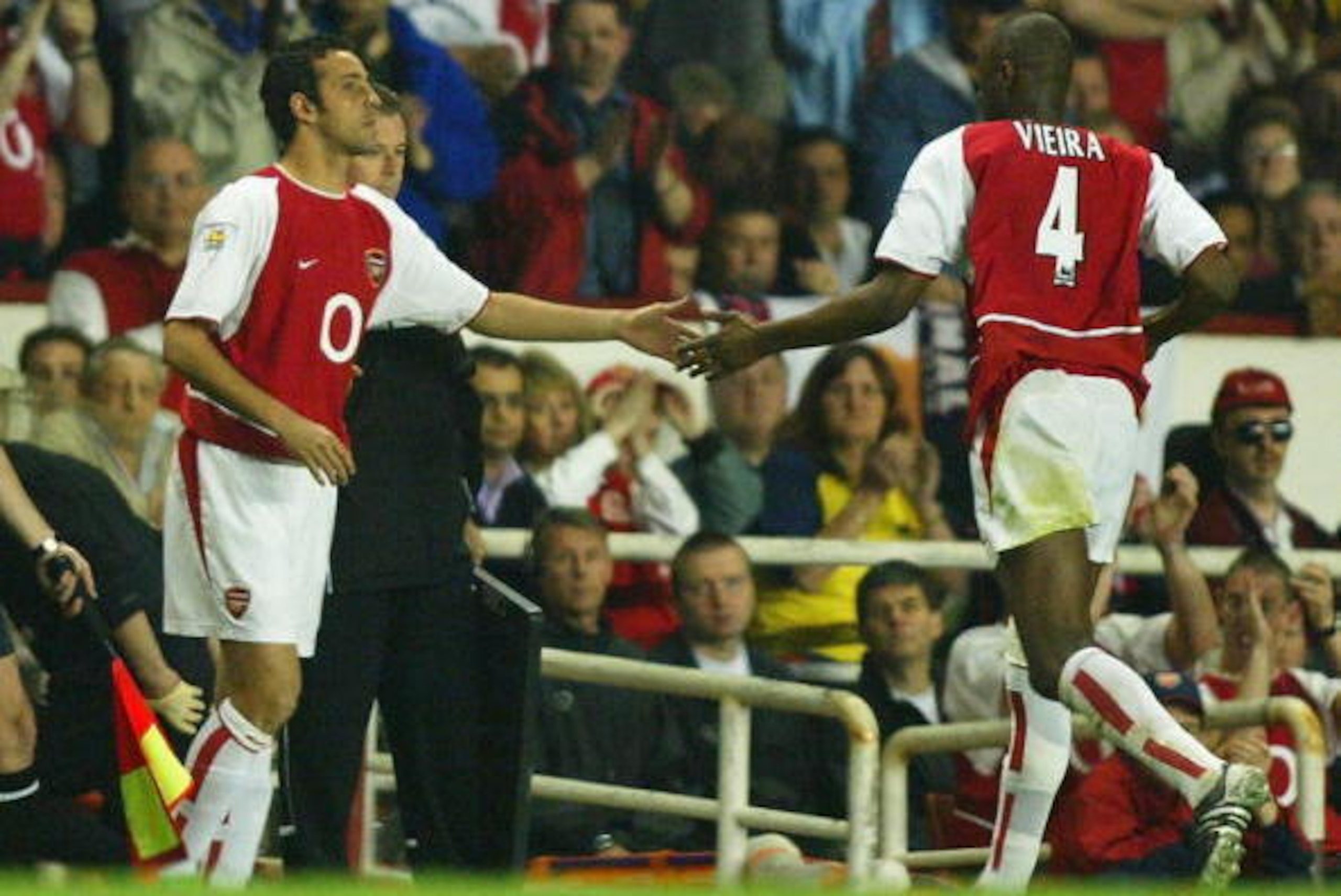
If either one was injured or suspended (again, particularly in Vieira's case), Wenger called on workhorse Ray Parlour or stout and scrappy Brazilian Edu.
Arsenal had two formidable central midfield partnerships few teams in Europe could match. This quartet was the backbone of a perfectly balanced squad underpinned by a blend of power, awareness, intelligence, skill, flair and pace.
That's a winning formula no matter who the manager is or where he buys his players from.
It was that kind of strength in the middle that enabled Wenger to rely on simple yet ruthlessly effective tactics. While the fluidity and guile of his players often morphed the team shape into a variety of guises, Wenger's best Arsenal team(s) played 4-4-2.
Anatomically, its symmetry perfectly suited the intricate game Wenger loves his teams to play:
But the comforting structure of football's most famous formation has rarely been seen at Arsenal since 2006. The lack of strength and natural width to support a four-man midfield, along with the desire to accommodate so many central schemers, have seen to that.
Yet at the club's recent AGM, Wenger spoke of reviving the 4-4-2 this season, according to Gunnerblog writer James McNicholas:
It would be great to see an encore for the system that suits Wenger's philosophy best. The 4-4-2 bailed Arsenal out of trouble in last season's winning FA Cup run, via vital cameos in the semi-final against Wigan Athletic and the final against Hull City.
However, it would take a brave man to suggest Wenger can successfully deploy the formation long term with this team. Not without strong and energetic terriers securing the middle and wide players who tuck in with the ball and cover their full-back without it.
Therein lies to root of Arsenal's problems since 2005, the same problems that leave the club currently seventh in the Premier League. Wenger simply doesn't have the personnel to best put his ideas into practice.
He's backed himself into a corner with a recruitment policy too skewed toward one type of player. Now Arsenal and the manager, whose greatness is sadly being forgotten, are paying a heavy price.


.jpg?w=2560 "Tennis Player Gets 24-Year Ban for Match Fixing (AP)")
.jpg?w=2560 "Bleacher Report's Expert NFL Picks 🔮")
.jpg?w=2560 "Jalen Hurts Out Sunday")