
Problems Going Forward Are Costing Arsenal This Season
Arsenal's biggest problem so far this season isn't an overly generous defence, it's an inconsistent attack. Issues in the forward areas are consistently costing Arsene Wenger's team points.
At the root of the problem is Wenger's seeming inability to work out what his best attacking combination looks like. He's tried a myriad of options so far this season, all yielding varying and debatable degrees of success.
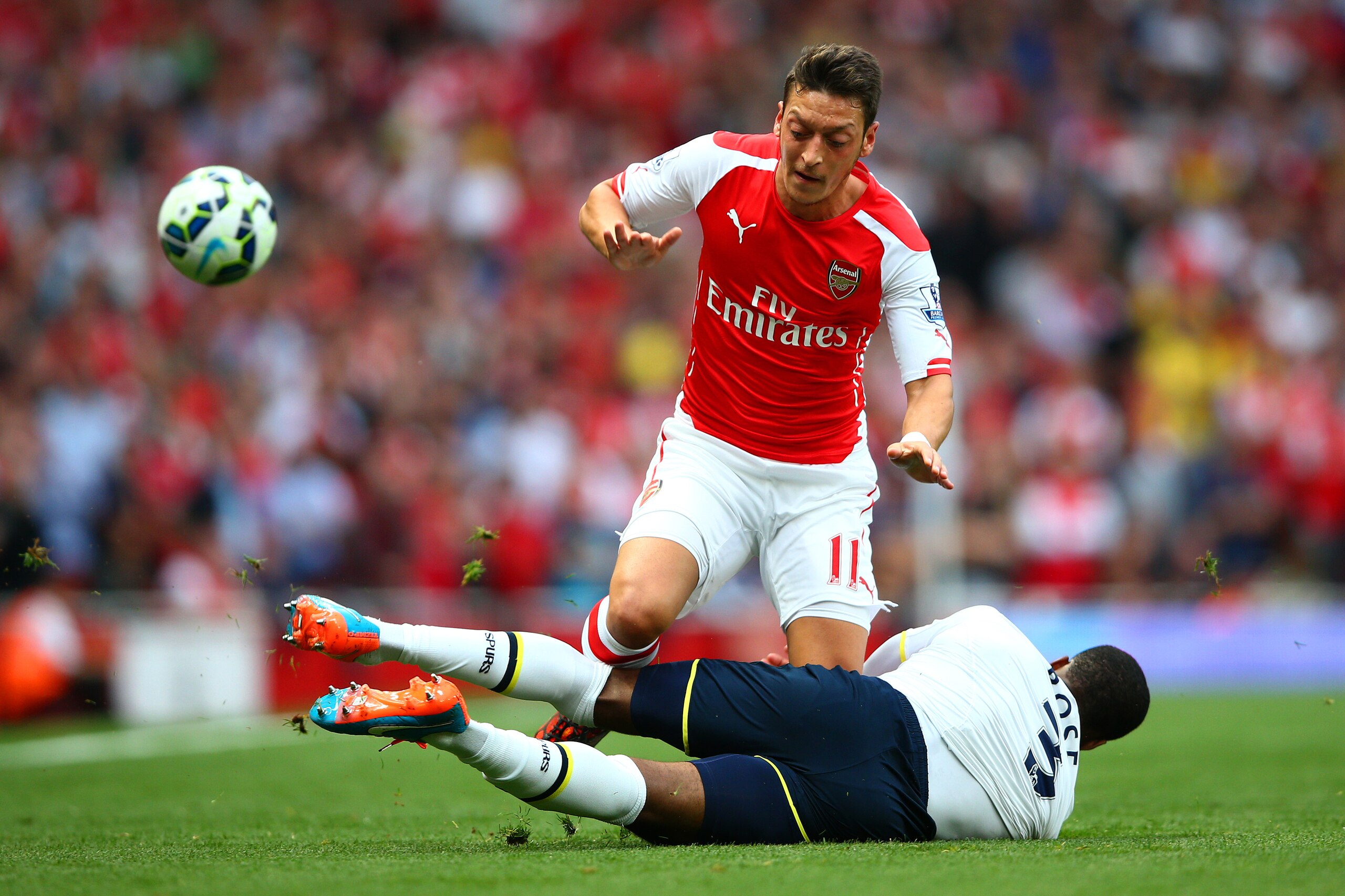
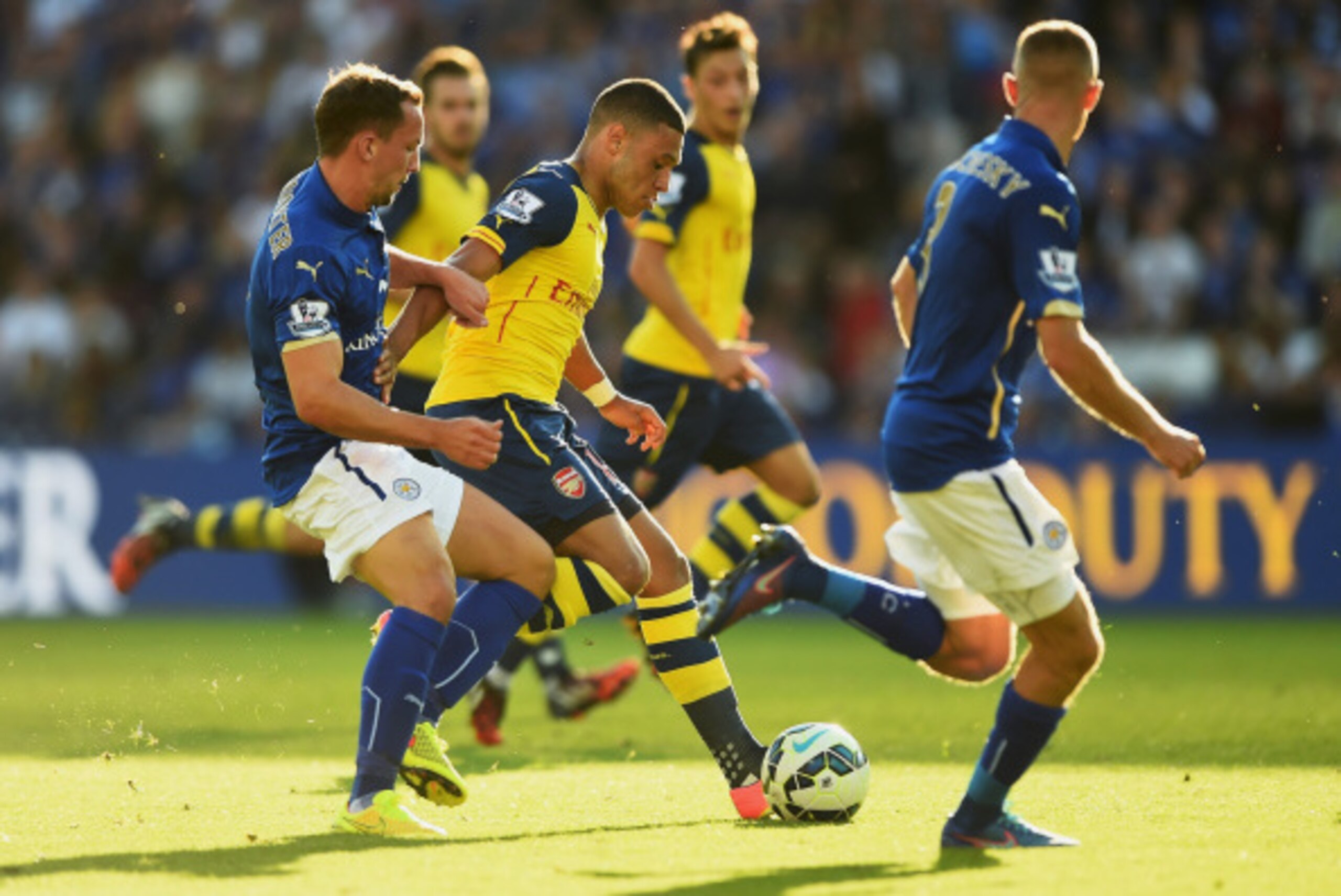
Wenger has tried marquee summer signing Alexis Sanchez on the right, the left and even through the middle as a striker. He's also deployed club-record purchase Mesut Ozil on the left flank, and as a more centralised No. 10.

Wenger has opted for players such as Olivier Giroud, Yaya Sanogo and Danny Welbeck as his No. 9. Admittedly, the rotation in that area is influenced as much by injuries as indecision.
But there is certainly a strong element of experimentation inherent in most of Wenger's forward-thinking selections. It's most evident in midfield.
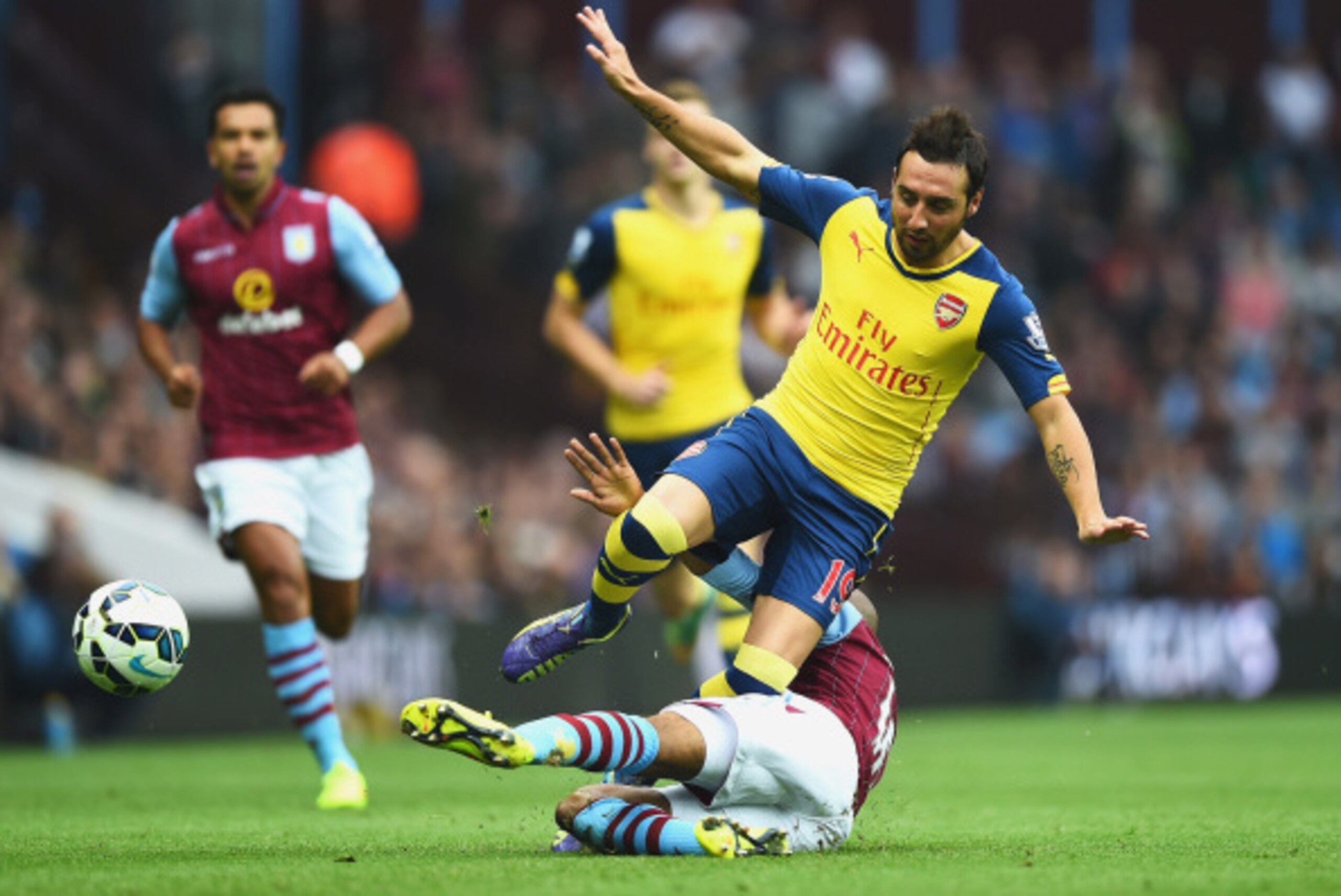
So far this season, Wenger has started then benched Santi Cazorla. He's given game time to Alex Oxlade-Chamberlain, and tried to make an uneasy central partnership between Jack Wilshere and Aaron Ramsey work.
Part of this indecision is inevitable when the team is stocked with so many like-minded players wanting to attack the same areas. Certainly, Wenger's desire to fit all of his best talents into the team is eliminating a set starting 11 this season.
It's also producing an attack that is not creating and converting enough chances, something that is putting the defence under too much pressure. That's what happened in the recent north London derby, a hollow 1-1 home draw against Tottenham Hotspur.
Arsenal owned the ball but weren't sharp or fluent enough to break Spurs down. That left the team vulnerable to a smash-and-grab goal, one duly supplied for the visitors by Nacer Chadli.
Despite Oxlade-Chamberlain's equaliser, Wenger lamented that his team hadn't done more with the ball, per Sky Sports: "We had great spirit and great determination. On top of that, we were 1-0 down and I think we had 77 per cent possession, which is unbelievable in a game like that."
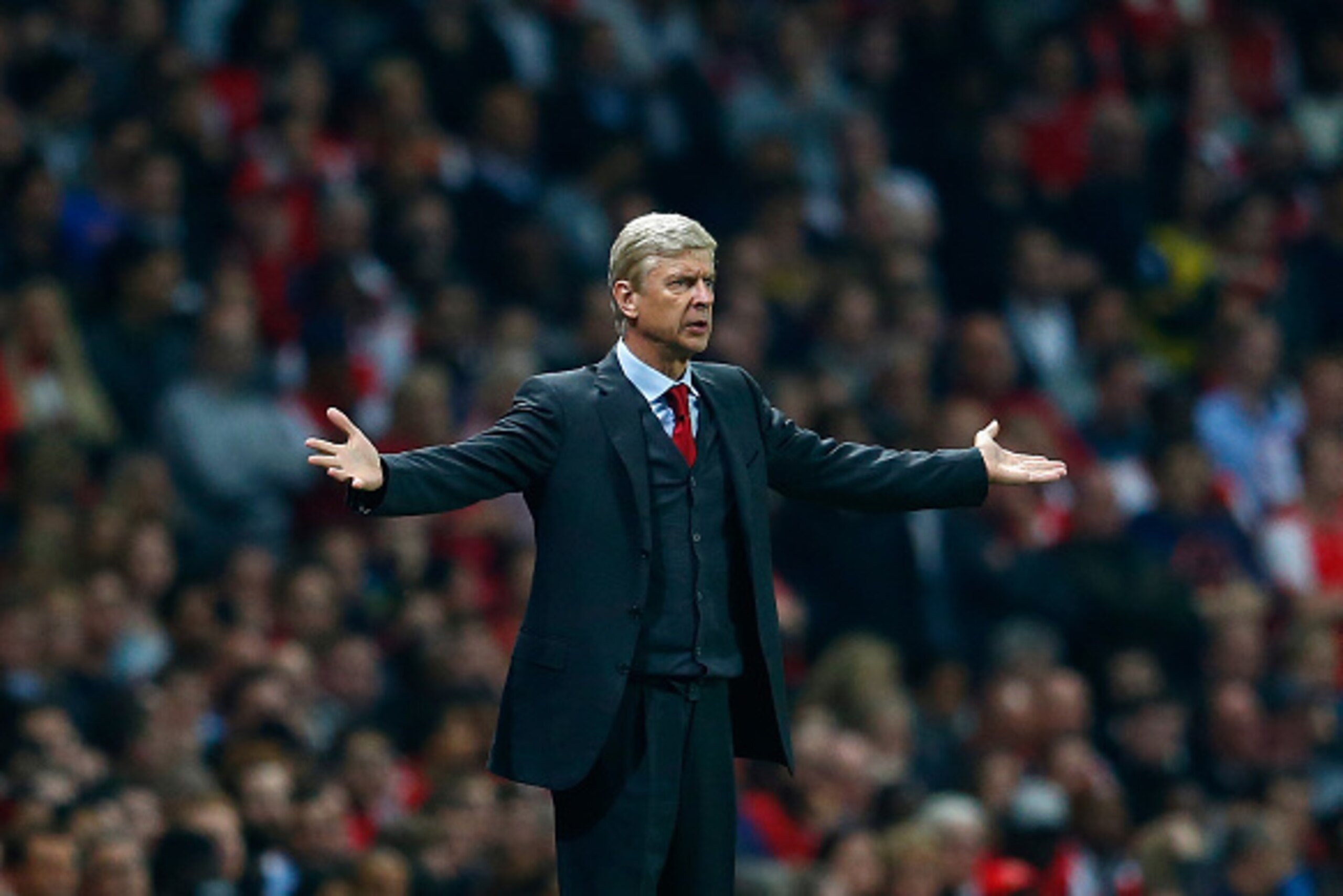
This is becoming a familiar source of frustration for Wenger this season. He was critical of his team's tepid forward play, following the 2-1 Carling Cup defeat to Southampton, per Arseblog News:
"I think the first reason for our defeat is the quality of our opponent and the performance of our opponent. The fact that we couldn’t score—we scored from a free-kick but apart from that we couldn’t score.
If you look at the amount of possession we had in the second half, and you play for so long with the amount of possession we had, you have to score.
"
These examples are part of a worrying pattern. Many might contend defensive woes are Arsenal's main problem, but this misses the point.
Arsenal should be doing more with the ball. If they did, it would've rendered a breakaway goal from Spurs merely a slight blemish on a 3-1 win.
Arsenal shouldn't be struggling to beat Crystal Palace at home. The Gunners shouldn't fail to add to an early goal at Leicester City.
Nor should they labour to score just once in two matches against Besiktas in the UEFA Champions League. It shouldn't be beyond Arsenal to trouble Borussia Dortmund's defence.
If the Gunners were playing the intuitive, attacking football Wenger previously made the club's trademark, many of this season's results would look a lot different.
Finding some continuity going forward, at least via a combination that works, is a riddle Wenger must solve now. Without a solution, Arsenal are becoming pedestrian, predictable and dull.
Playing stylish, expansive football has been a badge of honour for Arsenal since Wenger took over in late 1996. Even during the years without silverware, Arsenal could always be relied upon for an entertaining game based on brilliant attacking football.
It was a point of pride, or at least it should have been.
However, the memories of distinctive "Wengerball" are fading fast. The Gunners are no longer the style kings of the English Premier league.
No continuity up front is a major reason why. Wenger's brand of attractive, free-flowing football has always been based on three key qualities: pace, fluidity and understanding.
Passing and movement are quick, worked in tandem between technically gifted players on the same wavelength. But the more Wenger chops and changes his current combinations up front, the more he denies his attackers the chance to build that vital rapport.
Think back to the days of "The Invincibles." The attacking players in that team all had an innate understanding of where each other was, what runs would be made and when passes would be released.
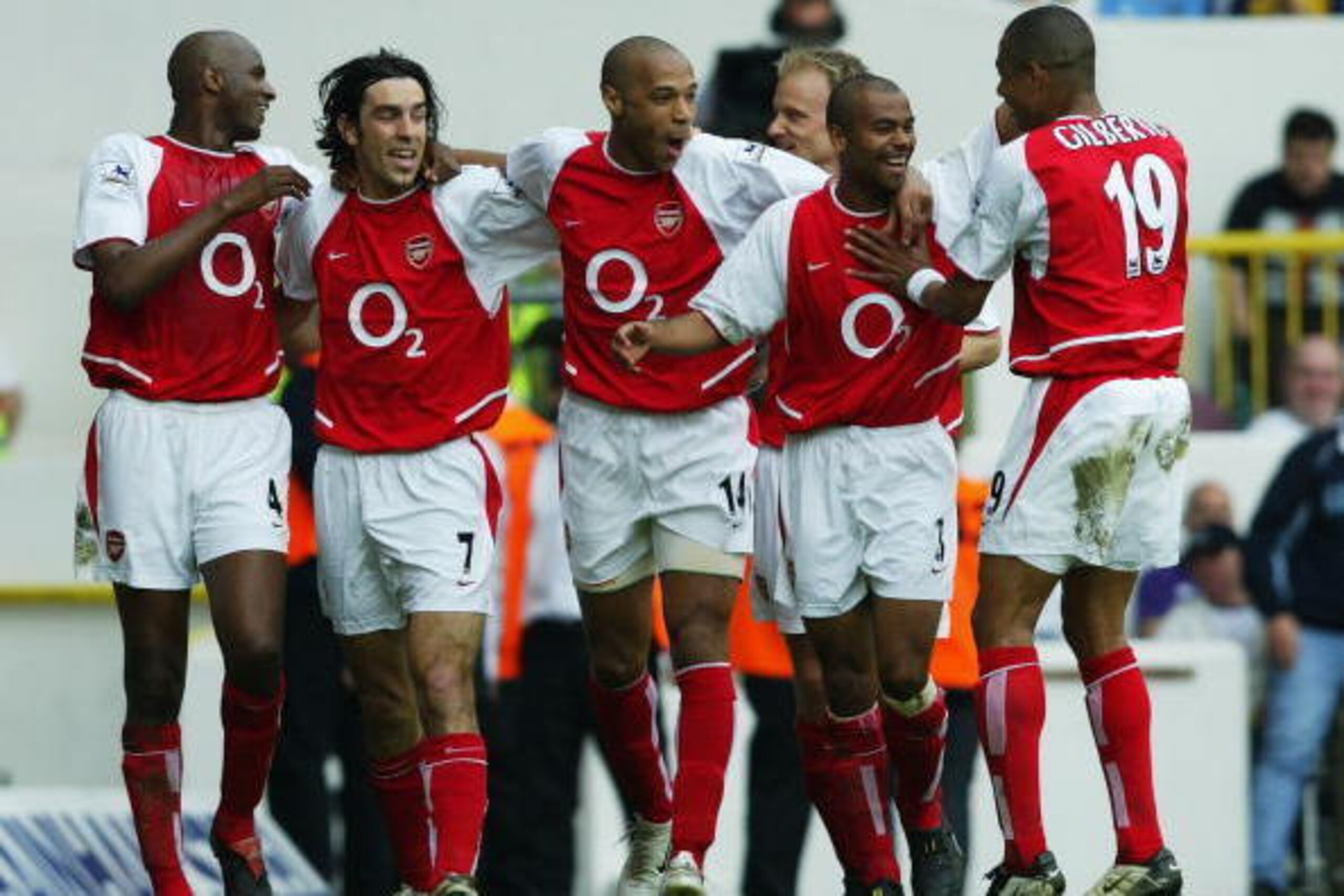
That's why Thierry Henry, Robert Pires, Freddie Ljungberg and Dennis Bergkamp combined for so many wonderful team goals.
Wenger's current crop doesn't possess the talent of that illustrious quartet. Wenger also doesn't have the quality in reserve such as Sylvain Wiltord and Nwankwo Kanu.
However, today's Arsenal attackers ought to have more chemistry than they've displayed this season. Ramsey and Wilshere have played together for years.
Cazorla is in his third season with the team, Ozil his second. Oxlade-Chamberlain has had long enough now to be more in tune with the way this team plays.
Only new boys Sanchez and Welbeck have a credible excuse for struggling to get to grips with what Wenger wants. Those struggles are already evident.
Sanchez was surprisingly dropped to the bench for the north London derby against Tottenham Hotspur. Wenger freely admitted it was simply a selection choice to leave out the gifted Chilean forward, per Arsenal.com:
Maybe the Gunners boss was letting Sanchez observe the intensity of a Premier League derby, rather than brazenly subjecting him to something many imports initially struggle to cope with.
However, Goal.com reporter Wayne Veysey has suggested there's another reason why Sanchez was on the bench. It's one that says a lot about Arsenal's current woes in attack:
"Goal has learned that Sanchez has been dropped by the manager from the starting XI for Arsenal's last two Premier League matches for slowing down the team's well-established passing game.
Wenger reacted to Arsenal's limp 2-0 defeat at Borussia Dortmund in their Champions League opener a fortnight ago by axing Sanchez and replacing him for the trip to Aston Villa with Alex Oxlade-Chamberlain.
However, Wenger is concerned at the effect the World Cup star has on the team's style of play when he plays entire matches.
The Frenchman and his coaching staff are trying to drill into Sanchez the need to release the ball earlier rather than hang on to it for too long and lose the ball in dangerous areas.
"
Whatever you may think about the veracity of Veysey's report, the argument he posits is a very credible one. There is a certain sluggish element to Arsenal's buildup game whenever Sanchez receives the ball from the flank.
His instinct is to be direct, rather than engage in the bright and slick one-touch combination passing Wenger loves. Consequently, Arsenal tend to play quicker without Sanchez.
That's something ex-Gunners defensive stalwart and current BBC pundit Martin Keown recently hinted at per Mail Online reporter Alex Sharp:
"‘With Alexis Sanchez not playing, the team was dancing for his boots. Sanchez will obviously come back in at some point but Ozil was magnificent in the central role today,’ said Keown as a pundit on Match of the Day.
‘Ozil was magnificent in the central role, he pressed all the right buttons and orchestrated all of Arsenal’s best attacks.’
"
Keown was speaking after Arsenal's 3-0 away win against Aston Villa, by far the team's best attacking performance this season. It may have come without Sanchez, but Wenger has to get his new star up to speed with his forward teammates.
Of course, a certain amount of transition has to expected from any new player at a club that plays in such a particular way. The fact that Sanchez has already bagged four goals in an apparent transition period bodes very well. Imagine what he'll do when he becomes more accustomed to the game Wenger wants.
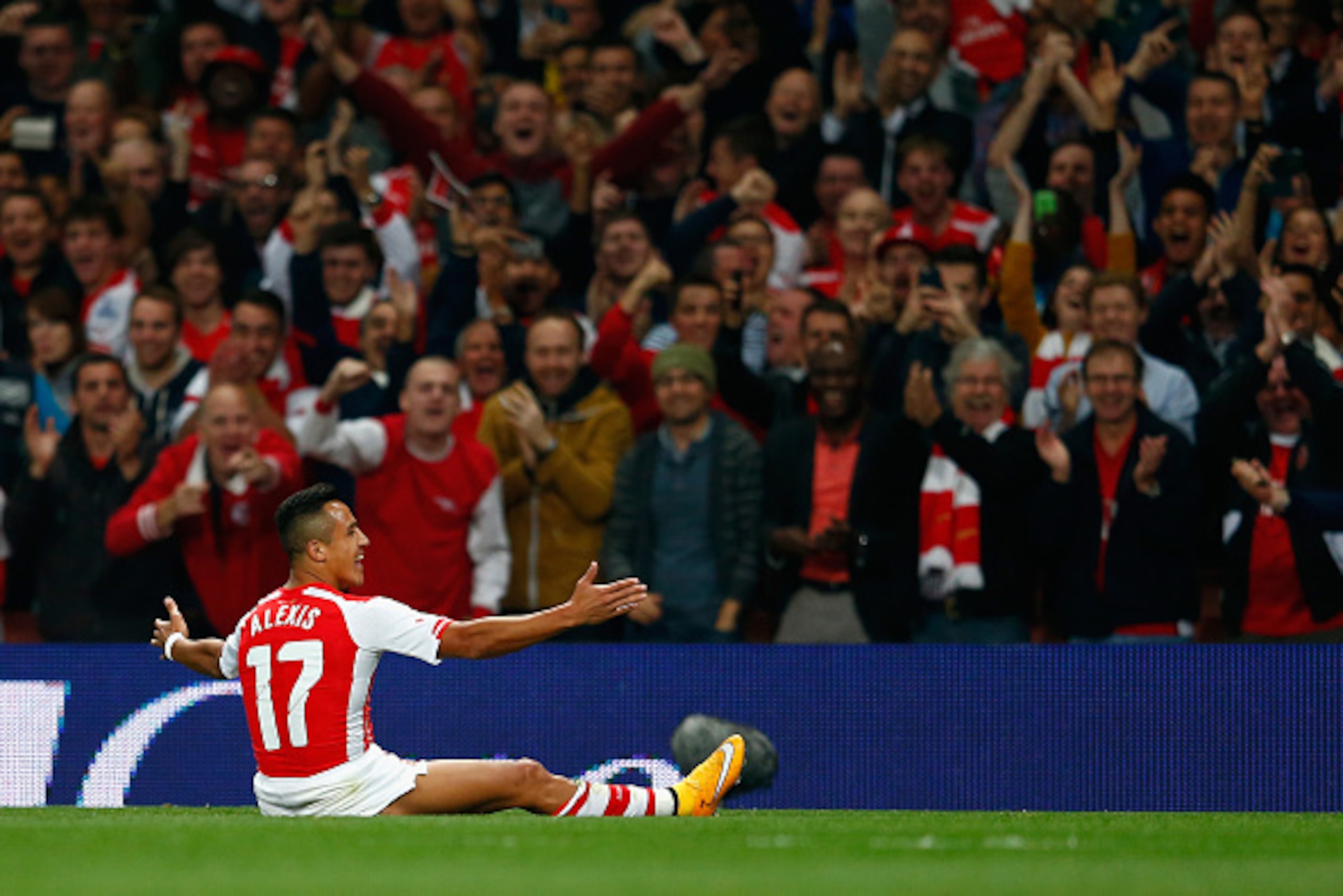
It's a game based on rapid exchanges of passes in forward areas between rotating triangles of players. Look at a number of goals from the first half of last season to see these triangles in action.
But the kind of combinations produced by the Gunners last season take chemistry that has to be built over time. It means that Wenger must be patient with Welbeck, who spent the first 20-25 minutes against Spurs looking very threatening but appeared out of his depth for the remaining 65.
It also demands getting his best attacking players on the field together more often. That means Ozil, Cazorla and Sanchez must all play, even if accommodating them leads to difficult choices regarding Wilshere and Chamberlain.
Playing his three best players together more often is the only way to establish the rapport needed to play through defences with the instinctive fluidity this team is missing going forward.
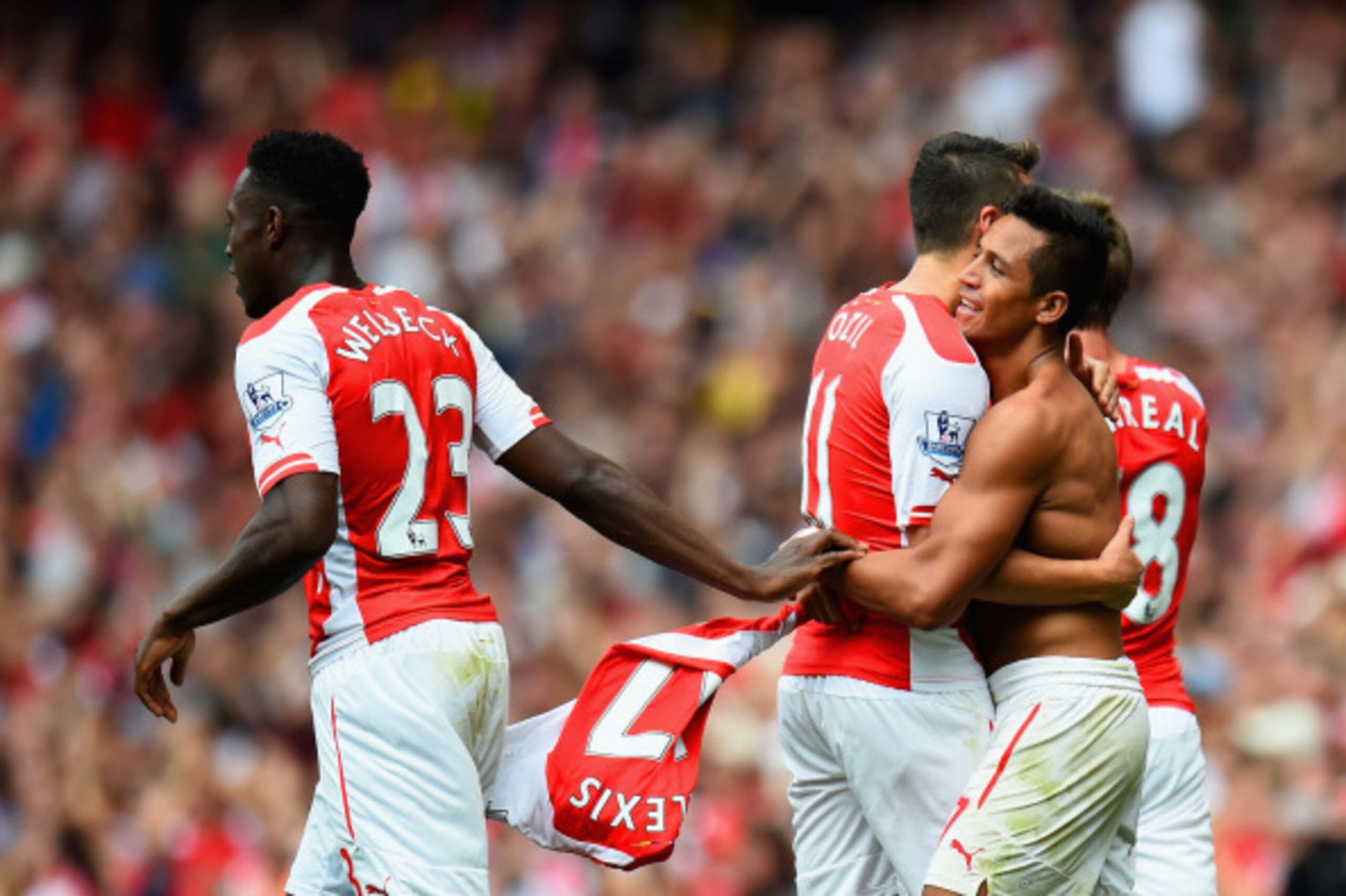
It could mean keeping Ozil on the left, but that doesn't limit his freedom. The German was Arsenal's best player against Tottenham. With a bit more fortune, he would've scored and bagged an assist, despite starting from the left.
Of course, many of Wenger's options in the middle are currently restricted due to injuries suffered by Ramsey and Arteta, according to ESPNFC.co.uk. However, Wilshere may be fit for next weekend's game at Chelsea, per Mirror reporter John Cross.
Finding the right blend in the middle can establish an attack that presses high and seizes the initiative in games. That's crucial for these players. They are a group that needs to impose itself on teams, rather than try to resist them.
That's why it's pointless to call for Wenger to shut up shop by playing a flat back four, or putting two bodies in front of his defence. Right or wrong, that's just not his philosophy. Even if it were, he doesn't have the players to play that way.

This team's success will be defined by what it does going forward. That will matter more than what happens at the back.
The defence, while far from dominant is certainly solid. Centre-backs Per Mertesacker and Laurent Koscielny are capable, as is full-back Kieran Gibbs. Meanwhile, goalkeeper Wojciech Szczesny can produce moments of brilliance.
Arsenal can defend ably but are rarely going to be stingy enough to win without conceding. Honestly, few teams, if any, in this season's Premier League are.
The real priority for the Gunners should be to make more of their opportunities going forward. That will rely on Wenger's ability to quickly find the right formula in attack.

.jpg?w=2560 "Goodell Explains Pro Bowl Decision")

.jpg?w=2560 "Steelers Rework DK's Deal")


.jpg?w=2560 "Biggest Draft Risers 📈")