Minnesota Vikings' Harrison Smith Developing into One of NFL's Best Safeties
On a defense that has seesawed up and down in its performances in 2014, Harrison Smith’s play has shone brightest for the Minnesota Vikings. At this point, he should enter the discussion as not only the best player in Minnesota, but also one of the league’s best safeties.
A stellar performance in Week 1 kick-started Smith’s season, sparking an impactful first three weeks. Picking on a lowly Rams offense was one thing. He backed up that showing with two more strong ones against Tom Brady and the Patriots and Drew Brees and the Saints. Everything from versatility to big-play ability has been on display for the third-year safety.
.jpg?w=2560 "Rams Seahawks Football")
Coming out of Notre Dame in 2012, Smith was a sought-after prospect. Minnesota traded into the first round to select him, hoping to end the woes at the safety positions that dated back to Darren Sharper’s time in Minnesota.
Smith was a tremendous prospect, too. He reinforced his strong tape for the Irish with a phenomenal showing at the scouting combine. Mockdraftable.com provides data on measurable traits in prospects with percentile charts based on position. Smith’s numbers told a promising tale.
In comparison to other safety prospects, Smith is especially tall, lanky and quick. The combination of size and athleticism makes him a premier talent at a premium position.
Smith put in an impressive rookie campaign, which didn’t slow down projections that he could become a Pro Bowl-caliber player. The injury bug had other ideas, though. Turf toe sent him to the IR for a significant chunk of the 2013 season.
Imminent turnover in the coaching staff made Smith’s future role less clear until the Vikings hired Mike Zimmer. After playing his first two seasons in the Tampa 2, a derivation of the base Cover 2 zone-heavy defense, Smith finds himself in a defense that could unleash his full potential. Smith sung the praises of Zimmer’s scheme and some newfound freedom after Minnesota’s Week 1 victory, as quoted by USA Today’s Tom Pelissero:
""I don't know if I could say (there is) 'freedom' because you've got a role in every defense," Smith said. "But I think Coach Zimmer just likes to use his safeties up near the line, sometimes like a linebacker. We really get to do it all, and it makes it a lot of fun."
"
The variety of pre-snap alignments Smith has been used in are easy to point out from just his first game under the new staff.
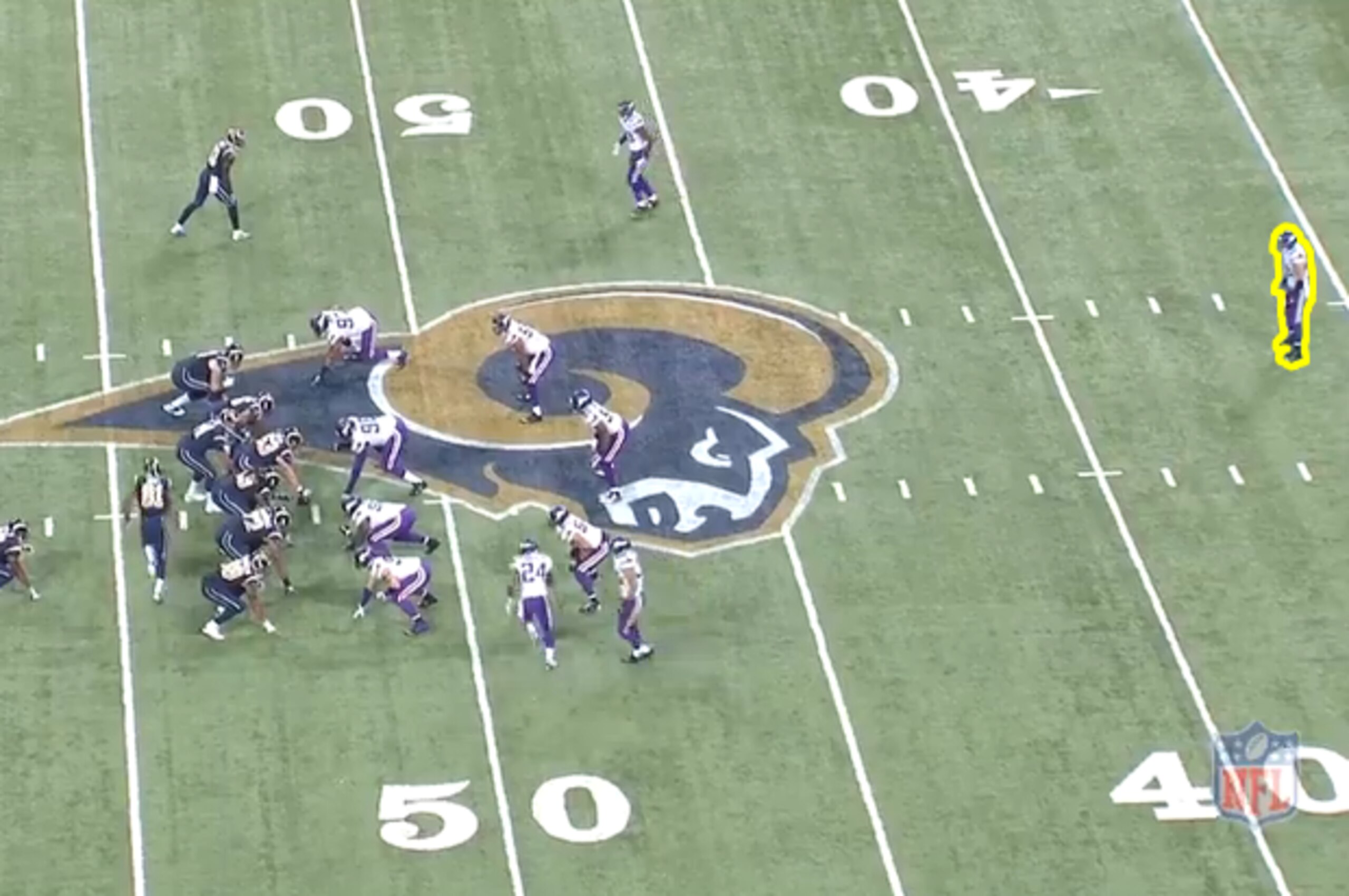
This is a traditional single-high safety alignment, typical for a free safety. A safety who can accelerate to top speed and utilize range over the top in coverage is ideal for this role.
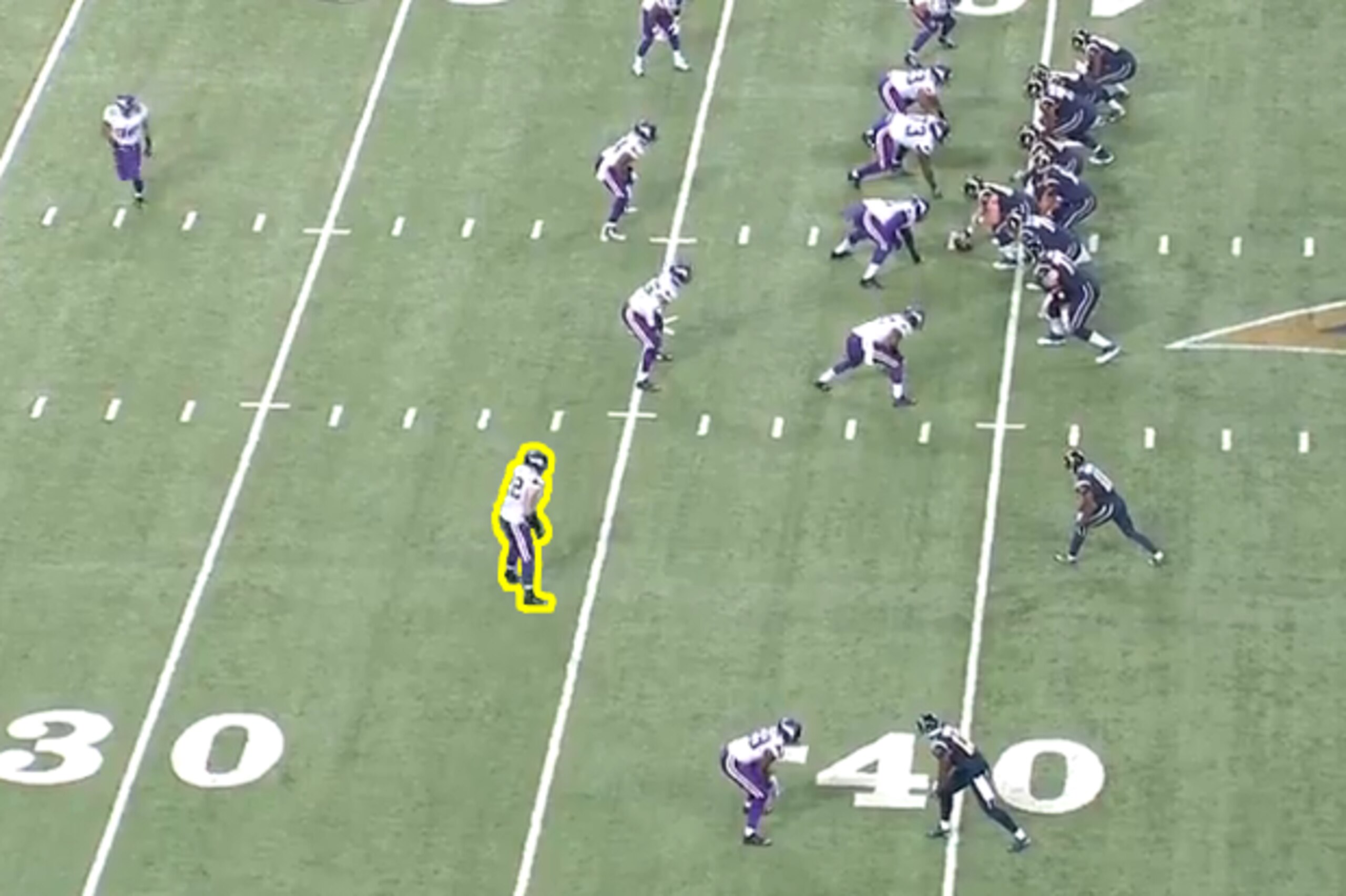
Smith is lined up over the slot receiver, who is Tavon Austin in this case. Smith doesn’t happen to play man coverage on this snap, but Zimmer’s willingness to play him over top of a talent like Austin is meaningful. No matter the coverage call, he could be isolated with the playmaker in space as a tackler.
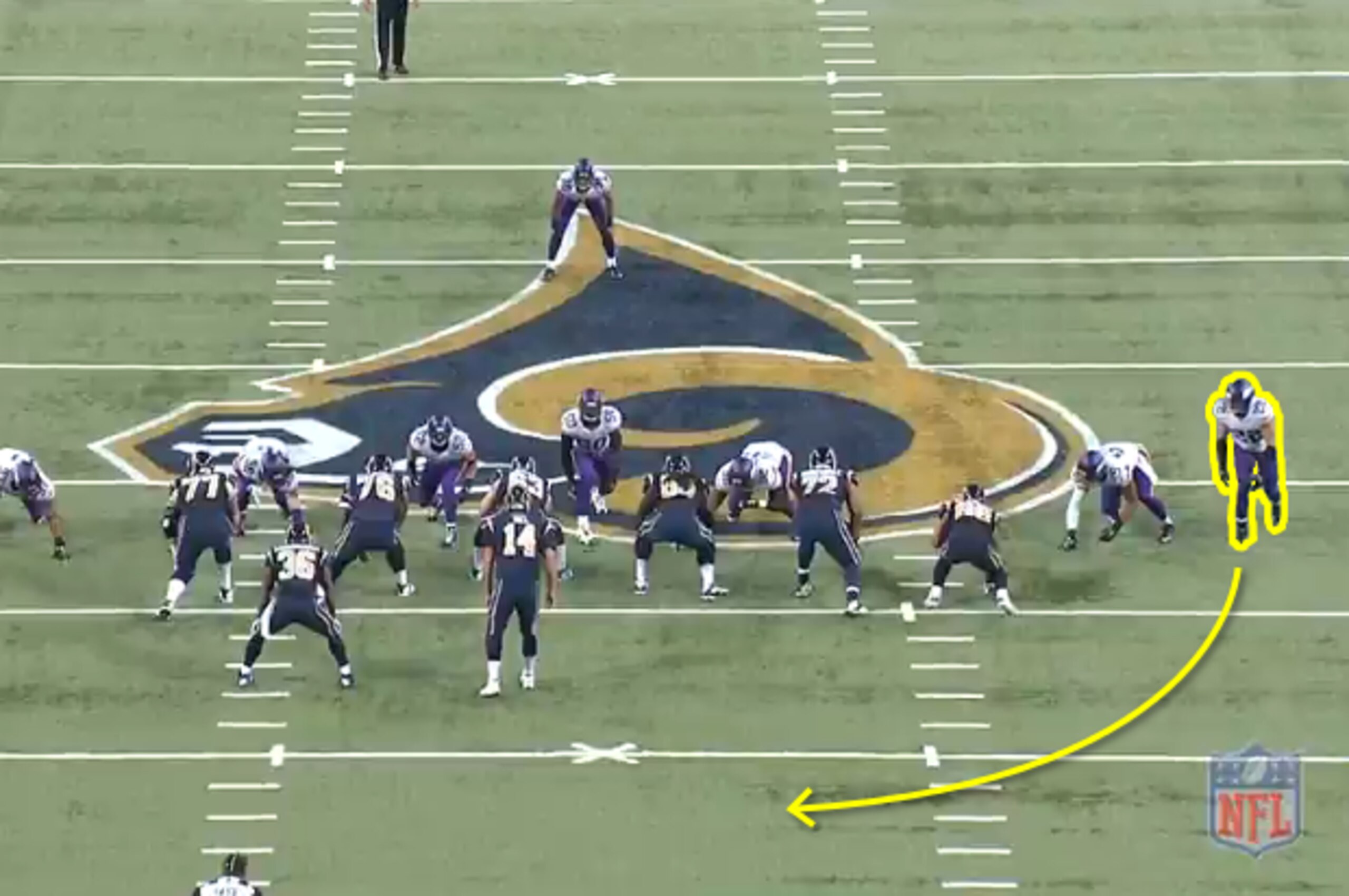
Finally, this example goes back to Smith’s quote about playing around the line of scrimmage. Zimmer has created chaos with Smith’s ability to blitz off the edge, often producing scenarios where the safety comes unblocked. In his seven snaps as a rusher thus far, Smith has tallied a sack, a hit and two hurries, via Pro Football Focus premium statistics (subscription required). That is productive and efficient.
The variety of coverage looks Zimmer has implemented also gives Smith a bigger role. Playing man coverage across the board is not uncommon for a Zimmer-coached defense. With some of the secondary limitations, more zone looks have been relied upon early in 2014.
"#Vikings tape: D plays fast under Zimmer. Multiple looks. 3-Deep, Quarters, Cover 2 + pressure. Great scheme for S Harrison Smith.
— Matt Bowen (@MattBowen41) September 10, 2014"
This defensive scheme suits Smith and he suits it. If the coaches have matchups they like and want to put numbers on the line of scrimmage, Smith can rush off the edge or bluff it before sinking into coverage. If they want to stack him over the top of a tight end and eliminate seam routes in quarters coverage, that can happen. If they want to protect against downfield throws to the sideline, Smith can shut down a side of the field in Cover 2. He certainly has experience doing that.
Wherever he lines up on the field, offenses will be encouraged to throw elsewhere. Zimmer and company can then allocate more resources to the rush or for more coverage help across the board knowing Smith can be trusted no matter the matchup. Nobody seems to be doubting that he's the best Minnesota has in the secondary.
That point was never truer than when Smith was stuck on Jimmy Graham as a coverage changeup in New Orleans. Before that look, Minnesota tried to slow down Graham with man coverage from safety Robert Blanton or bracketed him with a few different coverage looks.

This coverage is Cover 1, which brings five rushers and matches up with man coverage across the board while a safety roams over the top. Usually that’s the free safety, but Smith’s skills call for him on Graham.
Smith takes inside leverage as the tight end releases, quickly flipping his hips to turn and run. Then he anticipates that Graham will break it off at the sticks, so he plants and undercuts the route.
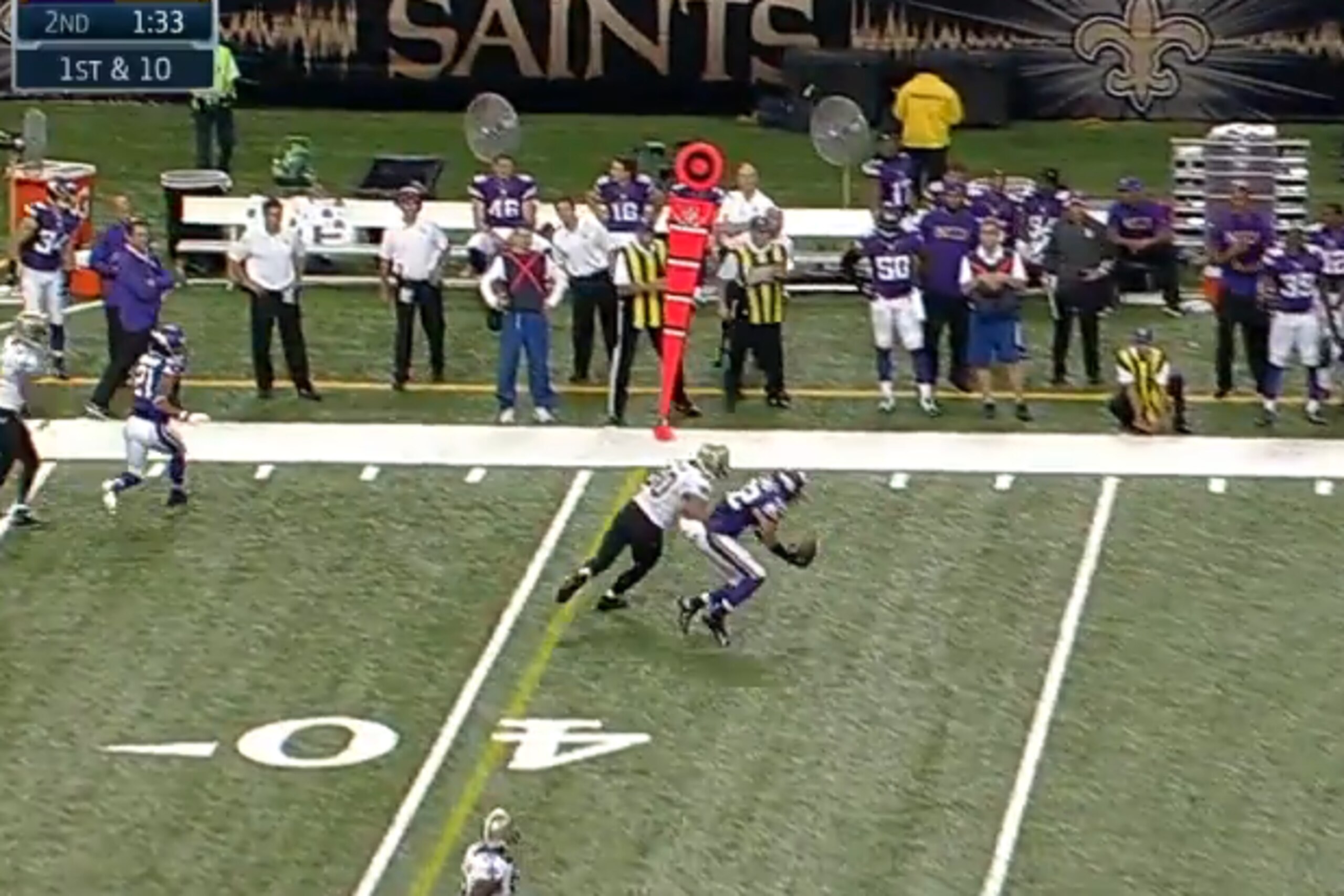
His teammates will let him have it in the film room for dropping this interception. That shouldn’t take away from how often Graham manhandles defensive backs in his routes. Few are able to match the dynamic tight end early in the route and then beat him to the ball like Smith did on this play.
As previously mentioned, the varying of coverages can be effective for the Vikings in large part because of the versatility of Smith. While subtle and about to show up in a box score, this play against St. Louis speaks to the athleticism Smith brings to the table as a deep safety.
The concept is similar to the last play, except the roles of the safeties are reversed.
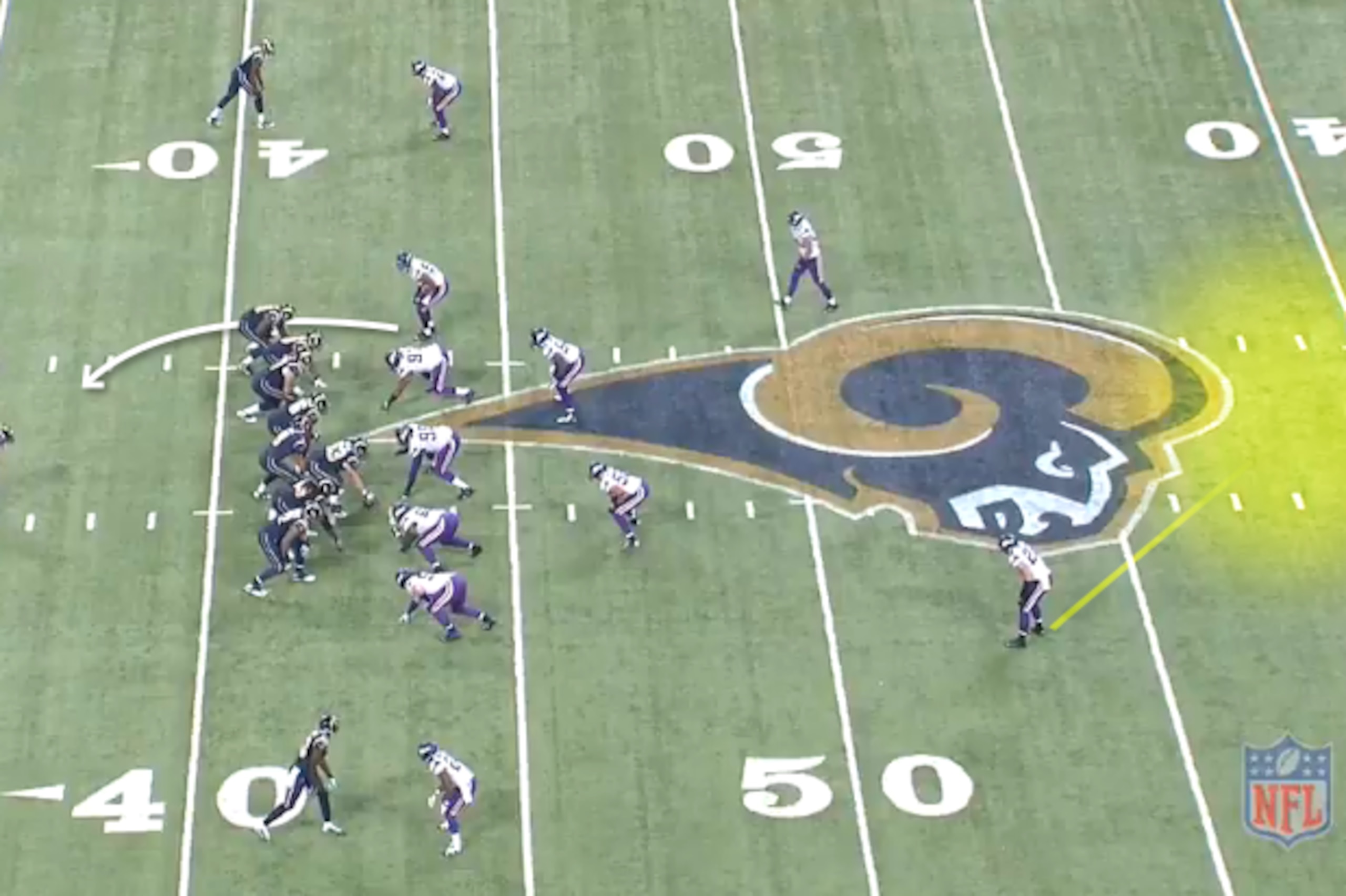
The other difference is that Minnesota disguises the coverage and that a fifth rusher is coming. With Blanton as the single-high safety, the defense has less freedom. Because Smith is the center fielder on this play, the Vikings play games with the quarterback before the snap.
By the time the quarterback releases, Smith has already covered enough ground to close on the opposite side of the field. He gets to top speed quickly enough to roam almost all the way across the field and be in proper position.
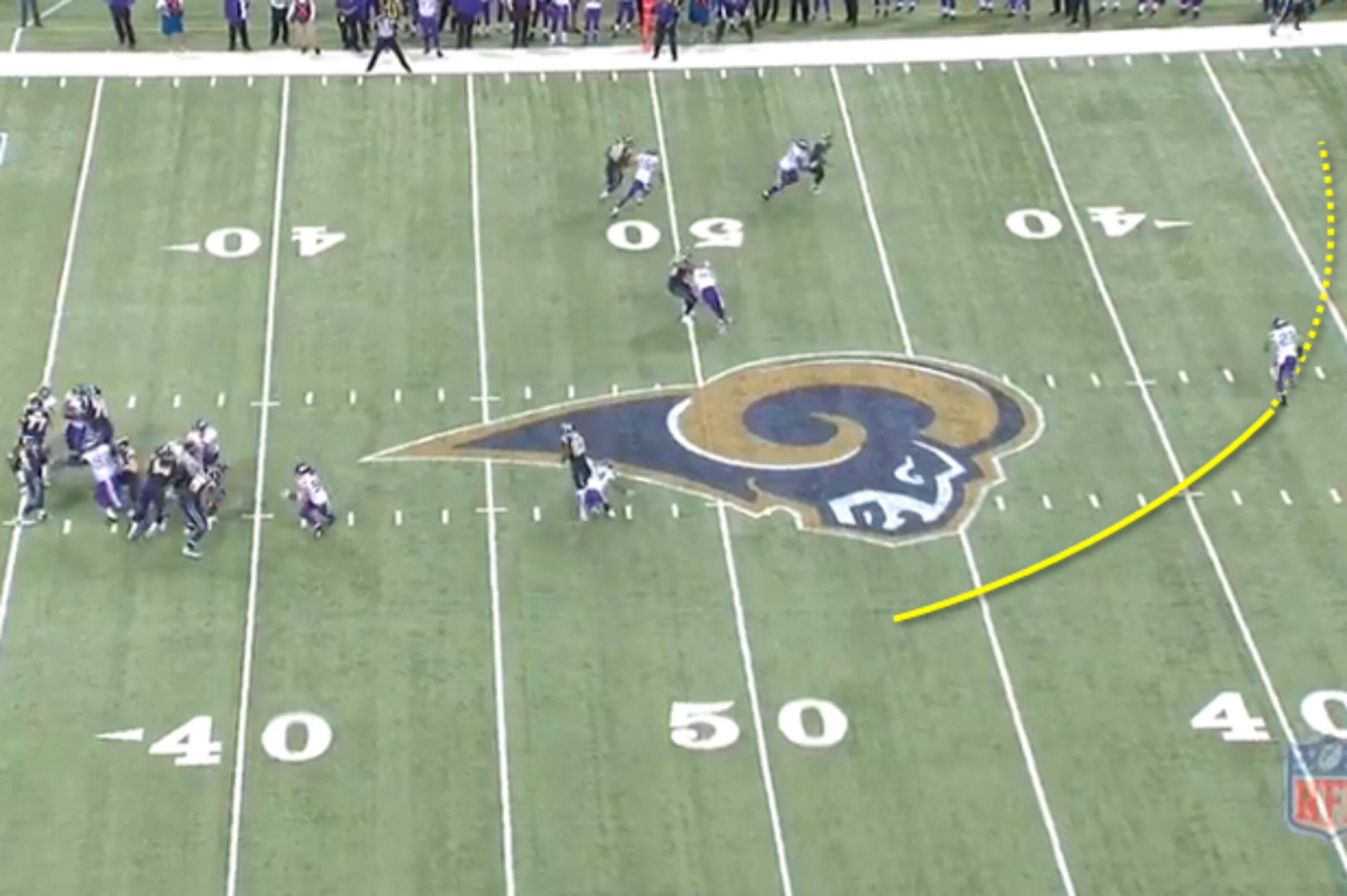
The ball is thrown to the wheel route instead of the go, so no play is made on the ball from Smith. If quarterback Austin Davis had decided that as soon as Blanton stepped forward he was going to throw the deep ball, Smith likely would have intercepted it. The type of range he exhibits on this play is why the Vikings are comfortable utilizing him in so many different ways and why they can mix their coverage so well.
Steady improvement to build on a successful rookie season has been the theme for Smith. His positive development in run defense follows that story. Per Pro Football Focus premium statistics, Smith missed a tackle on every 5.9 tackle attempts as a rookie. That finished No. 41 out of 58 qualifiers at the safety position. His missed tackles were both frequent and costly.
Smith’s tackling efficiency measure improved to 13.0 attempts per miss a season ago and sits at a healthy 11.0 attempts per miss through three games this season, with only a single missed tackle recorded.
Improvement in run defense hasn’t been a matter of cleanup tackles down the field or hauling guys down after giving up receptions either. Smith has been a force around the box, delivering numerous bone-crushing hits. A crucial tackle he made in the Saints game on Sunday pinpoints just how far he’s come as a tackler.
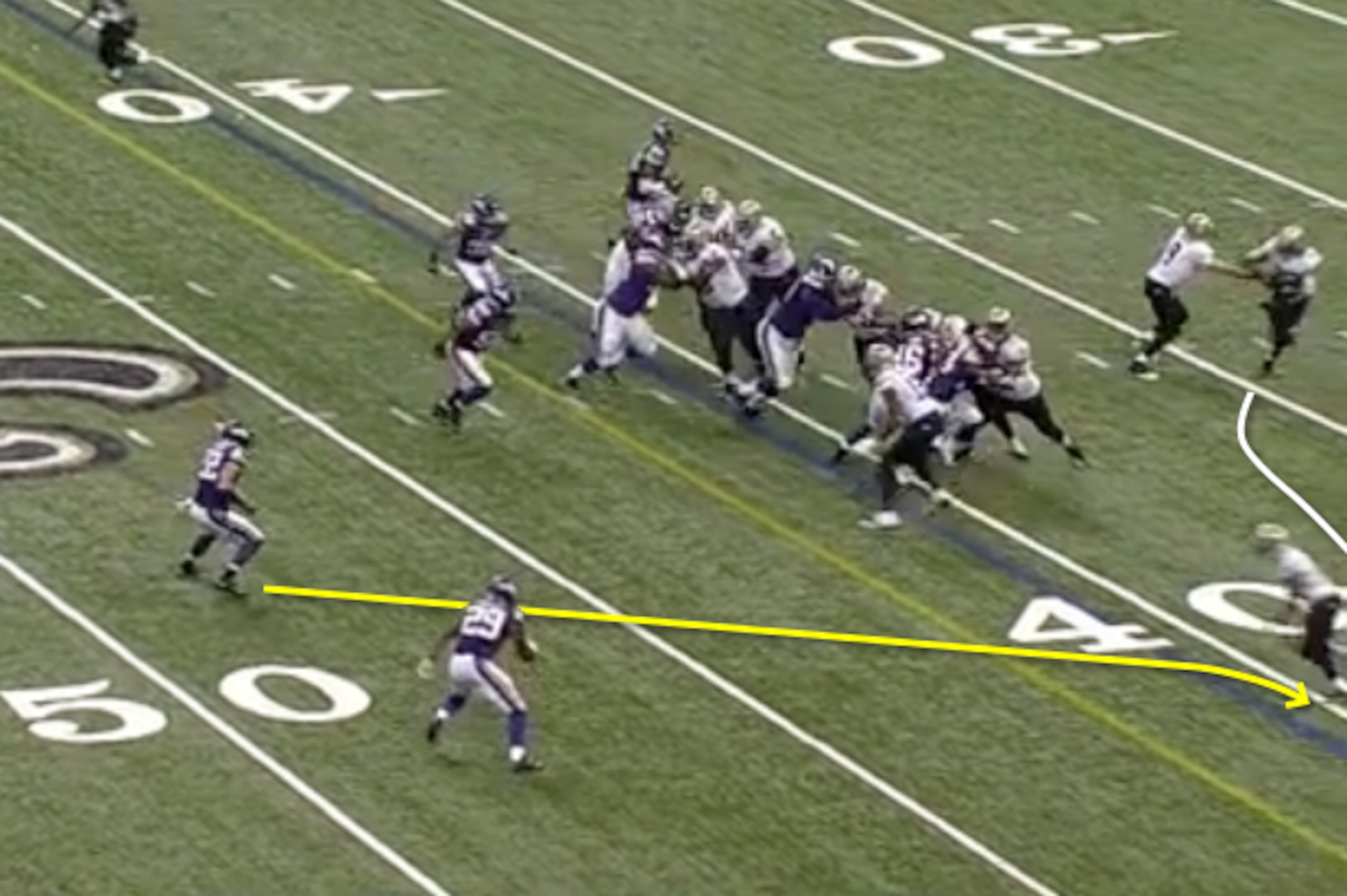
Success starts with a decisive reaction to the reads. Smith likely reads down blocks from the slot receiver and a hook from the left tackle. As soon as he reads the blocks, he makes a beeline for the numbers. No steps are wasted. He also makes sure not to overrun it to the outside, taking a perfect angle for the inside shoulder of the ball-carrier at the perimeter and pursuing inside out.
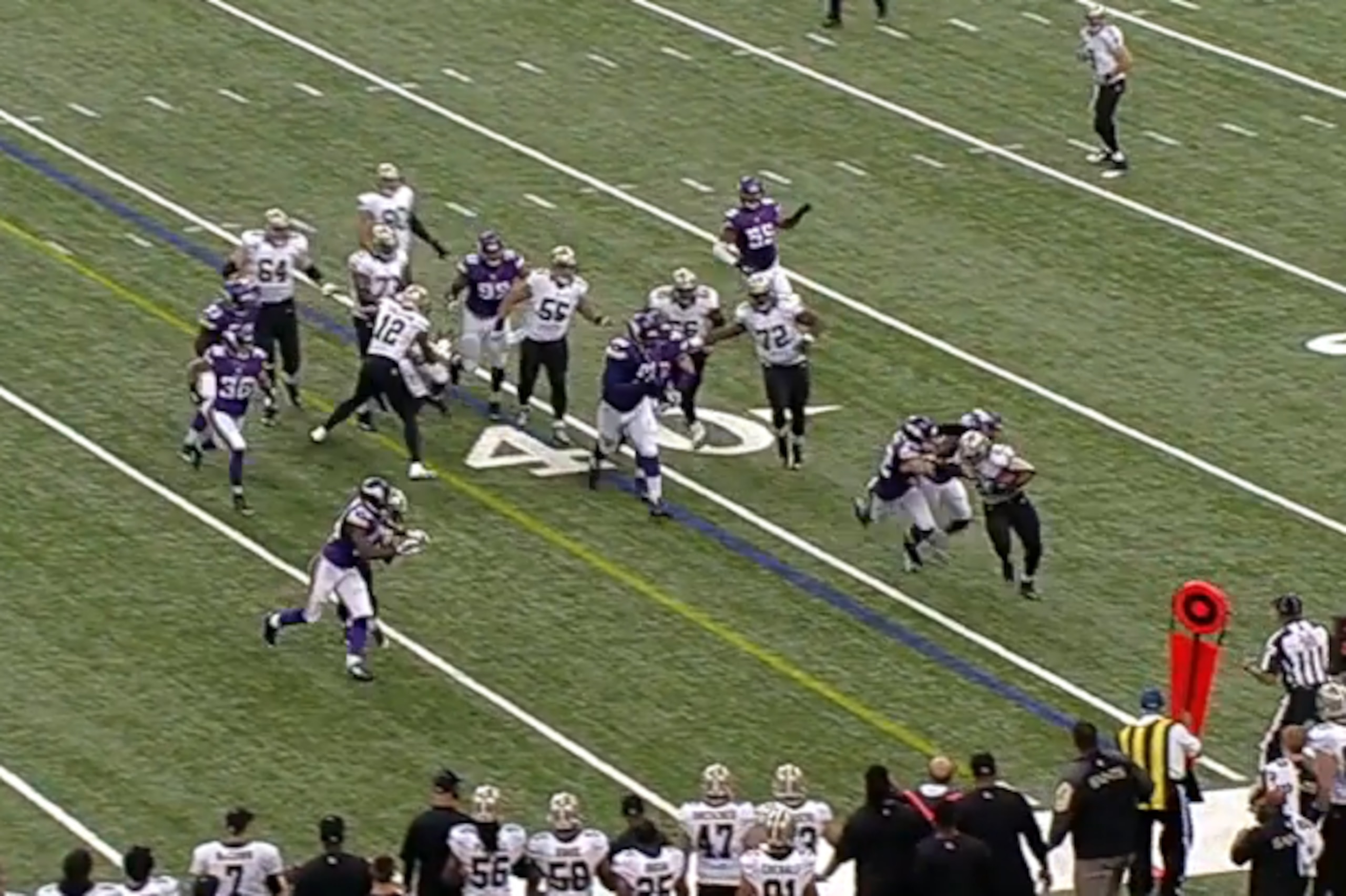
Notice the tackling technique Smith employs. Instead of dropping his head and trying to drive through the ball-carrier, he corrals him with both hands up around the shoulder pads. This is a classic rugby-style tackle that is commonly taught to defensive backs who don’t have the strength to match bruising backs.
Strength becomes no issue here, though. Smith is able to pull down Pierre Thomas well short of the sticks. What originally looked like a well-blocked sweep and an easy first down for New Orleans quickly went south. This third-down stop by Smith isn’t a play that many safeties are capable of.
Making timely tackles is just another area of the game that Smith has made significant strides in. The positive steps he continues to take have put him in the upper echelon of NFL safeties at this point in the 2014 season.
The schedule isn’t about to ease up for the Vikings defense, with quarterbacks Matt Ryan, Aaron Rodgers and Matthew Stafford on the docket. As Minnesota tries to claw their way back to a .500 record and tries stay in contention, the play of Harrison Smith will be relied upon. He has cemented himself as the team’s most valuable player on the active roster with this early-season performances, so it's far from irresponsible.