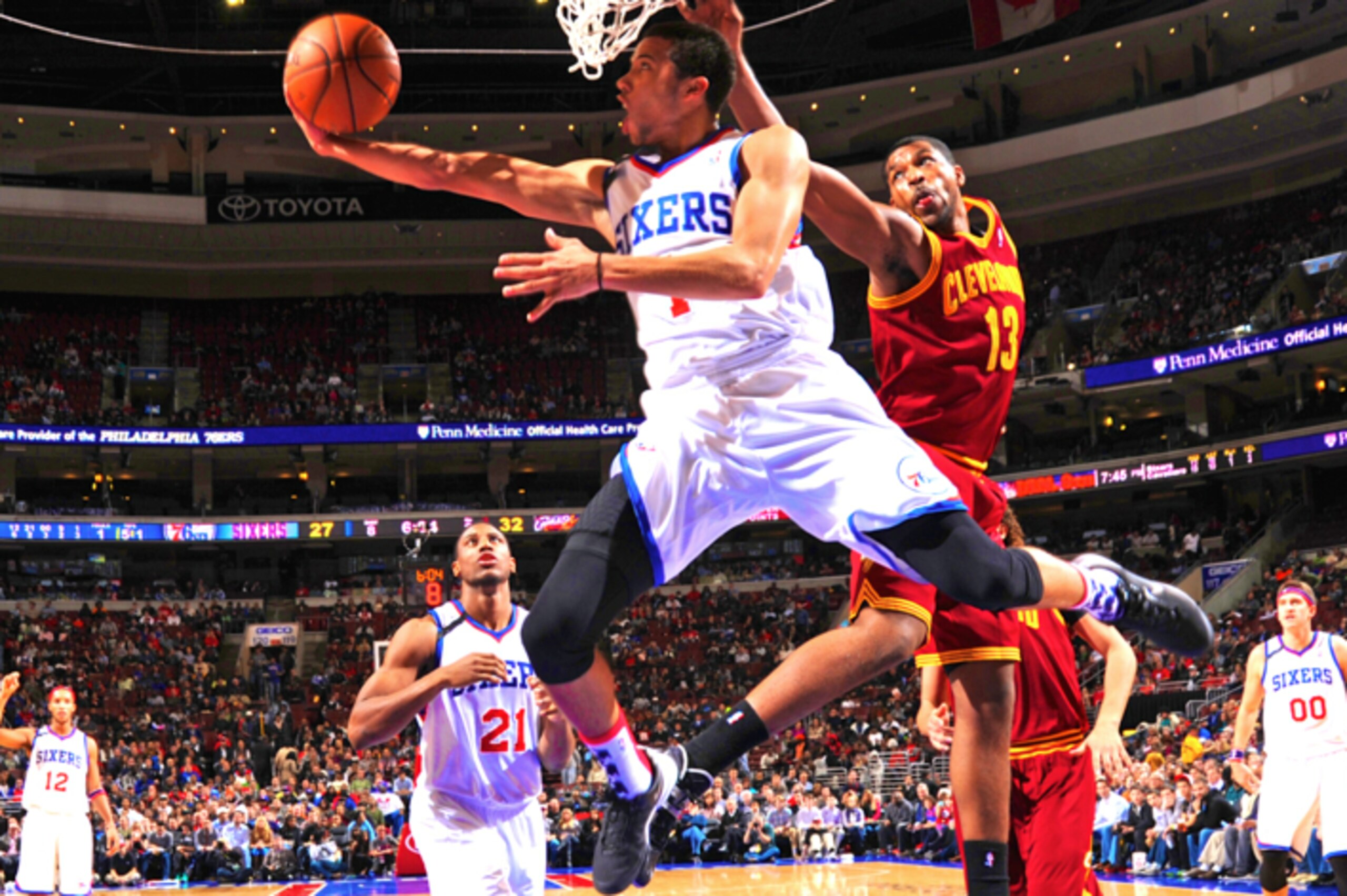

Michael Carter-Williams Is Key to Making Philadelphia 76ers Rebuild Work
In a league where dual-threat point guards are among the most coveted franchise building blocks, Michael Carter-Williams is already establishing himself as the centerpiece of the Philadelphia 76ers' rebuild.
Make no mistake about it: Nerlens Noel, Joel Embiid and Dario Saric will all be integral components of Philadelphia's lengthy developmental project. But as Carter-Williams starts to craft his professional image over the next few seasons, it'll be those players' chemistry with him that dictates how successful this new generation of Sixers ultimately is.
And publicly, Carter-Williams is embracing a leadership role sans Thaddeus Young.
TOP NEWS
Jokić Pops Out at CU Game 🦬
Watch: LeBron's 1st 76ers highlights

NBA Power Rankings Entering Preseason 🔢
“I think regardless of who is on the team," Carter-Williams said, according to The Intelligencer's Tom Moore (via Philly.com), "I have to be a leader out there, give direction to the new guys and really bring the team together.”
Given the state of Philadelphia's inexperienced roster, we'd expect nothing less from the 22-year-old Rookie of the Year winner.
| Player | PPG | APG | SPG | PER |
| Chris Paul (2005-06) | 16.1 | 7.8 | 2.2 | 22.1 |
| Derrick Rose (2008-09) | 16.8 | 6.3 | 0.8 | 16.0 |
| Kyrie Irving (2011-12) | 18.5 | 5.4 | 1.1 | 21.4 |
| Damian Lillard (2012-13) | 19.0 | 6.5 | 0.9 | 16.4 |
| Michael Carter-Williams (2013-14) | 16.7 | 6.3 | 1.9 | 15.5 |
But the on-court production is still what matters most.
In that regard, Carter-Williams needs to evolve in quite a few areas while building on last season's relative success.
Thanks to a 6'6'' frame and 6'7'' wingspan that was tied for the longest among point guards at the 2013 NBA draft combine, according to DraftExpress, Carter-Williams proved he has the raw physical tools to make it as a weapon with two-way capabilities.
According to Basketball-Reference.com, Carter-Williams joined Oscar Robertson and Magic Johnson as the only players in league history to average at least 15 points, six rebounds and six assists during their rookie seasons.
However, Carter-Williams' status as a reliable source of offense will be largely dependent on his ability to correct some troubling patterns.
Chief among them is his shaky jump shot.
"The fact that he struggled is not news: he shot 26.4 percent from three-point range, 32.7 percent on jumpers overall and only 28 percent on catch-and-shoots," Liberty Ballers' Derek Bodner wrote in June.
Here's what a visual representation of those numbers looks like, via Nylon Calculus:
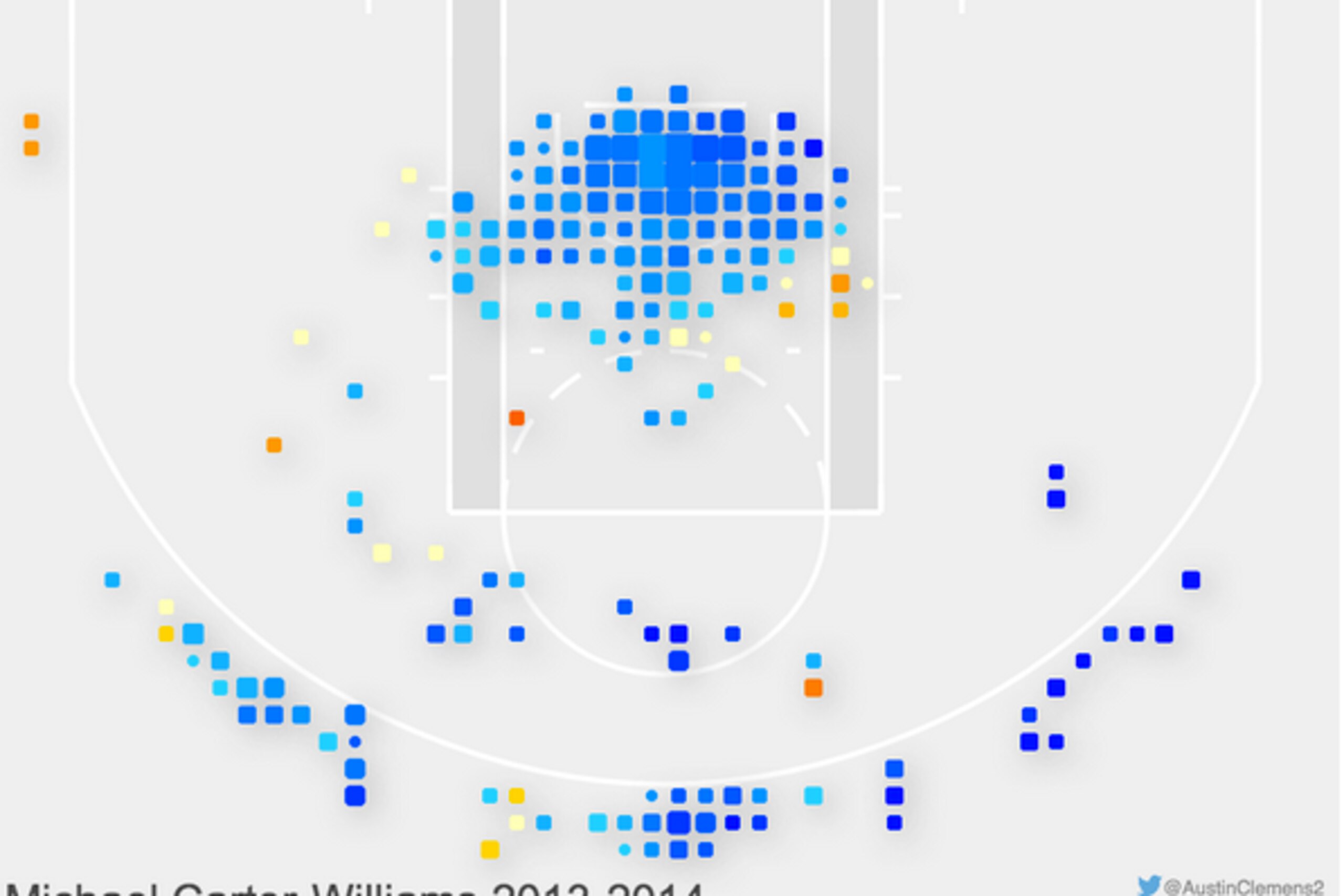
Cringe-inducing, right?
What's arguably more concerning is Carter-Williams' inefficiency around the rim.
According to NBA.com, 38.7 percent of Carter-Williams' field-goal attempts last season came inside the restricted area. On 408 attempts, he converted just 211 shots (51.7 percent).
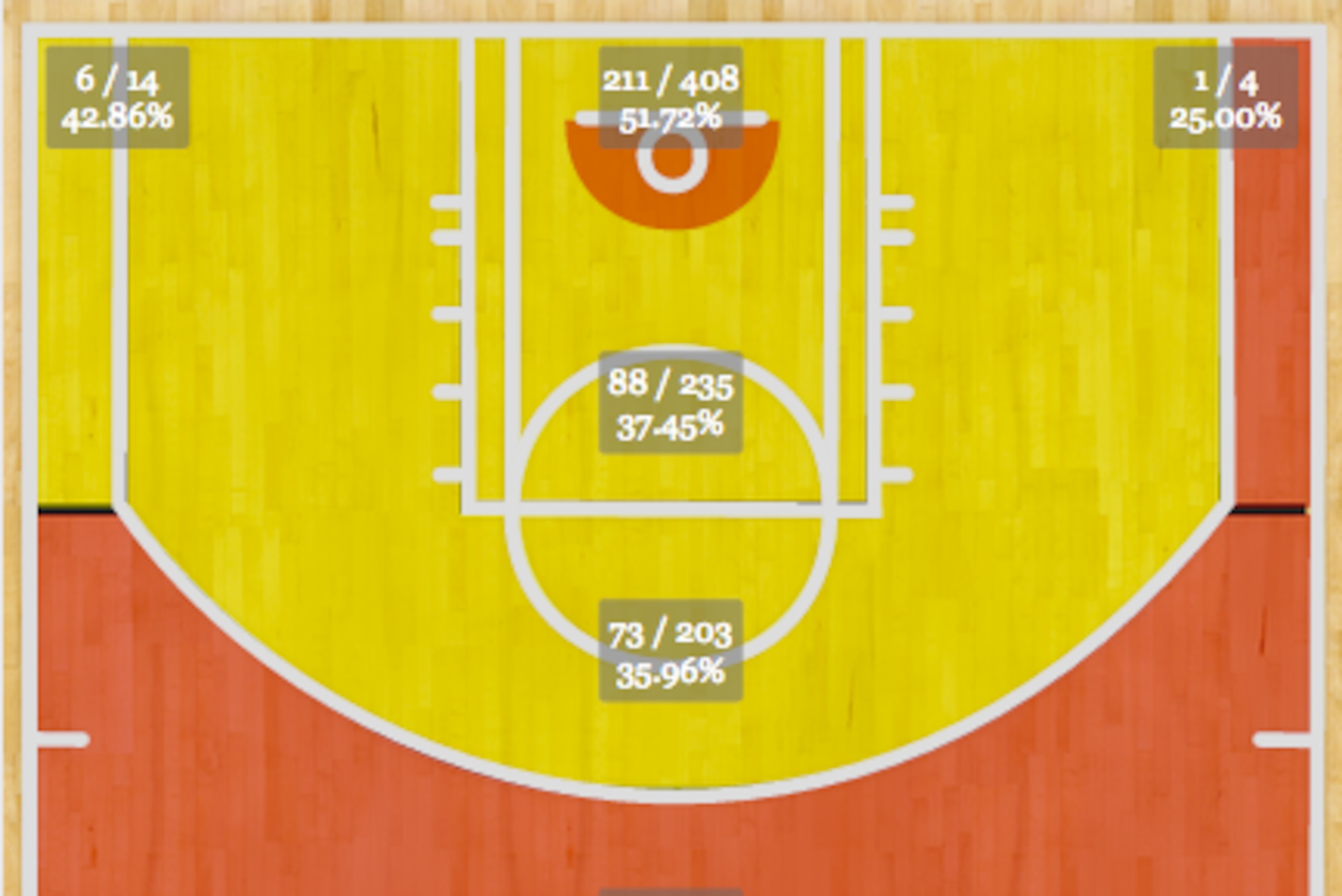
And among players who attempted at least five drives per game, Carter-Williams ranked third-worst in terms of conversion rate. According to SportVU player tracking data, Carter-Williams made just 37.7 percent of his drives, shots that are classified as "any touch that starts at least 20 feet of the hoop and is dribbled within 10 feet of the hoop and excludes fast breaks."
While improvement in those two categories is imperative, it's important to remember Carter-Williams' impact wasn't limited to volume scoring.
As Bleacher Report's Adam Fromal revealed in the form of a new passing metric, Carter-Williams was actually quite a competent distributor last season, ranking ahead of Tony Parker, Goran Dragic and Kyrie Irving in passer rating:
"While he wasn't a particularly valuable scorer and often struggled with his efficiency, Carter-Williams thrived as a distributor in this uptempo system.
Though the pace adjustments hurt his passer rating, the big point guard still made a significant impact on his teammates' shooting and was the impetus behind most scoring plays when he was on the court. His secondary assists (1.5 per game) are right near the top of the leaderboard, for example.
"
That said, Fromal's passer rating also shed light on Carter-Williams' turnover problem:
"In order to improve as a sophomore, Carter-Williams has to cut back on the bad-pass turnovers.
He recorded 144 as a rookie 1-guard, and that's far too high a number for a player with only 70 games under his belt. Only seven players recorded more per game, and each of them generated more points off assists, making the biggest problem on this young floor general's resume quite obvious.
"
Although Carter-Williams dropped 6.3 dimes per game, he committed 3.5 turnovers a night, too. Among all qualified players, Carter-Williams' assist-to-turnover ratio of 1.79 ranked No. 67 overall, according to ESPN.
What's important to remember is that the turnover numbers—like the rest of his metrics—were inflated by the ridiculously fast pace at which Philadelphia played.
According to SportVU, Carter-Williams ranked 17th in both assist opportunities per game (12.4) and points generated via assists (14.9), numbers we can also partially attribute to the Sixers' league-high 99.2 possessions per 48 minutes.
On defense, there were encouraging signs as well.
While it wasn't always pretty, Carter-Williams had decent success as a defender against ball-handlers in the pick-and-roll.
According to Synergy Sports (subscription required), Carter-Williams spent 42.6 percent of his time guarding such plays and limited opposing ball-handlers to 38.3 percent shooting (0.74 points per possession).
And it all comes back to length.
With the stature necessary to intimidate smaller point guards, Carter-Williams has shown no fear of putting his size to good use.
On this trip down the floor against the Boston Celtics, Carter-Williams pressures Rajon Rondo at the three-point line instead of giving him a comfortable cushion to operate.
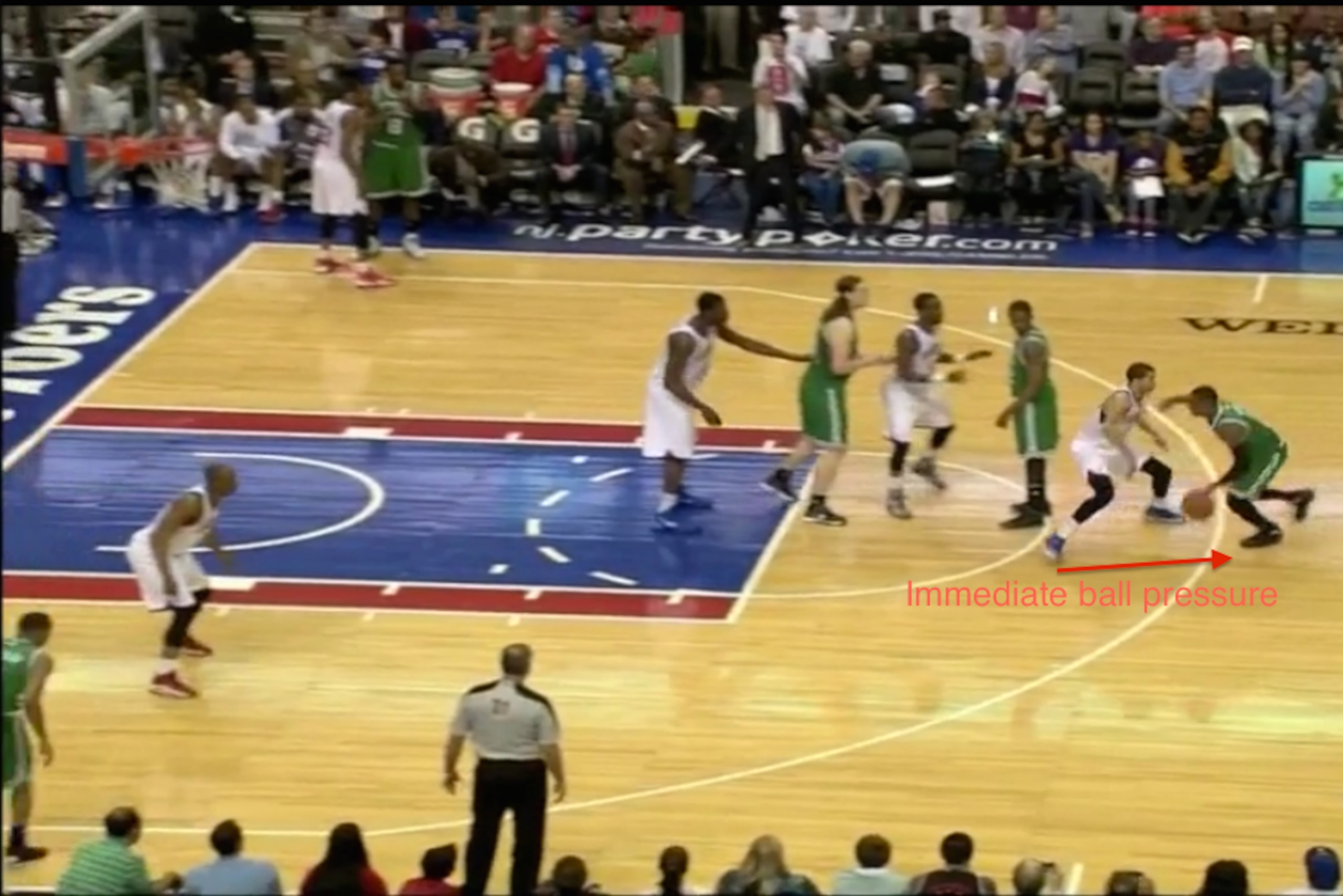
Then, after Rondo finally creates some separation, Carter-Williams is able to use his 6'7'' wingspan to recover and force Rondo into altering his decision to shoot mid-air, which results in a pass to empty space and a turnover out of bounds.
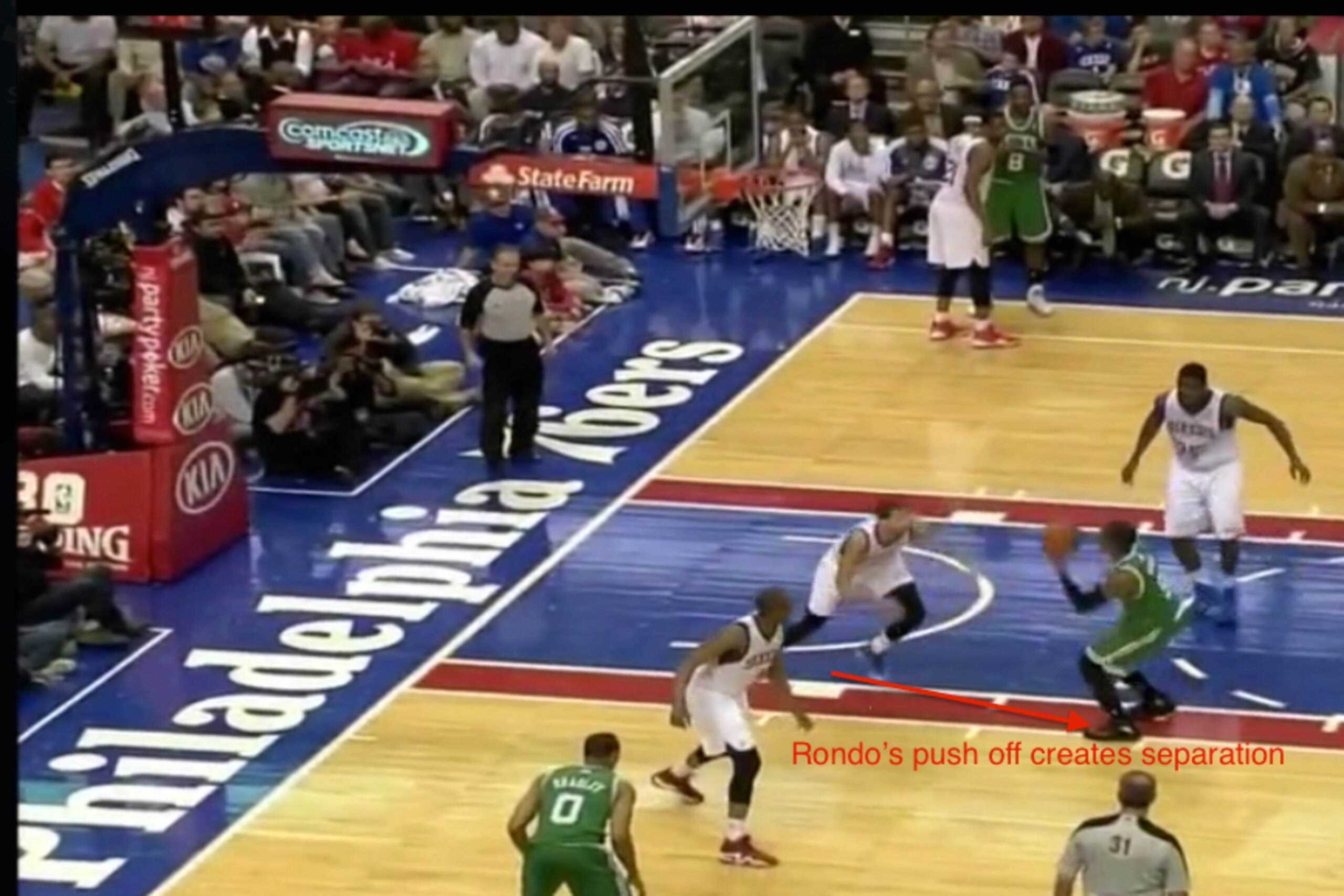
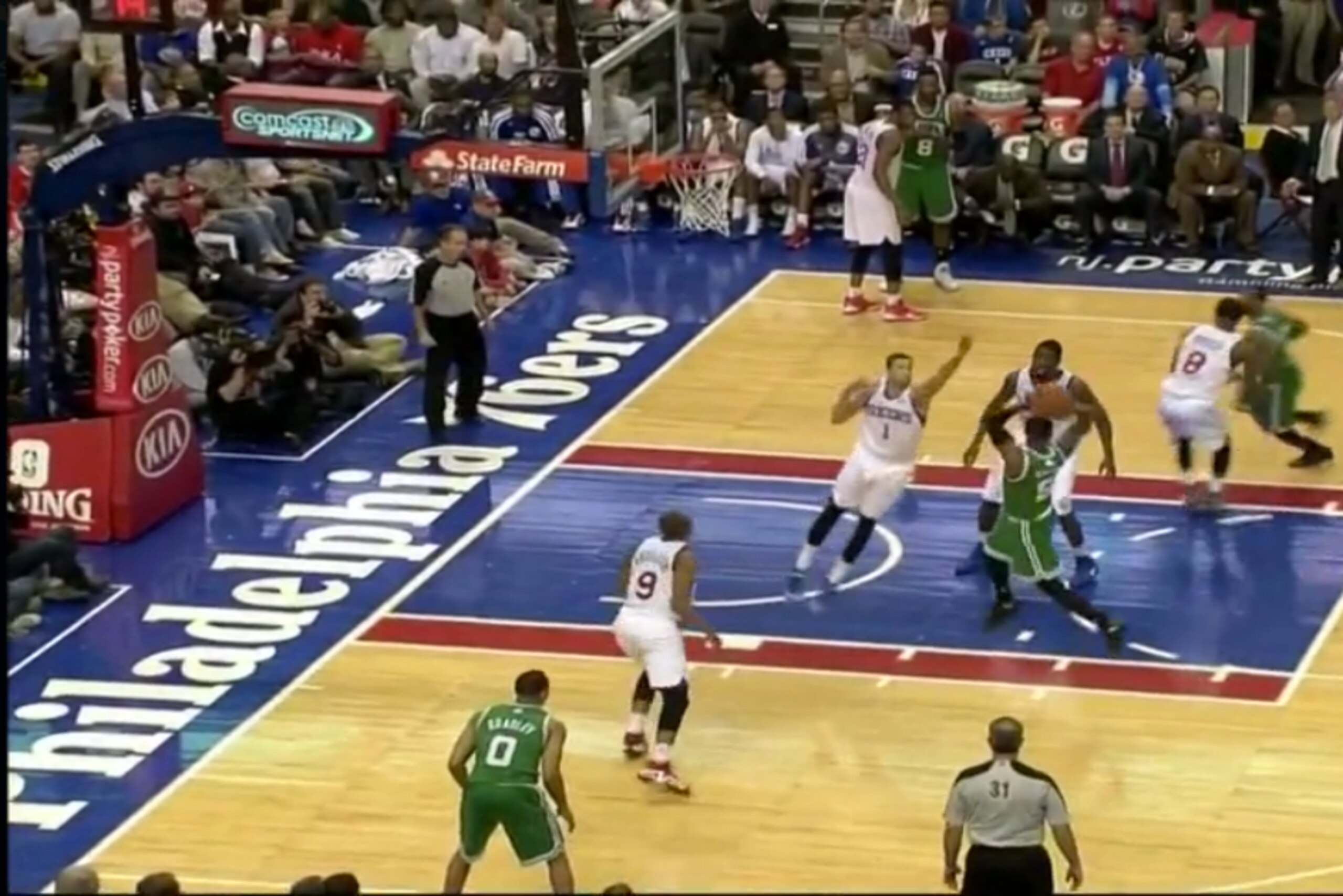
It's just one example, but Carter-Williams' physique allows him to disrupt dribble-drives and pick-and-rolls in ways that should make other point guards envious. And when he's finally able to team up with Nerlens Noel, opponents should dread running pick-and-rolls against that sort of quickness and length.
There are clearly other areas in which Carter-Williams needs to improve. Namely, he was torched by spot-up shooters to the tune of 1.13 points per possession last season, according to Synergy.
Through all this, it's important to remember hot and cold stretches litter rookie campaigns across the Association. The ups and downs were not just acceptable. They were expected. And Carter-Williams still exceeded expectations.
As a result, Sixers head coach Brett Brown is on board with what general manager Sam Hinkie is building toward, specifically with regard to Carter-Williams.
According to Sports Illustrated's Ian Thomsen, Brown said: "I think this is a reflection of what Sam is going to be able to bring to the franchise in the future. Albeit it's still early days, and I don't want to get overly dramatic and flattering. There's a long way to go—and Michael knows it, which is the exciting thing."
Growing pains will crop up again during year two. That much is inevitable.
But if last season was any indication, Carter-Williams possesses the competitive mettle necessary to be the face of Philadelphia's grand experiment.


.jpg?w=2560 "Commanders May Change Logo 👀")
_0.png?w=2560 "Week 5 Winners & Losers 📊")

.jpg?w=2560 "Rap: Lions, LaPorta End Contract Talks")
.jpg?w=2560 "Seahawks Have No Plans to Move")