How NY Giants QB Eli Manning's Footwork Is Different in the New Offense
When analysts look at what New York Giants quarterback Eli Manning has put on film so far, a common criticism is that Manning doesn’t yet look comfortable with the alteration of his footwork to suit the team’s new West Coast offensive system.
ESPN analyst Jon Gruden, in a conference call with reporters last week, was the latest expert to voice concerns about the Giants’ decision to move to an offense that, in essence, has called on Manning to completely change some fundamentals that helped him develop into a two-time Super Bowl MVP and a Pro Bowl quarterback.
Here’s what Gruden had to say about the Giants’ troubled passing game during his conference call with reporters:
TOP NEWS

New NFL contenders starting to emerge after Week 4
.jpg?w=2560 "Cardinals Giants Football")
Love's Body Already 'Tired'
Vrabel Trolls CJGJ After WR Shade
"Eli Manning has changed his fundamentals; he even stands differently in the shotgun. There are a lot of different receivers, there are new linemen, there are new running backs. So not only is he learning a new system and learning new coaches, he’s had to react to a lot of new players everywhere.
"
Let's look at some of the changes in Manning's footwork, focusing on the shotgun.
The Old System

In the previous system, one of the biggest differences that jumped out in the sample of plays studied is that Manning’s feet are either parallel as he waits for the snap from center, or, as Gruden noted during the Monday Night Football ESPN broadcast between the Giants and Detroit Lions, Manning’s left foot was the one staggered back.
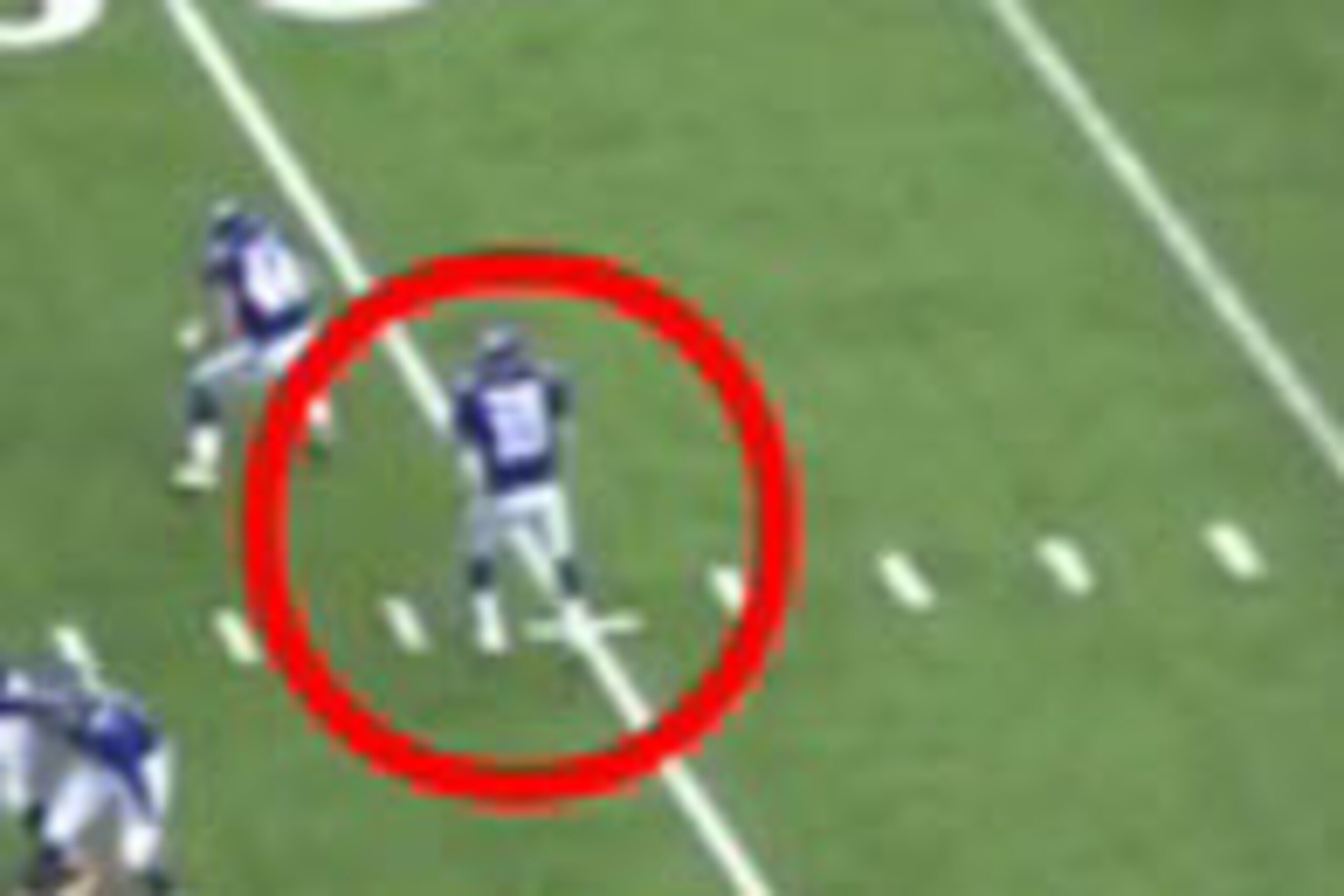
Another noticeable characteristic of the old offense is that regardless of the depth of the drop, more often than not, Manning immediately flipped his hips, which mean that his shoulders were parallel to the field of play.
During his dropback in the old system, Manning would take either a one-, three- or five-step drop, the depth depending on where the first target was supposed to be.
Because Manning was so used to these fundamentals, he was able to cleanly drop back with the ball, avoid any wasted motion and get his feet set to where he could then step up into the pocket (assuming he got the protection he needed from his offensive line) to make the throw.
The New System

In the new system, Manning always staggers his feet in the shotgun, his right foot now being the one that goes in back on most plays, as Gruden pointed out during the telecast.
The problem, though, is that because the motion is not quite second nature to Manning, he takes a short “hop step” before he takes his first full step backward.

This slight delay could potentially be part of the reason why the timing between the receiver and quarterback has been an issue. All it takes in the NFL is a split-second delay to mess up the timing of a play, which is why a pass is often thrown ahead of or behind a receiver, depending on the route.
It also hasn't helped matters that at times, the receivers have had issues beating the jam by opposing defenders or have struggled to separate, thus giving Manning a clean target with which to work.
The point to take away here is that if a pass is dependent on timing, every motion beginning with the snap to the dropback to the quarterback setting his feet to the throw must be done with precision.
Manning and the Giants have yet to show that they are able to do that on a consistent basis in this new offense.
Conclusion
In the old vertical passing game, Manning was often able to drop back, wait for things to develop and then throw the ball.
When his offensive line began to deteriorate around him last year, the days of being able to sit back and enjoy a sandwich while scanning for an open receiver disappeared.
In the new offense, the idea is to get the ball out quicker, an approach that should not only keep the defense on its heels but also take some of the pressure off the offensive line to hold their pass blocks for longer than a couple of seconds.
“Yeah, we’d like him to play faster and make quicker decisions,” Giants quarterbacks coach Danny Langsdorf said.
“We’re trying to put some pressure on (Manning) to speed up and by doing so we’ll get some more pressure on the defense and make them adjust to us.”
The result should be less pressures and sacks and more pass completions, which is why Langsdorf revealed the coaching staff has lofty expectations for Manning this year.
“We’d love to be there at 70 percent,” he said. “That’s the ultimate goal, but we want to raise his completion percentage for sure.”
Manning’s footwork should get better the more he plays in this system. However, he’s going to need help from his receivers and tight ends, who need to run crisp routes, separate and hang onto the ball when it comes their way.
It also wouldn’t hurt things if his offensive line, which gave up two sacks and allowed nine quarterback hits in the game against the Lions, actually gave the quarterback the confidence necessary to work on the footwork in a live setting without having to constantly run for his life.
Patricia Traina is the senior editor for Inside Football. All quotes and information obtained firsthand, unless otherwise noted. Follow me on Twitter, @Patricia_Traina.
.jpg?w=2560 "Cardinals Giants Football")
.jpg?w=2560 "Titans Ravens Football")

.jpg?w=2560 "OBJ Calls Out Giants 😳")
.jpg?w=2560 "Tyreek Deal May Come Soon")