2011 NFL Playoffs: Aaron Rodgers Benefited Where Alex Smith Didn't—Stability
 Go back to the 2005 NFL Draft. The San Francisco 49ers have been on the clock unofficially since the early part of December of 2004, and officially since January of 2005.
Prior to the draft, it was widely believed that the 49ers had narrowed their top pick to either junior quarterback Aaron Rodgers or Alex Smith. (I personally wanted the 49ers to draft Michigan wide receiver Braylon Edwards.)
There was even a report that the 49ers had agreed in principle to terms with Aaron Rodgers just in case contract talks didn't work with Alex Smith prior to the draft.
TOP NEWS

Bold Trade Predictions Before Season Kickoff 🏈
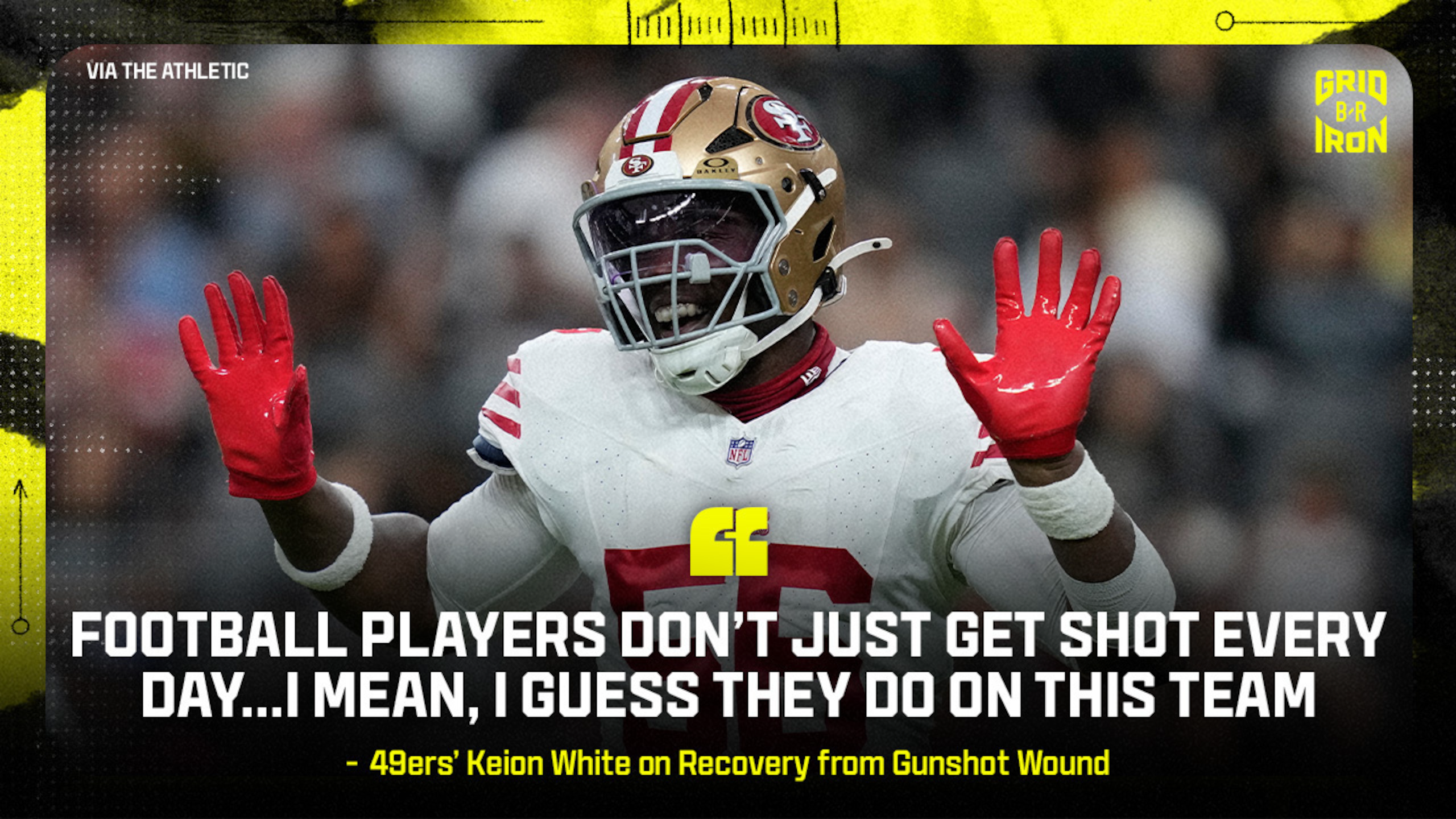
49ers EDGE's Viral Quote 😶
1 Reason Why Commanders' Fans Should Be Optimistic 🙏
Rodgers was the feel-good story. The California kid who grew up a 49ers fan was thought to be the better of the two. Better arm, more accurate and better field vision, he was to many fans, the local favorite, after all, the last time the 49ers passed on a college quarterback who grew up a 49ers fans, he went on to win three Super Bowl titles. His name, Tom Brady.
Alex Smith on the other hand was probably the more intriguing of the two prospects. Smith, also a junior, was coming off the type of season very few quarterbacks not named Tim Tebow often dreamed of.
Smith led the Utah Utes to an undefeated 12-0 season and helped crash the Bowl Championship Series where the Utes defeated the Pittsburgh Panthers, 35-7—a game in which Smith threw for four TD passes. Smith was also a Heisman Trophy finalist and was named as the Player of the Year by The Sporting News.
Alex Smith even beat Aaron Rodgers as a sophomore, when the Utes defeated the Golden Bears, 31-24.
Both quarterbacks also carried baggage.
Before he was a Golden Bear, Rodgers was at Butte Community College where he was discovered by Coach Jeff Tedford, and this was the problem according to many critics.
Tedford had a long history of turning out first-round NFL quarterbacks under his pro-style offense. His list included: David Carr, Akili Smith, Trent Dilfer, Kyle Boller and Joey Harrington, none of which are household names (excluding Dilfer for his work on ESPN).
Smith's baggage was his lack of arm strength, but more importantly, the type of offense he ran at Utah. Urban Meyer's famous Spread offense ran primarily out of the shotgun formation using quick and short passes to compliment the occasional shovel pass.
In the 2005 BCS Fiesta Bowl against the Pittsburgh for example, of Alex Smith's 29 completions, more than half came on shovel passes.
Ultimately, the 49ers went with Alex Smith because then-head coach Mike Nolan believed that Smith offered more upside. At 6'4", the 49ers believed Smith had the advantage of not having passes knocked down at the line of scrimmage, and at a skinny 208-pound frame, the 49ers also believed Smith could bulk up to the 220-225 pound range.
Rodgers, in the meantime, went 23 picks later to the Green Bay Packers, where he would, for the next three seasons, sit while watching and learning from Hall of Fame quarterback Brett Favre (even if Favre didn't actually teach him).
When Rodgers was handed the reigns of the Packers in 2008, his offensive numbers in just one season buried those of Alex Smith in his first four seasons. Although the Packers finished 6-10 and missed the playoffs one year after losing in overtime in the NFC Championship Game, Rodgers and the Packers have been in sync since then, and Rodgers is widely regarded as one of the top quarterbacks in the league.
In the last three seasons, Rodgers has fired for 86 touchdowns to 31 interceptions. More importantly, Rodgers has had the kind of stability that Alex Smith has never had.
From the get-go, Rodgers has had the stability at head coach and the offensive weapons in place. Greg Jennings, Donald Driver, Jordy Nelson, running back Ryan Grant and tight ends Donald Lee and Jermichael Finley.
Smith, on the other hand, has had, not one, but three head coaches. Not one, or two, but six different offensive coordinators, which means six different offensive philosophies. From run-heavy, to balance, to spread, to pass-heavy, you name it, Alex has been involved in it all.
Even more importantly, Alex has never had the offensive weapons that Rodgers had. Yes, Frank Gore is probably a better running back than Ryan Grant, but what about at the wide receiver spot?
Jennings, Driver and Nelson vs. Brandon Lloyd, Cedric Wilson, Arnaz Battle, Issac Bruce, Josh Morgan, Michael Crabtree for a season and a half and Antonio Bryant.
Bryant was Alex's best target because, unlike all the others, Bryant offered a down-field threat for Alex. Smith's longest touchdown pass to a wide receiver was back in 2006, a 72-yard bomb to Antonio Bryant.
When Nolan drafted Alex Smith, he said all the right things, including that Alex had to earn the starting job, yet Nolan named Alex the starter before the season began, then benched him in favor of Tim Rattay. Alex didn't start his first NFL game until Week 5, a blowout loss to the Indianapolis Colts at home.
In the end, it can be argued that it wasn't arm strength, or which system the quarterback came from, or which quarterback carried the least amount of baggage but rather, stability was the X-factor in how the careers of the two quarterbacks have fared so far.
Aaron Rodgers is 60-minutes away from being a Super Bowl champion, while Alex Smith sits at home wondering where he will play next season. Regardless of what happens next Sunday, Aaron Rodgers will still be considered an elite quarterback, while Alex Smith will move on to his fourth head coach, and seventh offensive coordinator.
.jpg?w=2560 "Rams Donald Comeback Football")
.jpg?w=2560 "CP3 RIPS Clippers")