Why Has Pittsburgh Steelers Defense Improved so Much in 2017?
The Pittsburgh Steelers have one of the NFL's best defenses through the first half of the season. It ranks fourth in total yards allowed (second against the pass and 14th against the run), second in points allowed and is tied for the fourth-most sacks in the league, at 26.
This is a far cry from a season ago, when the Steelers finished the year ranking 12th in yards allowed, 10th in points allowed while tallying only 38 sacks.
So what has changed to propel the Steelers defense into the league's upper echelon?
Here are the biggest reasons why Pittsburgh's defense has taken such a large step forward in 2017.
Drafting T.J. Watt
1 of 6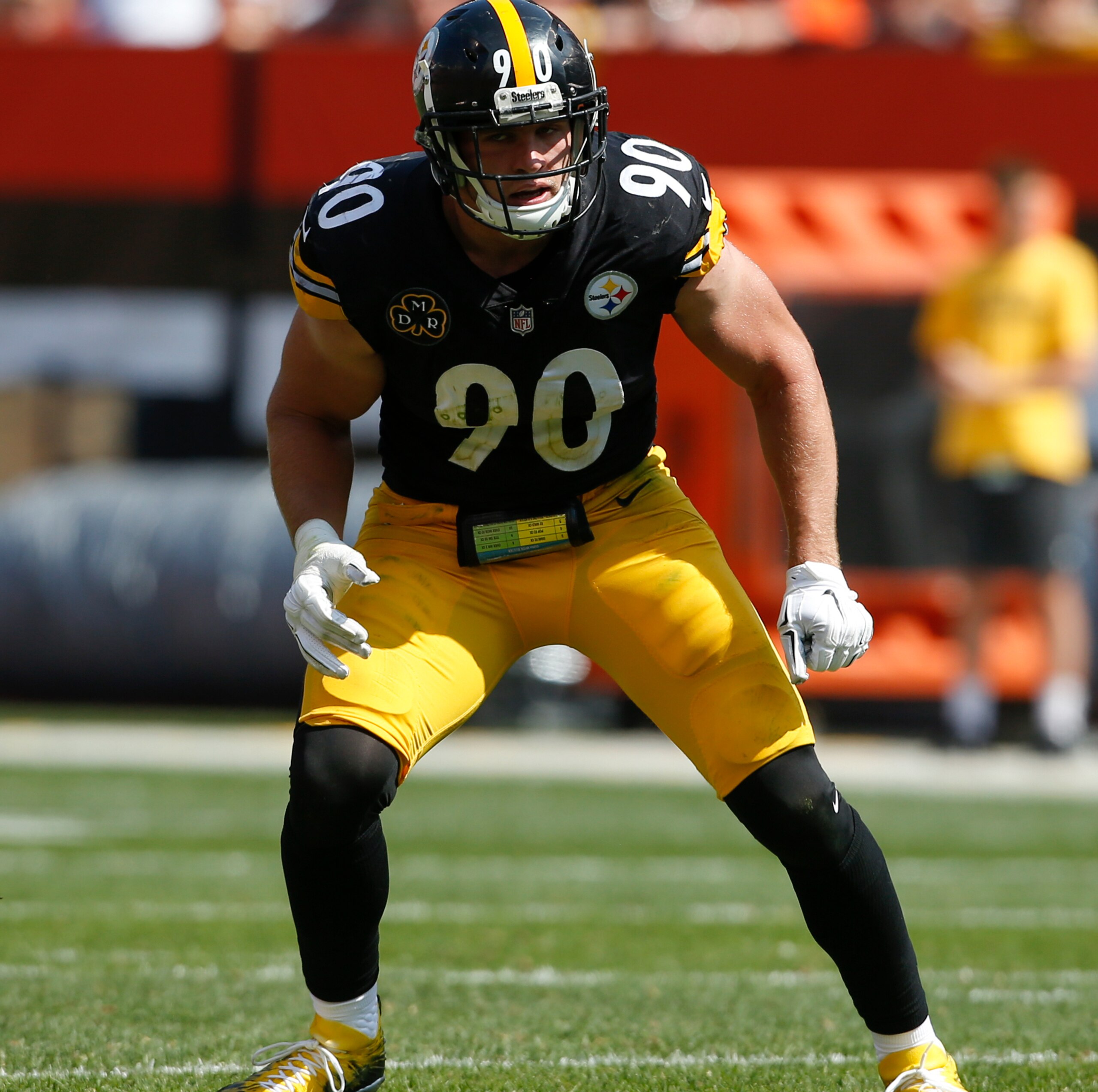
The Steelers needed to spend the 2017 offseason focusing on improving their defense. And though numerous player acquisitions and subtractions were made in the months before the regular season began, none has made as big an impact on the defensive side of the ball than Round 1 draft pick T.J. Watt.
When the Steelers drafted Watt, the goal was to have the rookie well-prepared enough to crack the first-team defense early in the season. That has so far been the case, with Watt starting in all seven games he's appeared in (with one absence due to a groin injury).
He's the team's sixth-leading tackler, with 28 total on the year, and is tied for the second-most sacks on the team, with four. He's also defended four passes and has an interception.
Without Watt, the Steelers would have had to turn to depth linebackers Arthur Moats and Anthony Chickillo or would have had to make 39-year old James Harrison a starter for yet another season.
While Harrison is certainly still an athletic freak, he's not an every-down linebacker (though he has one sack on the season despite playing under 6 percent of the defensive snaps).
Watt's youth, athleticism and ability to learn quickly and on-the-job has helped round out the Steelers' defensive front, particularly its pass-rush. His presence has been one of the key building blocks to Pittsburgh's improvements on the defensive side of the ball.
Pass-Rush Tweaks
2 of 6
The drafting of T.J. Watt also allowed the Steelers to evolve the way they pressure opposing quarterbacks.
This year, the defense has been using more three- and four-man pass-rushing fronts, eschewing the blitzing that has long been the hallmark of a Pittsburgh defense. In fact, according to ESPN's NFL Matchup, the Steelers are blitzing on only 20.5 percent of their plays this year, or the fifth-fewest in the league.
Not only does this allow for the cornerbacks and safeties to work primarily in coverage, thus not leaving the Steelers short-handed in the back end—a key to why the defense is allowing so many fewer passing yards this season—it also affords Pittsburgh's defensive front to do what they do naturally.
These traditional pressures are why seven members of the defensive line and linebacking corps have at least two sacks this season.
But none of this could be accomplished without the front playing disciplined football. Three- and four-man rushes require an adherence to the plan as well as the ability to execute it well, and the Steelers have managed to do both on a regular basis this season.
It's not all perfect; Steelers Depot's Alex Kozora has noted that in recent weeks some of that defensive discipline has been lacking, leading to a downturn in pass-rushing production.
However, with 26 sacks through eight games, the Steelers' defense has found a way to affect opposing quarterbacks without having to take players out of the secondary to do so.
This has resulted in the Steelers being on pace to notch as many as 50 sacks in the 2017 regular season and the secondary not giving up so much yardage on the passes quarterbacks are able to complete.
Healthy Heyward
3 of 6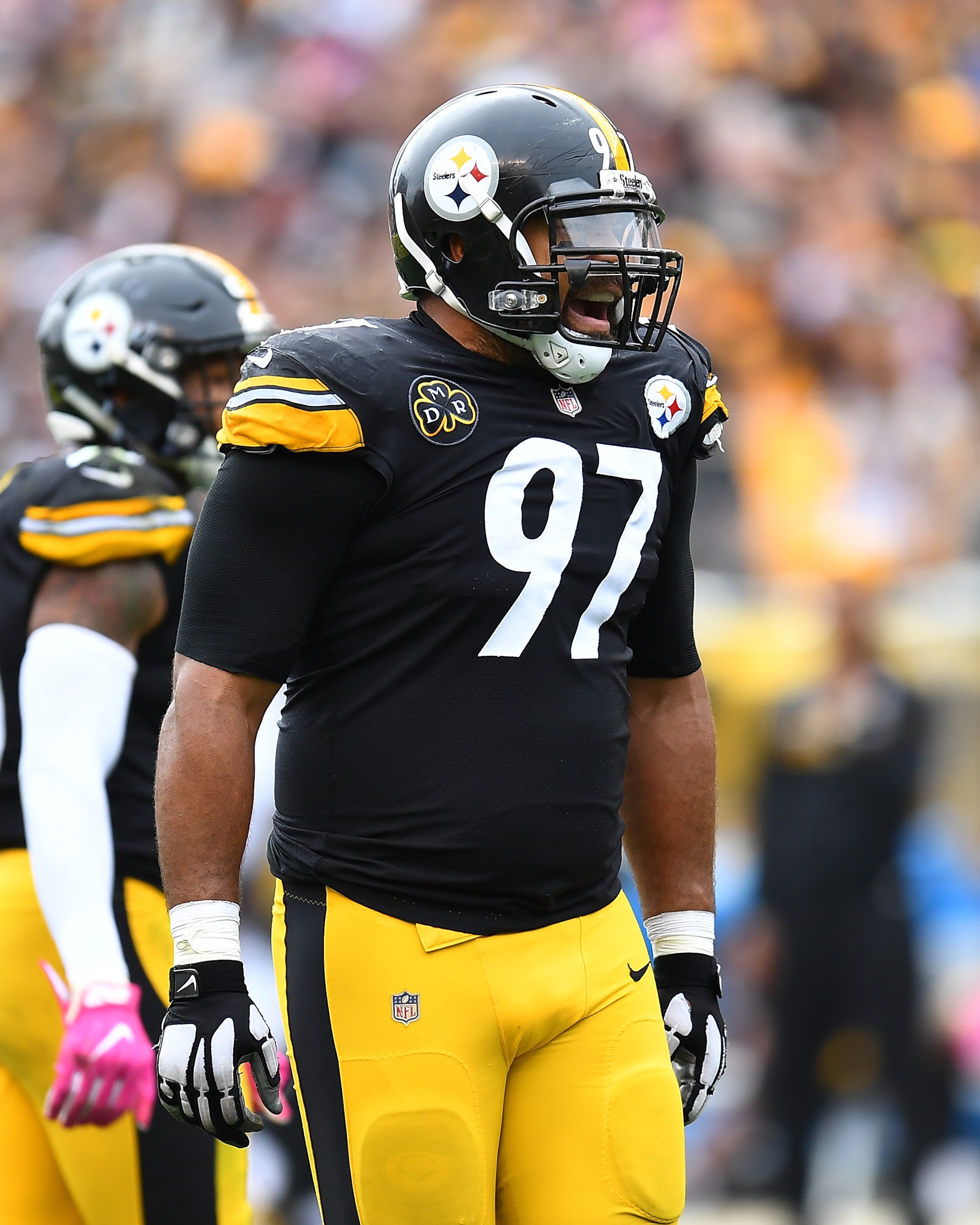
The Steelers were dealt a major blow both to their pass-rush and their run defense a season ago when starting defensive end Cameron Heyward was placed on injured reserve with a torn pectoral muscle.
Heyward played only seven games during the 2016 regular season, but in that span he recorded 21 tackles and three sacks. Meanwhile, the two players who replaced him, Ricardo Mathews and L.T. Walton, finished the year with a combined one sack and 22 tackles.
This year, Heyward is back to his typical form. He has 27 total tackles through eight games and leads the team in sacks, with five. Though the Steelers have had to do without fellow defensive end Stephon Tuitt, who has missed the last two games with a back injury, it hasn't had the same overall effect on the defense as Heyward's absence a year ago.
While that partially has to do with a better quality of defensive line depth (Tyson Alualu has been a definite upgrade over the Walton-Mathews duo from a season ago), it also says a lot about how dominant a defender Heyward is and how crucial he is to the Steelers' overall defensive success.
The quality of front-seven play is significantly higher with Heyward healthy and on the field. While the drafting of T.J. Watt certainly helped the Steelers improve their pass-rushing, particularly in three- and four-man rushes, it also requires the abilities of Heyward in order to meet its full potential.

Cornerback Shuffle
4 of 6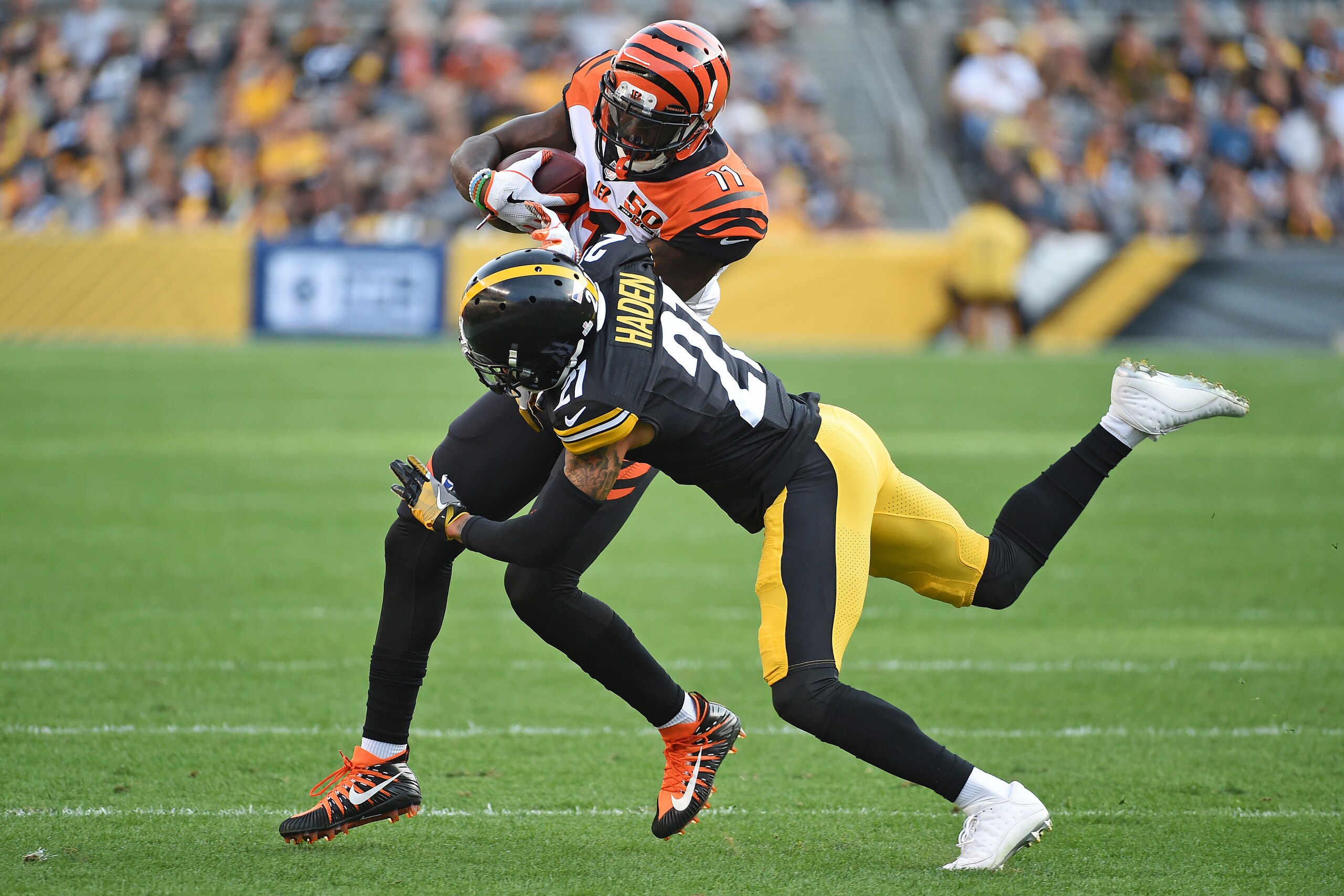
Part of the Steelers' efforts to revamp the defense involved admitting that certain things were not working from a personnel standpoint. Nowhere is this more clear than in the secondary, where the cornerback position has received a significant makeover.
A year ago, the Steelers starting cornerbacks to begin the season were William Gay and Ross Cockrell, with then-rookie Artie Burns working as the slot corner. As 2016 unfolded, though, Gay was switched to the slot and Burns to the outside.
Those shuffles continued into the 2017 offseason. Though Gay remains on the roster, he's now working mostly as a nickel or dime cornerback. The team also added Coty Sensabaugh during free agency to provide depth and drafted Cameron Sutton and Brian Allen in the third and fifth rounds of the 2017 draft, respectively.
While Sutton has spent the first half of the season on injured reserve and Allen has only been active sparingly as a special-teamer, the cornerback moves didn't stop there. In early September, the Steelers traded for veteran Browns cornerback Joe Haden and shipped Cockrell to the New York Giants.
Haden and Burns have been the Steelers starting boundary cornerbacks this year, while summertime standout Mike Hilton has handled the bulk of the slot duties. Haden has allowed only 11 completions on passes thrown his way, according to Steelers Depot's charting, while Football Outsiders noted Hilton is allowing an average of just five yards gained on completions thrown in his direction.
These cornerbacks can play both man and zone coverages and most importantly are not giving up the kinds of big plays in the passing game the defense was a season ago. The Steelers have given up only 21 passing plays of 20 or more yards and just three of 40 or more; in 2016, those numbers were 40 and 10, respectively. Further, opposing offenses have thrown just six passing touchdowns against the Steelers, compared to 20 a year ago.
While the 2016 numbers were good, particularly when it comes to scoring defense, 2017 has been an even better year for the Steelers in pass coverage. And it's not a switch to more man coverage, either. Defensive backs coach Carnell Lake and coordinator Keith Butler made installing more man coverage a priority in the offseason, primarily to combat quarterbacks like the New England Patriots' Tom Brady.
But Lake said in October that man coverage hasn't been used all that often yet because situations haven't warranted it being the focus of their defensive strategy.
The Steelers have instead mostly relied on the zone coverages that were burned so much a year ago. But the results aren't the same in 2017, and remaking their cornerbacks room is a key reason why.
The Shazier Factor
5 of 6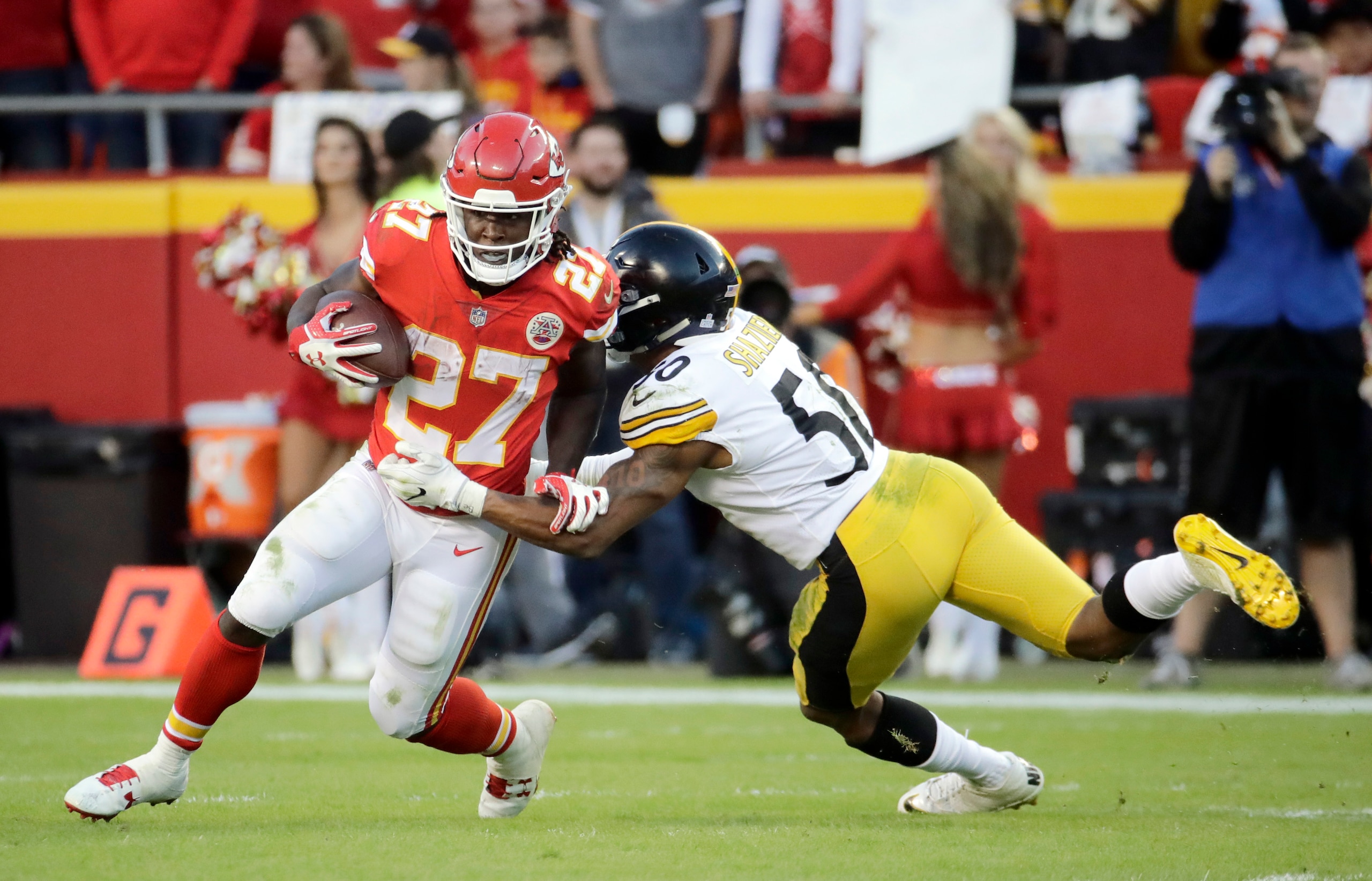
Not all of the Steelers' defensive improvements can be attributed to changes in either strategy or personnel. Some are simply the result of things not changing. An example of this is Steelers inside linebacker Ryan Shazier, who is again serving as the keystone to the entire defense.
There is seemingly nothing that Shazier cannot do. He is the Steelers' leading tackler, with 64 (including four for a loss), has defended eight passes, forced two fumbles and leads the team with two interceptions. Though he hasn't recorded a sack, that's more a result of him being needed less as a pass-rusher than any declining ability to pressure quarterbacks.
Few linebackers are as athletic and versatile as Shazier, and those traits have allowed the Steelers to use him in creative ways that ultimately free up other players to rush the passer and for the secondary to be more confident in their pass coverage.
Without him, the Steelers' entire defensive philosophy would require shifting; with Shazier again the team's all-around leading defender, the jobs of his teammates are made that much easier.
Swapping Williams for Timmons
6 of 6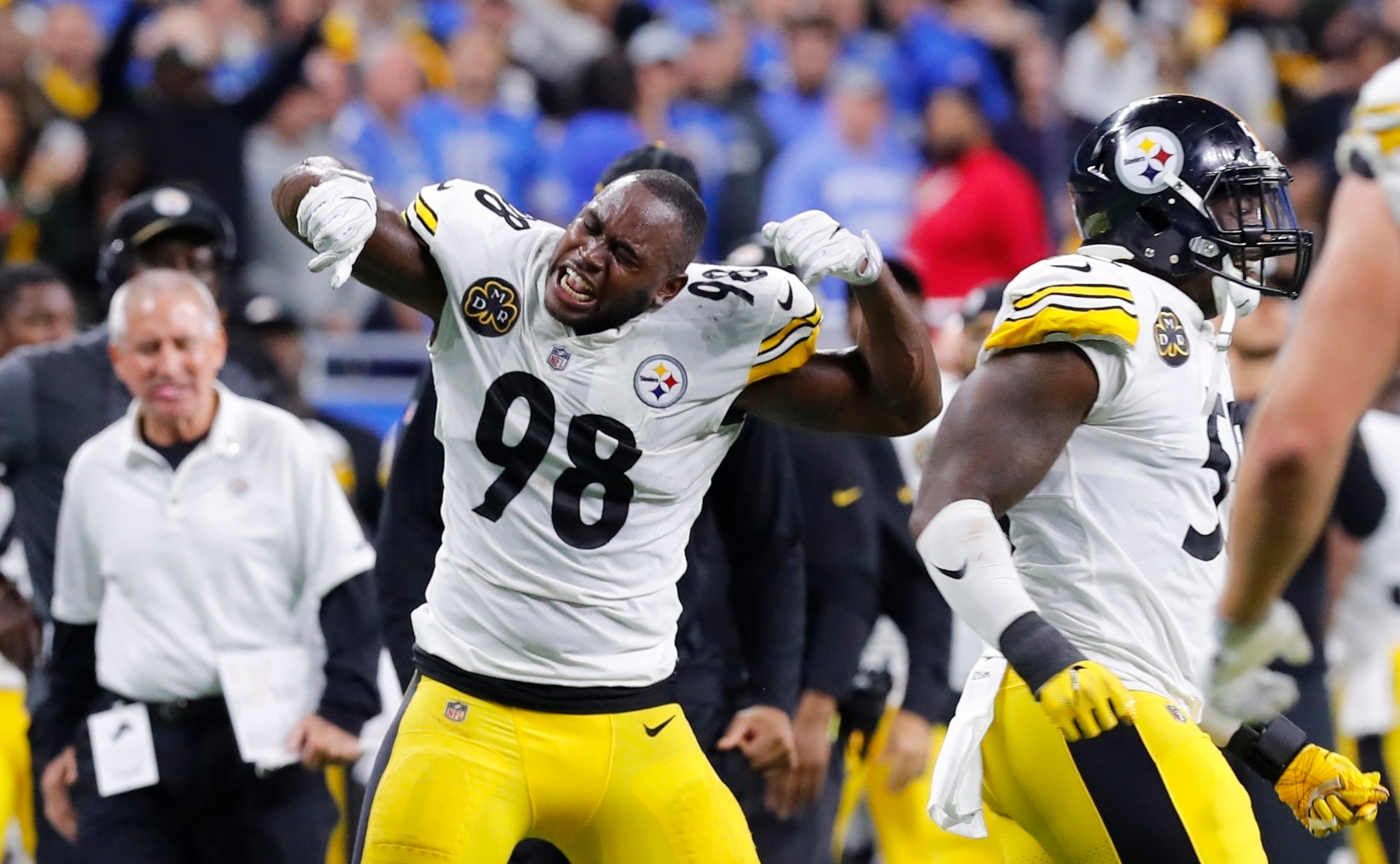
The various changes that the Steelers defense has undergone in the months leading up to the 2017 regular season are all interrelated. And a major cog in that plan took place in the early days of free agency, when longtime inside linebacker Lawrence Timmons was allowed to test the open market, eventually landing with the Miami Dolphins.
The Steelers chose to replace him with 2013 sixth-round draft pick Vince Williams, a career backup who has proved reliable even with his limited playing time.
Going into the season, Williams had appeared in 63 games but had only 17 starts. And while he had proved his mettle as an injury replacement, run-stopper and situational pass-rusher, it remained to be known what his role would be in coverage.
Timmons was one of the Steelers' key players in pass defense as a coverage linebacker—he had five passes defensed and two interceptions in 2016 while also leading the team with 114 tackles—but it did not appear that Williams possessed the same skill set to seamlessly step into Timmons' role.
However, that hasn't mattered, because the Steelers did not need Williams to turn into Timmons but rather to make the most of his strengths as a defender. With Ryan Shazier developing into the team's top coverage linebacker, those duties did not have to fall on Williams' shoulders. Instead, Williams has become an integral part of the front seven's ability to pressure quarterbacks and to stop the run.
Williams is the team's second-leading tackler, with 42 through eight games, and is tied with T.J. Watt for their second most sacks, at four.
Because the Steelers drafted Watt, have a high-caliber veteran in Shazier and a secondary better equipped to limit the damage inflicted by opposing wide receivers, Williams has been free to be Williams, proving that he's worthy of Timmons' old job in the process.