

Romelu Lukaku > Zlatan Ibrahimovic: Will the New Boy Have a Better Debut Season?
Romelu Lukaku is officially Zlatan Ibrahimovic's replacement No. 9 at Manchester United.
In March, when links with the Belgium international were being made in the press and a pre-injury Ibrahimovic was firing in goals for the Red Devils, Bleacher Report took a look into which of the two forwards United fans would prefer to see leading the line in 2017/18.
The results were perhaps surprising.
Lukaku won the poll by a margin of 58 per cent to 42 per cent. This was in spite of the fact that the former Sweden international had already scored 25 of his 28 goals for United by this point and his signing had clearly been a success.
So why were a majority of fans in favour of the new option? Some of it can maybe be put down to the appeal of the new. Fans like new signings because they offer the possibility of a better future.
But there is probably more to it than that. While Ibrahimovic had scored more than his fair share of goals, the United team Jose Mourinho had built with him at the tip of it could at best be considered a qualified success.
They had won the EFL Cup by this point and went on to add the UEFA Europa League title, earning them a place in next season's Champions League, but their league campaign was, in essence, a disaster. There were some promising moments, but the team was unable to maintain consistency. How much of that was down to Ibrahimovic is unclear, but there was clearly an issue that needed resolving.
The question of the Swede's plethora of big misses has been discussed a good deal. Opta measures a "big chances missed" statistic and the former Barcelona man topped the list in the Premier League last season, per the division's official website.
That metric is actually not a simple one to analyse, though. While it is obviously the case that missing a lot of big chances is a bad thing, one of a striker's main jobs is to get into a position where the creative players behind him can engineer a big chance in the first place. Ibrahimovic did that part of his job brilliantly, he just lacked a bit of cutting edge.
Lukaku is almost the precise opposite. His greatest strength last season was the quality of his finishing, which was clinical. The day after the above poll was taken, Squawka tweeted out his remarkable statistics. Indeed, a 33 per cent chance-conversion rate is so good it is likely unsustainable, but it is clear that taking his chances is not a problem for the former Everton man.
An interesting point to consider here is what it would actually mean for Lukaku to have a better season in 2017/18 at United than Ibrahimovic did in 2016/17. There is one obvious metric to measure the efficacy of strikers—the number of goals.
But it is not that simple. For example, if Lukaku scores 25 goals in all competitions, he will obviously have scored fewer than Ibrahimovic. However, if United finish, say, second in the league and make a decent run in the Champions League—with Anthony Martial and Marcus Rashford chipping in with more goals in a more fluid, functional attack—then the Belgian's arrival can be considered to have improved the team.
Ibrahimovic completely dominated United's attack. His physical presence and aura seemed to imbue an unconscious instinct in his team-mates to look for him over and over again. And because his movement—while displaying a sublime intelligence—hardly dragged defences out of shape, there was no vacuum of space created by his presence that United's other attackers could exploit.

It is not yet clear whether this will change with Lukaku, though. He is obviously quicker than Ibrahimovic and can match him for power, so he should give opposition defenders an additional wrinkle to consider. But there was little evidence from Everton's 2016/17 season that other attacking players will be more likely to score with the former Chelsea man in the side.
Indeed, the gap between Lukaku and the next highest scorer of league goals for the Toffees—Ross Barkley—was 20. Lukaku hit 25 and his team-mate just five.
At United, Juan Mata was 11 behind Ibrahimovic's 17, with six league goals. Wayne Rooney, Marcus Rashford and Paul Pogba all hit five, and Anthony Martial and Henrikh Mkhitaryan scored four apiece.
All of those players have reason to be disappointed in their final tally, but given no-one else at Everton hit five, and only Seamus Coleman and Kevin Mirallas hit four, this is clearly not an automatic fix for United's misfiring front line.
Obviously, this is not a like-for-like comparison. While United only finished one place above Everton, there was a sizeable eight-point gap, and Mourinho's men won two cups, demonstrating a clear superiority over the Merseysiders.
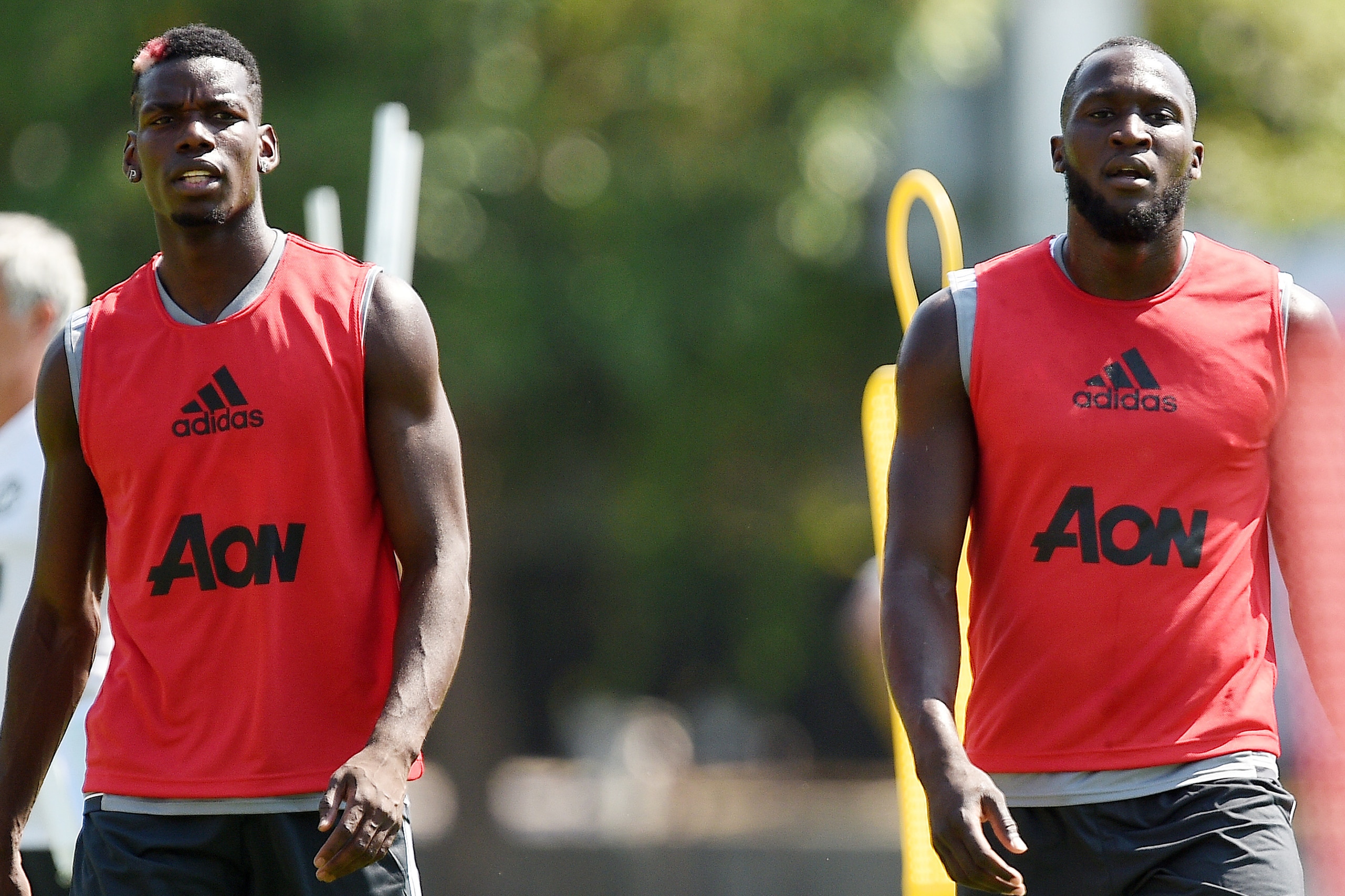
It will be fascinating to see how Lukaku links up with that supporting cast of attackers—bar Rooney, who has headed to Goodison Park.
In theory, the service the Belgian receives should be far better. His off-field friendship with Pogba could translate into an excellent link on the pitch, if the link between Pogba and Ibrahimovic is any indication.
He will not bring the same kind of leadership qualities as Ibrahimovic. After the League Cup final, United defender Chris Smalling described the Swede as "our main man," and the forward was clearly a de facto leader of the side, even if he was not wearing the armband.
It would be unfair to expect the same of Lukaku. His job is to replace Ibrahimovic as the practical fulcrum of United's attack, not the emotional pivot of the whole team.
Each of the two strikers possesses strengths the other does not. Lukaku cannot reach out a leg from a standing position to control a head-height ball, but Ibrahimovic cannot stretch a defence with runs into the channel. Lukaku cannot serve as an inspiration for United's younger players because he is one, but Ibrahimovic's finishing was far less clinical.
United's attacking style will probably be relatively similar next season, but the hope is that additional mobility and more clinical finishing up front will be the change needed to unlock greater success. That, in the end, is probably why Lukaku won that vote back in March.

Given reports from Warren Haughton of The Sun that Ibrahimovic may get a new United contract following his return from injury, it is possible United fans will see the two strikers in action together.
If Ibrahimovic is prepared to take a deeper-lying role, with Lukaku leading the line, then the question of who would be better for United will be resolved. The answer will simply be: both.
Quotes obtained firsthand.
.jpg?w=2560 "49ers Giants Football")
.jpg?w=2560)

.jpg?w=2560 "Rams troll Giants on social media")
.png?w=2560 "Davante's MONSTER MNF 🤯")
.jpg?w=2560 "Ertz Returning to Eagles")