

Can Eddie Lacy Be the New 'Beast Mode' in Seattle?
When the Seattle Seahawks signed former Green Bay Packers running back Eddie Lacy to a one-year, incentive-laden contract Tuesday, the move was met with widespread derision on social media for one obvious reason: Lacy, through his NFL career, has been unable to keep his weight consistently down to an optimal level.
Packers head coach Mike McCarthy had fined Lacy on more than one occasion for not making weight, according to a February USA Today report by Pete Dougherty, though McCarthy said in January that he’d love to see Lacy re-sign with the team. Lacy lost out on any real contract-year juice in 2016 because he suffered an ankle injury, playing in just five games, and reports indicated that he had bulked up to the 255/265-pound range after an offseason in which he had made fitness a priority.


.jpg?w=2560 "Cardinals Giants Football")
Still, Lacy was a compelling talent on the free-agent market. He was named Offensive Rookie of the Year in 2013, had two straight 1,000-yard seasons to start his NFL career and gained 5.1 yards per carry in 2016 despite his conditioning issues.
Seahawks head coach Pete Carroll, in desperate need of a power back who might be able to transcend his team’s woeful offensive line, signed off on Lacy joining his team and seemed very excited about the prospect of returning to his own preferred style of power-based offensive football—a brand of football Carroll had not seen enough since 2014, back when Marshawn Lynch wasn’t hurt, hadn’t retired and the Seahawks had some semblance of an offensive line. Lynch defined the Seahawks teams that went to two straight Super Bowls, winning one (and probably winning two if Lynch had gotten the ball on a certain goal-line play against the Patriots in Super Bowl XLIX), and the lack of that identity over the last two seasons has been a thorn in Carroll’s side.
In 2016, Christine Michael led the Seahawks with just 469 yards, and injuries to Thomas Rawls and C.J. Prosise caused the run game to struggle more. The hope for Carroll is that both Rawls and Prosise will be back and healthy for 2017, but Lacy provides an interesting alternate solution.
"We wanted to work really hard at regaining the mentality about running the football," Carroll told ESPN’s John Clayton on the network’s Seattle radio station, via ESPN.com’s Sheil Kapadia. "That's something that's really important to us. We knew that we lost that edge last year when [quarterback] Russell [Wilson] was hurt and when Thomas [Rawls] was hurt. Both those guys were injured for eight weeks, nine weeks, or something during the season. So, it took us a while to get going. And we didn't find the kind of rhythm that we wanted.
"We went all those years with Marshawn, and everybody knew what we stood for and the style of play. So I'm hoping to just continue to add now with Eddie. And the way Thomas brings it, that's a great one-two punch sending a message about playing tough and physical. And that's who we are. And that's who we want to continue to be. So that's why we've made this move."
Carroll’s belief that he can turn Lacy around has some past history behind it. When the Seahawks traded for Lynch in October 2010, the former Buffalo Bills running back was, like Lacy, a high draft pick with a lot of talent who had worn out his welcome in his original NFL city. Off-field issues and a relative lack of on-field effectiveness made the deal palatable for then-Bills general manager Buddy Nix, and it was only when Lynch got to Seattle and bought in completely for whatever reason that he became the player we all now remember.
But in October 2010, the thought of Marshawn Lynch defining a franchise was just as silly as the thought of Eddie Lacy becoming that type of player now.
So, let’s say the Seahawks are able to get Lacy back to his optimal weight of 225-230 pounds, although Bob McGinn of the Milwaukee Journal-Sentinel reported that in his recent free-agency visits, Lacy weighed in at 267 for one team. Let’s say that in 2017, the P90X pays off. What will Seattle get, and can Lacy at his best approximate the best of Lynch?
The first thing to note in a positive sense is that schematically, it’s a good fit. The Seahawks run primarily inside and outside zone with a little bit of power/gap blocking, and Lacy is an above-average zone runner with quick feet and good vision.
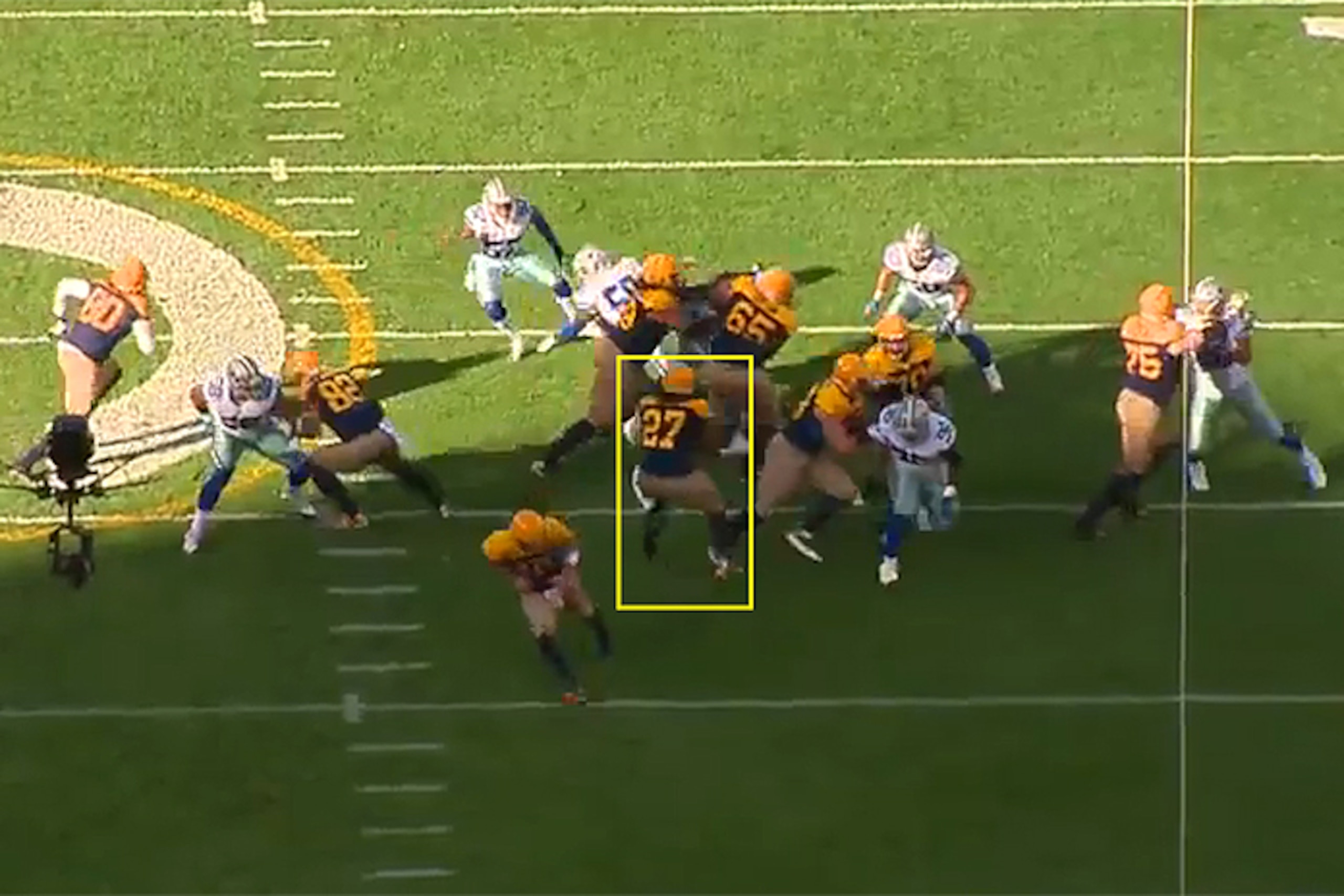
This 25-yard run against the Cowboys in Week 6 is an excellent example. Green Bay’s offensive line gets the zone slide going to the right, with tight end Richard Rodgers (82) crossing over to block the backside defender. Lacy shows good patience waiting for the blocking to develop and nice lateral agility to zip through once things open up. He then trucks downfield, capping off this run by hurtling safety Byron Jones (31). Weight issues or not, this is not a run that an out-of-shape guy could realistically execute.


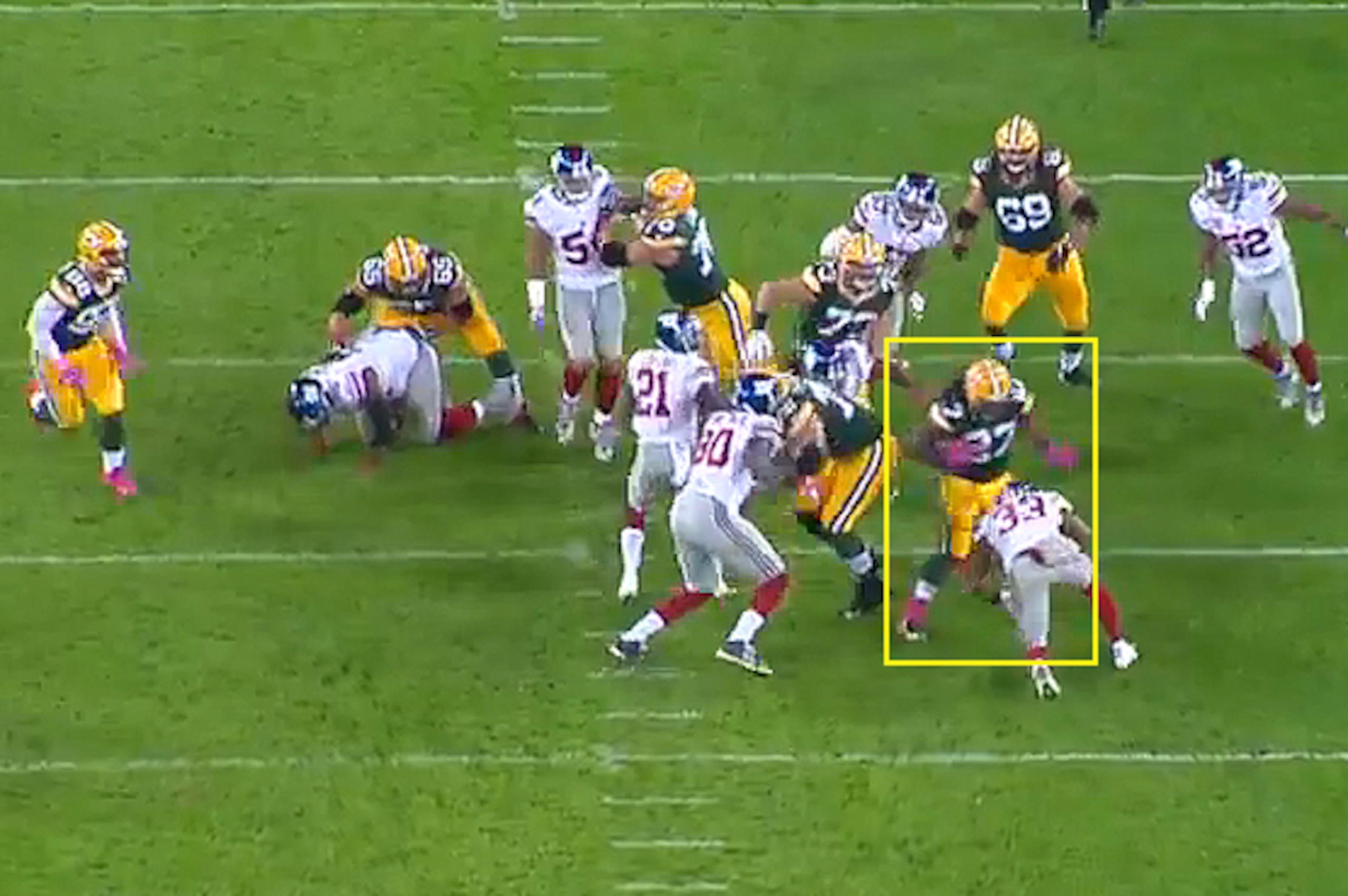
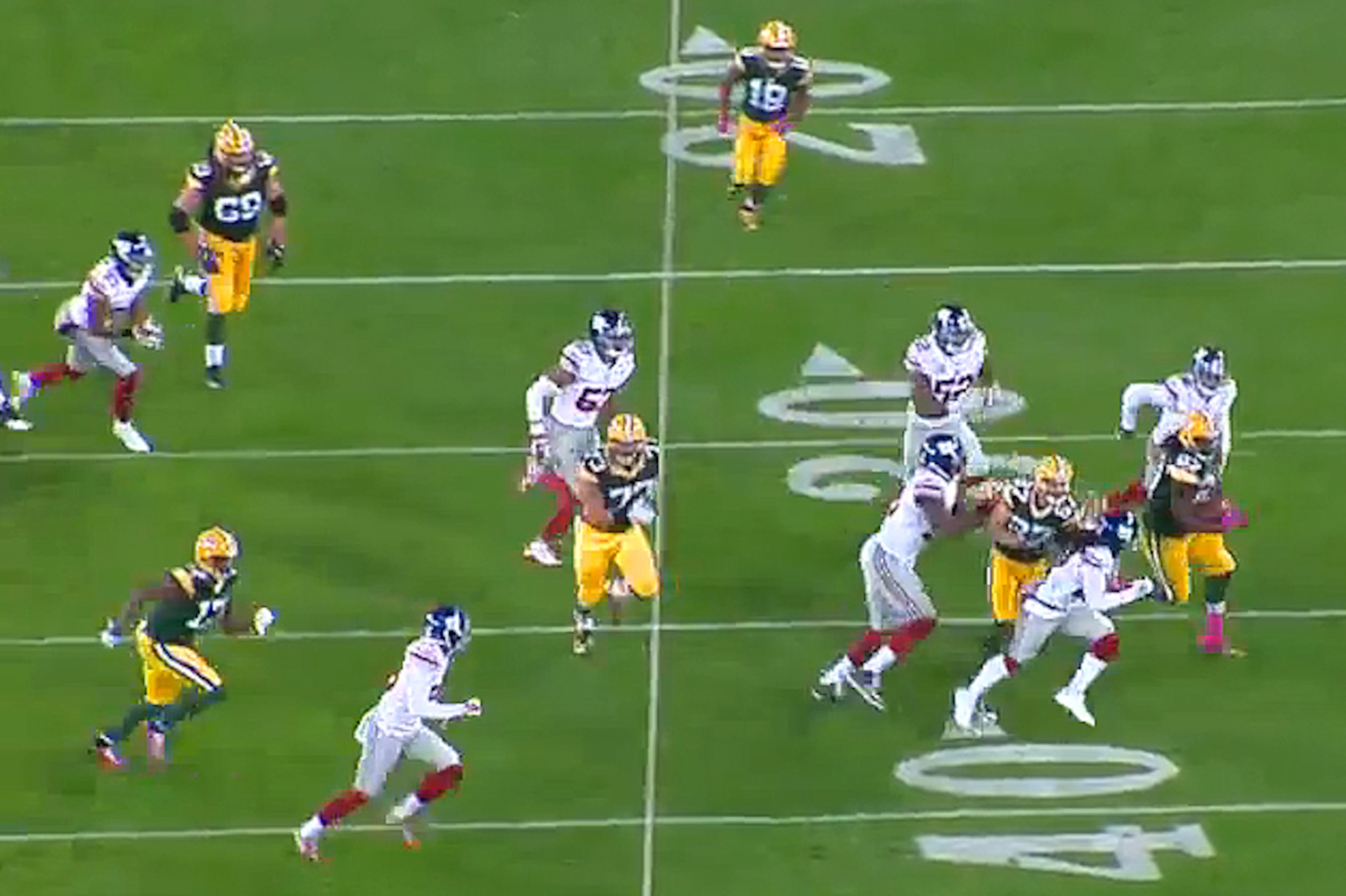
And if you’re looking to see how Lacy is able to get out of a jam with power and speed after he’s been bottled up on a play (assuming he’ll be bottled up a lot more behind Seattle’s offensive line than he ever was in Green Bay), this 31-yard gain against the Giants in Week 5 is a compelling example. In fact, one can look at a play like this and see where Carroll gets the Marshawn comparisons.
Here, Lacy is blocked in behind the line, and with linebacker Jonathan Casillas (52) closing in, this would be a negative play for a lot of backs. But Lacy shoots to the outside, waits for the cutback opening and takes it with authority. He then stiff-arms safety Andrew Adams (33) and gets free to the boundary. That’s a running back using his patience, power and short-area agility to create something out of nothing.


Moreover, these runs are not outliers. Last season, on just 71 carries, he forced 19 missed tackles and had four runs of 15 yards or more, per Pro Football Focus. So, it’s clear that when he’s on point physically, Lacy has what it takes to be a highly effective power back.
However, to compare him to Marshawn Lynch is to misunderstand just what made Lynch so rare and effective as a player. Lynch had the sheer power of a 240-pound back and the speed and agility of a 200-pound back, but he generally played at about 220 pounds. He was a monster hybrid who could emerge from a sea of tacklers to extend a play just as easily as he could bounce a run outside and take it to the house.
Instead, I see Lacy at his hypothetical best having an effect on Seattle’s offense not unlike the one LeGarrette Blount had on the Patriots offense last season. New England wanted to re-establish its power running game, using a fullback in a two-back set on about a third of its total snaps (fullback James Develin was on the field for 30.8% of the Patriots' plays in 2016, per Pro Football Focus), and Blount had the power and foot speed to make that work to the tune of 1,161 yards and a league-leading 18 touchdowns on 299 carries. Blount wasn’t a transcendent part of the offense, but he was a force multiplier when asked to be.
Lacy could be the same for Seattle—if he’s fit enough for it.
"I want him big. I want him big and tough and strong," Carroll concluded during that ESPN radio hit. "But I want him in the best shape so that he can run at his best and be durable and handle the load—235 [pounds], that's at the time he came out [of the draft], he was there.”
That’s why, per ESPN’s Kapadia, though the total value of Lacy’s one-year deal could be worth as much as $5.55 million, it’s actually $2.865 million guaranteed and another $2.685 million contingent on his weight, the total number of games he suits up and rushing yards.
The Seahawks are betting short-term that Eddie Lacy can set their offense back on the right track. And they just might have the right man for the job.

.jpg?w=2560 "Jets Dolphins Football")


.jpg?w=2560 "Ward Nearly Walks Out of Presser ▶️")
