How Mets, David Wright Should Handle Captain's Decaying Career
The New York Mets don’t have the best history of dealing with injuries, but it sure seems they’ve done right by David Wright this time around.
They’ve allowed their captain to try to come back from his latest devastating injury, without being unrealistic about his chances of making it back. They haven’t forced a decision about his future that might not need to be made, but they also haven’t allowed his health to become the issue that takes down their promising season.
The decisions ahead won’t get any easier, and this week’s latest Wright setback triggered more discussions in New York about whether it’s time for the third baseman to simply retire.
TOP NEWS
Brewers Stun Padres in Game 2 😧
Aaron Boone Calls Out Yankees Catcher 🗣️
Brewers Open Roof for Game 2
He’s shut down now with an impingement in his right shoulder, off to get a second opinion, according to multiple reports in New York newspapers. He’s doubtful for Opening Day, and even anything beyond that has to be considered questionable at best.
He hasn’t been right for two years now, with back and neck and now shoulder trouble. He hasn’t been able to play often (just 75 games the last two seasons combined). Even when he has played, he admitted last year that "every day it sucks getting ready for the game."
Why doesn’t he quit? Because he’s an ultra-competitive baseball player not ready to give in at age 34. And because he signed an eight-year, $138 million contract that runs through 2020.
Like it or not, that contract (and the insurance policy the Mets took out on it) drives plenty of the discussion about Wright’s future. He has $67 million still coming to him. The insurance policy could pay the Mets as much as $50.25 million of that, according to Ken Davidoff of the New York Post.
If doctors determine Wright can’t play, the decision is obvious. He gets his $67 million, and the Mets get their insurance.
For now, though, the Mets doctors apparently aren’t saying that. General manager Sandy Alderson told reporters (including Marc Carig of Newsday) Wright is suffering from the aftereffects of last summer’s neck surgery. He won’t throw for at least two weeks, and he probably won’t make it back for Opening Day, but at this point, they think he eventually gets back to playing.
“Our goal is to get him back to third base,” Alderson said.
There’s nothing wrong with having a goal. The only problem would have been if the Mets took Wright’s return as a given. They haven’t.
They brought back Jose Reyes, who had a surprise revival of his own as the Mets' third baseman late last year. They worked Reyes and Wilmer Flores at third base, giving themselves an acceptable Plan B that now becomes Plan A.
Even as they praised Wright’s early-spring work at the plate, they didn’t delude themselves about what he could contribute.
As an unnamed Mets source told John Harper of the New York Daily News before Wright's latest setback, “To be honest, the way we’re looking at it is anything we get out of David will be a bonus.”
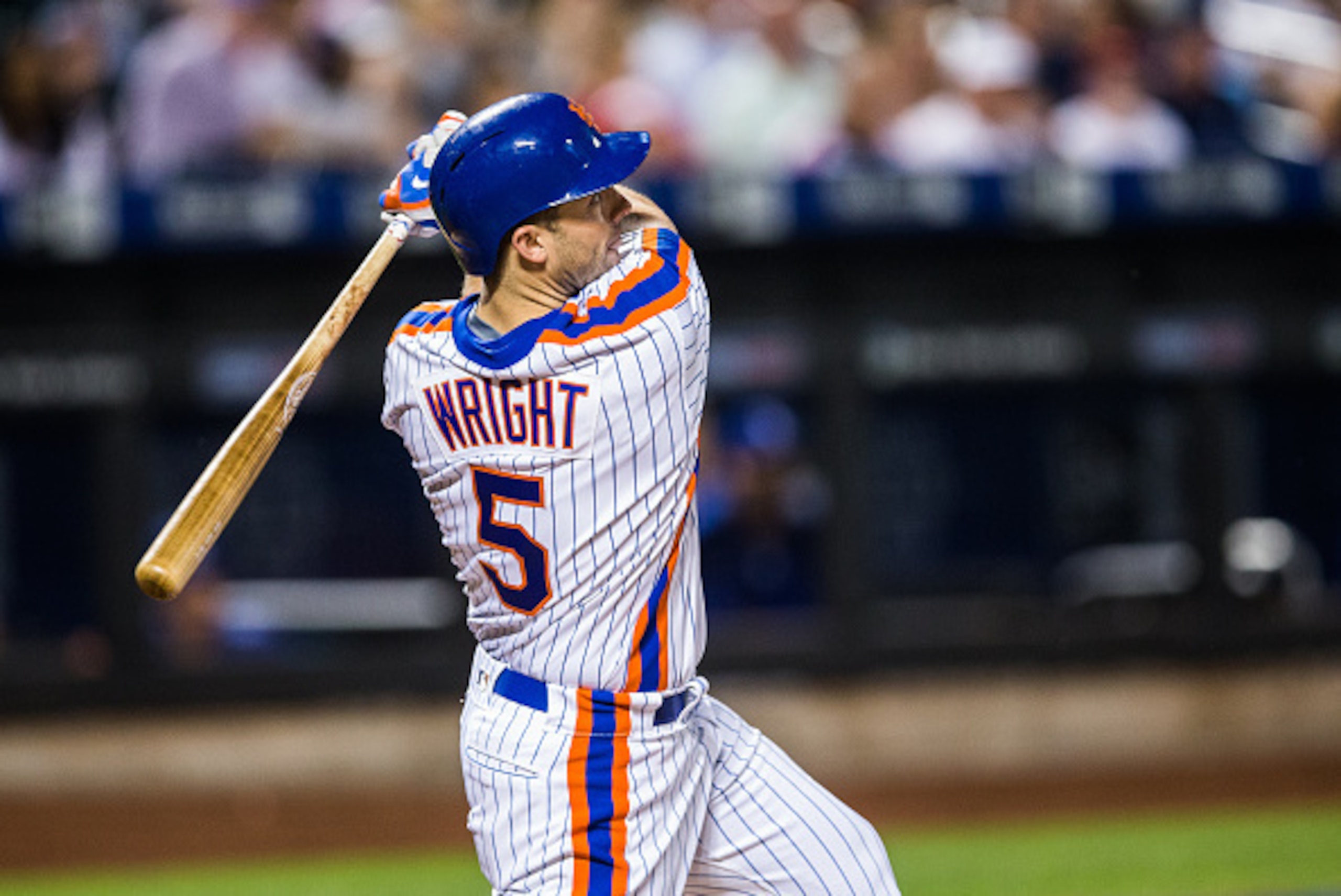
As much as we crave certainty and finality, the reality now is Wright and the Mets need to just wait and continue to gather information.
If Wright’s shoulder improves to the point where he can throw but not enough to make the long tosses at third base, maybe he can play first base (especially if Lucas Duda’s health continues to be a problem). If Wright doesn’t respond to the latest treatment, he goes on the disabled list and insurance kicks in.
It’s a tougher answer if he can hit but can’t throw, because the Mets play in the National League and don’t need a designated hitter. Perhaps Wright could be sent to an American League team, but with his health history, his contract and his loyalty to the Mets, that seems an unlikely option.
Alderson told reporters the latest setback hasn’t given the Mets “a more heightened level” of concern about Wright’s career. That’s nice, but there was a heightened level of concern about Wright’s career last year, and the year before.
Anyone who has spent even a few minutes around Wright hates this, because he’s the rare player universally respected by teammates, opponents, coaches, front-office types, media and fans. It feels unfair that a guy who went through the Mets’ dreary seasons with such class hasn’t been able to enjoy an era that already features two straight postseason appearances and could include many more.
He’s still a valuable player when he can get on the field (Wright homered in each of his last three games before giving in to the need for neck surgery last year), and he’s still ultra valuable as the unquestioned leader in the Mets clubhouse.
But the Mets long ago acknowledged the reality Wright is not a reliable option. They understood their plans for 2017 could only include him as a possible bonus, not as a necessary piece.
His setback now is a disappointment, but not a season-killer. Not for the team, anyway.
They can afford to wait this out. Wright has little choice but to wait it out, too, unless the doctors he trusts most tell him there’s not enough hope for a return.
Danny Knobler covers Major League Baseball as a national columnist for Bleacher Report.
Follow Danny on Twitter and talk baseball.
.jpg?w=2560 "NFL investigating referee after viral exchange with player")
.jpg?w=2560 "OBJ Calls Out Giants After Release")