Celtics Can't Join Eastern Elite Without Making a Statement Against Cavs
The
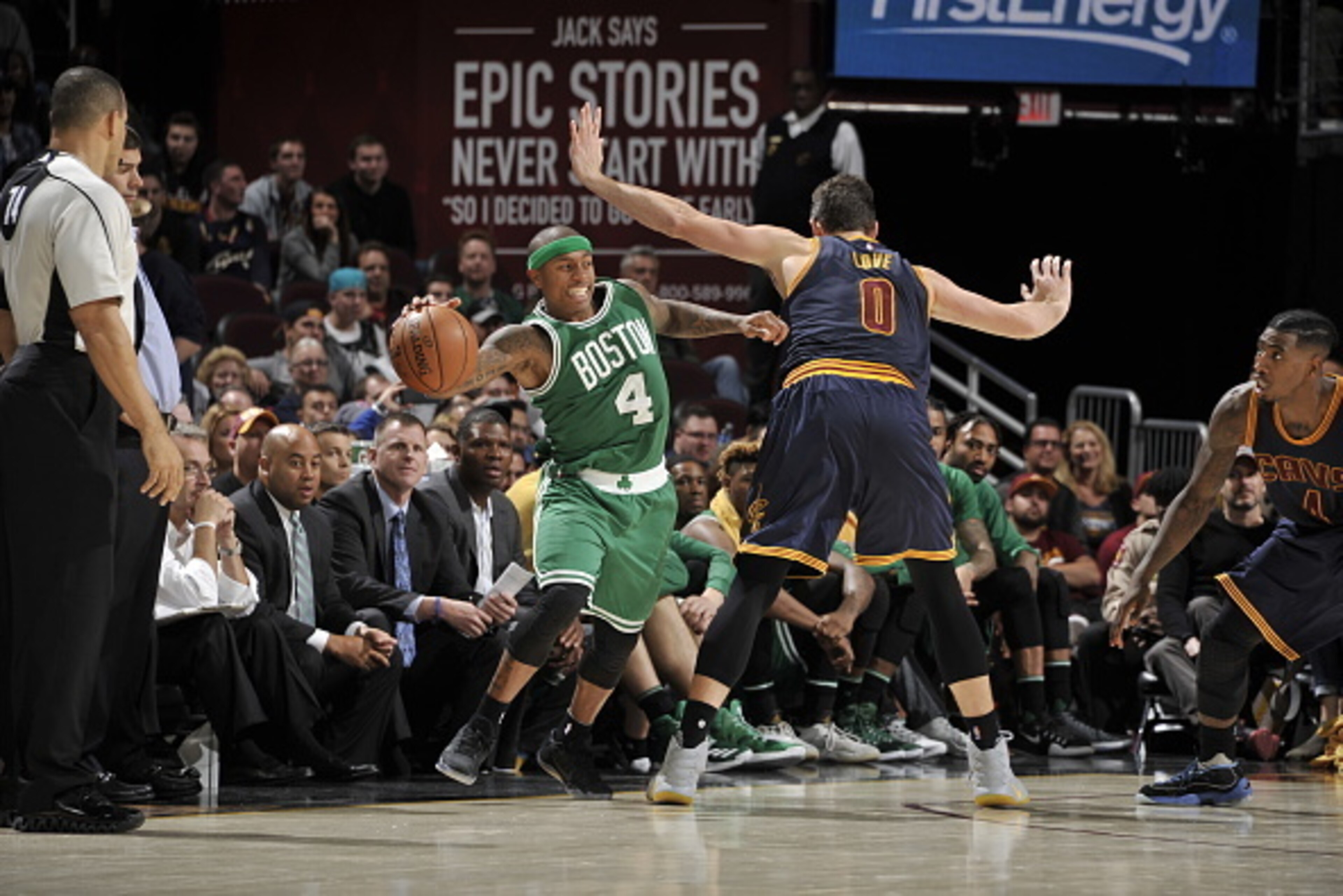
Boston Celtics are starting to look like the pseudo-contender most projected they'd be, and a victory over the Cleveland Cavaliers on Thursday night—their seventh in eight games—could go a long way in shaping how they're perceived around the league. And maybe even how they perceive themselves.
TOP NEWS
Winners and Losers from LeBron's Decision 📊
.png?w=3840 "Boston Celtics v Los Angeles Lakers")
Jaylen Brown's LeBron Post ✈️
Shams: Bron Suitors' New FA Targets
Not that any of that would matter to the Cavs. But it at least would do the Celtics some good.
Boston is finally healthy, with the sixth-best net rating and a top-10 defense over its last seven games. Isaiah Thomas is the reigning Eastern Conference Player of the Week, Marcus Smart is getting to the free-throw line and knocking down threes, Al Horford is more aggressive with the ball, and it's safe to say this group has never looked better.
In other words, the timing could not be more ideal for a road test against the defending champions.
Cleveland won't have J.R. Smith for Thursday night's showdown and is a comfortable 23-7 (23-4 when LeBron James suits up). But one game in late December doesn't come close to defining a season—or a week's slate, for that matter. The Celtics won't buy into the hype either, but they know any shot at an NBA Finals appearance over the next couple of years still goes through Cleveland.
It's a significant 48 minutes, even if they won't (publicly) admit it.
"Last time we played them, I don't think we was healthy, fully healthy, so now we're fully healthy, and I guess they're not, but it doesn't matter because nobody asked questions when we was hurt either," Celtics wing Gerald Green said.
"They're a really good team. Obviously defending champions, have the best player in the world on their team. We're gonna be ready for it. I think that's one of those games that you don't have to get guys up for that game. That's one of those games where people are gonna be ready to play for that one."
In their first meeting back on November 3, Boston entered Cleveland without Horford and Jae Crowder, two of its top four defenders. Rookie Jaylen Brown scored 19 points and defended LeBron James during the first start of his career (he was plus-12 in 35 minutes) and Tyler Zeller had a double-double.
From Boston's perspective, so much has changed for the better since then. Matching up against a high-powered offense like Cleveland's is much easier when your normal starting lineup is intact and your bench provides depth instead of insurance.

"We don't really care about what they're doing, and I know they don't care about what we're doing," Thomas said. "We're just trying to focus on us, and getting better each and every day. And we've done that the past, what, seven games or whatever. With a healthy squad we're a pretty good team."
Despite their recent success, the Celtics still rank dead last in defensive rebound rate over their last seven games. It's a problem that should rear its head against a Cavaliers squad that crushes teams on the offensive glass when it chooses to do so.
Cleveland's starting five with DeAndre Liggins in Smith's place is grabbing an outrageous 38.6 percent of its missed shots. Tristan Thompson and Kevin Love are a beefy handful down low, and they rebound at a rate that would rank fourth in the league when they share the floor with James.
Boston kept everyone except Thompson off the offensive glass during that first matchup. He might be the only player (except James) the Celtics don't have an answer for: Amir Johnson's physicality only gets you so far, and three-guard small lineups are a tough bet against a team as athletic and physical as Cleveland.
Elsewhere, the Celtics do a solid job of taking away three-point shots because they can switch screens, have mobile bigs who hedge and recover, and rarely get burned on closeouts. Only five teams are allowing a lower percentage from beyond the arc this season. Execution in this area is key against the Cavaliers, who rank third in three-point attempts and second in three-point percentage—a fatal one-two punch.
Celtics head coach Brad Stevens refuses to view any one particular matchup as more significant than the other 81 but did mention a specific problem his defense will face going up against one of the best passers who ever lived.
"They'll post LeBron at the elbow or post LeBron on the block, and it just puts you in a quandary because he's such a good playmaker," Stevens said. "But if you don't show him attention, then they score on you."
The Celtics are fortunate enough to have Crowder back this time around, and his ability to make life hard for James allows teammates to stay home on their individual assignments. But if Crowder struggles, and defenders are forced to collapse inside whenever James barrels toward the paint, it could be another long night.

The Cavaliers know opponents want to put their top wing defender on James, so they seek out mismatches by having James screen for Kyrie Irving, forcing a switch and making life easier for their best player (and a total nightmare for the defense).

This works the other way, too, with James having the ball and Cleveland setting a screen for him via a smaller guy—usually a guard who isn't used to being in that situation. It's equally devastating and helps explain why Synergy Sports ranks LeBron in the 85th percentile as a post-up passer.
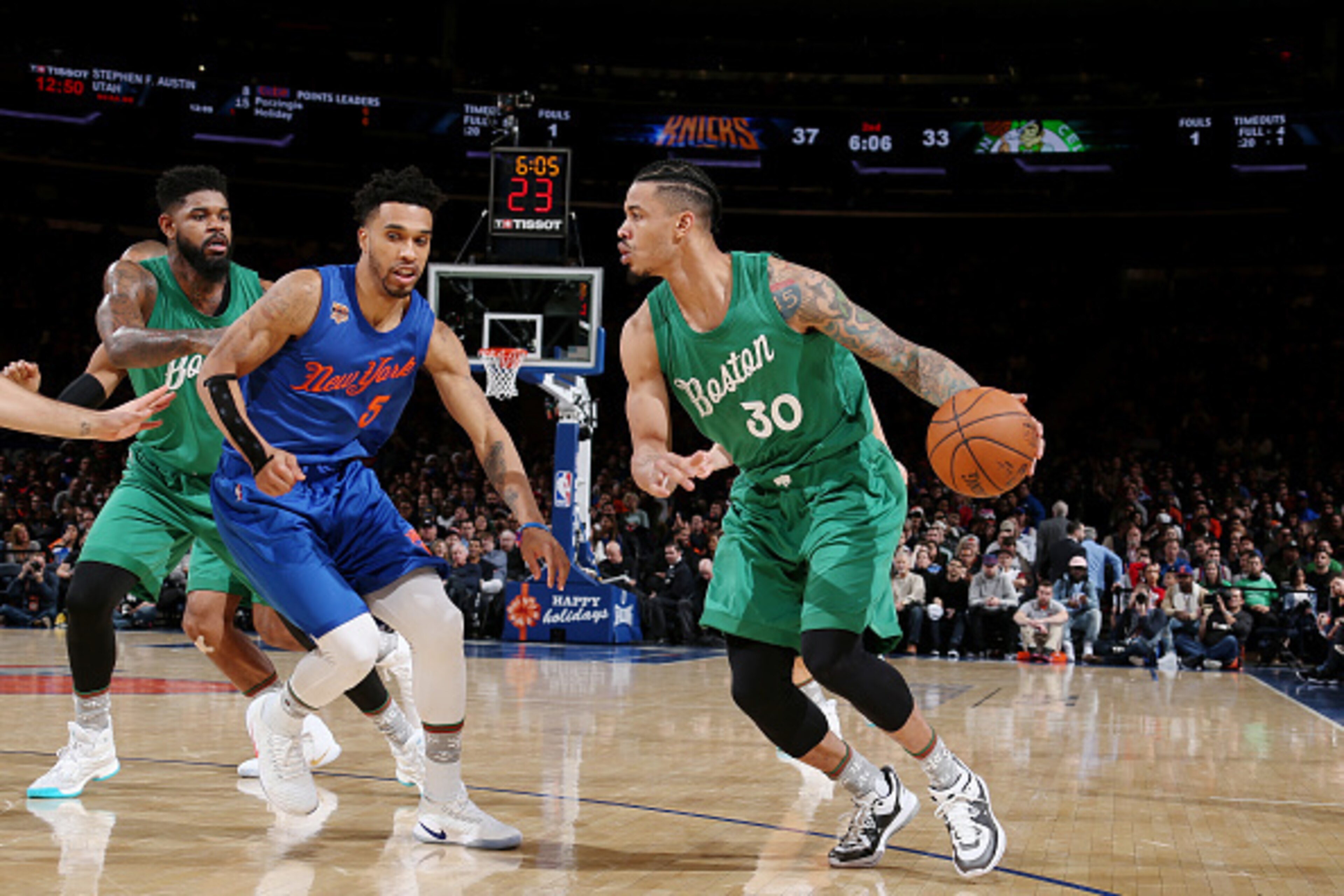
Unlike most teams, Boston has plus individual defenders at just about every position (i.e., Smart and Avery Bradley) who are quick enough to deter James from putting it on the floor if they switch. They also have Thomas, though, and Cleveland won't hesitate to use whoever he's guarding to screen for LeBron if things get tight.
Defending the three-point line and protecting the glass as best they can are two significant keys for victory. According to Inpredictable, the Cavaliers have the third-best defense in the league after a made shot. After a defensive rebound or turnover, they plummet to 25th.
It sounds obvious because it is, but forcing turnovers and attacking off missed shots is key.
So is getting back on defense when the ball doesn't fall through the basket. According to Synergy Sports, Cleveland ranks third in transition offense—whether it be Love or Channing Frye walking into a spot-up three, Richard Jefferson swooping in for a layup or James taking matters into his own hands.
Smart knows this and preached, above all else, the need to control tempo. "Can't let those guys get out in transition and get easy baskets," he said. "We just have to stay solid and play in the half court."
The Cavaliers could care less about losing to the Celtics in a regular-season game. They know they're better, and are. But games like this matter for a growing Boston squad that's trying to prove it can go toe-to-toe with heavyweights on a consistent basis.
Win or lose, the Celtics will still be below Cleveland and the Toronto Raptors in both the standings and their point differential, but this is a fantastic and rare opportunity for Boston to see where it stands against the best of the best. Internal perception matters, as does grabbing the attention of the colossal obstacle in their way.
"We all know the challenge they present us," Smart said. "It's gonna be a great game."
Boston Celtics Insider Notebook
The Resurrection of Gerald Green
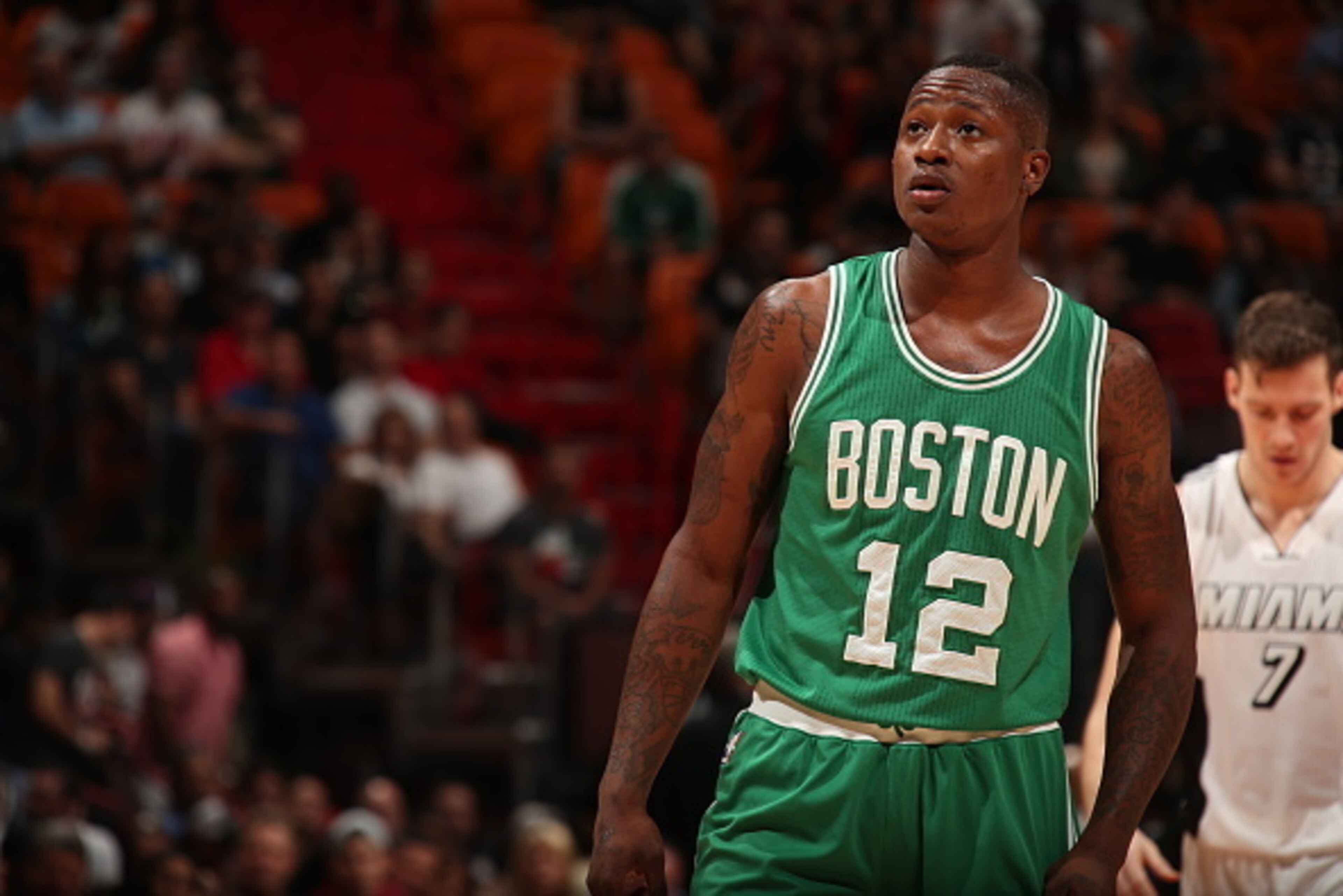
Through Boston's first 30 games this season, the 30-year-old Green (their oldest player) did not play 15 times and was listed as inactive twice. A groin injury kept him out of training camp, and he's been catching up ever since. Most of the 10-year veteran's influence was restricted to the one-on-one games he played with Smart and Brown after practice.
But Green has awoken, scoring 27 points over Boston's last two games—including 19 in 19 minutes against the Memphis Grizzlies on Tuesday night.
"Gerald's finally getting his opportunity, and he's taking advantage of it," Thomas said. "He's one of the best scorers I've seen in the NBA. Whether it be practice or games, all it takes is one shot for him to feel like he's on fire. He can help us, really."
With Brown often looking like the 20-year-old rookie he is, the Celtics can really use Green's athleticism and size (6'7", 205 lbs) on the wing. His scoring punch won't be consistent from night to night, but if he can space the floor and rebound a little bit, that veteran's minimum contract will look especially sweet.
The Disappearance of Terry Rozier
On the other end of the spectrum is Rozier, who clocked his first two DNPs of the season in Boston's last two games. On Christmas Day, all his minutes were allocated to the wing so Smart could handle the ball and post up a bit more on the second unit.
A bad slump hasn't helped.
After the 22-year-old shot 40 percent from beyond the arc in November, he's at 30.9 percent overall and 19.2 percent on threes in December. Rozier has all but stopped attacking the basket, instead playing within the offense but failing to take advantage of opportunities that naturally occur.
He's at his best in the pick-and-roll, rising up off screens with an accurate mid-range jumper that forces his man to battle above the screen. But we haven't seen that in a while, and it's unclear when/if his minutes will return.
All quotes in this article were acquired firsthand unless otherwise noted. All stats are from NBA.com and Basketball-Reference.com, unless otherwise noted.
.png?w=3840)
.jpg?w=3840 "Grading SmackDown 🔠")