

Will Tiger Woods Ever Win Another Tournament?
The wait is finally over.
It has been 15 months and two back surgeries since Tiger Woods’ last competitive round.
But on Thursday afternoon, the 40-year-old 14-time major champion will attempt to reclaim at least some semblance of his former glory at the Hero World Challenge.
TOP NEWS

FedEx St. Jude Leaderboard 📝
Spieth Shot from Porta-Potties 😭
Report: Rahm's LIV Future in Doubt
Woods is scheduled to tee off at noon ET and will be paired with Ryder Cup hero Patrick Reed for comeback number…well, who’s really counting anymore?
Most have already come to the realization that Woods’ game will never again reach a level even remotely close to the dominant form he displayed from 1999–2008.
In the interim we have also concluded that it is unlikely we will ever again see a player dominate the game the way Woods did for much of his career.
And while the thought that Woods may never win another event or may be teetering on the brink of retirement is still fairly speculative, it is certainly a scenario to be considered based on the state of Woods’ game and his injury history over the past couple years.
The endless comparisons between Woods and players such as Jack Nicklaus through the years were always quite trivial as we were attempting to compare a work in progress to fully completed bodies of work for players from previous generations.
There is little doubt that Woods will make every effort to continue rehabilitating both his body and golf game in the coming weeks, months and possibly even years.
But what if that is not enough?
What if age and injuries have degraded his body and golf game to a point where, even though we may continue to see him out on the course competing for years to come, we have already seen the last of his accomplishments?
If that does wind up to be the case, then we already possess all the information needed to at least form an opinion as to how Woods’ accomplishments compare to players from previous generations.
Amateur Career
A golfer’s career truly begins long before he steps foot onto a PGA Tour fairway. Golfers initially begin competing against their peers at the amateur level prior to making the transition into the professional game.
And Woods is without question the most accomplished amateur golfer since Bobby Jones.
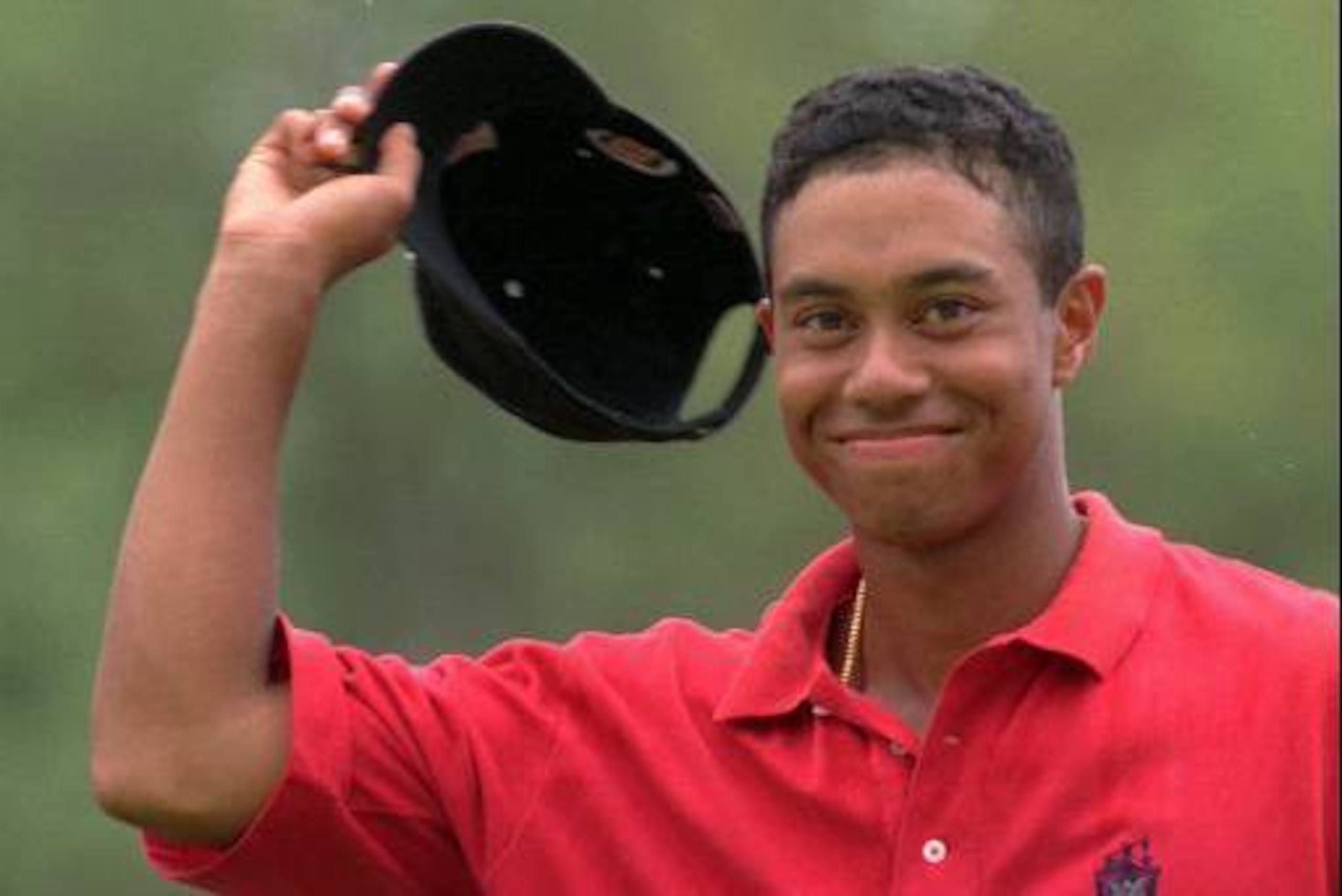
Woods' six consecutive USGA titles between 1991 and 1996 (three U.S. Junior Amateurs and three U.S. Amateurs) is an almost laughable level of domination in the amateur game, and no other golfer in history (not even Jones) has won more than two consecutive U.S. Amateur titles.
Nicklaus also had a very strong amateur career. He won two U.S. Amateur titles and came very close to winning the 1960 U.S. Open at Cherry Hills, but his record still falls vastly short of Woods’ utter and complete domination of the amateur game for a period of six years.
PGA Tour Career
Woods’ 79 PGA Tour wins is second only to Sam Snead and his career 25.2 percent winning percentage is the highest in PGA Tour history.
However, during Woods' true prime years (1997–2009), he won a mind-boggling 30 percent of all PGA Tour events he entered.
Just to put that into perspective, Nicklaus won 20.2 percent of his PGA Tour events during what could be considered his prime years (1962-1978), which is nearly 10 percent lower than Woods.
Arnold Palmer’s winning percentage during his prime years (1956–71) was 15 percent, which is half of Woods’ 30 percent.
Even Snead, who of course showed a great degree of longevity en route to his record 82 PGA Tour victories, had a 23 percent winning percentage during his prime (1937–55), still far below Woods’ rate between 1997 and 2009.
Woods holds the record for the lowest career scoring average in PGA Tour history, as well as the lowest single-season scoring average (67.9 in 2000).
Throughout his entire career, Nicklaus never won the Vardon Trophy, which is awarded by PGA of America to the player with the lowest PGA Tour scoring average. Woods won it eight times between 1999 and 2009, which is four more than any other player in history.
Woods holds the record for the most consecutive PGA Tour cuts made at 142. That is 20 percent more consecutive cuts made than Byron Nelson’s streak of 113 and 26 percent more than Nicklaus’ longest streak of 105.
Whether you focus on just his prime years, or analyze his entire career from start to finish, there is little question that Woods was more dominant, more consistent and significantly more successful than any other player in PGA Tour history.
World Golf Championships
Woods has won an astonishing 18 World Golf Championship events.
These are events held at very difficult venues and attended by only the top players in the world.
The strength of field at any given WGC event is very close to that of a major championship.
For example, the total WGR point rating (which is determined mostly by the strength of the field) for the 2016 Masters was 798. The point rating for the 2016 WGC-Match Play was just slightly behind at 779. This indicates that the strength of field at the 2016 WGC-Match Play Championship was virtually identical to that of the 2016 Masters.
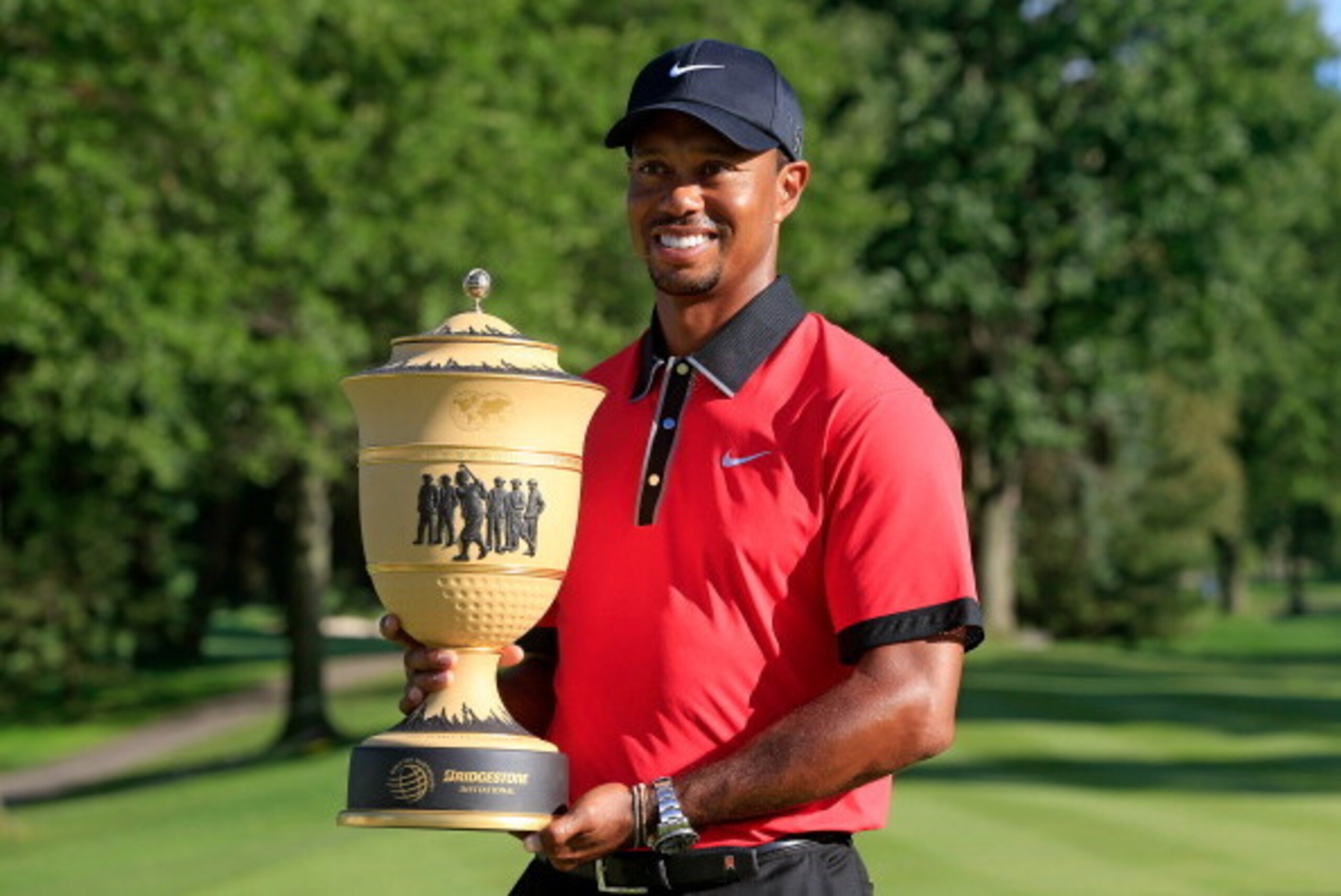
Outside of Woods’ 18 WGC titles, Dustin Johnson and Geoff Ogilvy have the next-most individual WGC titles, with only three apiece.
Phil Mickelson, who is without question the next best player of Woods’ generation, has won only two WGC titles throughout his entire career.
Woods’ level of domination in golf’s toughest events was such that had he only played in the majors and WGCs, he would still have more career PGA Tour wins than Hall of Famers such as Lee Trevino, Ernie Els, Johnny Miller, Greg Norman, Ben Crenshaw and Hale Irwin.
Woods’ 18 WGC titles may well be his most underrated career accomplishment. This can be partially attributed to the importance Woods himself placed on the majors from a very young age, which had the unintended consequence of diluting other impressive accomplishments such as his WGC titles.
Woods was also part of the first generation to have competed in World Golf Championship events on a regular basis, so there is no way to compare Woods’ WGC performance to players from previous generations.
World Golf Rankings
Woods has spent a total of 683 weeks as the No. 1-ranked player in the world, which is more than 13 years.
Between 1999 and 2004 he spent a record 264 days atop the World Golf Rankings. Between June 2005 and October 2010, Woods broke his own record when he spent 281 weeks as the No. 1-ranked player in the world.
In addition, Woods won the Mark H. McCormack Award, which is awarded to the player who spent the most weeks at No. 1 during the calendar year, 13 consecutive years between 1998 and 2010.
The official World Golf Ranking system was launched in 1986. Prior to Woods, Greg Norman had the longest streak as the No. 1-ranked player in the world at 96, which is 66 percent fewer weeks than Woods’ longest streak.
Prior to 1986, the McCormack Rankings, published by IMG founder Mark McCormack, were used as an unofficial world golf ranking.
McCormack’s system compiled results from all major tours around the world and analyzed performance over a three-year period rather than the two-year period used by the official World Golf Rankings.
The McCormack Rankings were published at the end of each year between 1968 and 1985, so it is difficult to know exactly how many consecutive weeks Nicklaus’ would have spent atop the rankings.
Nicklaus was also seven years into his career when the rankings began, so it is also difficult to know how many additional years Nicklaus would have finished atop the rankings earlier in his career.
However, Nicklaus did finish first in the rankings each year between 1968 and 1977.
Woods did not finish the year atop the World Golf Rankings for as many consecutive years as Nicklaus did within the McCormack Rankings (Woods' longest streak was six years), but he did finish the year off as the No. 1-ranked player in the world a total of 12 times.
Even though the McCormack Rankings existed between 1968 and 1985, we don’t really have a true apples-to-apples comparison between generations with regards to the World Golf Rankings.
However, if the revolving door atop the World Golf Rankings over the past five years since Woods vacated his perch is anything to go by, it should give us a deeper sense of just how absurdly dominant Woods had been for such a long period of time.
Professional Majors
Upon turning professional, it took Woods less than two years to completely alter the course of major championship history.
Woods won the 1997 Masters by a record 12 strokes, but that is only part of the story.
Perhaps even more historically significant is the way in which Woods’ obscene display of power changed the direction of golf course architecture for more than a decade.
Augusta National and every other major championship venue found themselves running for the bulldozers in an attempt to lengthen their courses after witnessing Woods drive 360-yard par fours and flip wedges into par fives.
Tim Rosaforte described Woods’ 1997 Masters in an article for Golf Digest: "Woods reduced this once mighty track to an executive course. He was reaching the par fives with wedges and driving it pin-high at the 360-yard third. All he did was go 18-under, set the tournament record, win by 12 strokes and turn Augusta into Indian Wells."
In addition to the Masters, Woods either holds or shares the record for the largest margin of victory at every major except the PGA Championship (post-1900 for the Open Championship), and is the only golfer to have won all four majors by at least five strokes.
Woods' 15-stroke victory at the 2000 U.S. Open is considered by many to be the greatest display of golf ever seen.
“He's going to do something this week that people will be talking about 100 years from now," Johnny Miller said during the 2000 U.S. Open coverage, per Golf Digest.
"We always felt someone would come along who could drive the ball 300 yards and putt like Ben Crenshaw," Nick Price said, per Golf Digest, after witnessing Woods' 15-stroke U.S. Open victory at Pebble Beach. “This guy drives the ball farther than anybody I've ever seen and putts better than Crenshaw."
Although we didn’t know it at the time, Woods’ record-shattering 2000 U.S. Open was only the beginning. He would go on to win the next three majors, making him the only player in history to hold all four professional major titles at one time. This accomplishment has now become known as the “Tiger Slam.”
Nicklaus won three majors in a row between the 1971 PGA Championship and 1972 U.S. Open, but never captured four in a row and also never won more than two majors during a single season.
Woods and Ben Hogan are the only two golfers to have won three professional majors during a single calendar year.
The major championships are the one area where, despite Woods’ incredible dominance, Nicklaus would hold the edge.
Nicklaus captured 18 major championship titles over the course of 24 years between 1962 and 1986.

In addition to his 18 titles, Nicklaus compiled an amazing 19 runner-up finishes at the majors, which is a true testament to his level of consistency at golf’s biggest events.
However, there is more to this story than just Nicklaus’ 18 majors vs. Woods’ 14.
First and foremost, injuries are what really wound up stopping Woods in his tracks at the age of 33 and not some form of unexplained deterioration of skill.
This is by no means an attempt to create an excuse for Woods’ inability to win 18 or more majors.
Longevity is part of what makes any athlete truly great, and Nicklaus’ ability to win on golf’s biggest stage for 24 years is a major reason why virtually any ardent observer of the game would consider the Golden Bear to be at least one of the top two golfers of all time.
Nicklaus of course cannot control Woods’ health any more than he can control the weather, but one can’t help but think that Nicklaus’ major championship record might shine ever so slightly brighter had Woods remained healthy and simply lacked the skill to catch Nicklaus. That scenario would have truly eliminated any “what ifs” from this major championship conversation.
Woods' complete domination of his major championship competition for more than a decade must also be considered. Not all major wins are equal, and the margin of victory by which Woods won golf’s biggest events are some of the most impressive major championship accomplishments of all time.
Nicklaus’ largest margin of victory at the majors was nine strokes at the 1965 Masters and seven strokes at the 1980 PGA Championship. This pales in comparison to Woods' 12-stroke victory at the 1997 Masters and 15-stroke victory at the 2000 U.S. Open.
Comparing athletes in any sport is as much a matter of opinion as it is statistical analysis—and even more so when comparing athletes across generations.
The opinions we form are largely determined by the level of importance we personally place on various accomplishments.
Ty Cobb had a career batting average of .367 with more than 4,000 hits but only 117 home runs.
Was Cobb a better hitter than Babe Ruth, who had 714 home runs but just 2,873 total hits and a career batting average below Cobb at .342?
There is no real answer to that question, only personal opinions formed by the importance that one places on batting average versus home runs.
Tiger Woods is 40 years old, hasn’t competed in more than a year and possesses an injury report that looks more like that of an incredibly unlucky NFL lineman than a professional golfer.
Few would be truly shocked if Woods’ days of winning, major championships or otherwise, have already concluded.
Of course the question then becomes: Where would Woods’ body of work rank in the game’s history?
On virtually any list of the greatest golfers to have ever played the game, it really comes down to just two men: Woods and Nicklaus.
And within that comparison it really comes down to just one question: What level of importance do we place on the majors?
If you are of the opinion that the total number of major championship titles a player accumulates during the course of his career is the sole barometer through which to measure success, then obviously Nicklaus would top your list as he has won more professional majors than any other golfer in history, including Woods.
There is no question that the major championships are golf’s four most important events. However, it would be reprehensible to view all non-major accomplishments as absolutely worthless. That would essentially be degrading 99 percent of any professional golfer’s life as the vast majority of golf played would occur outside of the majors.
Woods may be four majors short of Nicklaus and three PGA Tour events short of Snead, but the compilation of his achievements across every aspect of the game is really unmatched by any player who has ever come before him, and is unlikely to even be approached again anytime soon.
If Woods never wins another tournament, there is still quite a strong argument to be made that he is the greatest golfer of all time.
Of course this is just one person’s opinion, but we may now be at a point where we can compare what is increasingly looking like Woods’ full body of work to players from previous generations.
Let the debate begin.
.jpg?w=2560 "Daniels' IG Story on LSU Dispute")


.png?w=2560 "Fernando Mendoza avoided this Vegas attraction")