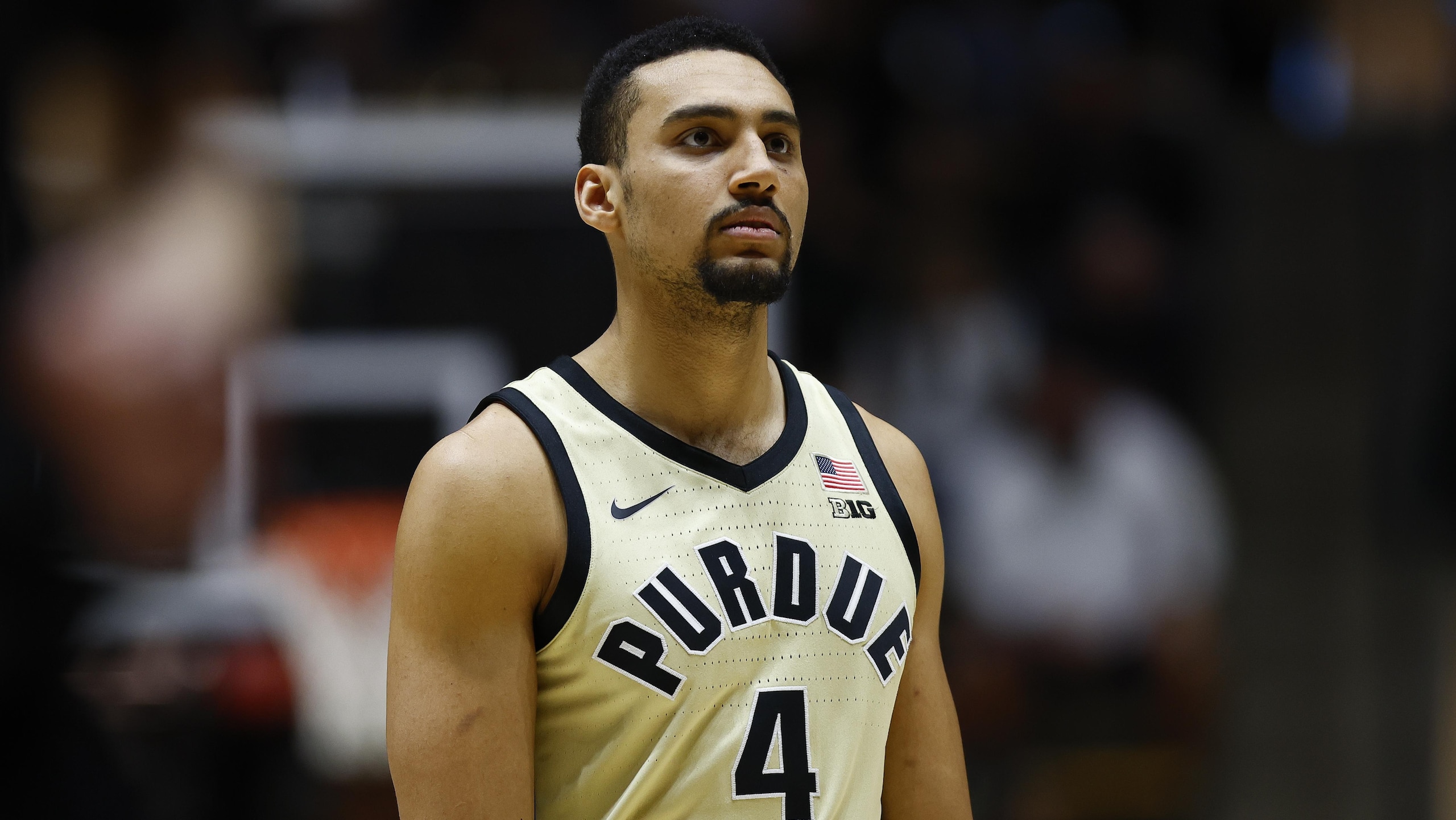
When the Golden State Warriors—a historical juggernaut on paper—opened their season with a 29-point loss to the San Antonio Spurs, they treated the result as an alarm clock.
"It woke us up a bit," prized offseason addition Kevin Durant said, per ESPN.com's Chris Haynes.
But the 2016-17 Dubs aren't early risers. Rather than spring up after that first alarm, they've haphazardly slapped at the snooze button.
It hasn't cost them another game, but sleepy single-digit wins over the New Orleans Pelicans and Phoenix Suns hardly seem like the work of an all-time NBA power.
Golden State may well reach that level before this campaign closes, but the reworked roster is still taking shape. That said, a few concerns have lingered around this group since training camp, and they have now surfaced on the main stage. Some of these kinks could iron themselves out, but others may require more substantial solutions.
4. Supplemental Scoring
1 of 4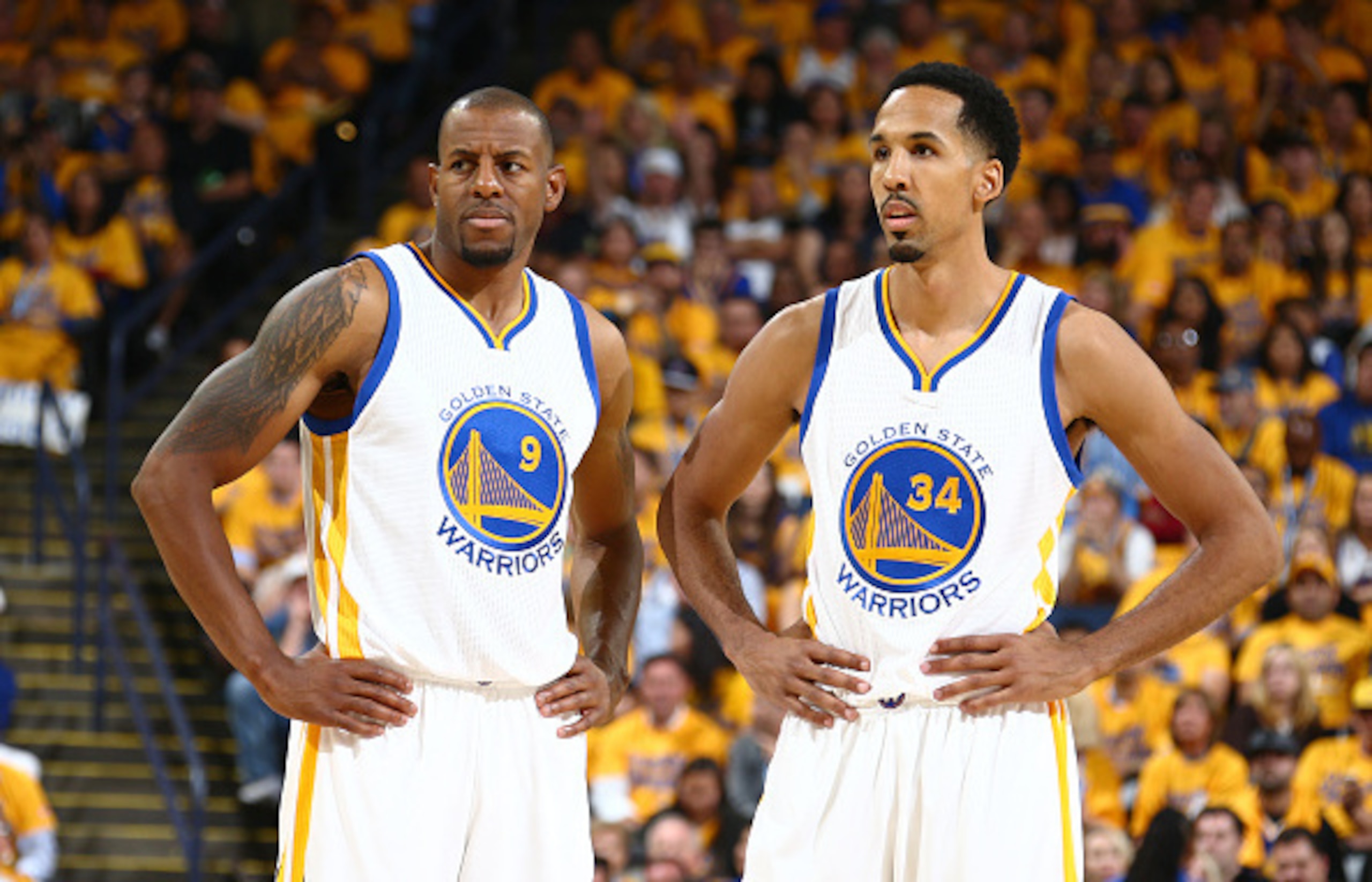
On the surface, this feels like the NBA's quintessential version of nitpicking.
Durant, Stephen Curry, Klay Thompson and Draymond Green have handled 77.7 percent of the team's points. That speaks mostly to the absurd talent level of the core four, but it also highlights a heavy burden the quartet carries. If the offense needs to rely on the No. 5 scorer, that means counting on Zaza Pachulia, a career 7.1 points-per-game producer with limited range.
There is no more Marreese Speights, who could don his "Mo Buckets" cape and catch fire. There isn't a speedy, ignitable penetrator like Leandro Barbosa. The bench also lost Festus Ezeli's brute force and Brandon Rush's career 40.3 three-point percentage.
Those four players had 55 double-digit outbursts between them last season, just seven fewer than Green produced. Incumbent Ian Clark, plus newcomers David West and JaVale McGee, totaled 30 double-digit scoring games. Sophomore Kevon Looney only made five appearances between two hip surgeries.
"Starting at the eighth man, the Warriors' rotation has two divergent groups: guys who aren't what they once were or guys who aren't what they’ll eventually be," the Bay Area News Group's Anthony Slater wrote. "Can one of the veterans crank back his career clock or can a youngster speed his up?"
Andre Iguodala and Shaun Livingston—Golden State's top two subs—aren't score-first players. While that helps them complement the stars, it doesn't ease this concern. Golden State is a minus-66 in bench scoring (122-56). Even with some static in that stat—at least two stars are typically on the court—there's no guarantee this bench could up the ante if one of the marquee players is lost to injury or suspension.
Possible Fix
This could be solved internally. If Clark, Looney and Patrick McCaw can provide sporadic eruptions, that'd be enough to push this problem off the back burner. But if it lingers, the NBA Development League might offer a solution. There are always hidden gems to unearth—such as the Spurs did with Jonathon Simmons.
3. Rebounding
2 of 4
The Warriors' penchant for small ball isn't necessarily a death knell for glass work. Their top six minute-getters last season stood 6'8" or shorter, and they still finished with the league's eighth-highest rebound percentage (51.3).
But clubs have targeted that as a potential weakness and tried to exploit it. Dating back to the Finals, the Warriors have allowed 63 offensive rebounds over their last five losses—12.6 per game. For context, only the Oklahoma City Thunder averaged more than 12.6 offensive boards last season.
Golden State sort of addressed this over the offseason by adding Pachulia (career 10 rebounds per 36 minutes). But he's a step down from Andrew Bogut (11 per 36), and Pachulia's presence can muddle some of the offensive spacing and flow.
Last season's squad spread the rebounding duties among multiple players, with eight averaging more than three boards. This group has yet to answer that call, as Green, Pachulia and Durant are the only ones topping three per game.
"We're going to have to be a gang rebounding team," head coach Steve Kerr said, per Slater. "We can't rely on somebody to just go get it. We have to make contact, be a more physical team, in terms of boxing out."
Assuming this requires more than telling players to rebound better, though, there are a few options at Kerr's disposal.
Possible Fix
The Dubs have enough bigs as it is, so there's no sense in trying to sign a glass-cleaning specialist. Rather, Kerr should find more minutes for Looney—the only reserve with a positive plus/minus—and McGee. Looney can provide a rebounding presence without crowding the middle, and McGee has the springs Pachulia and David West never did.
2. Perimeter Depth
3 of 4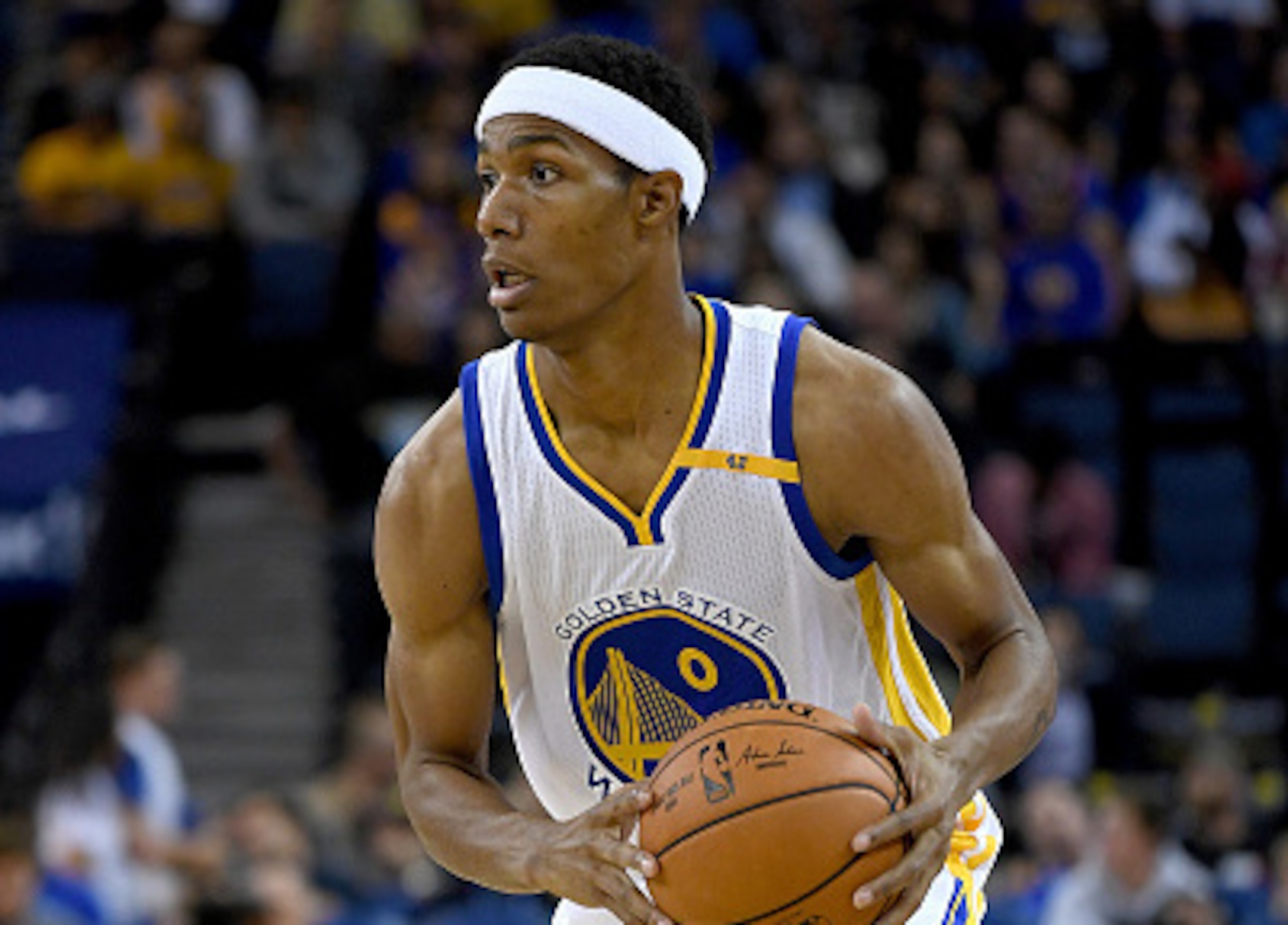
Because the Dubs used eight of their 15 roster spots on power forwards and centers, that only left seven guys to cover the other three positions. As strong as the first five are on the perimeter, there's barely a safety net behind them. And the only certainty with the last two is the need to keep at least one in the rotation.
Clark was around last season, but he finished 12th in average playing time. McCaw impressed in preseason action, but he only logged 19 minutes of regular-season work before suffering an ankle sprain.
"We just have to make do," Kerr said, per Connor Letourneau of the San Francisco Chronicle. "It means that, no matter what happens, whether it's close, whether it's a blowout either direction, we're going to have some guys on the floor at the end of the game that otherwise might not be."
This might be the best encapsulation of the perimeter sparsity—the world-beating Warriors are forced to "make do" because the 38th pick is injured. That's not a knock on McCaw, but most championship-or-bust teams aren't this reliant on a second-round rookie.
Livingston and Iguodala can help cover this absence, but Kerr should be hesitant about overloading his 30-something vets. Clark will be counted on, so he'll need to be more than a shooting specialist—especially since his shot isn't falling. It's tough to ask more from Thompson when he's already logging a career-high 37.4 minutes per game.
Kerr will play this balancing act all season. McCaw's injury won't be the last, and if even two strike at the same time, Golden State may be forced to make an external move.
Possible Fix
With the Warriors light on trade chips, they could seek out a low-cost signing. If they go the vet-for-hire route, the names won't be sexy—think Kevin Martin, Gary Neal or (once he's healthy) Mario Chalmers. The D-League is another alternative—maybe when camp casualty Elliot Williams gets right. All of these are break-glass-in-case-of-emergency-only options, but right now there's nothing behind that glass.

1. Rim Protection
4 of 4
Even if it's been clunky to start, Golden State's offense has the chance to be historically lethal. It's hard to imagine the defense following suit.
The Dubs have been shredded every which way out of the gate—some familiar, others foreign.
Transition defense will always be a challenge, given the free-wheeling offense's propensity to commit live-ball turnovers, but better effort can help there. Interior defense, on the other hand, offers no such simple solution.
Golden State has hemorrhaged 52 paint points per game, third-worst in the NBA. Last season, that number was only 45.1. Stats are hard to trust this early in the year, but this one alarms for multiple reasons. For starters, this defense has struggled to contain two bottom feeders. The Pelicans shot 47 percent against the Warriors and only 39.3 percent in their other outings.
This problem also surfaced the second Golden State assembled its new cast. Last season's Warriors could replace one elite rim protector (Bogut, 45.2 percent against at the rim) with another (Ezeli, 43.6). Pachulia is a walking invitation to attack (52.2 percent last season, 58.8 this year), and Father Time has sapped West's mobility.
The Dubs had the fourth-best defensive efficiency last season at 100.9 points per 100 possessions. They're now 27th with a grisly 108.0 defensive rating.
"The Warriors' defense looks, at this point, unrecognizable," ESPN.com's Ethan Sherwood Strauss wrote. "Whether that's due to a lack of rim protection or a lack of comfort, the Warriors must improve on that flaw."
Possible Fix
In the short term, Kerr should get Looney (and his 7'3 ½" wingspan) more action and see what, if anything, McGee can provide. Once Damian Jones gets healthy, he should get a long look for a rotation role. The Warriors should also monitor Emeka Okafor's reported comeback attempt. Either way, this area needs attention next summer when Pachulia, West, McGee and Anderson Varejao all come off the books.
Unless otherwise noted, statistics used courtesy of NBA.com and Basketball-Reference.com.
Zach Buckley covers the NBA for Bleacher Report. Follow him on Twitter @ZachBuckleyNBA.

.jpg?w=2560 "Hunter's Wife Calls Out Sharpe")
.jpg?w=2560 "Peyton Linked to Colts GM Job")