

This Is Chris Paul's Last Chance to Win on His Own Terms
LOS ANGELES — The start of the 2016-17 season will be like all the others of Chris Paul's NBA career. No ring ceremony. No banner raised. No spotlight on opening night.
"Unfortunately for me, I've had 11 summers of going into the summer knowing what it's like not to win a championship," Paul said.
Thursday night, he tips things off in the same place (the Moda Center) and against the same team (the Portland Trail Blazers) that ended his most recent attempt at a title with the Los Angeles Clippers.
TOP NEWS

Pic of LeBron's Helicopter Commute 🚁
Jokić Pops Out at CU Game 🦬

NBA Power Rankings Entering Preseason 🔢
"You try to get away from it and spend as much time with your family and stuff like that," he explained. "But when you love it as much as we do and stuff like that, you always think about 'what ifs.'"
Paul can only hope his latest campaign won't end under another cloud of question marks. It might be the last shot he gets as the main man on a championship contender.
To some extent, he's already begun a shift toward the passenger seat in L.A.
The Clippers spent their preseason implementing a list of tweaks, all of which could have the effect—primary or otherwise—of lightening Paul's substantial load. For example, after evaluating L.A.'s 2015-16 season, head coach Doc Rivers determined that his team needed another perimeter stopper.
"If you looked at our team last year, other than Chris, Austin [Rivers] was literally the only one you thought was a really good defender," the Clippers coach and team president explained. "After the season was over, that was the first thing we thought: Who can bring us some toughness and can guard even multiple positions?"
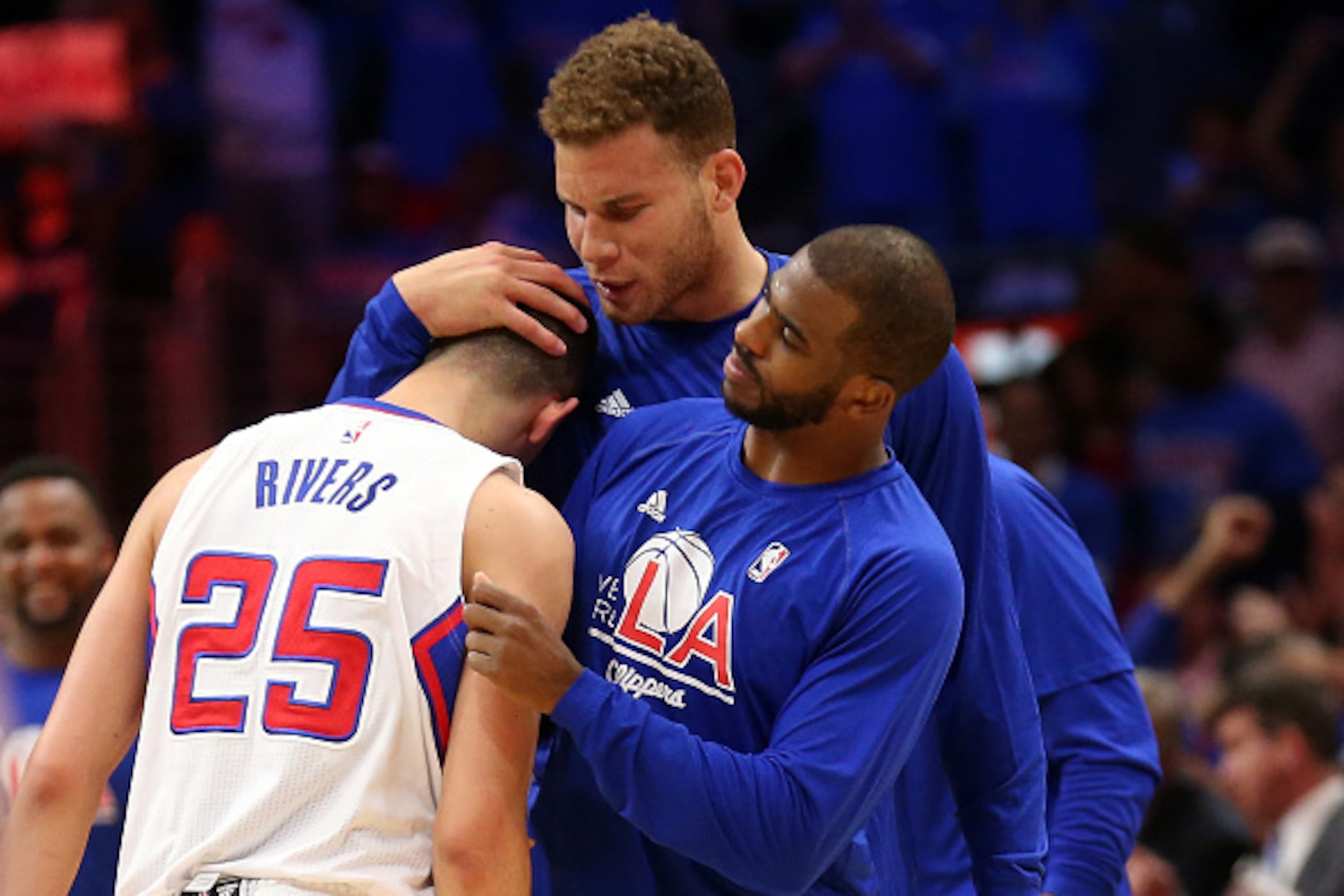
Rivers singled out Raymond Felton to fill that need. He'd been impressed with the way the North Carolina product finished his campaign with the Dallas Mavericks—so much so that he put a call in to Felton's representatives right after free agency opened on July 1.
The coaching staff believes having Felton and the younger Rivers on the same team—and in the same lineup at times—will allow them to do for Paul what so many other teams have done for their point guards: relieve them of having to defend their opposite numbers.
Paul has done that at an elite level for years. He has the eight All-Defensive selections and six steals titles—not to mention countless bumps and bruises—to prove it. But there are only so many screens he can fight through and quick floor generals he can afford to chase before his 31-year-old body begins to break down.
"Things change," Paul said. "Obviously, I'm not as fast and stuff like that as I once was."
Nonetheless, he's found ways to not only stay effective, but also hold his place among the top players at his position. Paul takes care of the ball—his 3.80 assist-to-turnover ratio last season was second only to Mike Conley's 4.07 among point guards—and has captained a Clippers attack that's finished no worse than sixth in offensive efficiency since he arrived in 2011.
Still, the Clippers would rather not push his limits if they don't have to.
"Heck, he's something you would like to preserve, for sure," Rivers said.
A more egalitarian offense could also help to keep Paul fresh. Rivers and his staff stressed ball movement—initiated from the post and the perimeter—throughout the exhibition schedule.
It's a relatively small change that could yield striking results.
Under Rivers' regime, the Clippers have ranked no better than 13th in passes made per game. This past season, they slipped to 23rd, per NBA.com. They've still scored tons of points off assists, however, thanks to Paul's on-ball mastery. During 2015-16, he logged the league's third-highest time of possession per game (8.0 minutes) and the second-highest frequency of isolation plays among point guards (15.2 percent).
Encouraging more cutting and passing could help the Clippers generate offense without having to hang on Paul's every dribble. So should putting him in more three-guard lineups, with Felton, Jamal Crawford and the younger Rivers capable of creating scoring opportunities.
"Just give him a break," Felton said when asked what he can do for Paul. "He doesn't have to play so many minutes. He doesn't have to be on the ball as much as well."
"This year, I'm going to have to help Chris out with [the offense] a lot too," Rivers said. "It's just a lot. I think it will ease if both of us are going and attacking downhill and creating for others, not only ourselves."
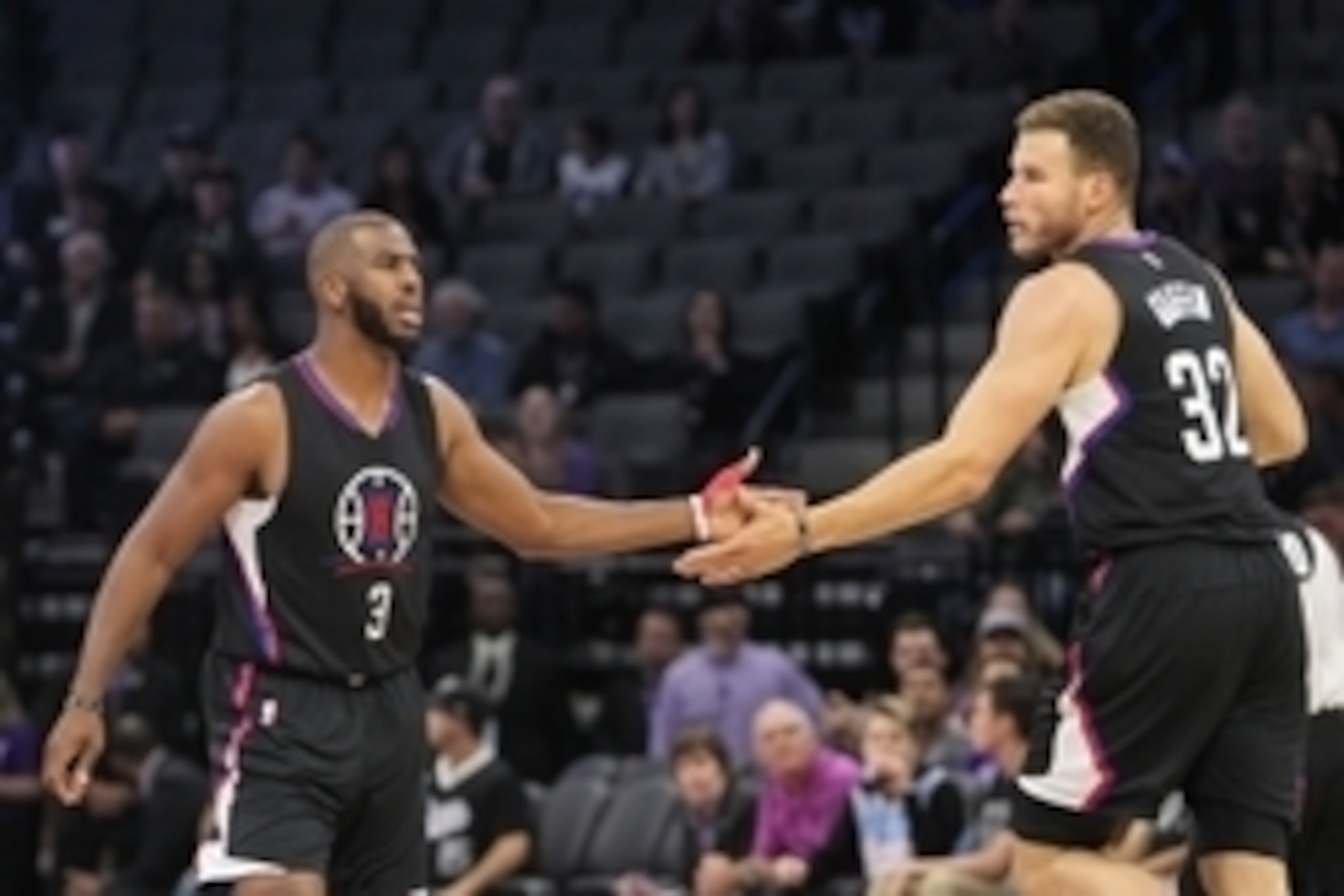
That task won't be for L.A.'s guards alone. Blake Griffin has flashed an ever-improving flair as a point forward over the course of his career. The Clippers plan to stagger his minutes with Paul's, so Griffin will get more time on the ball. Paul will get to rest, and the team will rarely be without an offensive focal point on the floor.
Paul, for his part, doesn't see himself at the center of all these tweaks.
"I've looked at it as ways to help our team," he said. "I don't think it's necessarily about me. It's about ways to help our team being able to adjust."
But anything that helps him would be good for the team by extension. By diffusing his responsibilities across the roster, the Clippers could activate more players and become a stronger, more complete team as a result.
The Clippers know better than anyone that even their best-laid plans can crumble to cruel chance. Paul's broken finger and the recurrence of Griffin's quad injury in Game 4 against the Blazers all but doomed L.A. to an early playoff demise.
What if the fates conspire again? What if the Golden State Warriors and San Antonio Spurs prove too overwhelming to overcome? Or what if the team succumbs to some other pitfall before the conference finals?
Would Paul look hard at his own ticking clock and even harder at other destinations when he likely opts for free agency?
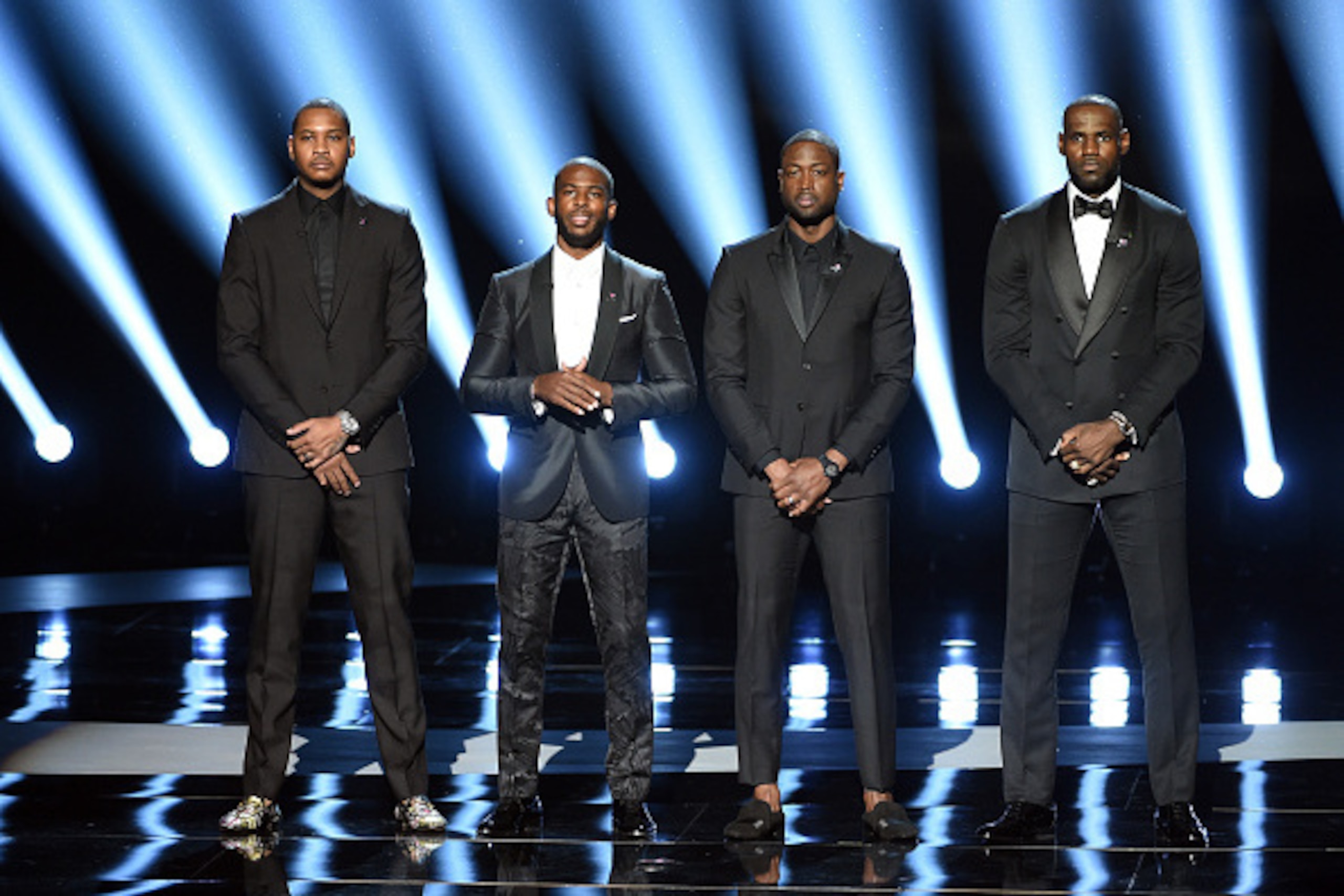
Perhaps he'd consider helping close friend Carmelo Anthony climb the league's ladder with the New York Knicks. He could fill Derrick Rose's spot just in time to ride Kristaps Porzingis' rise. And in the Big Apple, Paul, the president of the National Basketball Players Association, would be that much closer to the center of power.
He could curate a different banana boat reunion with Dwyane Wade in Chicago.
Maybe he'd be inclined to move closer to home with the Charlotte Hornets. Paul is from North Carolina, boasts a strong relationship with team owner Michael Jordan and remains one of the Jordan Brand's top ambassadors.
If he wanted to take the West's best head-on again, Paul could make his way to San Antonio, where Tony Parker isn't getting any younger.
At this point in his career, Paul remains good enough to bend the free-agent market to his will. But few situations, if any, would offer him a better shot at a title than staying put, short of joining one of the last three champions. Fewer still would become his team overnight or ever.
For all their foibles and shortfalls, the Clippers might offer Paul his best chance to compete at the highest level. Even though he could soon cede the steering wheel to Griffin.
But those are matters to sort out next summer. For now, Paul's attention is firmly on making the most of the season in front of him.
Clippers Insider's Notebook
Austin's Limits
The Clippers knew they were getting a combo guard when they re-signed Austin Rivers to $35 million over three years this past summer. What they didn't know was what else the 24-year-old would bring to camp.

"I didn't sign him this summer saying, 'Man, we're signing a 3 defensively,'" the elder Rivers said.
Yet he now expects to use his progeny, listed at 6'4" and 200 pounds, as a stopper across perimeter positions.
"I don't think Austin wanted to accept that he could be a good defensive player [coming out of college]," Doc said. "I think he's accepted that. He actually likes it now. I think that's been really nice to see. Even in practice, he wants to guard whoever has got it going. That's a good sign."
That ability could get Austin on the floor more, perhaps even as a starter in certain matchups. Without any stellar options at small forward, the Clippers could turn to their young Blue Devil to assume that spot if he is able to hold his own defensively.
So far, Austin has taken his expanded responsibilities on both ends in stride.
"I'm excited that my role has grown," he said. "I want it to continue to grow...and continue to grow...and continue to grow."
Bench in Progress
The Clippers had ample time to practice between the end of their exhibition schedule Oct. 18 and the start of their regular season Oct. 27. The second unit got even more than that.
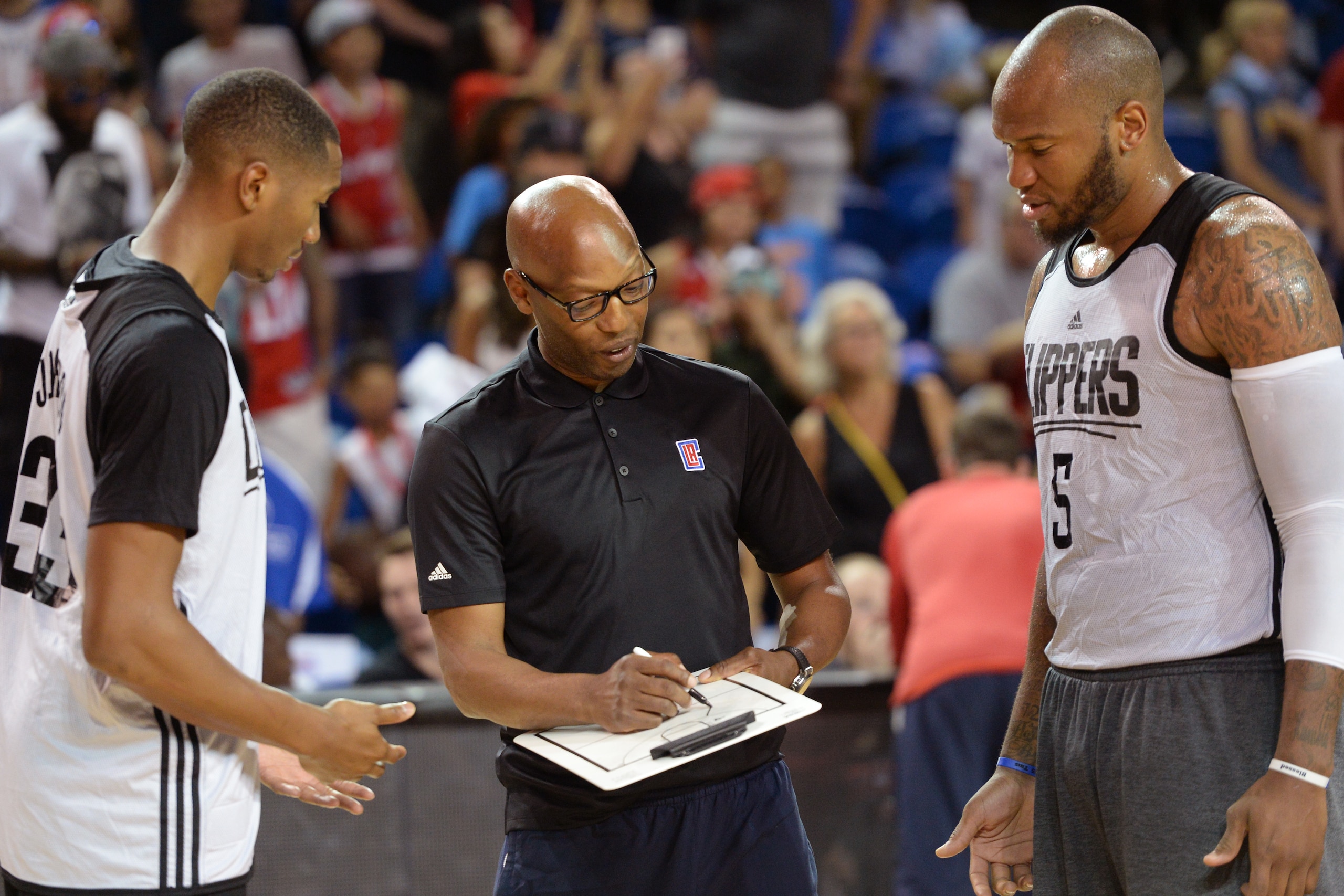
Multiple times during that lengthy break, Doc Rivers summoned his reserves into the team's practice facility extra early to run their sets uncontested.
"They need to catch up," Rivers said. "The starters have only done it for three years, the same stuff and even the new stuff. Some of those guys have, but some of them haven't. You put them together, you've just got to get the continuity down."
The team likes what it has coming off the bench: Jamal Crawford, the reigning Sixth Man of the Year, and the younger Rivers are both back on new contracts. So is Wesley Johnson, who inked a three-year, $18 million deal. Between Felton, Marreese Speights and Brandon Bass, L.A. added three steady veterans to the second unit on the cheap.
As Rivers eyes a rotation of no more than nine or 10 players, whatever the Clippers can squeeze out of Alan Anderson and Paul Pierce could be icing on the cake.
But first, the bench will have to find its collective footing. The second unit surrendered several sizable leads during the exhibition season and was consistent only in its inconsistency therein.
"The core group, the first unit, has their rhythm down," Johnson said. "That goes without saying. They've been playing together for forever. I think the second unit is us just getting good chemistry down."
Getting Defensive on the Glass
Last season, the Clippers managed to finish fourth in defensive rating despite ranking as the third-worst defensive rebounding team in the league.
"I think if we had gotten one or two more rebounds a game and taken away offensive rebounds, we would've been No. 1 in defense," Rivers said. "It's actually that simple. Those are rebounds we can get."
The team doesn't expect its bigs to do much more in that regard. DeAndre Jordan ripped down the second-most rebounds per game during 2015-16. Griffin chipped in 8.4 boards of his own.
Thus, the onus falls on L.A.'s guards.

"The thing with us, I think a lot of times last year, was just our inability to get long rebounds," J.J. Redick said. "Some of that is leaking out; some of that is just being in pursuit of the ball."
As Paul explained, the solution to the Clippers' woes on the defensive backboard is a mental one.
"It's a collective thing," he said. "It's got to be a mindset—something that we've got to drill. We sort of drill in practice where a shot goes up, and you've got to go find a body. It's not the most athletic guys. I always say, 'Look at Zach Randolph.' It ain't physical ability. It's all about a mindset and being able to have a knack for rebounding."
2K in L.A.
Amid all the added practices, the Clippers found time for some fun and games.
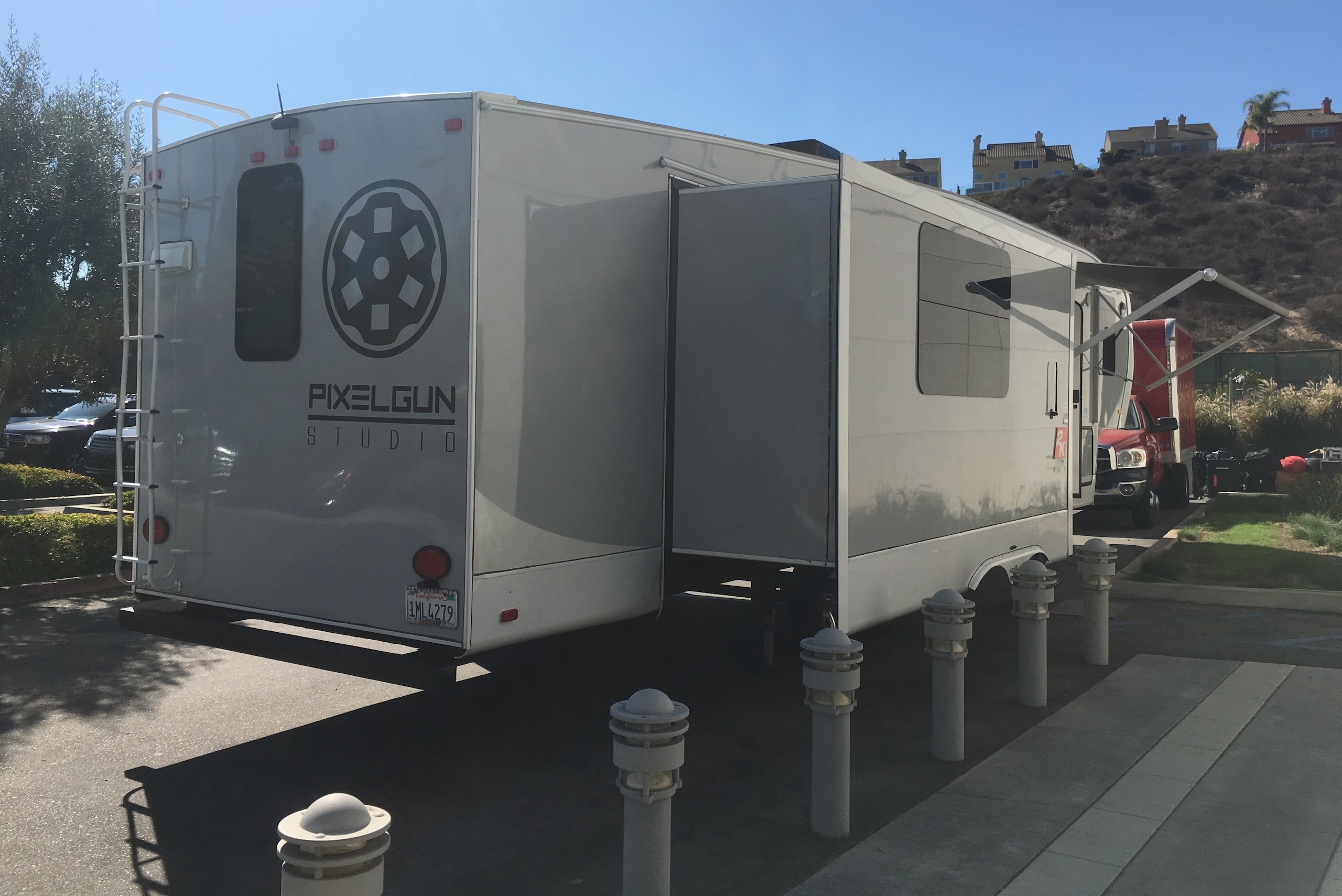
For two days, the team hosted a trailer from Pixelgun Studio outside its training facility to capture players' facial expressions for NBA 2K17. Paul Pierce, Raymond Felton, Marreese Speights and Austin Rivers all participated in the voluntary process. So did rookie big men Brice Johnson and Diamond Stone.
"It's always good to get your own animations on a video game," Felton said. "It's surreal still to this day to see yourself on a video game when before, growing up, you weren't that person. But to see it now, it's always fun."
The rest of the team, including Doc Rivers, opted out, in large part because they'd had their motions captured in previous years.
Not that Rivers would want to partake again.
"No, no," he said. "It would be me screaming and yelling and complaining way too much. I'll pass on all those things."
All quotes obtained firsthand.

.jpg?w=2560 "Rap: Lions, LaPorta End Contract Talks")
.jpg?w=2560 "Report: Baker May Miss Up to 6 Weeks")
.jpg?w=2560 "EVERY Fantasy Football Update")
_0.png?w=2560 "Week 5 Winners & Losers 📊")
