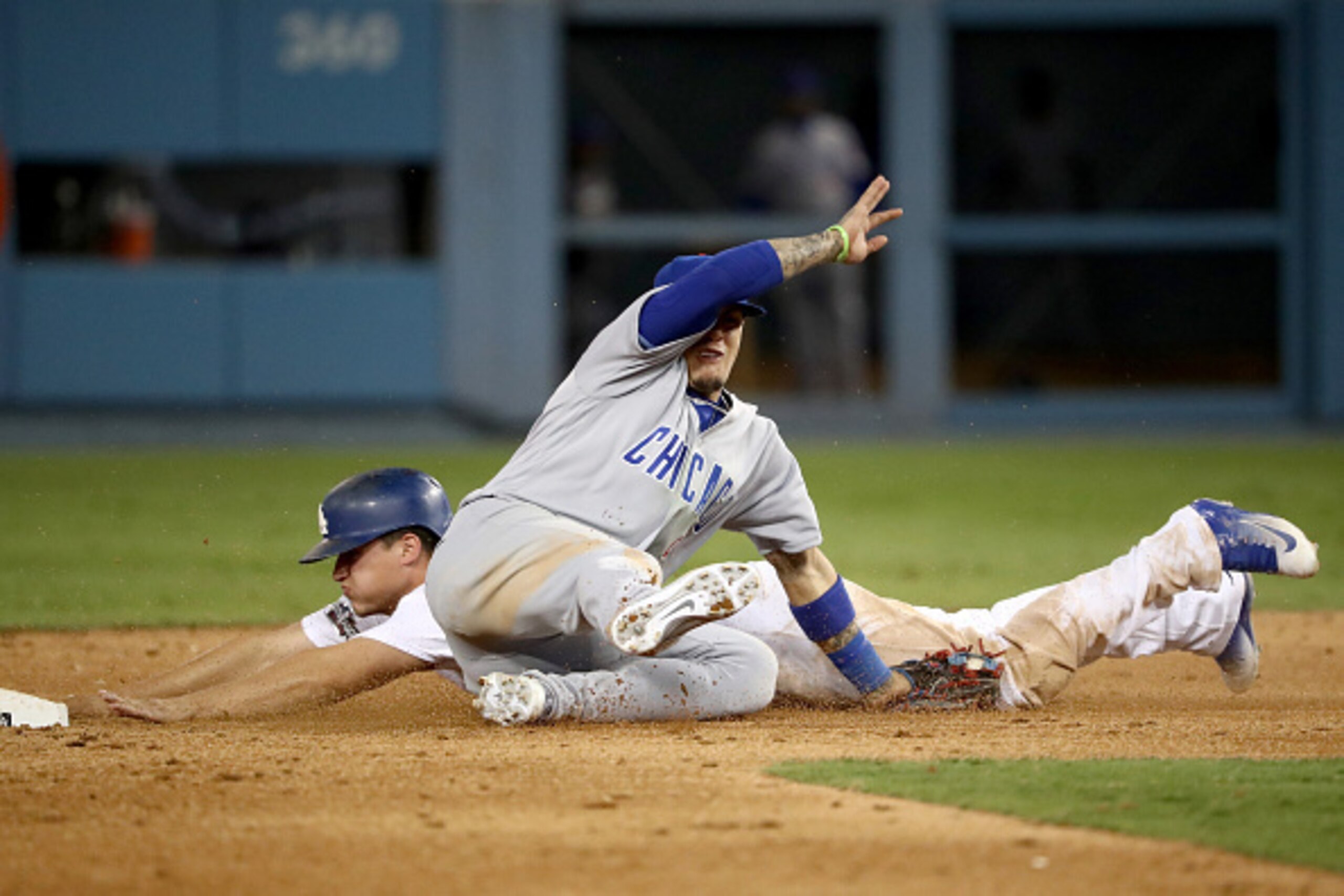

Cubs vs. Dodgers: Keys for Each Team to Win Game 5
It's now a best-of-three series between the Chicago Cubs and the Los Angeles Dodgers for a spot in the World Series. The Cubs' 10-2 win at Los Angeles on Wednesday evened the National League Championship Series at two games apiece. Basically, the first team to claim the next two victories moves on.
Now we're guaranteed to get two more matchups between the Cubs and Dodgers: first Game 5 on Thursday at Dodger Stadium and then Saturday at Wrigley Field in Chicago. None is more important than the next one, though, because it puts the winner in position to advance the following game.
Surprisingly, past scenarios like the one we're currently in haven't favored the team with home-field advantage for the rest of the series. According to ESPN, in league championship series where the road team won Game 4 to make it 2-2, only three of nine teams who had two of the next three at home ended up making the World Series.
What are the keys for each team in order to win this pivotal fifth game? Follow along as we break down what both the Cubs and Dodgers need to do in order to take the next one.
Cubs: Carry It Forward
1 of 6
You can't take any runs with you, but the Chicago Cubs sure wish they could after their batters suddenly came alive in Game 4. After consecutive shutouts for the first time in franchise postseason history and 21 straight scoreless innings, once that first run crossed home plate it seemed like a major weight came off the collective shoulders of Chicago's hitters.
Several Cubs who entered Wednesday in major slumps managed to break out—at least for one night. Anthony Rizzo and Addison Russell, who were a combined 4-of-50 in the first seven games, each went 3-for-5 with a home run and five total RBI, while Jason Heyward drove in his first run of the playoffs.
Now comes the hard part: doing it again the next day while keeping Wednesday's offensive explosion from being a fluke and instead the start of something big.
Dodgers: Shake it Off
2 of 6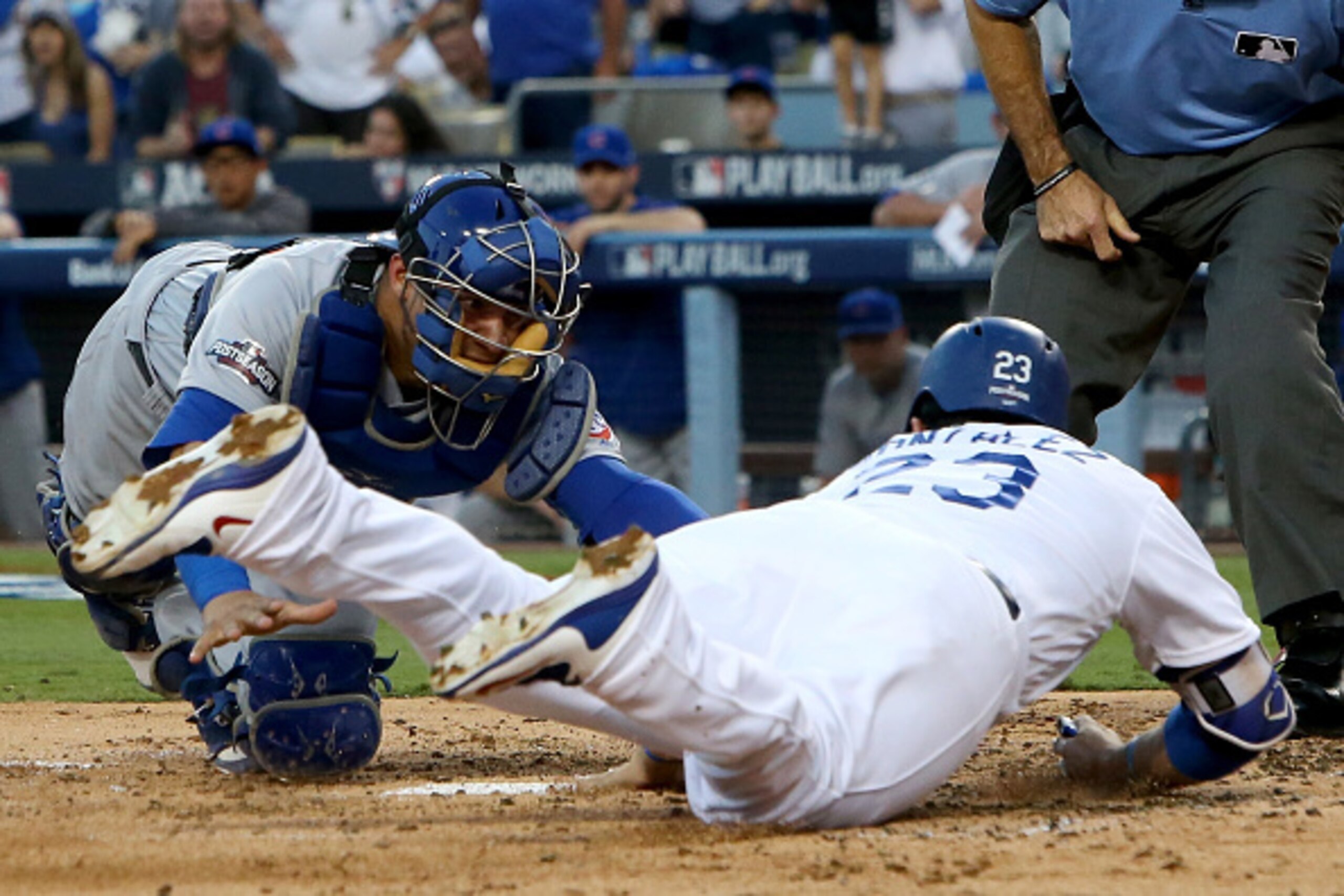
If you think about it, being tied 2-2 at this point in a best-of-seven series is supposed to happen. Assuming the home team wins every game, Chicago would have taken the first two games and then the next two would go to Los Angeles to even the series.
That's not how it really went, as the Dodgers took Game 2 to get an edge and kept it by winning on Tuesday as well. Losing Wednesday stopped their momentum but doesn't put them in a dire situation; it's just one where winning the next game is imperative.
But then again, it would have been that way even if the Dodgers had won to go up 3-1. In fact, there might have been more pressure since losing the fifth game would ensure the series returns to Chicago, something that's a certainty now.
Things might have gone differently had Adrian Gonzalez been called safe at home in the second inning when the game was scoreless. Instead, he said that play had an impact on the rest of the night.
"Let's be honest. After that, we played a sloppy game," he said, per the Los Angeles Times' Andy McCullough.
The scoreboard is reset each game, and that's how the Dodgers should be preparing for Game 5 as if it's the first game of what's now a best-of-three series where Thursday's victor has a major edge.
Cubs: Lean on Lester
3 of 6
Despite winning handily, Chicago used five relievers in Game 4 because starter John Lackey only lasted four-plus innings. He made it through the first four with only minimal stress—though getting replay to uphold an out call at home to end the second helped—but after walking the first two batters of the fifth, manager Joe Maddon decided to pull him despite only 72 pitches.
Mike Montgomery went two innings and Carl Edwards might have gone that long, too, but he was pulled after two-thirds with an apparent hamstring injury, and his status for Game 5 is uncertain. Instead, Maddon had to use Travis Wood for one-third of an inning and then Pedro Strop and Hector Rondon one inning apiece to close it out.
That means Chicago will need Jon Lester to go as long as possible in order to get to the back end of the bullpen, namely Aroldis Chapman, who hasn't appeared since Sunday. Lester has been the Cubs' best starter in October, going eight scoreless innings in Game 1 of the NLDS and six innings of one-run ball in Game 1 of the NLCS.
With Montgomery not throwning the last two days and Edwards possibly unavailable, some of the bridge guys could be out of commission. An early exit for Lester could prove disastrous.

Dodgers: Shore Up the Defense
4 of 6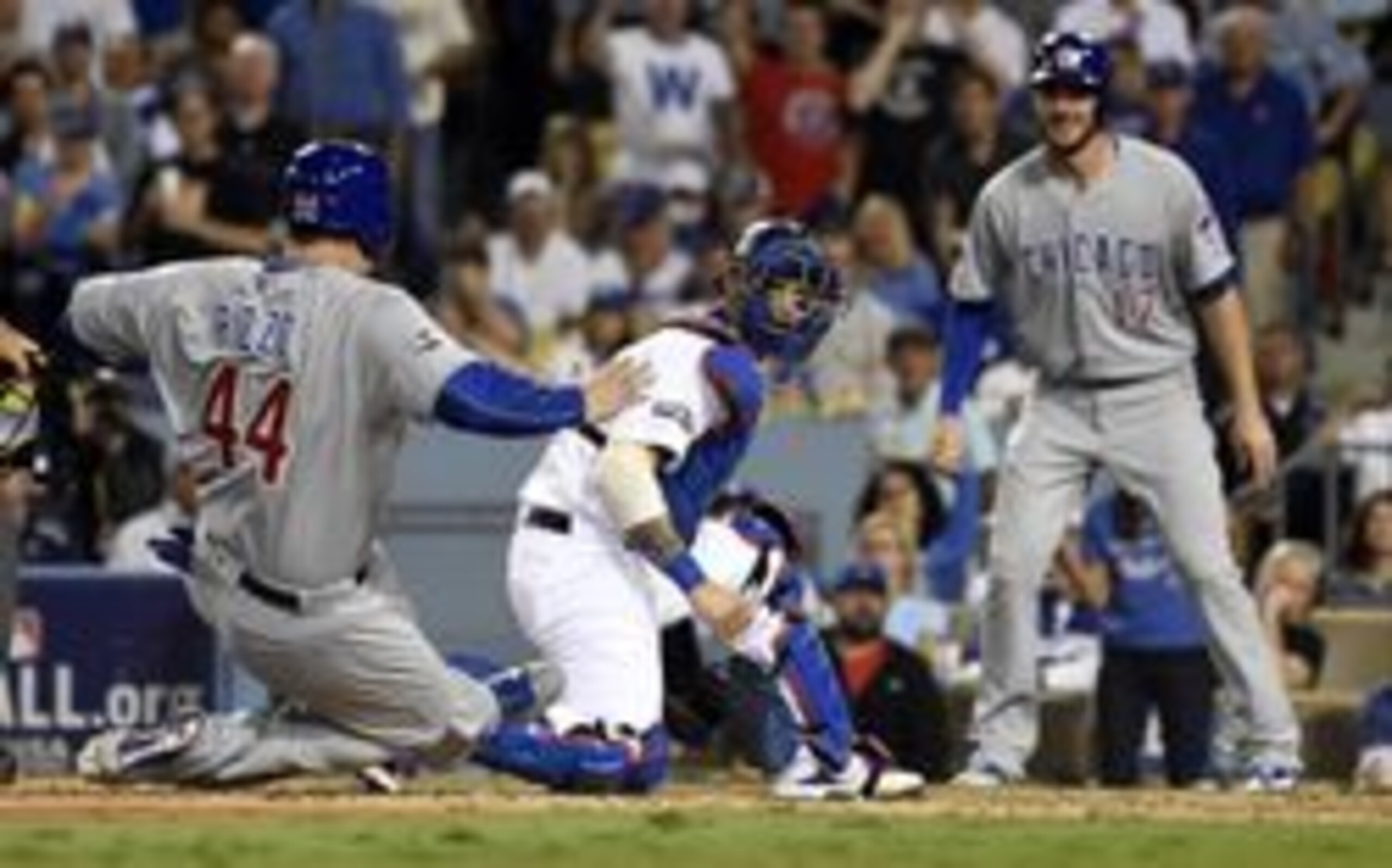
This is the Dodgers' 21st trip to the postseason since moving to Los Angeles in the late 1950s and the 13th since 1974. That year was the last time they committed four errors in a postseason game, according to Baseball-reference.com.
LA was not sharp in the field, with bad throws and dropped relays that didn't help out a pitching staff that was getting roughed up most of the night. Only one of Chicago's 10 runs were unearned, but three of the errors helped contribute to the scoring, including two in the five-run sixth.
The Cubs' second run in the fourth came after Andrew Toles' bad throw in from left allowed Javier Baez to advance to third and then come in on Heyward's groundout. Two innings later, Enrique Hernandez threw one away on a one-out infield single to get the wheels turning on six consecutive Cubs reaching base. More poor defense led to an additional run at the end of the sixth when Joc Pederson's throw home on a sacrifice fly got past Yasmani Grandal and allowed a second run to come home.
Pitcher Luis Avilan, backing up behind home plate, also misfired getting the ball back in play but it didn't result in another error.
The Cubs are too good of a hitting team, despite their struggles in Games 2 and 3, to give them help by booting it around.
Cubs: Go Up There Hacking
5 of 6
The Cubs led the majors in walks during the regular season with 656, but in the NLCS, their willingness to work the count hadn't been paying off. They had nine walks against 25 strikeouts in the first three games, with many of those punchouts either on a called strike or because they were forced to chase a ball in a bad count after letting too many good pitches pass.
Not the case on Wednesday. Chicago was much more aggressive at the plate, particularly in the fourth and sixth innings when it scored nine of 10 runs. Of the 16 players that put the ball in play in those frames, 12 did so within the first three pitches, including five whose contact led to runs scored.
Even though the Cubs only drew three walks, the frequency of swings they took led to the Dodgers' pitchers throwing 184 pitches in nine innings, including 123 strikes. If the walk is there, take it, but don't take good pitches when they can be put into play with a chance of something positive happening.
Dodgers: Have Faith in Kenta
6 of 6
With the Dodgers facing what's essentially a must-win game—trying to win two straight at Wrigley Field to claim a championship isn't the ideal formula for success—it would make sense for manager Dave Roberts to once again turn to workhorse/ace Clayton Kershaw. After all, he's had the lefty work on short rest multiple times this postseason, closing out Game 5 of the NLDS after he threw six-plus innings less than 48 hours earlier.
But Roberts is sticking with his planned rotation and will send Kenta Maeda to the mound on Thursday. The main reason? While Game 5 is very important, it's not a do-or-die contest like Game 6 could be.
According to ESPN's Jayson Stark, Roberts "doesn't want to lean on Kershaw again on short rest" in a non-elimination game. When Kershaw started on three days rest in the NLDS and then came on in relief the following game, the Dodgers had to win both times to stay alive or advance.
Maeda was pulled after three innings in the NLDS against Washington and after four in Game 1 of the NLCS, allowing seven runs between the two outings. But he's also only thrown 129 pitches and is working on normal rest, so if he can avoid early trouble, he should be good to go long.
Los Angeles used five relievers in Game 4, but three were making their first appearance this series. And the Dodgers didn't have to go to Kenley Jansen, who threw 21 pitches on Tuesday and could be able to go multiple innings with an off day on Friday.
All statistics courtesy of Baseball-reference.com, unless otherwise noted. Follow Brian J. Pedersen on Twitter at @realBJP.

.jpg?w=2560 "Report: Darnold Could Miss 3-6 Weeks")


.jpg?w=2560 "Breaking News")