Changing Expectations for Tottenham Hotspur's Youth Will Test New Hopefuls
For the Tottenham Hotspur players involved in last Friday's 2-1 Premier League 2 defeat to Manchester City, the occasion was one of the last of its kind. Those involved will be among the final youth-team players to get a showcase at this version of White Hart Lane.
This generation of prospects and those to come over the next few years will probably not mind too much. Their allotted under-23 and selected FA Youth Cup games may not end up taking place at temporary venue Wembley Stadium from next season (assuming they take up this option for league and cup games here, further specifics have not yet been confirmed), but beyond then these fixtures will occur at the brand-spanking-new ground being developed in N17 right now.
TOP NEWS

Sullivan, Hall Lead USMNT to Big Win 💥
.jpg?w=2560 "Titans Giants Football")
OBJ Calls Out Giants After Release

🚨 Week 5 AP Top 25 Poll
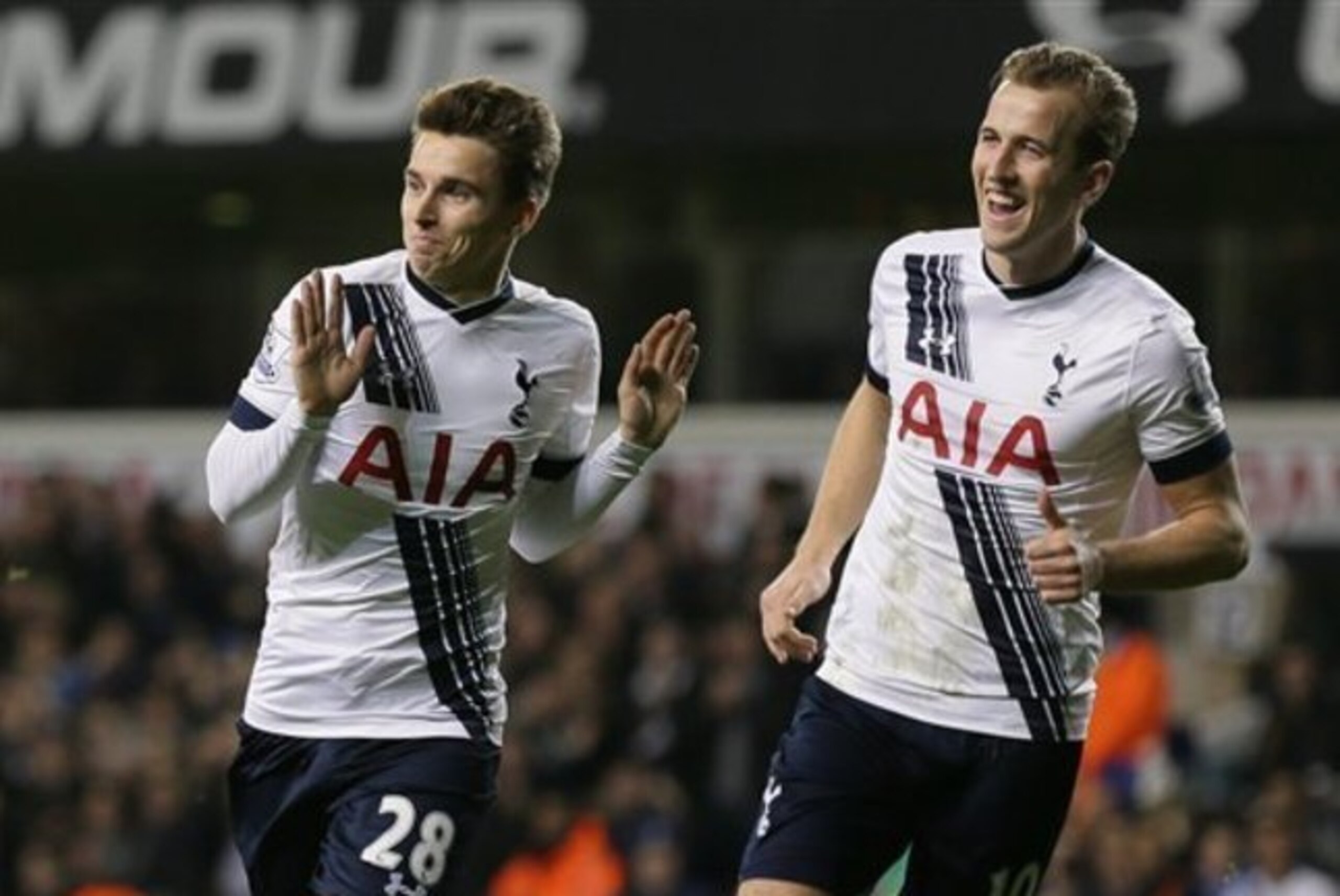
As the environments in which these first-team glimpses take place are set to change, so are the expectations for these Tottenham youngsters. For those involved against Man City, such as the highly touted attacker Marcus Edwards and goalscorer Shayon Harrison, their development is occurring in a landscape shaped by those who have come immediately before them.
Up until recently, it had been individuals (or at most, a smattering) rather then crops of players coming up via the Tottenham youth team in the last two decades or so.
Sol Campbell, Stephen Carr and Ledley King were among the standouts. Others such as Stephen Clemence, Luke Young, Stephen Kelly and Jamie O'Hara had solid spells for a time but ended up moving elsewhere.
Albeit with a year or two in between them here and there, the group produced or honed in the Spurs academy, Nabil Bentaleb, Tom Carroll, Harry Kane, Ryan Mason, Danny Rose and Andros Townsend, has been the best since the 1980s.
They have not matched the success of those to emerge in Keith Burkinshaw's sides back then—Garry Brooke, Mark Falco, Micky Hazard, Glenn Hoddle, Chris Hughton and Paul Miller among them (with captain Steve Perryman a holdover from an earlier generation). But while some have since moved on, all have contributed to one of the club's healthier periods of the modern era.
This is no small thing.
In the Premier League weekend just gone, Bleacher Report's Chelsea correspondent Garry Hayes wrote about how pleasing it was to see Blues manager Antonio Conte field some of their own youngsters in the win over champions Leicester City (see below).
The Blues' spending power since billionaire Roman Abramovic's takeover has meant successive managers being able to bypass academy hopefuls for finished products. Yet with a dominant youth group achieving success Hayes compares to that of Manchester United's famous Busby Babes, there is a clear will to see if talents such as Nathaniel Chalobah and Ruben Loftus-Cheek can make a difference.
Like Conte may be seeing at Chelsea now, Tottenham's managers over the last few years have taken note of what was going on in their junior ranks.
Harry Redknapp handed several players their debuts before Andre Villas-Boas had more substantial looks at some. Tim Sherwood, involved in the academy before briefly becoming head coach, looked set to be a significant champion of several, but it has been current boss Mauricio Pochettino who has instead reaped the benefits of these players.
It has not been a full-blown harnessing.
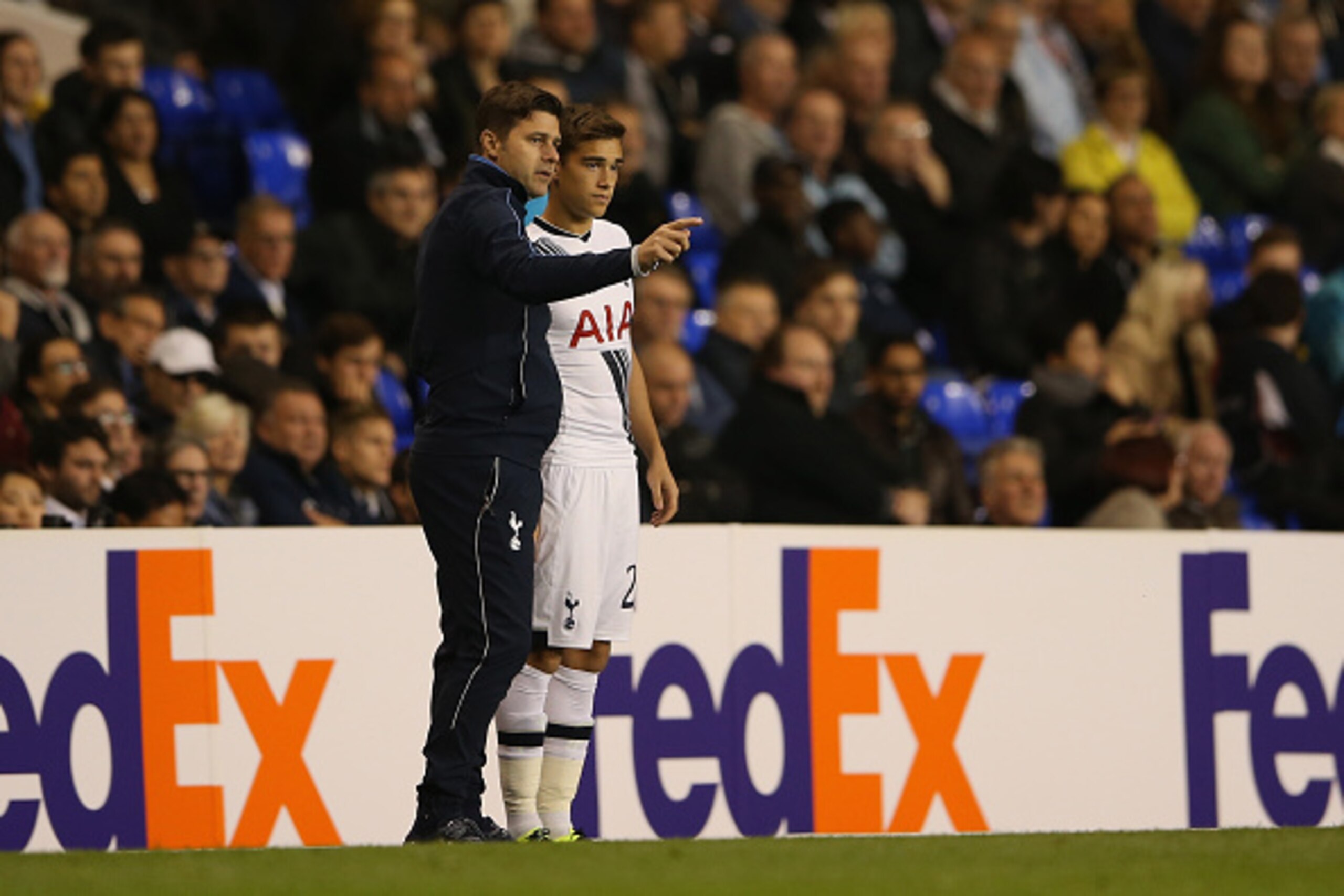
Expensive acquisitions from elsewhere are still being made and will continue to be if Pochettino deems them more capable of improving an ambitious squad.
The Argentinian has widened and kept open the route to his first team, though. As long as good players are continuing to be developed at the club's Hotspur Way training ground, there is some opportunity for progression.
In the midst of this recent mini-era, there have been examples showing how the better scope for young players at Spurs is intertwining and clashing with old and new notions of expectation and hype.
Prior to this month's meeting with Manchester City, the last such game (shamefully) this writer attended at White Hart Lane was Tottenham's 2-0 March 2014 win over Arsenal. Still an under-21-focused category then, the home side's scorers that night were Souleymane Coulibaly and Harry Winks. Their different paths since have been and will remain fascinating to track.
Coulibaly arrived at Tottenham after scoring an eye-catching nine goals in four matches for the Ivory Coast at the 2011 Under-17 World Cup. He won the top-scorer award despite his team getting knocked out in the second round.
Among the standout performances earning him the tag of the "new Didier Drogba" was a four-goal haul in a 4-2 win over Denmark (see below).
The subsequent hype over Coulibaly—lingering throughout his subsequent four-year stay in north London—was a product of the wider time from which he came. A shooting star who previously may have found notoriety from impressive statistics in the Football Manager computer game series now saw his reputation built and sustained via YouTube videos and consequent social media buzz.
Just 16 at the time of his signing from Siena, Coulibaly became fairly prominent among Tottenham's youth teams during his spell at the club (interrupted by a loan spell with Serie B outfit Grosetto in 2013).
On that night against Arsenal, there were enticing glimpses of his predatory instincts and the excitement factor around him—not least the penalty he scored and the acrobatic celebrations that followed.
But there was also the impression of the striker being a somewhat peripheral performer and lacking physical presence. If he looked lightweight at this level, it was hard to see him getting a chance in the top flight.
It was not a surprise to see Coulibaly leave for Bari later in 2014. Although still only 19 then, there was little to suggest he was a Premier League player in the making, let alone one who could live up to being a new Drogba or follow Kane, who was by then part of the senior squad.
Credit is due to him for the career he has since made for himself. By way of spells with Football League clubs Peterborough United and Newport County, he is now playing for Kilmarnock in the Scottish Premiership. Scoring goals like his recent superb strike versus Celtic (see below), Coulibaly is still worth keeping an eye on.
Winks' journey since his efficient and composed display in that junior north London derby is a familiar one with Tottenham supporters.
He was handed his debut off the bench by Pochettino eight months later in a 1-0 Europa League win over Partizan Belgrade. A couple more appearances in Europe last season were sandwiched by impressively mature showings in pre-season against prestigious competition.
Of those following in the wake of the Kane generation, fellow midfielder Josh Onomah has been pushed more up until now. Making his League Cup, Premier League and Champions League bows already this season, though, Winks is working hard to prove there is more gold in them academy hills.
"I'm delighted mainly with the result, but for my personal performance I'm over the moon with myself," the 20-year-old said following a terrific outing in the 5-0 win over Gillingham. "For my first start, I was just happy that we got the win and I had a good game myself.
"I felt like I was enjoying it, and that’s the main thing. I felt like I was in control of myself and the game."
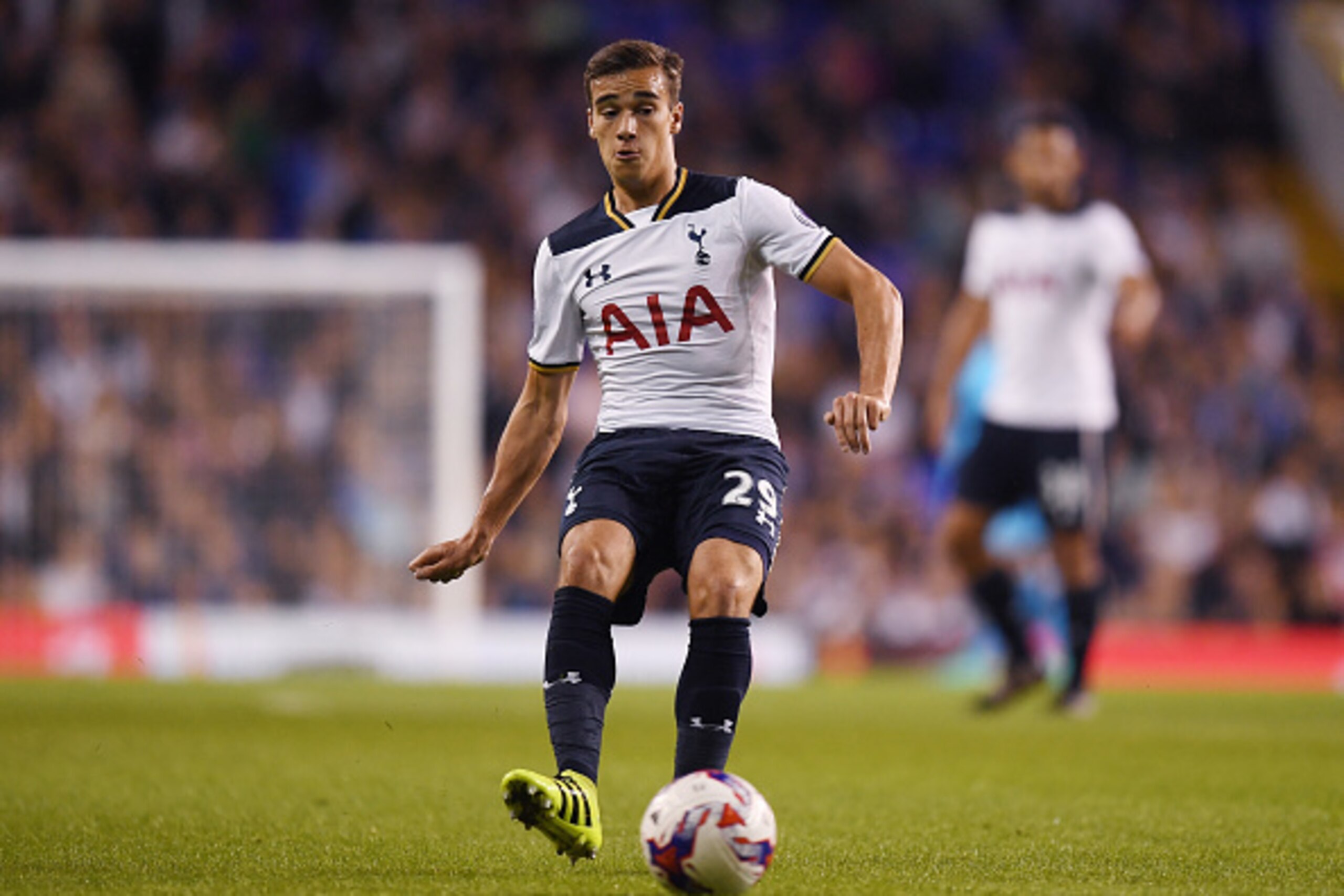
Winks is benefiting from the efforts of those who came before him but, as one of the best of his age-group, subject to pressure in trying to follow up. Nevertheless, those players are more inspirations than anything else.
"It's great for us, all us young, aspiring academy boys," he said. "We want to be where Harry [Kane] is, where Ryan Mason was, Tom Carroll, players like that. We want to get there, and to see them succeed and doing so well only gives us more motivation to get there."
Speaking before his side's 1-1 Premier League draw with West Bromwich Albion, Pochettino made a point of listing him among his options in the competitive central-midfield position. Winks did not make the matchday squad but is in his manager's thinking.
As his predecessors did for him, Winks could be a similar example for the likes of Luke Amos, Edwards, Harrison and Anton Walkes—players taken by Pochettino on tour this summer and all involved in the aforementioned loss to Manchester City—as they look to make appearances in grounds like White Hart Lane the norm.
Edwards is coming somewhere in between Coulibaly and Winks in terms of expectations at Tottenham. The skillful and clever performer has taken a similar in-club path to his fellow England youth international but shares a burden of hype that the former experienced.
Since being compared by Pochettino to Barcelona and Argentina superstar Lionel Messi as well as Spurs' own Erik Lamela, Edwards' reputation now precedes him. Against Man City, there were audible gasps of anticipation nearly every time he was involved.
His mazy, penetrating dribbles and testing final-third work helped sustain this. He kept City keeper Billy O'Brien and his defence on their toes even after Spurs were reduced to 10 men with Ryan Loft's dismissal, his charges into their box making sure his team stayed in the game.
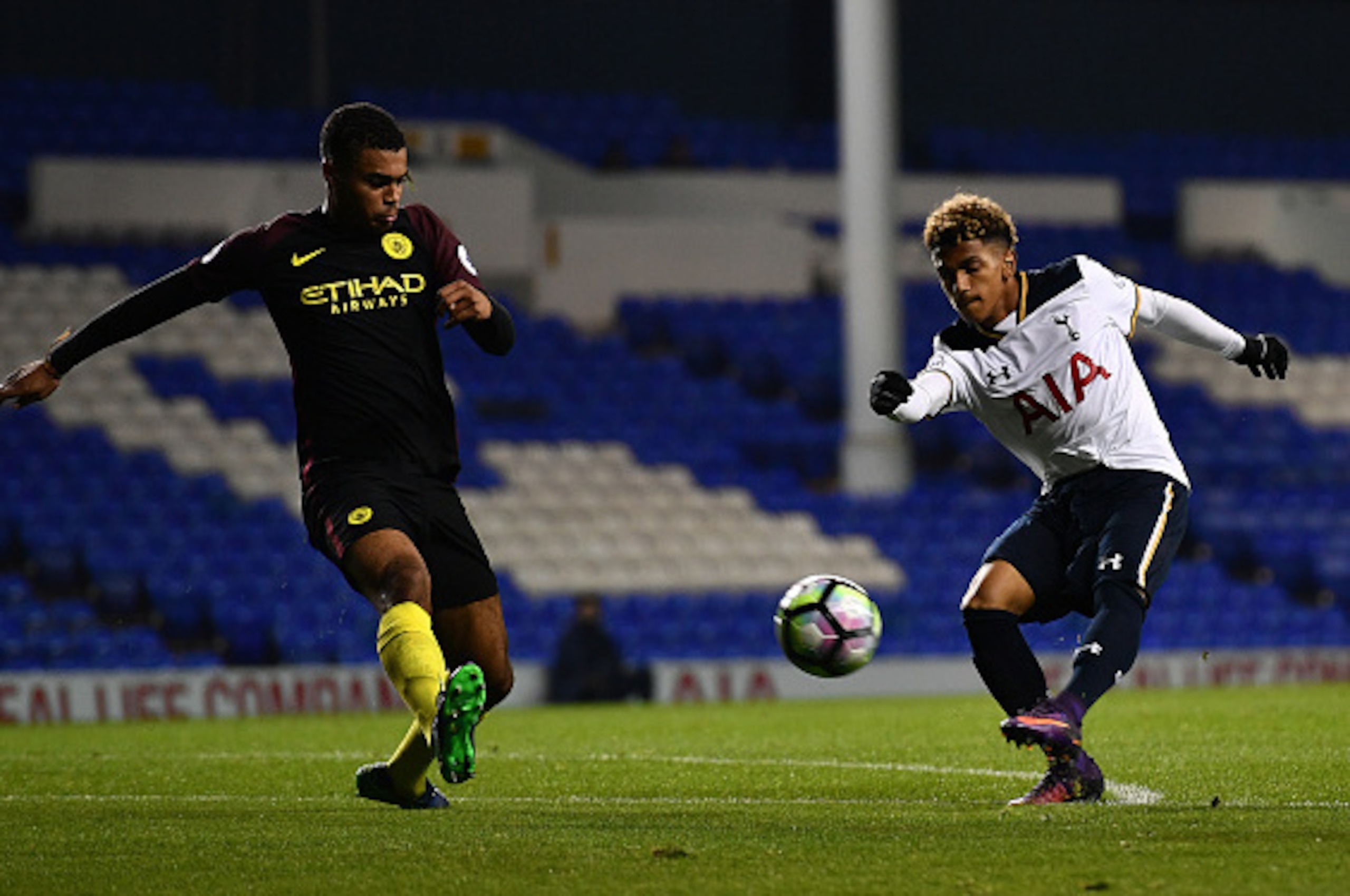
It was an Anthony Georgiou run leading to Harrison's penalty that gave the north Londoners some hope in front of the small but lively crowd. But overall, it was Edwards who most enthralled and kept the fans believing.
He and his team-mates will get an opportunity to impress in front of a television audience when Tottenham take on Bayer Leverkusen in the UEFA Youth League this week. Some of them may also follow their own EFL Cup cameos against Gillingham with some involvement in next week's fourth-round visit to Liverpool.
Just getting a chance to impress fans and the club's coaching staff is better than many of their age in England will get. That does not take away from the challenge of fulfilling these new expectations at Tottenham.
Quotes obtained firsthand unless otherwise noted.


.jpg?w=2560 "Rap: Lions, LaPorta End Contract Talks")