

Jose Mourinho's Career Beginning to Resemble His Manchester United Predecessor
Louis van Gaal left Barcelona by mutual consent in January 2003, but despite this being probably the most tightly packed two-word phrase in football management, this particular departure didn’t take much analysis to unpick. Some departures are more "mutual" on one side than the other.
Barcelona were on such a wretched run of results by the mid-point of the season that it seems incredible Van Gaal was still clinging onto his job beyond Christmas. Worse, alongside the cripplingly bad form that had brought six wins and eight defeats from 19 games, the manager had fallen out with 1999 Ballon d’Or winner Rivaldo so hard and publicly that the Brazilian was released for free despite having a year of his contract still to run.
TOP NEWS
Jeff Bezos Nears Liverpool Deal 🤑
Big Drama in USA U20s vs. Mexico

EPL Transfer Window Grades 📝
Van Gaal had shouldered the blame for poor returns from high-profile replacements Juan Roman Riquelme and Gaizka Mendieta, and his Barcelona looked doughy and drained of inspiration, mired in the middle reaches of LaLiga and only three points above the drop zone.
For all the hyperbole and diplomacy, this was a sacking in all but name.
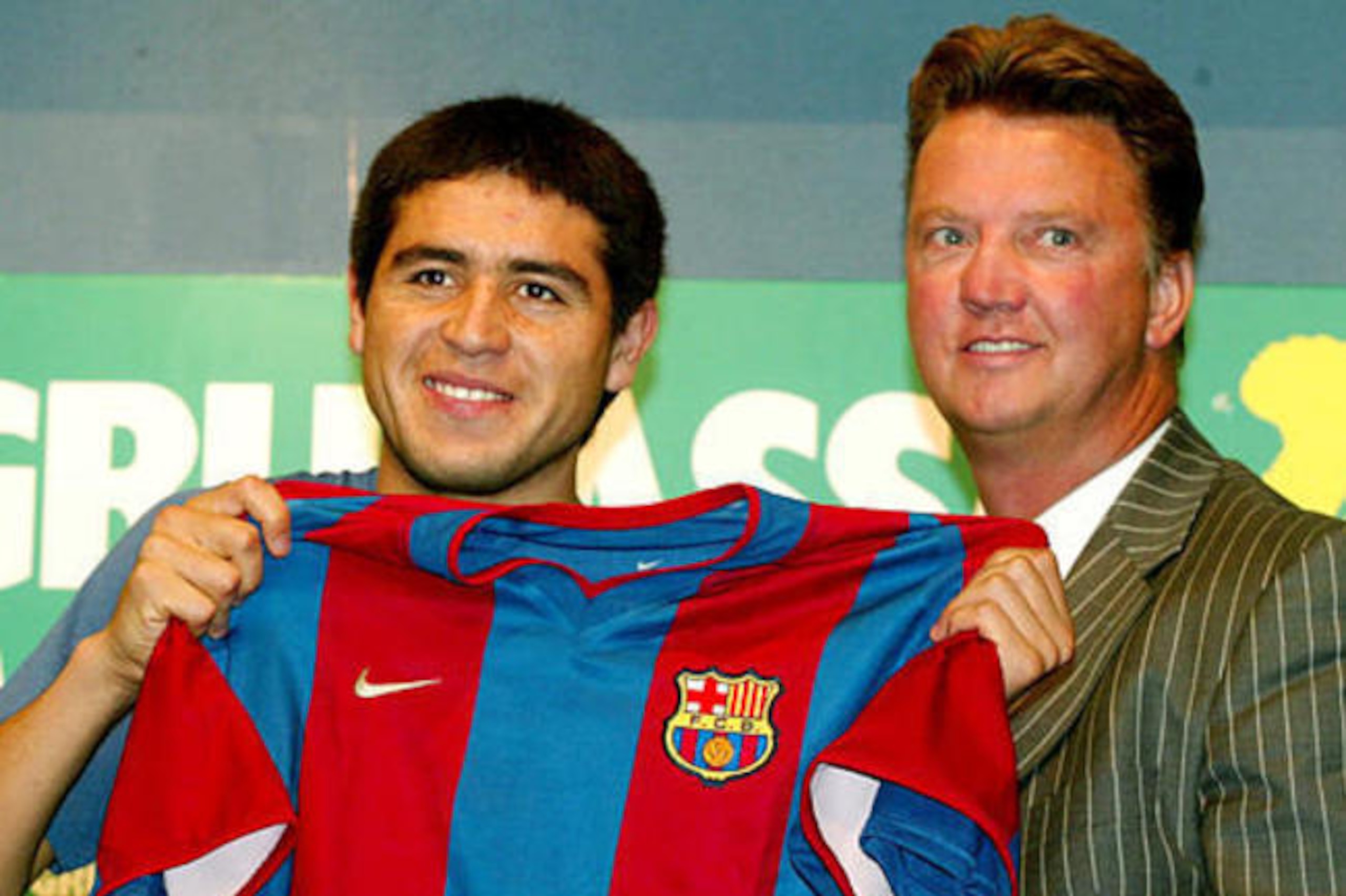
“He came into the dressing room after hearing the news, started to talk, and all of a sudden began crying like a baby,” former Barcelona defender Philippe Christanval told SRF (h/t Goal) of the moment Van Gaal learned of his fate following a 2-0 defeat at Celta Vigo. “He was really hurt. It impacted me seeing him cry. He was a hard, cold person, and here he was destroyed.”
It’s difficult not to feel sympathy with Van Gaal’s plight. Three-and-a-half years before breaking down in the bowels of Celta’s Balaidos he’d celebrated guiding Barcelona to a second consecutive LaLiga title which, when combined with his tenure as Ajax manager, brought to a close a personal run of five titles in six seasons.
That run had also seen him lift the European Cup with the Dutch giants in 1995, as his brilliant Ajax showed themselves to be worthy torch-bearers of Johan Cruyff’s total football of the 1970s and '80s.
As a Dutchman, to have conquered both Amsterdam and Barcelona, Van Gaal had stood briefly on the shoulders of a king. Now his own shoulders heaved with heavy sobs.
Though it’s easy to say now, his tenure at Manchester United played out with a certain thread of predictability running through it.
Despite a mini-revival in fortunes between 2009 and 2014—a league title each with Bayern Munich and AZ Alkmaar, to go with a third-placed finish at the World Cup with the Netherlands—Van Gaal hadn’t been an elite-level manager for some time, realistically not since he failed to guide his country to the World Cup in 2002.
Van Gaal had looked down on all the rest during his years at Ajax and Barcelona, in more ways than one, but his career had tapered off from the top by the time he pitched up at Old Trafford, so much so that prior to accepting the job he had been making flirtatious eyes in the direction of Tottenham Hotspur.
With Van Gaal’s successor Jose Mourinho reeling from three defeats in three games, and in a broader context from his disastrous dismissal from Chelsea last year, it seems a fitting moment to ask the question: What is it, exactly, that puts a limit on the cycle of an elite manager?
Certainly, Van Gaal isn’t the only coach to have had his years on top curtailed to roughly a decade, give or take a year or two, and Mourinho is showing sure signs of falling into, if not the same spiral, then a similarly nuanced deceleration in fortunes.
The spotlight shouldn’t fall exclusively on the United manager. Arsene Wenger’s career at Arsenal has fitted neatly into two 10-year chapters. The first, between 1996 and 2006, took him from little-known outsider in England to a Champions League final via three sensational league titles and a total reimagining of how footballers could be managed.
The second looks to be petering out meekly amid a malaise approaching critical mass and general supporter unrest.
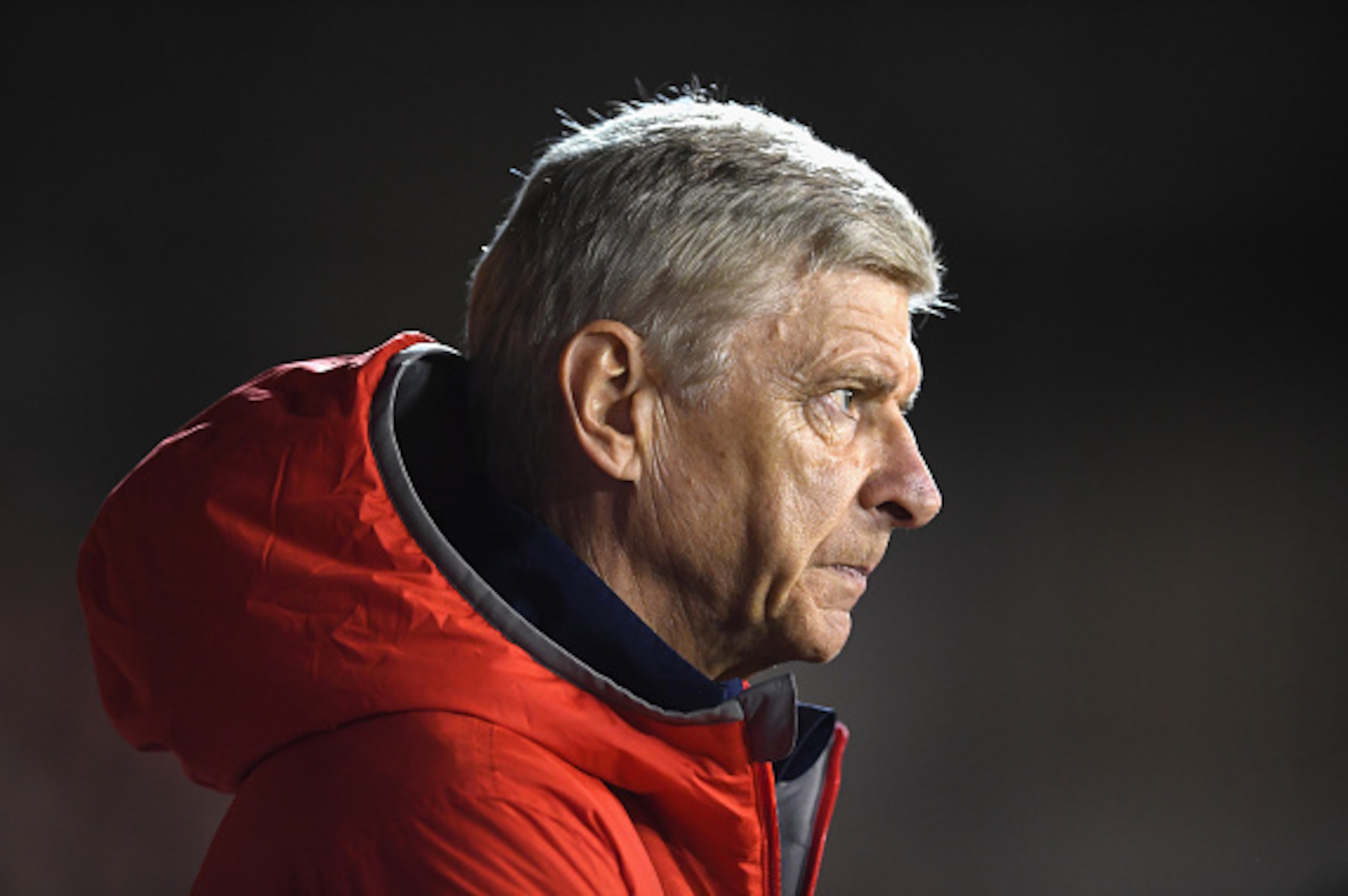
“Arsene has not just been good for Arsenal, he’s been good for football, and we hope he stays as our manager for another 10 years” former Gunners vice-chairman David Dein said in 2006, on the 10th anniversary of the Frenchman’s appointment.
It felt inconceivable then that Wenger’s position would ever come under serious threat off the back of what he had achieved.
Despite the many adequate arguments for the defence that can be made for this last decade of his tenure, Arsenal aren’t any longer at the vanguard of European football, and Wenger is no longer looked upon as being indispensably relevant to the forward motion of modern coaching.
The names Wenger and Van Gaal don’t excite anymore. Instead it’s Jurgen Klopp and Thomas Tuchel, Diego Simeone and Zinedine Zidane, Antonio Conte and Massimiliano Allegri; all have catching up to do to match their elders in terms of honours in the dugout, but they have time on their side in this respect.
The age factor is not something to be discounted. As more and more years stack up between ageing coaches and their players, the dynamics of those relationships inevitably change.
Van Gaal was well-documented as having lost the knack of communicating with some of his younger players when at Bayern Munich, with many finding it difficult to find common ground with a manager they deemed overly authoritarian.
The club suffered a spate of departures shortly after he arrived, with players citing a general sense of misunderstanding as the reason that they couldn’t work under the Dutchman. Luca Toni, in particular, took exception to Van Gaal dropping his trousers in some misjudged effort to assert some control over his squad.
Failed relationships certainly went a long way towards toppling Mourinho from his Chelsea perch, and it’s telling that his most public displays of mutual affection from within his current United side have come from the 34-year-old Zlatan Ibrahimovic.
Eden Hazard, Cesc Fabregas and Diego Costa all struggled to maintain relations with Mourinho as Chelsea’s title defence turned to ash last season, a burden which ultimately proved too cumbersome to maintain. But it’s in the arrangement of his game plans that Mourinho, like his peers, will be judged, and here is where the parallels with Van Gaal become most alarming.

No Mourinho side has looked quite so shapeless in midfield as United have in the early, difficult weeks of this season. A bizarrely theatrical transfer policy, whereby big names and marquee transfer fees trump intelligent and careful team building, represents a glaring, uneasy change in temperament.
Former France forward Christophe Dugarry was blunt in his appraisal of Mourinho’s tactical capabilities in his weekly radio show (h/t the Irish Independent).
"I get the feeling Mourinho's last tactical success was that Champions League [semi-final] between Inter Milan and Barcelona [in 2010]," said the former Barcelona man.
“He's won titles since, but I think he's lost the plot. He believes he has become more important than the team. Tactically, I think he doesn't put anything in place. Apart from the players, who have changed, it's the same organisation as last season under Louis van Gaal.”
It was reported by journalist Diego Torres in his book (h/t the Guardian) that Mourinho broke down in great sobs when he heard that David Moyes had been chosen to replace Alex Ferguson in 2013. Like Van Gaal he knows the feeling of tears on his face having been rejected by the club of his dreams.
The similarities between the two are becoming hard to ignore.
.jpg?w=2560 "Colombia Inauguration")
.jpg?w=2560 "Top Trade Block Candidates 📞")
.jpg?w=2560 "Best Landing Spots for Top NFL Free Agents")
.jpg?w=2560 "Lions Try Out Trevon Diggs")

.jpg?w=2560 "Richardson Unsure of Future With Colts")
.jpg?w=2560 "Buzz: Terrion Arnold Visits Seahawks")