

Utah Jazz Complete 2016-17 Season Preview
The 2015-16 Utah Jazz learned two critical lessons on March 30.
First, never leave Klay Thompson unattended. The All-Star sniper buried a game-tying triple with 15 seconds remaining, forcing an overtime period that allowed the Golden State Warriors to escape Salt Lake City with a 103-96 win.
But the second takeaway arguably trumped the result: The Jazz saw firsthand that they could hold court with the NBA's elite.
TOP NEWS

LeBron's Special Helicopter Deal

MJ Makes Record-Setting Donation 🙌
Collins on Brooks Scuffle 👀
"I feel like we can play with them," swingman Rodney Hood said, per Aaron Falk of the Salt Lake Tribune.
Though last season's Jazz lost more games than they won (40-42), they weren't bullied by anyone. They split the season series with the Cleveland Cavaliers, took both the Warriors and Oklahoma City Thunder to overtime and came within two points of stopping the San Antonio Spurs.
Utah had the highest net rating of the 14 non-playoff teams (plus-1.6, 12th overall) despite enduring a laundry list of injuries: Former No. 5 pick Dante Exum was lost before the season to a torn ACL, and prominent rotation players Derrick Favors, Rudy Gobert and Alec Burks all missed at least 20 games.
A clean bill of health should propel Utah into the postseason race, and a string of savvy investments will only increase the franchise's odds of snapping its four-year playoff drought.
Biggest Offseason Move
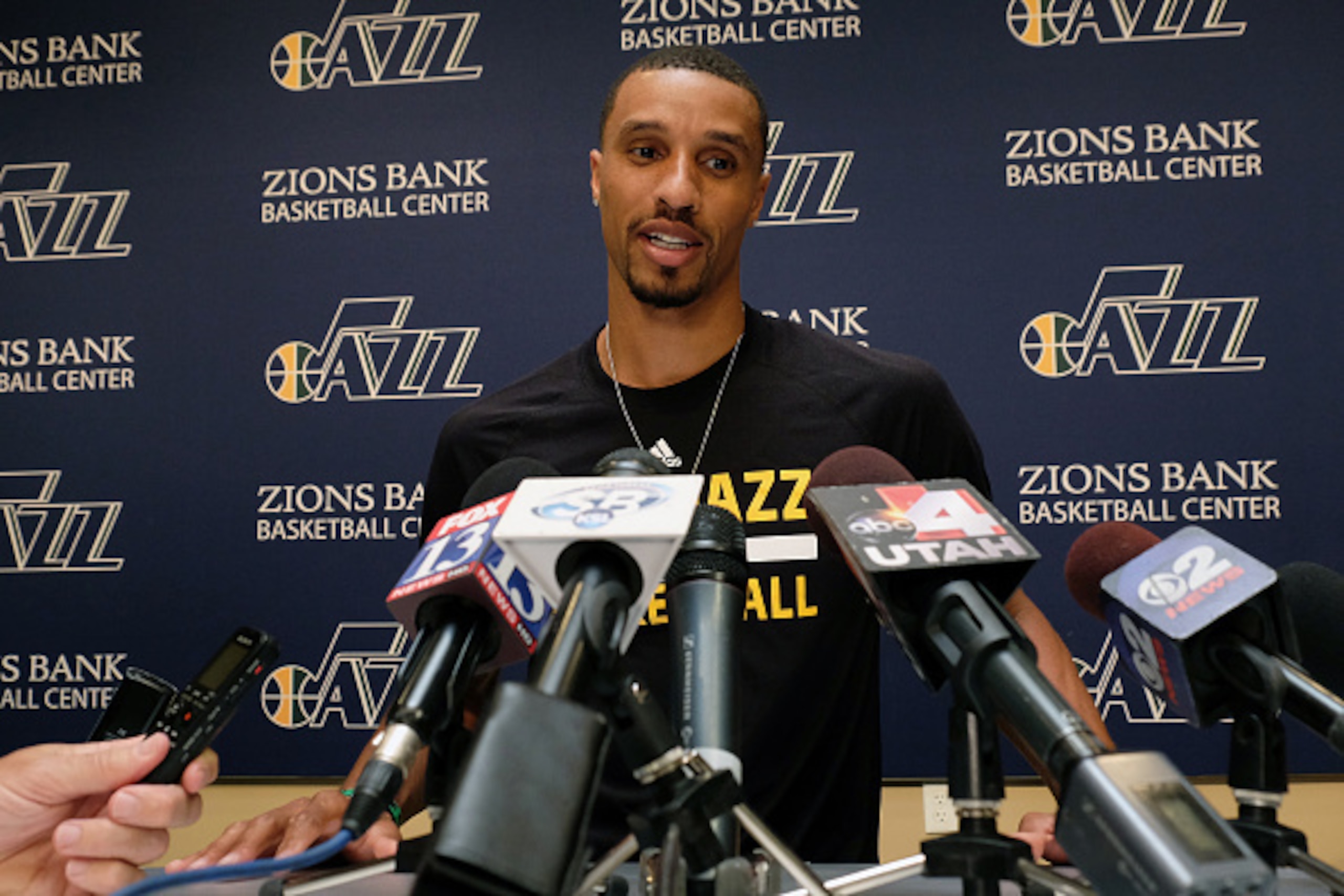
The Jazz can see the light at the end of their breakthrough tunnel. In fact, they used it to guide their offseason.
Rather than add to their prospect collection with the No. 12 pick, they flipped it in a three-way deal for battle-tested floor general George Hill. The lanky 30-year-old has been a playoff participant in seven of his eight NBA seasons and was one of only 12 point guards to post positive real plus-minus ratings at both ends of the court in 2015-16, per ESPN.com.
Hill and MVP Stephen Curry were the only qualified players to average at least 12 points, four rebounds and three assists per game and shoot 40 percent from three, according to B/R Insights. Should Hill reproduce that line, he'd be the first player in Jazz history to do so.
As Bleacher Report's Andy Bailey observed, Hill immediately provides a sizable step-up in point guard production:
Hill's low-maintenance game means that Hood, Burks and Gordon Hayward won't need to curtail their offensive creativity, and his outside shot brings breathing room to an offense that often features two interior bigs. His 6'9" wingspan adds even more length to what was already a top-10 defense. Not to mention that all of this eases the burden Exum will shoulder in his return.
Utah approached the rest of its summer with the same desire for immediate gratification. Free agency brought 35-year-old Joe Johnson, an interchangeable forward with a vast array of scoring skills and nearly 4,000 minutes of playoff experience. Veteran big man Boris Diaw arrived in a trade, and the draft delivered seniors Joel Bolomboy, Marcus Paige and Tyrone Wallace.
"We added a guard, we added a wing, we added a big and we added to our depth," Jazz general manager Dennis Lindsey said, per Mike Sorensen of the Deseret News. "We've improved and are better able to manage our season with the depth we have."
Rotation Breakdown
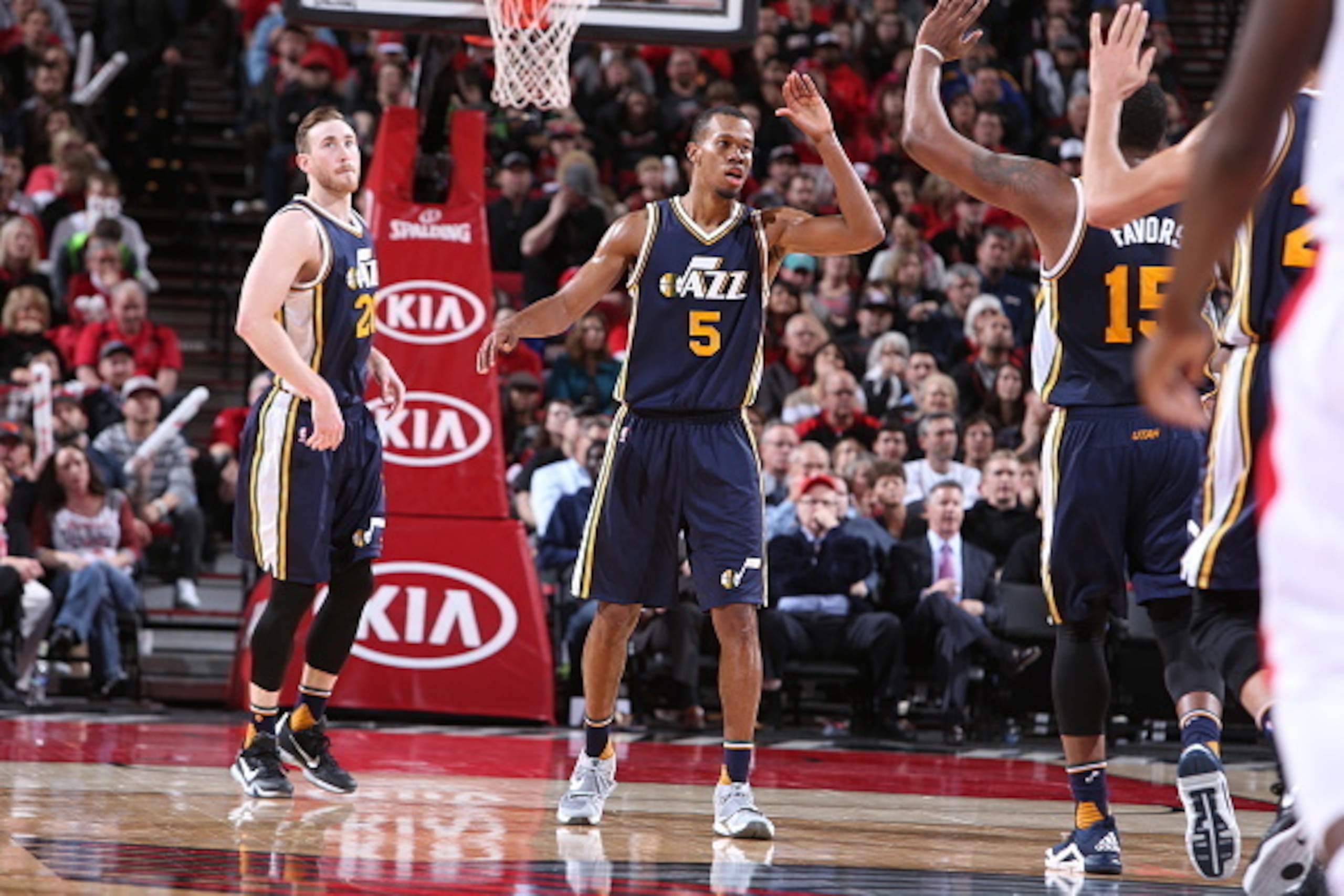
For all the talent and depth assembled on this roster, head coach Quin Snyder should have an easy time setting his starting five.
The quartet of Hood, Hayward, Favors and Gobert posted a plus-5.0 net efficiency rating over 688 minutes last year, which would have ranked sixth overall. Hill is the obvious candidate to fill the fifth spot, as Utah's lead guards ranked 20th in points (19.6), 30th in assists (5.6) and 30th in rebounds (4.3) last season, per HoopsStats.com.
As Exum finds his footing, he'll fight for the most reserve minutes. But Burks and Johnson should be right there with him, giving Snyder a seemingly endless supply of long, versatile wings.
Sophomore Trey Lyles holds the distinction of first big man off the bench, as he can stretch the floor and create offense. Diaw rounds out the second five, though Jeff Withey will be utilized when Utah needs more size and rim protection—assuming the Jazz guarantee his $1.0 million salary, per Basketball Insiders.
| George Hill | Rodney Hood | Gordon Hayward | Derrick Favors | Rudy Gobert |
| Dante Exum | Alec Burks | Joe Johnson | Trey Lyles | Boris Diaw |
| Shelvin Mack | Joe Ingles | Joel Bolomboy | Jeff Withey | |
| Raul Neto |
As CBS Sports' James Herbert noted, it's tough to find weak links in this group:
"This team should be a powerhouse. Most opponents will not have the big men to deal with a frontcourt duo like Derrick Favors and Rudy Gobert. Most will not have two top-notch perimeter defenders to match up with Gordon Hayward and Rodney Hood, either. George Hill is the perfect low-maintenance, defense-first, floor-spacing point guard for this group, and Utah's bench depth means that few teams will be as versatile on both ends.
"
The Jazz might not overwhelm opponents with individual talent, but that's not what this team was constructed to do. The strength resides in the collective, and Utah's top-to-bottom muscle looks as powerful as almost any in the NBA.
Reasons for Confidence
On the surface, Exum appears an unlikely source of optimism.
He hasn't seen regular-season action since April 2015, and his rookie campaign was an unmitigated disaster on the offensive end. Of the 274 players who logged 1,000 minutes that season, the Australian point guard ranked dead last in player efficiency rating (5.7) and 267th in true shooting percentage (45.7).
Yet the Jazz were substantially better with their prized rookie on the floor. And once he cracked the opening lineup at the All-Star break, he helped transform Utah into a defensive terror.
Remember, Exum had neither a reliable jumper (29.3 percent) nor a discernible offensive identity, and the Jazz still fared 5.1 points better per 100 possessions when he hit the hardwood. That's a testament to his unique defensive gifts—his 6'6" frame and 6'9 ½" wingspan present a host of problems for opposing point guards. With elite size and athleticism, he's a mobile road block—too tall to finish over and too quick to get around.
He needs to develop at the opposite end, but he's had the past year-plus to focus on exactly that.
"It's given me an opportunity to kind of work on everything that I need to work on, and step back from the game and be able to learn," Exum said, per Gordon Monson of the Salt Lake Tribune. "Being away from playing, and seeing the team, you get to kind of realize how we can get better."
With Hill around, the Jazz have no reason to rush Exum's return. They can afford him a soft landing and then increase his exposure at whatever rate his game dictates. Given the value he provided as a raw rookie, his polished version could be the type of prize that pushes Utah into full-fledged contention.
Reasons for Concern
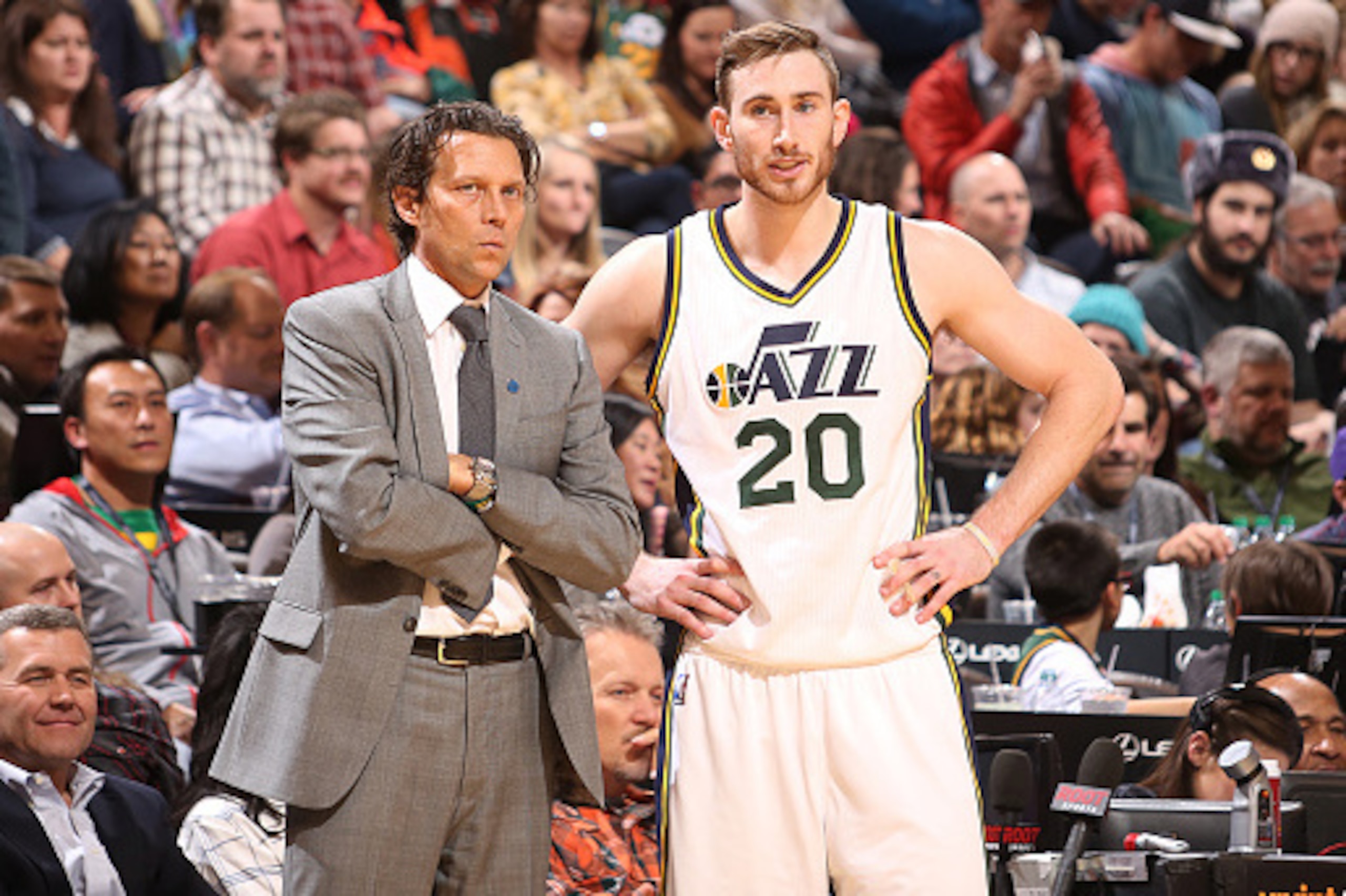
When the shot clock is off and the scoreboard isn't in Utah's favor, who's the one player capable of getting them a victory? Considering only four teams had more games decided by three points or fewer last season, it's safe to assume this question keeps Snyder up at night.
Hayward averaged the most points in 2015-16 (19.7), but his 43.3 field-goal percentage ranked just 22nd among the league's (30) 19-plus-point scorers. Hood has yet to post an average player efficiency rating, most of Favors' points are created by others (63.4 percent of his career field goals have been assisted) and Gobert is a garbage man.
Utah combats this problem by adhering to a team-based system offense. The Jazz passed more than anyone last season (354.8 per game), which is remarkable since no one played at a slower pace (93.26 possessions per 48 minutes).
But while it's tough to knock a team for over-passing, Utah at least toes the line of too much ball movement. It saw a league-high 11.0 percent of its offensive possessions last until the final four seconds of the shot clock, resulting in too many difficult shots against set defenses.
Thus the Jazz must find more easy buckets. They have the athletes to pick up the pace, and their selflessness could generate a stream of open looks in transition. Having Burks and Exum healthy should lead to more aggressive attacks off the dribble, and the spacing will improve with the offseason additions and Lyles' rise through the rotation.
Utah's offense wasn't bad last season—just mediocre (17th in efficiency). But with a clear motivation to win now, it's obvious where this team needs to improve.
Predictions

The Jazz aren't the typical up-and-coming team. Barring more medical woes, they shouldn't need to scrap for one of the final playoff berths. And if they make the postseason, they won't be a happy-to-be-here participant.
Utah had the league's 10th-best point differential last season (plus-1.8, per SportingCharts). That's a playoff credential in most years, and it's one that should rise after an offseason of recovery and reinforcement.
"This is a versatile, mammoth team that should win 50 games next season," wrote ESPN.com's Zach Lowe. "Seriously, predicting 50 wins for the Jazz is not bold. They are that good."
So many central players are either entering their primes or still climbing toward them. The new veteran voices in the locker room will help guide this nucleus to previously unseen heights. Forget about simply securing a playoff spot; the Jazz should compete to host a postseason series or two.
- Final Record: 50-32
- Division Standing: First in Northwest
- Playoff Berth: Yes
- B/R League-Wide Power Rankings Prediction: 4th
Unless noted otherwise, statistics used courtesy of NBA.com and Basketball-Reference.com.
Zach Buckley covers the NBA for Bleacher Report. Follow him on Twitter @ZachBuckleyNBA.

.jpg?w=2560 "Grading WWE Raw 🔠")


.jpg?w=2560 "Viral Rams Coach Vid 🖕")
.jpg?w=2560 "Injury-stricken Seahawks signing veteran RB")