Germany Have Yet to Find the Right Balance in Their Hunt for Euro 2016 Glory
Germany's first two matches of their Euro 2016 campaign have followed a familiar script: Much like in the four previous major tournaments under head coach Joachim Low, the team followed up a fairly convincing win in the opening game with a somewhat underwhelming second performance.
Having beaten Ukraine 2-0 and drawn 0-0 with Poland, "they're top of the table, of course, but none the wiser about their chances to win the competition," as Raphael Honigstein wrote for ESPN FC.
As in those previous tournaments, critics are openly wondering how good this Germany side really is after the goalless draw with their north-eastern neighbours. They might have a point, seeing as the attacking performance left a lot to be desired, and Poland, arguably, were closer to a win, even despite Manuel Neuer not having to make a single save in the entire match.
TOP NEWS

Man City Inflated $1B+ Profits 🤯
Live Int'l Break Goals and Highlights 🔥
Man City Breaks Internet 🍿
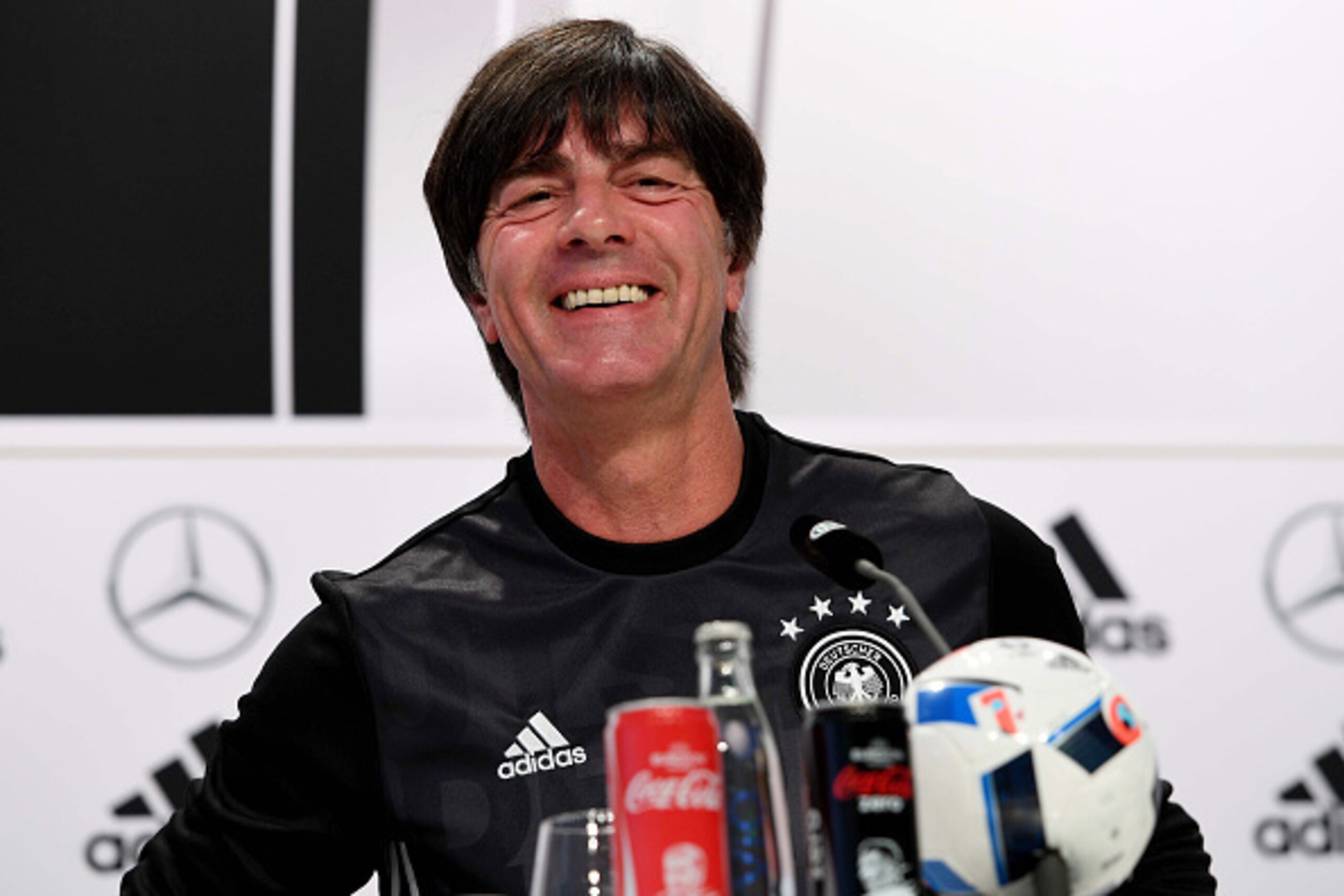
Low seems relaxed, having experienced this scrutiny before. In his press conference on Saturday morning, the 56-year-old said, per Dirk Krampe of Ruhr Nachrichten (link in German), that the criticism put a smile on his face because it resembled the discussions of 2014 when, of course, Germany won the FIFA World Cup.
It's easy to forget now, presumably because the 7-1 semi-final win over host nation Brazil casts such a big shadow, but Germany didn't really get going early on. The 4-0 win over Portugal looked more convincing than it was—and an early penalty and a sending off for Pepe before half-time aided it—the 2-2 draw with Ghana was flattering, and the 1-0 win over the United States in the final match of the group stage required hard work.
Germany then needed a Neuer masterclass to overcome Algeria in the round of 16. "It wasn’t until the quarter-final that Germany found the way of playing that would take it to the crown," Jonathan Wilson wrote for Sports Illustrated after the Poland match. "The oddity, though, is that having found the solution then, it seems to have been misplaced again at some point over the past two years."
Indeed, going by the performances between the two tournaments and in the two first matches in France, Germany are nowhere near their level from Brazil. Most notably, their attack is stuttering, with individual performances from important figures such as Thomas Muller or Mesut Ozil not up to par so far.
Most of the criticism revolves around Mario Gotze, who has looked out of his depth leading the line at the Euros. Oliver Kay of the Times noted the 24-year-old's struggles:
"A study of Gotze’s heatmap [against Poland] confirms the impression gained throughout the game and indeed the previous outing against Ukraine four days earlier: that, against a compact defence, his willingness to receive the ball in tight areas did not translate to an ability to make things happen.
Nobody wants to go into battle with a blunt instrument, which an unsophisticated centre forward can often resemble in the modern game, but nor does it stand to reason that every reconditioned playmaker, such as Gotze, will be transformed into a rapier.
"
It would be too easy, however, to lay all the blame on Gotze's shoulders. Germany's struggles going forward are more a structural problem than one of personnel: They have yet to find the right balance in their play.
"It can attack, and it can defend, but it seems incapable of working out a balance between the two modes," Wilson wrote. "Its games go through spells when it seems impossible either side should ever score and spells when it seems a goal must come at one end or the other."
It was evident especially in the match against Poland: Germany were solid at the back in the first half but failed to hit the target even once for the first time at the Euros since a match against Italy in 1988, per stat provider Opta.
In the second period, then, they were more inventive going forward and had a couple of chances but also looked more vulnerable defensively, relying on last-second blocks from Jerome Boateng and interventions from Mats Hummels to keep Poland out.
"Germany’s problem seems to be that if it is to remain secure at the back, it lacks the creativity to break down sides that don’t gift its goals," Wilson noted. Indeed, Germany have only really looked consistently dangerous in France so far when the game was open for both sides.
Coughing up three big scoring chances against a quintessentially pedestrian Ukraine side in the first half of their opener, Germany "were a slightly broken team," as Low conceded after the match, per Honigstein. "Our spatial distribution was not good. We had a hole in front of defence."
The second half of that game was their most comfortable spell at the tournament so far, as they smothered their opponent with possession: "We kept our positions better, which led to more accuracy and confidence in our passing game. We were also able to press them higher. They didn't have single clear-cut chance."
It may well be the blueprint for the matches to come in France, but it's highly questionable whether Germany can keep the ball should they face a Spain side that looks frighteningly comfortable so far, or whether it would be enough to break down a solid defensive side such as Italy.
At least Low can feel good about the individual quality of his defence. The trio of Neuer, Boateng, who is arguably Germany's player of the tournament after two matches, and Hummels is a great foundation.
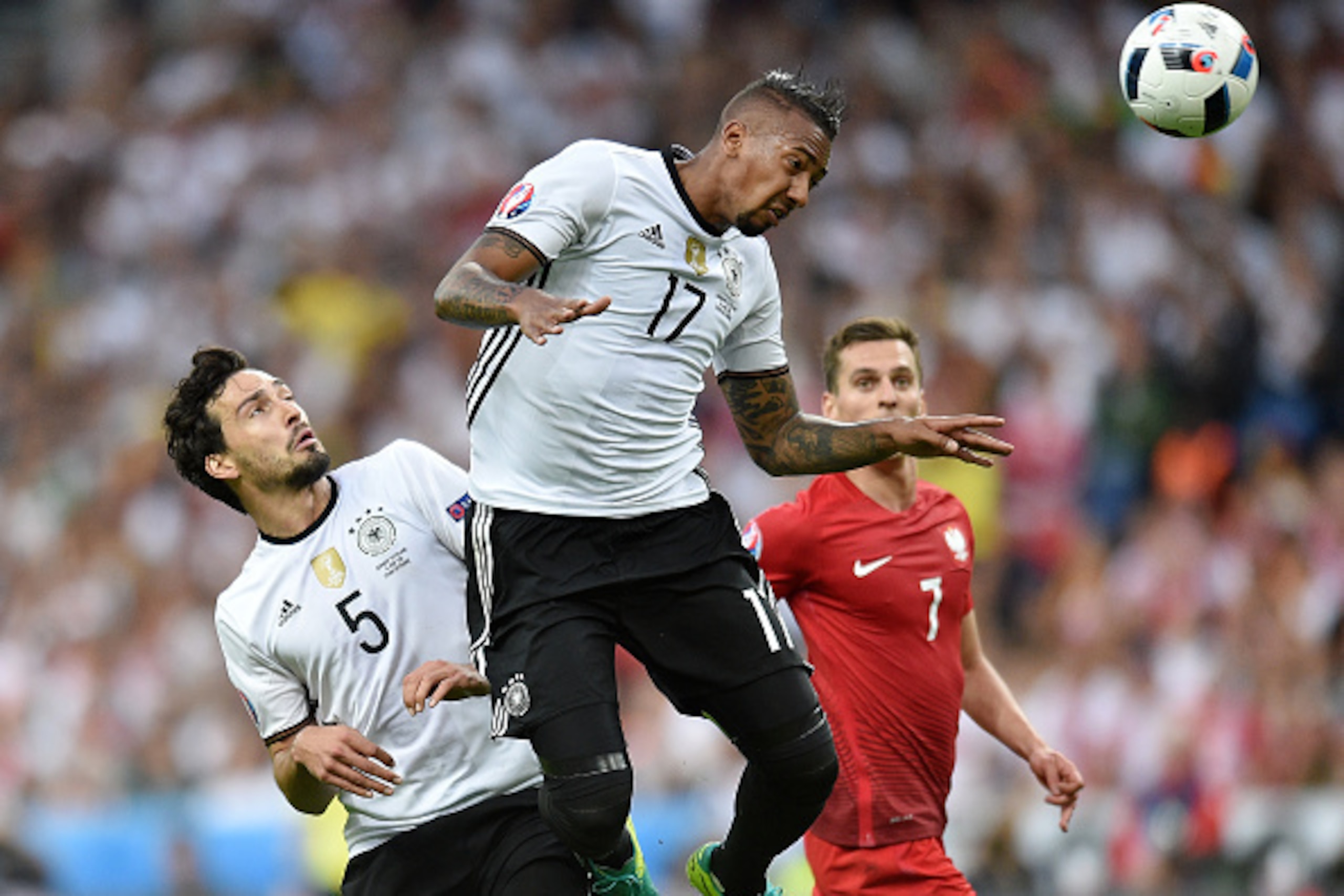
The latter looked rusty for a while to start the Poland match, as expected after he had been out injured following the DFB-Pokal final on May 21, but improved greatly as the game went on. Neuer, meanwhile, hasn't been tested since the first half against Ukraine, where his two impressive saves kept Germany in the lead.
These three defensive pillars make up for a lot of defensive issues this team has at times shown in the last two years. It remains to be seen whether they can carry their team-mates all the way, especially once they start facing more positive sides in the knockout stages, of course, but so far, so good.
Regardless, it wouldn't be too surprising to see Low installing a bit more protection for his back line in the later stages of the tournament. The plan could well be to insert Bastian Schweinsteiger into the starting XI at some point.
The team captain only came on a minute from full-time against Poland and didn't play against Ukraine, but there's a sense around the German camp that he'll play an important part in France:
His inclusion would allow Toni Kroos, by far Germany's most creative player so far, to move a bit further up the pitch and, most likely, push Ozil to the left wing.
This writer argued before the tournament started that Ozil should not have to play out wide as he did in 2014, but with the Arsenal man's understated performances to this point and Germany focusing heavily on the left wing in their attacking moves, it may actually help both the team and the 27-year-old himself.
In Brazil, this setup ultimately led to success for Germany, and his quest for stability and balance could once again persuade Low to change his plans in the coming matches.
At any rate, with the team not looking far ahead of their competition as they did two years ago, it seems as though they will have to grind out results at Euro 2016. It's not like Germany lack experience in that regard.
Lars Pollmann is a Featured Columnist who also writes for YellowWallPod.com. You can follow him on Twitter.
.jpg?w=2560 "Giants Relase OBJ")

.jpg?w=2560 "J.J. McCarthy No Longer '9' 😲")
.jpg?w=2560 "Harbaugh Backs McDaniel 🤝")