
Thiago Motta's Number Inconsequential to Italy's Euro 2016 Quest
In the week since Italy manager Antonio Conte announced his final choices for his 23-man roster for the 2016 UEFA European Championship, there has been a lot of controversy in his selections.
Faced with a rash of injuries, especially to his midfield, the former Juventus boss went for experience over youth. Inexperienced but talented players like Giacomo Bonaventura, Marco Benassi and Jorginho were left at home. Instead, shirts were given to 31-year-olds like Marco Parolo and Emanuele Giaccherini, the latter of whom also has intimate knowledge of Conte's systems thanks to their years together at Juve.
Another veteran along for the ride is Daniele De Rossi, who, at 32 years old, was thought to be fading out of the national-team picture despite carrying 103 caps—the sixth most in the country's history.
TOP NEWS

New NFL contenders starting to emerge after Week 4

Deion Playbook Found at Hotel
.jpg?w=2560 "Cardinals Giants Football")
NFL investigating 2 referees for separate viral exchanges
De Rossi also brings 18 goals to the tournament, which somewhat depressingly is three times as many as the next highest-capped man in the squad—which happens to be Giorgio Chiellini.
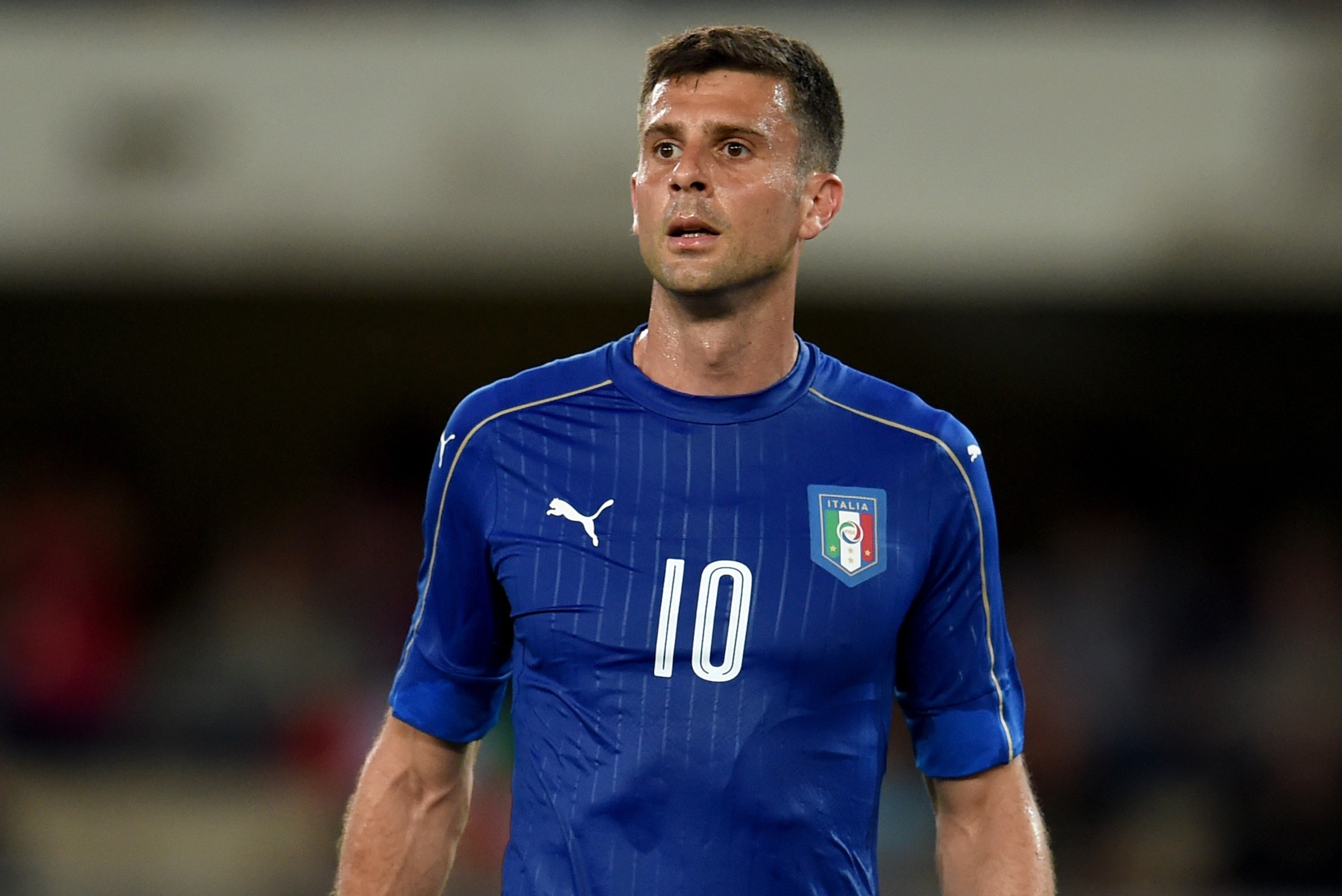
Another older player brought in at the expense of young talent is Thiago Motta of Paris Saint-Germain. But Conte has drawn the ire of Italy fans for more than just Motta's age. The 33-year old has controversially been issued the No. 10 shirt. So much consternation has come from this decision that it's worth looking into in detail—even if at the end of the day it may not mean much.
For those of you who are brand new to the game of football, a quick history lesson about squad numbers—and the No. 10 in particular—is in order.

The first documented use of squad numbers in association football came on March 30, 1924, in the United States, in the forerunner to the Lamar Hunt U.S. Open Cup. There's no detail as to the genesis of that first moment, but it could have something to do with the trend toward uniform numbers in major league baseball, which had begun six years before.
It wasn't until four years later that numbers moved to Europe in a pair of games in England, one between Arsenal and Sheffield Wednesday and the other between Chelsea and Swansea Town.
For years, numbers were issued based on who was in the starting lineup and where they played. Goalkeepers were No. 1. The iconic shirt for centre-backs became the No. 6, after the position of the old centre-half when the pyramid and "WM" were in fashion.
The No. 10 became an icon because of where the men who wore it played. They started as inside-forwards, and as tactics evolved turned into attacking midfielders and second strikers. They were goal creators and goalscorers, players who could dribble, pass and shoot in equal measure. They were the most exciting players on the field.
Throughout the course of history the best players in the world have worn the No. 10. Pele wore it. Diego Maradona was so iconic as Argentina's No. 10 that the country tried to get FIFA to change their numbering rules for international tournaments so they could retire it. Napoli did just that for him at the club level.
Italy has had its share of iconic players wear the number. The likes of Alesesandro Del Piero, Francesco Totti, Gianni Rivera and Roberto Baggio have all worn it for club and country. Go back even further and you find the number on the back of Valentino Mazzola, one of the true greats in world-football history and the man who pretty much invented the position the No. 10 is expected to be today.
Motta, by contrast, is not at all what is expected of the shirt. He's got none of the pace that is standard. He's an excellent passer—according to WhoScored.com, he led Ligue 1 averaging 93.1 passes per game, completing them at a 92.5 percent clip. But he's not the incisive creator that is typical of the number either—this year in league play he had just one assist and and only averaged a key pass every two games.
His style of play has seen many roundly criticise the decision to give him the shirt. There may also be a darker side to this resistance. Motta was born in Brazil, and there is likely a segment of the population who aren't happy that the No. 10 has gone to an oriundo—regardless of the fact that Argentina-born Omar Sivori also wore the shirt in the 1960s.
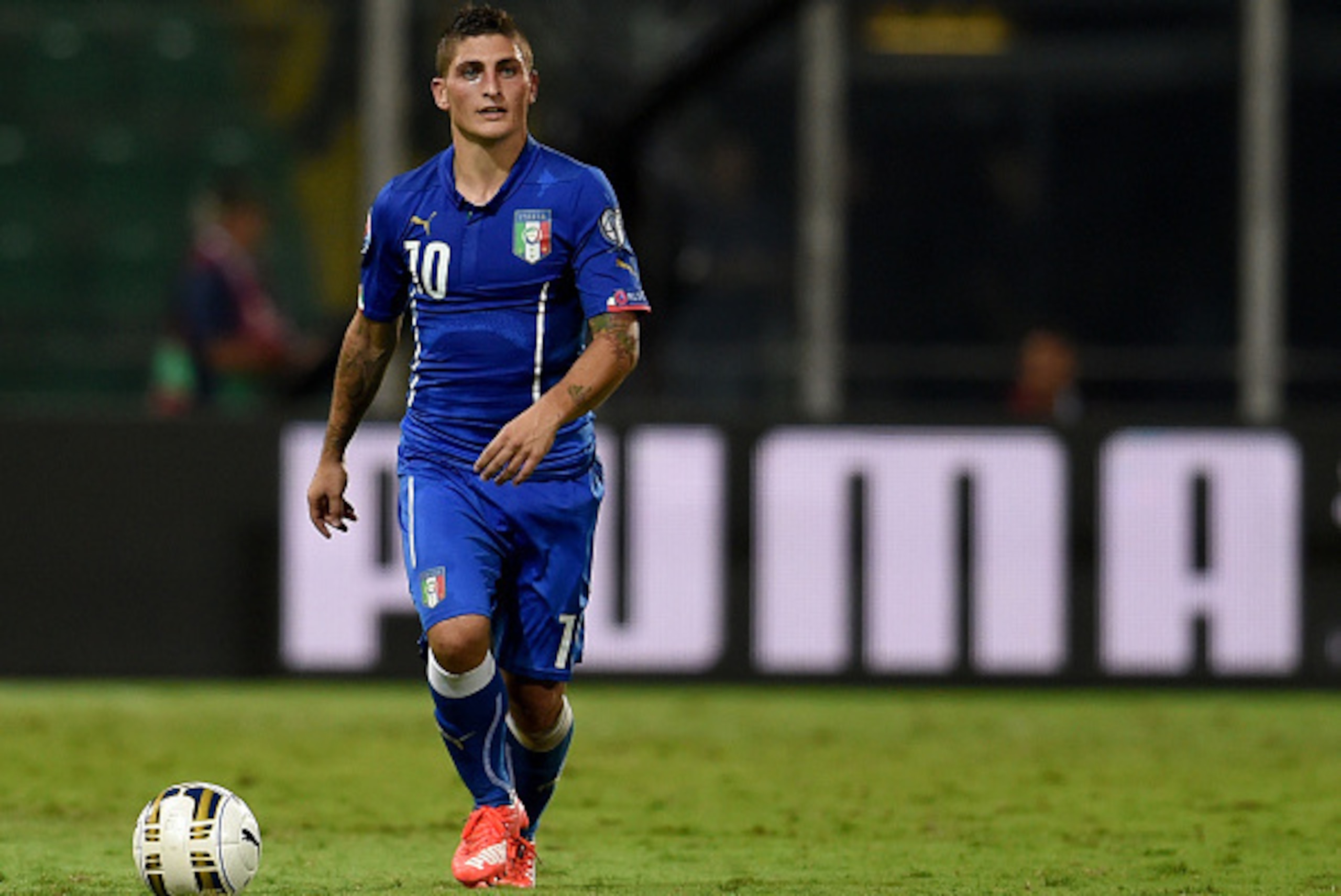
In the last few rounds of qualifying, Motta's PSG teammate Marco Verratti wore No. 10 and, according to James Horncastle's analysis of the situation on WhoScored, was tipped for it before his sports hernia ruled him out of the tournament.
Conventional wisdom would have had one of the only two real flair players on the roster—Napoli's Lorenzo Insigne or Fiorentina's Federico Bernardeschi—as next in line for the number. So why go with Motta?
There are a few possibilities. One is that Conte was hesitant to heap pressure on a young player. To have the No. 10, and carry on the legacy of such an illustrious line of players, would be a huge burden.
Granted, those players have shown they can handle that kind of pressure, at least at club level. Bernardeschi was given the Viola's No. 10 this year, and no greater a presence than Gianfranco Zola has advocated for Napoli to take their No. 10 out of retirement and hand it to Insigne. It's possible that giving one of them the honour would spur them rather than hinder them.
But at the same time it's not an unreasonable concern. Two years ago Insigne—his club's only representative on Italy's World Cup squad—was booed at the beginning of the 2014-15 season, mostly because of his refusal to speak at a preseason function but also in part because of his poor showing in Brazil. Bernardeschi's overall numbers—six goals and four assists in all competitions—were unimpressive this year.
Another possible explanation is that Conte is using the move to inspire his forwards. A master motivator, his decision to bestow the No. 10 on Motta could be a message: I don't think any of you are worthy of this yet. Prove me wrong.

A third possibility is that he simply doesn't care where the number goes. Conte has never employed a trequartista and doesn't count as much on individual flair as much as teamwork in attack. This could just be the coach broadcasting his opinion that the number doesn't mean that much.
And at the end of the day, does it really? Will Italy's chances of advancing in the tournament be affected by the fact that one person and not another is wearing a number—one that has become more of a symbol as time has gone on?
In 2012, Football Italia's Antonio Labbate investigated the apparent devaluing of the No. 10 in Italy. At the time of his writing, two Serie A teams (not counting Napoli) hadn't issued the number at all. Others had issued them to some atypical players—target men like Maxi Lopez or Alberto Gilardino or box-to-box players like Alberto Aquilani. One team, Genoa, settled a dispute between two players who wanted the jersey by holding a blind auction (with proceeds going to charity).
In an era where players change clubs more frequently and squad numbers are set rather than rotating based on the lineup, the No. 10 has lost some of its mystique.
Motta isn't the archetype of the shirt, but the number is being given to that kind of player less and less in football these days. It may be jarring to see it on his back, but at the end of the day, it really isn't going to have much bearing on what happens on the field.
This has been a lot of hubbub for nothing.
.jpg?w=2560 "Hill Injury Update Football")
.jpg?w=2560 "Titans Giants Football")
.jpg?w=2560 "Tyreek makes another cryptic post amid Chiefs rumors")