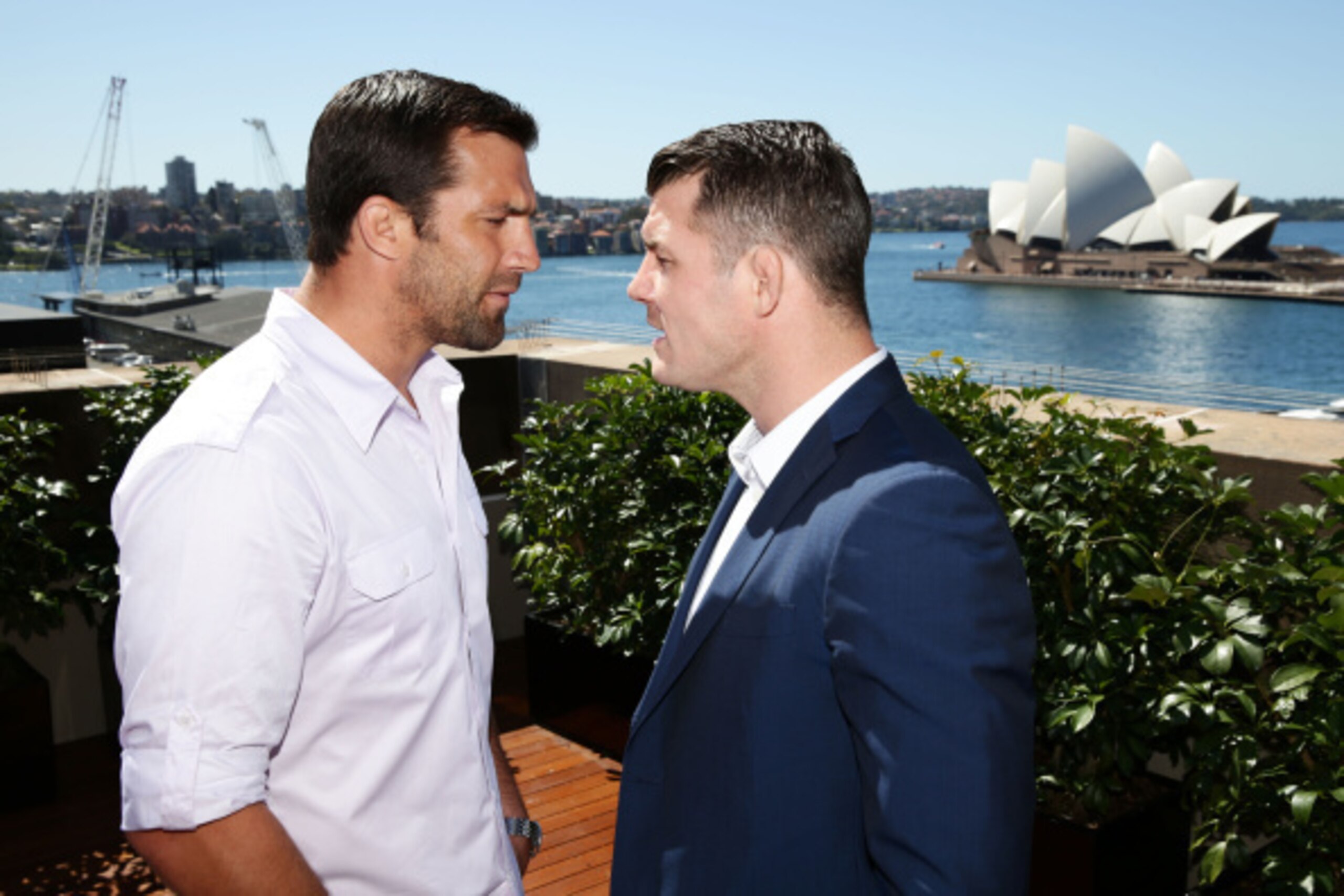
The Complete Guide to UFC 199: Rockhold vs. Bisping
The UFC returns to Los Angeles with the UFC 199 pay-per-view card on Saturday night, June 4. This is an excellent event from top to bottom and is stacked with fun, well-matched fights.
In the main event, longtime middleweight contender Michael Bisping finally gets a title shot as he replaces the injured Chris Weidman against champion Luke Rockhold. Bisping fell to Rockhold only 18 months ago, but he's the best option on short notice. This feels something like a lifetime achievement award for the 10-year UFC veteran, who has done so much for the promotion over the years.
In the co-main event, bantamweight champion Dominick Cruz takes on Urijah Faber as the two men complete the trilogy they began more than nine years ago. This is a necessary bout and one with real narrative interest, even if it feels like something of a gimme fight for Cruz.
The rest of the card carries real interest. Rising featherweight Max Holloway takes on Ricardo Lamas in a great action fight, and Dustin Poirier and Bobby Green open the main card in the odds-on favorite for Fight of the Night honors.
The prelims are likewise compelling. Youthful welterweights Tom Breese and Sean Strickland headline the Fight Pass portion of the event, while Clay Guida attempts to hold the gate against the rising Brian Ortega on Fox Sports 1. The lightweight scrap between Beneil Dariush and James Vick should be a barnburner as well.
From top to bottom, this is a fantastic event. Let's take a look at each fight.
The Fight Pass Prelims
1 of 7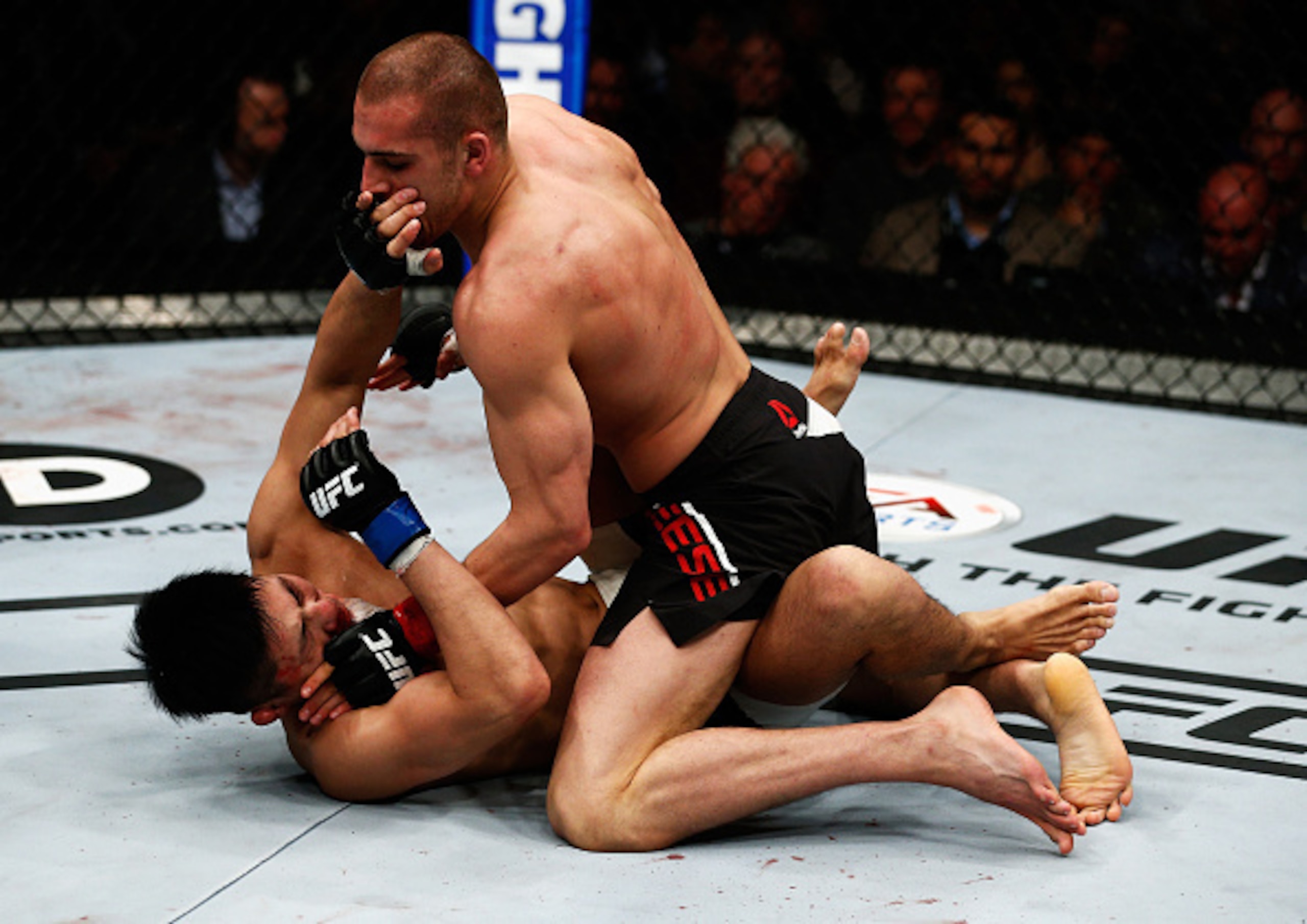
Lightweights
Polo Reyes (5-2; 1-0 UFC) vs. Dong Hyun Kim (13-7-3; 0-1 UFC)
Low-level lightweights meet in the evening's opener. Reyes, a veteran of the second season of The Ultimate Fighter: Latin America, debuted with a knockout win over Cesar Arzamendia in November. Kim, who shares a name with the UFC welterweight contender, lost a late-notice debut to Dominique Steele that same month.
Reyes is an aggressive striker with particular skill on the counter and legitimate power in his hands, but he's lacking as a wrestler and grappler. Kim's best facets are his strong clinch takedowns and top control, though he isn't overpowering and is only a competent striker.
Prediction: If Reyes can keep this standing, he should chew up Kim on the feet; if Kim can work takedowns, he should control or finish Reyes on the mat. The latter seems marginally more likely, so the pick is Kim by decision.
Middleweights
Kevin Casey (9-4, 2 N/C; 1-2, 2 N/C UFC) vs. Elvis Mutapcic (15-4; 0-1 UFC)
California's Casey takes on Iowa's Mutapcic in a solid middleweight scrap. Casey was a cast member on TUF 17 and returned to the promotion after a stint in the RFA organization. He has since failed a drug test and scored two no-contests along with a 1-1 record. Mutapcic debuted on short notice at 205 pounds against Francimar Barroso in January and lost a decision.
Both fighters desperately need a win to stay in the UFC.
Casey is a big, strong and powerful southpaw. He flings hard punches at range before throwing himself into the clinch and takedown attempts, but he does his best work from top position with heavy punches and submissions. Mutapcic is primarily a striker. He packs big power in his punches and kicks and is a solid wrestler to boot, but he works at a slow pace and doesn't produce enough offense.
Prediction: Casey's style requires a great deal of energy, and if he can't finish early he tends to gas late. If Mutapcic can weather the first round, he should take it; he knocks out Casey in the second round.
Light Heavyweights
Jonathan Wilson (7-0; 1-0 UFC) vs. Luiz Henrique da Silva (10-0; 0-0 UFC)
California's Wilson takes on debuting Brazilian da Silva in an excellent matchup of light heavyweight prospects. Wilson knocked out Chris Dempsey in 50 seconds in his debut last August, while da Silva punched his ticket to the UFC with a win over UFC veteran Ildemar Alcantara in January.
Wilson is a big, athletic southpaw with an extremely quick straight left and big power. He seems to be a competent wrestler and grappler, but he has yet to be tested. Da Silva is likewise a striker by preference and carries substantial power in his kicks. He doesn't offer much else, and like Wilson, he's still raw.
Prediction: Wilson's physical gifts should be the difference here. He knocks out the hittable da Silva in the first round.
Welterweights
Sean Strickland (17-1; 4-1 UFC) vs. Tom Breese (10-0; 3-0 UFC)
Two of the welterweight division's best prospects clash in an outstanding matchup. Strickland has won two in a row and most recently finished Alex Garcia in February. Breese, a native of England who now trains at Montreal's Tristar Gym, has finished two of his three UFC wins in the first round. He took a decision from Keita Nakamura, also in February.
The winner will be the next big thing in a division ripe for a turnover at the top and will likely receive a top-15 opponent in his next outing.
Breese is enormous for the division at a thickly built 6'3" and puts his height and reach to good use in every phase. The southpaw is a patient and range-oriented striker who makes good use of feints and boasts pinpoint accuracy with his sharp, powerful straight left. He's hittable in the pocket, though, and could be outworked by a more active striker.
The heart of Breese's game lies elsewhere. He's a monster of a clinch fighter with great leverage and a gift for landing hard knees, and he combines that with slick takedowns. His grappling is even stronger, with a heavy base, smooth passes, hard strikes and a gift for getting to the back. He makes excellent use of leg locks to sweep as well.
Strickland is also big for the division at a rangy 6'1". He throws a hard, consistent jab and follows with a sharp straight right, mixing in kicks at all levels for variety. Pace and volume are strong suits.
The American is an efficient takedown artist with an array of trips in the clinch and solid shots. He isn't an impenetrable defensive wrestler, but he's more than competent. Strickland does his best work from top position with vicious, quick-paced strikes powered by strong posture and passes technically to dominant positions.
Prediction: This is a tough fight to call. Strickland could outwork the slower-paced Breese at range, and if he can get on top, he's capable of doing serious damage. The Englishman is a harder puncher, however, and has a substantial edge in height and reach. He's stronger in the clinch, a comparable wrestler and no worse on the ground. Breese edges out a competitive decision.
The Fox Sports 1 Prelims
2 of 7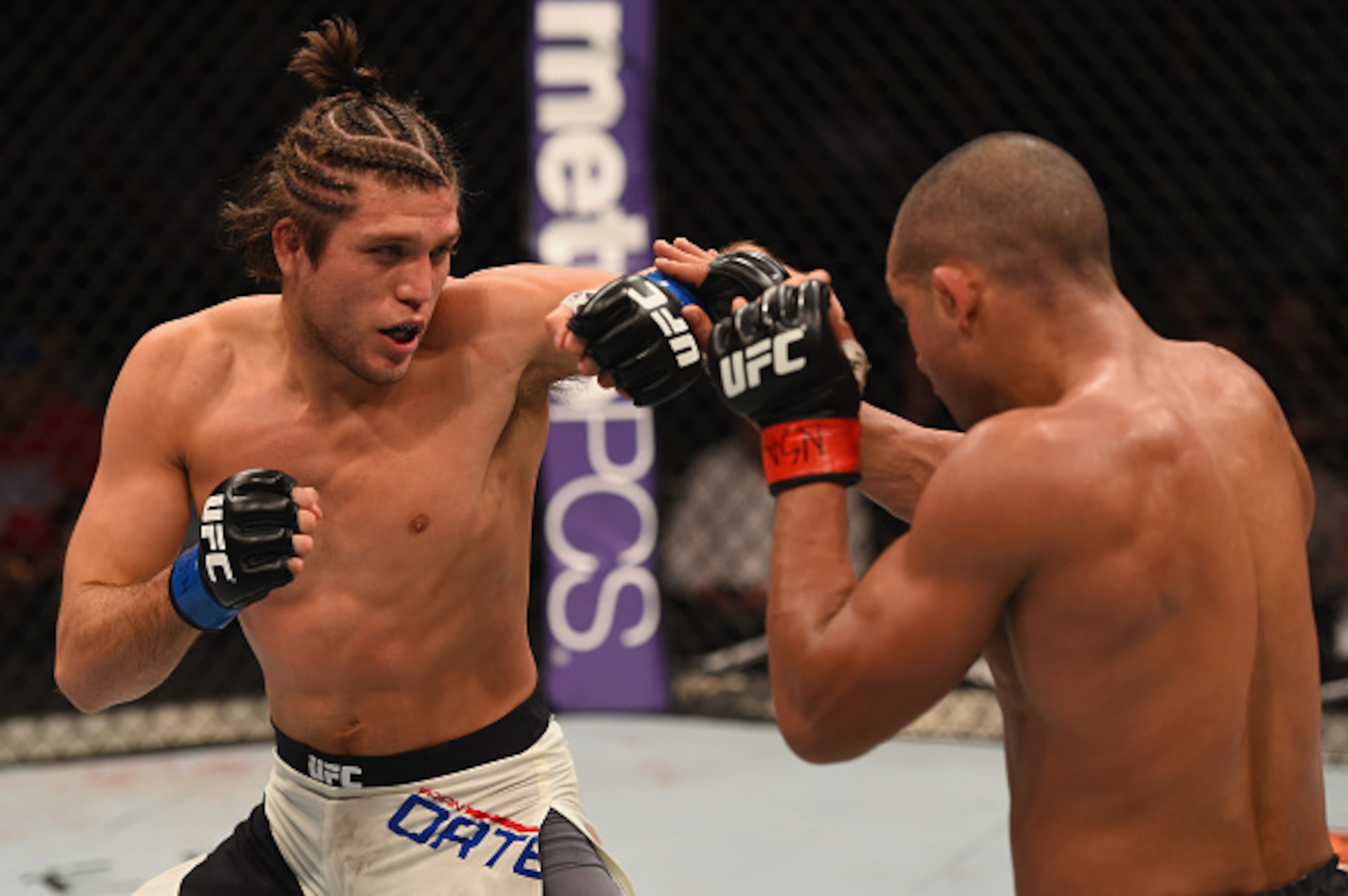
Featherweights
Cole Miller (21-9, 1 N/C; 9-7, 1 N/C UFC) vs. Alex Caceres (11-8, 1 N/C; 6-6, 1 N/C UFC)
Veteran featherweights meet in a solid matchup. Miller, a contestant on The Ultimate Fighter's fifth season, has been in the UFC since 2007. He dropped a decision to contender Max Holloway in February 2015 and then suffered an eye poke in a bout with Jim Alers in December.
Caceres has spent most of his UFC career at 135 pounds, but he defeated Masio Fullen in his return to featherweight, which snapped a three-fight losing streak.
Miller is a rangy featherweight at 6'1" and puts his height to good use with a long jab and straight right. He's not much of a wrestler, but he's an aggressive and technically sound grappler with sweet submissions on his back and on top. Caceres plays a similar game, particularly the emphasis on grappling and poor wrestling skills, but he prefers to kick at range.
Prediction: Miller is a little sounder as a striker, more dangerous on the mat and is substantially larger. He finds a submission in the second round.
Strawweights
Jessica Penne (12-3; 1-1 UFC) vs. Jessica Andrade (13-5; 4-3 UFC)
Brazil's Andrade drops from bantamweight to strawweight and takes on former title contender Penne in a crackling matchup at 115 pounds. Andrade lost her rematch with Raquel Pennington last September, which drove her down to strawweight after a successful run at 135 pounds.
Penne was a contestant on TUF 20 and defeated Randa Markos at the finale, which led her into a title fight with Joanna Jedrzejczyk last June. It was a one-sided beating, but Penne hung tough.
Andrade is a rock 'em sock 'em robot. She bulls her way forward into the pocket and drops long head-body punching combinations at a rapid pace. Clinch takedowns and a solid top game add another dimension. Penne throws a nice jab and solid kicks at range, but she is far too hittable. She likes trips and throws in the clinch and does her best work on the ground, where she's dangerous both on top and from her back.
Prediction: While Andrade is a slight underdog, she has a massive advantage on the feet and should chew up Penne in the striking exchanges. The American isn't a great wrestler and likes takedowns in the clinch, where Andrade is also strong, so Penne won't have an easy time getting Andrade down. The pick is Andrade by decision.
Lightweights
Beneil Dariush (12-2; 6-2 UFC) vs. James Vick (9-0; 5-0 UFC)
Talented young lightweights meet in an outstanding matchup. Dariush had won five in a row in the UFC's deepest division prior to April, when a momentary lapse against Michael Chiesa led to a submission loss. Vick has won five in a row himself, most recently defeating blue-chip prospects Jake Matthews and Glaico Franca.
This is a nice opportunity for Dariush to rebound and a huge step up in competition for Vick. Stylistically, it's a barnburner of a fight.
The submission loss to Chiesa notwithstanding, Dariush is an elite grappler. He has a technically sound and well-rounded approach on the mat, and unlike many grapplers on his level, he's a solid takedown artist as well. On the feet, the southpaw throws vicious kicks and is an improving combination puncher.
Vick is huge for the division at 6'3" and puts his height to good use with a long, punishing jab and a steady diet of kicks. While not a powerful puncher, he works fast and piles up the volume to the legs and body. Wrestling isn't his strong suit, but he has a great guillotine in transition that partially makes up for it.
Prediction: If Vick can keep this at range, he has a serious advantage in height and reach, as well as the pace to chew up Dariush with straight punches and kicks. It's more likely, though, that Dariush punishes Vick with kicks on his way into takedowns and top control. Dariush takes a decision.
Featherweights
Brian Ortega (10-0, 1 N/C; 2-0, 1 N/C UFC) vs. Clay Guida (32-16; 12-10 UFC)
Talented prospect Ortega gets a step up in competition against the veteran Guida. Since failing a drug test in his UFC debut, Ortega has emerged victorious in excellent scraps with Thiago Tavares and Diego Brandao. Guida has been on a rough run of late, alternating wins and losses in his last six fights. The aforementioned Tavares choked him out in November.
Ortega is a dynamic young fighter. He's an improving striker who throws a long jab and straight right along with some wilder spinning techniques, but he remains hittable and somewhat limited. Although a subpar wrestler, he's an incredible grappler, especially from his back. Triangle-armbar-sweep chains are his specialty, and he can do tremendous damage when he gets to top position.
Guida is a grinder by trade. He's more relentless than explosive as a wrestler, but his endless cardio and willingness to make his opponent uncomfortable work in his favor. From top position he's difficult to shake off and technically sound, while on the feet he has surprising power and acumen as a counterpuncher.
Prediction: Ortega is a substantial favorite, but Guida's path to victory is clear: take Ortega down and grind out rounds. He's done it to dynamic grapplers before and can do it again. Still, Ortega is a tremendous talent and could give Guida fits on the feet, and it's likely that he catches Guida at some point. The pick is Ortega by submission in the third, though with a serious caveat.
Dustin Poirier vs. Bobby Green
3 of 7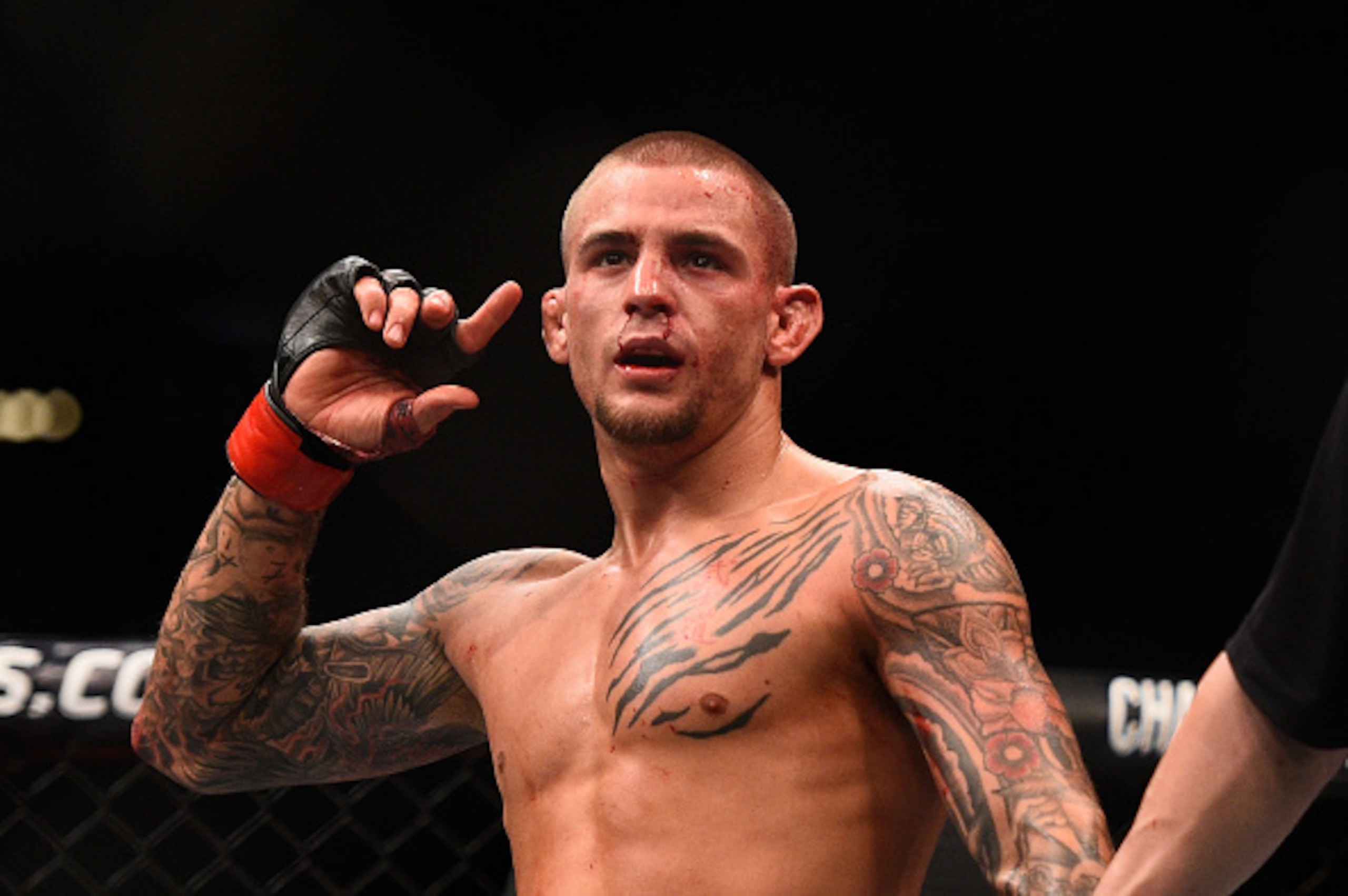
Lightweights
Dustin Poirier (19-4; 11-3 UFC) vs. Bobby Green (23-6; 4-1 UFC)
Talented lightweights on the cusp of breaking through to the division's elite meet in an excellent scrap. Poirier is 3-0 since moving up to 155 pounds after an 11-fight run at featherweight, and the higher weight class seems to suit him. The Louisiana native blasted Carlos Diego Ferreira and Yancy Medeiros in the first round and took a tough decision from hot prospect Joseph Duffy in January.
Green, a native of California, compiled an impressive four-fight winning streak to begin his UFC career before falling short against Edson Barboza. He has been out of action for the past 18 months.
This is an outstanding matchup, and the winner will have a claim on a top-10 opponent or possibly even higher in his next outing.
Poirier is a southpaw puncher. Despite spending so much time at 145 pounds, he's a thickly built and physically strong lightweight with good speed and crushing power in his hands. There's no area of the fight where Poirier is anything less than competent, and he has several in which he stands out.
The southpaw generally prefers to strike. He works his way forward behind a stinging right jab, a consistent barrage of low kicks and left straights that carry him forward into the orthodox stance and allow him to cover distance.
Poirier really goes to work when he can press into the pocket, where he strings together head-body combinations of two to four punches. He shows real craft in this range, consistently moving his feet to find angles and pulling his head off the center line both as and after he throws.
Part of the reason Poirier is so good in the pocket is because he's a monster in the clinch. He moves seamlessly from exchanging punches into a single-collar tie or an overhook, and from there he lands sharp punches, elbows and knees. Landing strikes as he breaks or enters the clinch is another specialty. His physical strength and skill meld together in a strong combination.
Wrestling is a solid secondary skill set for Poirier. He's an excellent defender of takedowns, and while he struggled with shooting from too far away in his younger days, he does a much better job of setting up his takedowns now.
While he has made only sparing use of his grappling skills in recent years, Poirier excels on the mat. He has a great series of chokes from the front headlock and drops bombs from top position, which he blends with passes and the occasional submission attempt.
Pace and volume are the Louisianan's strong suits, but if he has an issue, it's defense. He's better now than he was in his youth, but he still doesn't move his head enough and isn't active enough in parrying punches. The fact he's so often in the pocket makes this a real issue against elite competition.
Green is an awkward and unorthodox but effective striker. He boasts quick hands and good speed in general, and while he's not the most powerful puncher, he has serious craft in his game.
The Californian likes to keep his hands low or extended away from his head at range and switches stances in confusing ways. He might pressure his opponent in a square stance with his arms at full length, then explode forward into a clean three-punch combination before pulling back into an almost side-on stance. He throws a steady diet of oblique and round kicks at range to fill up the space between combinations.
Defensive soundness defines Green's game. Despite his low hands and awkward movements, he's hard to hit cleanly at any range. His awkward guard and constant head movement mean many shots are either deflected or don't land flush, and he excels at checking leg kicks as well. He tends to work at a quick pace as well.
The rest of Green's game is solid. He has a wrestling background and has the defensive chops to keep himself standing against even strong wrestlers, while offensively he can hit both shot takedowns and trips in the clinch. On the mat he has a particularly quick move to the back and is a good all-around grappler.
Betting Odds
Poirier -220, Green +180
Prediction
This is a great matchup and probably a bit closer than the betting odds indicate. Poirier will want to press forward, but Green's defensive acumen and propensity for trash-talking might make it difficult for the Louisianan to find his rhythm. As a puncher, the feeling he's not hurting Green with his shots could well force Poirier into making bad decisions.
That has happened before, and Green's defensive wrestling skills mean Poirier probably won't be able to go to a plan B on the ground if the striking isn't going his way.
Still, Poirier's big weapon here is his clinch game. Even if Green finds success exchanging with Poirier or is able to keep him on the end of his jab, the Louisianan can do serious damage inside. If he gets going in the clinch, that will open up the pocket for Poirier as well.
The pick is Poirier by competitive decision.
Dan Henderson vs. Hector Lombard
4 of 7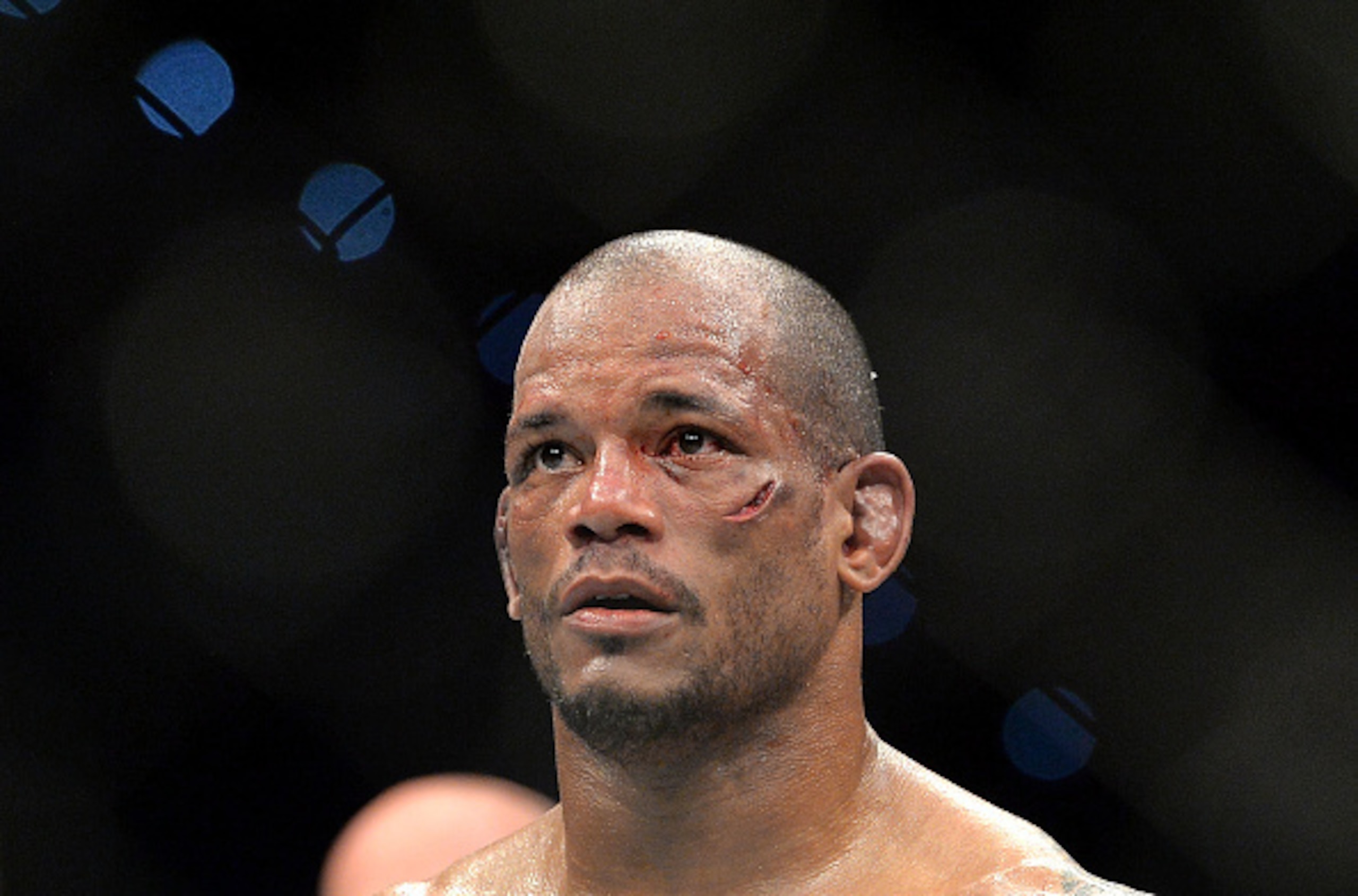
Middleweights
Dan Henderson (31-14; 8-8 UFC) vs. Hector Lombard (34-5-1, 2 N/C; 3-3, 1 N/C UFC)
Veteran middleweights meet in a clash that features more name value than relevance. Henderson is on a brutal 2-6 run in his last eight, and his last four losses have all come by stoppage. A win over Tim Boetsch gave him some new life, but he fell to Vitor Belfort by knockout in November. Lombard moves back up to 185 pounds following a four-fight run at welterweight. He lost a back-and-forth war to Neil Magny in March.
Lombard is now 38 but remains an incredibly quick, athletic and powerful fighter. The southpaw mostly prefers to strike, patiently stalking his opponent and attempting to pressure toward the fence. He doesn't have the tightest footwork and doesn't throw much at range, but when he commits to combinations of power punches, few opponents can last for long.
The Cuban throws with shocking, ridiculous and almost hard-to-describe power. He throws everything into his shots and shows some craft in how he places them, moving smoothly between head and body.
An Olympian in judo, Lombard's clinch game is a strong secondary skill set. He can hit gravity-defying trips and throws when the mood strikes and land hard punches in tight. It's almost impossible to get in on Lombard's hips, and he showcases exceptional takedown defense.
From top position, Lombard mostly looks to control and catch a breather, though he has brutal power when he postures up and decides to throw.
The problem with the Cuban's game is cardio. He can fight at pace for about seven minutes, and if he hasn't finished his opponent by then or can't hit takedowns to get some time to breathe, he's in real trouble. It's been a problem throughout his career, and it's growing more pronounced as he ages.
Henderson is a shot fighter—there's no escaping that unpleasant but essential fact—but he remains dangerous. He still carries tremendous power in his right hand even as his ways of landing it have decreased. Aside from the occasional low kick and jab, the overhand is all he throws. There are still moments of brilliance in his timing and placement, but they're few and far between.
Despite his Olympic wrestling credentials, Henderson hasn't been an effective MMA wrestler in a long time. His takedown defense was never brilliant, and it's not elite now. He rarely looks for takedowns himself. Working in the clinch is still a strong suit, though, and he excels at landing his right hand as he breaks off.
On the mat, Henderson has little to offer from his back. He has power in his ground strikes when he can get to top position, but that doesn't happen often.
The basic issue with Henderson at this point is durability. He simply can't take flush shots on the chin and hope to remain conscious; it's that simple.
Betting Odds
Lombard -400, Henderson +325
Prediction
The dynamic here is simple: Lombard hits really hard, and Henderson can't take shots from a puncher of Lombard's power. Lombard knocks out Henderson in the first round.
Max Holloway vs. Ricardo Lamas
5 of 7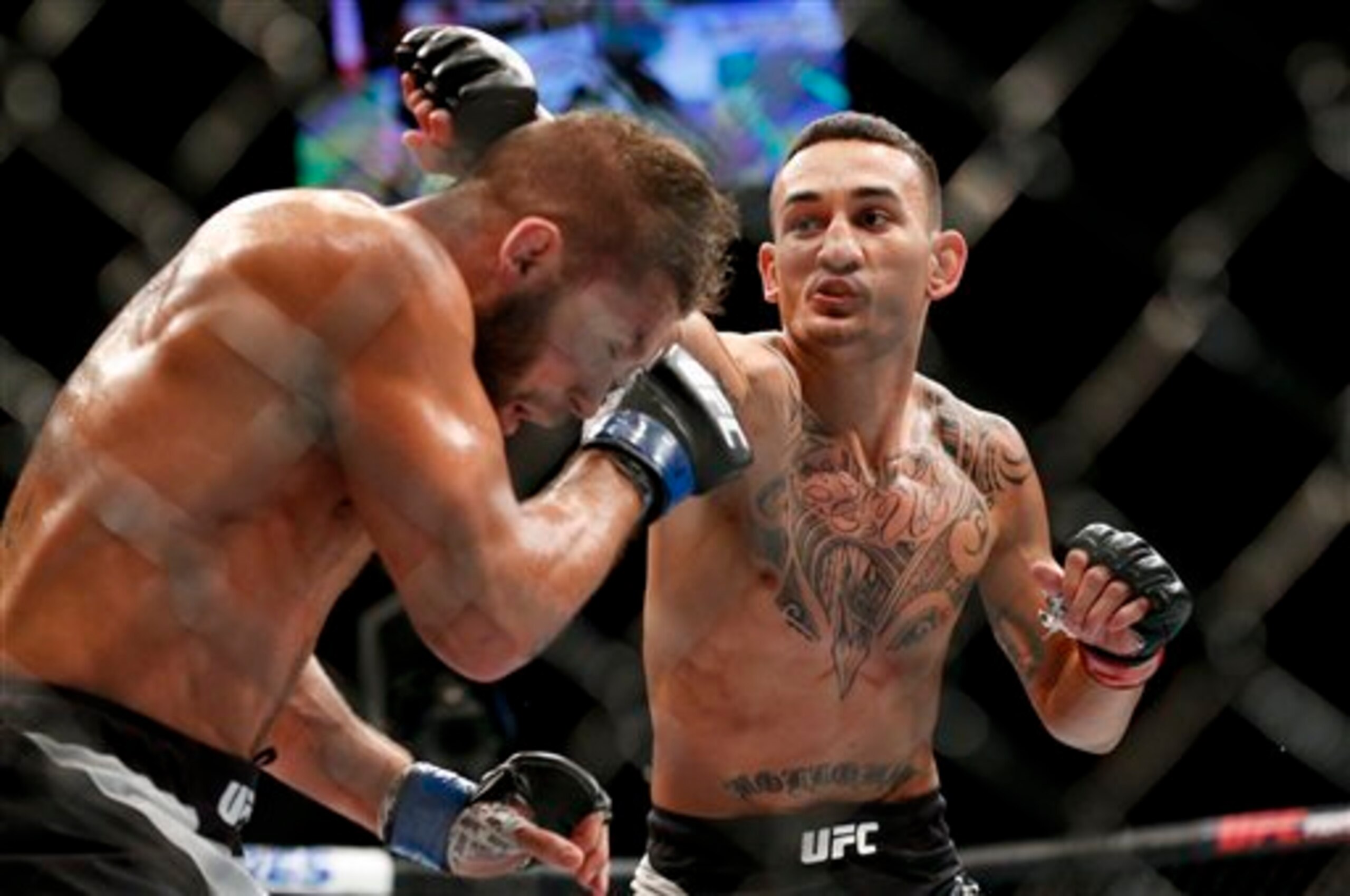
Featherweights
Max Holloway (15-3; 11-3 UFC) vs. Ricardo Lamas (16-4; 7-2 UFC)
Hawaii's Holloway looks to extend his eight-fight winning streak against former title contender Lamas in an excellent featherweight matchup. Lamas rebounded from a knockout loss to Chad Mendes by taking a dominant decision from Diego Sanchez in November. Holloway hasn't lost since dropping a decision to Conor McGregor in August 2013, and most recently he defeated Jeremy Stephens in December.
The featherweight division's title picture is confusing, but it will be hard to deny Holloway his shot at the belt if he wins. Lamas, on the other hand, would likely need another win or two.
Holloway is a rangy striker who puts his 5'11" frame to good use on the feet. While he can operate out of both stances, the Hawaiian generally prefers southpaw, which puts even more distance between him and his opponent. Front and round kicks, along with a crisp jab, allow Holloway to set his preferred range. From there he can leap in with potent punching combinations.
Both constant circling and cutting angles open up opportunities for Holloway to move in and out with his strikes and allow him to stay away from his opponents. He rarely moves in straight lines and never gets in and out of range on the same angle. He's almost never there to be hit, which makes landing counters difficult.
The Hawaiian isn't an especially powerful puncher, but he works at an exceptional pace and piles up damage to the legs and body over the course of the fight. If he senses he's hurt his opponent, Holloway is happy to flurry in long head-body combinations, particularly if his opponent's back hits the fence.
Striking is Holloway's preferred skill set, but he's no slouch elsewhere. He's one of the division's best defensive wrestlers and boasts great balance, a quick sprawl and technically proficient skills against chained takedowns with his back to the cage. He almost never attempts his own takedowns, but he has a nice trip game in the clinch when the mood strikes.
Despite his lack of offensive takedowns, Holloway has ways of getting the fight to the mat. He loves to use a guillotine choke to sweep and end up in top position, and once there he has great posture and surprising power in his ground strikes.
Lamas is, in many ways, Holloway's opposite. Where Holloway looks to pile up strikes and win rounds, Lamas is the ultimate finisher. He combines great speed and power with outstanding killer instinct; the moment his opponent is hurt, Lamas looks to end the fight as quickly as possible.
This dynamic creates an odd rhythm to Lamas' approach. He spends most of the fight circling and moving at range, launching single punches and kicks that carry substantial power. His output during these stretches is extremely low, and as a result it's not hard to outwork him.
If he lands something that feels substantial, though, Lamas opens up. It could be a punch, a round kick or a spinning kick, but the feeling of landing flush seems to flip Lamas' switch. At that point, he unloads barrages of punches and kicks looking for the finish. He might throw five strikes per minute at range for four minutes and then unload 15 punches in a 15-second stretch if he smells blood.
Wrestling is a good secondary skill for Lamas. He wrestled in college, and while he's not the defensive wrestler you might expect with that background, he's reasonably proficient with his singles and doubles.
This creates a paradox, because while he struggles to get the fight to the mat, Lamas does his best work from top position. He's a vicious ground striker and really excels in transitions, particularly with the guillotine from the front headlock.
Betting Odds
Holloway -335, Lamas +275
Prediction
This is a brutal matchup for Lamas. He's fighting an excellent defensive wrestler who works at a much- quicker pace and is difficult to hit cleanly, so Lamas won't get many opportunities to land the kill shot. He'll have to be both perfect and lucky, and that's much less likely than Holloway fighting a safe, disciplined fight and piling up volume for three rounds. Holloway takes a clean decision.
Dominick Cruz vs. Urijah Faber
6 of 7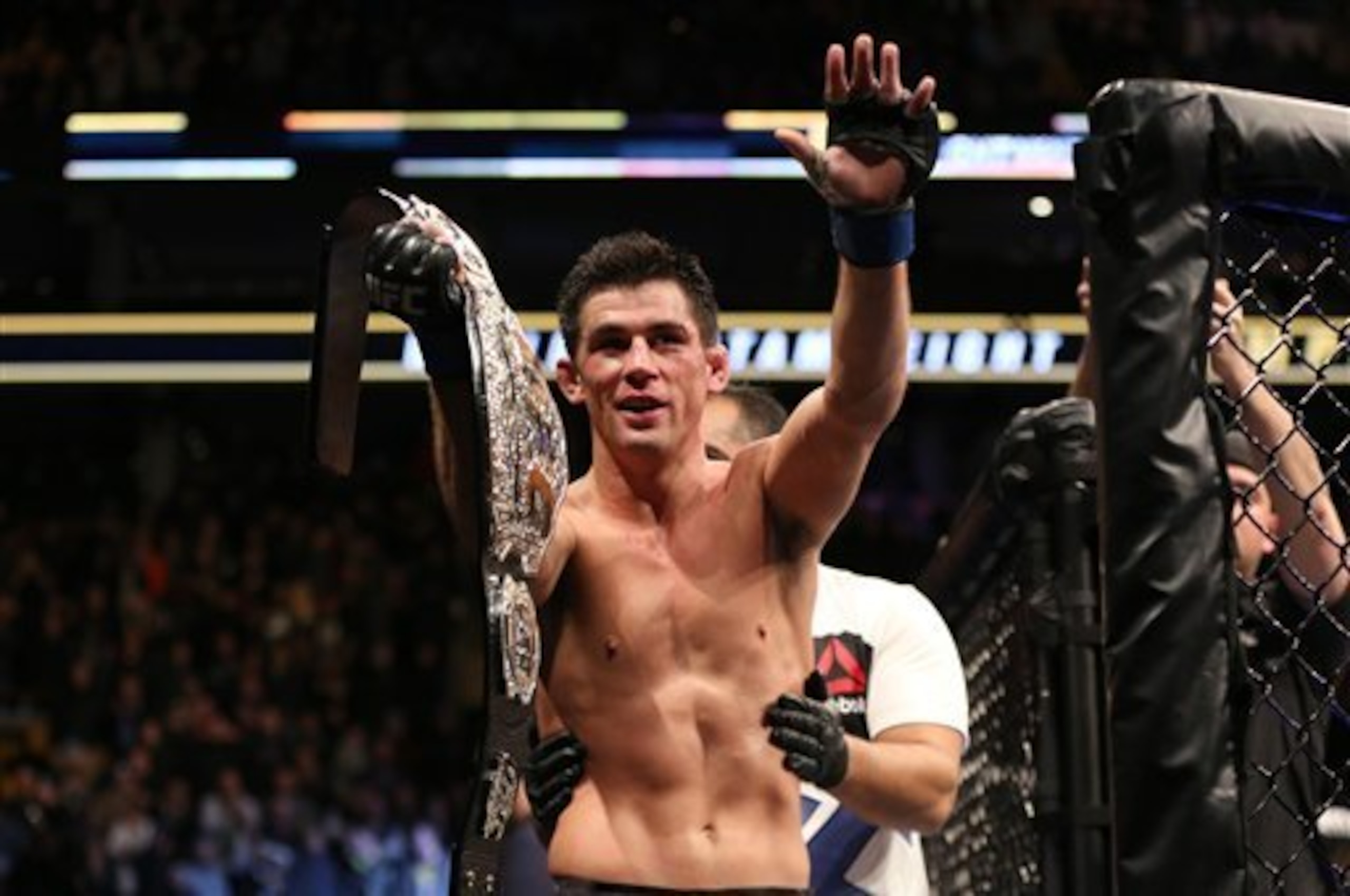
Bantamweight Championship
Dominick Cruz (21-1; 4-0 UFC) vs. Urijah Faber (33-8; 9-4 UFC)
The long-lost Cruz returned to action in January after a 16-month absence and reclaimed the title he had last defended more than four years before in a crackling matchup with TJ Dillashaw. Now riding a wave of fan goodwill and a higher profile than he ever enjoyed prior to his rash of terrible injuries, Cruz looks to capitalize by completing his trilogy with nemesis Urijah Faber.
The two first met in March 2007, when Cruz was a wet-behind-the-ears 21-year-old with only nine fights under his belt. It took the more experienced Faber only 1:38 to choke Cruz into submission. Their second meeting, in July 2011, was an entertaining and clear five-round decision in Cruz's favor.
Since then, Cruz has fought only three times. He defeated current flyweight champion Demetrious Johnson in Mighty Mouse's last fight at 135 pounds, finished Takeya Mizugaki in September 2014 and beat Dillashaw last January. Faber, by contrast, has gone 8-3 in that stretch. He lost to Frankie Edgar in May 2015 but rebounded with a win over Frankie Saenz in December to set up his title shot.
This is likely the 37-year-old Faber's last chance at a title. For Cruz, it offers a chance to move past the better-known Faber and stamp himself as not only the champion but also a fighter deserving of stardom in his own right.
Cruz's unique footwork is the heart of his game in every possible way. He moves constantly, putting together pivots, sidesteps and stance switches into a bewildering combination of angles and distances that produce both his offense and his defense.
A typical Cruz sequence is a flow chart of options. He circles and circles before picking the proper angle to dart into range, throwing a combination of punches or a kick and then pivoting 90 degrees to another angle. At that point, depending on the opponent's reaction, he can throw another strike, change levels for a takedown or simply move his head to avoid his opponent's counter before exiting back to a safe distance.
Cruz repeats that process over and over again. The same angle and entry that led to a punching combination in the first round might yield a kick in the third and a takedown in the fifth.
The same holds true whether Cruz is moving forward or, more often, sticking and moving as his opponent tries to pressure him toward the fence. He circles and circles to avoid the forward movement, and then he plants his feet to drop a counter. That might consist of a punching combination or a level change from the same angle.
All of this makes Cruz nearly impossible to successfully pressure and hard even to hit, especially to the head.
While not a power puncher, Cruz does have a bit of pop in his hands. More importantly, he produces an exceptional volume of offense. He's always working and targets the legs and body to wear his opponent down even more than the simple pace might.
If Cruz were a pure striker with great takedown defense, that would be a big enough challenge, but the champion is also an exceptional wrestler. His angles are superb, his entries are perfect, and his finishes are technical. While he generally doesn't look to control or even land many strikes on the mat, his takedowns serve as a change of pace and help to freeze the opponent.
Faber's game is all about efficiency, especially at this point in his career. Despite his age, he remains an excellent athlete with great speed, power and explosiveness, and for the most part his fights revolve around trying to find a big, fight-ending moment upright or on the mat.
The Californian is a tricky if somewhat-limited striker at range. He mostly throws one strike at a time, feinting to open up his preferred overhand right or a stepping knee. The occasional low kick adds some variety, but the right hand is Faber's bread and butter.
That might sound a bit underwhelming, but Faber's speed, timing and power shouldn't be underestimated. He excels at looping it around his opponent's guard, throwing it off a level change and landing it as a counter.
While he's competent at range, the heart of Faber's game lies in close quarters. He's a strong clinch fighter with a nice array of knees, elbows, trips and hip tosses. The power double is his specialty. He drives through his opponent and finishes with authority. His overhand right is an excellent setup for it.
From top position, Faber postures up to land heavy ground strikes, even from inside the closed guard. When his opponent scrambles, Faber is ready. He has one of the best front headlock games in MMA and combines a lethal guillotine and sweep with an array of moves to the back, where he finishes with the rear-naked choke.
Those are the high points. On the other hand, Faber can often lapse into periods of inactivity as he hunts for the big punch or takedown. His takedown defense is surprisingly spotty, and he's not a defensive mastermind on the feet, either.
Betting Odds
Cruz -550, Faber +425
Prediction
Cruz should take this handily. He's a better fighter than he was in 2011, and more specifically, the things that gave Faber fits in that fight—Cruz's angles, counters and striking volume—are even more pronounced now than they were then.
Faber does have a shot. He can catch Cruz with a right hand as the champion enters or exits, which he did several times in 2011; if Cruz makes a mistake in a scramble, Faber can lock up a guillotine; and if Cruz gets too cocky and sits down to counter one too many times, Faber can blast him in an exchange.
The far more likely outcome involves Cruz sticking and moving while piling up volume. Cruz takes an increasingly one-sided decision.
Luke Rockhold vs. Michael Bisping
7 of 7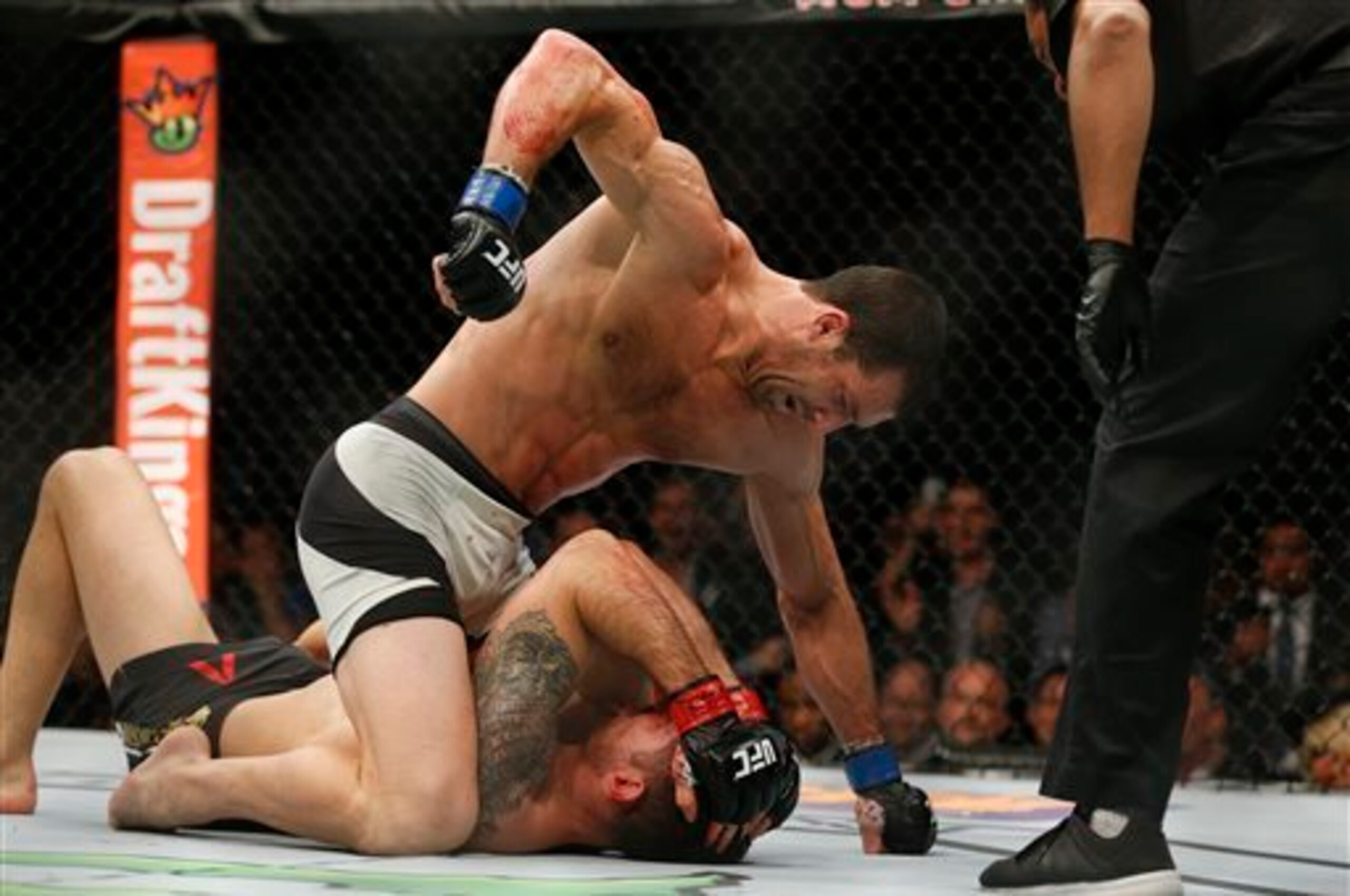
Middleweight Championship
Luke Rockhold (15-2; 5-1 UFC) vs. Michael Bisping (28-7; 18-7 UFC)
Veteran middleweight Bisping steps up on short notice to replace former titleholder Chris Weidman against the champion Rockhold, who defeated Bisping only 18 months ago.
This is essentially a career achievement award for Bisping, who has competed under the UFC banner 25 times and was the major force in driving the promotion's expansion into Europe. He defeated the legendary Anderson Silva in February to cap a three-fight winning streak, and it's now or never for the 37-year-old Englishman.
Rockhold dropped his UFC debut to Vitor Belfort in May 2013 but has been unstoppable in the aftermath. He has finished each of his five opponents since then—Costas Philippou, Tim Boetsch, Bisping, Lyoto Machida and Chris Weidman—and only Weidman made it out of the second round. The Californian looks like the heir to Anderson Silva's throne as the middleweight kingpin.
Bisping's game relies on his pace. The Englishman never stops working and buries his opponent under a wave of volume-striking as the fight wears on. While not blessed with great speed, athleticism or power, this approach suits his deep reserves of cardio and toughness, as well as his ability to adjust as the fight wears on.
High-output boxing is the core of Bisping's approach. He probes, measures and scores with a consistent jab as he circles at range, and then he either exits on an angle or sits down on a right cross. When his confidence begins to grow, Bisping starts to stick a left hook or, more commonly, a left kick to the body behind the cross. Low and middle kicks at range add some variety and consistently score points.
The constant in-and-out movement and steady stream of strikes makes it hard for opponents to keep up. Bisping simply never gives his opponent any time to breathe. He gets in, scores, gets out and then repeats the process ad nauseam. The constant targeting of his opponent's legs—and especially the body—serve the same purpose: By the fourth and fifth round, Bisping's foe generally has little left in the tank.
On the downside, Bisping has always been hittable as he darts in and out. Without blazing speed, playing that kind of game always produces moments of vulnerability, and skilled counterpunchers have repeatedly caught him as a result. While durable in a general sense, Bisping doesn't have the strongest chin, either.
The rest of Bisping's game is competent. He's a strong defensive wrestler and hits a nice double-leg takedown as a change of pace. His defensive grappling and guard are rock-solid—he has been submitted only once in 35 fights—while from the top he mostly looks to control and land a few strikes.
Rockhold is a marvel of speed, athleticism and power. The 6'3" southpaw prefers to strike, but he's lethal in every phase and needs only momentary openings to finish both on the feet and on the mat.
The champion's striking game depends on two things: rangy kicks and devastating counters. Rockhold throws a steady diet of round, front and spinning kicks to wear his opponent down, score and keep him at his preferred long range. When his opponent tries to cover that gap, Rockhold laces him with a counter right hook, pivots out and gets back to landing kicks.
It's a simple-enough game, but Rockhold's length, raw speed and exceptional timing make it difficult to overcome. He takes clean angles and pivots nicely in the pocket. This footwork and sense of where he is in the cage keep him off the fence and in open space, where he prefers to operate.
If his opponent does succeed in getting all the way inside, Rockhold is even more dangerous in the clinch. His height and reach give him great leverage in the tie-ups, and he excels at pinning his opponent against the cage and dropping vicious knees to the body and head.
Things don't get any easier from there. Rockhold is an outstanding defensive wrestler, but more than that, he excels as a counter-wrestler.
Opponents who make the mistake of shooting on him in open space allow him to use his lightning-quick sprawl and grab ahold of the front headlock. From there, the fight is all but over. Rockhold has a great guillotine choke he often uses to sweep to top position, a variety of slick moves to the back and a gift for using strikes to open up his submissions.
There are no real weaknesses in Rockhold's game. He works at a fast-enough pace that he won't be easily outworked at range and is defensively sound enough not eat many clean shots. He can't be taken down without the opponent putting himself in mortal danger, and he can't be ground down in the clinch.
Betting Odds
Rockhold -1000, Bisping +650
Prediction
By any metric, this is Rockhold's fight to lose. He's younger, faster, hits harder, is unlikely to fall into Bisping's pace and can control the fight in the clinch or on the mat if he gets uncomfortable striking at range. He should have his pick of ways to finish this, and the most likely is a submission or strikes on the ground after hurting Bisping on the feet. Rockhold finishes with ground strikes in the first round.
All betting odds via Odds Shark.
Patrick Wyman is the Senior MMA Analyst for Bleacher Report and the co-host of the Heavy Hands Podcast, your source for the finer points of face-punching. He can be found on Twitter and Facebook.
.jpg?w=2560 "Myles Garrett Got Warning 👀")
.jpg?w=2560 "Every Team's Biggest Surprise So Far 😲")