

Who Made Good and Bad Decisions at the NBA Draft Deadline?
At long last, we can start making predictions for the 2016-17 men's college basketball season without repeatedly typing "if (insert important player mulling NBA draft decision) returns."
But before we start churning out updated still-way-too-early top 25 rankings and bracket projections, let's take a moment to reflect on the past month and decide which players made the best and worst draft decisions.
First and foremost, this entire process was a fantastic joint decision by the NCAA and NBA. I had my doubts about how well it would work—and it wasn't much fun trying to keep track of who's in and who's out while writing prediction pieces that were obsolete by the time they published—but the market wasn't too flooded, and the vast majority of players who used the extra month to make a decision did so wisely.
TOP NEWS

LeBron's Special Helicopter Deal

MJ Makes Record-Setting Donation 🙌
Collins on Brooks Scuffle 👀
Some made better calls than others, though.
Best Decision to Remain in NBA Draft: Malachi Richardson

Those of us who haven't dedicated our lives to watching college basketball through the lens of an NBA draft scout have a tendency to overreact to the small sample size that is the NCAA tournament.
Did Isaiah Whitehead's stock drop by shooting 4-of-24 from the field in his only tournament game? Perhaps a little, but NBA scouts have been evaluating him since high school—that one game was a small fraction of a percentage of the data they have on him. Conversely, DeAndre Daniels had an incredible three weeks during Connecticut's 2014 championship run, but it wasn't enough to make up for the inconsistent effort he displayed in his first three collegiate seasons. He's still trying to break into the NBA.
For the most part, the tournament simply doesn't affect draft stock. But there's usually one big exception to that rule, and despite Jim Boeheim's disdain for mock drafts, Malachi Richardson was that guy this year.
Prior to the tournament, Richardson wasn't even on the radar. B/R's Jonathan Wasserman posted a full two-round projection of the draft the day before the tournament began, and Syracuse's only representation on that list was Michael Gbinije at No. 52.
Then Richardson single-handedly fueled Syracuse's unbelievable comeback win over Virginia in the Elite Eight, and a star was born.
It wasn't the first time Richardson wowed us. Hell, it wasn't even the first time he impressed against the Cavaliers, as his 23 points in that win matched a career high he set against UVA back in January. But it was impossible not to notice and admire the combination of the stakes, his confidence/swagger and the way he completely sucked the life out of one of the best and most veteran teams in the country.
And once the scouts started looking, they couldn't turn away. Richardson was one of the darlings of the draft combine earlier this month, per Syracuse.com's Chris Carlson, and is now a projected mid-first-round pick by seemingly every mock drafter under the sun.
"Actually being able to go through this process, it's helping," Richardson told Wasserman. "I'm being able to figure out different things that I probably wouldn't have figured out right after the Final Four."
Moreover, Richardson made the right choice because it's hard to imagine his draft stock climbing any higher in future years.
Had he returned to Syracuse, he would have been the alpha dog with the potential to climb into the 2017 lottery with a strong season. But for a guy who shot 37.0 percent from the field and committed 79 turnovers, it's probably for the best that he's going to get that paper now rather than risking exposing more flaws in his game and dropping out of the projected first round altogether.
Honorable Mention: Cheick Diallo
Eligibility issues kept Cheick Diallo from playing in Kansas' first five games, and by the time he was able to step foot on the court, Bill Self had already moved on to other options.
In the limited minutes he did play, though, Diallo competed with the tenacity of a junkyard dog, averaging 16.0 points, 13.5 rebounds and 4.6 blocks per 40 minutes.
Kansas fans may feel he's identical to Cliff Alexander, playing one abridged season before leaving for the draft. However, NBA scouts seem to want Diallo more than they wanted Alexander (who went undrafted), as Diallo is still projected to go late in the first round. And with the Jayhawks already overflowing in frontcourt depth for the 2016-17 season, there's no point in Diallo giving that up to get one year older while potentially spending most of his time on the bench once again.
Worst Decision to Remain in NBA Draft: Nikola Jovanovic
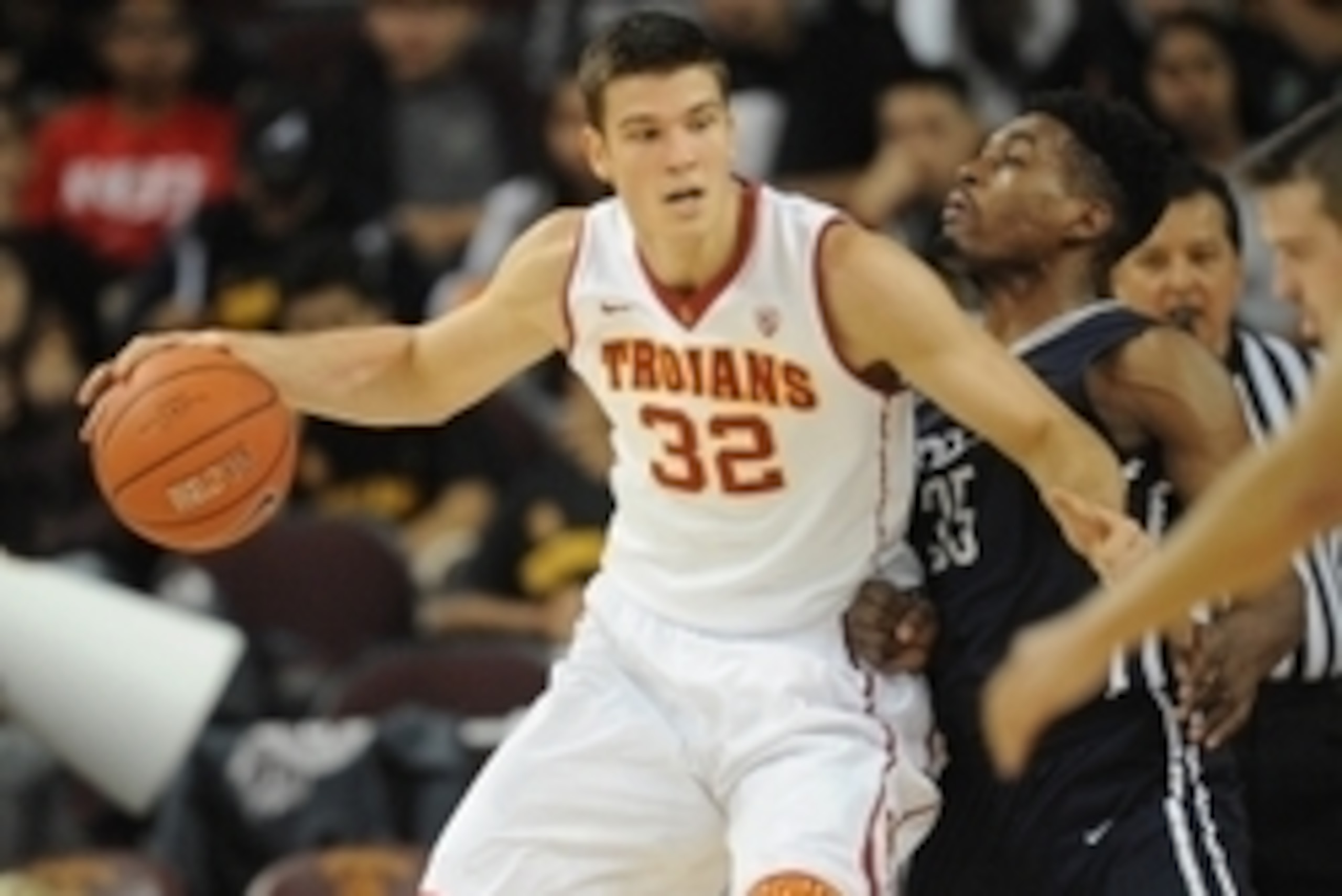
I hate this category, because I don't know the family or financial situations these players are juggling. Some have parents or are parents who can't afford to keep playing basketball for no income. Others—like Trevor Lacey last year—are self-aware enough to realize that getting one year older in college isn't going to help their marketability, so they choose to explore their options overseas as soon as possible rather than hitting life's snooze button for another year.
But Nikola Jovanovic announced on Instagram his decision to remain in this year's draft by saying, "Playing in the NBA has been my dream and I couldn't be more excited to have the opportunity to start my professional career."
Has he ever checked a mock draft? At any point on any site in the past few months, can you recall Jovanovic listed as a possible draft pick?
Neither NBADraft.net's Aran Smith nor ESPN's Chad Ford currently has Jovanovic on his top 100 big board. Sam Vecenie of CBS Sports had Jovanovic ranked No. 73 of the 105 underclassmen to initially declare for the draft—meaning that even if seniors and international players were ineligible to be drafted, Jovanovic still wouldn't be worth a pick.
Again, I don't know his personal situation, but to state that you're pursuing your dream to play in the NBA in the face of a ton of evidence to suggest it isn't going to happen seems like a strange decision.
Worse yet, Jovanovic was one of the handful of players who waited until the last day to make up his mind. Despite taking the extra month to gather intel and despite not even getting invited to the draft combine, he opted to remain in the draft pool.
Along with Julian Jacobs surprisingly entering the draft and the decisions of Katin Reinhardt, Darion Clark, Malik Marquetti and Malik Martin to transfer, one has to wonder what's going on at USC. The Trojans had the pieces to be a preseason Top 25 team, but they might be lucky to avoid the bottom 25 percent of the Pac-12 standings with only four returning players.
Honorable Mention: Rosco Allen
Based on how many players used the extra month to decide to return to school, there weren't too many options for this category. One could make the case that Troy Williams and Chinanu Onuaku—particularly after the latter underwent heart surgery—would have benefited from another year in college, but they might both get drafted.
Rosco Allen, on the other hand, has little to no hope of hearing his name called on June 23.
However, the decision does make some sense. The 4-star recruit from the class of 2012 turned 23 earlier this month, meaning he would be 24 by next year's draft—which makes him a dinosaur compared to the 19-year-olds he would be jostling with for draft position. He redshirted the 2013-14 season with a stress fracture in his leg, hence the age issue. And with a new head coach coming in, there's no telling how much his role might have changed.
Still, it seemed we were just beginning to scratch the surface of Allen's potential this past season. Stanford floundered as a team, but Allen blossomed into a more efficient player at a much higher usage rate than we had seen in the past. Another season of that with a slightly improved three-point percentage might have been enough to get him on the radar for a second-round pick in 2017. Alas, he'll likely have to settle for playing somewhere overseas for a few years.
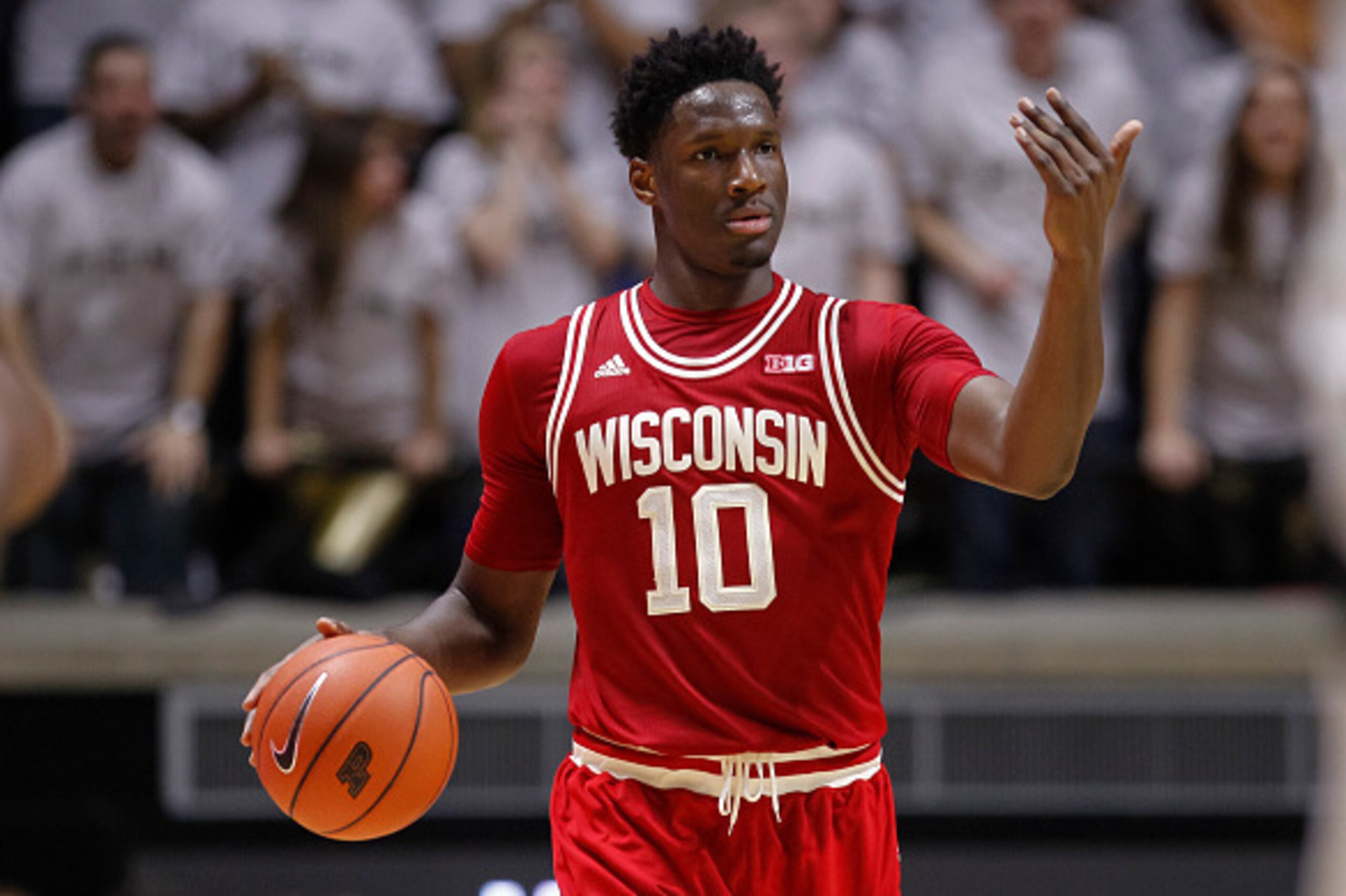
Best Decision to Return to School: Nigel Hayes, Wisconsin
The Big Ten hit the "returning to school" jackpot. The conference had 10 athletes on the late-April list of players who had declared for the draft without hiring agents, and all of them decided to come back except for Indiana's Troy Williams. That means one more year of Melo Trimble, Caleb Swanigan, Vince Edwards, Peter Jok, Andrew White III, Trevor Thompson, James Blackmon Jr. and Corey Sanders.
But most importantly, it means one more year of Nigel Hayes.
Compared to how well he played as a sophomore, Hayes had a dreadful junior year. His O-rating, per KenPom.com, dropped by more than 20 points, thanks in large part to his two- and three-point percentages both dropping more than 100 points. His scoring increased because his usage rate skyrocketed, but his drop in efficiency might have been the most drastic in the entire country.
Hayes has a future in the NBA, but he's at the top of a long list of players who need one more season to maximize draft position and salary.
With Hayes in tow, Wisconsin should open the season as a Top 15 team and could creep into the Top 10 over the next few months. We saw in 2013-14 and 2014-15 how effective he can be as a tertiary weapon on a dominant team, but he needs to show he can be the main guy on a title contender.
Seniors don't often go in the lottery, but Frank Kaminsky was the No. 9 pick last June. With a big 2016-17 season, Hayes could get there. At any rate, his chances of going in the first round should improve drastically.
Honorable Mention: Abdul-Malik Abu, North Carolina State
The list of viable candidates for this category was a mile long. Roughly 50 players withdrew from the draft in the past four weeks, and nearly all of them appear to have made the correct career move.
But as far as both the player and the school are concerned, Abdul-Malik Abu's decision to pull out of the draft might be the biggest of them all.
Abu was never a highly rated prospect. As Bret Strelow noted for the Fayetteville Observer earlier this month, there was speculation the Boston Celtics might use one of their many second-round draft picks on Abu because of his connection to Boston and president of basketball operations Danny Ainge, but they just would have stashed him in the NBA D-League.
Instead, Abu will bring his 12.9 points and 8.8 rebounds per game back to a team that desperately needs them. With a projected starting five of Dennis Smith Jr., Terry Henderson, Maverick Rowan, Abu and Omer Yurtseven, with Torin Dorn and BeeJay Anya coming off the bench, the Wolfpack have a real ACC contender in 2016-17. That wouldn't have been the case without Abu, who could evolve into a draft-worthy prospect with a solid junior season.
Worst Decision to Return to School: Josh Hart, Villanova
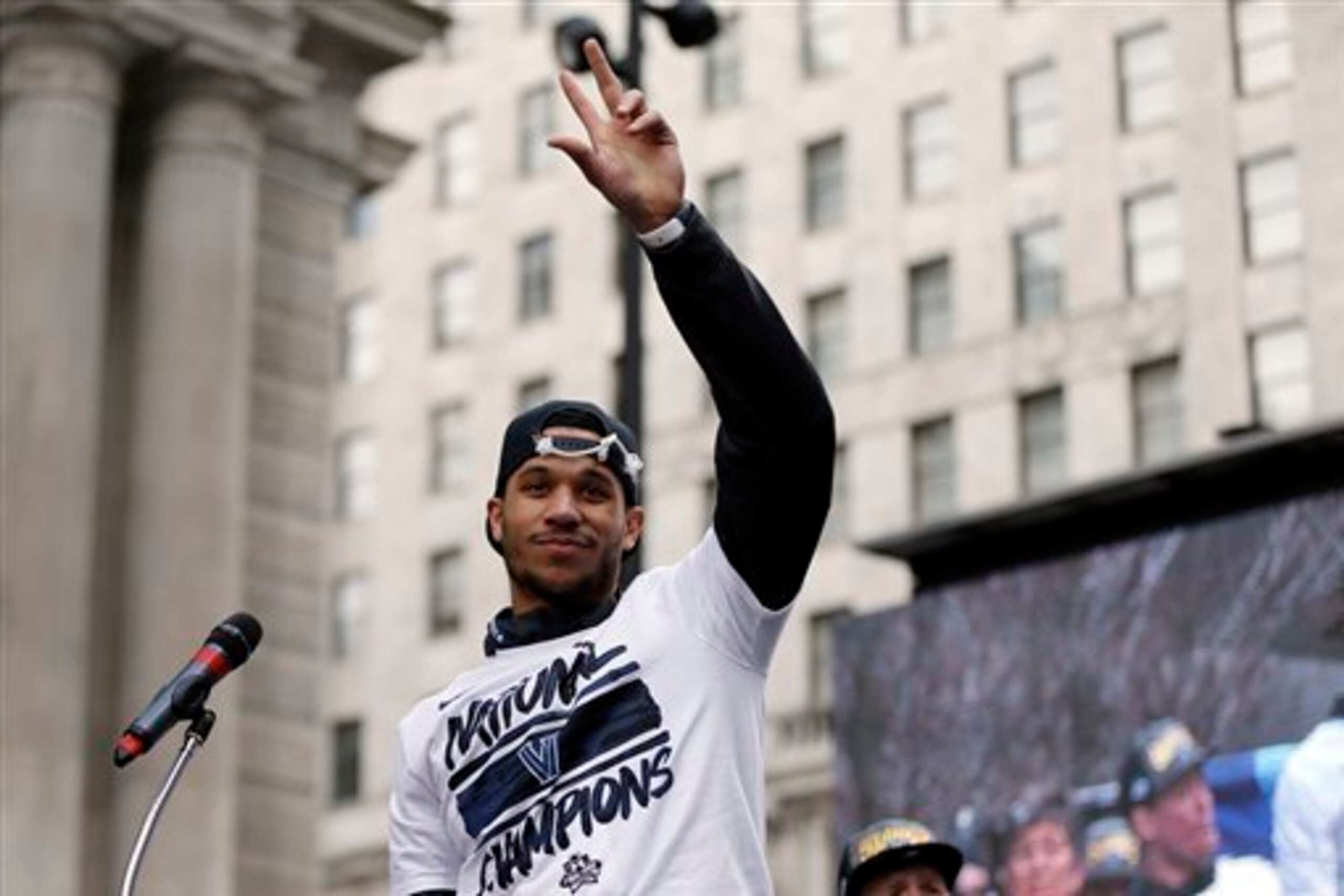
For the state of college basketball in 2016-17, this was the best announcement of the past six weeks. Josh Hart is a surefire preseason All-American, he's arguably the preseason favorite for the 2017 Wooden Award, and he gives Villanova a better chance at repeating as national champion than any team since Florida did it in 2006 and 2007.
But what does he have left to prove?
Hart was already the leading scorer, second-best rebounder and arguably the best defender for a champion. He has consistently been one of the more valuable players in the country in all three of his years with the Wildcats.
Midway through Hart's freshman year as the team's sixth man, Villanova head coach Jay Wright told Bleacher Report, "He has the skill set that we look for in everybody. ... He has proven to be exactly what we wanted him to be. He is in on every play. He is one of our best rebounders, one of our best defenders and one of our best slashers."
Like Oklahoma's Buddy Hield, Hart has a tireless work ethic and oozes value even when his shooting percentages aren't the best. Also like Hield, the NBA wasn't quite ready to commit to him after his junior year, as Hart was either a late first-round pick or an early second-rounder, depending on your preferred source for draft projections.
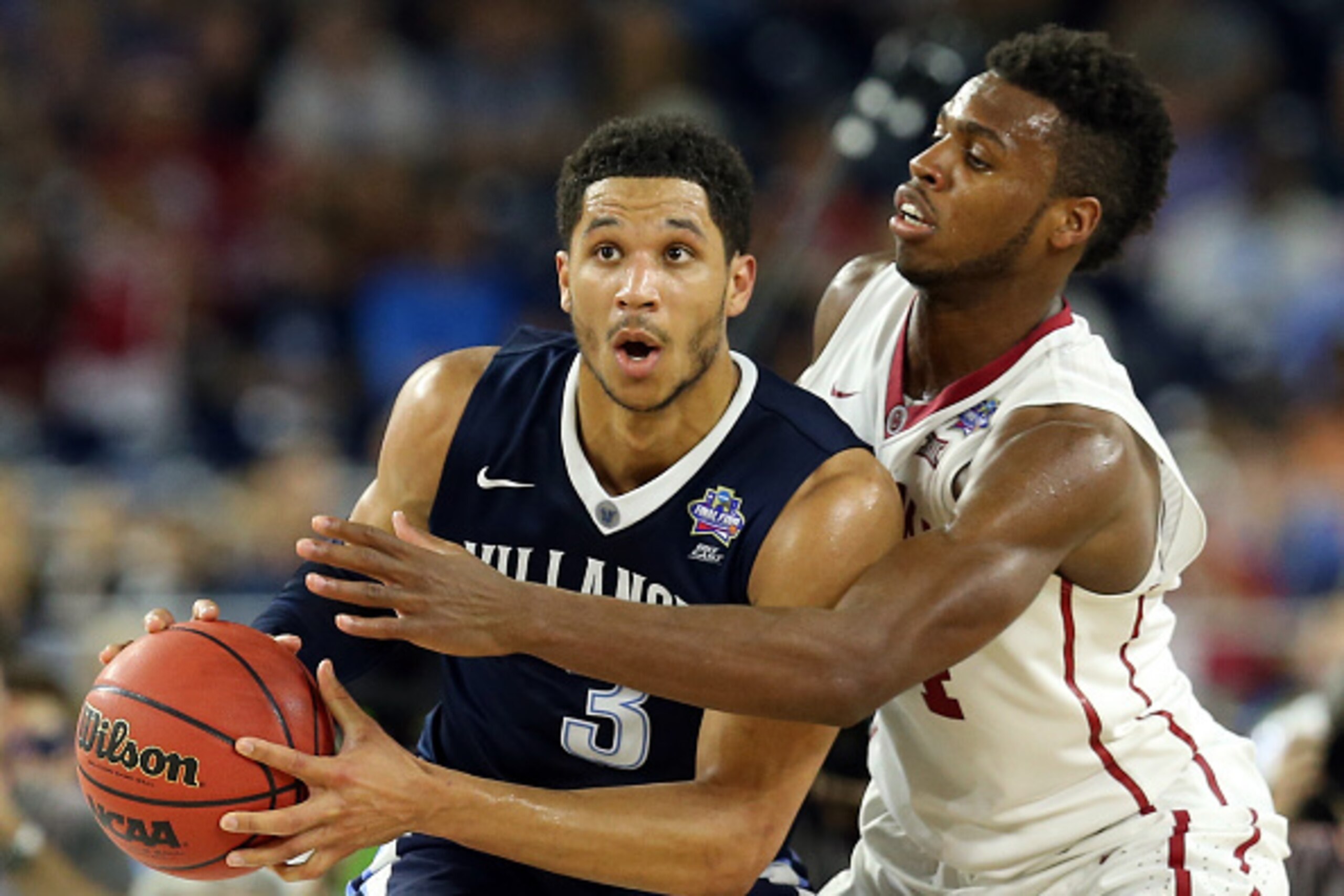
And as long as we're comparing him to Hield, that's the obvious best-case scenario for Hart: He comes back stronger and more dominant than ever for a team that spends the entire season ranked in the Top 10, gets into an oft-discussed battle for the Wooden Award and blossoms into a lottery pick.
That isn't usually how it goes, though. Tyrone Wallace, Yogi Ferrell, A.J. Hammons and Ron Baker were all juniors in the "likely second round" range with Hield one year ago, but not one of them did much to improve his stock, despite a solid senior year. In fact, Hammons is probably the only one whose stock went up at all, and he's still probably a mid-second-rounder.
Even Brice Johnson had one of the most dominant seasons in the country and merely rose from a mid-second-rounder to a probable late first-round pick.
Long story short, it's rare for a player to show something as a senior that wasn't already apparent in his first three years, and it's almost impossible to show it so well as to become more valuable after getting one year older.
Moreover, Hield made his leap in a season with possibly the weakest freshman class of the past decade. For Hart to improve his draft stock while battling this incoming batch of freshmen would take a herculean effort. Anything short of 19.0 PPG and 8.5 RPG for a Final Four team and the extra year on Hart's odometer will likely cause his stock to drop.
We're thrilled he's coming back. Villanova might open the season ranked No. 2 in the country because of him, and outstanding seniors are always great for college basketball—especially when they play for reigning national champions. We're just not sure it will help his chances of becoming a first-round draft pick.
Honorable Mention: Jaron Blossomgame, Clemson
As was the case with Hart, we're not sure what Jaron Blossomgame has left to prove at the collegiate level.
His team certainly has more room to grow than Hart's does. Clemson has missed the past five tournaments and becomes a much stronger candidate to dance with Blossomgame coming back for his senior year.
But the man averaged 18.7 points and 6.7 rebounds per game while shooting 44.1 percent from three-point range. On a team with higher expectations in part because of quality incoming transfers, how can he possibly be expected to improve upon those numbers?
And as we mentioned with Hart, expectations are that next year's draft class will be even stronger than this one, so he'll be one year older and attempting to stand out in a stronger crowd. That doesn't seem like a good combination.
Of course, Blossomgame was overlooked all season long. If he leads Clemson to 22 or more wins and a tournament berth while earning All-ACC first-team honors, maybe his stock will be even higher than it was this offseason. It certainly seemed like he was headed for a second-round pick, though. We'll see if that's still the case a year from now.
Strangest Decision of Them All: Marcus Lee, Kentucky (for Now)
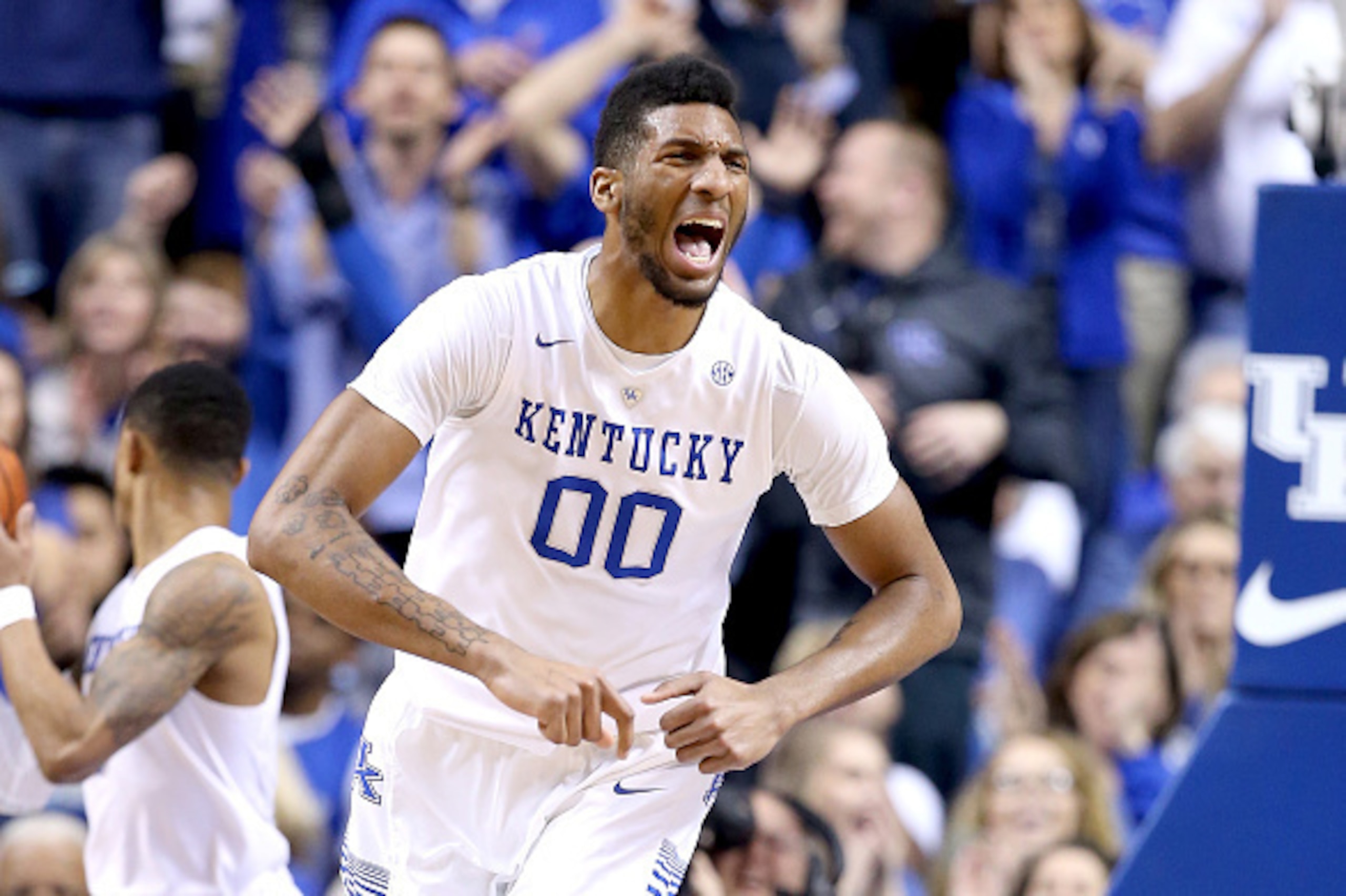
Though we did boldly predict back in mid-April that someone would make a late decision to withdraw from the draft before transferring elsewhere, we were expecting a graduate transfer.
Marcus Lee's decision to withdraw from the draft and sit out a year before playing his final collegiate season is easily the most head-scratching thing to happen during this whole process.
"Marcus Lee informed us today that he is pulling his name out of the draft but has decided he is going to transfer to a school out west to be closer to his family," head coach John Calipari said in a statement, per ESPN's Jeff Goodman.
On the one hand, it makes sense because there's no room at the inn.
With Bam Adebayo, Wenyen Gabriel and Sacha Killeya-Jones joining the team and Derek Willis and Isaac Humphries returning, Kentucky already has five talented frontcourt players on a roster that also has a trio of excellent guards in De'Aaron Fox, Malik Monk and Isaiah Briscoe. Had Lee opted to return to Lexington, he would have been volunteering for a fourth consecutive season of limited minutes.
Such is life when you're in a recruiting class with Julius Randle and Dakari Johnson, joining a roster that surprisingly returned Alex Poythress and Willie Cauley-Stein. Toss in the annual reloading of McDonald's All-Americans, and Lee never had much of a chance to shine with the Wildcats, despite solid numbers when he did play.
But after he sits out the 2016-17 season and plays in 2017-18, he'll be nearly 24 years old at the time of the 2018 draft. If he has an effective senior season, someone will certainly take a second-round flier on the former McDonald's All-American, but that also would have been the case this June. Unless he absolutely dominates for a Top 20 team in 2017-18 and slides into the back of the first round, he's essentially just waiting two years to get paid to play basketball, pointlessly risking injury for an additional 730 days.
We wish Lee the best of luck. He's undoubtedly going to be the most coveted transfer this summer and should make a nice splash wherever he lands. We just wouldn't have made the same decision.
Kerry Miller covers college basketball for Bleacher Report. You can follow him on Twitter @kerrancejames.

.jpg?w=2560 "Grading WWE Raw 🔠")


.jpg?w=2560 "Viral Rams Coach Vid 🖕")
.jpg?w=2560 "Injury-stricken Seahawks signing veteran RB")