Away from Barcelona and Madrid, Sevilla the Symbol of La Liga's Hold over Europe
They'd been outnumbered, but it hadn't mattered. As a collective, they'd been the little guy, but it hadn't mattered.
It said so much.
In one corner of Basel's St. Jakob-Park, Sevilla's fans launched into the club's spine-tingling hymn, each rendition followed by another and then another, over and over. "And that is why I came here today to see you, I'll be a Sevillista until death," runs the part that roars loudest, and here it was as loud as ever, moving and joyous.


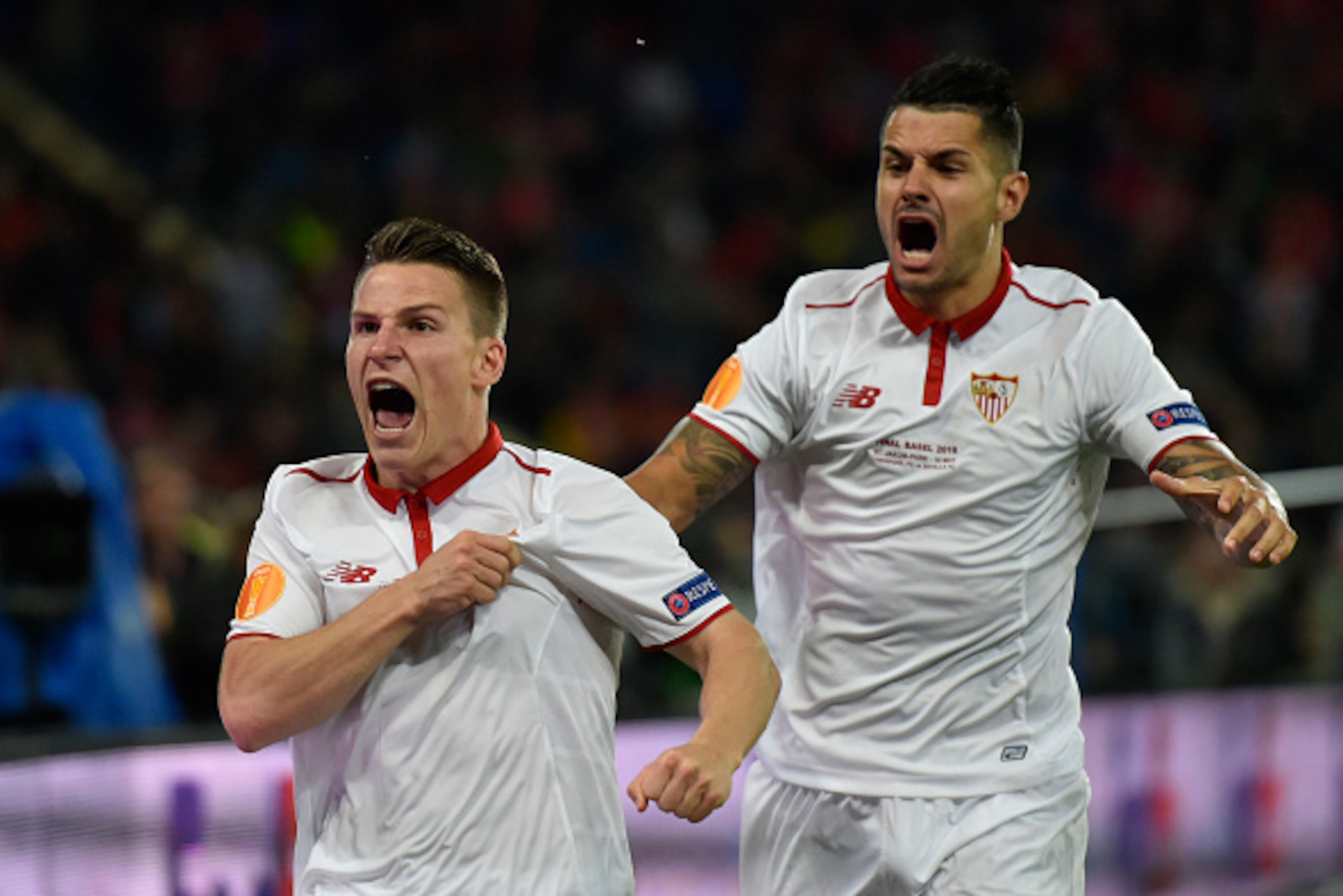
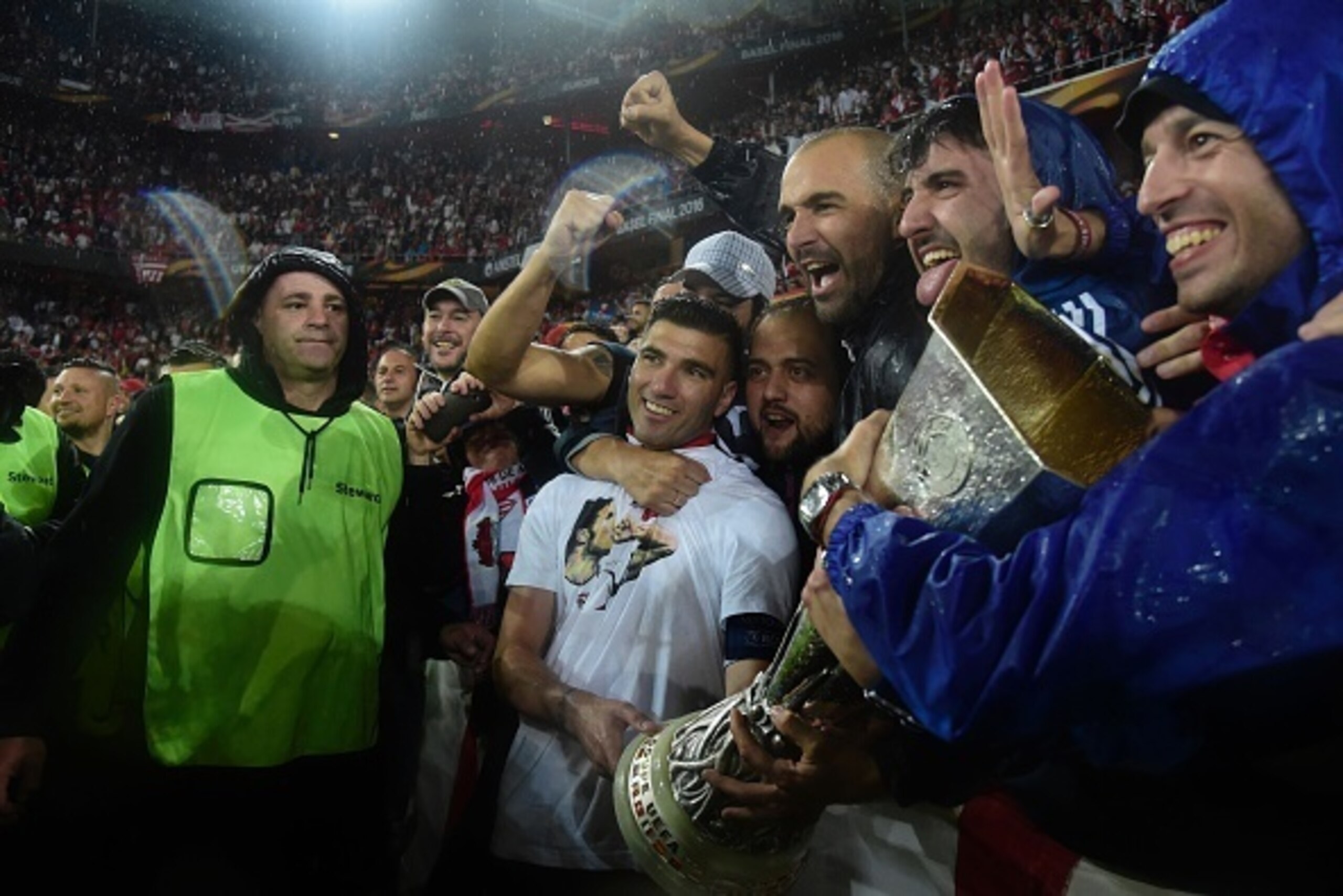
In front of the fans, Sevilla's players danced and sang with them, their feat historic. With a 3-1 victory over Liverpool in Wednesday night's UEFA Europa League final, the Andalucians had won the same European title for a third straight time, becoming only the fourth team ever to do so.
The others: Real Madrid, Ajax and Bayern Munich.
Some company.
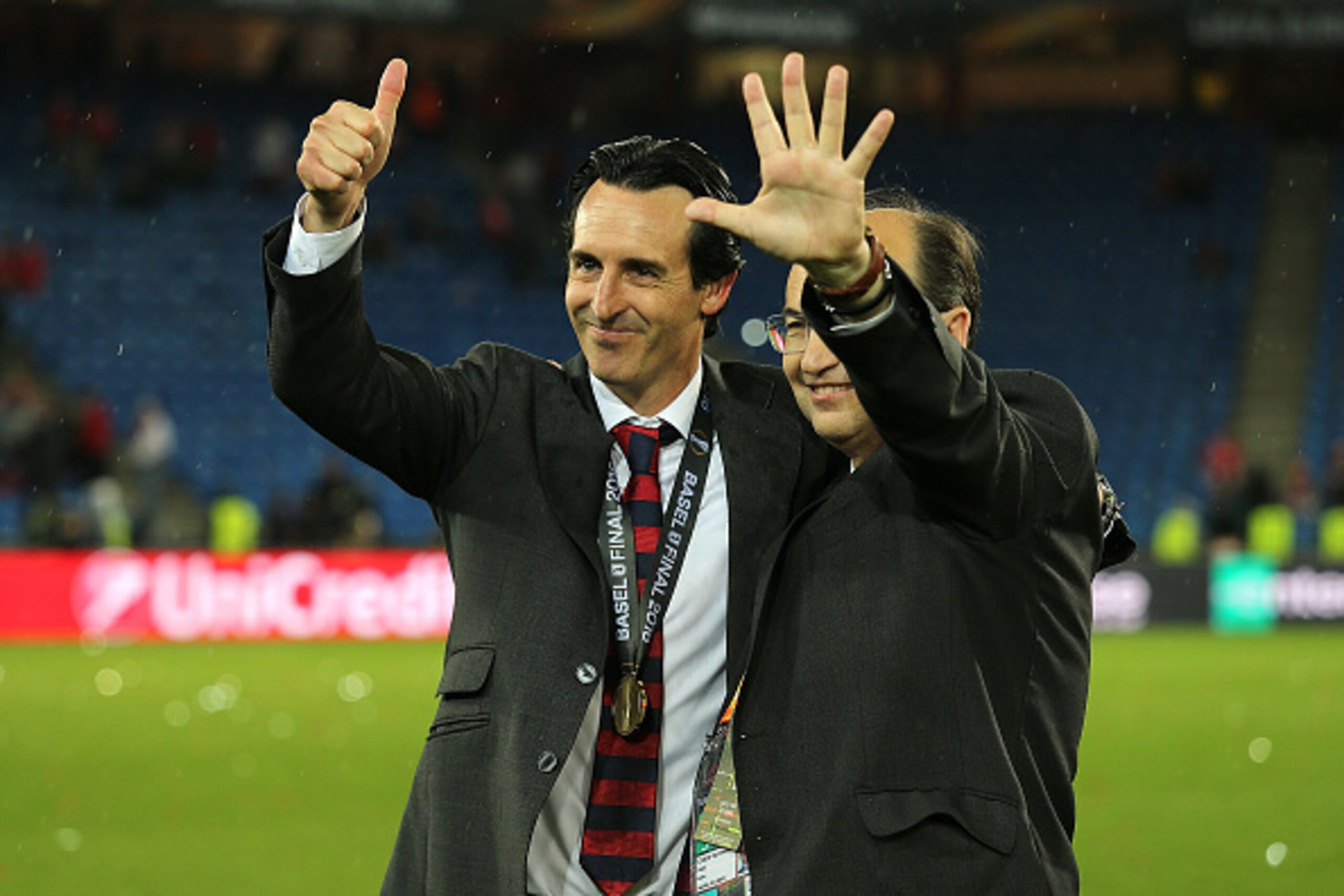
For Sevilla, though, this was more than just a third straight win. Out on the pitch, club president Jose Castro held up an open palm to those in the stands; this, after all, was their fifth capture of this title in a decade.
"At Sevilla we love this competition," said manager Unai Emery, a coach who's embraced his club's emotional connection with it, in his post-match press conference. "We love it so much and we want it so much that we won it. It is our competition and we underlined that once again."
He's right; it is their competition, and it's Spain and La Liga's, too.
Since 2003, eight of the Europa League's/UEFA Cup's 13 champions have been Spanish. Sevilla lead the way with five of those triumphs, Atletico Madrid have two and Valencia grabbed the other. What's more, in two of those eight finals, the opponents were Spanish as well.
It's the same in the tier above. At the end of the month, the Champions League will host its second all-Spanish final in three seasons and will crown its third straight Spanish champion. Across both competitions, that will mean the last six major European titles will have all been claimed by sides hailing from La Liga.
It's no coincidence. Extended dominance is never achieved by chance, and here Sevilla stand as the symbol of it.
"Sevilla in the streets and Spain proud of its football, its league, this Sevilla," said AS on Thursday morning.
"You are eternal," said Marca.
In one sense eternal is right, but in another it's not.
In the hearts and minds of those connected with the club, this 2016 vintage of Sevilla will never be forgotten. Their legacy is assured; the bond they've forged is forever. And yet, like the 2015 and 2014 crops, like all those that went before them, this group as they are now won't exist together beyond this season—and that is what makes this so remarkable.
Guided by the extraordinary success of sporting director Ramon Rodriguez Verdejo, a man known to the rest of the world as Monchi, Sevilla is a club that undergoes major rebuilding every year. It's not a choice but rather a necessity, a business model having been built on it in order for the club to compete and survive.
It shouldn't work, but somehow it does. And no one does it better.
Just last summer, among a plethora of moves in the transfer market, Monchi sold Carlos Bacca and Aleix Vidal for a combined €47 million. Again, it was out of necessity. The season before, he sold Alberto Moreno, Ivan Rakitic and Federico Fazio for €46 million. Before that, it was Alvaro Negredo, Jesus Navas, Geoffrey Kondogbia and Gary Medel for €78 million.
Elsewhere, rivals bemoan the difficulty of replacing stars, but few face the problem as regularly as Sevilla. And yet, Sevilla replace them just fine.
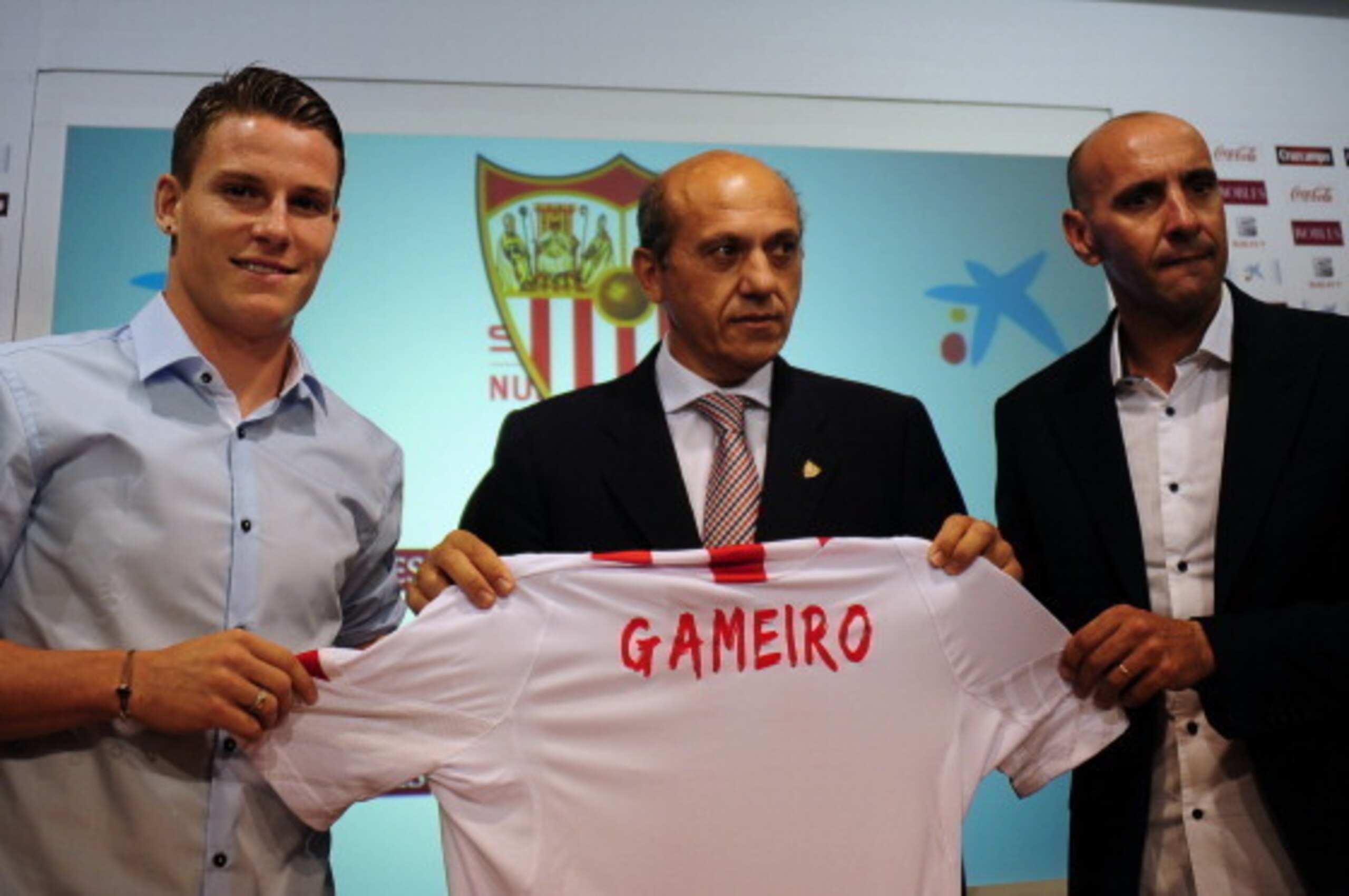
This season, Kevin Gameiro (cost: €7.5 million) has stepped up to fill the void left by Bacca. Before him, Bacca (€7 million) did the same after Negredo departed.
It's this knack for finding the next guy at a minimal outlay that's astonishing. Monchi's list of successful bargains includes: Rakitic, Vidal, Kondogbia, Medel, Fazio, Coke, Daniel Carrico, Vitolo, Vicente Iborra, Sebastian Cristoforo, Grzegorz Krychowiak, Timothee Kolodziejczak, Ever Banega, Benoit Tremoulinas, Mariano, Adil Rami, Sergio Escudero, Michael Krohn-Dehli and Yevhen Konoplyanka.
Not one of those players cost more than €7.5 million, and most of them were under €5 million, some of them free. But getting them in is one thing; making it all work is another entirely.
"Every year we change 10 players," said Sevilla captain Coke after Wednesday's triumph, per AS (h/t Football Espana). "It's complicated and difficult at the start, so it shows how much merit there is to this."
It's this that's perhaps the key in all of this. To make this work, to overcome the annual ripping up of the foundations, everything else requires absolute precision and dedication: scouting, coaching, planning, youth development, tactical work; the lot.
Like for most Spanish clubs, Sevilla can't throw money at their problems, because money is the problem.
"The economic crisis made the clubs here utilise their capital better in selecting players," said La Liga president Javier Tebas in April. "The crisis taught Spanish football to work harder to find talent, whereas the Premier League had it easier and didn't have to work as hard for this."
What Tebas touched on was a point that feels as though it's becoming increasingly relevant. For the Premier League at present, there's no correlation between financial dominance and on-field dominance. Between it and La Liga, when it comes to European competition it's not even close, the cash in England having seemingly bred complacency or an obstacle.
To an extent, Monchi agrees. In a wonderful interview with the Guardian's Sid Lowe, he said:
"There are loads of off-field things in which they [the Premier League clubs] beat us easily. And on the football side, I saw very good work being done. But there's a disconnect between that work and the advantage they glean from it. I know English clubs that are very professional, scouts everywhere, but the information they gather isn't always applied. Why? Because they have money.
"
If that money has created complacency, it's perhaps most evident technically and tactically. Throughout the current season in the Premier League, chaos has reigned supreme and an absence of top-end quality has existed alongside the refreshing unpredictability.
"I've always said that the best league in the world is the Premier League," Manchester City manager Manuel Pellegrini told a press conference ahead of his side's recent clash with Real Madrid. "For various reasons: the fans, the organisation. But the best football is played in Spain. It's not by sheer chance that Sevilla have won two Europa Leagues and Spanish teams in general make the final."
Somewhere along the line, it's not working in England like it is in Spain. Coaching isn't having the same impact. Teams aren't as clever and as prepared. Few are more than the sum of their parts.
The focus, the dedication and the precision in the details don't appear to be the same, the Premier League's clubs striking more as businesses with football teams attached, rather than football teams with businesses attached.
After all, on Tuesday, several of Manchester United's mascots for the final game of the season were painted blue to promote the latest X-Men film. This is a club with an Official Male Shampoo Partner, an Official Ready Meal Partner and an Official Confectionery Partner. It's as if the identity of it (and others) has been taken away from the pitch—the place where that of Sevilla still lies.
Indeed, despite the regular upheaval, a defined identity continues to exist at the Ramon Sanchez-Pizjuan. There, a connection between player, fan and coach is evident. From the stands, something is transmitted onto the field, where Sevilla play with personality, ferocity and a certain swagger.
They're not flawless by any stretch—they struggle away from home, Emery can be guilty of tinkering too often and they're hardly the most talented—but they make up for it. How? Through the relentless intensity of Emery. Through the scouting of Monchi and his team. Through the commitment to the little details. Through the prioritising of competing above everything.
"It's the competing that keeps them happy," said Emery, who gets it, in an interview with Pete Jenson for the Daily Mail. "Fans want their emotions to come to the surface and the only to way to make that happen is to give them a team that transmits emotion: intensity, attacking, scoring goals, competing, fighting."
He continued:
"That awakens them. The fans want emotions. The Champions League generates more money and allows you to buy better players but what fans really want is to enjoy their team, to win things. If you have money but you don't generate feeling and emotion, it's worthless. You can be in the Champions League and generate money but if you get knocked out in the group it means nothing to the fans. Sure, you've made 20 million, but what does that mean to them?
"
It's this feeling combined with the precision of the behind-the-scenes work that's propelling Sevilla and La Liga more generally.
For the Andalucians, the Europa League is theirs, they own it. At the 2014 final in Turin, thousands of scarves read "nuestra copa," our cup, and when Sevilla returned to the competition this year, local newspaper Estadio Deportivo declared: "The throne is now expecting its king."
As such, there's an emotional significance to the Europa League for Sevilla. They identify with it. They define themselves by it. Like for Real Madrid and the European Cup (now the UEFA Champions League), that in turn stirs something within them, making a team that's cleverly coached and assembled capable of toppling anyone.
"This is the competition Sevillistas want," added Emery on Wednesday.
For the third time in a row, that competition belongs to them, on a continent that belongs to Spain.
.jpg?w=2560)




.jpg?w=2560 "Nabers' Recent IG Post 👀")