5 of the Most Interesting Radio Messages from 2016 Chinese Grand Prix
Sebastian Vettel recovered from a poor start to finish second in Sunday's Chinese Grand Prix, but the four-time world champion wasn't entirely happy after claiming his second podium of the 2016 Formula One season.
In his efforts to avoid hitting Daniil Kvyat at Turn 1, Vettel had accidentally collided with Kimi Raikkonen's rear-right tyre, leaving his Ferrari team-mate limping at the rear of the field.
Even as he made progress through the field, the first-lap collision played on a loop in Vettel's mind, with the German criticising Kvyat's driving on three separate occasions over team radio during the 56-lap race.
With a look at Kvyat's own heated rant, the tyre strategies that left Lewis Hamilton and Nico Hulkenberg scratching their heads, Fernando Alonso's qualifying woes and Romain Grosjean's reality check, here are five of the most interesting pit-to-car radio messages from Shanghai.
Sebastian Vettel Blames Daniil Kvyat for Kimi Raikkonen Collision
1 of 5
The biggest crime a Formula One driver can commit is to hit their team-mate.
When that driver competes in the scarlet-red colour of Ferrari, the holiest team of them all, and the company's chairman happens to be watching from the garage, such shenanigans are almost unforgivable.
And Sebastian Vettel knew it.
As he tried to avoid a collision with Daniil Kvyat at Turn 1, the four-time world champion found himself sandwiched between two cars and made contact with Kimi Raikkonen, half-spinning the No. 7 car and dislodging its front wing as his team-mate rebounded off the Red Bull.
It was, as the race stewards judged, nothing more than a racing incident. But with one Ferrari's race ruined before the opening lap had been completed, Vettel needed someone to blame.
"OK, I made contact," he reported on the first lap. "I had no chance to avoid, I had the Red Bull coming up the inside like a madman and I hit Kimi. I think my nose is damaged."
The physical stains of the incident were wiped away when Vettel received a new nose during his first pit stop on Lap 4, but the horror of the friendly fire was still at the forefront of his mind as the field circulated behind the safety car three laps later.
"Kvyat's attack was suicidal," he complained. "There was always gonna be a crash. No way with the speed he had he could have done the corner."
After restarting from 15th, Vettel recovered to finish runner-up to Nico Rosberg, with his fightback completed after a pass on Kvyat for second place with 20 laps remaining.
But despite recovering to achieve the best possible result—a crucial result following his retirement on the formation lap in Bahrain—Vettel was still haunted by the collision with Raikkonen even on the slow-down lap.
"Good job, Sebastian. P2, and great recovery. Strong weekend," said Riccardo Adami, his race engineer, trying to focus on the positives.
"Yeah. Again, massive apologies. Scuza mi. Massive apologies to the team but, er...surely I didn't do it on purpose and I'm really sorry for Kimi...Was nothing I could do. Kvyat came like a torpedo and I had to react, and there was no way out."
As shown in a video produced by the official F1 website, Vettel confronted Kvyat in the cool-down room ahead of the podium ceremony, still adamant he was to blame despite the Russian making no contact with another car.
And although this was Vettel at his most arrogant, it was, in a sense, quite endearing he was so prepared to savage anyone who he felt had wronged Ferrari.
Yet behind those three radio messages and that pre-podium lecture was the fact Vettel was simply struggling to hide his embarrassment after committing F1's cardinal sin.
Daniil Kvyat Urges Jolyon Palmer to Respect Blue Flags
2 of 5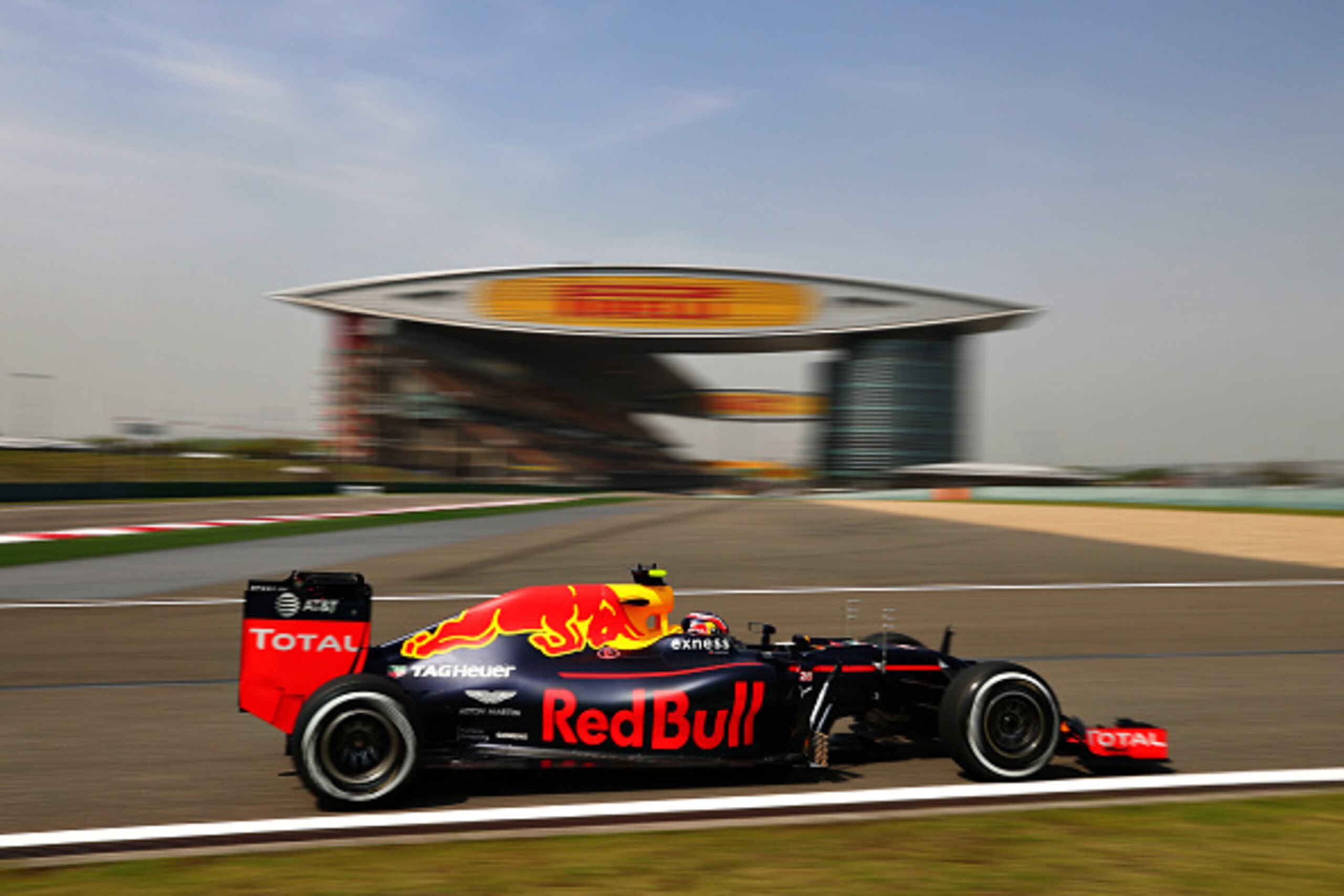
Prior to incurring the wrath of a four-time world champion, Daniil Kvyat had been giving another driver a piece of his mind.
After a mediocre start to the season, which saw him eliminated from Q2 in Australia and Bahrain as team-mate Daniel Ricciardo claimed two consecutive fourth-place finishes, the Russian was in desperate need of a strong result with the fanfare around Max Verstappen and Carlos Sainz Jr. growing all the while.
Despite winning F1's Driver of the Day award in China, Kvyat was again the least convincing Red Bull driver at the Chinese GP, where Ricciardo hauled his RB12 to the front row of the grid and claimed the lead at the start.
But Ricciardo's puncture on Lap 3, the collision between Sebastian Vettel and Kimi Raikkonen, and Lewis Hamilton's disastrous weekend meant he—as the driver with the fastest car with the least damage behind Nico Rosberg—ran comfortably in the top three for much of the race.
And in the closing stages, having conceded second place to Vettel, Kvyat was determined to ensure nobody—least of all a backmarker—prevented him from claiming the second podium finish of his F1 career.
As he later told Autosport's Ian Parkes, Jolyon Palmer had endured the "worst" weekend of his life in China after finishing last of the 22 finishers, and the rookie seemed reluctant to move aside for Kvyat when the Red Bull driver came to lap him.
"He should get out of my f--king way!" Kvyat shouted on Lap 42 at a time Ricciardo was pressurising Hamilton and Felipe Massa for fourth place. Competing in just his second race, however, Palmer still refused to let Kvyat through, with the Russian again voicing his frustration.
"Blue f--king flags!" he boomed before gesticulating to the Renault driver when Palmer eventually obliged at Turn 6.
Since making his F1 debut in 2014, Kvyat has often used colourful language over pit-to-car radio in times of elation and frustration, and his rant at Palmer was a reflection of the sheer pressure he felt to get to the finish line and claim the result he required so badly.
Lewis Hamilton, Nico Hulkenberg Confused by Mercedes, Force India Strategies
3 of 5
Can the Chinese Grand Prix be considered a truly enjoyable race?
Sure, there was yet more chaos on the opening laps, a surprise podium finisher and it was fun to track the progress of three world champions as they recovered from poor starts to claim good points.
But for all the positivity surrounding F1's new three-tyre rule, the race—much like the previous round in Bahrain—became a little too complicated and too difficult to follow for spectators and drivers alike.
Having stopped at the end of the first lap for a new nose following his collision with Felipe Nasr, Lewis Hamilton was again called to the pits when the safety car appeared on Lap 5, with Mercedes replacing his soft-compound tyres with a set of super-softs.
The three-time world champion was presumably wondering why the team didn't change his tyres during the initial stop, and his race engineer, Pete Bonnington, was strangely cryptic when explaining why Mercedes chose to pit behind the safety car.
"We have a plan. Nothing wrong, all part of the plan," he reassured his driver on Lap 6 before instructing him to pit for a third time at the end of that lap.
"Sorry, I'm boxing again now?!" Hamilton asked in a concerned tone of voice.
"Affirm, we're gonna fit the softs so we don't have to use any other compounds!" replied Bonnington, sounding rather pleased with himself.
With Hamilton spending a single lap on the super-softs—ensuring he had used two different compounds—Mercedes' hope was that he could complete the remainder of the race on softs, but the master plan failed to come off when Hamilton was forced to make his fifth stop for mediums on Lap 30.
Although Hamilton's confusion was understandable, far more worrying was the later interaction between the Force India pit wall and Nico Hulkenberg, who was unaware the team had switched him to Plan B, which was a four-stop strategy, as chief operating officer Otmar Szafnauer later told the team's official website.
"I think we should think about the alternate strategy to be honest, guys," Hulkenberg suggested while running 14th on Lap 25. "Think about it."
"We're already on it! We're already on it," came the reply from Bradley Joyce, his race engineer.
Perhaps Hulkenberg is among those drivers who simply lack the ability to read a race—particularly a race as muddled as the Chinese GP—as they're driving along, and maybe Force India themselves were at fault for not updating the German driver of their change of plan.
But, in any case, is F1 wise to promote a style of racing whereby even the drivers themselves are unsure exactly what's happening?


.png?w=2560 "Oklahoma City Thunder v Los Angeles Lakers - Game Four")
Fernando Alonso Prevented from Taking McLaren-Honda to Q3
4 of 5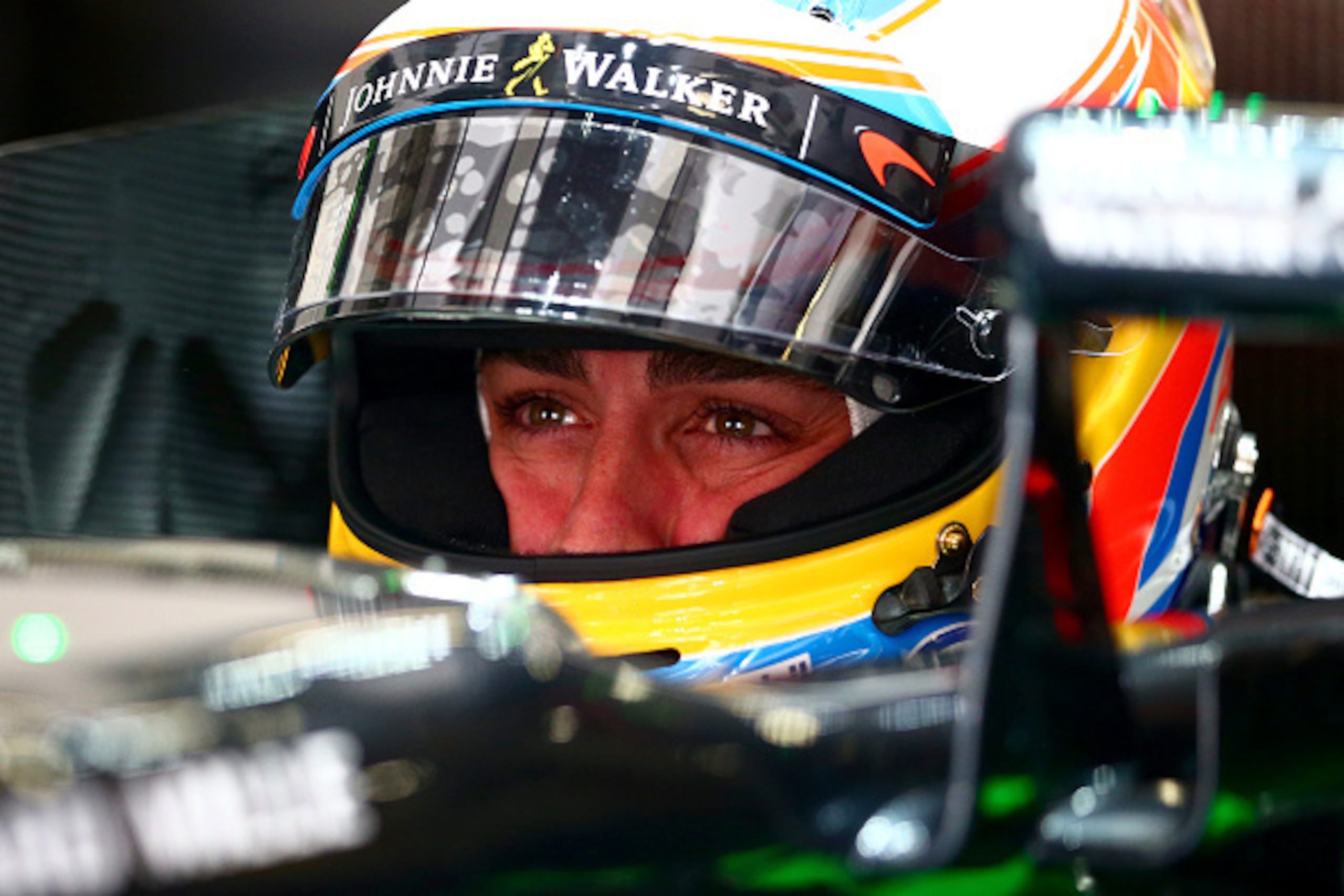
Almost 18 months since one of the most glorious chassis-engine partnerships in Formula One history reformed, the numbers of McLaren's latest Honda-powered era continue to make the eyes water.
In the 22 grands prix since the beginning of 2015, the team have scored just 28 points, registered just six top-10 finishes and suffered 15 retirements.
But perhaps the most telling—and certainly the most irritating—statistic concerning the modern McLaren-Honda team is they are yet to reach the third and final segment of qualifying.
Irritating, because while the team have not made the top-10 shootout, they have had occasional opportunities to do so, missing out through those familiar technical problems and sheer bad luck.
The most memorable example came at last year's Monaco GP, where Jenson Button qualified 12th after yellow flags appeared on his final lap of Q2, preventing him from improving his time on a day Fernando Alonso was convinced McLaren could have finished as high as sixth, per Autosport's Glenn Freeman.
And this time it was Alonso who was the innocent victim of someone else's dramas at a circuit McLaren may have broken into Q3 on merit.
As Button later told Sky Sports' television coverage of the event, both drivers conducted their initial banker laps of Q2 on used tyres as normal and planned to produce their decisive laps on new super-softs at the climax of the session.
Yet Hulkenberg's loose wheel saw the session suspended with little more than a minute remaining, meaning the McLarens had no time to improve their times and leaving Mark Temple to break the bad news to Alonso.
"Unfortunately there's no time left in the session to have another go, so we are P12."
"No! Argh! Argh!" was all the two-time world champion could muster in response.
"Yeah, that is massively frustrating," Temple replied, recognising Alonso's groans were not related to the fractured ribs he sustained in his Australian GP crash. "I reckon we really had a good chance of a good result there."
The wait goes on.
Haas Reluctant to Put Romain Grosjean out of His Misery
5 of 5
What a difference a fortnight makes.
After following up his sixth-place finish in the Australian GP with fifth in Bahrain, Romain Grosjean couldn't speak highly enough of his Haas team, telling his colleagues they were all lost together in an "American dream" and how much he loved the VF-16 car.
Yet as his nightmare race in China coughed to a close, the Frenchman couldn't wait to see the back of it.
Grosjean had spent his weekend complaining about the tyre-pressure guidelines enforced by Pirelli, which—as he told ESPN F1's Laurence Edmondson—were "ridiculous" and rendered his car "undriveable" long before he collided with Sauber's Marcus Ericsson on the opening lap.
In the latter stages, the Driver of the Day in Australia and Bahrain was hobbling in 19th and—possibly with an eye on a "free" gearbox change for the next round in Russia, as noted by Martin Brundle during Sky Sports' television coverage—asked the team to bring his race to a premature end.
"Two to go, Romain, two to go," encouraged his race engineer on Lap 55 of 56. "Hang in there."
"Yeah, that's why I'm asking you if you want to retire the car," Grosjean replied. "There is a problem in the car somewhere. It's undriveable today."
So close to the first two-car finish of their F1 adventure, Haas were presumably reluctant to succumb to a needless DNF and ensured Grosjean kept going until the chequered flag.
"Understood, but we do not want to retire the car, we do not want to retire. Let's hang in there."
After the feel-good factor of the first two races, the Chinese GP was something of a reality check for Haas—not only in terms of their expectations for their debut season, but how they handle their star signing—who is one of the more emotional drivers on the grid.
On the good days, Grosjean will produce near-perfect performances, claim exceptional results and emerge as the team's biggest asset. But on the bad days, he will require intelligent, careful and compassionate management.
All team radio quotes, as well as timing and tyre data, sourced from the official F1 website, Pirelli Motorsport's infographic on Twitter and the FOM television feed.
.jpg?w=2560 "Rams Camp Football")
.jpg?w=2560)