Are Ferrari Actually Closing the Gap to Mercedes? What Do the Numbers Tell Us?
All the talk coming into the 2016 Formula One season was how Ferrari were finally catching up to Mercedes after two years of Silver Arrows domination.
"We know more or less where we are compared to Ferrari—which is why I say for sure it is close," said Mercedes' Nico Rosberg after the final pre-season test, per ESPN F1's Nate Saunders. "But we are not sure if we are ahead or behind."
After qualifying at the first race, in Australia, Ferrari's Kimi Raikkonen said of Mercedes, "Obviously they are very fast but I don’t think we should be too worried," per F1i.com's Phillip van Osten.


.jpg?w=2560)
Of course, Rosberg won the first two races for Mercedes with his team-mate, Lewis Hamilton, finishing second in Australia and third in Bahrain. Those are exactly the same results the Mercs scored in Australia and Bahrain last year, but with Hamilton taking the victories.
Ferrari have been hindered by two retirements, although Sebastian Vettel could have won in Australia if not for the team making the wrong tyre choice following a mid-race red flag and restart.

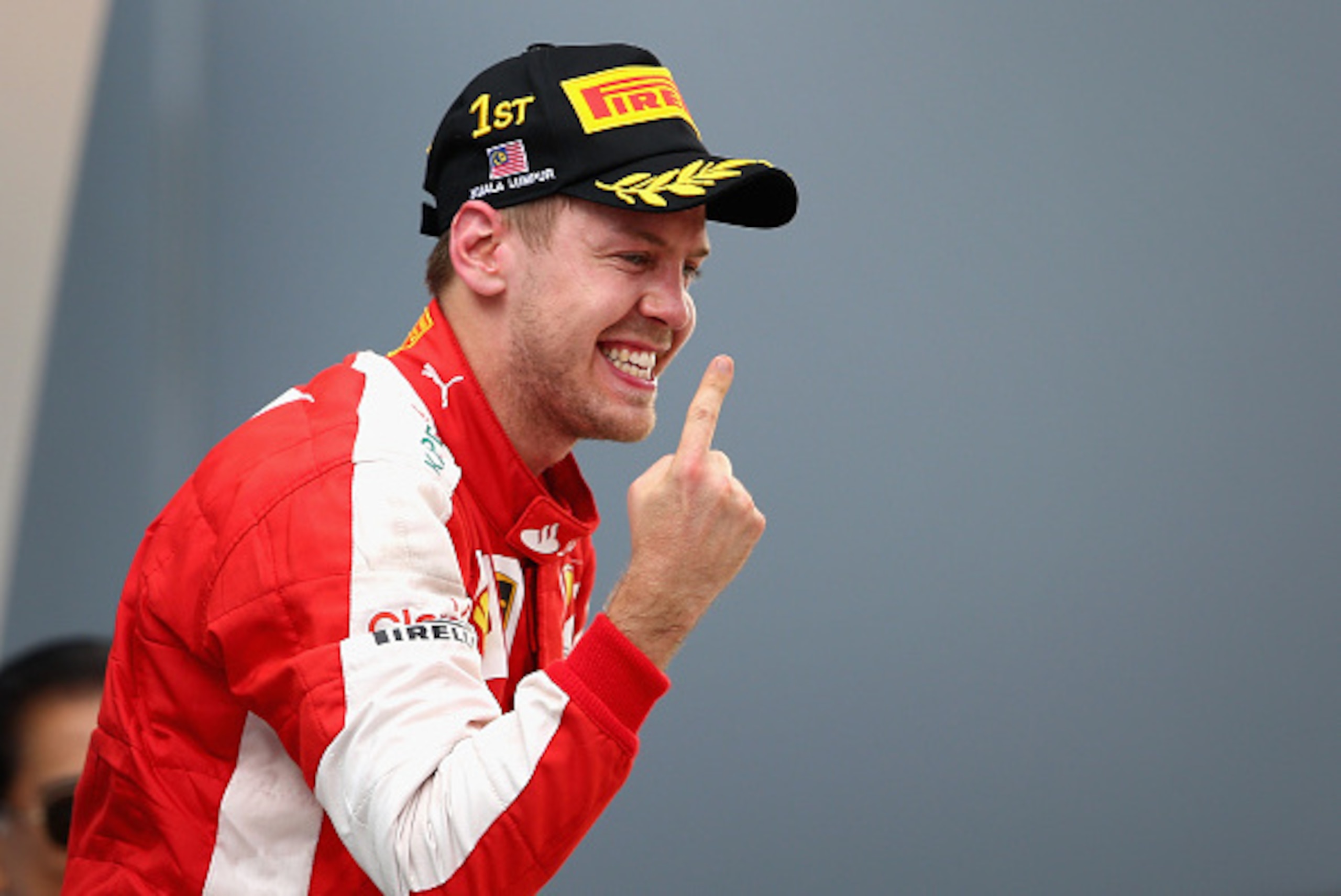
In 2015, with the calendar in a different order, Vettel picked up his first win for Ferrari at the second round of the season, in Malaysia.
Ferrari haven't found the same success yet this year, and it is only two races into a 21-race season, but what do the times tell us so far about Ferrari's improvement and their gap to Mercedes?
First, let's look at qualifying. We will compare the drivers' times from Australia and Bahrain this year to the same two races last year (even though Bahrain was Round 4 in 2015), as well as those from last year's Malaysian Grand Prix.
| Hamilton | 1:26.327 | Hamilton | 1:23.837 |
| Rosberg | -0.594 seconds | Rosberg | -0.360 seconds |
| Vettel | -1.430 seconds | Vettel | -0.838 seconds |
| Raikkonen | -1.463 seconds | Raikkonen | -1.196 seconds |
| Hamilton | 1:32.571 | Hamilton | 1:29.493 |
| Vettel | -0.411 seconds | Rosberg | -0.077 seconds |
| Rosberg | -0.558 seconds | Vettel | -0.519 seconds |
| Raikkonen | -0.656 seconds | Raikkonen | -0.751 seconds |
| Hamilton | 1:49.834 | N/A | N/A |
| Vettel | -0.074 seconds | N/A | N/A |
| Rosberg | -0.465 seconds | N/A | N/A |
| Raikkonen | Eliminated in Q2 | N/A | N/A |
In Australia, the gap from the fastest Merc to the fastest Ferrari was nearly halved, from 1.430 seconds in 2015 to 0.838 seconds this year. That is the good news for the Scuderia. The bad news is that Vettel was still more than 0.8 seconds slower than Hamilton's pole lap—a massive gap in the world of F1.
In contrast to the improvement in Australia, Vettel was actually more than one-tenth of a second slower in Bahrain relative to the quickest Mercedes than he was in 2015: 0.519 seconds adrift, versus 0.411 seconds last year.
And again, whether the gap closed or not, half a second is still a huge amount of time to make up.
In Malaysia last year, where Vettel was surprisingly competitive, his qualifying time was just 0.074 seconds off Hamilton's pole time. That looks like an anomaly, though, considering he was nearly a second behind at the next race, in China, and then the half-second mentioned above in Bahrain.
Again, it has only been two races, but judging by qualifying pace, Ferrari are still a long way from catching the Mercs.
However, points aren't scored on Saturdays. It doesn't matter how well (or poorly) you qualify if you aren't quick in the grand prix.
Here are the gaps between the Mercedes and Ferrari drivers at the end of each race:
| Hamilton | - | Rosberg | - |
| Rosberg | +1.360 seconds | Hamilton | +8.060 seconds |
| Vettel | +34.523 seconds | Vettel | +9.643 seconds |
| Raikkonen | DNF | Raikkonen | DNF |
| Hamilton | - | Rosberg | - |
| Raikkonen | +3.380 seconds | Raikkonen | +10.262 seconds |
| Rosberg | +6.033 seconds | Hamilton | +30.148 seconds |
| Vettel | +43.989 seconds | Vettel | DNF |
| Vettel | - | N/A | N/A |
| Hamilton | +8.569 seconds | N/A | N/A |
| Rosberg | +12.310 seconds | N/A | N/A |
| Raikkonen | +53.822 seconds | N/A | N/A |
Vettel was much closer to the two Mercs in the Melbourne race, just as he was in qualifying. In fact, were it not for Ferrari's decision to make an extra pit stop after the red flag, Vettel might have won.
So clearly the Ferraris were quicker around Albert Park this year than they were in 2015. In the end, though, Vettel was still nearly 10 seconds behind Rosberg's race-winning Silver Arrow.
As it was in qualifying, the Bahrain race was also a different story. Whereas Raikkonen came close to winning at Sakhir following a late-race charge in 2015, ultimately finishing three seconds behind Hamilton, he never troubled Rosberg en route to a second-place finish last week, 10 seconds behind Rosberg.
Given the results so far—and the fact that Vettel already had a win by this time last year—it is difficult to say Ferrari have made a huge jump in performance. They are probably closer, but Mercedes still have a significant advantage.
Vettel seems to agree. When asked about the remaining gap to Mercedes before the Bahrain race, he told the official F1 website, "Nothing to laugh about! We are definitely not where we want to be so of course our whole aim is to get the best out of what we have."
And there is one other factor that must concern the Italian team: reliability.
Ferrari have now suffered two retirements in the first two races. It took them until round eight last year to suffer their second DNF.
With Mercedes' bulletproof cars, Ferrari will not be able to mount a serious challenge until they can push their machines to the limit without them breaking down.
Looking ahead, the signs are there that Ferrari can challenge the Silver Arrows—as Vettel demonstrated in Melbourne. But there is still a significant gap, both in performance and reliability, that must be closed before Ferrari can hope to beat Mercedes over the course of a season.
All timing data is from the FIA's official website.
Follow me on Twitter for updates when I publish new articles and for other (mostly) F1-related news and banter:
.png?w=2560)