Ferrari Show Title-Challenging Pace at the Australian Grand Prix
The result of Sunday's Australian Grand Prix—a Mercedes one-two, followed by Ferrari's Sebastian Vettel—will look familiar and predictable to anyone with a cursory interest in Formula One over the last couple years. As at the U.S. Grand Prix last year, though, how those familiar results came about was anything but predictable.
In 2015, it took Ferrari and Vettel two races to spring a surprise on Mercedes. In Melbourne, it didn't even take two corners.
Throughout the offseason, the big question was: Could Ferrari catch Mercedes and end the Silver Arrows' two-year domination of the sport? After qualifying on Saturday, it seemed the answer was no.
.jpg?w=2560 "Titans Giants Football")

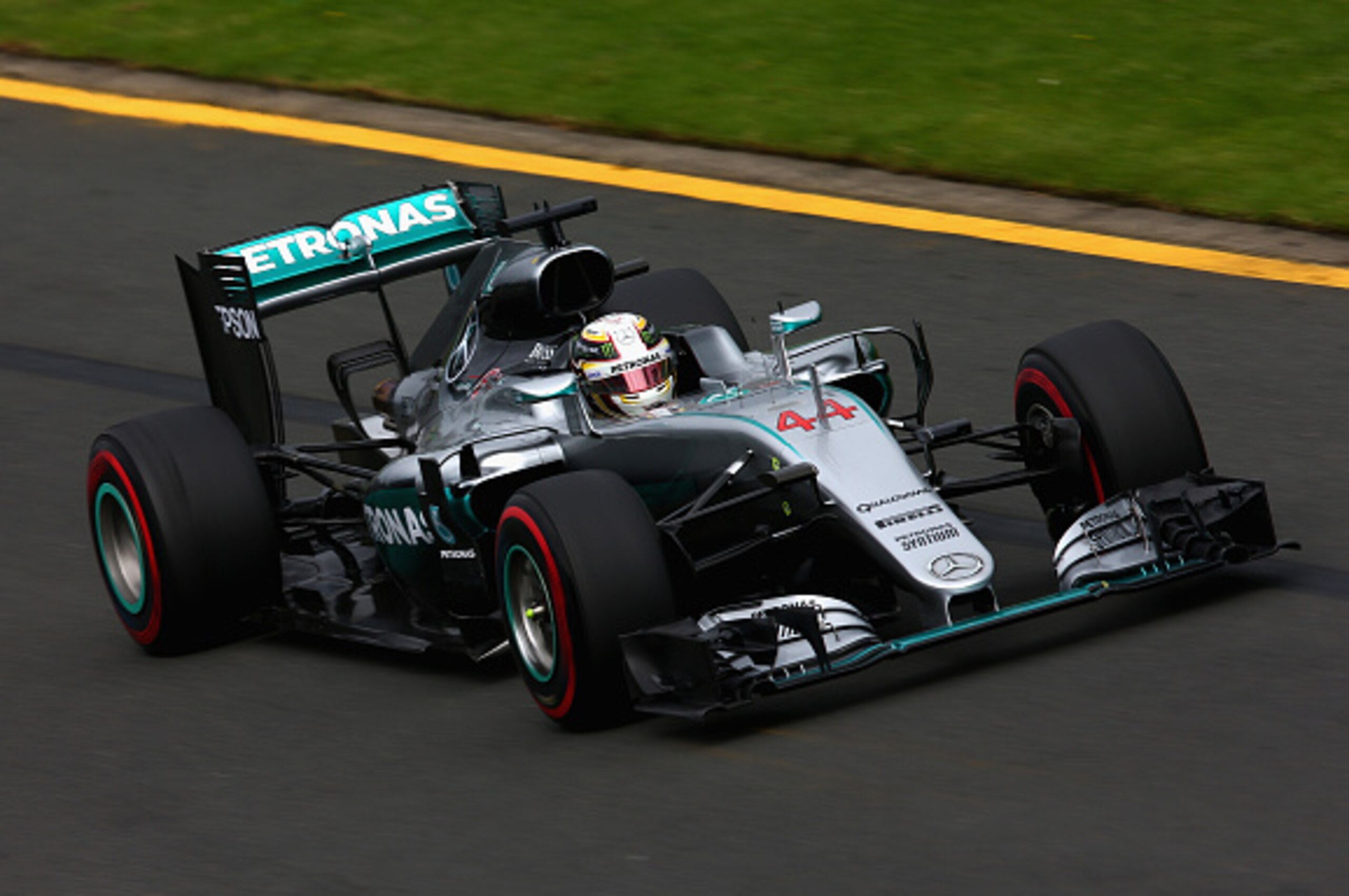
Lewis Hamilton qualified on pole, nearly a second clear of Vettel in third. Nico Rosberg split them, 0.360 seconds behind Hamilton, in the other Merc. Not only was the new qualifying format "rubbish," as Mercedes executive director Toto Wolff told the Sky Sports television audience, but it appeared we were in for another Mercedes parade to the chequered flag on Sunday.
Then the race started.
While Hamilton moved slowly from his grid slot on the left, Vettel shot between the two Mercs and was clear of both as they entered the first corner. Rosberg locked his wheels under braking and clipped Hamilton's front wing, reminiscent of their incident at the 2014 Belgian Grand Prix, minus the puncture. That allowed Kimi Raikkonen, in the other Ferrari, to get a better run out of the corner and slip ahead into second place.
"I tried to just go for it in Turn 1, but Sebastian did a great job. He braked on the limit and so there was just no way to get into there on the inside, so I had to back out," Rosberg explained in the postrace press conference.
Even more shocking than the start was the fact that the Silver Arrows didn't immediately reel in the Ferraris. All that mileage in pre-season testing and their dominant qualifying performances were forgotten as Vettel completed the first lap 2.4 seconds ahead of Rosberg with Hamilton falling down to sixth place, behind Max Verstappen and Felipe Massa.
By Lap 11, just before Rosberg made his first pit stop, he was three-and-a-half seconds adrift of Vettel and about one second behind Raikkonen.
Hamilton, who was stuck behind Verstappen and his year-old Ferrari engine, stayed out until Lap 16 before pitting. The race was thrown into chaos, again, two laps later.
Fernando Alonso clipped the back of Esteban Gutierrez's car as they approached Turn 3 at approximately 300 kph, launching his McLaren into an airborne roll before stopping upside down against a tyre barrier.
"You see the sky, the ground, the sky, you want to stop," said Alonso afterward, describing the crash to the official F1 website.
"I saw a little space to go out and went out quickly—my mum will watch TV, so I want to be out quickly and say I am OK. But yeah it was quite a big one. I'm thankful to be here."
The race was red-flagged for 20 minutes while marshals cleaned the track, which proved fortuitous for Mercedes. Hamilton had already switched to medium tyres (the hardest compound available) at his pit stop and Rosberg did likewise during the stoppage, with the team figuring neither driver would need to stop again.
Both Ferraris, meanwhile, continued on supersoft tyres—ensuring they would need another pit stop later in the grand prix.
"We didn't expect probably what both of them did, going on let's say the hardest compound and going to the end," Vettel explained on the podium. "So we tried to go more aggressive."
That decision likely cost Vettel the race.
Raikkonen retired on Lap 22, just after the restart, with flames shooting out of his air intake, while Vettel continued to lead Rosberg. Then, on Lap 35, Vettel made his inevitable pit stop, handing Rosberg a lead he would not relinquish.
Vettel emerged from the pits approximately 10 seconds behind Hamilton, whose long run on the medium tyres left him trailing just Rosberg and Daniel Ricciardo (who eventually pitted as well, promoting Hamilton and Vettel to their final positions of second and third, respectively).
Rather than focusing on what could have been for Ferrari, though, let's look at what they have achieved. Specifically, their race pace (at least around the Albert Park circuit) is a match for the Silver Arrows.
It was not a speed deficit, but rather a poor strategy call that undid Vettel in Melbourne. That bodes particularly well for the rest of the season, as the biggest issue with the sport over the last two seasons has been the lack of competitiveness at the front of the grid.
When Vettel emerged from his last pit stop, it took him 15 laps to close the 10-second gap to Hamilton to under one second. Yes, he was on fresher and softer tyres, but he also held Rosberg at bay for the first 12 laps while they were on the same rubber.
If Vettel's Melbourne performance is indicative of Ferrari's true pace, Mercedes will have a real battle on their hands this year.

As happened to Hamilton last year in Monaco, human error cost Vettel a potential victory. And that is the F1 we love...unpredictable, exciting, without every result seemingly preordained and every decision made by computers and then quadruple-checked by other computers.
Not every race will be this close—that is also F1, love it or not—but after an offseason of uncertainty surrounding the sport's regulations and an embarrassing backtrack on the new qualifying format, the Australian Grand Prix was exactly what the sport needed.
Now, the travelling circus heads to Bahrain for Round 2—and it was the second round last year where Vettel pulled off his stunning first win for Ferrari. He won't be able to take the Mercs by surprise this time, but with the pace he showed in Melbourne, it may not matter.
All timing data is from the FIA's official website.
Follow me on Twitter for updates when I publish new articles and for other (mostly) F1-related news and banter:


.jpg?w=2560 "Saquon Out for Game")
.jpg?w=2560 "Rap: Lions, LaPorta End Contract Talks")
.jpg?w=2560 "Report: Baker May Miss Up to 6 Weeks")